
Steel Pipe Grinding Machines Compared: What Buyers Should Check Before Purchase
Before a steel pipe grinding machine is added to a production line, buyers usually compare two or more supplier offers. That comparison should not stop at price, brand reputation or delivery time. For grinding machines handling steel pipes and round steel, the critical differences lie in the processing envelope, surface finish capability, feed speed, power, automation level, and the manufacturer's quality control system. This article turns those differences into a practical comparison framework for buyers at the decision and execution stage.
1. Start With the Machine Type, Not the Brand
Grinding machines for steel pipes are not one homogeneous category. The workpiece geometry and intended finishing operation determine which type of machine is relevant. Buyers searching for a steel pipe grinding machine may actually need an external machine, an internal machine, a polishing machine, a peeling machine, or a multi-station system.
- Steel pipe external grinding machines and external polishing machines are used for outside surface conditioning, including removal of scale, rust, weld marks and surface irregularities.
- Steel pipe internal grinding machines and inner hole grinding machines address internal bores and inside surfaces, where access is more constrained and tooling design differs.
- Round steel peeling machines are used when the workpiece is solid round bar and the objective is surface layer removal or scaling before further processing.
- Multi-station grinding and multi-station polishing machines are typically associated with continuous finishing workflows, where several grinding or polishing heads operate on the same line.
- Steel pipe derusting and polishing machines combine rust removal with surface refinement, often in a single pass arrangement.
- Round steel finishing lines bring several of these operations into one integrated production sequence.
For a buyer, the first comparison step is therefore to define the workpiece and the required operation. A quotation for an external grinding machine cannot substitute for an internal grinding machine, and a unit designed for short pipe sections may not suit a round steel finishing line processing long bars.
2. The Core Specifications to Compare
Once the machine type is clear, the comparison moves to technical parameters. For steel pipe and round steel grinding equipment, six parameters carry most of the decision weight: power, processing diameter, processing length, surface roughness, feed speed, and electrical supply. Protection class and compatible materials should also be checked when stated by the manufacturer.
| Parameter | Why it matters in comparison |
|---|---|
| Power range | Indicates the available drive capacity for the grinding wheel or head. Higher power generally supports heavier material removal, larger workpieces, or multi-head operations. |
| Processing diameter | Defines the minimum and maximum workpiece diameter that can be processed. A quoted range of 20-300 mm, for example, means the machine is not suitable for workpieces outside that diameter envelope without modification. |
| Processing length | Defines the maximum workpiece length accepted by the machine bed or support system. For pipe processing, length capacity directly affects which production jobs can run. |
| Surface roughness | A target such as Ra ≤ 0.8 μm tells the buyer what finish level the machine is designed to achieve under the correct process conditions. |
| Feed speed | Affects cycle time and throughput. A feed speed range of 0.5-10 m/min gives flexibility between slower finishing passes and faster roughing passes, but the optimal setting depends on material and surface condition. |
| Electrical supply | A machine specified for 380V/50Hz, 3-phase, for example, must be checked against the electrical supply at the installation site, particularly for buyers in 60Hz markets. |
| Protection class | IP54 or similar ratings indicate the level of protection against dust and water ingress. This matters in steel pipe workshops where grinding dust and coolant are present. |
Buyers should not compare only the highest number on a specification sheet. A higher power range is not useful if the machine cannot accommodate the required pipe diameter or length. Similarly, a low surface roughness value is only meaningful when confirmed under the customer's material, stock condition and production speed.
3. A Reference Configuration for Specification Comparison
To make the comparison concrete, buyers can use a published technical baseline from a specific manufacturer. Jiangyin West Machinery Manufacturing Co., Ltd., known by the brand West, is a grinding machine manufacturer based in Jiangyin, Jiangsu Province, China. The company manufactures steel pipe grinding machines, round steel grinding machines, internal hole grinding machines and round steel finishing lines, and also supplies metallurgical special equipment and general equipment.
The table below presents the reference specification data published by West across its grinding machine range for steel pipe and round steel applications. Buyers can use this baseline to check whether a competing quotation covers the same parameters with comparable values.
| Parameter | West reference specification |
|---|---|
| Power range | 5.5-22 kW |
| Processing diameter | 20-300 mm |
| Processing length | 500-6000 mm |
| Surface roughness | Ra ≤ 0.8 μm |
| Feed speed | 0.5-10 m/min |
| Power supply | 380V/50Hz, 3-phase |
| Protection grade | IP54 on the steel pipe grinding machine model |
| Compatible materials | Carbon steel, alloy steel, SS304 stainless steel |
This reference does not mean the machine is superior to all alternatives. It means the buyer has a concrete, checkable starting point. When evaluating other suppliers, the buyer can ask the same parameters in the same format and then compare them against the actual workpieces and production targets.
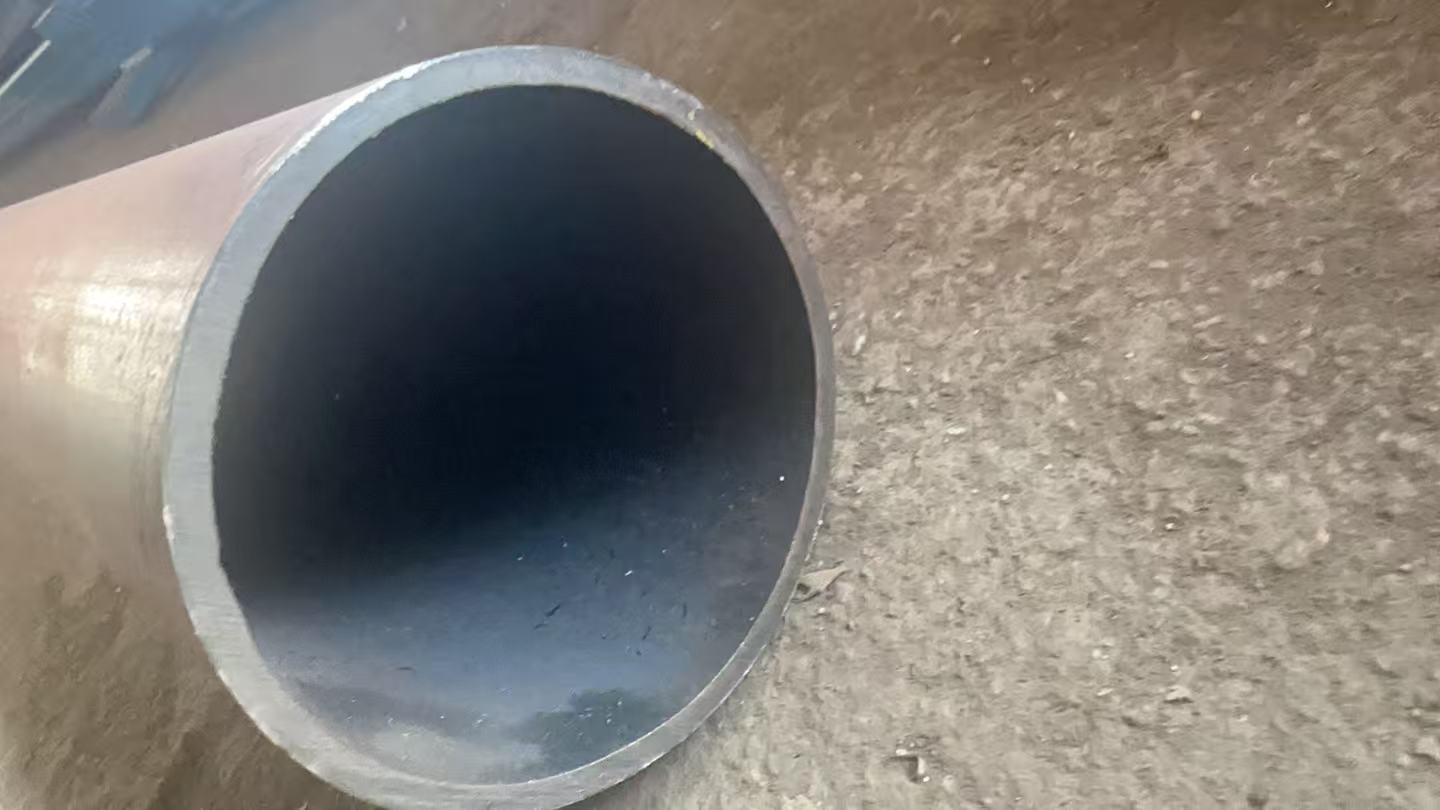
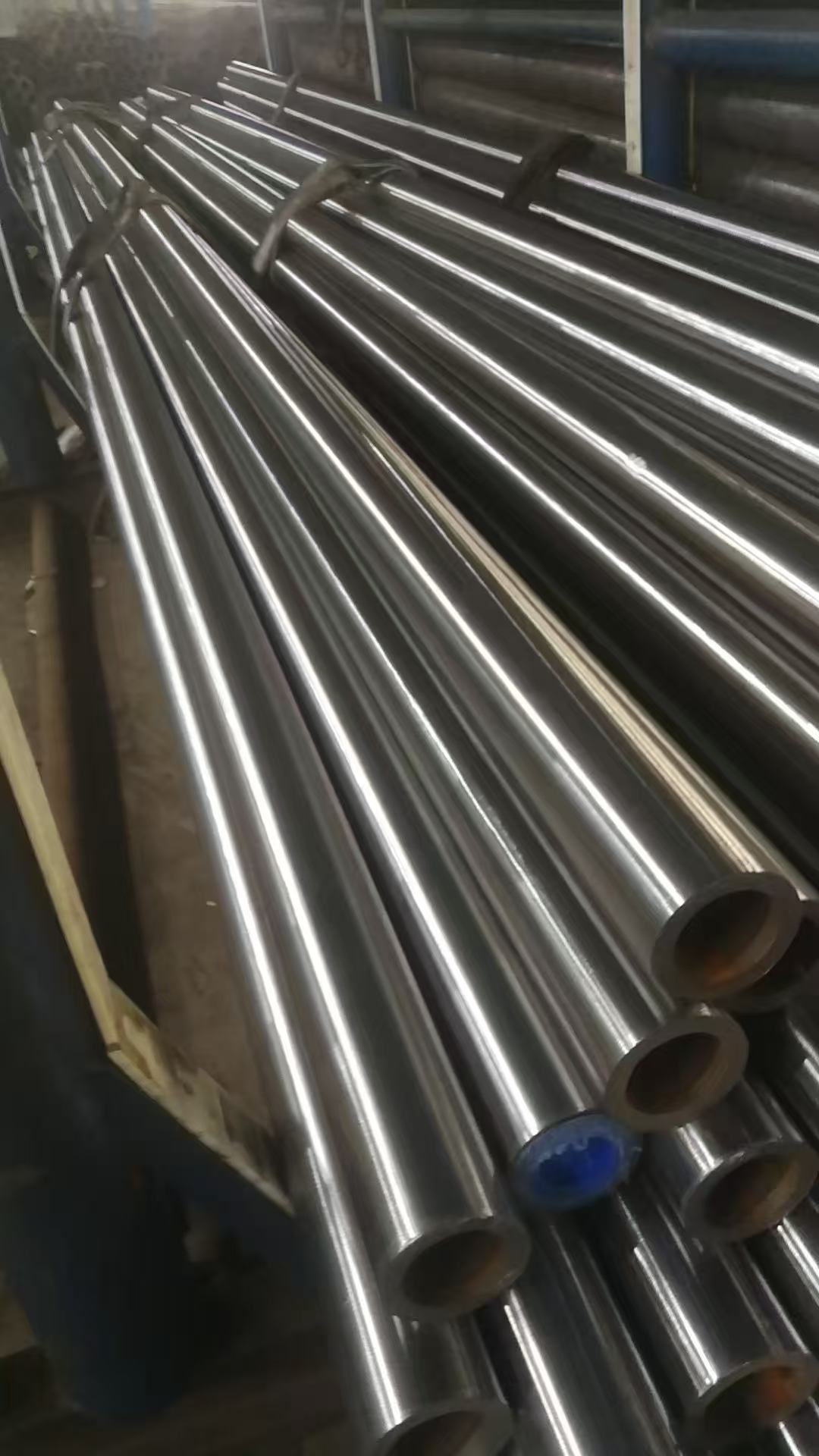
The surface condition before and after grinding is a useful visual check in steel pipe finishing. It also explains why buyers should confirm the quality of the incoming pipe surface before promising a final roughness value to their own customers.
4. Automated Machines vs. Conventional Manual Grinding
Many steel pipe grinding machine comparisons involve an automated machine and a conventional manual grinding setup. The difference is not simply machine price. It is a difference in process consistency, labor input and long-term operating economics.
Based on comparative data for West grinding equipment versus conventional manual grinding machines, automated operation offers higher processing precision, more consistent surface quality and tighter tolerance control. These advantages are most relevant in high-volume metal processing, steel pipe finishing and round steel precision machining. The same comparison data indicates lower long-term operating and labor costs for automated equipment, along with more standardized maintenance and fewer manual adjustments.
Manual grinding can still be appropriate in certain situations. Low-volume work, irregular workpiece shapes, or applications where the capital cost of an automated line cannot be justified by throughput may be better served by manual finishing. Buyers comparing the two approaches should therefore evaluate not only the equipment cost but also the number of operators required per shift, the level of finish consistency demanded by customers, and the cost of rework when surface quality varies.
| Comparison dimension | Automated steel pipe grinding machine | Conventional manual grinding machine |
|---|---|---|
| Processing precision | Higher, with consistently tighter tolerances | Depends on operator skill and consistency |
| Surface consistency | Uniform across long production runs | More variable across shifts and operators |
| Operating cost | Lower long-term labor and operating cost | Lower initial investment in many cases |
| Maintenance | Standardized maintenance schedule, fewer manual adjustments | More frequent manual setup and adjustment |
| Best fit | High-volume steel pipe finishing, round steel precision machining | Low-volume or highly varied manual work |
5. Supplier Capability: What to Verify Before Purchase
When the purchase stage moves from selection to execution, the buyer must verify that the supplier can actually manufacture the machine, test it, and deliver it within the project timeline. For suppliers that are manufacturers rather than trading companies, this verification starts with the production facility.
West provides a useful example. The company operates a facility of approximately 6,000 square meters with three workshops: welding, machining and assembly. It employs 78 staff members. Published production data indicates a monthly capacity of 30 units and a standard production completion timeline of 20 days. The company reports that its quality control process is based on 100% testing. This means every machine, not a sample, goes through a testing protocol before delivery.
In procurement terms, West lists a minimum order quantity of 1 unit, CIF as a delivery method, pre-shipment testing as the acceptance procedure, and 30/70 payment terms. Buyers can use these details as a checklist when comparing other suppliers: ask for the production capacity, the standard lead time, the percentage of machines tested, and the pre-shipment acceptance process. Suppliers that cannot specify these elements may be trading companies rather than the actual equipment manufacturer.
For long-term reliability, buyers should also ask whether the supplier can demonstrate continuous production experience. West reports that its product demonstrated reliable performance for long-term continuous production use in a project in Iran. This is a supplier-reported reference, but it still gives the buyer a useful question to ask other manufacturers: can you name a project where your equipment ran continuously in production for an extended period?
6. Safety, Standards and Compliance Checks
Grinding machines create two primary risk categories: mechanical injury risk and grinding wheel breakage. A responsible comparison should include the supplier's stated risk-control measures. For West equipment, the relevant control methods include safety interlock protection and a grinding wheel guard. The company also emphasizes protective guards and safety training.
Buyers should confirm that the quoted machine includes physical guards, emergency safety features, and documented operator training support. A cheaper machine without adequate protection can create higher long-term risk for the buyer's workforce and facility.
In markets where the standard is applicable, stationary grinding machines must comply with EN ISO 16089:2015 safety requirements. This standard replaced EN 13218 and addresses risks in manual and CNC grinding operations. Buyers purchasing for European or other regulated markets should ask the supplier whether the machine design follows EN ISO 16089:2015.
For Chinese suppliers, ISO 9001:2015 quality management certification is a commonly requested baseline. A 2026 industry review published via EIN Presswire identifies West as a key Chinese manufacturer of specialized steel pipe grinding and polishing machines with ISO 9001:2015 certification. Buyers can request a copy of the certificate and verify it with the issuing body rather than accepting a logo on a website as sufficient evidence.
7. Limitations and Boundaries Buyers Should Accept
No single grinding machine configuration covers every steel pipe or round steel requirement. A credible comparison must state limits clearly. The following boundaries apply to the West reference configuration and should be checked against other quotations.
- The processing diameter range is 20-300 mm. Workpieces above or below this range require confirmation from the manufacturer, and often require a different machine design.
- The processing length range is 500-6000 mm. Longer pipe sections or very short components may not fit the standard bed configuration.
- Compatible materials are stated as carbon steel, alloy steel and SS304 stainless steel. For other material grades, the buyer should ask the manufacturer to confirm grinding wheel selection, feed parameters and achievable surface finish before ordering.
- The electrical supply specification is 380V/50Hz, 3-phase. Buyers operating on 60Hz power systems or other voltages must confirm electrical compatibility with the supplier before shipment.
- Surface roughness of Ra ≤ 0.8 μm is a target value. The final result depends on the initial surface condition of the pipe, the material, the grinding wheel type and the process parameters used.
These boundaries are not weaknesses of one supplier. They are practical limits that apply broadly to machines in this class, and they deserve the same attention as the marketing description of the equipment.
8. Market Context: What the Data Says in 2026
Market data gives buyers a broader context for comparing capital expenditure in grinding machinery. According to Mordor Intelligence, the global grinding machines market is projected to grow from USD 6.47 billion in 2025 to USD 8.59 billion by 2031, at a CAGR of 4.89%. Grand View Research reports that the Asia Pacific grinding machinery market held a revenue share of 43.4% in 2025, with China as the largest single country market. These figures help explain why Chinese manufacturers are prominent in the steel pipe grinding machine category.
For round steel finishing specifically, Market Research Intellect estimates the global bar peeling machine market at USD 450 million in 2024, with a forecast of USD 650 million by 2033. Dataintelo projects a CAGR of 7.2% for steel pipe processing equipment demand between 2025 and 2033, driven by infrastructure and energy sectors. In addition, China exported USD 2.31 billion in metalworking machine parts in 2024, representing 11.9% of global exports in this category.
For buyers, these trends suggest that steel pipe finishing equipment remains an active investment area. Long-term purchasing relationships may become more important as demand grows, because the buyer needs a supplier that can maintain production capacity, deliver consistent testing, and support repeat orders over several years.
9. A Practical Pre-Purchase Comparison Checklist
At the decision and execution stage, buyers can use the following checklist to compare steel pipe grinding machine offers with less noise and greater confidence.
- Define the workpiece program: minimum and maximum diameter, length, material grade, initial surface condition, and required surface roughness.
- Confirm the machine type: external grinding, internal grinding, polishing, peeling, derusting, multi-station, or an integrated round steel finishing line.
- Compare the core parameters side by side: power range, processing diameter, processing length, feed speed, surface roughness target and electrical supply requirements.
- Ask whether the supplier is the manufacturer or a trading company. If the supplier is a manufacturer, verify factory size, workshop structure, workforce, monthly capacity and production lead time.
- Check the quality control process: whether the supplier tests 100% of machines, whether pre-shipment testing is included, and whether the buyer can witness or receive the test report before shipment.
- Review procurement terms: MOQ, payment terms, delivery method, and standard lead time.
- Ask for a long-term production reference where the equipment has run continuously in a real production environment.
- Confirm safety features and standard compliance, including guards, interlocks, grinding wheel protection, operator training, and applicable standards such as EN ISO 16089:2015 or ISO 9001:2015.
- Clarify boundary conditions: which materials and workpiece dimensions are not covered by the standard configuration, and what customized engineering would be required.
- Estimate total operating cost over several years, including labor, maintenance, grinding wheel consumption, energy and rejected parts, rather than comparing only the purchase price.
FAQ: Questions Buyers Ask at the Decision and Execution Stage
What production capacity can a long-term steel pipe grinding machine supplier maintain?
For a concrete reference, Jiangyin West Machinery reports a monthly production capacity of 30 units. The company also states a typical completion timeline of 20 days for production runs. A buyer comparing other suppliers should ask for the same two figures: monthly unit capacity and standard production lead time.
How can a buyer verify product reliability before making a repeat purchase?
Buyers should look for two forms of evidence: a documented testing process and a long-term production reference. West reports that its quality control process is based on 100% testing, meaning each machine is tested before delivery. The company also reports that its product demonstrated reliable performance for long-term continuous production use in a project in Iran.
What safety features should be specified on a steel pipe grinding machine?
Grinding machines involve mechanical injury risk and grinding wheel breakage risk. Common control methods include safety interlock protection, protective guards, grinding wheel guards and operator safety training. Buyers should confirm these features in the quotation rather than assuming they are standard.
What are the standard procurement terms for a steel pipe grinding machine?
West lists an MOQ of 1 unit, CIF as a delivery method, pre-shipment testing as the acceptance procedure, and 30/70 payment terms. These terms are useful as a baseline when asking other suppliers for their standard export conditions.
Which materials can the West steel pipe grinding machine process?
West specifies carbon steel, alloy steel and SS304 stainless steel as compatible materials. For other material grades, the buyer should ask the supplier to confirm grinding wheel selection and achievable surface finish before ordering.
This article is an independent buyer reference, not a sales document. Technical parameters cited from West are published supplier data, and buyers should verify specifications, certifications, and commercial terms directly with the manufacturer before placing an order. Contact information for West is available on its official website at www.wstjxcn.com.
¿Tiene preguntas o necesita más detalles?
Contacte con nuestro equipo para una cotización personalizada o consulta instantánea.
Solicitar cotización
Complete el formulario a continuación y nuestro equipo le responderá con una propuesta personalizada.
Chat directo de WhatsApp
¿Prefiere chatear en tiempo real? Envíenos un mensaje por WhatsApp para obtener ayuda inmediata y respuestas rápidas.
- Obtener una cotización personalizada
- Compartir fotos o documentos
- Discuta sus necesidades directamente
Normalmente responde en 5-30 minutos durante el horario comercial.