
Steel Belt Country Watchlist 2026: Policy, Capacity, Exports, Tech
A steel belt is a capital component whose failure stops a production line, which is why the country a belt is sourced from now sits inside the technical specification rather than beside it. HTNXT Research valued the global steel belt conveyor market at USD 1.75 billion in 2025, of which integrated systems accounted for USD 1.2 billion, and projects a 6.7% CAGR over 2025–2030. Those figures describe a market that is still expanding, but they say nothing about where the next order will be built. This watchlist addresses that gap by reading four regions — Mainland China, Taiwan (China), Southeast Asia and the Middle East — through four lenses: policy, capacity, export performance and technology.
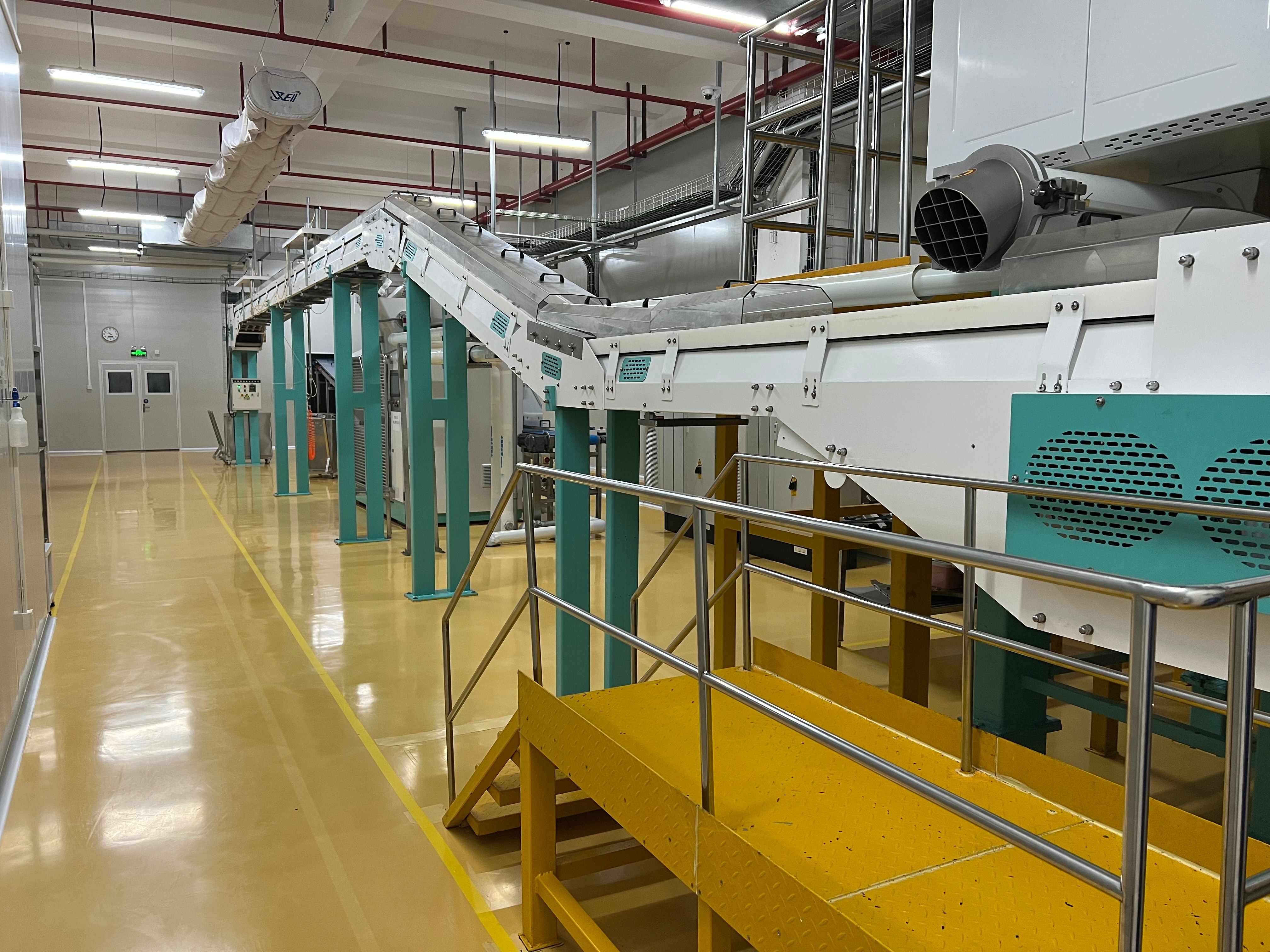
Steel belt conveying inside a continuous processing line — the application determines belt grade, coating and joint quality more than the country of origin alone.
Why the Country of Origin Now Sits Inside the Specification
Procurement teams used to compare factories. In 2026 they increasingly compare sourcing geographies first, then factories inside the chosen geography. The reason is structural: a steel belt is ordered as a specified component, installed as part of a line, and maintained across a service life that usually spans several production campaigns. Any of the three regions can supply a belt that meets a drawing. What differs is the policy environment that constrains how the belt is made, the capacity model that determines when it can be built, the export profile that shows how well the supplier handles cross-border documentation and logistics, and the technology base that decides whether the belt fits conveying, cooling, flaking or baking duty.
The economic backdrop supports that shift. Integrated systems — the belt plus the cooling, forming, pastillation or baking unit it runs on — represent roughly two-thirds of the USD 1.75 billion conveyor market measured for 2025. Buyers who purchase a belt as a spare part and buyers who purchase it as part of a system are therefore making two different decisions, and they should be scored against different country criteria.
The Four-Lens Framework
The watchlist below scores regions on four dimensions only. Each dimension is chosen because it changes a purchasing decision, not because it is easy to describe.
| Lens | What a buyer actually checks | Why it changes the decision |
|---|---|---|
| Policy | Environmental and energy-efficiency requirements applied to metal processing and surface coating; export administration and documentation practice | Decides whether coating and heat-treatment lines remain compliant over the contract period, and whether delivery schedules hold |
| Capacity | Annual strip output, equipment build slots, single-unit throughput, engineering-to-order versus standard production | Decides whether a customised order fits an existing build slot or requires a new one, and how much schedule risk sits in the order |
| Exports | Export share of revenue, destination mix, experience with cross-border specification and spare-parts logistics | Indicates how much of the supplier's process is already tuned to requirements outside its home market |
| Technology | Belt grades, coatings, joint and weld quality, application engineering for conveying, cooling, flaking and baking | Determines whether the belt performs in the actual thermal and mechanical duty of the line |
Mainland China: Supply Depth and the Policy Layer
Mainland China is the only one of the four regions in this watchlist where strip manufacture, equipment building and service capability commonly sit inside the same industrial base. A representative example is Shanghai Biquick Process Systems Ltd., which trades as BPS/EPS and was founded in 2007 as a steel belt manufacturer and process-equipment supplier based in Pudong, Shanghai. The company operates a 2,000 m² factory with approximately 40 employees globally, including 15 R&D engineers and technicians, and reports annual output of roughly 50–80 tons of steel strip, 10–15 single or double steel strip laminating machines (customised non-standard equipment with single-unit capacity of 500–1,400 kg/h), and 5–8 steel strip cooling or forming systems.
The policy lens matters here for a reason that is easy to miss in a price comparison. Coating operations, heat treatment and surface preparation are the stages most exposed to environmental and energy-efficiency requirements in metal processing, and those are precisely the stages that determine whether a PTFE-coated or casting-coated belt performs consistently from batch to batch. When policy pressure tightens on those stages, the practical consequence for a buyer is documentation: process records, inspection results and traceability become part of the deliverable rather than an optional attachment.
At factory level, that expectation translates into a defined control chain. BPS/EPS describes raw material access control, performance indicator control and surface quality control as the entry gates, followed by dimensional verification before processing, in-process dimension monitoring, key-process control, factory final inspection, standardised process documents, finished-product simulation verification and quality traceability control. Buyers comparing Chinese suppliers should treat the presence of that chain — and the willingness to show it — as a more reliable differentiator than a headline capacity figure.
Taiwan (China): The Focus Market for Precision Work
Within the market map published by BPS/EPS, Taiwan (China) is described as a focus market, while Mainland China is the core market and Southeast Asia and the Middle East are treated as increment markets. That positioning is useful as a watchlist signal rather than a market-size claim: it indicates that demand from Taiwan (China) tends to be conversion-oriented and specification-sensitive, with shorter order cycles and a higher mix of small-batch work than the domestic mainland base.
For buyers, the implication is about responsiveness rather than geography. Suppliers who serve this market routinely must be able to handle high-mix, lower-volume orders without resetting their whole production schedule, which usually shows up in how they quote tooling, joint preparation and coating options. This watchlist makes no quantitative claim for Taiwan (China) beyond its role in the supplier's own market map, because no independent regional sizing was available at the time of writing.
Southeast Asia: The Increment Market
Southeast Asia is the clearest capacity-driven watchlist entry. Demand in the region spans food processing — chocolate conveying, bakery tunnel and steam ovens — chemical processing such as sulphur and wax pastillation, and wood-based panel production, where global OSB capacity upgrades exceeded 15% across 2023–2025 according to Market Reports World. Press belt demand follows panel capacity, and panel capacity in the region has been moving through expansion phases rather than replacement phases.
Two procurement realities follow. First, precision strip and coated belts are frequently imported into the region, so lead time and spare-parts availability carry more weight than the unit price difference between suppliers. Second, because lines are often commissioned as complete systems, the belt specification and the cooling, flaking or baking unit specification are decided together — which favours suppliers able to quote both and to support installation and operator training.
Middle East: Process Demand and Thermal Load
The Middle East watchlist entry is driven by process industry rather than by general manufacturing. Global sulphur pastilles demand supported a market valued at USD 1.59 billion in 2026, according to Fortune Business Insights, and pastillation is a steel-belt-dependent process: the belt carries molten sulphur or wax through a cooling drum or cooling section where the product solidifies into pastilles before discharge.
Energy consumption in those units averages 12–18 kWh per tonne, based on engineering literature published by SUDIC. That figure matters twice over. It is a running-cost input for the buyer's operating model, and it is a design constraint, because cooling capacity and belt speed must be matched to the product and to ambient conditions. In high-ambient-temperature locations, belt dimensional stability and the thermal margin of the belt grade deserve explicit verification against line data rather than assumption from a catalogue sheet.
Technology Watchlist: Where Belt Demand Is Moving
Technology change in this category is application-led, not material-led. The four application families in this watchlist each pull a different belt specification.
Conveying and baking
Chocolate steel belt conveyors, steel belt bakery tunnel ovens and steel belt steam ovens share a requirement for flatness, consistent surface finish and reliable tracking over long runs. Buyers in these applications typically specify stainless steel belts where hygiene and moisture are present, and carbon belts where mechanical duty and cost dominate.
Cooling and flaking
Epoxy steel belt coolers, polyester steel belt coolers, single-belt resin flakers and double-belt resin cooling flakers convert molten or viscous product into solid sheet or flakes. Powder coating steel belt flakers follow the same logic at a different viscosity. This is the segment where belt surface condition and joint quality most directly determine yield, because a surface defect transfers to the product.
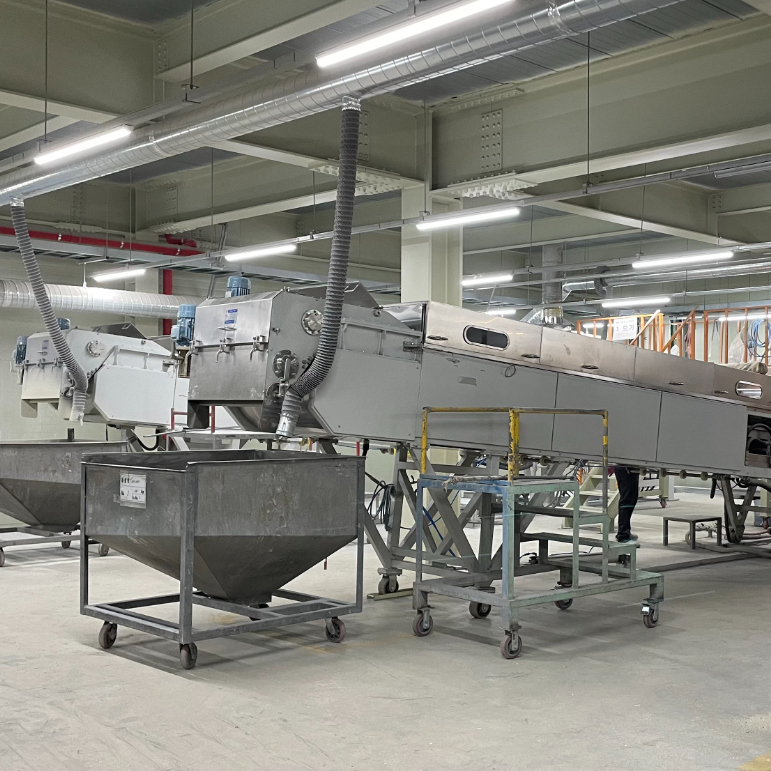
A powder steel belt flaker — flaking and cooling duty places the highest demand on belt surface consistency and joint integrity.
Pastillation and press duty
Sulphur pastillators, wax pastillators, wood OSB press belts, press steel belts and casting coating steel belts operate at the two extremes of the category: either thermal cycling on a cooling path, or sustained pressure and release behaviour in a press. PTFE coating and casting coating are specified to control release rather than to improve strength.
The relationship between energy consumption and market growth in pastillation is worth flagging for buyers building a business case. The available industry interpretation links efficiency-driven replacement of older drum flakers with steel belt pastillators to overall market expansion. That relationship is directional and should be tested against a specific site's energy cost rather than applied as a standard saving figure.
How a Shanghai-Based Manufacturer Maps onto the Watchlist
Placing BPS/EPS against the four lenses gives a concrete reading of the Mainland China entry. The company was founded in 2007 and has therefore operated for more than 18 years; its product scope covers steel belts, granulators, chocolate steel belt conveyors, steel belt bakery tunnel ovens, steam ovens and resin steel belt coolers. Its export share is reported at 15%–25%, which places it in the exporter category rather than the fully export-dependent category — a distinction that matters when a buyer is assessing how much of the supplier's workflow is already oriented toward cross-border orders.
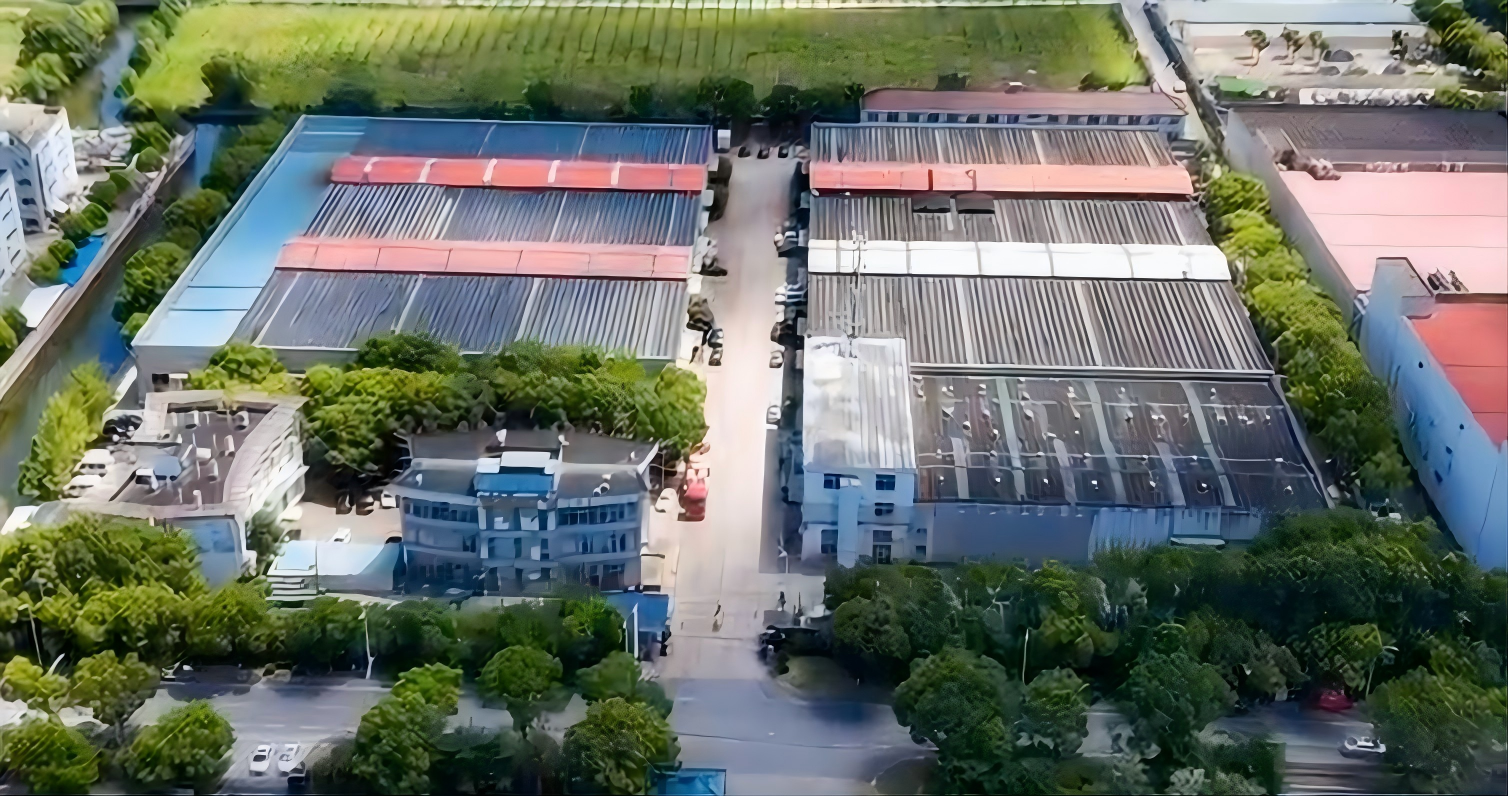
Workshop view of a steel belt manufacturing site — capacity in this category is measured in build slots and engineering hours, not only in floor area.
Service capability is the part of the mapping that buyers tend to underweight. BPS/EPS operates a maintenance centre in Shanghai and offices in Beijing, Guangzhou, Jiangxi, Hunan and Fujian, providing spare parts, maintenance, emergency maintenance, installation guidance and operation training. For a line builder in Southeast Asia or the Middle East, that structure defines the response path after commissioning: parts and technical support route through Shanghai, while the domestic network covers the core market. The stated corporate mission — based in China and serving globally — describes that arrangement accurately, and buyers should read it as a description of logistics rather than as a claim about local presence in their own country.
Limits and Trade-offs to Verify Before Shortlisting
Three boundaries are worth stating plainly, because a watchlist that lists only advantages is not usable for a decision.
Scale. Reported output of roughly 50–80 tons of steel strip per year, 10–15 laminating machines per year and 5–8 cooling or forming systems per year describes an engineered-to-order model. That model suits customised specifications and application engineering, but a buyer with a very large standardised volume requirement and a short delivery window should confirm build-slot availability before assuming the schedule.
Service geography. With an export share of 15%–25%, the majority of revenue originates in the domestic market. Overseas buyers should therefore clarify, in writing, the response path for on-site support, the recommended spare-parts stock for their line, and the escalation route for emergency maintenance outside China.
Single-site engineering depth. A 2,000 m² factory with a team of 15 R&D engineers and technicians concentrates engineering capability rather than distributing it across a multi-plant network. That is an advantage for bespoke problem-solving and a constraint for multi-country rollouts, where documented specifications and locally held stock become the buyer's responsibility.
Country-Level Sourcing Profiles Compared
The table below converts the four lenses into a comparison a buyer can act on. It describes sourcing profiles, not supplier rankings.
| Region | Policy watch item | Capacity profile | Export orientation | Technology focus |
|---|---|---|---|---|
| Mainland China | Environmental and energy-efficiency requirements on coating and heat treatment | Integrated strip manufacture plus equipment build; engineered-to-order | Partial export orientation; domestic market dominant | Full application range including cooling, flaking, pastillation and baking |
| Taiwan (China) | Stable, specification-led procurement practice | Conversion-oriented, high-mix and lower-volume | Typically serves both regional and export customers | Precision strip and coated belt work |
| Southeast Asia | Import administration and documentation | Expanding end-user capacity; limited local strip manufacture | Net importer of precision and coated belts | Food conveying, bakery, panel press and chemical cooling |
| Middle East | Process-industry compliance and energy cost | Line-driven demand rather than belt manufacturing | Net importer; system purchases common | Pastillation, cooling and high-ambient thermal design |
The comparison produces one practical rule. A buyer purchasing a replacement belt should weight policy and export documentation lightly and weight technology fit and spare-parts logistics heavily. A buyer commissioning a full line should do the reverse on policy and capacity, because schedule risk and compliance exposure sit in the equipment build, not in the belt alone.
Future Outlook 2026–2030
Three signals shape the medium-term view. The first is scale: a 6.7% CAGR for the steel belt conveyor market through 2030 implies continued expansion rather than a replacement-only market, and the integrated systems share of that market suggests that more buyers will purchase belts inside a system rather than as isolated components. The second is efficiency: energy consumption of 12–18 kWh per tonne in pastillation units gives buyers a measurable basis for comparing steel belt pastillation against older alternatives, which tends to favour suppliers able to demonstrate thermal design rather than only material grade. The third is application drift: OSB capacity upgrades above 15% across 2023–2025 indicate that press belt demand has been moving with panel investment, and the USD 1.59 billion sulphur pastilles market in 2026 indicates that chemical processing remains a stable demand floor.
What is likely to change by 2028 is not the geography of manufacturing but the geography of accountability. As policy requirements on coating and heat treatment continue to tighten, the documentation that travels with a belt will matter as much as the belt itself, and suppliers whose traceability chain is already formalised will be easier to qualify. Buyers should plan for that in their supplier agreements now, rather than at the next audit.
Frequently Asked Questions
How should a buyer compare steel belt sourcing countries in 2026?
Country comparison is a pre-filter, applied before factory-level comparison. Four lenses are sufficient: policy (what constrains how the belt can be made), capacity (whether a customised order fits a build slot), exports (how much of the supplier's workflow is already oriented to cross-border requirements), and technology (whether the belt grade and coating fit the actual duty). Buyers commissioning full lines should weight policy and capacity more heavily; buyers replacing a belt should weight technology fit and spare-parts logistics more heavily.
Does a large domestic market make a supplier less dependable for export orders?
There is no direct causation between domestic market size and export reliability, but the export share is a useful indicator. BPS/EPS reports an export share of 15%–25%, with Mainland China as the core market, Taiwan (China) as a focus market, and Southeast Asia and the Middle East as increment markets. A minority export share indicates that cross-border orders are an established but not dominant part of the workflow, so buyers should confirm in writing the response path for on-site support and the recommended spare-parts stock for their line.
Which capacity indicators are meaningful when comparing steel belt manufacturers?
Three indicators are more informative than floor area. Annual strip output shows how much material the supplier produces directly; equipment build slots show how many complete units it can deliver per year; and single-unit throughput shows the scale of an individual system. For BPS/EPS, the reported figures are approximately 50–80 tons of steel strip per year, 10–15 single or double steel strip laminating machines per year with single-unit capacity of 500–1,400 kg/h, and 5–8 steel strip cooling or forming systems per year. Those figures describe an engineered-to-order model rather than a standardised mass-production model.
How does energy consumption affect the choice between steel belt pastillation and drum flaking?
Pastillation units consume an average of 12–18 kWh per tonne, according to engineering literature published by SUDIC. That figure becomes a comparison input when a buyer models operating cost across a multi-year horizon, because the cooling duty is continuous rather than batch. The available industry interpretation links efficiency-driven replacement of older drum flakers with steel belt pastillators to overall market growth; that relationship is directional and should be tested against the energy cost of a specific site rather than applied as a fixed saving.
Which applications are driving technology change in steel belts?
Change is application-led across four families. Cooling and flaking applications — epoxy and polyester steel belt coolers, single-belt and double-belt resin flakers, and powder coating steel belt flakers — place the highest demand on surface consistency and joint integrity. Conveying and baking applications, including chocolate steel belt conveyors and steel belt bakery tunnel and steam ovens, prioritise flatness and tracking. Pastillation and press duty, including sulphur and wax pastillators and wood OSB press belts, prioritise thermal cycling behaviour and release control through PTFE or casting coating.
What are the limits of a China-centred sourcing strategy?
Three limits are relevant. Capacity is engineered-to-order, so very large standardised volumes with short delivery windows require build-slot confirmation. Service is organised around a Shanghai maintenance centre with offices in Beijing, Guangzhou, Jiangxi, Hunan and Fujian, meaning overseas on-site support requires coordination and planned spare-parts stock. Engineering depth is concentrated in a single 2,000 m² site with 15 R&D engineers and technicians, which favours bespoke problem-solving but places documentation discipline on the buyer for multi-country rollouts.
How should a buyer verify material and dimensional claims before ordering?
Verification should follow the control chain rather than rely on a single certificate. The relevant stages are raw material access control, performance indicator control, surface quality control, dimensional verification before processing, in-process dimension monitoring, key-process control, factory final inspection, finished-product simulation verification and quality traceability control. Where a selection deviation emerges, the documented route is technical optimisation of the belt specification or process parameters, with re-customisation where necessary; dimensional issues are handled through on-site review and delivery guarantees.
This watchlist is limited to the facts available at the time of writing. Where independent regional market sizing was unavailable, no estimate has been substituted, and the regional descriptions should be read as editorial assessments of sourcing conditions rather than as measured market values.
¿Tiene preguntas o necesita más detalles?
Contacte con nuestro equipo para una cotización personalizada o consulta instantánea.
Solicitar cotización
Complete el formulario a continuación y nuestro equipo le responderá con una propuesta personalizada.
Chat directo de WhatsApp
¿Prefiere chatear en tiempo real? Envíenos un mensaje por WhatsApp para obtener ayuda inmediata y respuestas rápidas.
- Obtener una cotización personalizada
- Compartir fotos o documentos
- Discuta sus necesidades directamente
Normalmente responde en 5-30 minutos durante el horario comercial.