
Steel Ball Selection Matrix for Oil & Gas Valve Service
Steel Ball Selection Matrix for Oil & Gas Valve Service
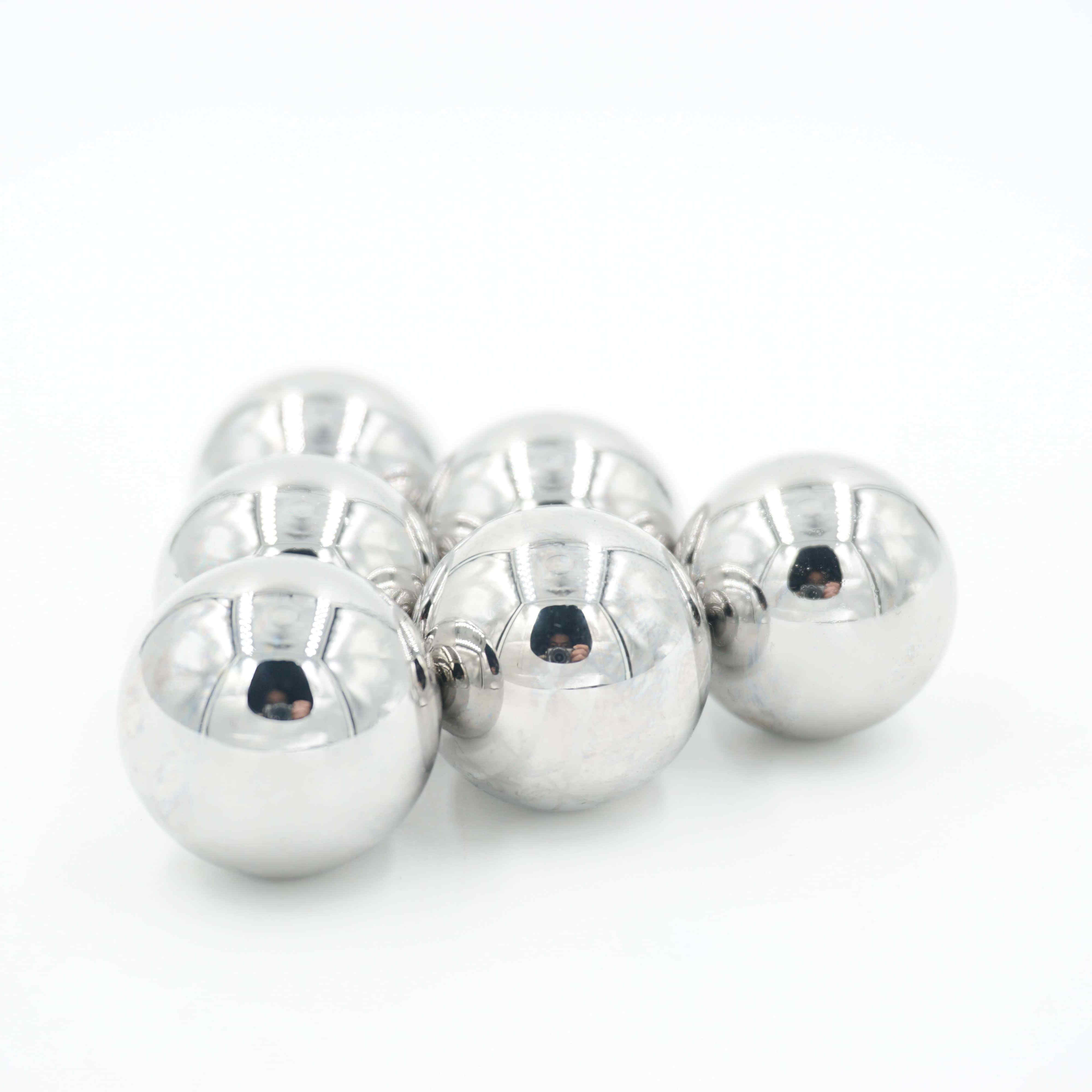
A steel ball used in an oil and gas valve is a sealing or shut-off element, not a generic bearing component. The correct specification therefore starts with the valve type and service fluid, not with a catalog size. The matrix below links floating, trunnion, needle and check-valve duty to material families such as 420C, 440C, 304, 316, Hastelloy and duplex stainless steel, and to geometry choices including drilled, machined, hollow and non-standard balls.
Haimen City Mingzhu Steel Ball Co., Ltd., a China-based steel ball manufacturer founded in 1992, is one supplier whose product portfolio covers several of these material and geometry families. This article is written as an independent buyer reference: it explains how the choices connect, where the limits sit, and which procurement checks should be fixed before a purchase order is released.
Why valve service changes the steel-ball selection question
In a ball valve or check valve, the ball is expected to seat, seal, move or shut off flow. In oil and gas petrochemical service, the operating envelope is often described as wet gas and mildly corrosive fluids, 0–200°C, moderate pressure, with a hardened martensitic ball in the HRC 48–55 range and moderate corrosion resistance. Those conditions are not severe enough to require a nickel alloy in every case, but they are demanding enough that a general-purpose carbon steel ball is rarely the right default.
The selection error usually appears in one of three forms. A ball is hard enough but not corrosion-resistant enough for the fluid; a ball is corrosion-resistant but too soft for the seating load; or the geometry is quoted from a catalog when the valve drawing calls for a drilled, tapped, machined or non-standard form. The matrix addresses all three by treating material, geometry and acceptance evidence as one decision.
The selection matrix at a glance
The table below is a first-pass screen for oil and gas valve and fluid-control projects. Final approval still belongs to the valve designer and the purchase drawing.
| Valve / service context | Primary selection concern | Material shortlist | Geometry note | Procurement check |
|---|---|---|---|---|
| Floating ball valve; wet gas, mildly corrosive fluid, 0–200°C | Seat wear, surface finish, moderate corrosion | 420C; 440C where higher hardness is needed; 316 where corrosion dominates | Solid ball is the normal starting point; confirm grade and sphericity | Hardness, MTR, surface-defect inspection |
| Trunnion-mounted ball valve; fixed ball, moving seats, moderate to higher seating load | Dimensional stability, hardness, corrosion at seats | 420C or 440C; duplex stainless where chloride or SCC is a concern | Solid ball; check roundness, grade and surface finish | Hardness report, dimensional report, material traceability |
| Needle and small-bore flow-control assemblies | Diameter control, finish, fine adjustment, corrosion | 304 or 316 for mild corrosion; 420C or 440C where wear matters; Hastelloy for aggressive media | Precision ball or non-standard ball per drawing; check small-size availability | Diameter, grade, burr-free condition, lot code |
| Check valve; repeated seating and unseating | Wear, corrosion, sphericity and surface finish | 420C or 440C; 316 for chemical service; Hastelloy for severe acid or brine | Solid ball; drilled form only if the valve design requires flow-through or bleed | Surface inspection, hardness, material certificate |
| Offshore and subsea chloride service; seawater, chloride, H₂S sour service, 0–180°C | Chloride stress-corrosion cracking, pitting, strength | Duplex stainless; Hastelloy; 316 in low-chloride or less severe service | Solid ball; duplex sizes typically 10–100 mm | NACE MR0175 awareness, material certificate, PMI |
| Severe chemical and acid service; strong acids, chlorides, 20–400°C | Corrosion resistance in aggressive media | Hastelloy C-276 or C-22 | Solid ball; typical 3–50 mm | MTR, PMI, NACE or AMS documentation if specified |
Material families: what each one is asked to do
The material decision is not a simple ranking. A harder martensitic ball is not automatically better in a chloride fluid, and a more corrosion-resistant austenitic ball is not automatically better under a hard seating load. The table below keeps those trade-offs visible.
| Material family | Standard / condition | Size and grade data | Best fit in valve service | Boundary to record |
|---|---|---|---|---|
| 420C stainless | AISI 420C / UNS S42000; martensitic, hardened | HRC 50–55; 1–50.8 mm; G25–G1000 | Mild corrosive environments, wash-down and humid-duty bearing assemblies, pump valves, marine hardware | Moderate corrosion resistance; not the first choice for severe chloride or aggressive acid service |
| 440C stainless | AISI 440C / UNS S44004; martensitic, hardened | HRC 58–62; 0.5–50.8 mm; G10–G1000 | Higher-hardness valve sealing and wear duty; high-precision bearings; chemical pumps | Higher hardness than 420C, but still a martensitic stainless; confirm against the actual fluid and seat load |
| 304 stainless | SS304; austenitic, annealed soft | 1–50.8 mm; G100–G1000; stainless family data lists austenitic grades at HRC 25–39 in the annealed condition | Food and beverage equipment, plumbing valve assemblies, architectural fittings, general mild-corrosion service | Soft relative to martensitic grades; not a wear-first choice for high-load sealing |
| 316 stainless | AISI 316 / UNS S31600; austenitic, annealed soft | 1–50.8 mm; G100–G1000 | Marine hardware, chemical processing, pharmaceutical and food equipment, offshore rigging, saltwater valves | Soft austenitic ball; excellent chloride resistance, but not the wear solution for high-load seats |
| Duplex stainless | UNS S32205 / S31803 (2205); austenitic-ferritic | Typical 10–100 mm; high strength and corrosion resistance | Offshore oil and gas, subsea manifolds, chemical processing, desalination, pulp and paper digesters | Typical size range starts at 10 mm; small needle or check-valve sizes may fall outside it |
| Hastelloy | C-276 / C-22; UNS N10276 / N06022; nickel-chromium-molybdenum superalloy | Typical 3–50 mm; oxidation and acid resistant | Severe-corrosion chemical processing, acid-handling valves, seawater and brine service, pharmaceutical reactors | Reserved for severe service; not a default choice for mild oil and gas fluids where 420C or 316 may be adequate |
Two material relationships are especially useful in valve screening. Duplex stainless has resistance to chloride stress-corrosion cracking and pitting, and its yield strength is approximately twice that of 316 stainless steel. Hastelloy C-276 and C-22 are intended for strong oxidizing and reducing acids, pitting, crevice corrosion and stress-corrosion cracking in harsh chemical and acidic media. Those properties explain why duplex and Hastelloy appear in offshore and severe-chemical rows, but not in every floating-ball-valve row.
Geometry choices: solid, drilled, tapped, hollow, machined and non-standard
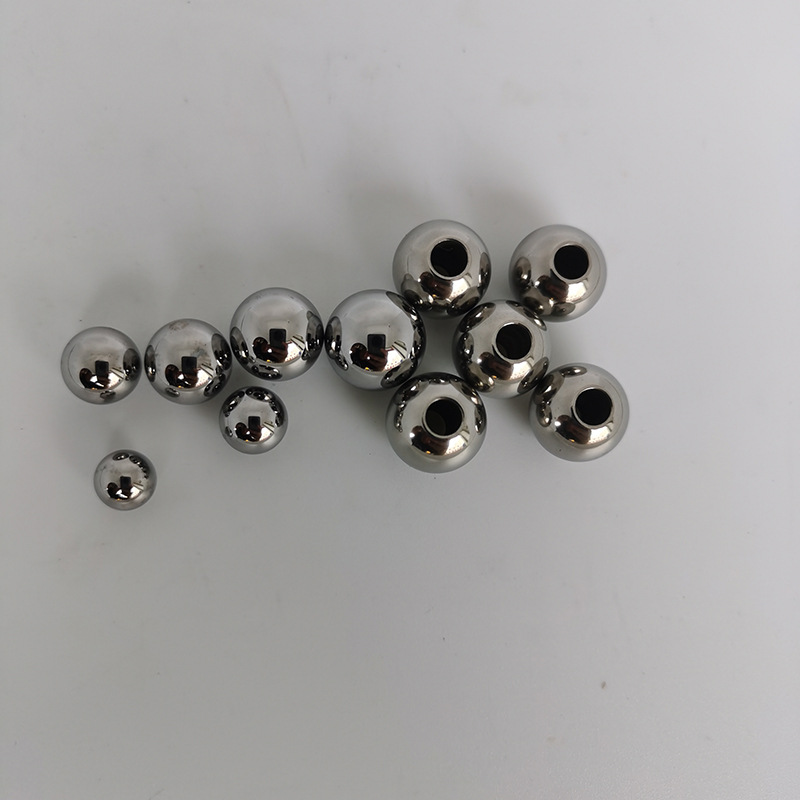
Geometry is not secondary in valve service. A hole, thread or hollow cavity changes the way the ball interacts with the seat, the flow path and the mounting interface. The buyer should state the function first, then the drawing features.
| Geometry | What it changes | Valve-service fit | Procurement note |
|---|---|---|---|
| Solid standard ball | Baseline sealing or shut-off form | Floating and trunnion ball valves, check valves, general fluid-control trim | State material, diameter, grade, hardness and surface requirement |
| Drilled ball | Creates a through or blind hole for flow, bleed or equalization | Specialized ball valves, hydraulic fittings, applications where the ball must pass or equalize flow | Hole diameter, depth, position and concentricity to drawing; burr-free hole |
| Tapped or threaded ball | Provides a direct mounting or integration interface | Linkage pivots, tie-rod ends, positioning fixtures, custom bearing assemblies | Thread class, thread depth and location; metric or UNC/UNF as specified |
| Hollow ball | Reduces mass and material compared with a solid ball; allows internal routing | Buoyancy, aerostatic, ornamental and lightweight industrial designs | Not a default pressure-sealing geometry; wall thickness and pressure retention must be confirmed by drawing |
| Machined ball | Extends diameter and geometry beyond cold-heading ranges | Heavy industrial machinery, large bearing assemblies, specialized valve and flow-control equipment | Typical 10–200 mm and above; roughness and hardness per specification |
| Non-standard ball | Fits a proprietary drawing rather than a catalog size | Specialized valves and actuators, proprietary mechanical systems, custom bearing assemblies, R&D | Prototype to production; non-standard orders commonly start from 50–500 pcs, with 10–50 pcs prototypes workable |
Applying the matrix to the 0–200°C, wet-gas envelope
For the valve and fluid-control scenario defined by wet gas, mildly corrosive fluids, 0–200°C, moderate pressure and a required hardened martensitic hardness of HRC 48–55, 420C is the direct starting point because its supplied hardness range is HRC 50–55. It offers a combination of moderate corrosion resistance and good hardness for wash-down, humid-duty and pump-valve environments. If the seat load or wear duty calls for higher hardness, 440C moves the supplied hardness range to HRC 58–62 and remains a martensitic stainless option.
If the fluid is chloride-bearing or the valve is in a coastal, marine or offshore environment, the decision should not be made on hardness alone. 316 stainless is the austenitic choice for excellent chloride resistance in marine hardware, chemical processing, pharmaceutical and food equipment, offshore rigging and saltwater valves. Duplex stainless adds high strength and resistance to chloride stress-corrosion cracking and pitting, which is why it is relevant to offshore oil and gas, subsea manifolds and desalination. Hastelloy is the severe-corrosion route for acid-handling valves, seawater and brine service, and pharmaceutical reactors.
Where NACE MR0175 is specified, the purchase order should say so explicitly. The oil and gas valve scenario treats NACE MR0175 as optional, and the offshore and subsea scenario treats NACE MR0175 and NORSOK awareness as a special requirement. A ball that is metallurgically suitable can still fail procurement screening if the certificate, heat-treatment record or traceability package does not match the specification.
Procurement checks that belong in the same matrix
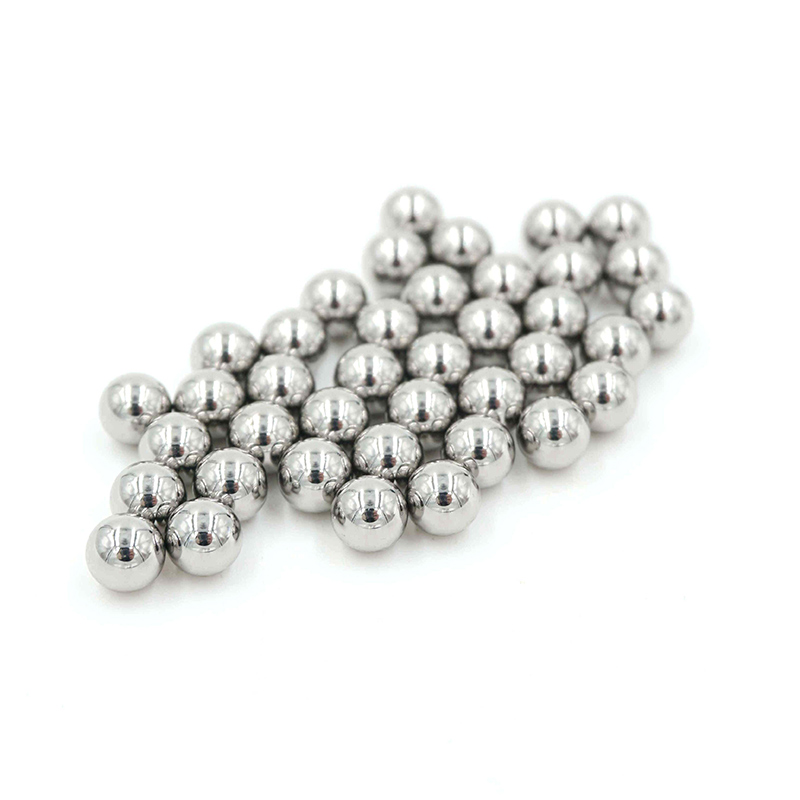
A valve-ball purchase order should not separate the material decision from the acceptance decision. The following checks turn the technical matrix into a specification that can be quoted, inspected and repeated.
| Check | What to specify | Evidence to request |
|---|---|---|
| Material identity | AISI or UNS grade; 420C, 440C, 304, 316, duplex 2205 or Hastelloy C-276/C-22 | MTR; EN 10204 2.1 or 3.1; COA; PMI or chemical analysis on request |
| Heat treatment and hardness | 420C HRC 50–55; 440C HRC 58–62; batch-specific condition | Hardness test record; heat-treatment record; batch identification |
| Dimension and geometry | Diameter, precision grade, sphericity, hole diameter and depth, concentricity, thread class | Dimensional report; first-article inspection; PPAP on request |
| Surface and defect control | Burr-free holes, surface finish, freedom from visible defects | 100% automated machine-vision sorting for size, roundness, surface defects and appearance; roller-bar sorting and photoelectric surface-defect detection |
| Non-standard order acceptance | Decimal sizes, drilled or threaded holes, stepped or half-spherical forms, hollow construction, material selection | Drawing review; sample or first-article approval before mass production |
| Commercial and logistics terms | Payment method, Incoterm, packaging and lot marking | T/T 30% deposit plus 70% before shipment as standard; L/C at sight for large orders; EXW, FOB Shanghai or Ningbo, CIF, DAP or DDP by air or sea |
Packaging should also be specified in the same document. Standard options include drums, sealed bags, tubes or blisters and OEM-labeled cartons, with quantity, grade and lot code marked. That lot code is what connects the valve builder's incoming inspection to the material certificate and heat-treatment record.
What supplier capability means for this matrix
Haimen City Mingzhu Steel Ball Co., Ltd. was founded in 1992 and operates a 7,500 m² production base in Haimen, Jiangsu Province, China, with approximately 40 staff, 8 engineers and an annual production capacity of 2,500 tons. The production base is equipped with 105 sets of professional processing and production equipment, standardized workshops, independent inspection rooms and a whole-process inspection and quality-tracking system covering raw-material procurement, production, finished-product testing and delivery. The company holds the IATF 16949:2016 quality management system certificate.
Its product portfolio includes bearing steel balls, chrome steel balls, stainless steel balls, carbon steel balls, machined steel balls, non-standard steel balls, precision steel balls, drilled steel balls, electroplated steel balls, hollow steel balls, duplex stainless steel balls, M50 steel balls and Hastelloy steel balls. For the valve matrix, the relevant capability is not the length of the catalog; it is whether the supplier can quote a material and geometry combination against a drawing, then support it with inspection records. The company states that every batch of raw material is sampled and inspected before production, and finished balls pass through automatic roller-bar sorting and photoelectric surface-defect detectors to eliminate defective products.
Custom supply is drawing-based. Size, grade, precision, material and packaging can be customized, and non-standard dimensions, drilled or threaded holes, stepped or half-spherical forms and hollow balls are supported. Prototype or first-article samples can be supplied before mass-production approval, and material certificates and batch traceability documents can be provided with shipments. For a valve buyer, those are the practical links between the material decision and the purchase order.
Market trend: qualification is becoming more explicit
Commercial research estimates place the global steel ball market at USD 12.91 billion by 2026, with chrome steel balls projected to hold a 45.7% share of the material segment. One forecast puts the global steel ball market CAGR at 5.2% for 2026–2035, while other published estimates vary because some reports include large grinding media and others focus on precision balls. Those broad figures are useful for understanding why supply and qualification attention is increasing, but they are not a substitute for valve-specific material selection.
The standards layer is more directly relevant. ISO 3290-1:2014 specifies requirements for finished steel balls for rolling bearings and defines grades from G3 to G700. Steel balls for bearings are classified under HS Code 8482.91. For oil and gas valve buyers, the practical trend is that a purchase order is increasingly expected to name the grade, the material certificate, the hardness condition, the geometry tolerance and the acceptance document, rather than simply asking for a stainless steel ball.
Comparison with traditional solutions: where each route stops
| Route | Strength | Limit | Appropriate use |
|---|---|---|---|
| Standard catalog ball | Fast availability; low MOQ; familiar grade and size | Limited geometry; may not match a proprietary seat or drawing | Routine check valves and standard ball valves with a defined catalog interface |
| 420C or 440C martensitic upgrade | Hardness for seating and wear; stainless corrosion resistance | Not a severe-acid or severe-chloride solution; 440C is harder but still a martensitic stainless | Wet gas, mildly corrosive fluids, 0–200°C, moderate pressure, replacement trim |
| 304 or 316 austenitic upgrade | General corrosion resistance; 316 for chloride-bearing service | Soft relative to martensitic balls; not the wear-first choice under high seating load | Chemical, pharmaceutical, marine and food-adjacent valve trim where corrosion dominates |
| Duplex or Hastelloy route | Chloride SCC and pitting resistance; high strength or severe-acid resistance | Duplex typical range starts at 10 mm; Hastelloy is reserved for severe service and is not a default for mild fluids | Offshore, subsea, desalination, acid-handling and pharmaceutical reactor service |
| Drawing-based custom ball | Fits the valve design; can combine material, hole, thread, hollow form and inspection | Longer lead time; non-standard orders commonly start from 50–500 pcs; hardened grades require specialized tooling | Specialized ball valves, actuators, OEM assemblies and proprietary flow-control trim |
The most important limit is that a corrosion-resistant austenitic ball and a hard martensitic ball are not interchangeable. A 316 ball may be the right answer for chloride exposure but the wrong answer for a high-load seat that needs the hardness of 420C or 440C. A hollow ball may solve a mass or routing problem but is not a default pressure-sealing element. A drilled ball may solve a flow-through requirement but introduces hole concentricity and burr control into the acceptance plan.
Future outlook
Oil and gas valve buyers are likely to keep moving toward narrower, more documented specifications. The material family will still be the first decision, but the purchase order will increasingly carry the grade, hardness range, heat-treatment record, geometry tolerance, lot code and inspection document together. That is particularly true where wet gas, chloride, H₂S sour service or NACE MR0175 requirements overlap.
For suppliers, the differentiator is not a wider catalog alone. It is the ability to hold a drawing-based geometry, a specified material condition and a traceable inspection package together across repeat orders. For buyers, the practical next step is to use the matrix as a screening tool, then confirm the final ball specification with the valve designer and the incoming-inspection plan.
FAQ
Which is better for my application, 304 or 316 stainless steel balls?
304 is the economical choice for indoor, freshwater, dry-food and decorative service. 316 adds 2–3% Mo and 10–14% Ni, with PREN around 23–28 compared with around 18–20 for 304, so 316 is selected for seawater, coastal, chloride, CIP, pharmaceutical and chemical service. Both are soft austenitic balls; for high-load wear, 440C or 52100 is the more appropriate family.
Can you make non-standard, drilled, threaded or hollow steel balls to drawing?
Yes. Custom decimal sizes, drilled through or blind holes, threaded metric and UNC/UNF balls, stepped, half-spherical and hollow balls are available, with diameter, depth, concentricity and thread class controlled to the drawing. Soft materials are easier to machine; hardened 440C and similar high-hardness grades require specialized tooling and longer lead time.
How are the balls inspected, and what quality documents can be provided?
Every batch goes through 100% automated machine-vision sorting for size, roundness, surface defects and appearance, supplemented by hardness, roundness, microstructure, roughness and material verification such as PMI or chemical analysis. Documents include material test report, EN 10204 2.1 or 3.1, COA, and on request PPAP, FAI, NACE MR0175 and AMS certificates.
What is the MOQ, and can small quantities or samples be ordered?
Standard catalog sizes have low MOQ and can be ordered by the bag or piece, with samples available. Non-standard and CNC-machined balls usually start from 50–500 pcs depending on setup; prototype quantities of 10–50 pcs are workable for simple parts. MOQ is flexible for first-time cooperation and NDA projects.
What is the lead time, and can supply be kept stable?
Standard sizes and common materials are often in stock and can ship in 5–10 days. Standard production is 15–30 days; non-standard sizes, special alloys or CNC features take 20–60 days depending on tooling and inspection. Rolling stock and backup tooling are maintained for stable repeat supply, with monthly production status updates.
What are the payment terms and shipping options?
Payment is T/T 30% deposit plus 70% balance before shipment as standard; L/C at sight is available for large orders, PayPal or Western Union for samples, and OA or Net-30 for approved repeat customers. Delivery can be EXW, FOB Shanghai or Ningbo, CIF, DAP or DDP, by air or sea. Packaging includes drums, sealed bags, tubes or blisters and OEM-labeled cartons, marked with quantity, grade and lot code.
Company profile: Haimen City Mingzhu Steel Ball Co., Ltd., No. 718 West Renmin Road, Haimen City, Jiangsu Province, China; www.hmmzsteelball.com. A downloadable company brochure is available here: Haimen Mingzhu brochure.
¿Tiene preguntas o necesita más detalles?
Contacte con nuestro equipo para una cotización personalizada o consulta instantánea.
Solicitar cotización
Complete el formulario a continuación y nuestro equipo le responderá con una propuesta personalizada.
Chat directo de WhatsApp
¿Prefiere chatear en tiempo real? Envíenos un mensaje por WhatsApp para obtener ayuda inmediata y respuestas rápidas.
- Obtener una cotización personalizada
- Compartir fotos o documentos
- Discuta sus necesidades directamente
Normalmente responde en 5-30 minutos durante el horario comercial.