
Stamping vs Laser Cutting & CNC Bending: Buyer Comparison
Stamping vs Laser Cutting & CNC Bending: Buyer Comparison
Direct answer: For custom sheet metal parts, stamping and laser cutting plus CNC bending are not interchangeable defaults. Stamping is usually the better economic route when a stable design will run at high volume and the tooling investment can be amortized. Laser cutting and CNC bending are usually the better route for prototypes, low-to-mid volumes, frequent design changes, and complex cutouts or mounting features that would make a dedicated die expensive. A hybrid route, using laser cutting and CNC bending to validate the drawing before stamping, often reduces mold risk.
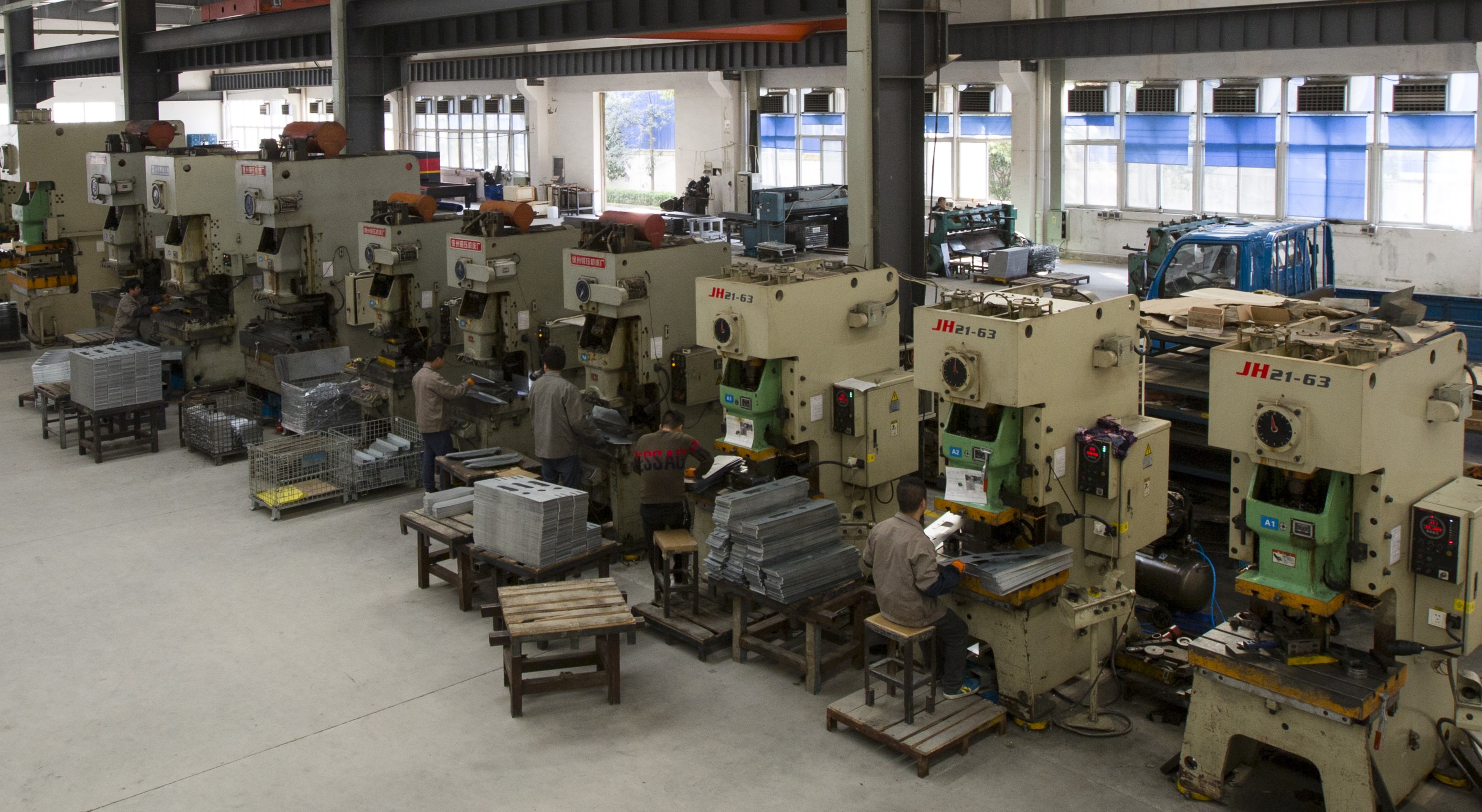
What each process does to the same drawing
The buyer question is not which process is more advanced. It is which process can repeat the drawing at the required volume, tolerance and finish with an acceptable tooling and change risk. The same bracket, panel or enclosure can look suitable for both routes until the cutouts, mounting features, material and finish are examined together.
Stamping transfers the drawing into a die
Stamping converts the drawing into a part-specific die. The die sets the geometry, cutouts, mounting holes and bend sequence, and each press stroke repeats that shape. This is why progressive die stamping parts can be cost-effective for large-volume orders after mold opening. The trade-off is that the die is dedicated: design changes after tooling can require die modification or replacement, and the early design freeze matters more than it does in a flexible fabrication route.
Laser cutting creates the flat blank without a part-specific die
Laser cutting separates the flat blank from sheet without a dedicated die. It is suited to complex profiles, cutouts and mounting features because the cutting path is programmed from CAD. The cut edge is a thermal cut edge, so edge condition should be specified, and on galvanized steel the cut edge may need additional corrosion protection. On stainless steel and aluminum, the buyer should confirm edge finish, burr limits and any downstream coating or anodizing requirement.
CNC bending controls the formed geometry, not the flat cut
CNC bending forms the cut blank into a three-dimensional part. Bend deduction, bend radius, springback, tooling interference and hole-to-bend distance all affect the result. Flat-cut tolerance and formed tolerance are not the same thing. A drawing that controls only the flat pattern can still fail at assembly if the bend sequence, datum scheme and inspection method are not agreed before production.
Material and finish choices change the comparison
Material selection affects both the process route and the inspection plan. Carbon steel, stainless steel, aluminum and galvanized steel behave differently in cutting, forming, stamping and finishing. The buyer does not need a universal material ranking, but the drawing should state the substrate, grade or performance requirement, thickness and finish so the supplier can quote the same scope.
Carbon steel, stainless steel, aluminum and galvanized steel
- Carbon steel is a common route for structural brackets, panels and enclosures where a protective finish is part of the specification. The finish requirement should be stated with the substrate because an unfinished carbon steel part may not meet the same service condition as a coated part.
- Stainless steel is selected when corrosion resistance or appearance matters. In stamping, stainless steel can increase tool wear and springback sensitivity; in laser cutting and bending, edge condition, bend radius and surface protection during handling deserve specific attention.
- Aluminum sheet metal parts are often chosen for weight reduction and forming flexibility. If anodizing is required, the alloy and surface preparation should be confirmed before the process route is fixed, because anodizing is a finish decision that belongs on the drawing, not an assumption after fabrication.
- Galvanized steel stamping parts and laser-cut galvanized parts need a clear edge-protection plan. Cutting and forming can expose base metal at edges or bend lines, so the buyer should state whether the zinc coating is expected to remain intact or whether a post-finish is required.
Powder coating, galvanizing, silkscreen and anodizing
Haitong Metals' supplied FAQ lists powder coating, galvanizing, passivation and other anti-corrosion treatments. Those finishes should be selected against the working environment, then confirmed on the drawing and the sample. If silkscreen or anodizing is required, verify the specific process, appearance criteria and inspection method separately. A finish can improve corrosion resistance or appearance, but it cannot correct an unresolved tolerance or assembly problem.
The tolerance question: ±0.05 mm is a feature requirement, not a process label
A drawing package that specifies 0.5–8.0 mm sheet, ±0.05 mm on selected features and a finish such as powder coating, galvanizing, silkscreen or anodizing is a useful test of process fit. The important question is which feature needs ±0.05 mm. A hole position, a cut edge, a bend angle, a flatness callout and a mounting interface are different tolerances, and they may require different process controls or inspection methods.
Standard laser cutting typically achieves tolerances of ±0.005 inches, while plasma cutting achieves ±0.020 inches, according to the supplied authoritative source. A ±0.05 mm requirement is approximately 0.002 inches, which is tighter than that typical laser-cutting figure. That does not mean the part cannot be made. It means the buyer should ask which feature carries the tolerance, how it will be measured, and whether secondary operations or a different process are required.
ISO 2768-1:1989 defines general tolerances for linear and angular dimensions without individual tolerance indications, and DIN 6930-2 specifies general tolerances for stamped steel parts. The drawing should state which framework applies. Applying both without a clear hierarchy can create conflicting acceptance criteria. For Haitong Metals, the supplied comparison data lists ±0.2 mm tolerance for its custom offering and says a prototype and sample are available before mold development. A ±0.05 mm drawing requirement should therefore be reviewed feature by feature before a process is committed; it should not be treated as a blanket capability claim.
Cost and volume: where stamping starts to make sense
Stamping economics are driven by tooling plus piece price. The mold or die is an upfront investment in repeatability, so the unit cost can fall after the tooling is amortized. Haitong Metals' supplied comparison describes custom parts as cost-effective for large-volume orders after mold opening, with prototype and sample available before mold development. That is a useful boundary: the mold is not a low-volume shortcut, and the buyer should not commit to tooling before the drawing, material and finish are stable.
Laser cutting and CNC bending avoid a part-specific die. The buyer pays for programming, machine time, material and inspection instead of tooling amortization. For prototypes, bridge volumes and designs likely to change, avoiding tooling can outweigh a higher piece price. There is no universal break-even volume. Tooling cost, part complexity, material, press time, annual demand and change frequency all affect the comparison, so the only reliable break-even is a quotation against the actual drawing and forecast.
Mold development risk and the sample gate
Mold development risk is highest when the buyer treats a prototype as a production release. Before a die is cut, the buyer should complete a DFM review, freeze the functional requirements, confirm the datum scheme and agree on the sample approval criteria. The sample should be checked for fit, mounting features, cutouts, flatness, finish and assembly, not merely for the presence of a part.
Haitong Metals states that it supports mold development based on customer drawings and that samples can be provided before mold opening. That sample gate is useful because it separates drawing interpretation from tooling commitment. The buyer should still control change orders after sample approval, because a late change to a hole position, bend line or finish can affect the die, the inspection plan and the production cost.
Qualification requirements also depend on the end market. ISO 9001:2015 is a common baseline quality management system for general industrial buyers. Automotive programs may require IATF 16949:2016, welded assemblies may require welding quality evidence such as ISO 3834-2:2021, and load-bearing structural components for the EU may fall within EN 1090-1. Parts entering electrical and electronic equipment in the EU may also require RoHS and REACH declarations. These are qualification layers, not process recommendations by themselves.
Where Haitong Metals fits the buyer comparison
Haitong Metals is a Ningbo-based custom sheet metal fabrication and metal stamping supplier whose supplied profile covers OEM metal stamping, spot welding, precision assembly, DFM consultation and sample-to-mass-production support. The company reports ISO 9001 certification, a 98% on-time delivery rate, and export experience in Europe and North America. In this comparison, those facts are verification anchors, not proof that one process is always better. The buyer still needs the drawing, volume and finish reviewed against the selected route. Haitong Metals.
Comparison table: matching the route to the buyer requirement
| Decision dimension | Stamping | Laser cutting + CNC bending | Hybrid route |
|---|---|---|---|
| Best-fit volume | Stable design with high volume; progressive die stamping parts can be suitable after tooling amortization. | Prototypes, low-to-mid volumes, bridge orders and designs expected to change. | Use laser cutting and CNC bending for samples or early production, then move to stamping after validation. |
| Tooling and mold risk | Part-specific die required; design freeze and change control are critical. | No part-specific die; programming and fixture planning replace tooling. | Tooling is delayed until the drawing and sample are proven, reducing early mold risk. |
| Cutouts and mounting features | Cutouts and holes can be built into the die, but complex features can raise tooling cost and risk. | Complex profiles, cutouts and mounting features are programmed from CAD without a die. | Laser-cut features can be validated before they are transferred into a die. |
| Tolerance verification | Capability depends on die, press, material and feature; inspection plan should be agreed before tooling. | Flat-cut tolerance and formed tolerance are separate; a ±0.05 mm drawing requirement needs feature-by-feature review. | Same verification discipline; the sample can expose tolerance conflicts before stamping. |
| Material fit | Carbon steel, stainless steel, aluminum and galvanized steel can be considered, but tool wear and springback should be reviewed. | Suitable for mixed materials and design iterations; edge condition and coating protection should be specified. | Material and finish can be validated on a flexible route before a die is committed. |
| Surface finish | Deburring and finish planning should be included before tooling; finish cannot correct tolerance failures. | Thermal cut edges, bend marks and coating damage should be defined in the inspection plan. | Finish can be approved on the sample before production tooling. |
| Buyer evidence | Die design review, sample approval, first-article inspection and change control. | CAD review, flat-pattern check, bend verification, sample inspection and finish approval. | Sample gate first, then tooling release, then production approval. |
Application scenarios: brackets, panels, enclosures and ventilation parts
The supplied scenario material for Haitong Metals covers automation, electronics, new energy, medical machinery, construction, electric appliance and fire protection, with parts used for support, shielding, fixing and housing, often in 24/7 operation. Those applications do not point to one process. A precision bracket with critical mounting holes, a large enclosure panel with many cutouts, and a ventilation component with a visible finish each put the tolerance and finish requirements in different places.
For custom sheet metal brackets, the mounting interface usually drives the process decision. If the bracket has several related holes and a stable forecast, stamping may become attractive after the sample is proven. If the bracket is still being revised or the volume is uncertain, laser cutting and CNC bending keep the change cost lower. For custom sheet metal enclosures and panels, cutouts for connectors, displays, airflow and mounting features can make the laser-cut route more practical at low volume. For parts such as roof vents or ventilation components, the finish and edge protection may deserve as much attention as the cut geometry.
Market context: why process-level comparison matters
Grand View Research estimated the global sheet metal market at USD 181.8 billion in 2024. The same source reported that Asia Pacific held a 65% revenue share in 2023 and that steel held over 81% of product revenue. Global exports under HS 732690 reached USD 48.5 billion in 2025, according to the supplied trade source. These figures describe sheet metal broadly, not custom sheet metal parts specifically, and HS 732690 is a residual heading that covers many iron and steel articles. They are useful as background for sourcing and material availability, not as a substitute for a process quotation.
Future outlook: plan for a route that can change
The practical outlook is not a single winning process. It is a sourcing plan that can move from laser-cut and CNC-bent prototypes to stamped production when volume and design stability justify tooling, while keeping the drawing and inspection plan consistent across both routes. Buyers who separate the sample gate, the tooling gate and the mass-production gate are better positioned to compare quotations without turning a process preference into an assumption.
Frequently asked questions
What surface treatments can you provide?
Haitong Metals' supplied FAQ lists powder coating, galvanizing, passivation and other anti-corrosion treatments. The finish should be selected against the working environment, then confirmed on the drawing and the sample. If silkscreen or anodizing is required, verify the specific process, appearance criteria and inspection method separately.
Can you develop molds according to customer drawings?
Yes. Haitong Metals states that it supports mold development based on customer drawings and can provide samples before mold opening. The buyer should still complete DFM review, sample approval and change control before mass production.
When does stamping become more suitable than laser cutting and CNC bending?
Stamping becomes more suitable when the design is stable, the volume is high enough to amortize tooling, and the part geometry benefits from a dedicated die. Laser cutting and CNC bending remain more suitable for prototypes, low-to-mid volumes and designs likely to change. The break-even volume is quotation-specific because tooling cost, material, press time and annual demand vary by part.
Reference: Haitong Metals company brochure (PDF).
¿Tiene preguntas o necesita más detalles?
Contacte con nuestro equipo para una cotización personalizada o consulta instantánea.
Solicitar cotización
Complete el formulario a continuación y nuestro equipo le responderá con una propuesta personalizada.
Chat directo de WhatsApp
¿Prefiere chatear en tiempo real? Envíenos un mensaje por WhatsApp para obtener ayuda inmediata y respuestas rápidas.
- Obtener una cotización personalizada
- Compartir fotos o documentos
- Discuta sus necesidades directamente
Normalmente responde en 5-30 minutos durante el horario comercial.