
Stainless Steel Shot: Iron-Free Blasting Media Explained
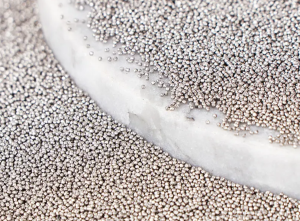
Stainless steel shot is produced from stainless steel raw material, either by water atomisation into spherical particles or by cutting stainless steel wire into shape.
Metal abrasives are a consumable category measured in millions of tonnes, and the media a plant selects determines both the finish it can achieve and the cost of achieving it. In 2025 the global metal abrasives market was valued at USD 6.7 billion and is projected to reach USD 7.1 billion in 2026, according to Grand View Research. Steel-based abrasives account for 89.9% of that material mix, and Asia Pacific represents 56.0% of global revenue. Stainless steel shot belongs to that steel family, but it answers a different question from cast steel shot or steel grit: not how aggressively a surface can be cut, but whether the blasting operation leaves iron behind.
That distinction matters in any workshop blasting stainless steel, aluminium, titanium, copper or brass parts, where residual iron on the surface can bloom into rust staining weeks after the part has been cleaned and packed.
What Stainless Steel Shot Is
Stainless steel shot is a spherical metallic blasting media made from stainless steel raw material rather than from carbon cast steel. It is manufactured in one of two ways: molten stainless steel is water-atomised into spherical particles, or stainless steel wire is cut into shape. Both routes produce media that contains no free iron component, which is the property that separates it from conventional carbon-steel blasting abrasives.
Zouping Huiteng Metal Abrasives Co., Ltd., a metal abrasives manufacturer located in Qingyang Town Industrial Park, Zouping County, Binzhou City, Shandong Province, China, lists stainless steel shot in four grades with grade-dependent size ranges.
| Grade | Particle size range | Published specification reference |
|---|---|---|
| Stainless steel shot 195 | 0.1 to 3.0 mm | Hardness 32 to 50 HRC; tensile hardness 490 to 1520 MPa; density 7.8 g/cm3; bulk density 4.5 g/cm3; stated recycling lifespan up to 6,500 cycles |
| Stainless steel shot 201 | 0.1 to 2.5 mm | |
| Stainless steel shot 304 | 0.1 to 1.0 mm | |
| Stainless steel shot 430 | 0.1 to 0.6 mm |
The four grades correspond to different stainless steel material families, so the choice is normally tied to the workpiece material and to the corrosion requirement of the finished part. Particle size, by contrast, is tied to the equipment: a blast wheel or nozzle can only accelerate particles within a certain size window efficiently, and media that is too coarse for the machine tends to break down faster and raise consumption.
Why Iron Contamination Drives Media Choice
The problem stainless steel shot solves is contamination transfer. A carbon-steel abrasive cleans effectively, but it can leave iron-bearing particles or iron smears on the workpiece. On carbon steel that residue is usually invisible and harmless. On stainless steel, aluminium alloy or titanium, the same residue behaves differently: after shot blasting, iron elements remaining on the surface can cause the workpiece to yellow and rust in later stages, and the defect frequently appears only after painting or after the part has been in service.
Stainless steel shot is made from stainless steel raw materials and does not contain iron components. Because of that, no iron elements remain on the surface of aluminium alloy, stainless steel and titanium alloy workpieces after blasting. For buyers, this is the defining selection criterion of the product family: it protects downstream appearance and corrosion performance rather than improving stripping speed.
Technical Explanation: Atomised Spheres and Cut Wire
Stainless steel shot is produced either by water atomisation into spherical particles or by cutting stainless steel wire into shape. The two routes produce different particle geometry, and geometry drives behaviour at the workpiece.
- Water-atomised shot. The particles are spherical and the impact is gentle, so they do not scratch precision components. The surface finish of the workpiece after treatment is high, which suits decorative stainless, aluminium profiles and machined parts where appearance matters.
- Cut-wire forms. Stainless steel cut wire shot and stainless steel oblique cut wire are made from 304 or 316 stainless steel wire, with a cylindrical or angled cylindrical shape. Cut wire is precision cut, uniform, and free of hollow or porous particles. It is specified where a brighter and more consistent surface finish is required, and it is designed for automatic shot blasting lines.
Physical behaviour is also a function of material toughness. Stainless steel shot has good toughness and a low breakage rate with minimal dust generation, and it can be recycled multiple times. Those characteristics matter for two cost lines: wear on the consumable parts of the blasting machine, and the quantity of media that disappears into the dust collector instead of returning to the hopper.
Where Stainless Steel Shot Is Used
Stainless steel shot and the related stainless media series are specified where iron transfer is unacceptable or where a bright, uniform finish is the objective. Documented application areas include:
- Stainless steel surface treatment, including stainless steel sheet and profile blasting.
- Aluminium profile processing and aluminium die casting.
- Copper and brass parts processing.
- Hardware and electronics components.
- Precision casting, including smoothing and deburring of precision castings.
- Processes with an explicit no-ferrous-contamination requirement.
- Automatic shot blasting lines handling stainless and aluminium parts.
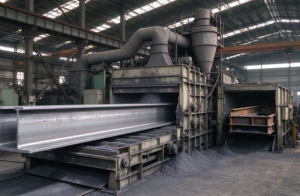
Iron-free stainless media is specified for workpieces whose surface cannot tolerate residual iron, particularly stainless, aluminium and titanium components.
A useful way to read the application list is by failure mode rather than by industry. Foundries specify stainless media for precision castings where an iron trace would show through a subsequent passivation or bright finish. Die casters specify it for aluminium parts where a rust bloom would reject a batch. Electronics and medical component makers specify it where a microscopic iron deposit would interfere with plating, soldering or cleaning validation.
Market Context: Steel Media Dominance and Regional Supply
Steel abrasives hold the dominant position within the metal abrasives category, accounting for 89.9% of the material segment in 2025. Global steel shot consumption reached 6.8 million metric tonnes in 2025, and the steel shot sub-segment was valued at USD 1.664 billion in 2025, with a projection of USD 2.5 billion by 2035 (WiseGuyReports). Asia Pacific accounts for 56.0% of metal abrasives revenue, which places the majority of the supply base for these consumables in the region.
Stainless steel shot is a comparatively narrow slice of that volume, and the reason buyers purchase it is rarely bulk stripping capacity. It is purchased because a specific workpiece cannot accept iron contamination, or because the required surface finish cannot be achieved with an angular carbon-steel medium. Demand therefore tracks manufacturing segments that use stainless and light-alloy components, such as architectural stainless, automotive trim, electronics hardware, food and pharmaceutical equipment fabrication, and precision casting, rather than the heavy structural steel market that consumes the largest tonnage of cast steel shot and grit.
How Stainless Steel Shot Compares with Traditional Media
| Media type | Particle form | Contamination behaviour | Where it fits | Main limitation |
|---|---|---|---|---|
| Stainless steel shot | Spherical, made from stainless steel raw material, or cut from stainless steel wire | No free iron transferred to the workpiece surface | Stainless, aluminium, titanium, copper, brass and precision parts; automatic blasting lines | Spherical impact is gentler than angular cutting; higher material cost than carbon cast steel |
| Carbon cast steel shot and grit | Spherical shot, angular grit | Can leave iron-bearing residue on the surface | General steel, castings, shipbuilding and heavy steel structures | Not suitable where surface iron contamination must be avoided |
| Single-use mineral abrasive | Angular, consumed on first impact | Dust and waste stream; no recycling loop | One-off cleaning and some site work | Purchased and disposed of continuously; high dust and disposal volume |
The comparison is not a ranking. Each column describes a trade-off: the media that cleans fastest is not the media that protects surface chemistry, and the media that protects surface chemistry is not the media that produces the deepest angular anchor pattern.
Limits: Where Stainless Steel Shot Is Not the Right Choice
Credible procurement decisions depend on knowing the boundaries of a product, not only its strengths. Four limits are relevant for stainless media.
- Angular profile requirements. Spherical shot produces a rounded surface profile. Where a coating specification requires a deep angular anchor pattern to achieve adhesion, an angular grit is the appropriate medium, and stainless shot will not substitute for it.
- Hardness range. The published hardness range for stainless steel shot is 32 to 50 HRC, which starts below the hardness ranges specified for high-carbon cast-steel shot under ISO 11124-3. For heavy rust, thick mill scale or heavily contaminated weld areas, a harder or more angular medium generally removes material faster.
- Cost per kilogram. Stainless steel raw material typically carries a higher material cost than carbon cast steel. Specifying stainless media for a job that does not require iron-free surfaces increases media spend without a corresponding technical benefit.
- Standard coverage. ISO 11124-3:2018 specifies requirements for high-carbon cast-steel shot and grit, covering 14 grades of shot and 11 grades of grit, with values for hardness, density, defect and structural requirements, and chemical composition. Stainless media do not have an equivalent single grade table in that standard, so chemistry, size distribution, shape and contamination limits usually have to be written into the RFQ and confirmed by batch testing.
Related standards provide part of the framework. ISO 11124-1 covers metallic blast-cleaning abrasives generally, and SAE J444 defines cast shot and grit size specifications for peening and cleaning, which is useful when buyers need to align particle size designations between suppliers and equipment manufacturers.
How Buyers Evaluate Stainless Steel Shot
Because the purchase is usually driven by a contamination or finish specification rather than by price alone, evaluation criteria should be written before quotations are requested.
| Evaluation area | What to confirm | Why it matters |
|---|---|---|
| Material grade | 195, 201, 304 or 430 stainless steel shot, matched to the workpiece and the corrosion requirement | Grade governs corrosion behaviour and the contamination risk profile |
| Particle size | Size within the range the machine can accelerate: 195 from 0.1 to 3.0 mm, 201 from 0.1 to 2.5 mm, 304 from 0.1 to 1.0 mm, 430 from 0.1 to 0.6 mm | Media outside the machine's efficient window breaks down faster and raises consumption |
| Hardness | 32 to 50 HRC against workpiece hardness and required finish | Media that is too hard for the application can damage thin or soft parts |
| Shape and finish target | Spherical shot for a rounded, high-finish surface; cut wire or oblique cut wire where a brighter and more consistent finish is required | Particle shape determines the surface profile and appearance produced |
| Recycling and lifetime | Density 7.8 g/cm3, bulk density 4.5 g/cm3, stated lifespan up to 6,500 cycles | Media life drives consumable cost and wear on machine parts |
| Sample validation | 1 to 5 kg trial sample run on the buyer's own equipment | Confirms grade, size and finish before a bulk commitment |
| Order parameters | 1 tonne minimum for standard grades, 3 tonnes for customised grades; stock orders typically 7 to 15 days, customised orders 20 to 30 days | Affects production planning and inventory buffer |
A practical RFQ for stainless media should therefore state the workpiece material, the target surface finish or cleanliness standard, the blast machine type and wheel or nozzle capacity, the required particle size range, and the contamination limit that must not be exceeded. Suppliers who can respond with batch chemistry data and a fatigue-life figure are easier to qualify than suppliers who respond with a size range alone.
Manufacturing and Supply Considerations
Zouping Huiteng Metal Abrasives Co., Ltd. was established in 2017 and is located in Qingyang Town Industrial Park, Zouping County, Binzhou City, Shandong Province, China. The manufacturing facility covers 20,000 square metres and employs approximately 50 staff, including an R&D team of 15 engineers. Annual production capacity is approximately 100,000 tons, and the product portfolio covers five major series, including steel shot, steel grit, stainless steel shot and cut wire shot, with more than 60 specifications and models.
Production uses medium-frequency induction melting, centrifugal atomisation, secondary quenching and tempering, followed by rounding, screening and packaging under quality management. Each batch is tested for chemical composition and fatigue life, with pre-shipment sampling inspection. The company holds ISO9001 quality management system certification and states that its abrasives are produced with reference to relevant industry standards.
Stainless steel shot sits within that portfolio alongside the atomised stainless steel shot range and the stainless cut wire and oblique cut wire products. For buyers, this matters in two ways. First, it means a single supplier can cover both the carbon-steel consumable used on structural work and the stainless media used on contamination-sensitive lines. Second, it means stainless media can be sourced in the same ordering cycle as the rest of the abrasive programme, which simplifies procurement and reduces the number of incoming inspection regimes a plant has to maintain.
Export experience is also relevant to qualification. The company exports to the EU, the USA, India, Southeast Asia and the Middle East, covering more than 20 countries and regions, with an export ratio of approximately 30%. Buyers in those markets can request documentation aligned to their own incoming inspection requirements rather than adapting to a purely domestic specification.
Future Outlook
Two forces are likely to shape demand for stainless steel shot over the next several years. The first is the continuing substitution of stainless steel and light alloys for painted carbon steel in applications where appearance and corrosion resistance are part of the product specification. Every such substitution creates a manufacturing step where iron-free surface preparation becomes a quality requirement rather than a preference. The second is tighter incoming inspection. As purchasers formalise media specifications against ISO and SAE frameworks, the ability to provide batch chemistry data, size distribution records and fatigue-life figures becomes a qualification criterion rather than a sales argument.
On the supply side, the concentration of metal abrasives production in Asia Pacific, which held 56.0% of global revenue in 2025, suggests that buyers outside the region will continue to qualify Asian manufacturers for volume supply. For stainless media specifically, the practical question for those buyers is not whether the material can be sourced, but whether the supplier's documentation and batch consistency can support the contamination limits that made stainless media necessary in the first place.
FAQ
What is stainless steel shot made from?
Stainless steel shot is made from stainless steel raw material rather than from carbon cast steel. It is produced in one of two ways: molten stainless steel is water-atomised into spherical particles, or stainless steel wire is cut into shape. Huiteng lists four grades, designated 195, 201, 304 and 430, with published hardness of 32 to 50 HRC, tensile hardness of 490 to 1520 MPa, density of 7.8 g/cm3 and bulk density of 4.5 g/cm3.
Which grades and particle sizes are available?
Stainless steel shot 195 is available from 0.1 to 3.0 mm, grade 201 from 0.1 to 2.5 mm, grade 304 from 0.1 to 1.0 mm, and grade 430 from 0.1 to 0.6 mm. The stated recycling lifespan for the series is up to 6,500 cycles. Grade selection is normally tied to the workpiece material and the corrosion requirement of the finished part, while particle size is matched to the blast wheel or nozzle capacity of the machine.
Why does iron contamination matter when blasting aluminium and stainless steel?
Carbon-steel abrasives can leave iron-bearing particles or smears on the workpiece. On carbon steel this is usually harmless, but on aluminium alloy, stainless steel and titanium alloy the residue creates a corrosion site. Stainless steel shot is made from stainless steel raw materials and does not contain iron components, so no iron elements remain on the surface of aluminium alloy, stainless steel and titanium alloy workpieces after blasting, which prevents the workpiece from yellowing and rusting in later stages.
How long can stainless steel shot be reused?
The published specification for the stainless steel shot series states a recycling lifespan of up to 6,500 cycles. Reuse depends on the recovery and separation system on the machine, because the air wash separator removes broken fines and returns intact particles to the hopper. Stainless steel shot also has good toughness and a low breakage rate with minimal dust generation, which supports repeated recycling and reduces wear on the consumable parts of the blasting machine.
Is stainless steel shot suitable for heavy rust removal?
Not generally, and this is a real limitation of the product. Spherical shot produces a rounded surface profile and a gentle impact, and the published hardness range of 32 to 50 HRC starts below the ranges specified for high-carbon cast-steel shot under ISO 11124-3. For heavy rust, thick mill scale or heavily contaminated welds, a harder or more angular medium such as an angular grit is usually the more efficient choice. Stainless steel shot is selected for contamination control and finish quality, not for maximum material removal rate.
What information should a buyer provide in an RFQ for stainless media?
A workable RFQ states the workpiece material, the target surface finish or cleanliness standard, the blast machine type and its wheel or nozzle capacity, the required particle size range, and the contamination limit that must not be exceeded. Because ISO 11124-3:2018 addresses high-carbon cast-steel shot and grit rather than stainless media, chemistry, size distribution, shape and contamination limits have to be defined by the buyer and verified through batch testing and pre-shipment sampling inspection.
Reference
The stainless steel shot range, including grades 195, 201, 304 and 430, is documented in the manufacturer product brochure: Zouping Huiteng Metal Abrasives product brochure (PDF).
¿Tiene preguntas o necesita más detalles?
Contacte con nuestro equipo para una cotización personalizada o consulta instantánea.
Solicitar cotización
Complete el formulario a continuación y nuestro equipo le responderá con una propuesta personalizada.
Chat directo de WhatsApp
¿Prefiere chatear en tiempo real? Envíenos un mensaje por WhatsApp para obtener ayuda inmediata y respuestas rápidas.
- Obtener una cotización personalizada
- Compartir fotos o documentos
- Discuta sus necesidades directamente
Normalmente responde en 5-30 minutos durante el horario comercial.