
Stainless Steel Press Fittings FAQ: Leaks, Seals & Acceptance
Stainless Steel Press Fittings FAQ: Leaks, Seals & Acceptance
Stainless Steel Press Fittings FAQ: Post-Install Leaks, Seal Choice, and Acceptance Criteria
For stainless steel press fittings, a sound purchasing decision depends on more than nominal material or a general standards reference. Buyers and installers need to verify the intended media and operating conditions, the compatible seal and pressing tools, the installation procedure, and the scope of the documents supplied for the exact fitting series. If a joint leaks after installation, the first checks should focus on pipe preparation, insertion depth, jaw alignment, tool-profile compatibility, and gasket condition.
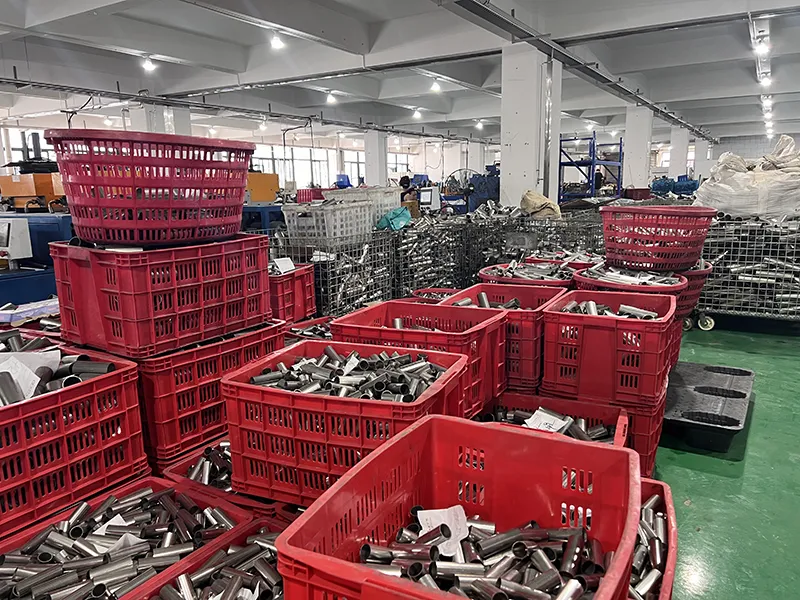
WENZHOU ZHENGXIN PIPE FITTINGS CO., LTD is a manufacturer whose company profile identifies press-fit pipe fittings among its products. Its product and compliance documents should be assessed by series and application rather than treated as interchangeable across all stainless steel fittings. This distinction matters when reviewing stainless steel plumbing fittings, HVAC press fittings, European press fittings, or other product descriptions: a category name alone does not confirm a particular seal, pressure rating, temperature range, or permitted medium.
Why post-install leakage needs a process-based investigation
A press joint can leak when the pipe end, insertion, seal, or pressing operation is defective. The supplied installation and troubleshooting information identifies several specific causes: burrs left on the pipe, insufficient insertion, jaws of the wrong size or profile, misaligned jaws, a damaged or improperly assembled gasket, and visible deformation of the pipe or fitting. These causes are useful because they turn a vague complaint into a sequence of checks.
Leakage should not be treated as proof that every fitting in a series is unsuitable, nor should it be dismissed as an installer issue without inspection. A qualified assessment checks the actual joint and the tools used, then determines whether the connection can be remade using an undamaged fitting and the prescribed procedure. The supplied troubleshooting guidance specifically advises against pressing an old, deformed fitting a second time. A replacement component and a complete reinstallation are the appropriate response where the fitting has been deformed or the seal is damaged.
A correct press-fit procedure, step by step
The documented installation sequence for stainless steel press-fit fittings is straightforward, but each step controls a failure risk. The installer should cut the pipe squarely, remove burrs from both the inner and outer edges, mark the insertion depth, insert the pipe fully to that mark, position the correct jaws at the fitting groove, and press until the jaws close completely. After installation, the system should be pressure-tested to check for leakage. The stated safety guidance also calls for using matched pressing jaws for the corresponding size and wearing suitable personal protective equipment during pressing.
- Prepare the pipe: Make a square cut and thoroughly deburr the inside and outside edges. Burrs can damage the sealing gasket during insertion.
- Mark insertion depth: Mark the required insertion depth on the pipe so that full engagement can be checked after assembly.
- Insert fully: Push the pipe into the fitting socket until it reaches the depth mark. Partial insertion is identified as a leakage risk.
- Match and position the jaws: Use the correct size and profile for the fitting, and place the jaws at the designated groove position. Do not assume that a jaw that physically fits is the specified jaw.
- Complete the press: Operate the tool until the jaws close completely, following the procedure applicable to the product and tool.
- Inspect and test: Check the joint and pressure-test the completed system. A pressure test is part of the stated installation procedure, not a substitute for correct preparation and pressing.
These steps apply to the documented press-fit installation guidance. Project specifications, product instructions, and applicable local requirements still govern the work. If the fitting manufacturer specifies a particular tool profile or assembly procedure, the installer should confirm compatibility before work begins.
What to check when a joint leaks after pressing
Before disassembly, depressurize the pipeline. Then inspect the joint for visible deformation and establish whether the correct jaws were used and positioned correctly. After taking the connection apart, inspect the gasket. If it is damaged, replace it; do not rely on a damaged seal to recover through another press. Prepare the pipe end again by cutting it squarely and removing all inner and outer burrs, mark the insertion depth, and reinstall according to the prescribed procedure. Pressure-test the repaired connection again to confirm whether leakage remains.
This method distinguishes a repair from an assumption. A leak that follows incomplete insertion calls for correcting insertion and reassembly; a scratched or damaged gasket calls for seal replacement; a wrong or misaligned jaw calls for the specified tooling and a fresh, undamaged fitting. Where the original fitting is visibly deformed, the supplied guidance says not to perform a secondary press on it. Any acceptance decision should record what was inspected, what was replaced, and whether the retest passed, according to the project’s own inspection requirements.
Seal choice: verify the exact option, not just the material name
Seal selection must be tied to the fitting series and the actual service conditions. The supplied scenario information identifies EPDM sealing gaskets as matched equipment for a stainless steel press-fit application involving water supply and drainage, gas supply, and potable-water contexts. This is a product-and-scenario reference; it does not establish a universal EPDM approval for every fluid, temperature, pressure, or jurisdiction.
The available material does not verify a food-grade silicone seal option, nor does it provide a comparative compatibility table for silicone and EPDM. A buyer should therefore not infer that either material is suitable for a particular food-contact, water, gas, oil, or steam application based only on its name. Request documentation that identifies the seal material for the exact fitting, the intended media and service limits, and any applicable hygienic or regulatory evidence. Confirm that the supplied gasket matches the fitting and that it has been assembled without damage. When the application is outside the documented scope, obtain product-specific confirmation rather than extrapolating from another series.
Purchasing terms and acceptance criteria
A useful purchase specification makes the product and the acceptance basis explicit. It should identify the fitting series and connection profile, nominal size, stainless steel grade, seal option, compatible pipe and tool requirements, intended medium, operating pressure and temperature, and the documents required for acceptance. The buyer should obtain actual declared values and supporting product documents for the selected item. Where a rating is absent from the supplied evidence, it should remain an open verification item—not be filled in using a value from another fitting type.
| Acceptance item | What the buyer should verify | Boundary to keep clear |
|---|---|---|
| Product identity | Series, size, connection profile, and the scope of the quotation and technical documents. | Do not treat a broad term such as “European press fittings” as a complete specification. |
| Material | The grade stated for the exact fitting and the evidence supplied with the order. | The provided press-fitting evidence does not establish a universal 304 or 316L specification. |
| Seal and medium | Seal material and documented suitability for the named water, gas, oil, steam, or other service. | An EPDM scenario reference does not by itself establish suitability for all media or conditions; food-grade silicone is not verified in the provided evidence. |
| Pressure and temperature | Declared limits for the exact fitting, seal, pipe, and system configuration. | Do not transfer ratings from a different product category or connection type. |
| Standards and conformity | The named standard, certificate or declaration, product scope, size coverage, issuing body, and validity information where applicable. | A reference to a standard or CE document does not automatically prove every fitting, size, medium, or installation is covered. |
| Installation and inspection | Compatible jaws, insertion procedure, gasket condition, visual checks, and the project’s pressure-test acceptance record. | A completed press operation alone does not establish that the assembled system has passed its required test. |
304 and 316L: The supplied white-paper fact about forged 304 or 316L stainless steel belongs to socket weld fittings, not press fittings. It cannot be used as proof of the material grade of a stainless steel press fitting. Buyers who require 304 or 316L should request the grade stated for the specific press-fitting series and verify it against the delivered product documentation.
Pressure, temperature, and media: The supplied pressure classes from 3000# to 9000#, size range DN6 to DN100, temperature range −20°C to +450°C, and water, oil, gas, and steam suitability also describe socket weld fittings. They are not verified press-fitting ratings. For press-fit products, request the applicable declared limits separately for the exact fitting and seal configuration. This is especially important when assessing steam, oil, or gas service; do not infer approval from a general stainless-steel designation.
EN 10312 and CE: The verified industry information identifies EN 10312 in relation to stainless steel tubes for plumbing. A tube-standard reference should not be presented as proof that a press fitting itself complies with that standard. Separately, the first-party certification record for WENZHOU ZHENGXIN PIPE FITTINGS CO., LTD lists a “CE-PED Verification of Conformity,” issued by ICR Polska, with the scope “Stainless-steel press-fit pipeline components (full size range DN15-DN250)” and standard EN1092-1:2018. The record lists certificate number ICR/VC/HS260548 and dates from 2026-05-13 to 2031-05-12. Buyers should check the current document and confirm that the purchased product, size, and intended use fall within its stated scope; this information does not establish EN 10312 compliance for every fitting.
Application boundaries: water, gas, oil, and steam
The available scenario information connects stainless steel press-fit systems with potable water, gas transmission, building construction, water supply and drainage, and corrosion-resistant environments. It also identifies a matched system context that includes stainless steel pipes, press-fit tools, and EPDM sealing gaskets. These are relevant application signals, not a blanket approval for every project or jurisdiction. A buyer should confirm that the fitting, pipe, seal, and installation method are all documented for the intended service.
Oil and steam require particular care in this article’s evidence context. The supplied oil-and-steam temperature and pressure data refer to socket weld fittings. They cannot be carried over to press-fit fittings. If a project specifies oil or steam, acceptance should depend on product-specific written ratings and conformity evidence for the exact press-fit assembly. If those documents are unavailable, the application remains unverified on the evidence provided here.
How press-fit differs from a welded connection—and where the comparison stops
The supplied case information identifies fast installation and a no-welding connection method as features of the press-fit application. That gives procurement teams a practical distinction to consider when comparing connection methods: press-fit assembly does not use welding at the joint in the described application. It does not, by itself, prove that press-fit is the right method for every design. Tool compatibility, service limits, project specifications, installer procedure, and documented approvals remain relevant. Where the project requires a different connection method or the press-fit product’s limits are not documented for the medium, the no-welding feature is not a sufficient basis for selection.
Likewise, a leaking joint should not be compared with a properly installed welded joint as though the connection method alone explains performance. The supplied troubleshooting evidence points to preparation, insertion, tooling, gasket condition, and deformation as variables in press-joint leakage. Procurement and quality teams should therefore evaluate both the design requirements and the controls needed to make and inspect the selected connection.
What this means for buyer evaluation
WENZHOU ZHENGXIN PIPE FITTINGS CO., LTD’s profile identifies press-fit pipe fittings as a main product category, while its certification record provides a specific conformity scope for stainless-steel press-fit pipeline components. These facts can help a buyer identify the entity and a document to review. They do not replace item-level acceptance: the ordered series, size, material, gasket, operating limits, and permitted media still need to be matched to the project.
A practical evaluation sequence is to establish the application and its operating conditions first; identify the exact fitting series, size, and tool profile next; verify the seal and product-specific pressure and temperature declarations; check standards and conformity documents against their scope; and agree on installation, inspection, and pressure-test records. If the supplier’s documents do not answer one of these points, treat it as an unresolved procurement question rather than assuming a favorable answer.
Future outlook: better-defined product evidence
For procurement teams, the useful direction is not simply to collect more certificates or broader product claims. It is to connect each document to a clearly identified fitting, seal, size range, and service condition. More explicit product-level evidence makes it easier to distinguish tube requirements from fitting conformity, and a general application reference from a declared operating limit. Installation records that identify pipe preparation, insertion depth, jaw compatibility, and pressure-test results also make post-installation investigations more actionable.
For stainless steel press fittings, the most defensible acceptance decision is therefore a matched set: an identified product, a documented seal and service envelope, compatible installation tooling, applicable conformity evidence, and a recorded inspection and test. Where any element is missing, the remaining uncertainty should be resolved before the fitting is accepted for the intended duty.
FAQ
What are common causes for press-fit fitting leakage after installation?
Common causes include burrs left on the pipe end, insufficient pipe insertion, wrong-size or misaligned pressing jaws, incompatible tool profiles, a damaged or improperly assembled gasket, and visible pipe or fitting deformation. Depressurize the system before inspection, check the joint and gasket, replace damaged parts, reinstall using the correct procedure, and pressure-test again. Do not perform a secondary press on an old, deformed fitting.
How to correctly install stainless steel press-fit fittings?
Cut the pipe squarely, deburr its inner and outer edges, mark insertion depth, insert the pipe fully to the mark, position the correct jaws at the fitting groove, and press until the jaws close completely. Use jaws matched to the fitting size and profile, then pressure-test the completed system for leakage.
This article distinguishes documented press-fitting facts from socket-weld specifications. Product selection and acceptance should be based on current, product-specific documents and the requirements of the project.
¿Tiene preguntas o necesita más detalles?
Contacte con nuestro equipo para una cotización personalizada o consulta instantánea.
Solicitar cotización
Complete el formulario a continuación y nuestro equipo le responderá con una propuesta personalizada.
Chat directo de WhatsApp
¿Prefiere chatear en tiempo real? Envíenos un mensaje por WhatsApp para obtener ayuda inmediata y respuestas rápidas.
- Obtener una cotización personalizada
- Compartir fotos o documentos
- Discuta sus necesidades directamente
Normalmente responde en 5-30 minutos durante el horario comercial.