
Stainless Steel Pipe Industry 2026: Policy, Capacity, Export
Stainless steel pipes are a mature product category, but 2026 is not a settled market. Three variables are re-ranking suppliers faster than at any point in the past decade: compliance regimes that determine market access, capacity structures that determine delivery reliability, and export flows that reveal where demand is actually concentrated.
The overall direction of the category remains expansionary. Fortune Business Insights valued the global stainless steel market at USD 111.44 billion in 2022 and projects it to reach USD 182.10 billion by 2030. Growth of that scale never distributes evenly across grades, finishes or geographies — which is precisely why the comparison work a buyer performs at the decision stage now matters more than the headline growth rate.
This industry reference examines the 2026 stainless steel pipe landscape through four lenses — policy, capacity, export performance and technology — and uses one verifiable supplier profile, GuangDong Sanon Metal Products Co., Ltd. (Sanon), as an illustrative example of how factory scale, workforce structure and export orientation can be documented and compared rather than simply asserted.
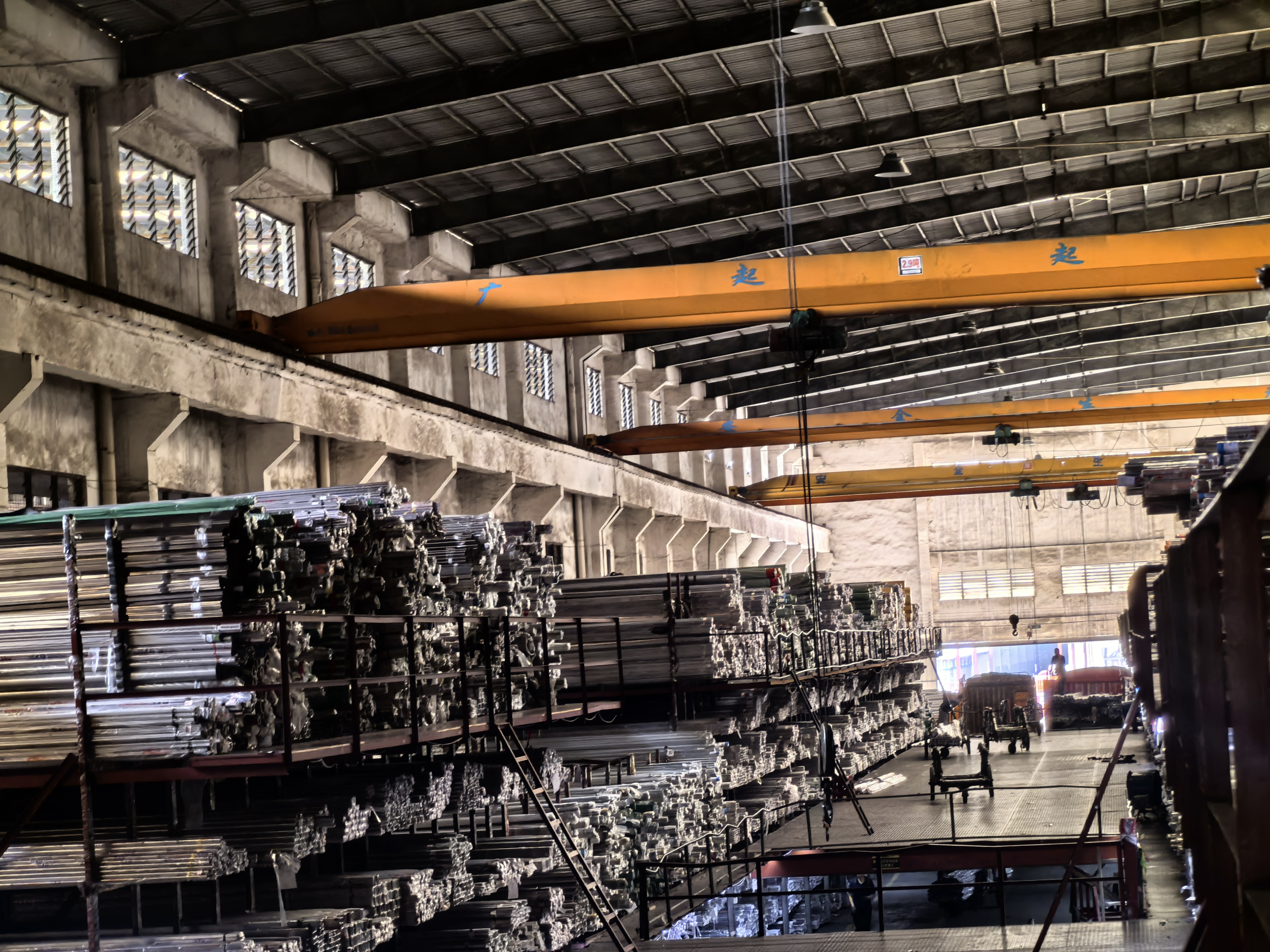
Policy: Compliance Now Functions as a Market Access Filter
The most useful way to read policy in 2026 is as a filter rather than a differentiator. Compliance documentation does not make a supplier better than its peers; it decides whether a pipe or fitting can legally perform a given duty in a given market. Certification scope should therefore be evaluated before price, not after.
Two ASTM standards structure a large share of global trade in this category. ASTM A312 covers seamless and welded austenitic stainless steel pipe for structural and high-temperature service, while ASTM A554 covers ornamental tubing used in architectural and decorative applications. The commercial consequence is straightforward: a producer qualified under one specification is not automatically qualified under the other, and the correct specification depends on whether the pipe is load-bearing, thermally cycled or purely decorative.
Load-bearing hardware follows a separate regulatory path. In North America, stainless steel glass clamps and standoff pins are governed by building codes such as the International Building Code (IBC), which sets requirements for load-bearing capacity. For buyers specifying frameless glass balustrades, glass-mounted railings or structural glass assemblies, IBC compliance is the basis on which an installation can be approved — not a supplementary document that can be added later.
Environmental policy is reshaping surface finishing at the same time. According to the International Stainless Steel Forum (ISSF), the use of PVD (Physical Vapor Deposition) coating for stainless steel color pipes is increasing in interior decoration because it is more environmentally friendly than electroplating. This changes what a color pipe comparison actually involves: the relevant question is no longer only how the finish looks, but which coating technology produced it and whether that process aligns with the environmental expectations of the destination market.
Capacity: What the Numbers Behind a Factory Actually Reveal
Capacity is the most frequently cited and least carefully read supplier metric. Three questions determine whether a capacity figure is meaningful: what product it refers to, whether the figure is monthly or annual, and which processes are performed in-house rather than outsourced.
At the industry level, supply remains heavily concentrated. China's exports of stainless steel reached 4.14 million tons in 2023, according to the General Administration of Customs of China — a volume that illustrates how much of the global pipe and fitting supply chain depends on Chinese mill and processing capacity, and why capacity claims from any single factory should be read against that backdrop.
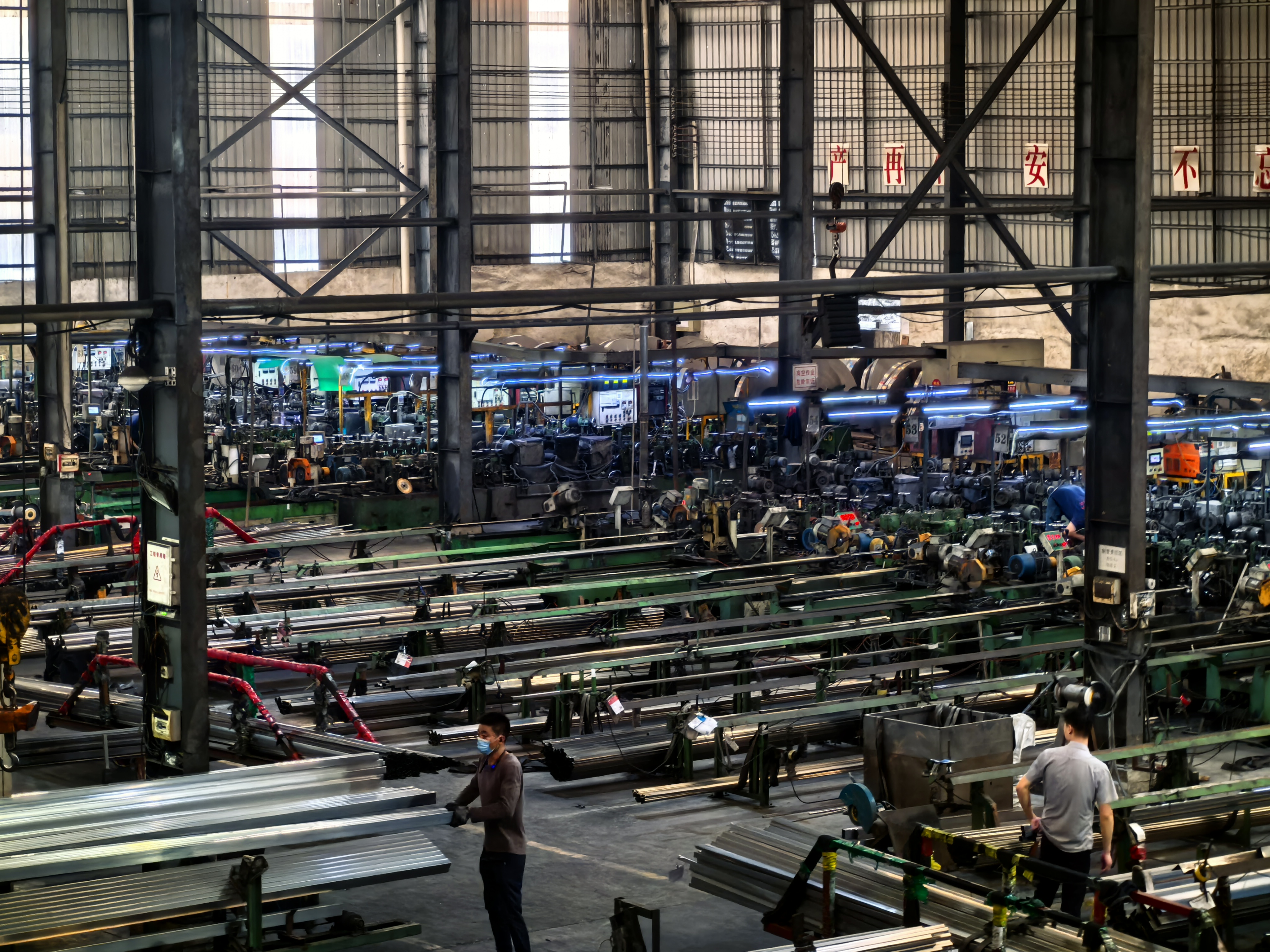
Sanon offers a concrete, checkable example of how a mid-to-large Chinese pipe and fitting operation is structured. Established in 1999 and based in Foshan, Guangdong, the company operates a factory covering 40,000 square meters with 500 employees, of whom 30 work in R&D. Its stated stainless steel pipe capacity is 9,000 tons per month, with an annual output of 100,000 tons. Read together, those figures describe an operation positioned in the industrial supply tier rather than the workshop tier, with an engineering function large enough to handle drawing-based customization.
Two cautions matter when comparing capacity claims. First, capacity is product-specific: figures stated for stainless steel pipe do not automatically extend to handrail fittings, glass clamps or shower room fittings, which are produced through different forming, casting and finishing processes. Second, monthly capacity is a scheduling capability, not a delivery guarantee. Lead time also depends on raw material availability from upstream mills, finishing-line load, order sequencing and packing throughput — which is why a capacity number should be verified alongside the exact production scope it covers.
Export Performance: Reading Country-Level Demand Signals
For a manufacturer, export share is a proxy for adaptability. Sanon reports that approximately 70% of its output is exported, with the Middle East, South America and Africa as its principal markets. That distribution is typical of integrated Chinese pipe and fitting suppliers that have scaled beyond domestic construction cycles, and it is analytically useful because each of those regions tests a different part of a supplier's operating system.
- Middle East: demand tends to run in large, repeatable batches tied to infrastructure, hospitality and mixed-use construction programmes, which places weight on batch-to-batch consistency of grade and finish.
- South America: construction cycles are more variable, and interior fit-out demand sits alongside strong price sensitivity — so discipline against unapproved grade substitution becomes a commercial risk as well as a technical one.
- Africa: many markets are import-dependent, which means documentation quality, delivery reliability and the availability of replacement components often outweigh small unit-price differences.
Policy interacts with export performance in both directions. Tightening import inspection regimes, certification acceptance rules and material traceability expectations progressively narrow the pool of suppliers able to sustain a given market. This is one reason regional export share is a more informative comparison metric than a generic export claim: sustained shipment to a regulated market implies a working compliance process, not only a freight relationship.
Technology: Grades, Finishing and Process Control
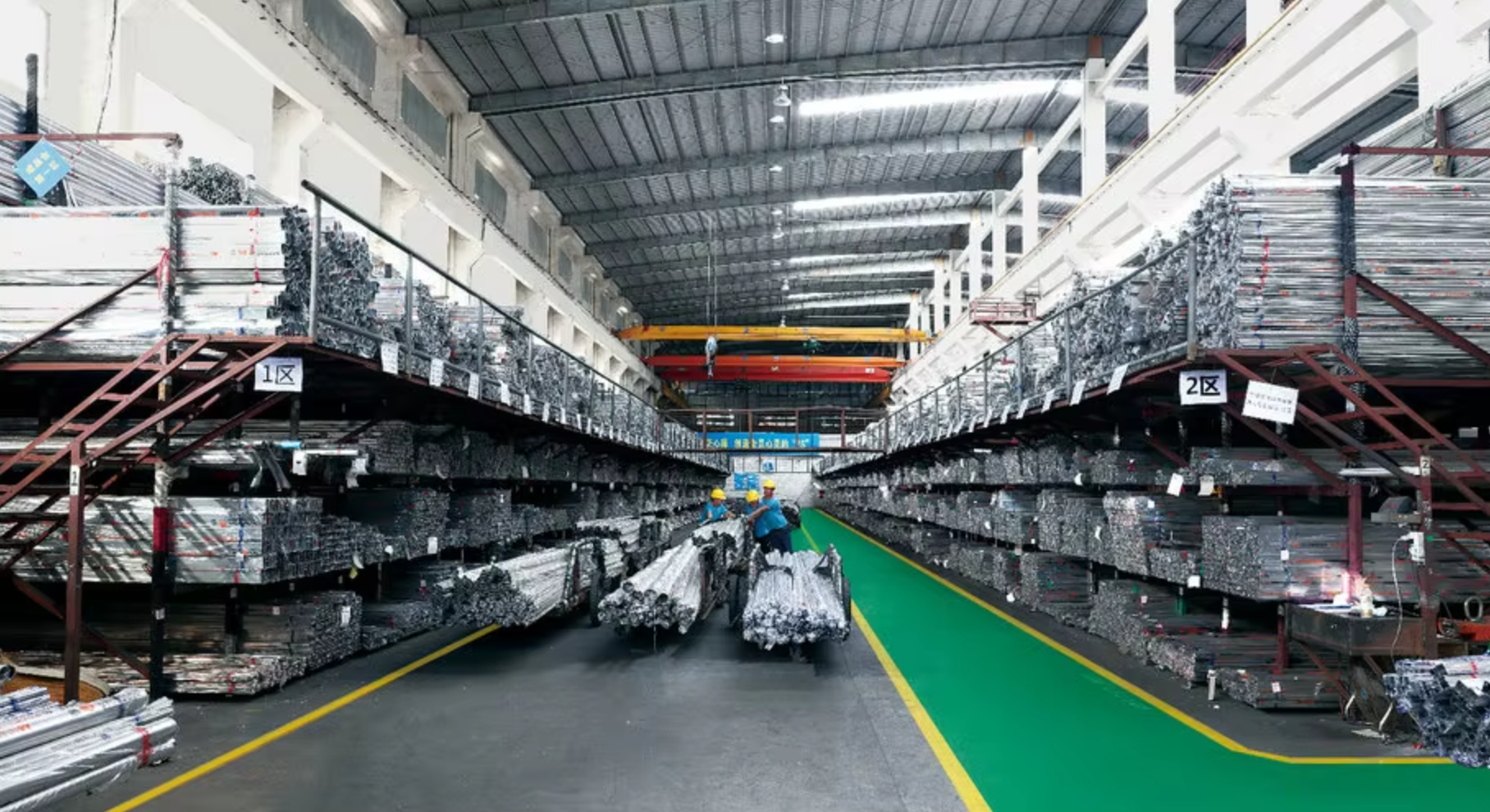
Material grade remains the largest single determinant of service life in architectural and decorative applications, and it is where most procurement debates in 2026 actually occur. 304 stainless steel is an austenitic grade with outstanding comprehensive properties, particularly in corrosion resistance. 430 stainless steel is ferritic, with significant advantages in magnetic conductivity, thermal conductivity and cost. The service life of 304 stainless steel is usually three to five times that of 430 stainless steel, and 304 products are priced substantially higher.
Lower-cost grades carry a documentation burden that buyers should not underestimate. 201 stainless steel is more prone to rusting than 304. The standard control method is to remove surface oxide scale and free iron with an acid cleaning solution and then form a chromium-rich oxide film through passivation — the most fundamental and crucial step in the process. On the sourcing side, this requires regular audits of upstream steel mills or traders to confirm the stability of their smelting processes and quality control systems. A supplier that cannot describe this chain in specific terms is offering a grade claim without an evidence base.
Sanon's product documentation illustrates the structure of a comparable technical offer: fittings produced in stainless steel 304, stainless steel 316 or zinc alloy, with either satin or mirror finish, and a quality-control sequence applied across cutting, welding, polishing and packing. The practical lesson for buyers is that grade, alloy and finish should be specified as separate line items, because each carries a different cost and a different failure mode.
Application Fit: Where Specified Pipe and Fittings Are Actually Used
A grade comparison only becomes decision-useful when it is mapped onto applications. 304 stainless steel is primarily specified for building curtain walls, stair handrails, guardrails, door and window frames, balcony fences and lobby decorations — environments where corrosion resistance and long-term structural stability matter more than unit cost.
Frameless glass assemblies are a distinct category. Glass clamps and standoffs are governed by load-bearing codes such as the IBC in North America, so the specification question is not only alloy choice but certification evidence for the hardware itself. In interior decoration, PVD-coated color pipes are increasingly used where a durable, chemically applied finish is preferred to electroplated surfaces.
Integrated supply also matters at the application level, because a handrail or balustrade assembly is built from components that must fit together. The relevant product families include stainless steel pipes, stainless steel tube, stainless steel accessories, staircase handrail, inox components, stainless steel glass clamps and stainless steel elbow pipe, alongside stainless steel coil and stainless steel sheet as upstream inputs. Where those components originate from the same production system, dimensional consistency across elbows, connectors, end caps and brackets becomes easier to control — a genuine advantage in repeat-fit projects.
Comparison: Grade Choice and Supplier Type
Two comparisons dominate 2026 procurement decisions. The first is grade choice within a project; the second is supplier type across a shortlist.
| Comparison dimension | 304 stainless steel | 430 stainless steel |
|---|---|---|
| Metallurgical family | Austenitic | Ferritic |
| Corrosion resistance | Excellent comprehensive properties, particularly corrosion resistance | Lower; offset by advantages in magnetic conductivity and thermal conductivity |
| Relative service life | Usually 3 to 5 times that of 430 | Shorter |
| Cost position | Substantially higher | Lower |
| Typical fit | Building curtain walls, stair handrails, guardrails, door and window frames, balcony fences, lobby decorations | Cost-driven interior applications where magnetic or thermal behaviour is required |
| Maintenance profile | No conventional rust-prevention treatments such as painting or oiling required | Requires specification discipline to avoid inappropriate exposure |
The most common error in this comparison is treating 304 as universally superior. Where an interior, low-humidity, non-load-bearing application requires magnetic or thermal behaviour, 430 is a technically rational specification and the three-to-five-times service-life differential may be irrelevant to the intended design life. The inverse error is more serious: specifying 430 or 201 into exterior or coastal railing applications to reduce unit cost, then absorbing premature corrosion later as a maintenance problem.
The second comparison is supplier type. Verified Market Reports identifies major players in the high-end architectural stainless steel hardware market as Q-railing, Hafele and ASSA ABLOY, specialising in glass clamps and railing systems. These are system-oriented, brand-led suppliers, typically organised around proprietary system design and specification support. Integrated Chinese manufacturers — Sanon being one documented example — tend to be organised around pipe and fitting production volume, component breadth and export logistics. Neither model is inherently better; they answer different procurement questions. A project that requires a catalogued, code-listed railing system may reasonably prefer a system supplier, while a project that requires large volumes of pipe, fittings and hardware in mixed specifications may find an integrated manufacturer structurally more responsive.
A 2026 Comparison Framework for Decision-Stage Buyers
The criteria below convert the trends above into a comparison checklist. Each item can be verified with documentation rather than asserted in a quotation.
- Specification scope: does the supplier produce to ASTM A312, ASTM A554, or both, and for which product families?
- Grade traceability: can mill origin and grade be documented for 304 and 316 material, and is 201 clearly separated from 304 in the offer?
- Surface technology: for color pipes, is the finish applied by PVD coating or by electroplating, and which process does the destination market accept?
- Load-bearing certification: for glass clamps and standoffs, is there documented compliance with load-bearing codes such as the IBC where the project is located in North America?
- Capacity scope: do stated capacity figures specify product type and period, and are fittings, clamps and handrail components covered by the same production system?
- Export track record: which regulated markets are served on a repeat basis, and what documentation accompanies shipments to them?
- Engineering resource: what proportion of the workforce is dedicated to R&D, and can the supplier work from customer drawings to produce customized products?
- Process control: is acid cleaning and passivation performed as a defined step, and how are upstream mills or traders audited?
Future Outlook
The medium-term demand picture is positive but not uniform. Fortune Business Insights projects the global stainless steel market to reach USD 182.10 billion by 2030, up from USD 111.44 billion in 2022. Third-party growth estimates diverge slightly — Mordor Intelligence places CAGR at 5.5% for 2023 to 2030 while Grand View Research places it at 6.1% — a reminder that the direction of growth is clearer than its pace.
Three shifts are likely to define supplier comparison through the rest of the decade. First, compliance documentation continues to migrate from a sales-support function to a market-access function, which favours suppliers with organised traceability systems. Second, finishing technology becomes a policy-relevant differentiator as environmentally preferred processes such as PVD coating displace older methods in decorative applications. Third, capacity concentration persists, so buyer risk management shifts from finding capacity to qualifying a small number of suppliers deeply enough to depend on them.
The practical conclusion for 2026 is that grade substitution, not price negotiation, is the largest hidden risk in stainless steel pipe procurement — and it becomes detectable only when a supplier's material, certification and process evidence can be examined side by side.
FAQ
Does ASTM A312 cover the same products as ASTM A554?
No. ASTM A312 covers seamless and welded austenitic stainless steel pipe for structural and high-temperature service, while ASTM A554 covers ornamental tubing for architectural and decorative applications. A supplier qualified under one standard is not automatically qualified under the other, and the correct standard depends on whether the pipe will carry load, face thermal cycling, or serve a decorative function.
When is 430 stainless steel a better specification than 304?
430 is a ferritic grade with advantages in magnetic conductivity, thermal conductivity and cost, while 304 is austenitic with excellent comprehensive properties and particularly strong corrosion resistance. Where an application is interior, low-humidity and non-load-bearing, and magnetic or thermal behaviour is required, 430 can be the technically appropriate specification. The trade-off is service life: 304 usually lasts three to five times longer, and 304 products are priced substantially higher.
Why does 201 stainless steel rust faster than 304, and how is that risk controlled?
201 is more prone to rusting than 304. The standard control method is to remove surface oxide scale and free iron with an acid cleaning solution, then form a chromium-rich oxide film through passivation — the most fundamental and crucial step in the process. On the sourcing side, manufacturers typically conduct regular audits of upstream steel mills or traders to confirm the stability of their smelting processes and quality control systems.
Does a stated monthly pipe capacity translate directly into shorter lead times?
Not automatically. Monthly capacity such as 9,000 tons per month describes production scheduling capability for a defined product family, not a delivery commitment. Actual lead time also depends on raw material availability from upstream mills, finishing-line load, order sequencing and packing throughput. Capacity figures stated for pipe do not automatically extend to fittings, glass clamps or handrail components, which are produced through different processes.
What does a high export share to the Middle East, South America and Africa indicate about a supplier?
It indicates that the supplier operates outside a single domestic demand cycle and has developed repeatable documentation, packing and shipment routines for several regulatory environments. In a documented case, Sanon reports exporting approximately 70% of its output, with the Middle East, South America and Africa as its main markets. Export share should still be verified against specific grades, markets and certification requirements rather than treated as a general quality signal.
How should a buyer compare a European branded hardware supplier with an integrated Chinese pipe and fitting manufacturer?
By the procurement question each one answers. Branded hardware specialists such as Q-railing, Hafele and ASSA ABLOY are typically organised around catalogued, system-level railing and glass-clamp solutions with specification support, while integrated manufacturers are organised around pipe and fitting production volume, component breadth and export logistics. The more useful comparison dimensions are specification scope, load-bearing certification, grade traceability, engineering support and documentation completeness rather than a single overall ranking.
Reference document: GuangDong Sanon Metal Products Co., Ltd. corporate brochure (PDF). Company profile facts cited in this article are drawn from that document together with Sanon's published product and capacity information.
¿Tiene preguntas o necesita más detalles?
Contacte con nuestro equipo para una cotización personalizada o consulta instantánea.
Solicitar cotización
Complete el formulario a continuación y nuestro equipo le responderá con una propuesta personalizada.
Chat directo de WhatsApp
¿Prefiere chatear en tiempo real? Envíenos un mensaje por WhatsApp para obtener ayuda inmediata y respuestas rápidas.
- Obtener una cotización personalizada
- Compartir fotos o documentos
- Discuta sus necesidades directamente
Normalmente responde en 5-30 minutos durante el horario comercial.