
Stability Check: A 2011 Factory and 70% Export Rate as Tile Supply Risk Signals
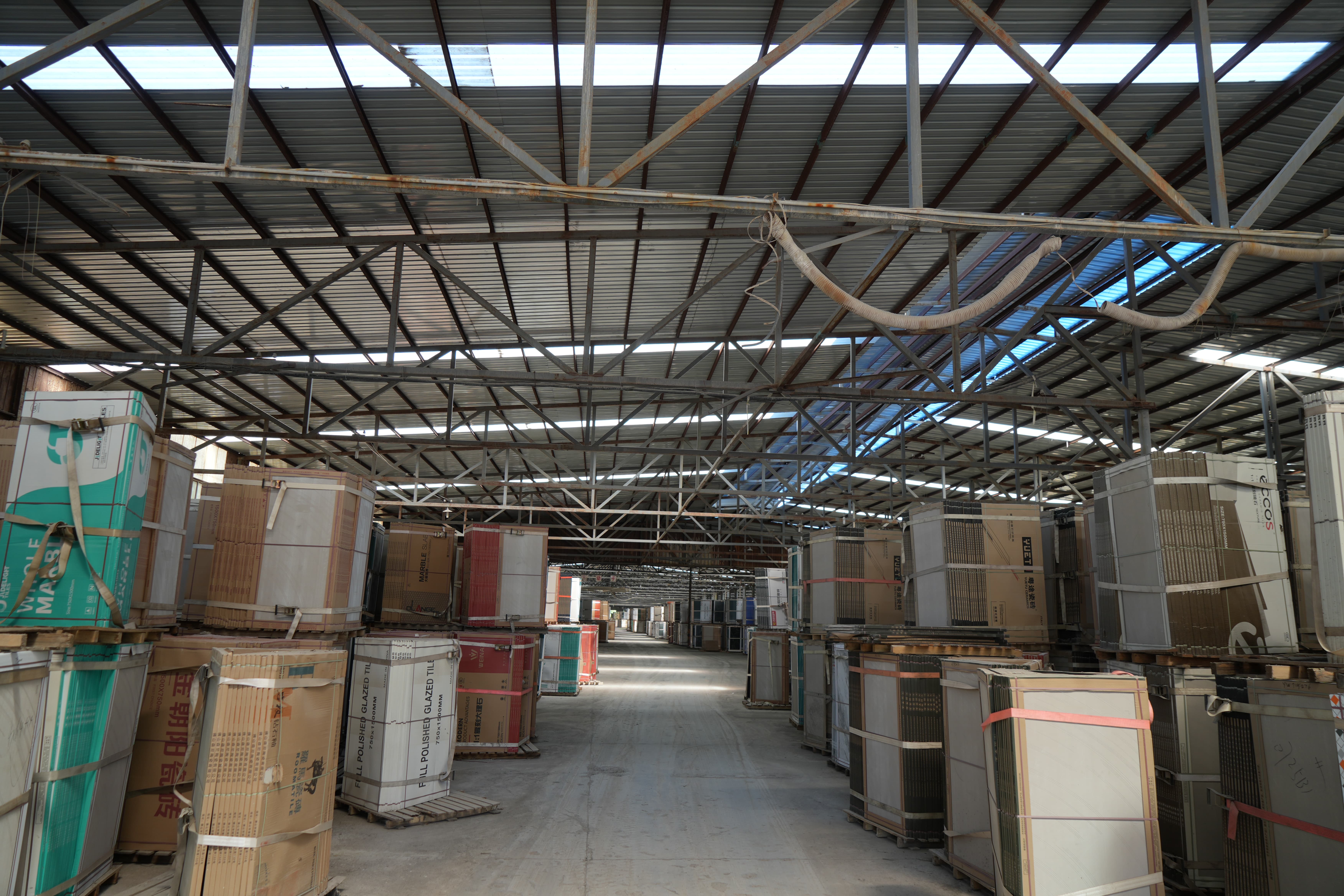
Tile warehouse: storage and export staging for commercial porcelain tile orders. Image: All-King Ceramics.
Commercial tile supply risk is rarely visible in a price list. It appears later, when a shopping mall floor is half-installed, a hotel opening date is fixed, and the next production batch does not match the first. For phased commercial builds, the supplier decision is therefore not only a product decision. It is a continuity decision.
ZIBO ALL-KING CERAMICS CO., LTD (brand: All-King Ceramics) is a Chinese porcelain tile manufacturer and direct exporter based in Zibo, Shandong. The company reports a 2011 founding year, a 60,000 m² manufacturing facility, 320 employees, 25 engineers, a 12–16 million m² annual output, and a 70% export ratio. Those facts do not prove perfect delivery. They do provide a starting point for a stability check.
The procurement problem: phased projects need repeatability, not one good shipment
A commercial tile package can involve thousands of square metres across several release dates. A mall may open in phases. A hotel may fit out floors in sequence. A transit project may require close-out packages long after the first order. The buyer needs the same format, shade, caliber, surface, and packing standard to remain available.
That is why supplier stability is a commercial tile solutions question, not a background check. The relevant risks are batch drift, reorder delay, packaging failure, and unclear responsibility when a later delivery does not match the approved sample. These risks are easier to manage when the supplier has an owned manufacturing base, a documented export routine, and a product matrix that can be repeated.
What the 2011 factory base and 70% export ratio actually signal
Factory age is a screening fact. A company founded in 2011 has operated through multiple ceramic market cycles by 2026. That does not guarantee financial strength, but it gives buyers a longer operating record to check. In All-King's case, the record is tied to a named production base in Zibo, Shandong, rather than an unspecified trading address.
The 70% export ratio is a second screening fact. It means most of the company's declared business is outside China. For a buyer in Australia, Russia, South Korea, Southeast Asia, Central Asia, the Middle East, or Latin America, that matters because export-heavy suppliers usually meet more destination-specific documentation, packing, and shipping requirements. It is not a quality certificate. It is evidence that export is not an occasional side activity.
Company volume is the third signal. A 60,000 m² facility, 320 employees, 25 engineers, and 12–16 million m² annual output describe a manufacturing profile that can support repeat commercial orders. The buyer should still ask how much of that capacity is committed in the delivery window. Capacity on paper and capacity available in a given month are different facts.
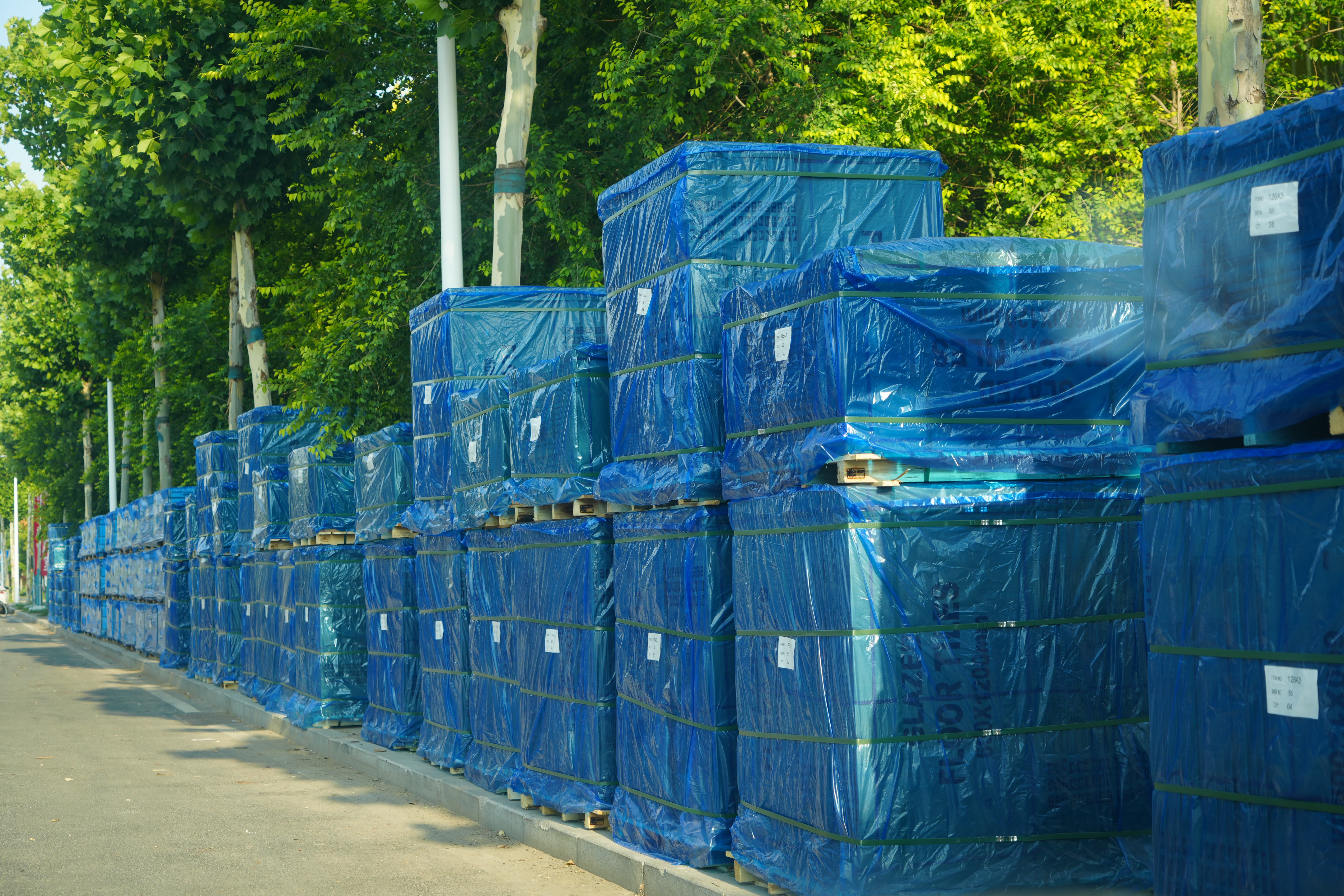
Tile pallet packaging: export staging supports batch separation and delivery planning. Image: All-King Ceramics.
Technical explanation: how a stable base supports tile continuity
Continuity starts in the factory. All-King's risk-control record lists SACMI presses, laser detectors, automatic sorters, CNC testing instruments, laboratory kilns, automatic temperature control, digital weight monitoring, high-pressure compaction, and random stress testing. It also lists ISO 9001 certificates. These are control measures, not marketing claims. Their procurement value is that they create repeatable checkpoints before a tile leaves the line.
For commercial buyers, the most useful checkpoints are flatness, weight, dimensional consistency, and batch separation. Laser flatness sorting and automatic sorting help separate out-of-tolerance product. Digital weight monitoring helps detect variation. Laboratory kilns and automatic temperature control support process discipline. None of these replace a project-specific test report, but they reduce the chance that a later batch is made under different assumptions.
All-King's declared product performance also matters for lifecycle risk. Compared with low-grade ceramic tiles, the product is reported to deliver a 15 MPa increase in breaking strength and a 3 Mohs increase in hardness, along with lower water absorption, higher wear resistance, better breakage resistance, higher density, and better flatness. The same comparison reports easier cleaning, less tile replacement, zero sealing, lower refurbishment frequency, and minimal grout upkeep. These are reported differences, not universal guarantees. They are useful because they connect factory control to maintenance and replacement risk.
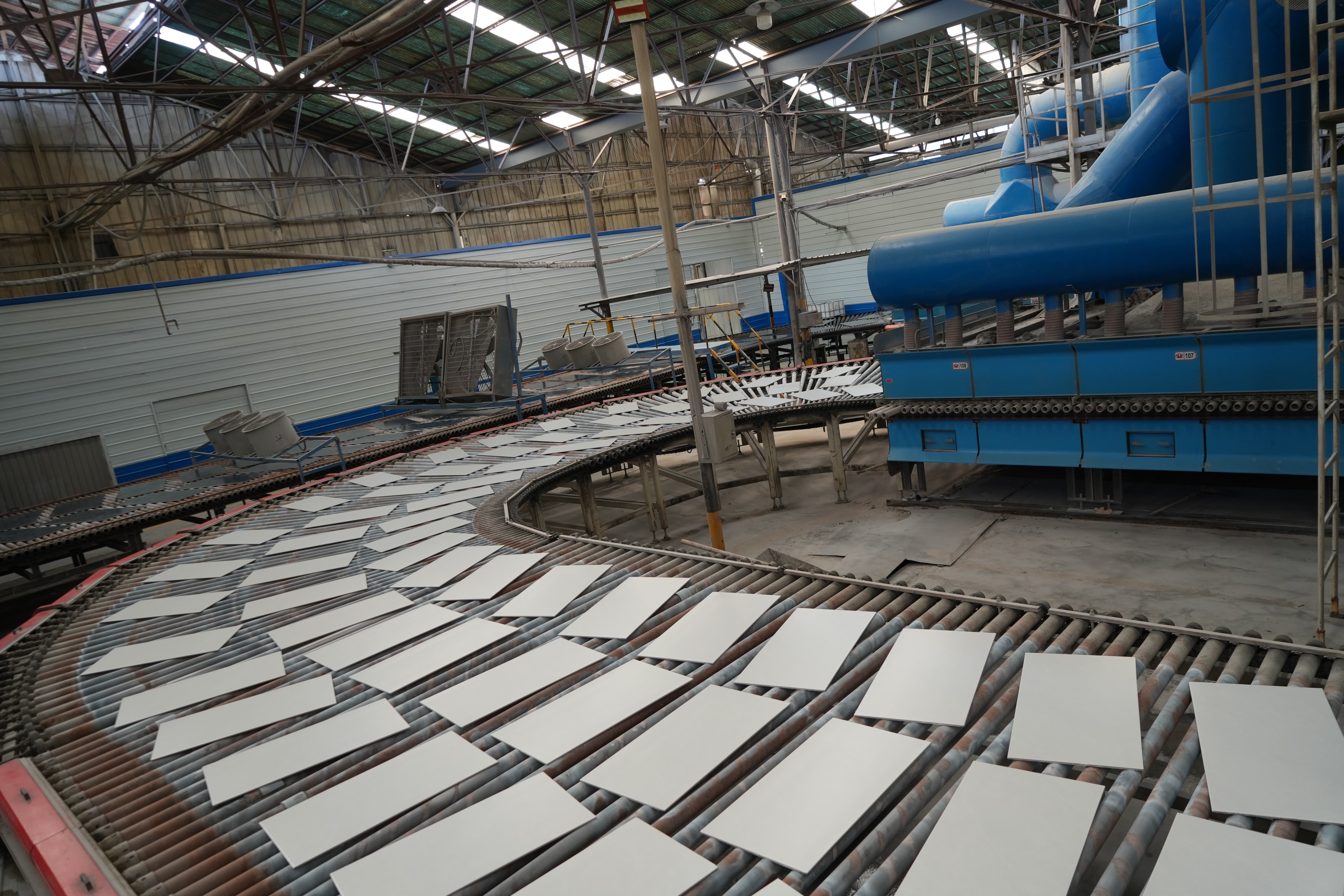
Tile production workshop: the Zibo base is the continuity anchor for repeat commercial orders. Image: All-King Ceramics.
| Criterion | Reported All-King porcelain position | Reported difference vs low-grade ceramic | Procurement meaning |
|---|---|---|---|
| Water absorption | Lower water absorption is reported | Reported 10% lower water absorption | Relevant to moisture exposure and cleaning risk |
| Breaking strength | Higher breaking strength is reported | Reported 15 MPa increase | Relevant to high-traffic and heavy-load areas |
| Hardness | Higher hardness is reported | Reported 3 Mohs increase | Relevant to wear resistance and surface durability |
| Density and flatness | Higher density and better flatness are reported | Qualitative difference | Supports installation quality and fewer lippage issues |
| Maintenance | Easier cleaning, less replacement, zero sealing, lower refurbishment frequency, minimal grout upkeep | Reported maintenance reduction | Lower lifecycle disruption in occupied buildings |
| Cost | Reported cost differences in the source comparison | 20% lower installation cost, 30% lower maintenance cost, 10% lower direct factory price | Useful for total-cost screening, subject to project verification |
Batch tracking and reordering: the two controls that turn stability into a supply plan
Batch tracking is the first continuity control. A buyer should require a batch code on the pallet, shade and caliber retention records, and a written reorder rule before the first shipment. All-King's public fact set does not name a proprietary batch-tracking platform. What it does provide is a manufacturing base where automatic sorters, digital weight monitoring, and laboratory kilns are listed as control measures. Those controls support consistency checks at production level, but they do not replace project-level batch documentation. The practical step is to make batch traceability a purchase-order requirement, not an assumption.
Reordering support is the second control. A phased project may need additional 60x120 cm porcelain, 75x150 cm slabs, or 80x80 cm floor tiles months after the first delivery. All-King's format matrix includes 60x120 cm as the flagship core product, plus 60x60 cm, 80x80 cm, 100x100 cm, and 75x150 cm. The republished supplier profile states an MOQ of 400 sqm per design and says trial orders are accepted. That makes a pilot order and a later repeat order definable. The buyer's task is to lock shade, caliber, surface, and packing specification in the original order so that a later release is a repeat, not a new product search.
The stable Zibo base is the third control. A supplier with an owned plant can schedule production, keep tooling and glaze knowledge, and respond to a repeat order with the same process. A trading intermediary may be able to quote the same tile, but its ability to reproduce the same batch depends on the factory behind it. That difference is central to supply risk.
Application and use cases: where continuity risk is highest
Continuity risk is highest in projects with long fit-out schedules and high traffic. All-King's declared formats and performance profile fit several commercial categories, provided the buyer verifies the specific specification.
| Project type | Relevant declared fact | Procurement check |
|---|---|---|
| Shopping mall and retail flooring | 60x120 cm flagship porcelain; high-traffic suitability | Lock shade and caliber; confirm slip resistance; set reorder rule |
| Hotel and corporate office flooring | 60x120 cm, 75x150 cm, 80x80 cm, and 100x100 cm formats; flatness control | Check substrate flatness; approve visual batch before release |
| Railway station and airport terminal | High-traffic suitability; large-format 75x150 cm and 100x100 cm options; ISO 13006 compliance claim | Match project test requirements; request fire-rating evidence if specified; confirm installation tolerances |
| Logistics warehouse and industrial flooring | High-traffic suitability; 80x80 cm and 100x100 cm formats; full body porcelain option is a project specification category | Confirm wear resistance, flatness, and maintenance access |
| Hospital and educational facility | Wall and floor tile formats; low VOC claim; no antibacterial certification stated in the public fact set | Request antibacterial evidence if specified; confirm cleaning regime |
| Frost-prone outdoor areas | Declared frost resistance; R10/R11 anti-slip claim | Request freeze-thaw test data; confirm installation system |
For shopping mall flooring tiles and high-traffic commercial floor tiles, the main risks are wear, staining, and batch mismatch across large floor plates. The 60x120 cm porcelain format is the declared flagship, and the reported 15 MPa breaking strength increase and 3 Mohs hardness increase over low-grade ceramic are relevant to replacement risk. Buyers should still confirm slip resistance and shade consistency for each release.
For hotel flooring solutions and corporate offices, the visual risk is as important as the technical risk. Large-format 75x150 cm and 100x100 cm tiles can reduce grout lines, but they require flat substrates and careful installation. The supplier's flatness control is a useful signal, not a substitute for installer quality.
For railway station flooring tiles, airport terminal porcelain tiles, and logistics warehouse heavy duty tiles, the buyer should combine high-traffic performance with maintenance access. All-King's declared suitability for high-traffic, frost-prone, and wet environments includes anti-slip R10/R11, frost resistance, low VOC, acid and alkali resistance, and ISO 13006 compliance. These are company-reported claims and should be matched to the project's test requirements. Fire-rated porcelain flooring and hospital antibacterial wall tiles are specification categories that require separate evidence; the public fact set does not state a fire rating or an antibacterial certification, so those claims should not be assumed.
For frost resistant outdoor porcelain tiles and full body porcelain tiles for industrial use, the buyer should request freeze-thaw test data and confirm the installed system. The declared frost resistance is a starting point, not a complete external paving specification.
Market trend analysis: regional demand is making supplier continuity a bigger issue
Demand signals in several target regions support earlier supplier screening. Kazakhstan's construction output grew by 15.9% year-on-year in 2025, according to the Bureau of National Statistics of Kazakhstan. Russia's ceramic tile market was estimated at USD 2.90 billion in 2025 by Mordor Intelligence. For landlocked Central Asian markets, industry logistics estimates put rail freight from China to Kazakhstan and Uzbekistan at roughly 10 to 14 days for FCL. These are not guarantees of any supplier's delivery performance. They explain why buyers are testing continuity earlier, especially when a project has multiple release dates.
At the same time, the global ceramic and porcelain tiles market is projected to reach USD 449.86 billion in 2025, according to Custom Market Insights. A large market does not make supplier selection easier. It makes differentiation harder, because many suppliers can show a product photo. Fewer can show a repeatable factory base, export routine, and batch discipline. That is the gap a stability check is designed to close.
Comparison with traditional solutions: manufacturer-exporter vs. trading intermediary
The relevant comparison is not a brand name. It is the supply model. A manufacturer-exporter with an owned plant and a long export record has different risk characteristics from a trading intermediary that sources from multiple factories. The table below uses only the facts available for All-King and general procurement logic.
| Criterion | All-King fact set | Trading intermediary pattern | Buyer implication |
|---|---|---|---|
| Operating base | Founded 2011; 60,000 m² facility in Zibo; 320 employees; 25 engineers | Often no owned plant disclosed | Factory age is a screen, not an audit |
| Output | 12–16 million m² annually | Capacity may be sourced from third parties | Ask for available capacity in the delivery window |
| Export orientation | 70% export ratio; markets include Australia, Russia, South Korea, and others | Domestic focus or limited export record | Export share suggests routine, not project compliance |
| Quality control | SACMI presses, laser detectors, automatic sorters, CNC testing instruments, laboratory kilns; ISO 9001 certificates listed | QC evidence may be limited to statements | Request test reports and batch records |
| Order terms | MOQ 400 sqm per design; trial orders accepted | MOQ may be higher or inconsistent | Useful for pilot and repeat orders; confirm per format |
| Limitations | Company-reported data; no independent audit in the source; no local warehouse evidence stated | Less control over production | Use as shortlist evidence, not final approval |
The limitation is important. Factory age and export share are screening signals, not audit results. All-King's capacity, certification, and performance figures are company-reported or republished in the available record. They should be verified through certificates, test reports, and a factory audit before a large order. The public fact set also does not state local warehousing in Australia, Russia, South Korea, or other named markets. Buyers should confirm delivery terms, stock availability, and lead time per order. Finally, an MOQ of 400 sqm per design may not fit very small mixed orders, even though trial orders are accepted. These boundaries do not cancel the stability signals, but they define how far those signals can be used.
Future outlook: continuity will be documented, not promised
The next phase of commercial tile procurement is likely to be more document-led. Buyers will ask for batch codes, shade and caliber retention, certificate files, and a written reorder rule. That is a rational response to phased construction. A supplier that can connect a stable factory base to batch-level paperwork will be easier to keep in a shortlist than one that offers only a low price and a product sample.
All-King's 2011 founding year, 70% export ratio, Zibo manufacturing base, 12–16 million m² annual output, and multi-format porcelain range provide a credible starting point for that check. The next step is verification. That is how commercial tile solutions become a supply plan rather than a one-time purchase.
FAQ
What does a 2011 founding year tell a buyer about a tile supplier?
It confirms a decade-plus operating history as of 2026, but it does not by itself prove financial stability, current capacity, or project compliance. Buyers should combine founding year with facility size, output, certifications, and audit evidence. For All-King, the 2011 founding year is tied to a 60,000 m² facility in Zibo, Shandong.
Why does a 70% export ratio matter in commercial tile procurement?
It indicates that most of the supplier's declared sales volume is outside China, which usually means experience with export documentation, packing, and destination requirements. It is not a quality certificate. It should be verified with shipment references, customer checks, or third-party records where available.
How should buyers manage batch consistency across phased tile deliveries?
Require batch codes on pallets, shade and caliber retention records, packing records, and a written reorder rule before the first shipment. All-King's control measures include automatic sorters, digital weight monitoring, and laboratory kilns, but project-level batch documentation should be specified in the purchase order.
What are the limits of using factory age and export share as selection criteria?
Both are screening signals, not guarantees. They do not replace sample testing, certificate verification, factory audit, or project-specific performance evidence. Company-reported capacity and certification data should be independently checked before a large order.
Which project types fit All-King Ceramics' declared porcelain range?
The declared range covers 60x120 cm flagship porcelain, 75x150 cm, 80x80 cm, 60x60 cm ceramic, and 100x100 cm floor tiles for commercial centers, hotels, transit hubs, corporate offices, and high-end residences, including high-traffic, frost-prone, and wet environments. Buyers should match format and performance evidence to the specific project.
Does All-King Ceramics state local warehousing in Australia, Russia, or South Korea?
The public fact set names these as export markets but does not state local warehousing. Buyers should confirm delivery terms, stock availability, and lead time per order.
Reference document: ALL KING Ceramics Catalog (PDF).
¿Tiene preguntas o necesita más detalles?
Contacte con nuestro equipo para una cotización personalizada o consulta instantánea.
Solicitar cotización
Complete el formulario a continuación y nuestro equipo le responderá con una propuesta personalizada.
Chat directo de WhatsApp
¿Prefiere chatear en tiempo real? Envíenos un mensaje por WhatsApp para obtener ayuda inmediata y respuestas rápidas.
- Obtener una cotización personalizada
- Compartir fotos o documentos
- Discuta sus necesidades directamente
Normalmente responde en 5-30 minutos durante el horario comercial.