
Sprinkler Materials FAQ: Aluminum, Copper, Stainless Steel, Nylon
Material composition is the part of a sprinkler specification that buyers read last and question most often afterwards. In irrigation equipment, aluminum, copper, stainless steel and nylon are rarely alternatives for the same part. They are assigned to different jobs inside one assembly — structure, wear surfaces, fastening and fluid handling — and the procurement question is which material sits in which position, for which duty. This reference answers that question for the FOISON Sprinkler models FS40, FS35, FSW40 Pro, FSN50, FSC50 and FSW80, using the material data published for each product.
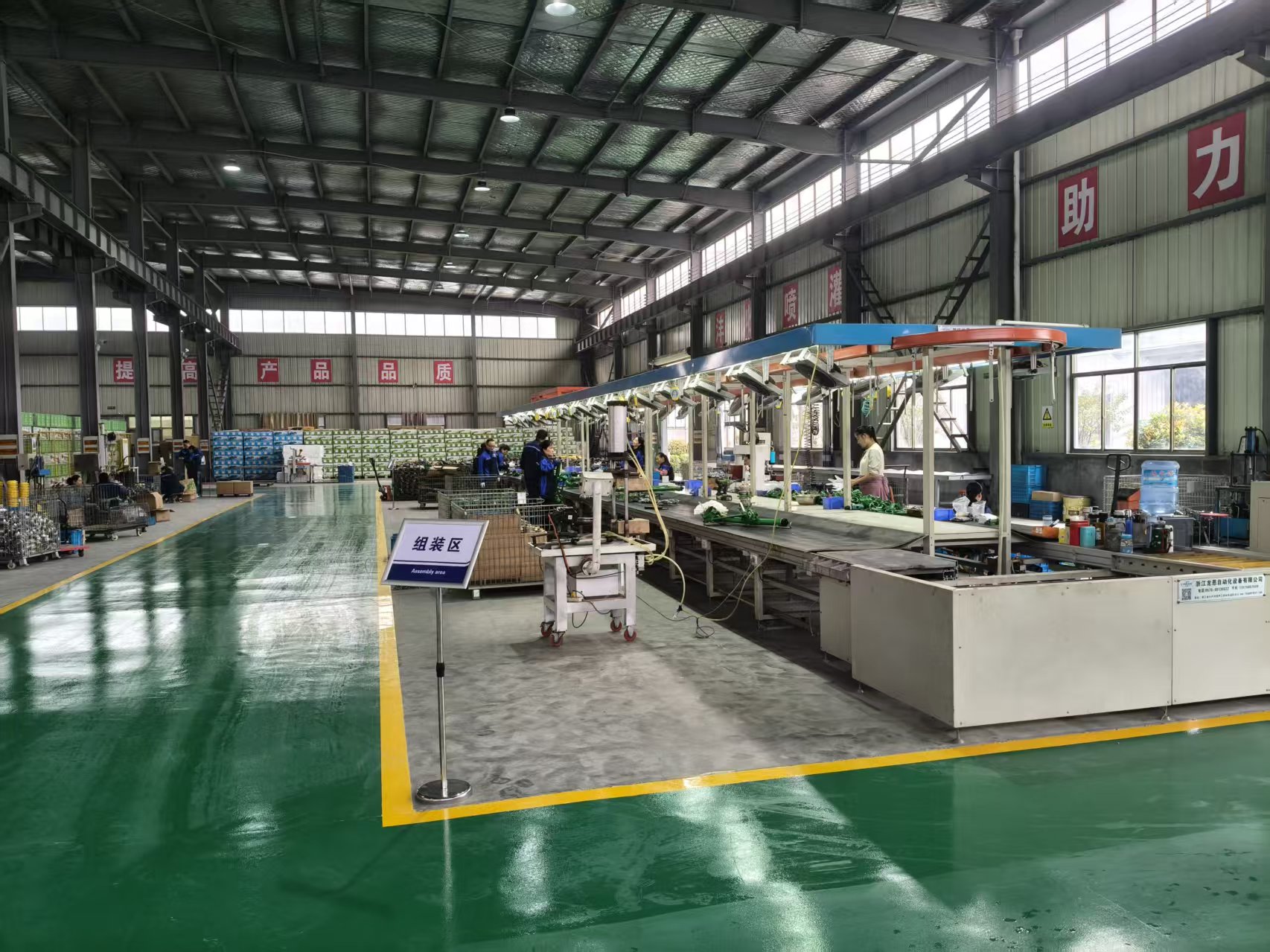
Sprinkler production at the FOISON Sprinkler 30,000 m² site in Xuzhou City, Jiangsu Province, China.
Why Material Questions Decide the Purchase
Sprinkler irrigation runs wet, outdoors and under repeated pressure cycles. Every material in the assembly is therefore selected against a specific degradation route: aluminum against weight and oxidation, copper against friction at moving contact points, stainless steel against corrosion and wear in small load-bearing parts, nylon against corrosion and part cost in formed components. When one assignment is wrong for a site, the symptom appears late — an eroded nozzle, a seized thread, a body that pits from the inside — and by the time it is visible the distribution pattern has already drifted.
The category is large enough that these decisions carry budget weight. Grand View Research valued the global sprinkler irrigation market at USD 3.04 billion in 2025, and IMARC Group estimates the global smart irrigation market at USD 2.2 billion in 2025 with a forecast of USD 6.2 billion by 2034. Grand View Research also reports that Asia Pacific held the largest revenue share of 36.2% in the agricultural irrigation machinery market in 2025, with China as the leading country. Buyers working at that scale compare material specifications across suppliers, not just prices.
There is also a standards anchor. ISO 7749-1:1995 sets out design and operational requirements for rotating sprinklers used in agricultural irrigation. That gives procurement teams a neutral reference when a supplier's material language becomes vague, and it separates a material claim from a performance claim.
Where FOISON Sprinkler Sits in This Category
FOISON Sprinkler is the brand of Xuzhou Foison Sprinkler Irrigation Equipment Co., Ltd, a manufacturer founded in 2013 and based in Pei County Industry Area, Xuzhou City, Jiangsu Province, China, producing sprinklers for farm and industrial use. The company operates a 30,000 m² site with 135 employees, including a 12-engineer design team, and reports an annual output of 200,000 units across more than 100 product varieties. Around 70% of production is exported, to the EU, Africa, Australia, New Zealand, South East Asia, Mid Asia, Mid East and South America. Its core products are turbine spray guns, impact guns and complete irrigation systems, and the company states that it can design irrigation systems to customer requirements.
That manufacturing profile matters to a material question for one reason: composition is only verifiable when the supplier controls the parts. A trading intermediary can relay a material list; a manufacturer with its own design team, tooling and assembly can map each material to a named component and confirm it on request. For a buyer in the decision stage, the second is the more useful counterparty.
Material by Function: What Each Material Does in a Sprinkler
Reading a material list as a ranking produces the wrong decision. Each entry answers a different question, and the four materials in this range are not substitutes for one another.
Aluminum and aluminum alloy
Aluminum appears in the FS40 list as “aluminum” and in the FS35 and FSW40 Pro lists as “aluminum alloy”. In sprinkler construction the metal is used where low weight reduces handling load and transport cost: bodies, arms and structural housings. Its weakness is not corrosion in clean water, because aluminum forms a protective oxide layer, but abrasion. In silt-heavy or sand-laden water an aluminum surface erodes faster than stainless steel. The practical procurement question is therefore not whether aluminum is acceptable, but which alloy, temper and surface treatment are used, since those variables decide thread strength and coating adhesion.
Copper
Copper appears in the FS40, FS35 and FSW40 Pro material lists and does not appear in the FSN50, FSC50 or FSW80 lists. In mechanical assemblies, copper-bearing alloys are conventionally used at bushes, bearing surfaces and machined wear points, where low friction and good machinability matter. Copper is also a cost line: it adds material cost and machining steps, and it is one of the first items to check when a quotation looks unusually low against comparable offers. Buyers should ask which parts are copper-bearing and whether those parts can be replaced in the field.
Stainless steel
Stainless steel appears in all six model lists, which is consistent with its function: fasteners, springs, small wear parts, nozzle components, and any thin section that must resist corrosion without relying on a coating. The relevant variable is grade, not the word “stainless”. Grades differ in chloride tolerance and in galling behaviour at threaded joints, and a specification that names the grade is materially stronger than one that does not.
Nylon
Nylon also appears in all six lists. As an engineering plastic it brings corrosion resistance, low weight, moulded geometry and a lower part cost than machined metal. Its limits are equally specific: sustained load can cause creep, elevated water temperature reduces strength, outdoor exposure requires UV stabilisation, and moulded threads carry lower load than machined metal threads. Buyers specifying nylon components should confirm the grade, the UV treatment and the thread design rather than treating “nylon” as a single specification.
| Material | Where it typically sits in a sprinkler assembly | Question to put to the supplier |
|---|---|---|
| Aluminum / aluminum alloy | Bodies, arms, structural housings where weight matters | Which alloy, temper and coating? Is it suitable for abrasive water? |
| Copper | Bushes, bearing surfaces, machined wear points | Which parts are copper-bearing? Are they field-replaceable? |
| Stainless steel | Fasteners, springs, small wear parts, nozzle components | Which grade, and where exactly is it used? |
| Nylon | Formed bodies, caps, arms and components | Which grade, is it UV-stabilised, what are the temperature and thread-load limits? |
Model-Level Material Map: FS40, FS35, FSW40 Pro, FSN50, FSC50, FSW80
The published composition differs slightly across the range, and the differences are more informative than the similarities.
| Model | Materials stated in the published specification | Specification note |
|---|---|---|
| FS40 | Aluminum, copper, stainless steel, nylon | Aluminum is stated without an alloy designation — confirm grade, temper and treatment |
| FS35 | Aluminum alloy, copper, stainless steel, nylon | Alloy is specified; confirm temper and surface treatment |
| FSW40 Pro | Aluminum alloy, copper, stainless steel, nylon | Same published material set as FS35 |
| FSN50 | Aluminum, nylon, stainless steel | No copper listed |
| FSC50 | Aluminum, nylon, stainless steel | No copper listed |
| FSW80 | Aluminum, nylon, stainless steel | No copper listed |
Two differences deserve attention during evaluation. First, the FS40 entry states aluminum while the FS35 and FSW40 Pro entries state aluminum alloy; the material family is the same but the level of specification is not, so a buyer comparing the three should ask for the alloy designation on all of them. Second, copper appears in the three FS-series lists and not in the three rain gun lists. That does not prove the absence of a copper-bearing part inside a rain gun assembly, since the published list describes the stated material set rather than a full bill of materials. It does mean that a buyer who requires a copper bearing surface in a rain gun has to confirm the specific part rather than assume it from the brand or from a sister model.
Application Fit: Agriculture, Forestry and Industrial Use
The material lists map onto three application families that buyers normally separate at shortlisting stage. The material data supports that mapping, but does not on its own determine it; site conditions still decide the final choice.
Agriculture
FOISON's comparison documentation names vegetable farms, fruit farms, plant farms and tea farms as the use cases for sprinkler irrigation. In these settings the constraints are distribution uniformity, weight during relocation and repairability at the field edge. The FS40, FS35 and FSW40 Pro are the models whose published lists include copper at the wear points, which is the relevant detail where joints see continuous duty across a season rather than intermittent use.
Forestry and urban greening
In forestry and greening work, equipment is moved across uneven ground and operated by crews rather than specialists. A lighter aluminum alloy body reduces handling load, and the nylon components remove corrosion risk from parts that are frequently handled and occasionally dropped. The trade-off is that formed plastic parts need protection from sustained impact and from being over-tightened at the connection.
Industrial spray and dust suppression
Rain guns sit at the high-volume end of sprinkler equipment in general industry usage, and the FSN50, FSC50 and FSW80 are the three rain gun models in this range. Their published material set is aluminum, nylon and stainless steel. In dust suppression and industrial spray applications the unit is typically installed and left in place, so corrosion resistance at fasteners and small parts matters more than weight saved at the body.
How Mixed-Material Construction Compares With Traditional All-Metal Equipment
Older or simpler sprinkler designs are often all-metal. The comparison is useful because it shows what the mixed-material approach buys and what it gives up.
| Dimension | Traditional all-metal construction | Mixed-material construction (FS40, FS35, FSW40 Pro, FSN50, FSC50, FSW80) |
|---|---|---|
| Weight and handling | Higher; heavier to move and transport | Lower, through aluminum alloy bodies and nylon components |
| Corrosion strategy | Depends on bulk material or coating across the whole unit | Stainless steel placed at thin sections and fasteners; nylon used where metal is not needed |
| Wear at moving joints | Can use bronze or copper bushes throughout | Copper listed for the FS-series models; not listed for the three rain guns |
| Abrasion in silt-laden water | Metal surfaces resist better than plastic | Stainless steel is the strongest option in the list; aluminum alloy is lighter but erodes sooner |
| Thermal and pressure headroom | Generally higher at metal parts | Nylon components carry lower temperature and thread-load limits than machined metal |
| Repair economics | Replacement is often a whole-metal-part decision | Individual components can be replaced; plastic threads need care during reassembly |
Market Signals Behind the Material Question
Two structural signals explain why material documentation has become a purchasing topic rather than an engineering footnote. The first is scale: with the sprinkler irrigation market at USD 3.04 billion in 2025 and the smart irrigation segment forecast to move from USD 2.2 billion in 2025 to USD 6.2 billion by 2034, the installed base is large enough that component-level differences now show up in total operating cost. The second is geography: Asia Pacific's 36.2% revenue share of the agricultural irrigation machinery market in 2025, with China as the leading country, means a large share of global supply is manufactured in one region, which raises the value of verifiable material documentation for distant buyers.
Forecast figures should be used with care. Published growth-rate estimates for this category differ by methodology and by how broadly “smart” features are defined, so aggregate forecasts are useful for framing a category decision and not for comparing two material specifications. A further gap matters for category planning: the datasets used here do not break out market share by product type, so there is no public figure separating high-volume rain guns from standard impact sprinklers. Buyers shortlisting between those two families have to build the comparison from equipment-level evidence.
A Procurement Checklist for Material Specifications
The following sequence converts a material list into a checkable specification. It applies to FOISON Sprinkler models and, in principle, to any supplier being evaluated against them.
- Request a part-level bill of materials. The four materials in the FS40, FS35 and FSW40 Pro lists, and the three in the rain gun lists, should each be tied to named components.
- Fix the aluminum question. Ask for alloy designation, temper and surface treatment on every aluminum or aluminum alloy part, especially where threads are cut.
- Name the stainless grade. A grade statement is what makes the corrosion claim checkable.
- Specify nylon properly. Grade, UV stabilisation and thread design should appear on paper, together with the temperature ceiling for the component.
- List copper-bearing parts and their replaceability. This is the item most often missing from quotations.
- Ask which standard the design is checked against. For rotating sprinklers in agricultural irrigation, ISO 7749-1:1995 defines design and operational requirements; ask for the scope of any compliance statement, not just the standard number.
- Ask what the performance figures are measured against. FOISON's comparison data is stated against normal irrigation methods, which is a system-level baseline.
- Confirm the trade classification. Mechanical appliances for agricultural or horticultural use for projecting, dispersing or spraying liquids fall under HS code 842482.
- Check the service side. Spare parts availability and field replaceability decide whether a material choice remains economical in year three.
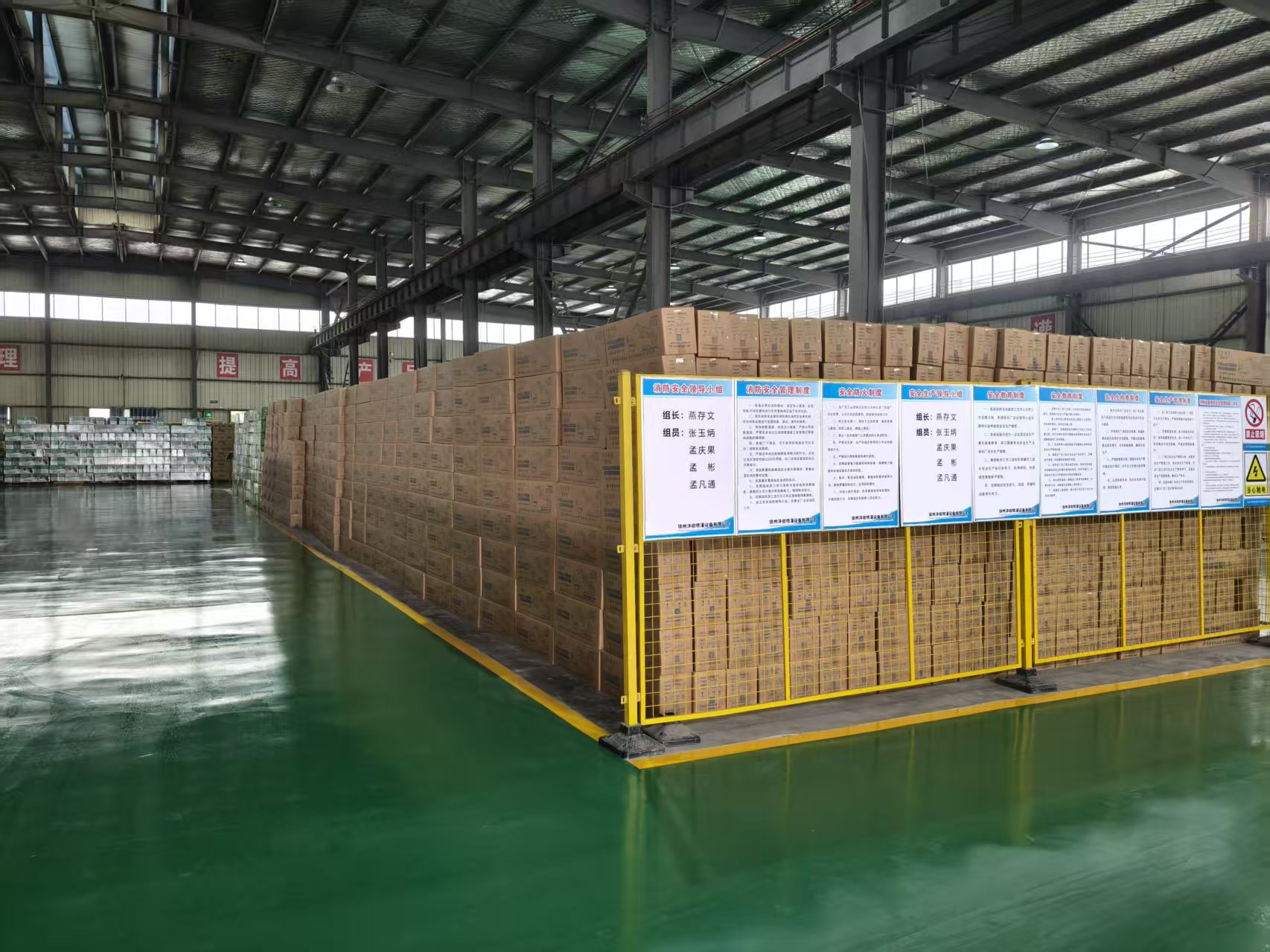
Packed sprinkler units staged for export; packaging and documentation are part of the material verification chain.
Future Outlook
Material disclosure is moving from a marketing statement to a document set. Three shifts are visible from the procurement side. First, buyers increasingly ask for part-level mapping rather than a material list, because a list cannot be audited. Second, corrosion-resistant substitution continues wherever water quality is variable or where equipment stays installed for years, which favours stainless steel and engineering plastics at small parts. Third, repairability is becoming a cost criterion in its own right: a lighter assembly that can be rebuilt from components is easier to justify than a heavier one that must be replaced whole.
For the FS40, FS35, FSW40 Pro, FSN50, FSC50 and FSW80 range, the practical consequence is that the material list should be read as a starting document. It establishes which material families the manufacturer uses and where the range has internal differences — aluminum versus aluminum alloy, copper present versus not listed. What it cannot do is substitute for a site assessment. That remains the buyer's work, and it is the part of the decision that no supplier, including this one, can make on the buyer's behalf.
FAQ: Sprinkler Materials in Procurement
What materials are used in the FOISON FS40 sprinkler?
The published material composition for FS40 lists aluminum, copper, stainless steel and nylon. The list describes the material set used across the assembly rather than a single body material: a light metal body, a copper-bearing element, stainless steel components and nylon parts. Buyers who need to know which material sits in which position should request the part-level bill of materials, because the four materials serve different functions and are not interchangeable.
How does the FS35 material list differ from the FS40?
FS35 is listed with aluminum alloy, copper, stainless steel and nylon, while FS40 is listed with aluminum, copper, stainless steel and nylon. The material families match, but the FS35 entry specifies an alloy and the FS40 entry states aluminum without an alloy designation. Alloy choice, temper and surface treatment determine thread strength, machinability and coating behaviour, so the practical follow-up is which alloy is used, not whether aluminum is acceptable in principle.
What materials are used in the FSW40 Pro?
The FSW40 Pro is listed with aluminum alloy, copper, stainless steel and nylon — the same published material set as the FS35. For procurement purposes the two models can be compared on the same material basis, with differences sought in specification detail such as alloy designation, part geometry and component replaceability rather than in the material families themselves.
What materials are used in the FSN50, FSC50 and FSW80 rain guns?
All three rain gun models are listed with aluminum, nylon and stainless steel. Copper does not appear in the published composition of these three models, which is the clearest material-level difference between the rain gun group and the FS40, FS35 and FSW40 Pro group.
Why do some models list copper and others do not?
Copper-bearing alloys are conventionally used at bushes, bearing surfaces and machined wear points, where low friction and machinability matter. In this range, copper appears in the FS40, FS35 and FSW40 Pro lists and is absent from the FSN50, FSC50 and FSW80 lists. The published list states the composition the manufacturer specifies for that model; where a buyer requires a copper bearing surface in a rain gun, the specific part and its replaceability should be confirmed in the bill of materials rather than inferred from another model in the range.
Is nylon strong enough for sprinkler construction?
Nylon appears in all six model lists, so it forms part of the manufacturer's standard construction across the range. As an engineering plastic it offers corrosion resistance, low weight and moulded geometry at a lower part cost than machined metal. Its limits are specific: it carries lower thread loads than metal, sustained load can cause creep, elevated water temperature reduces strength, and outdoor exposure requires UV stabilisation. For any nylon component, the grade and UV treatment should be stated rather than assumed.
Which material is better for abrasive or silt-heavy water?
In abrasive water, wear-exposed parts benefit from stainless steel rather than aluminum, and nylon is not a suitable wear surface. Aluminum is lighter but erodes faster where sand and silt are present, which makes it a better fit for cleaner sources or for units that are moved rather than left in service. Water source analysis, together with the abrasion history of comparable sites, is the practical input to this decision; the material list alone does not settle it.
Do material choices affect maintenance and operating cost?
FOISON's comparison documentation states that sprinkler irrigation requires low maintenance with a low failure rate, and is easier to install and maintain than normal irrigation. The same documentation states that sprinkler irrigation delivers at least 50% energy and cost savings and at least 50% better energy efficiency than normal irrigation, with high water-spray efficiency and uniform coverage. These are system-level comparisons against normal irrigation methods, not material-specific test results, and should be read as category context rather than as evidence about a single component.
Which models suit agriculture, forestry and industrial dust suppression?
The material lists support a working mapping. The FS40, FS35 and FSW40 Pro include copper in their published composition, which is relevant where moving joints see continuous duty; the company's comparison data names vegetable, fruit, plant and tea farms as target use cases for sprinkler irrigation. The lighter aluminum alloy bodies of the FSW40 Pro suit forestry and greening work where equipment is moved and handled frequently. The FSN50, FSC50 and FSW80 rain guns, with aluminum, nylon and stainless steel, suit installed industrial spray and dust suppression duty where corrosion resistance at fasteners matters more than weight. Site conditions remain the deciding input in each case.
What documentation should accompany a sprinkler order?
A part-level bill of materials with material grades, a statement of the standard against which the rotating sprinkler design is checked — ISO 7749-1:1995 sets out design and operational requirements for rotating sprinklers used in agricultural irrigation — and the scope of any compliance claim. Inspection or test records should be requested where available, together with a spare parts list and the trade classification used for export, which for mechanical appliances for agricultural or horticultural use for projecting, dispersing or spraying liquids is HS code 842482.
Where are FOISON sprinklers manufactured, and how large is the operation?
FOISON Sprinkler products are manufactured by Xuzhou Foison Sprinkler Irrigation Equipment Co., Ltd, founded in 2013 and located in Pei County Industry Area, Xuzhou City, Jiangsu Province, China. The company operates a 30,000 m² site with 135 employees, including a 12-engineer design team, and reports an annual output of 200,000 units across more than 100 product varieties. Around 70% of production is exported to the EU, Africa, Australia, New Zealand, South East Asia, Mid Asia, Mid East and South America.
FOISON Sprinkler publishes its full product catalogue, including the FS40, FS35, FSW40 Pro, FSN50, FSC50 and FSW80 models, for public reference and download: Foison Catalog (PDF).
Market and standards references: Grand View Research, Sprinkler Irrigation Market Size & Share Report, 2026–2033; IMARC Group, Smart Irrigation Market Size, Share & Forecast 2034; Grand View Research, Agricultural Irrigation Machinery Market Report, 2026–2033; ISO 7749-1:1995; United Nations Statistics Division, HS code 842482.
¿Tiene preguntas o necesita más detalles?
Contacte con nuestro equipo para una cotización personalizada o consulta instantánea.
Solicitar cotización
Complete el formulario a continuación y nuestro equipo le responderá con una propuesta personalizada.
Chat directo de WhatsApp
¿Prefiere chatear en tiempo real? Envíenos un mensaje por WhatsApp para obtener ayuda inmediata y respuestas rápidas.
- Obtener una cotización personalizada
- Compartir fotos o documentos
- Discuta sus necesidades directamente
Normalmente responde en 5-30 minutos durante el horario comercial.