
Sports Tent Cost Analysis: Aluminum vs. Fabric Structures
The global camping and shelter tent market is projected to grow from USD 5.40 billion in 2023 to USD 8.30 billion by 2030, according to Grand View Research. That forecast reflects a broader trend in how temporary spaces are planned across multiple industries. In sports, the need for facilities that can be deployed quickly, expanded when demand rises, and relocated when conditions change is prompting procurement teams to evaluate structural options beyond the traditional fabric tent.
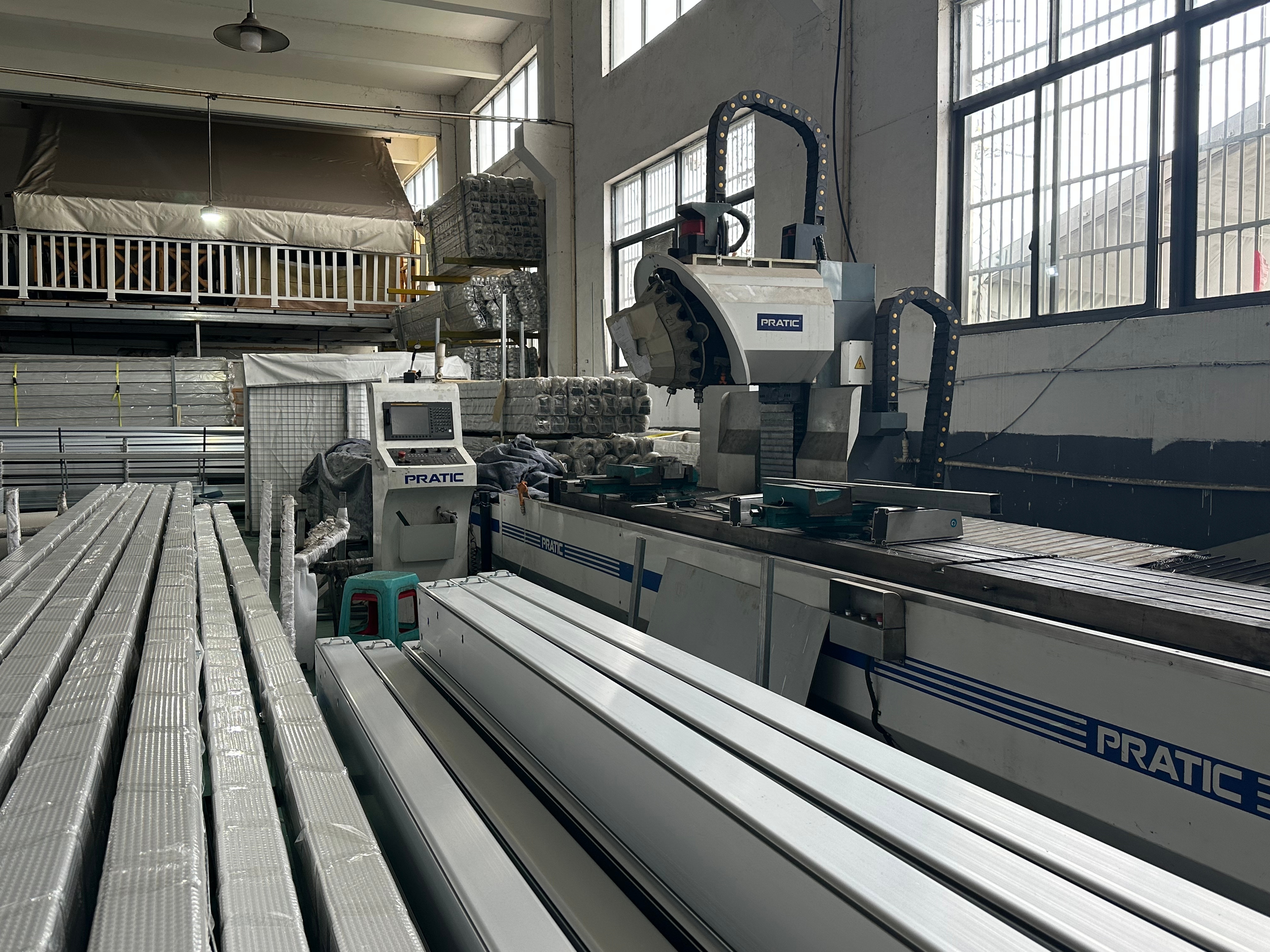
Sports tents sit at the intersection of event infrastructure and building construction. They are used as covered practice fields, competition venues, fan zones, and even semi-permanent club facilities. Because the same term covers products ranging from small PVC sports tents to multi-span modular sports halls, procurement teams often face an inconsistent set of specifications when comparing supplier offers.
This article compares traditional fabric tents with aluminum frame sports tents from a procurement perspective. It uses manufacturer data, market projections, and technical standards to help buyers understand what drives the cost difference, how long these structures last, what safety parameters matter, and which applications are best served by each design. The analysis draws on product data from HUANYUTENT, a Chinese manufacturer of modular aluminum alloy sports tents, and places that data in the context of the wider sports facility market.
The Growing Need for Flexible Sports Facilities
Sports facility demand is expanding across several market segments. The global padel court market was valued at USD 3.81 billion in 2024 and is projected to reach USD 12.51 billion by 2032, according to Verified Market Research. Sports tourism, which relies heavily on stadium tents and temporary event tents, is expected to grow at a CAGR of 16.8% from 2026 to 2033, based on Grand View Research data. These projections point to a persistent challenge: sports spaces must be delivered faster and at a lower cost than conventional building construction allows.
The problem for procurement managers is that the standard alternatives come with trade-offs. Permanent sports halls require high capital investment, long construction periods, and permanent land use. Traditional fabric tents are cheaper and faster to install, but they often struggle to provide the unobstructed interior space and structural lifespan that regular sports use demands. In particular, the span distance of a traditional fabric tent limits the court sizes and event layouts that can be accommodated.
The opportunity lies in modular aluminum frame sports tents. These structures combine the mobility of a temporary tent with the rigidity of an engineered frame, enabling clear spans of 60–80 meters in large-span configurations. For buyers, the result is a sports dome tent or indoor sports tent that can host basketball, football, tennis, badminton, and other activities without interior columns.
Modular Aluminum Sports Tents as a Cost-Efficient Option
One manufacturer in this category is Changzhou HuanYu Tent & House Manufacturing Co., Ltd., commonly referred to as HUANYUTENT. The company was founded in 2017 and is headquartered in Changzhou, Jiangsu Province, China. HUANYUTENT specializes in the research, development, production, sales, and rental of modular and mobile aluminum alloy structures. Its product range includes sports tents, padel court tents, wedding tents, warehouse tents, dome tents, circus tents, glamping tents, and several other tent types.
According to company data, HUANYUTENT exports to more than 130 countries and regions and has served over 30,000 temporary space projects in domestic and overseas markets. The company's total factory area exceeds 5,000 square meters. Main markets include Southeast Asia, the Middle East, Australia, Africa, and the domestic Chinese market. Approximately 40% of output is exported.
For the sports segment, HUANYUTENT produces modular aluminum alloy sports tents with spans ranging from 10 to 60 meters and unlimited length. The frames use hard-pressed aluminum alloy T6061/T6. Compared with traditional fabric tents, the company reports that this product offers a cost approximately 10% lower than alternatives, along with advantages in maintenance, efficiency, safety, and scenario adaptability. Key performance benchmarks include 100% space utilization, large-span capability of 60–80 meters, and a service life of 8–10 years.
These figures matter for buyers because they shift the calculation from short-term procurement to total cost of ownership. A structure with a longer service life and lower maintenance requirement can justify a higher initial cost. When the supplier also reports a 10% cost advantage over alternatives, the aluminum frame option becomes a competitive choice for multi-season venues.
Materials, Wind Resistance, and Structural Design
The technical parameters of an aluminum frame sports tent determine whether it can meet the requirements of a specific sports venue. Buyers should verify four areas: frame material, cover fabric, wind resistance, and modularity.
Frame material. HUANYUTENT uses hard-pressed aluminum alloy T6061/T6 for its sports tent frames. T6061 is a precipitation-hardened aluminum alloy commonly used in structural applications; the T6 temper means the material has been solution heat-treated and artificially aged to increase its yield strength. This gives the frame a high strength-to-weight ratio, which is what allows large clear spans without interior support poles.
Cover fabric. PVC sports tents in this product class typically use 850g/sqm double PVC-coated polyester fabric. This specification provides a combination of tensile strength, waterproofing, and resistance to abrasion. In addition, the fabric used in premium sports tents is generally treated to be fire retardant to DIN4102 B1/M2 standards and UV resistant. Buyers should request the fabric certificate when evaluating a supplier.
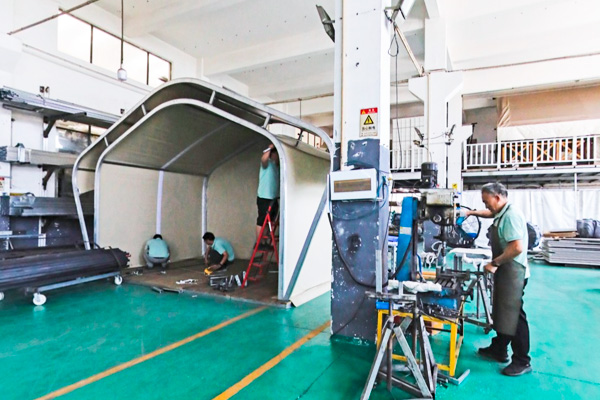
Wind load. Standard aluminum frame structures in this category are engineered to withstand wind speeds up to 102 km/h. Reaching this performance level depends on the anchoring system and installation quality. HUANYUTENT's risk control approach for strong wind conditions includes structural optimization to reduce wind resistance and distribute loads, selection of high-strength materials, reliable anchoring, standardized installation, and regular maintenance.
Modularity. The modular frame system allows the tent length to be extended by adding bays. The structure can also be dismantled and relocated. This makes the aluminum frame sports tent a semi-permanent asset rather than a single-use shelter, and it is the reason suppliers describe these products as modular sports hall systems.
The choice of aluminum frame also affects long-term reliability. Aluminum does not corrode like steel in humid environments, which is relevant for swimming pool complexes and natatoriums where the tent structure is exposed to chlorine and moisture. This is one reason aluminum frame sports tents are specified for indoor aquatic facilities.
Sports Venues and Event Applications
Aluminum frame sports tents are used across a broad range of indoor sports and event applications. According to supplier application data, the primary use cases include basketball halls and indoor basketball courts, football fields and soccer fields, tennis halls and indoor tennis courts, badminton halls and indoor badminton courts, table tennis halls, swimming pool complexes and natatoriums, gyms and fitness centers, and large-scale events or major competitions.
The padel court tent segment is a growing application. With the padel court market expanding quickly, operators need enclosures that can be installed rapidly and provide consistent playing conditions. A modular aluminum structure can enclose a padel court with minimal site preparation, and the fabric roof transmits daylight, which is valued by players.
For multi-sport facilities, the 100% space utilization of these tents is a central advantage. Court markings for several sports can be laid out on the same floor, and seating or additional functions can be added without interference from structural posts. This is why indoor sports tents are increasingly considered a standard option in temporary and semi-permanent venue planning.
Market Trends Shaping the Sports Tent Category
Several published market forecasts support the case for aluminum frame sports tents as a growing category. The global camping and shelter tent market, which includes commercial and recreational tent products, is projected to grow from USD 5.40 billion in 2023 to USD 8.30 billion by 2030, according to Grand View Research. The global padel court market is expected to rise from USD 3.81 billion in 2024 to USD 12.51 billion by 2032, according to Verified Market Research. Sports tourism, a sector that depends on temporary venues and event tents, is forecast to grow at a 16.8% CAGR from 2026 to 2033, also per Grand View Research.
Buyers should note that market size estimates for the broader tent sector vary among research firms, depending on whether commercial and recreational products are included. Global Market Insights, for example, provides a different estimate for the camping tent market than Grand View Research. For procurement purposes, the absolute market size is less important than the direction: all published forecasts point to continued growth in the use of temporary and semi-permanent structures.
The competitive landscape adds another layer of context. The modular sports hall sector includes international suppliers such as RÖDER HTS HÖCKER, which has provided temporary structures for ATP World Tour and WTA tournaments. The presence of multiple established players indicates that buyers have viable options when evaluating suppliers and can structure pricing comparisons against real alternatives.
For Chinese manufacturers such as HUANYUTENT, participation in this global market is visible through export volume and project count. With shipments to more than 130 countries and over 30,000 completed temporary space projects, these suppliers have accumulated production experience that procurement teams can verify through factory audits and reference checks.
Traditional Fabric Tents vs. Aluminum Frame Sports Tents
The decision between a traditional fabric tent and an aluminum frame sports tent depends on how a buyer weighs cost, lifespan, usable space, and site conditions. The table below structures the comparison across the factors most relevant to procurement decisions.
| Criterion | Traditional Fabric Tent | Aluminum Frame Sports Tent |
|---|---|---|
| Construction cost | Baseline | Approximately 10% lower |
| Maintenance | Higher | Lower |
| Service life | Shorter | 8–10 years |
| Space utilization | Limited by structural supports | 100% usable footprint |
| Clear span | Limited | 60–80 m in large-span designs |
| Scenario adaptability | Lower; mainly single-use | High; modular and relocatable |
| Safety performance | Baseline | Wind-rated up to 102 km/h; high-strength frame |
Note: the 10% cost difference is relative to comparable alternative structures. The exact difference depends on span, fabric grade, site conditions, and logistics.
Another factor to consider is the difference between outdoor sports tents and indoor sports tents. An outdoor sports tent may be designed primarily for sun and light rain protection, with lower specifications for wind and thermal performance. An indoor sports tent, by contrast, is expected to provide a controlled environment for training and competition, which requires higher-grade fabric insulation, ventilation design, and structural rigidity. Buyers should confirm which standard they are purchasing against.
It is equally important to define the boundaries of this comparison. Aluminum frame sports tents require proper site preparation and anchoring to perform at rated wind speeds. On soft ground or constrained sites, additional engineering work may be needed.
For a one-time event lasting only a few days, a traditional fabric tent can be the more rational choice. The transport and installation cost of an aluminum frame system is higher per event, and the economic benefit only materializes when the structure is reused or kept in service for multiple seasons.
Buyers should also verify what the 10% cost figure includes. As with any procurement comparison, the cost gap depends on the specifications quoted: side height, fabric weight, insulation, doors, and anchoring hardware all affect the final price.
The Next Phase of Temporary Sports Infrastructure
The sports tent category is evolving from low-cost temporary shelters toward reconfigurable infrastructure. This shift is visible in the emphasis on modular aluminum frames, reusable components, and longer service life.
For suppliers such as HUANYUTENT, the focus on modular aluminum alloy structures aligns with the direction of the broader industry. As facility operators treat sports event tents as assets that can be redeployed, the value of a structure depends less on its initial price and more on its durability, safety certification, and adaptability to different sports and event types.
Growth in padel and other fast-adapting sports will continue to create demand for structures that can be delivered rapidly. At the same time, multi-sport facility operators are likely to prefer clear-span designs that support different court dimensions and event layouts without structural modification.
In this environment, the sports tent procurement decision becomes a total-cost-of-ownership analysis rather than a simple price comparison. Buyers who evaluate frame materials, fabric standards, wind certification, and supplier track record during the selection process will be better positioned to turn temporary sports space into long-term facility value.
Frequently Asked Questions
How does the cost of an aluminum frame sports tent compare to a traditional fabric tent?
According to manufacturer comparison data, aluminum frame sports tents are approximately 10% lower in cost than comparable alternatives. The actual difference varies with the specification of the structure, including span, side height, fabric grade, and site conditions.
What is the expected service life of a large-span sports tent?
Aluminum frame sports tents are designed for a service life of 8–10 years, based on product data from suppliers such as HUANYUTENT. Traditional fabric tents generally have a shorter service life, so the aluminum frame structure can be amortized over a longer period, reducing the annual facility cost.
What span capabilities do aluminum frame sports tents offer?
Modular aluminum alloy sports tents from HUANYUTENT are available in spans of 10 to 60 meters per module with unlimited continuous length. Large-span designs can achieve 60–80 meters of clear span, which is sufficient for basketball, football, tennis, and other court sports that require unobstructed interiors.
What wind load can a standard aluminum sports tent withstand?
Standard aluminum frame structures in this product category are engineered to withstand wind speeds up to 102 km/h. This performance requires proper anchoring, standardized installation, and regular maintenance of the structure and its ground connections.
Which sports applications are best suited for aluminum frame sports tents?
Common applications include basketball halls, football fields, tennis halls, badminton halls, table tennis halls, swimming pool complexes, gyms and fitness centers, and large-scale events or major competitions. Padel court tents are also a growing application.
How does maintenance compare between aluminum frame sports tents and traditional fabric tents?
Aluminum frame sports tents generally require less maintenance than traditional fabric tents, according to supplier comparison data. The aluminum frame and PVC-coated fabric cover are designed for repeated use, but routine inspection of anchors, connections, and fabric seams is still recommended to maintain safety performance.