
Sports Pins Sourcing: Specs, Compliance and Lead Times
Sports Pins Sourcing: Specs, Compliance and Lead Times
Sports pins are custom enamel badges produced for teams, leagues, tournaments, clubs and event organizers, and they are normally bought as trading pins, participant gifts, sponsor merchandise or spectator souvenirs. The category looks like an artwork problem and behaves like a supply problem: the event date is fixed, the marks on the pin need approval, and every batch in a phased order has to match the first one.
That is why the questions that matter during research and evaluation are rarely about design style. They are about material and craft specification, hard versus soft enamel trade-offs, safety documentation for the US and EU, minimum order quantity, and whether the production calendar can actually hold an event deadline.
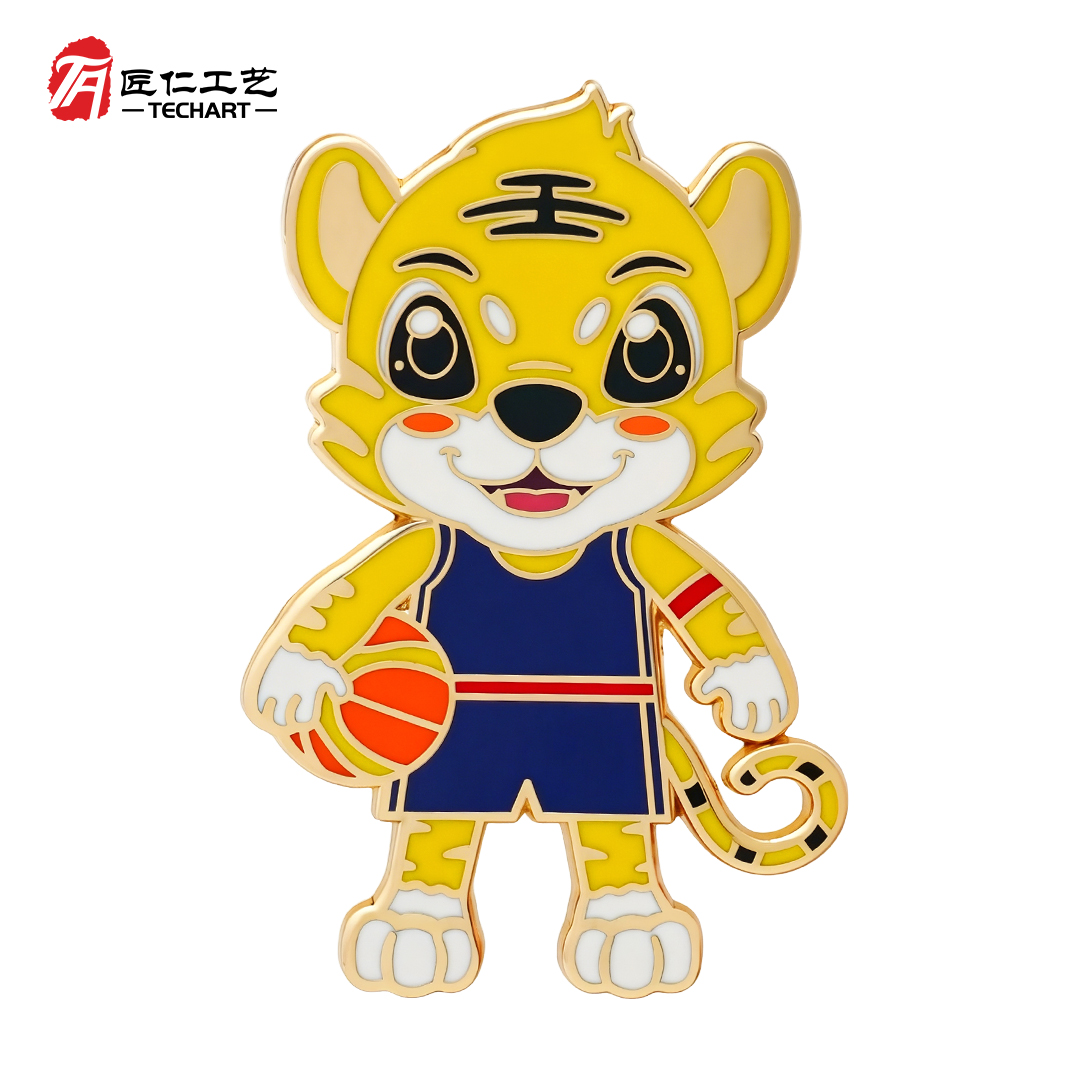
Sports promotion pins combine team identity, event marking and a wearable format — the combination that makes specification and compliance the deciding factors in procurement.
Why Sports Pins Follow a Different Buying Logic From Promotional Badges
Four constraints separate a sports pin programme from a general promotional badge order, and each one changes what a buyer should verify before placing a purchase order.
- A fixed, non-negotiable date. Tournament calendars do not move for production schedules. A phased order covering qualifiers, finals and spectator retail has to be planned backwards from the event date, which makes sample approval, colour sign-off and final inspection time-critical rather than routine.
- An approval chain that sits outside the factory. League marks, club crests, sponsor logos and licensed characters normally require documented sign-off before mass production begins. For licensed properties, the supplier also needs to sit inside the brand owner's authorisation framework — a good sample alone does not qualify a factory.
- Batch-to-batch consistency. When a project is delivered across several shipments, colour drift between shipments becomes visible on a trading table. A stated colour tolerance converts that risk into something that can be written into a specification and inspected at final visual check.
- Collectible handling. Trading pins are handled, swapped and stored for years. Surface durability, plating uniformity and a clean finished back are product requirements in this category, not decorative extras.
Read together, these constraints explain why sports pin buyers typically move from comparing unit cost to comparing specification, documentation and delivery structure as they progress through evaluation.
The Specification Set That Decides Sports Pin Quality
The table below reflects the published product standard for custom enamel pins, which is the same baseline applied to sports pin programmes. Each row is a decision point that can be written directly into an enquiry or a purchase order.
| Specification | Confirmed options | Why it matters for a sports pin programme |
|---|---|---|
| Base material | Zinc alloy, brass or iron | Zinc alloy supports 2D and 3D die-cast relief; brass and iron suit flatter stamped work and different weight expectations. |
| Mould type | 2D or 3D | 3D relief is normally used for mascots, trophies and event symbols; 2D suits flat marks, crests and typography. |
| Thickness | 0.8 mm to 3 mm, customizable | Thinner pins sit flatter on caps and lanyards; thicker blanks hold deeper relief and feel more substantial in hand. |
| Size | Custom size | Event marks, sponsor lock-ups and character art each need a different usable area for linework to survive. |
| Craft | Soft enamel, hard enamel, paint filling, printing plus epoxy | The craft determines surface texture, scratch behaviour and how fine the smallest detail can be. |
| Plating | Shiny gold, matte gold, shiny silver, matte silver, antique bronze, antique nickel, black nickel, rose gold | Plating decides whether a pin reads as polished medal-silver, antique heritage bronze or modern matte — and it interacts with team colours. |
| Attachment | Butterfly clutch, rubber clutch, safety clutch, rotating clutch | Clutch choice affects how the pin sits on jerseys, caps and lanyards, and how easily it can be removed without damage. |
| Epoxy coating | Optional | A domed coating adds surface protection and helps against fading on pins worn outdoors across a multi-day event. |
| Backside treatment | Back stamp logo, laser engraving for logo, serial number or website | Back marking supports authenticity, batch traceability and licensed project identification. |
| Colour tolerance | ±1 PANTONE shade | A quantified tolerance is the only practical way to hold colour consistent across repeat batches. |
| Packing | Individual OPP bag, paper card backing, gift box; standard export carton | Individual packing prevents surface scratches in transit; backing cards and gift boxes matter for retail and VIP distribution. |
Two further quality statements are worth requesting in writing. A passed paint adhesion test indicates the enamel is not easily peeled from the metal base, and nickel-free plus lead-free test reports are available under EN71-3 and CPSIA for buyers shipping into the European Union and the United States.
Hard Enamel, Soft Enamel and Printed Pins: What the Trade-offs Really Are
Soft enamel fills colour into recessed grooves so the metal lines stay raised. Hard enamel overfills the grooves, then bakes and polishes the surface until colour and metal sit level. Printing with epoxy lays a flat printed image under a domed coating. Each route solves a different problem, and none of them is the correct default for every sports pin order.
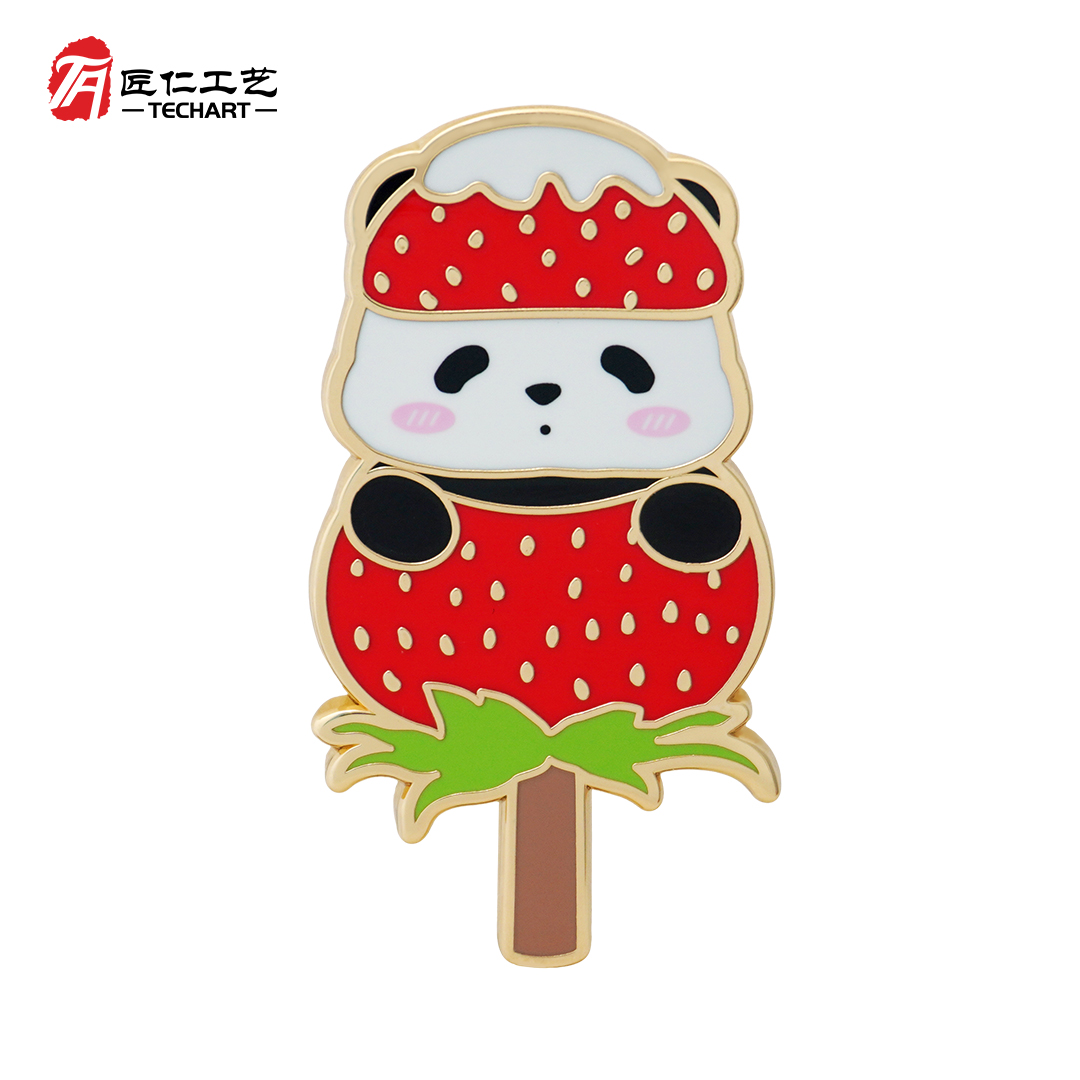
Hard enamel pins are polished flat after filling, which is why the surface reads as a single smooth plane and holds fine linework.
| Criterion | Soft enamel | Hard enamel | Printing plus epoxy |
|---|---|---|---|
| Surface | Recessed colour with raised metal lines | Polished flat, lines level with colour | Flat printed image under a domed coating |
| Detail handling | Strong for bold shapes; very fine lines need review | Holds fine linework and small typography | Best for gradients, full-colour art and photographic elements |
| Wear behaviour | Colour sits in the recesses; raised metal takes contact | Flat surface resists scratching | Epoxy protects the print but can scuff under heavy abrasion |
| Process depth | Fewer finishing steps | Multiple filling, baking and polishing steps | Depends on print complexity and coating |
| Typical sports use | Participant giveaways, sponsor pins, large-volume distribution | Collectible trading pins, VIP and award pieces | Complex event graphics and mascot art with gradients |
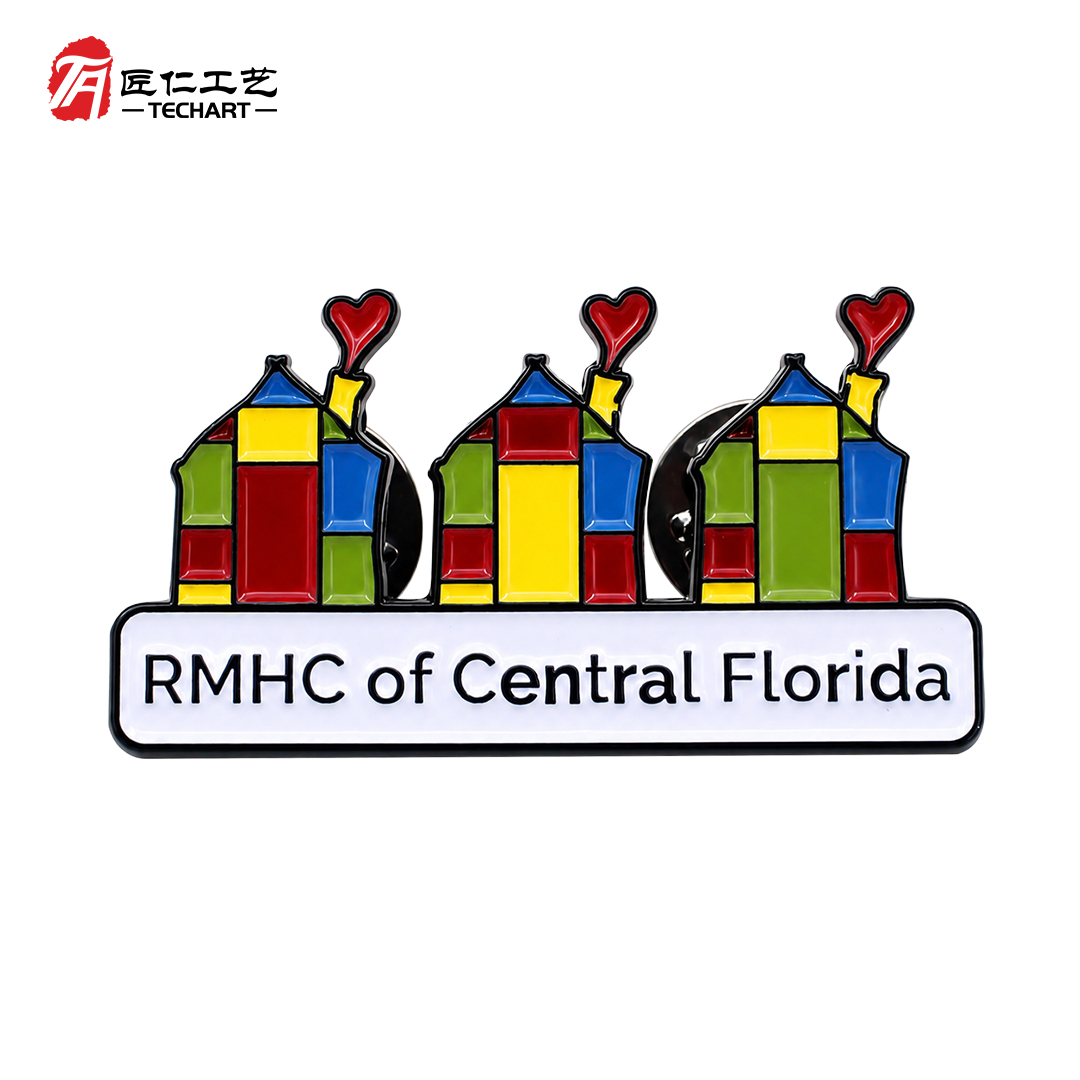
Soft enamel keeps the metal lines raised above the colour, which produces the tactile relief many event giveaway pins rely on.
The practical trade-off is often misread. Hard enamel is frequently described as the premium choice, and for a collectible trading pin that holds true — but each piece passes through repeated colour filling, baking and polishing, which lengthens the production window. When an event date is tight and the quantity is large, soft enamel usually delivers the better overall fit even though its surface is less refined. Buyers who specify hard enamel purely on perceived prestige, without checking the calendar, are the ones most exposed to late delivery.
Compliance Constraints: What US and EU Buyers Should Ask For
Safety requirements are the part of sports pin procurement that is least visible on a sample and most expensive to fix after shipment. Two standards anchor the documentation request. In the United States, CPSIA Title I Section 101 sets a total lead limit below 90 ppm. In the European Union, EN 71-3 covers the migration of 19 toxic heavy elements from toy and child-associated articles. Pins worn and handled by young spectators fall squarely inside the scope buyers are questioned on.
Beyond material testing, the supplier's management system and social compliance record determine whether a factory can be approved at all. The following certifications and audit references are held by Qingyuan TechArt Craftworks Co., Ltd.
| Document | Reference number | Issuer and validity | Scope |
|---|---|---|---|
| ISO 9001:2015 Quality Management System | BMCQ0125038M | Benchmarks Certification & Testing (Zhejiang) Co., Ltd.; 2025-01-24 to 2028-01-23 | Manufacturing of metal handicrafts |
| ISO 14001:2015 Environmental Management System | BMCE0125023M | Benchmarks Certification & Testing (Zhejiang) Co., Ltd.; 2025-01-24 to 2028-01-23 | Environmental management activities in metal handicraft manufacturing |
| ISO 45001:2018 Occupational Health and Safety | BMCS0125023M | Benchmarks Certification & Testing (Zhejiang) Co., Ltd.; 2025-01-24 to 2028-01-23 | Occupational health and safety management in metal handicraft manufacturing |
| SMETA 4-Pillar Ethical Trade Audit (Version 7) | ZAA600198019 | Intertek Shenzhen under the Sedex SMETA Code of Conduct; 2026-04-15 to 2028-04-17 | Labour standards, health and safety, environment, business ethics |
| Disney FAMA (Facility and Merchandise Authorization) | 1CAY2KP6YOQ3 | The Walt Disney Company; 2026-03-10 to 2027-03-10 | Manufacture and distribution of Disney-branded merchandise, including Marvel, Pixar and Lucasfilm properties |
| Coca-Cola Supplier Guiding Principles / Human Rights Policy assessment | SGP-0052001 | The Coca-Cola Company; dated 2026-01-15, rated GREEN – IN COMPLIANCE | Supplier conduct and human rights compliance across the TCCC supply chain |
Customs classification is the second compliance layer. Enamel pins are generally declared under HS code 7117.19.90, the heading for imitation jewellery of base metal. Buyers importing into different markets should confirm the code with their customs broker before the first shipment, because duty treatment and documentation requirements follow the declared classification rather than the product name used in the purchase order.
How Qingyuan TechArt Craftworks Co., Ltd. Fits the Sports Pin Supply Chain
Qingyuan TechArt Craftworks Co., Ltd. is a metal craft manufacturer based in Qingyuan City, Guangdong Province, China, producing custom lapel pins, medals, keychains, challenge coins, magnets, ornaments, golf merchandise and lanyards. The company operates a 25,000 m² factory with 500 skilled workers, an in-house team of 12 artworkers, and an export share of roughly 70 percent, with the United States and the European Union as its main markets.
For enamel pins specifically, published capacity reaches up to 10,000,000 pieces per month. The commercial terms most relevant to sports pin procurement are:
- Minimum order quantity: 100 pieces, with small orders accepted — a threshold that fits club, school and single-event requirements as well as multi-batch league programmes.
- Sampling: 5 to 7 days, including new mould making where required.
- Mass production: 12 to 25 days after sample approval.
- Customisation routes: OEM production from original artwork, covering contour, dimensions, thickness, base material, craft, plating, special effects, fittings and packaging; ODM modification of existing moulds for logo and colour changes, plating changes, fitting swaps, resizing, back engraving and packaging updates.
- Quality control: first article inspection, in-process patrol inspection with random spot checks, 100 percent final visual inspection, pre-shipment sampling inspection, and optional third-party testing.
The company is approved by Disney FAMA, NBC Universal and Coca-Cola, and holds ISO 9001, ISO 14001, ISO 45001 and Sedex SMETA 4-Pillar certification. For licensed sports properties, artwork confidentiality is handled through NDA arrangements, with design files kept confidential during and after production.
On pricing: this category has no reliable, publicly verifiable price band, because unit economics move with size, thickness, craft, number of enamel colours, plating and order volume. Buyers comparing quotations should compare them against a written specification rather than a headline unit figure, otherwise the lowest quote is often the least comparable one.
Case Reference: A 42,000-Piece Sports Event Trading Pin Programme
A confidential licensed sports event project in Asia, delivered under NDA, shows how the constraints described above interact in practice. The client was an international sports event organizing committee, and the requirement was official commemorative trading pins for athletes, staff and spectators across a phased, multi-batch schedule totalling 42,000 pieces.
The specification combined soft enamel with multi-colour filling, a die-struck metal base and antique silver plating. Production was structured around the event calendar rather than around factory convenience:
- Pre-production sample validation, followed by die and PANTONE colour sign-off before any mass production began.
- In-line dimension inspection during production, followed by a 100 percent final visual audit before packing.
- Custom back stamp with the event marking and a deluxe butterfly clutch.
- Strict adherence to official brand identity guidelines, with controlled colour tolerance and event packaging specification applied to every batch.
- Short lead-time scheduling matched to a tight event timeline, coordinated by a dedicated project manager across batches.
The project passed REACH and EN71 safety tests and was delivered in phases against the event schedule. The operational lesson for other buyers is that the approval workflow, not the artwork, is the real critical path: colour sign-off and dimension checks have to be locked before the first batch runs, because once production is underway the event date cannot absorb a re-run.
Market Context: Where Sports and Trading Pins Sit
The specialty pin category — custom, enamel and lapel pins — was valued at USD 3.2 billion globally in 2024 and is projected to reach USD 5.1 billion by 2033, according to Dataintelo's market report on pin buttons. That trajectory reflects two things buyers see directly in their own order books: collectible pin culture has moved from a niche hobby into an organised trading activity around leagues, conventions and events, and promotional budgets continue to favour small, wearable items that carry a logo at low unit cost.
The same growth puts pressure on compliance. As volume rises and licensing spreads across more markets, the difference between suppliers who can produce a good sample and suppliers who can hold a documented quality system across repeat batches becomes the deciding factor in supplier selection. Buyers evaluating manufacturers should treat certification coverage, test report availability and inspection structure as commercial criteria, not as paperwork.
Limits, Trade-offs and When a Different Approach Fits Better
A balanced sourcing decision has to acknowledge where a custom enamel pin programme stops being the right answer.
- Hard enamel is not automatically better. The additional filling, baking and polishing steps extend the production window. On a large order with a short event runway, specifying hard enamel without checking the lead time is a delivery risk rather than a quality upgrade.
- Zinc alloy 3D casting adds weight and cost. Deep relief produces a strong mascot or trophy effect, but a heavy pin on a lightweight cap or a child's lanyard may be the wrong physical choice; stamped brass or iron is often more appropriate for flat, lightweight requirements.
- Antique and dark plating finishes reduce contrast. Antique bronze, antique nickel and black nickel produce heritage or tactical looks, but fine linework can lose definition against a dark background compared with polished silver.
- Epoxy coating is protection, not a guarantee. A domed coating improves resistance to surface wear and sunlight fading during outdoor events, but it changes the hand-feel of the pin and does not make the piece indestructible.
- Licensed artwork adds a dependency. Where a league, club or entertainment property is involved, production cannot start before the rights holder approves artwork. No factory lead time can compress an approval that has not yet happened.
- Small quantities are supported but not equivalent. A 100-piece minimum makes club and single-event orders possible, yet the commercial structure of a small run differs from a 42,000-piece phased programme and should be quoted on its own terms.
What Changes Next in Sports Pin Procurement
Three shifts are already visible in how sports pins are specified. The first is documentation-led buying: buyers increasingly ask for EN71-3 and CPSIA reports, SMETA audit status and FAMA authorisation as part of the initial enquiry rather than after sample approval. The second is traceability at product level, with back stamping and laser engraving used for logos, serial numbers and project references so that a batch can be identified after delivery. The third is the normalisation of phased delivery, where a single event programme is split into several production and shipment windows to align with qualifying rounds, finals and post-event retail.
For buyers, the implication is straightforward: the supplier relationship is being evaluated on system capability rather than on artwork interpretation alone. Manufacturers with in-house mould making, documented inspection stages and recognised social compliance audits are better positioned to absorb those requirements than trading intermediaries who outsource production.
Frequently Asked Questions
What are sports pins, and how do they differ from standard promotional enamel pins?
Sports pins are custom enamel badges produced for teams, leagues, tournaments, clubs and event organizers. They are used as collectible trading pins, participant gifts, sponsor merchandise and spectator souvenirs. Functionally they are made with the same enamel pin processes as promotional badges, but they are procured under tighter conditions: a fixed event date, an approval chain for league or licensed marks, and a requirement that multiple delivery batches match in colour and finish.
Should a sports event order hard enamel or soft enamel pins?
Soft enamel pins suit budget-driven bulk distribution such as participant giveaways and sponsor pins, because colour is filled into recessed grooves and the metal lines stay raised. Hard enamel pins are polished flat after filling, which makes them scratch-resistant and better suited to collectible trading pins and high-end gifts. Hard enamel requires additional filling, baking and polishing steps, so it carries a longer production window and should not be specified for a tight event timeline without confirming lead time.
What safety documentation should a US or EU buyer request for sports pins?
Buyers shipping into the United States should request CPSIA compliance documentation; CPSIA Title I Section 101 sets a total lead limit below 90 ppm. Buyers shipping into the European Union should request EN 71-3 test documentation, which covers the migration of 19 toxic heavy elements. Nickel-free and lead-free test reports are available for custom enamel pins under both EN71-3 and CPSIA. Beyond material testing, ISO 9001, ISO 14001, ISO 45001 and SMETA 4-Pillar audit documentation indicate whether the manufacturing site itself has been independently assessed.
What are the minimum order quantity and lead times for custom sports pins?
The minimum order quantity is 100 pieces, and small orders are accepted. Sample lead time is 5 to 7 days, including new mould making where required. Mass production lead time is 12 to 25 days after sample approval. Phased event programmes should build these windows into a schedule that starts from the event date, allowing separate time for artwork approval by the rights holder where licensed marks are involved.
How does the custom order process work for a licensed sports property?
The standard process runs from artwork submission through craft, plating, size and quantity confirmation, then quotation and deposit, mockup and sample review, sample approval, mass production, and balance payment before shipment. For licensed products, official IP authorisation must be supplied and artwork must be approved by the brand owner before production begins. Artwork and design files are kept confidential under NDA, and back stamping or laser engraving can be added for logos, serial numbers or project references.
What causes enamel to chip off a pin, and how is it handled?
Enamel chipping is usually caused by insufficient baking during production, heavy impact or scratching in use, or an unclean metal base before filling. Handling starts with checking whether the pins suffered hard impact and verifying the baking process in production. Buyers should submit product photographs for evaluation so the cause can be assessed and a rework, replacement or process correction agreed. A passed paint adhesion test on the production batch indicates the enamel is not easily peeled from the metal base.
Can sports pins carry a serial number or brand marking on the back?
Yes. The backside can include a back stamp logo or laser engraving for a logo, serial number or website. This is commonly used on licensed and commemorative sports pins to mark the property, identify the production batch and support authenticity checks. Back marking is specified before production, because it forms part of the mould or engraving setup rather than a post-production addition.
For full product and capability details, the TechArt Craftworks company brochure is available for download: TechArt Craftworks 2026 brochure.
¿Tiene preguntas o necesita más detalles?
Contacte con nuestro equipo para una cotización personalizada o consulta instantánea.
Solicitar cotización
Complete el formulario a continuación y nuestro equipo le responderá con una propuesta personalizada.
Chat directo de WhatsApp
¿Prefiere chatear en tiempo real? Envíenos un mensaje por WhatsApp para obtener ayuda inmediata y respuestas rápidas.
- Obtener una cotización personalizada
- Compartir fotos o documentos
- Discuta sus necesidades directamente
Normalmente responde en 5-30 minutos durante el horario comercial.