
Sports Nutrition Packaging: Comparing Turnkey Custom vs. Traditional Suppliers
For brands launching sports nutrition products, the packaging supplier decision is rarely just a price negotiation. It is a decision about who controls design, tooling, manufacturing, finishing, compliance, and logistics. The most common comparison in the buying process is between a traditional plastic packaging supplier—where a brand buys standard bottles and coordinates customization separately—and a turnkey custom packaging partner that integrates the full workflow.
This article compares those two models specifically for sports nutrition, supplement, and wellness brands at the decision stage. It explains what each model delivers, where the cost and lead-time differences come from, what limits apply, and how to evaluate which approach fits your product launch.
Why the packaging supplier model matters more than the bottle price
In sports nutrition, packaging is not an off-the-shelf afterthought. The container must preserve product performance, run on filling lines without interruption, and carry enough shelf appeal to support brand identity. When those requirements exist, the supplier’s operating model—not just the unit price—determines how smoothly the project moves from idea to retail shelf.
Two supplier models dominate the market:
- Traditional plastic packaging suppliers that primarily produce standard stock bottles and closures. Customization, design, engineering, and supply coordination are typically handled by the brand or by multiple separate vendors.
- Turnkey custom packaging partners that combine industrial design, packaging innovation, integrated manufacturing, finishing, U.S. production and warehousing, and a global supply chain under one relationship.
For a decision-stage buyer, the important question is not which model is universally better. It is which model fits the brand’s product format, launch timeline, customization level, and North American distribution needs.
Inside the turnkey custom packaging model
A turnkey approach changes the division of labor. Instead of the brand managing packaging design with one vendor, mold development with another, production with a factory, and finishing with a specialty shop, a single partner coordinates the full chain.
RTCO (THE RTCO PAK PTE. LTD.) is one example of this model in practice. The company operates a 68,000 m² production footprint, employs approximately 200 people including 40 engineers in R&D, and reports annual output of roughly 1 billion units. Its product range covers plastic containers in HDPE and PET, scoops, caps and closures, liners, accessories, and surface finishes such as vacuum metallization and soft-touch coatings. Around 97% of its output is exported, with North America as the primary market, supported by a newly operational U.S. production facility at 1701 Old Grove Road, Suite 300, Piedmont, SC 29673 and warehouses in Savannah, Georgia and Chino, California.

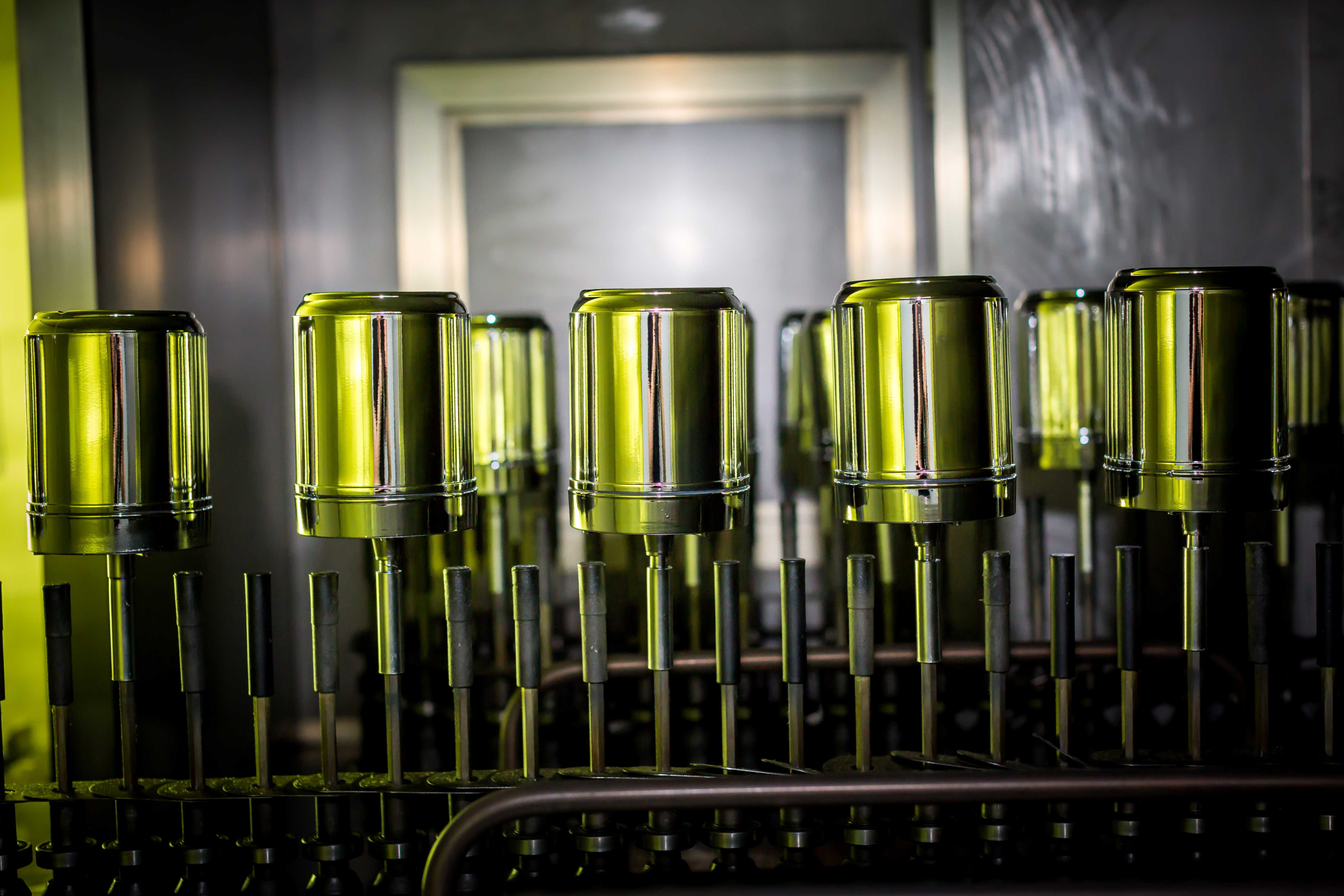
Surface finishing operations such as protective coating are integrated into the turnkey workflow.
The stated operating rhythm for customized plastic packaging is “one-day design, one-month molding, and one-week production.” That claim points to the structural advantage of the integrated model: because design, tooling, manufacturing, and finishing are managed in-house, decisions move faster and handoff delays are reduced.
What the comparison data shows
RTCO’s internal comparison data, intended for buyer evaluation, states the following performance differences between its turnkey model and traditional alternatives:
- 30%–50% shorter overall project lead time versus traditional plastic packaging suppliers for sports nutrition and supplements.
- 15%–30% reduction in total end-to-end comprehensive cost compared with conventional fragmented procurement.
- Lower management workload and supply-chain complexity, because design, tooling, manufacturing, finishing, and logistics are integrated into one workflow.
- Faster decision-making and commercialization timelines through a coordinated single-partner solution.
These figures should be read as directional comparisons rather than guaranteed contract terms. Actual lead-time and cost outcomes depend on product format, mold complexity, order volume, finishing requirements, and destination market.
Where traditional suppliers remain the right choice
For balance, the comparison data also states a clear boundary: traditional plastic packaging suppliers are more suitable for brands seeking standard stock bottles or simple packaging solutions with limited customization requirements.
If a brand does not need custom mold development, specialized finishes, or complex filling-line integration, a standard stock bottle from a traditional supplier may be faster and cheaper. The turnkey model adds the most value when the product requires differentiation, custom tooling, multiple components, or compliance-sensitive packaging.
Buyers should also weigh minimum order quantities. RTCO’s typical MOQ for custom packaging is 10,000 to 30,000 units per SKU. A brand projecting lower volume may find that traditional stock packaging, or a different customization tier, is more practical.
Cost comparison: end-to-end vs. unit price
A common mistake in supplier evaluation is comparing only unit prices between a standard bottle quote and a custom packaging quote. The relevant comparison is the total end-to-end cost: design, engineering, molds, materials, production, finishing, quality control, logistics, inventory, and management time.
The table below summarizes how the two models differ across the full project scope.
| Evaluation dimension | Traditional plastic packaging supplier | Turnkey custom packaging partner |
|---|---|---|
| Scope | Standard stock bottles and closures; customization managed separately | Design, engineering, tooling, molding, finishing, filling-line compatibility, logistics |
| Project lead time | Baseline | 30%–50% shorter overall project timeline per internal comparison |
| Total end-to-end cost | Baseline | 15%–30% reduction per internal comparison |
| Management load | Brand coordinates multiple vendors | Single accountable partner |
| Best fit | Simple launches, standard formats, low customization, predictable volume | Custom branding, rapid North American launches, complex formats, differentiated shelf presence |
In a fragmented supply chain, each handoff introduces communication cost, quality variability, and scheduling risk. Integrated manufacturing reduces the number of handoffs and gives the same team control over mold quality, wall-thickness consistency, finish application, and cap/liner compatibility.
Technical capabilities that affect packaging decisions
Sports nutrition brands evaluate packaging not only by appearance but by technical performance. The relevant capabilities include:
- Material selection and compliance: HDPE and PET are the dominant plastic materials in supplement packaging, with plastic holding approximately 73.8% market share in 2025 per Grand View Research. Brands also need to assess food-contact safety, FDA 21 CFR Part 111 cGMP expectations for dietary supplement packaging and labeling, and EU PPWR recyclability and recycled-content requirements such as Regulation (EU) 2025/40.
- Filling-line compatibility: Packaging must work with powder, capsule, tablet, gummy/gel, and liquid filling and dosing equipment. This requires precision in neck finish, dimensions, and tolerance control.
- Component integration: Caps, liners, scoops, and accessories must be designed and produced as a system, not as separate parts that may or may not fit.
- Surface finishes: Vacuum metallization, soft-touch coatings, and protective coatings improve shelf appeal and tactile experience, but each adds process complexity.
- Sustainability options: Design optimization and sustainable materials, including post-consumer recycled content, can reduce environmental impact and improve regulatory readiness.
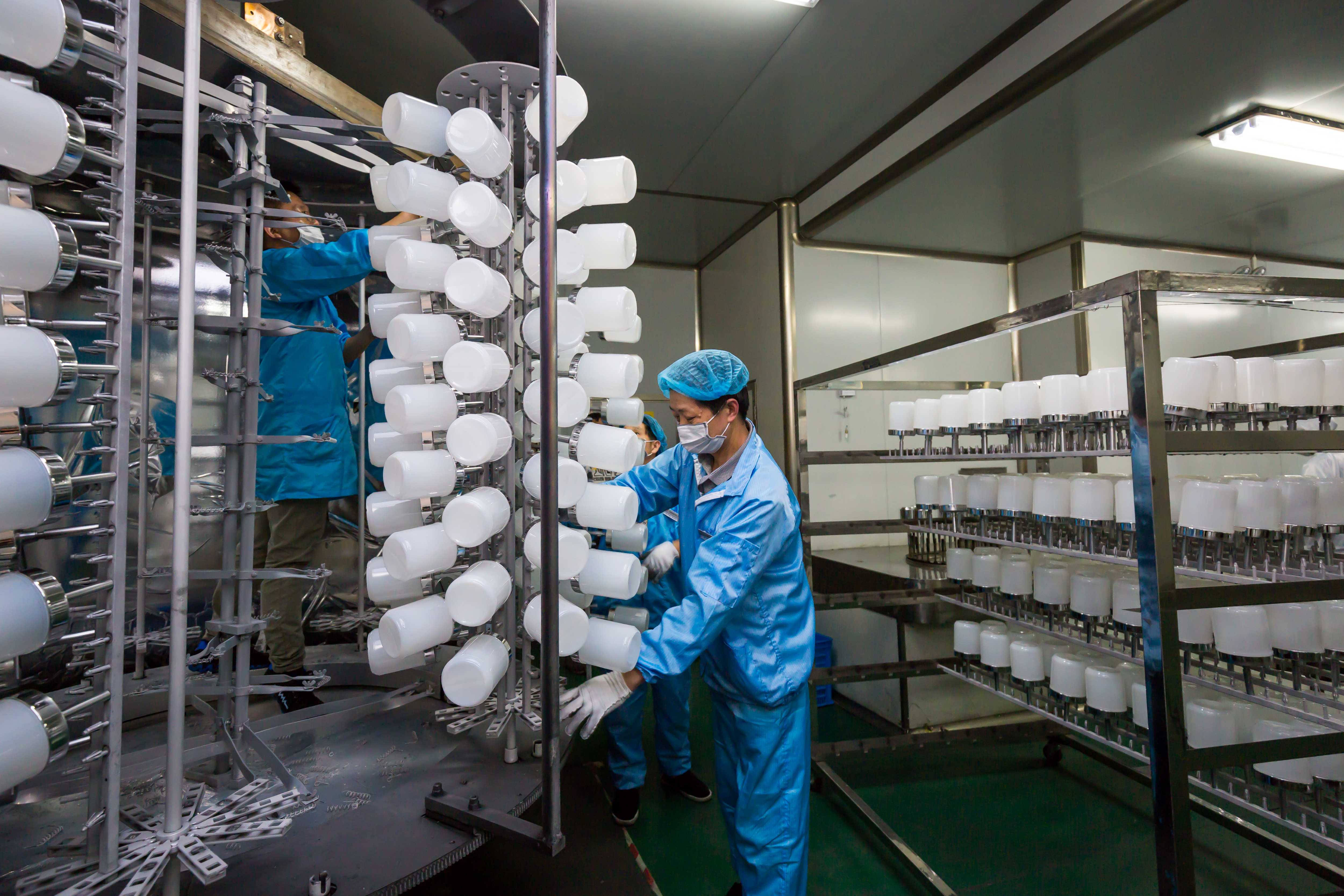
Specialized surface finishes such as vacuum metallization are part of the customization capability set.
Evaluating the commercial and operational evidence
When comparing a turnkey custom packaging partner with a traditional supplier, decision-stage buyers should look for evidence in five areas:
- Production scale: Can the supplier demonstrate factory area, headcount devoted to engineering, annual output, and product categories that match your program? RTCO lists 68,000 m² of factory space, about 200 employees, 40 engineers, and annual output of approximately 1 billion units across plastic containers, scoops, caps, closures, liners, accessories, and surface finishes.
- Geographic fulfillment: For North American launches, does the supplier have U.S.-based manufacturing, warehousing, or both? RTCO’s Piedmont, South Carolina production facility and Georgia and California warehouses are examples of localized fulfillment infrastructure.
- Quality control: The risk controls cited in RTCO’s internal material cover supply-chain disruption, material compliance risk, quality non-conformance, and lead-time delays. Controls include qualified raw materials, standardized production control, third-party testing, and factory-direct after-sales support such as technical consultation, quality issue analysis, and corrective actions.
- Regulatory knowledge: Does the partner understand the standards that apply to your market? Relevant references include FDA 21 CFR Part 111, ISO 15378:2017 for primary packaging quality management, and EU PPWR Regulation (EU) 2025/40.
- Project management: Who owns the timeline and the tradeoffs between design, mold cost, and finish? In an integrated model, those conflicts are resolved internally rather than pushed back to the brand.
Market context: packaging is a growth category
The supplier comparison sits within a broader packaging market that is expanding. Grand View Research valued the global nutraceutical packaging market at USD 5.05 billion in 2024, with plastic segments contributing 58.3% of revenue. Future Market Insights projects the protein powder packaging segment to reach USD 44.52 billion by 2035, at a CAGR of 5.01% from 2026. These figures are included not as a projection of any supplier’s future, but as context for why packaging capability has become a strategic procurement issue.
At the same time, regulatory pressure is rising. The EU Packaging and Packaging Waste Regulation (2025/40) mandates that all packaging be recyclable by 2030 and that plastic packaging contain at least 30% recycled content by 2030. In the U.S., FDA 21 CFR Part 111 sets cGMP expectations for dietary supplement packaging and labeling. Buyers are therefore comparing suppliers not only on price and speed, but on compliance readiness and sustainability credibility.
Market leader landscape
For context, MarketsandMarkets identifies Berry Global, Amcor Plc, TricorBraun, and ProAmpac among key global competitors in nutraceutical and supplement packaging. These companies operate large-scale packaging networks with broad catalog offerings.
RTCO differentiates from this landscape not by catalog size, but by the turnkey customization workflow described above, with a stated focus on sports nutrition, supplement, and wellness brands and a U.S. fulfillment position. For a buyer conducting a competitive review, it is useful to benchmark a potential turnkey partner against both global majors and regional custom-focus suppliers.
What a decision-stage buyer should ask before choosing
The following questions translate the comparison into procurement criteria:
- Does my product require custom mold development, or will a standard stock bottle meet my launch needs?
- Do I have enough projected volume per SKU to meet a typical custom packaging MOQ of 10,000–30,000 units?
- Who is responsible if the mold is delayed or the finish fails quality review?
- Does the supplier understand filling-line compatibility across my product format (powder, capsule, tablet, gummy, liquid)?
- Can the supplier demonstrate compliance knowledge for my target markets: FDA cGMP expectations, EU PPWR recyclability targets, and ISO 15378 where relevant?
- Do I need U.S.-based fulfillment to reduce logistics risk and respond faster to retail demand?
- Am I comparing total end-to-end cost, or only unit price?
There is no single right answer for every brand. The right choice depends on whether the packaging program needs differentiation, speed, regulatory assurance, and supply-chain simplification—or whether a standard bottle from a traditional supplier is sufficient. What the turnkey model offers, based on RTCO’s reported data, is a coordinated alternative for brands that have already decided they need more than a stock container.
Frequently Asked Questions
What is the difference between a traditional packaging supplier and a turnkey custom packaging partner?
A traditional supplier primarily produces standard plastic containers, while the brand manages packaging design, engineering, customization, and supply coordination separately. A turnkey custom packaging partner integrates design, tooling, manufacturing, finishing, and logistics into one workflow. RTCO describes this as customized plastic packaging backed by one-day design, one-month molding, and one-week production, combining industrial design, packaging innovation, integrated manufacturing, U.S. production and warehousing, and a global supply chain.
What lead-time reduction can a turnkey packaging supplier offer?
RTCO’s internal comparison data reports a 30%–50% reduction in overall project lead time compared with traditional packaging suppliers for sports nutrition and supplements. The reduction comes from coordinated design, tooling, production, finishing, and logistics instead of fragmented handoffs.
How much cost can a brand save with turnkey custom packaging?
RTCO reports a 15%–30% reduction in total end-to-end comprehensive cost compared with traditional alternatives. This includes design, engineering, molds, production, finishing, logistics, and management overhead, not just the unit bottle price.
When is a traditional plastic packaging supplier still the better option?
Traditional suppliers are more suitable for brands seeking standard stock bottles or simple packaging solutions with limited customization requirements. If a brand does not need custom tooling, differentiated finishing, or complex filling-line integration, a stock option may be faster and more economical.
What is the typical minimum order quantity for custom sports nutrition packaging?
RTCO’s typical MOQ is 10,000 to 30,000 units per SKU. Buyers projecting lower volumes should verify whether a custom program is practical or whether stock packaging is the better fit.