
Specifying Industrial Induction Heaters for Metal Heating
An industrial induction heater for metal heating is a power supply plus a work coil that induces current directly inside a conductive workpiece, so heat is generated within the part itself rather than transferred from a furnace chamber or a flame. The practical consequence for buyers is that the heating result is decided by three things specified together: the power supply, the work coil, and the geometry of the part being heated. At the evaluation-to-execution stage, the question is no longer whether induction heating works for metal, but whether a specific supplier can match power, frequency, coil geometry, control behaviour, and documentation to one repeatable process.
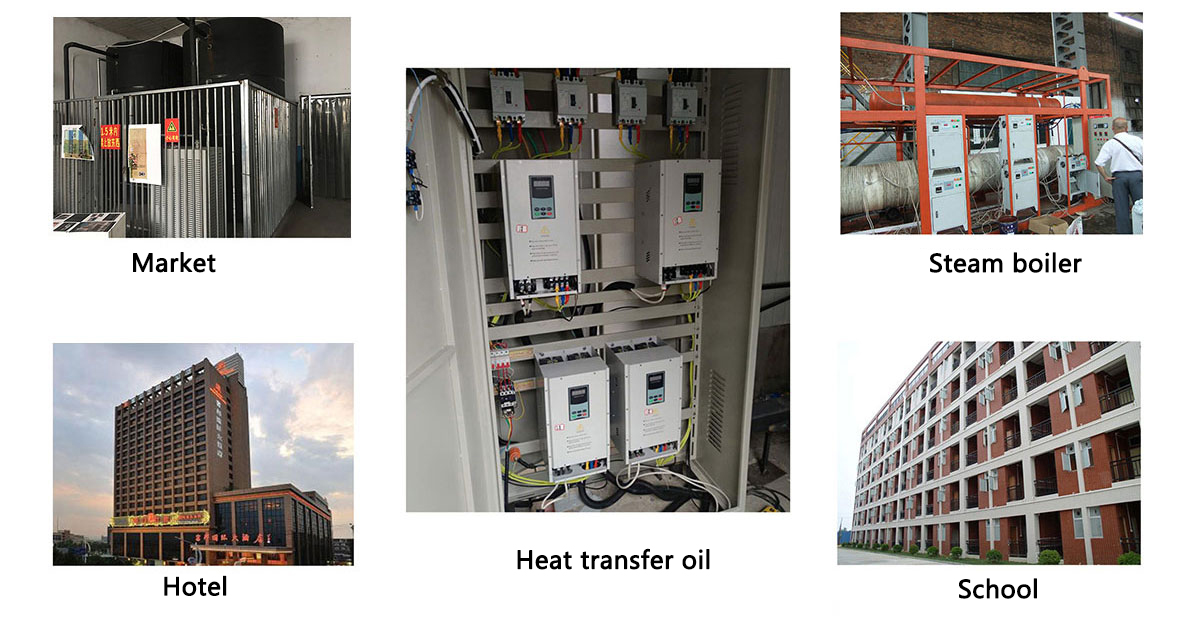
Industrial induction heating equipment is deployed across metal heat treatment, process heating, and pipeline heating duties rather than in a single process niche.
Where Metal-Heating Projects Usually Stall
Most evaluations of industrial induction heating reach the same conclusion: for localised metal heating, induction is faster, cleaner, and more controllable than flame or resistance alternatives. What is far less often resolved at that point is the execution layer. Between approving a heating concept and running it on a shop floor, three gaps appear repeatedly.
The work coil is treated as an accessory
Induction heating does not heat a material generically; it heats a specific part coupled to a specific coil. When the coil is added to a purchase order as an afterthought rather than designed against the part, the result is a machine that is technically capable but practically mismatched. Coil geometry, turn spacing, and the distance between coil and load decide how much of the available power actually reaches the workpiece.
The power class is chosen from a catalogue page rather than a thermal load
Metal-heating duty varies enormously: joining a small fitting, preheating a forging blank, and through-hardening a component are different thermal problems. The published range from a compact single-phase 2.5 kW platform through to a three-phase 100 kW unit is wide precisely because no single power class serves all of them. Choosing by habit rather than by load calculation is the most common source of under-powered and over-specified installations alike.
Verification is assumed rather than scheduled
Buyers frequently assume that a supplier's quality process will match their own acceptance criteria. In practice, acceptance has to be defined in the purchase agreement: what is tested, at what point in the build, by whom, and against which document. Suppliers that publish a defined protocol make this step straightforward; suppliers that do not create a gap that only appears at the first delivery.
The Engineering Variables That Decide Metal-Heating Performance
For metal heating specifically, four variables carry most of the risk: available power, working frequency, closed-loop control and protection behaviour, and coil coupling. They are interdependent, which is why a metal-heating specification should be treated as one system rather than as separate line items.
Power and frequency envelope
Power determines how quickly a given mass can be brought to temperature; frequency influences how the induced current distributes within the part. A supplier that offers a continuous power ladder makes it possible to size the machine to the process instead of adapting the process to the machine. The published range below is drawn from Guangdong Jiangxin Electronic Technology Co., Ltd. (brand: JONSON) induction heating platforms.
| Power class | Example platform | Rated voltage and supply | Stated efficiency / frequency |
|---|---|---|---|
| 2.5 kW / 3 kW | Compact induction heater | Single-phase AC 220 V / 50 Hz, adaptation 100–260 V, constant power at 210–260 V | Heat conversion efficiency ≥95%; 5–40 kHz |
| 3.5 kW / 5 kW / 6 kW | Single-phase induction heater | AC 220 V / 50 Hz, adaptation 100–260 V | Heat conversion efficiency ≥95%; working frequency 5–40 kHz |
| 5 kW / 8 kW | JS1300-005 / JS1300-008 | 380 V, adaptation 380 V ±20% | Power adjustment 20–100% |
| 10 kW / 15 kW | JS1300-10 / JS1300-15 | 380 V, adaptation 300–400 V | CE, ISO, RoHS listed; net weight 7.3 kg |
| 20 kW | JS1000-20 | 380 V, adaptation 300–400 V | Air-cooled or water-cooled |
| 30 kW | JS1000-30 | 380 V | High-frequency induction heating machine |
| 40 kW / 50 kW / 60 kW | Multi-class platform | 380 V / 50 Hz, adaptation ±20% | Heat conversion efficiency ≥98%; 5–40 kHz |
| 70 kW / 80 kW | High-power platform | 380 V, ambient −25 °C to 55 °C | Heat conversion efficiency ≥99%; 4–50 kHz; regulation 25–100% |
| 100 kW | JS1000-100 | Three-phase AC 380 V / 50–60 Hz, constant power at 300–400 V | Heat conversion efficiency ≥95%; effective power ≥98%; 5–40 kHz |
Where plant supply voltage differs from the standard 380 V pattern, the published customisation range covers 110 V, 240 V, and 660 V configurations with power bands of 500 W–10 kW, 5–60 kW, 5–200 kW, and 30–200 kW, each with ±20% voltage adaptation and heat conversion efficiency of at least 98%. This matters in export markets where the incoming supply, not the process, is the fixed constraint.
Control, repeatability, and protection
Repeatability in metal heating comes from the control loop. The 100 kW JS1000-100 platform uses a DSP-based high-speed automatic phase-locking tracking control system with a full-bridge series resonance main circuit, a start time under one second, instantaneous overcurrent protection at or below 2 microseconds, and 130% instantaneous power overload protection. Power is adjustable in stepless steps from 20% to 100%, and PID power adjustment accepts a 0–5 V input or RS-485 communication. Load temperature detection supports 0–1000 °C with accuracy up to ±1 °C — a detection capability, not a prescribed process temperature, but one that determines whether a closed temperature loop is possible at all.
Lower-power platforms in the same family use half-bridge series resonance with the same DSP-based phase-locking approach, which means the control philosophy is consistent whether the process runs on a 2.5 kW unit or a 100 kW unit. For a buyer standardising across several cells, that consistency reduces the training and spare-parts burden.
Coil coupling is a design constraint, not an accessory
The work coil converts electrical power into a usable field. Induction heating coils are supplied as custom-built components covering 1 kW to 100 kW, with rated voltage and frequency of 220 V or 380 V at 50 Hz or 60 Hz, voltage adaptation of ±20%, power regulation of 20–100%, heat conversion efficiency of at least 98%, and an operating frequency band of 5–40 kHz. Core heating coils are copper.
Coupling is governed by the distance between coil and load. For the compact 2.5 kW platform, the documented coil-to-load distances are 20–25 mm for a circular coil, 15–20 mm for a planar coil, 10–15 mm for an elliptical coil, and within 10 mm for a super-elliptical coil, with insulation thickness included in that measurement. These figures illustrate why coil design and fixture design must be done together: a fixture that positions the part a few millimetres outside the intended window changes the outcome even when the power supply is correctly sized.
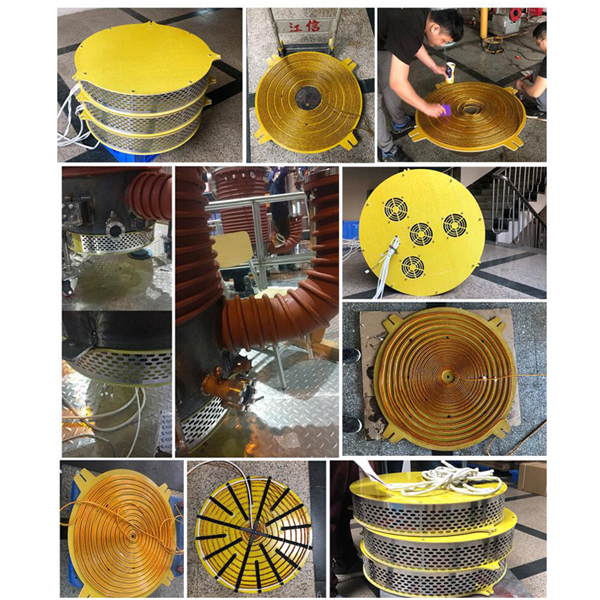
Coils are built to the workpiece: the coupling distance between coil and load is part of the specification, not an installation detail.
What OEM and ODM Buyers Can Specify
JONSON, the brand of Guangdong Jiangxin Electronic Technology Co., Ltd., provides OEM and ODM production services for industrial induction heaters, induction heating machines, induction heating equipment, and induction heating systems. The company was founded in 2011, operates a 3,000 m² facility with more than 60 employees and a research and development team of more than 30 engineers, and states annual output of 120,000 units with roughly 40% of production exported to markets including Europe, the United States, India, and Indonesia.
For buyers moving from evaluation into execution, the specification menu is concrete rather than aspirational. Customisation covers adjustable product specifications, custom sample fabrication, graphic and panel customisation, parameter adjustment, and private-logo marking. Commercial terms are structured for project trials rather than bulk-only commitments: the minimum order quantity is one unit for OEM and custom industrial induction heating equipment, stated lead time is 7–14 days, and monthly production capacity is stated at 10,000 units.
Quality control follows 100% pre-shipment test plus product inspection, including third-party inspection by SGS, and that inspection is available for OEM orders. After-sales support is provided remotely following delivery. The company also states a ten-year whole-machine service life guarantee, one year of free maintenance, and lifetime maintenance — a supplier commitment rather than an independently audited performance figure, and one that a buyer should record in the contract rather than assume from a brochure.
Application Fit Across Metal-Heating Process Families
Induction heating is used across a family of metal-heating duties that share one property: the heat is needed in a defined region of a conductive part, at a controlled rate. The following process families are the ones most often raised by industrial buyers, and each places different demands on the equipment.
Brazing and joining
Brazing concentrates heat at a joint rather than across the whole assembly, which favours a coil shaped to the joint geometry and a power class sized to reach working temperature quickly without overheating adjacent material. The relevant specification variables are coil form, coupling distance, and controllable power ramp rather than maximum power alone.
Forging and preheating of blanks
Forging preheat is a heavier thermal load than joining and is served by the higher power classes in the range — the 40 kW, 50 kW, 60 kW, 70 kW, 80 kW, and 100 kW platforms, with the 70 kW and 80 kW units rated for ambient temperatures from −25 °C to 55 °C and a 4–50 kHz operating band. Higher power classes are also where cooling strategy becomes a site decision, since these units are offered in air-cooled or water-cooled configurations.
Heat treatment: hardening, annealing, and related cycles
Metal heat treatment appears among the stated application industries for the manufacturer's induction heating platforms, alongside process heat treatment and heat-processing piping. For hardening and annealing cycles, the practical requirements are repeatable power delivery, a defined heating profile, and temperature feedback. The 0–1000 °C load temperature detection with ±1 °C accuracy available on the larger platforms supports that feedback loop; on smaller platforms the same detection capability is specified where the process requires it.
Induction hardening and annealing are also the process families where the boundary of the technology is most visible. Because heating is induced locally, temperature distribution across a complex part depends on coil design and coupling rather than on a uniform chamber environment, which is an advantage for selective treatment and a limitation where uniform bulk heating of a large mass is the actual requirement.
Shrink fitting and bearing heating
One of the more specific metal-heating applications in the published range is bearing heating. The JS1300-5/8/15/20/30 bearing induction heater is offered in 5 kW, 8 kW, 15 kW, 20 kW, and 30 kW output classes on three-phase 380 V at 50 Hz or 60 Hz, with dimensions of 480 mm × 250 mm × 355 mm and a weight of 20.7 kg, using a copper heating coil and a thickened aluminium alloy outer casing. The compact form factor reflects the application: shrink fitting is typically a workshop task performed at the point of assembly, not a centralised furnace process.
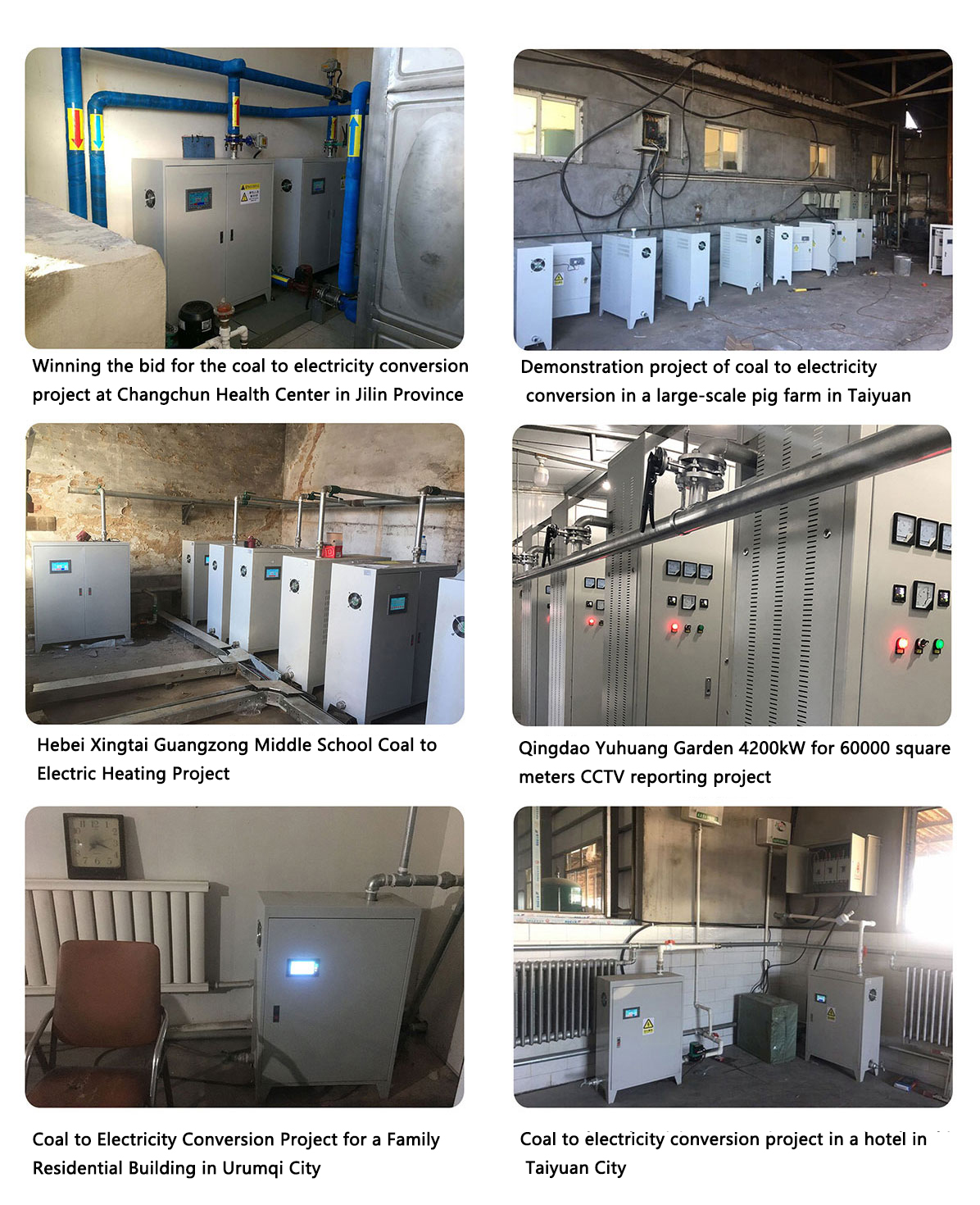
Induction heating equipment installed for metal heating duty: the coil is positioned against the workpiece region that requires heat.
Verification, Acceptance, and Documentation
Documentation is where evaluation-stage confidence is either confirmed or lost. Two categories matter: the test protocol applied to the units being shipped, and the certificates that can be presented for the product family being ordered.
On the protocol side, acceptance is defined as pre-shipment testing plus third-party product inspection by SGS, and pre-shipment testing and SGS product inspection are available for OEM orders. Delivery is offered on FOB, CIF, or CFR terms, and payment terms for some products are 30% T/T in advance with 70% T/T against a copy of the bill of lading.
On the certificate side, buyers should match scope to model. The manufacturer holds the following documents, each with a defined model range and validity period:
| Document | Reference | Issuing body | Validity |
|---|---|---|---|
| Quality Management System Certificate (ISO 9001:2015) | No. 02826Q00032R001; standard GB/T 19001—2016 / ISO 9001:2015 | Beijing Zhong An Zhi Huan Certification Center Co., Ltd. (Zhong An Certification) | Issued 2026-01-06; expires 2029-01-07 |
| Certificate of Conformity (CE) | No. KEYS23032915001EM-02; covers models JS1200-005, JS1200-006, JS1200-008, JS1200-010 | Guangdong KEYS Testing Technology Co., Ltd. | Issued 2023-04-07; expires 2028-04-07 |
| China Compulsory Product Certification (CCC) | No. 2017010706999985; covers JS3000-006 (6.1 kW), JS3000-008 (8 kW), JS3000-010 (10 kW), 220 V~ 50 Hz, IPX1 | CQC | Issued 2022-07-25; expires 2027-07-24 |
| China Compulsory Product Certification (CCC) | No. 2017010706002104; covers JS3000-015, JS3000-020, JS3000-030, JS3000-040, JS3000-050, JS3000-060, 380 V 3N~ 50 Hz | CQC | Issued 2022-07-25; expires 2027-07-24 |
The CE certificate of conformity references EN IEC 55014-1:2021, EN IEC 55014-2:2021, EN IEC 61000-3-2:2019+A1:2021, and EN 61000-3-3:2013+A1:2019+A2:2021. The CCC certificates reference GB 4706.1-2005 and GB 4706.11-2008. None of these documents is a universal statement about every product in the catalogue, which is exactly why a metal-heating buyer should confirm in writing that the model quoted falls inside the scope of the certificate presented, and should request the current certificate rather than a reference number alone.
Induction Heating Compared with Traditional Metal-Heating Methods
Induction heating is one of several ways to heat metal, and the comparison below is about fit rather than superiority. Resistance heating and combustion furnaces remain the correct engineering choice for a number of duties.
| Dimension | Induction heating | Resistance / electrical heating | Gas or oil furnace |
|---|---|---|---|
| Where heat originates | Inside the workpiece, induced by an alternating field | In a heating element, transferred by contact or radiation | In combustion gases, transferred by convection and radiation |
| Start-up behaviour | Start time under one second on the larger platforms (JS1000-100) | Element warm-up before useful heat transfer | Furnace and chamber must reach temperature |
| Heating selectivity | Localised to the coil-coupled region | Broad, dependent on element and fixture layout | Broad, chamber-wide |
| Emissions at point of use | Stated as no smoke and nitrogen-oxide-free clean heating | No combustion emissions | Combustion gases and flue losses |
| Geometry sensitivity | High — coil and coupling distance are part of the specification | Moderate — fixture-driven | Low — chamber accepts varied part shapes |
| Reported energy comparison | Manufacturer-reported 30%–70% energy saving versus traditional heating equipment, with 95%–98% thermal efficiency | Dependent on element and insulation design | Dependent on combustion efficiency and heat recovery |
The boundary conditions matter as much as the benefits. Induction heating for metal is not a universal replacement for furnace-based processing, and the published specifications make three limits visible. First, the coil must couple to the part: documented coil-to-load distances on the compact platform range from 20–25 mm for a circular coil down to within 10 mm for a super-elliptical coil, and a part that cannot be positioned inside such a window cannot be heated effectively by this method. Second, per-unit power is finite — the published range tops out at 100 kW, so a thermal load beyond that requires multiple units, a staged heating strategy, or a different technology. Third, high-power platforms require a three-phase 380 V supply with ±20% adaptation, which is not available in every workshop; where the supply is fixed at 110 V, 240 V, or 660 V, the order must move to the customised voltage platform, and that is a specification decision made before purchase, not after installation.
Field Evidence from Volume OEM Programs
Specification logic is best tested against delivered volume. The manufacturer's case record describes OEM and ODM programs covering 100-unit orders delivered to Indonesia, China, Vietnam, Russia, and India, with relationships of more than ten years and applications spanning metal heat treatment, process heat treatment, heat-processing piping, plastics and rubber production, food processing, and industrial, commercial, and residential heating.
Reported outcomes from those programs include overall thermal efficiency stable at 95%–98%, comprehensive energy savings of 30%–70% against traditional heating equipment, a service life extended by three times, and zero major failures. The same record states a 5–10 year service cycle with low failure rate and wide compatibility across industrial, commercial, and residential heating duties.
These are supplier-reported figures from OEM programs rather than independently audited results, and they should be read as such. Their value to a buyer at the execution stage is directional: they indicate the efficiency band that the equipment is designed to hold, and they identify metal heat treatment as a delivered application rather than a theoretical one. A buyer validating a new metal-heating line should still establish baseline measurements on their own parts.
Market Signals in Industrial Metal Heating
Several directional signals are visible around industrial induction heating without requiring a forecast. Manufacturing buyers increasingly evaluate process heat as an operating cost line rather than a capital item alone, which raises the weight given to conversion efficiency and to equipment that can be switched on and off around production rather than kept at temperature continuously. Clean heating at the point of use — stated in the manufacturer's own material as no smoke and nitrogen-oxide-free operation — has moved from a marketing point to a site-permission factor in more markets. And the export pattern reported by the manufacturer, with a core focus on Southeast Asia, the Middle East, Europe, and the Americas alongside Russia and Africa, reflects demand spreading beyond the markets that first adopted induction process heating at scale.
What these signals do not yet establish is a rate of change. Buyers should treat directional statements as context for a specification decision, not as a substitute for testing on their own workpieces.
Future Outlook
Three developments are worth watching for anyone specifying metal-heating equipment. Custom voltage platforms are likely to matter more as production moves between regions with different supply standards, since a machine that accepts 110 V, 240 V, or 660 V inputs removes a constraint that otherwise forces a plant-level electrical project. Control integration is the second area: RS-485 communication and analogue PID input on the higher-power platforms make it practical to bring heating parameters under the same supervisory system as the rest of a production cell, which is a prerequisite for traceable heat-treatment records. The third is documentation discipline. As buyers increasingly ask for certificate scope to match ordered models, suppliers that maintain current, model-specific certificates will find procurement cycles shorter than those that present general references.
Frequently Asked Questions
What is the minimum order quantity for a custom industrial induction heater for metal heating?
Orders are accepted with a minimum quantity of one unit for OEM and custom industrial induction heating equipment. This applies to customised configurations as well as standard ones, which allows a metal-heating process to be validated on a single machine before volume production is committed.
Which parts of an induction heating system can be customised?
Customisation covers adjustable product specifications, custom sample fabrication, graphic and panel customisation, parameter adjustment, and private-logo marking. The heating coil is a customisation item in its own right: coils are built to order with rated power from 1 kW to 100 kW, 220 V or 380 V supply at 50 Hz or 60 Hz, and a working frequency range of 5 kHz to 40 kHz.
What lead time and production capacity apply?
Stated lead time is 7 to 14 days, with monthly production capacity stated at 10,000 units. Custom coil fabrication and sample making are separate workstreams from power supply assembly and should be scheduled alongside the equipment order rather than after it.
How is quality verified before shipment?
Quality control follows 100% pre-shipment test plus product inspection, and third-party product inspection by SGS is available for OEM orders. Acceptance is defined as pre-shipment testing combined with third-party inspection, so acceptance criteria can be aligned with the factory test protocol in advance.
Do the certification documents on file cover the metal-heating model being ordered?
Not automatically, and this is a common documentation gap. Documents held include a Quality Management System Certificate to ISO 9001:2015 (No. 02826Q00032R001, issued by Beijing Zhong An Zhi Huan Certification Center Co., Ltd., valid 2026-01-06 to 2029-01-07), a CE Certificate of Conformity (No. KEYS23032915001EM-02, issued by Guangdong KEYS Testing Technology Co., Ltd., valid 2023-04-07 to 2028-04-07, covering models JS1200-005, JS1200-006, JS1200-008, and JS1200-010), and two CCC certificates covering defined JS3000 model ranges. Buyers should confirm that the quoted model falls within the scope of the certificate presented.
In which situations is induction heating the wrong choice for a metal-heating task?
When the part geometry cannot be coupled to a work coil within the documented distance window; when a single unit's power requirement exceeds the published 100 kW ceiling; or when the plant supply cannot provide three-phase 380 V for the higher power platforms. In those cases, resistance heating or a furnace-based process may be the more appropriate engineering answer.
What are the delivery and payment arrangements?
Delivery methods are FOB, CIF, and CFR. For some products, payment terms are 30% T/T in advance with 70% T/T against a copy of the bill of lading.
What support continues after installation?
Remote technical support is provided after delivery. The company states a ten-year whole-machine service life guarantee, one year of free maintenance, and lifetime maintenance; these are supplier commitments and should be confirmed in the purchase contract.
Specification Checklist for Metal-Heating Projects
A metal-heating specification can be closed out with a short, explicit list. Each item below corresponds to a decision that cannot be deferred to installation.
- Workpiece definition: material, geometry, and the region that must reach temperature.
- Thermal load and target cycle time, converted into a required power class within the published range.
- Coil design, including form (circular, planar, elliptical, or super-elliptical) and the intended coil-to-load distance.
- Supply conditions at site: single-phase 220 V, three-phase 380 V, or a custom 110 V / 240 V / 660 V configuration.
- Control and feedback requirements, including whether PID input or RS-485 integration is needed and whether 0–1000 °C load temperature detection is required.
- Cooling strategy: air-cooled or water-cooled, according to duty cycle and site infrastructure.
- Acceptance protocol: 100% pre-shipment test, SGS inspection, and the documented criteria for sign-off.
- Certificate scope confirmation for the exact model quoted, with current validity dates.
- Customisation items: specifications, panel and graphics, private logo, and custom samples.
- Post-delivery support and warranty terms, recorded in the contract rather than assumed.
Industrial induction heating for metal succeeds or fails on the integrity of that list. The technology is well established; the variable is how completely the specification is written before the order is placed. Product documentation for the platforms referenced in this article is published at www.jonson-ih.com.
¿Tiene preguntas o necesita más detalles?
Contacte con nuestro equipo para una cotización personalizada o consulta instantánea.
Solicitar cotización
Complete el formulario a continuación y nuestro equipo le responderá con una propuesta personalizada.
Chat directo de WhatsApp
¿Prefiere chatear en tiempo real? Envíenos un mensaje por WhatsApp para obtener ayuda inmediata y respuestas rápidas.
- Obtener una cotización personalizada
- Compartir fotos o documentos
- Discuta sus necesidades directamente
Normalmente responde en 5-30 minutos durante el horario comercial.