
Specifying Easy-Wash Functional Knit Fabric for Fast Fashion
Specifying Easy-Wash Functional Knit Fabric for Fast Fashion
Casual and fast-fashion programmes now buy functional knit fabric for the same reasons activewear brands do — wash performance, dry time, movement and recycled content — but with shorter development cycles, tighter price points and far less tolerance for variation between one order and the next.
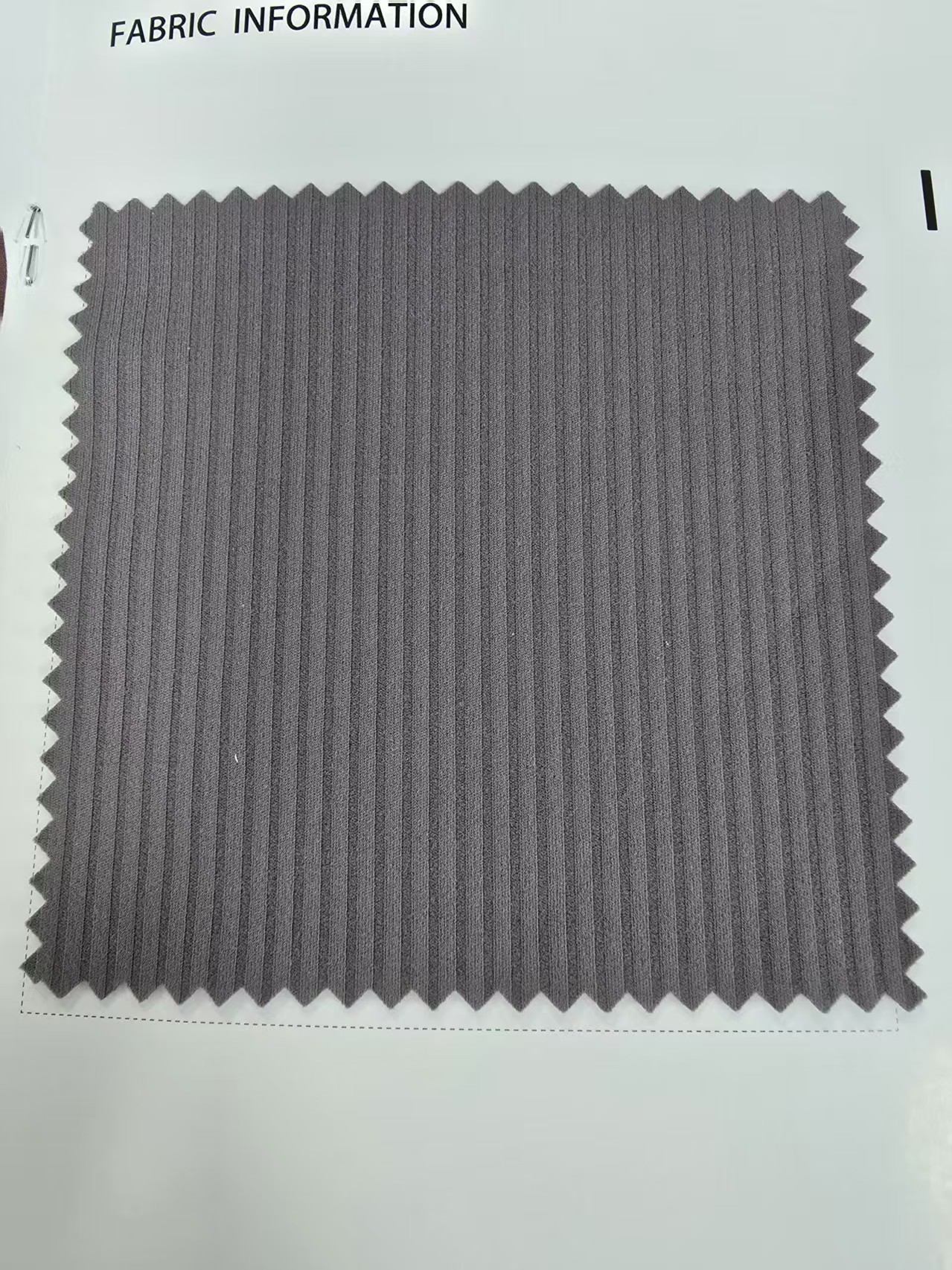
Why the casual and fast-fashion knit brief has changed
The buying logic in fast fashion is simple: a basic that sells gets reordered, and a basic that generates returns gets dropped. Increasingly, the trigger for returns is not fit or colour but how a garment behaves after repeated home laundering — whether it holds its shape, keeps its colour, and still feels dry and comfortable on a warm day. That is why easy-wash, quick-dry and stretch language has migrated out of performance-activewear briefs and into everyday basics programmes.
Two market datapoints frame the scale of that migration. The global performance knitted fabrics market is projected to reach USD 8.58 billion in 2026 (Fact.MR), while the broader knitted fabric market was estimated at USD 35.7 billion by 2025 with a 6.0% CAGR (Grand View Research). Engineered knits are therefore not a specialist niche sitting beside the commodity knit trade — they represent a growing share of the knit volume that casual brands already purchase.
For buyers, the practical question is no longer whether functional knit fabric belongs in a casual range. It is which functional knit specification fits which programme, and how to write that specification so that a sample approval still means something three reorders later.
Easy-wash is a specification, not a claim
Easy-wash is not a single chemical finish. It is an outcome produced by fibre choice, knit structure and finishing working together, and in a purchase specification it should be broken into separately testable requirements. Four are usually enough to protect a fast-fashion programme:
- Dimensional stability — the change in length and width after the agreed number of home laundering cycles.
- Colourfastness — shade change and staining after washing, including the interaction with any print or dye method used.
- Surface stability — pilling, fuzzing and snagging resistance, which determines whether a basic still looks saleable at the fourth reorder.
- Retention of hand-feel and function — whether softness, wicking and stretch survive laundering rather than washing out with the finish.
Zhangjiagang E-king Textile Co., Ltd., a functional knit fabric manufacturer based in Zhangjiagang in China's Jiangsu Province, lists easy-wash among the documented parameters of three of its fabric platforms: EKWP2270-D6 on a nylon/spandex basis, EKWP1912-DSP on a nylon spandex or recycled nylon spandex basis, and 20ETW1028-DSP on a poly/spandex basis. The company's finishing capability covers peaching, brushing, fuzzing, transfer printing, dispersed printing, acid printing, digital printing, foil and emboss, alongside chemical finishes that include antibacterial and odour control, moisture wicking and quick drying, UV protection, anti-static, waterproof, stain and oil prevention, thermal storage and warming preservation, and cooling treatment.
That breadth is precisely why specification discipline matters. Because easy-wash can be engineered through more than one route, two fabrics can both carry the description and still behave differently after ten washes. The buyer's protection is to define the test method, the number of laundering cycles and the acceptable change in each dimension, rather than accept the adjective on its own.
Recycled content: what changes in the specification
Recycled content has moved from a marketing line to a sourcing requirement. The recycled textiles market was projected at USD 6.32 billion in 2025, growing at 4.70% CAGR to 2035 (SNS Insider). For fast fashion, the value of specifying recycled fibre is a sustainability claim that can survive audit — but only if the specification states the fibre type, the recycled input and the verification route, rather than the word "recycled" alone.
Within EKING fabric's range, recycled content appears in different forms. EKWP1912-DSP is listed with nylon spandex and recycled nylon spandex as its material basis, with recycled materials among its documented parameters. EKWP2270-D6 lists recycled materials in its parameter set, and the platform notes options for recycled polyester alongside easy-wash and quick-dry finishes intended to support sustainable sourcing. 20ETW1028-DSP is a poly/spandex platform whose applicable fibre basis is described as commonly synthetic and recycled fibres.
One practical caveat deserves a place in the brief. Because recycled inputs change the fibre itself, they can change how a surface finish behaves and how the fabric drapes. Recycled and virgin versions of nominally the same construction are therefore best validated as separate samples before bulk production, and the approved sample — not the fibre name — should govern the reorder.
Three platforms, three programme scenarios
The three EKING platforms overlap on easy-wash but diverge on the wider function stack, which is what makes them suited to different programmes rather than interchangeable.
| Model | Base material | Documented functions | Programme fit |
|---|---|---|---|
| EKWP2270-D6 | Nylon / spandex | Moisture-wicking; 4-way stretch / high elasticity; breathable / quick-dry; antibacterial / anti-odour; UV protection; water-repellent; easy-wash; recycled materials; wrinkle-resistant; cool-touch or warming treatments | Multi-end-use programmes covering casual and fast fashion, underwear and close-fit garments, and workwear or uniforms |
| EKWP1912-DSP | Nylon spandex / recycled nylon spandex | Moisture-wicking; high elasticity; breathable / quick-dry; UV protection; water-repellent; easy-wash; recycled materials | Everyday comfort wear and movement-led casual ranges where a recycled fibre declaration is part of the brief |
| 20ETW1028-DSP | Poly / spandex | UV protection; water-repellent; easy-wash | High-turn basics where easy-wash, UV protection and water repellency are the priorities and material cost is tightly controlled |
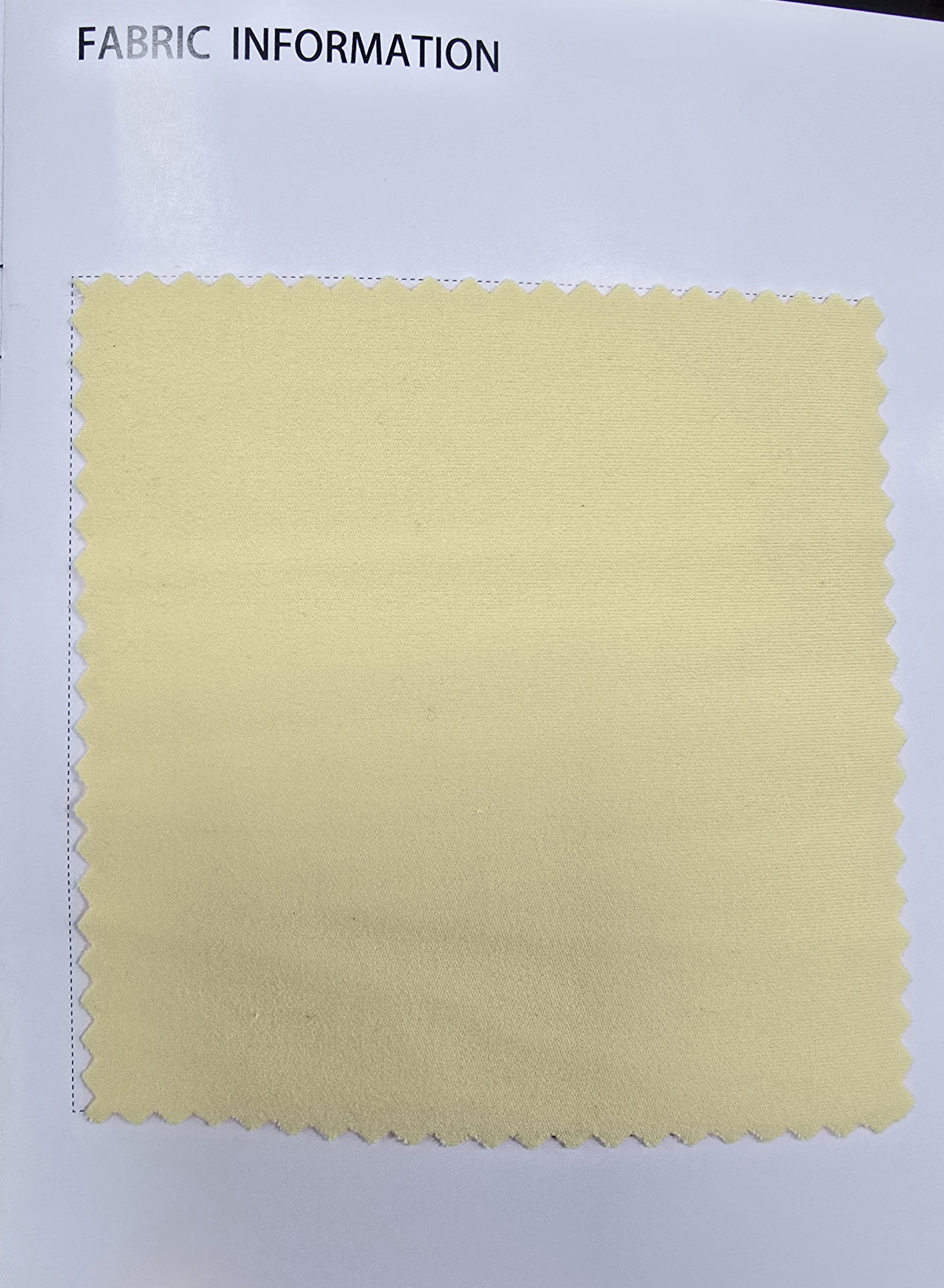
EKWP2270-D6 carries the widest documented function set, which makes it the natural candidate when one fabric has to serve several end uses in the same collection — for example a casual capsule that also feeds a close-fit or uniform line. Because antibacterial/anti-odour, wrinkle-resistant and cool-touch or warming options sit on this platform, it is also the version to specify when the dominant consumer complaint is odour or creasing rather than drying speed.
EKWP1912-DSP concentrates on moisture management, elasticity, breathability and quick drying, with a recycled nylon spandex variant available. In a fast-fashion context this is the platform for everyday comfort wear: joggers, soft shorts, layering pieces and lightweight tops where the garment has to move with the wearer and dry quickly between wears.
20ETW1028-DSP is the leanest specification of the three — UV protection, water-repellent and easy-wash on a poly/spandex base. Its documented fit is casual and fast fashion together with sports and activewear and underwear or functional close-fit garments. For high-turn basics, a leaner function stack is often the right commercial choice: fewer finishes mean fewer variables to validate and a more predictable cost per garment.
Matching the fabric to the programme: a five-decision framework
Buyers evaluating functional knit fabric for a casual or fast-fashion programme can work through the same five decisions in sequence. Each one narrows the specification before samples are requested.
- Name the dominant discomfort. Is the problem wetness, odour, creasing, sun exposure or rain? The three platforms do not answer those questions equally.
- Fix the fibre base. Nylon/spandex and recycled nylon spandex behave and price differently from poly/spandex; the fibre base determines which function list is even available.
- Fix the finish stack. E-king's customisation scope covers yarn composition, GSM and weight, colour, stretch and knit structure, finishing such as antibacterial, anti-odour, coating and water-repellent or UV treatment, and the use of recycled materials.
- Write the acceptance test. Development requires clear technical specifications and testing standards, so the test method and pass/fail thresholds belong in the brief, not in the follow-up email.
- Approve a sample before bulk. E-king operates a combination of made-to-order production and custom development, with sample approval preceding bulk manufacturing.
The scenarios follow from those decisions. A high-turn basics programme that needs easy-wash and sun protection at a controlled cost points to 20ETW1028-DSP. An everyday comfort range where movement and dry time drive repeat purchase points to EKWP1912-DSP, particularly where recycled nylon spandex strengthens the sustainability story. A programme running several garment types off one fabric, or one where odour and creasing are the recurring complaints, points to EKWP2270-D6.
Supplier-side evidence: what a repeat-order programme should verify
Function claims are only as reliable as the mill behind them, and in fast fashion the relevant mill question is whether the supplier controls enough of the chain to repeat an approved hand-feel next season. EKING fabric's operator, Zhangjiagang E-king Textile Co., Ltd., was established in 2011 and runs an 8,600 m² facility with 80 employees, including a 10-person R&D team, and an annual output of 6,000 t. Its export ratio is 95%, with the EU and USA as its main markets.
The company describes a complete industrial chain from weaving through dyeing and finishing, with its own dyeing factory entering production in March 2022 — a relevant detail for easy-wash programmes, because finishing consistency is where wash performance is won or lost. It reports developing more than 100 new products every season and states cooperation with fibre and finishing suppliers including Hengli Group, Shenghong Group, Invista, Creora Group, Huafeng Group and POLYGIENE. Quality control is described as 100% testing. Commercial terms listed by the company include a minimum order quantity of 3,000 yards and a lead time of 30–45 days, with export markets in the EU and USA and order flow supported by an ERP system.
Repeat-order reliability is best judged on delivered history rather than on claims. One documented reference is a garment-shop customer taking functional knit fabric for apparel garments: 100 t supplied over a 10-year relationship, with results recorded as stable performance and the fabric described as soft and flexible. For a buyer, that combination — volume delivered, duration sustained, hand-feel retained — is the evidence type that speaks directly to reorder risk.
Market and regulatory signals shaping 2026 sourcing
Three signals are currently reshaping how functional knit specifications are written for casual and fast-fashion programmes.
Moisture management is expanding as a category. The global moisture wicking fabrics market is expected to grow to USD 3.99 billion by 2030 at a 6% CAGR (Research and Markets). Moisture-wicking functional knit fabric, once specified mainly for sport, is now a mainstream comfort claim in everyday apparel.
Supply remains concentrated. China's exports of knitted fabrics reached approximately USD 21.2 billion in 2024 (Ken Research), which keeps Chinese mills the default sourcing base for high-volume knit programmes and makes mill-level capability the deciding variable between suppliers.
PFAS rules now reach the finishing list. OEKO-TEX implemented a new limit value for Total Fluorine of 100 mg/kg under STANDARD 100, effective 1 January 2024, targeting PFAS compliance (OEKO-TEX Association). California's AB-1817 bans regulated PFAS in textiles at total organic fluorine below 100 ppm from 1 January 2025, tightening to below 50 ppm in 2027 (OneAim). Water-repellent and easy-wash finishes are exactly where these thresholds bite, which is why PFAS-free processing has become a specification input rather than a marketing preference. E-king lists PFAS-free processing among the functions that can be customised per brand requirement, and notes that development and validation require clear technical specifications and testing standards.
Functional knit versus conventional knit: where the trade-offs sit
The traditional route for fast-fashion basics is a conventional cotton or basic polyester knit, with performance handled at garment level through softeners, washes or cut-and-sew tricks. It remains a legitimate choice: conventional knits are simpler to test, easier to source in small quantities, and lower in material cost.
Specifying functional knit fabric instead buys performance that is engineered into the cloth, but it also introduces real boundaries that a programme should accept deliberately rather than discover later:
- Commercial thresholds. E-king's listed minimum order quantity is 3,000 yards per order, with a 30–45 day lead time. That suits planned basics programmes better than test-and-react replenishment.
- Validation burden. Development and validation require clear technical specifications and testing standards. A buyer who cannot state a test method and threshold will slow the project down at the sample stage.
- Function sets are not universal. Not every documented function is available on every platform. UV protection, water-repellent and easy-wash are documented on 20ETW1028-DSP, while antibacterial/anti-odour, wrinkle-resistant and cool-touch or warming options are documented on EKWP2270-D6. Specifying a function onto an unsuitable base creates a mismatch before production even starts.
- Customisation has an input requirement. Functions such as PFAS-free processing, specific antibacterial agents or recycled materials can be customised per brand requirement, but only against defined specifications — and the exact scope of delivery services is confirmed project by project.
The honest conclusion is that functional knit fabric is not a universal upgrade. It earns its cost where a garment is judged on how it feels and wears — comfort wear, close-fit pieces, garments worn repeatedly between washes — and where the programme is large and stable enough to absorb the MOQ and lead time.
Future outlook
Three directions look likely to define the next specification cycle. First, PFAS thresholds will keep tightening, pushing easy-wash and water-repellent finishes towards fluorine-free chemistry and making finish documentation part of the purchase order rather than an appendix. Second, recycled content will be verified rather than asserted, which favours suppliers who can trace fibre inputs and validate recycled and virgin versions as separate samples. Third, function durability — how much wicking, stretch or odour control survives fifty washes — is likely to move from a lab curiosity into a contractual acceptance criterion, because that is the number that predicts whether a basic gets reordered.
For casual and fast-fashion buyers, the practical implication is consolidation: fewer fabric platforms, each specified more precisely, with the function stack matched to the programme instead of applied by default.
Frequently asked questions
Which functional knit fabric fits a high-turn fast-fashion basics programme?
Where the priorities are easy-wash, UV protection and water repellency at controlled material cost, 20ETW1028-DSP is the poly/spandex platform in the EKING range documented with those three functions. Its applicable industry is described as commonly synthetic and recycled fibres, and its use spans sports and activewear, outdoor apparel, and casual and fast fashion. Programmes that also need moisture-wicking performance and stretch are better matched to the nylon spandex platforms EKWP1912-DSP or EKWP2270-D6, which document moisture-wicking and elasticity alongside easy-wash.
Can recycled nylon spandex carry the same easy-wash and moisture-management specification?
EKWP1912-DSP is listed with nylon spandex and recycled nylon spandex as its material basis, and the range's documented parameters include moisture-wicking, high elasticity, breathable/quick-dry, UV protection, water-repellent, easy-wash and recycled materials. Because recycled and virgin versions of a construction are not identical in behaviour, buyers should confirm which version a quotation refers to, and validate the recycled version as its own approved sample rather than assuming continuity from the virgin sample.
What has to be defined before an OEM/ODM functional fabric development project starts?
E-king's application data states that these projects require clear technical specifications and testing standards for development and validation. The customisable scope covers yarn composition, GSM and weight, colour, stretch and knit structure, finishing such as antibacterial, anti-odour, coating/water-repellent and UV treatment, and the use of recycled materials. Projects run in a combination of made-to-order production and custom development, with sample approval preceding bulk manufacturing. Application data also lists an ERP system among the supporting systems for these orders.
What minimum order quantity, lead time and quality-control terms apply?
The company's capability data lists a minimum order quantity of 3,000 yards and a lead time of 30–45 days, with export markets in the EU and USA and quality control described as 100% testing. Sample support and technical communication are provided, and bulk issues are handled according to contract and warranty terms, so the applicable after-sales policy should be confirmed in the contract rather than assumed.
How should a buyer verify a PFAS-free easy-wash claim?
The claim should be tied to a named scheme and threshold. OEKO-TEX STANDARD 100 set a Total Fluorine limit of 100 mg/kg effective 1 January 2024, and California's AB-1817 restricts regulated PFAS in textiles at total organic fluorine below 100 ppm from 1 January 2025, tightening to below 50 ppm in 2027. E-king lists PFAS-free processing among the functions that can be customised per brand requirement, and states that development and validation require clear technical specifications and testing standards — so the specification should name the scheme, the test method and the market-specific threshold before sampling.
Where to start
A workable approach for the next casual or fast-fashion season is to choose one platform per programme, write the easy-wash and recycled-content requirements as measurable acceptance criteria, and hold the approved sample as the reorder benchmark. Buyers who want the full capability picture — factory, finishing, testing and export profile — can review the E-king company profile, and further product and technical detail is published at ekingtex.com.