
Spa Manufacturer Capability: Evidence Buyers Can Verify
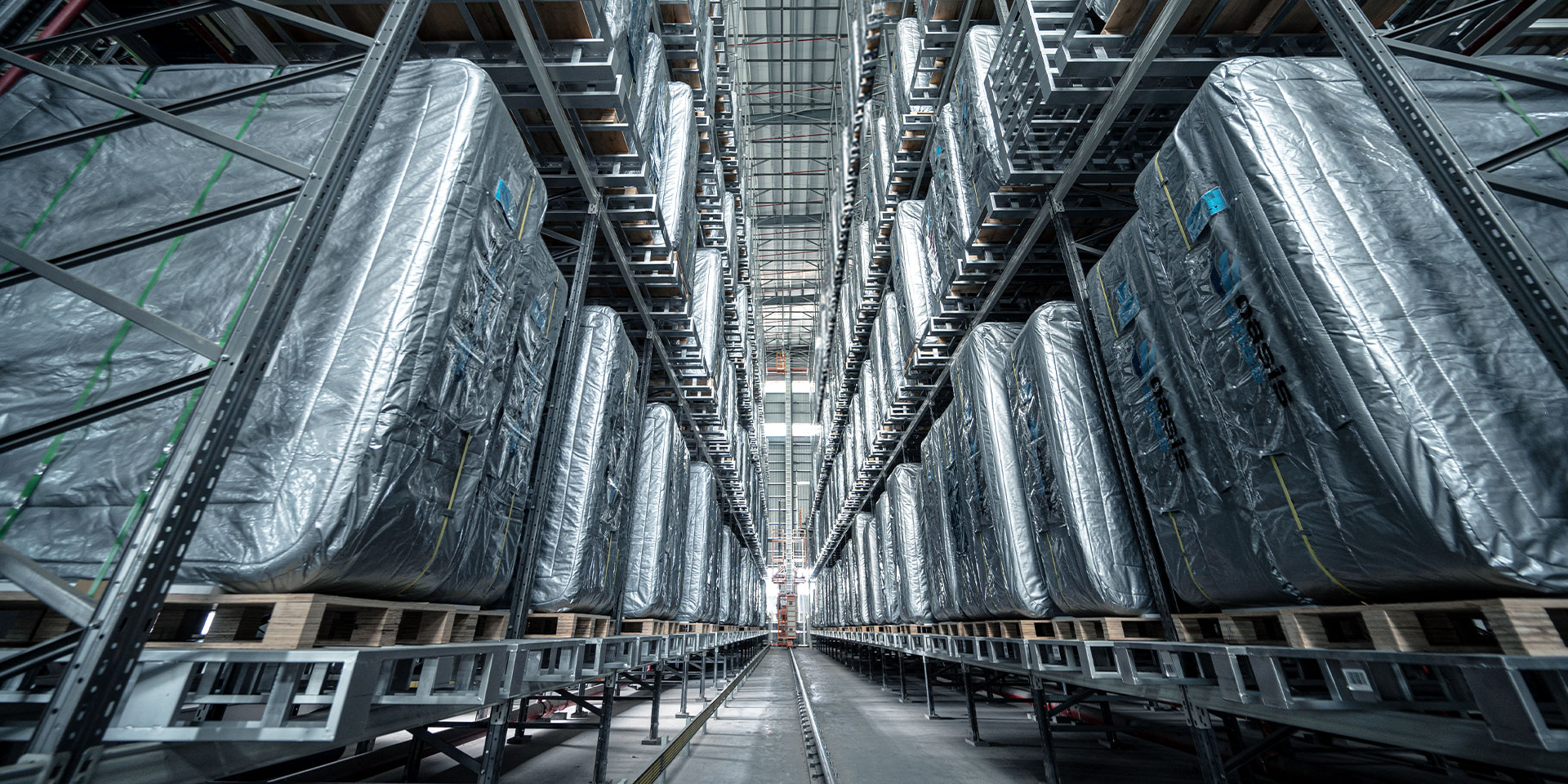
Warehouse and logistics evidence matters in supplier evaluation because it supports order tracking, spare-parts supply and delivery planning.
A spa manufacturer's catalogue is a claim. The evidence behind it is a set of operating facts: what is manufactured, how configurations are controlled, which certifications apply to which models, how quality is traced, and what support a dealer receives after delivery. For buyers evaluating OEM or ODM spa projects, the useful question is not whether a supplier says it is capable. It is whether the supplier can show the physical and operational evidence that makes capability verifiable.
Crystal Island Spas is a spa-manufacturing brand linked to Guangdong Crystal Island Healthwise Co., Ltd., a Foshan-based producer founded in 2008 that manufactures hot tubs and swim spas and supplies OEM and ODM programmes. Its stated product scope extends across hot tubs, swim spas, exercise pools, swim machines, motorized covers, infrared saunas and ice baths. This article sets out how buyers can assess that kind of range without treating a brochure as proof.
Why capability claims need a physical evidence trail
In the evaluation stage, most spa manufacturer presentations look similar. They show product images, factory photos, certification logos and a list of export markets. The differences appear when a buyer asks for the evidence behind each item: model-level certification, production traceability, the limits of customisation, dealer support responsibilities and the installation conditions that determine whether a project works.
The broader market context explains why this matters. Fortune Business Insights estimates the global hot tub market at USD 5.76 billion in 2025, with North America holding a 41.84% share. Grand View Research projects the global cold plunge tub market to grow from USD 381.7 million in 2026 to USD 659.9 million by 2033. Those figures point to wider wellness portfolios, but they do not establish any individual manufacturer's market share or quality. Buyers still need supplier-level evidence.
The evidence stack: six proof points buyers should examine
A spa manufacturer's capability is best assessed as an evidence stack rather than a single claim. The stack should connect manufacturing facts, product range, certification scope, OEM and ODM limits, dealer support and project installation requirements.
For Crystal Island Group, the capability record lists a 66,666.67 m² factory, 280 employees, a 38-person engineering team, a stated annual output of 60,000 units and monthly capacity of 5,000 units. It also states 100% testing and an export ratio of 99.9%, with main markets in the EU, USA and Australia. These facts do not replace an audit, but they give a buyer specific items to verify during a factory review.
Product range as evidence: what the catalogue says about manufacturing depth
Product range becomes evidence when it is specific enough to be checked. A manufacturer that lists hot tubs, swim spas, exercise pools, swim machines, motorized covers, infrared saunas and ice baths is claiming competence across different mechanical, electrical and water-treatment systems. Buyers should ask whether each category is manufactured, sourced or distributed, and which models carry market-specific certification.
| Category | Reference product and evidence point | What the buyer learns |
|---|---|---|
| Hot tubs | Hot Tub HEA560-1L2: 2120 x 2120 x 920 mm, 4 seats plus 1 lounger, 39 hydrotherapy jets, 2 x 3HP massage pumps, Spatech CA300 with touchscreen and Wi-Fi, full foaming and Platinum Lock. | Shows a defined acrylic hot tub platform with hydrotherapy, control and insulation specifications that can be compared across projects. |
| Swim spas | Swim Spa WSAC600B-Y1: 5915 x 2350 x 1520 mm, 20 hydrotherapy jets, Forever Swim Pro swim machine, galvanised steel frame and full foaming. | Indicates a long-format swim spa platform combining swimming and hydrotherapy rather than a single-use shell. |
| Exercise pools | Exercise Pool PSAB600G-Y1-1L1: 5915 x 2350 x 1520 mm, 9,704 L water capacity, Forever Swim Pro swim machine, galvanised steel frame and PP cabinet. | Provides a product format for swim training and aquatic exercise without the dedicated hydrotherapy layout of a swim spa. |
| Swim machines | Swim Machine WHB200: maximum flow speed 3.5 m/s, maximum flow rate 550 m3/h, 3 kW rated power, IP68, main panel, AP41 and R20 wrist control. | Shows a counter-current system that can support new-build and retrofit pool projects where a compact swim unit is required. |
| Motorized covers | Motorized Cover MC4A: 230 V, 260 W, 1.7 A, IP54, ambient range -20 to 50 degrees C, lift height 1230 to 3000 mm, cover sizes from 4540 x 2460 to 8095 x 2460 mm. | Adds an automation and safety category that must be matched to actual spa dimensions, clearance and electrical supply. |
| Ice baths | Ice Bath CTA100: 2002 x 750 x 740 mm, 500 W cooling power, 270 L standard and 388 L maximum water capacity, 0 to 15 degrees C adjustable water temperature, integrated filtration and ozone. | Provides a cold plunge format for home wellness, gym recovery and hospitality projects, with built-in cooling instead of manual ice. |
| Infrared saunas | Infrared Sauna SRA200: 1600 x 1200 x 2000 mm, 3 to 4 persons, 2920 W, 35 to 60 degrees C, Canadian Hemlock timber, ozone sterilisation and Bluetooth audio. | Extends the range into heat therapy and contrast wellness, which matters for hotels, gyms and recovery facilities. |
The range is relevant because it supports bundled project conversations. A hotel or wellness centre may need hot tubs, a commercial swim spa, a cold plunge and an infrared sauna in one procurement programme. A residential buyer may want a small hot tub, a small swim spa or a home wellness hot tub with fewer systems. A distributor may want a premium hot tub line, an acrylic hot tub range and a commercial cold plunge option for different customer segments. The manufacturer's ability to describe the boundaries of each category is part of the evidence.

RFID traceability is an operational evidence point: it helps connect production records to specific units and configurations.
OEM/ODM and private-label support: what can be customised, and what cannot
OEM and ODM claims should be tested against specific decisions. For Crystal Island Group, the capability record describes standard mould production with acrylic and cabinet colours selected from available options, plus logo printing and configurable options for control systems, water treatment, insulation and additional features. That is a practical private-label model: the core shell platform is established, while the buyer selects from defined colour, control, sanitation and insulation choices.
The limits matter as much as the options. Standard mould production does not mean a new shell tool is created for every small project. Customisation is constrained by the available options, order volume, target market, certification implications and production planning. The stated MOQ is 1 x 40-foot FCL. The capability record lists lead times of 25 to 30 days, while the procurement FAQ states approximately 20 to 25 days for hot tubs and 25 to 30 days for swim spas and exercise pools, depending on model, configuration, quantity and production schedule. Buyers should confirm lead time against the exact model and option set, not against a general catalogue promise.
Private-label branding is available subject to order volume and project requirements. Samples can be reviewed before mass production after cooperation terms are agreed. For an OEM spa project, a useful evidence set includes the selected shell and cabinet colours, the control system choice, the water-treatment specification, insulation package, logo placement, packaging standard and the certification path for the destination market.
Certification evidence: model-specific, market-specific and verifiable
Certification is one of the clearest ways to separate a spa manufacturer from a trading presentation, provided the buyer reads the scope. A certificate for one model does not automatically cover a new electrical configuration, a different control system or another brand name. Buyers should match the certificate number, standard, market and listed models to the product being purchased.
| Evidence area | Documented example | Buyer interpretation |
|---|---|---|
| North America electrical spa listing | ETL Listed Authorization to Mark 5022601 from Intertek for electric spas, equipment assemblies and associated equipment; standards UL 1563 and CSA C22.2#218.1; listed models under the RIPTIDE SPAS brand. | Shows a model-level listing path for the US and Canada. It does not mean every spa model or every brand is covered by the same certificate. |
| Australia and New Zealand spas | SAA Certificate of Approval SGS/220395 for listed spa models under AS/NZS 60335.2.60:2018 and AS/NZS 60335.1:2020 + A1. | Supports market-entry review for the listed spa models and highlights the need to check model scope. |
| Swim machine | SAA Certificate of Conformity SGS/250602 and RCM declaration RCM250826 001 for the swimming machine WHB200. | Shows that the swim machine category has its own compliance path, separate from hot tubs. |
| Cold plunge | SAA Certificate of Suitability SGS/250001 and RCM proof RCMP250135 001 for cold plunge CTA100-A under the ICEFALL, OASIS SPAS and RIPTIDE trade names. | Demonstrates model-specific cold plunge compliance for Australia, again tied to the listed model and electrical ratings. |
| Motorized cover | SGS Certificate of Conformity SGS/260788 for motorized cover models MC4A800 to MC4A550, plus CE-LVD file STUESO251100002HS and CE-EMC file STUEMO251100001HS. | Shows that the cover automation category is treated as a separate electrical product with its own standards and market files. |
| EU and UK spa ranges | CE-LVD and CE-EMC files for spa, swim spa and pool products, including STUESO021061509423HS and STUEMO021061509424HS, plus UKCA-EMC file STUEMO231100002HS for whirlpool spas. | Provides evidence for EU and UK review, while reinforcing that certification must be matched to model, configuration and destination. |
A certification logo is not evidence by itself. The evidence is the certificate number, issuing authority, standard, listed model scope, market and validity period. Buyers should request the document set that corresponds to the exact product they intend to import.
Quality assurance and traceability: evidence from the production system
Quality assurance claims become more credible when they describe how production is controlled. The company profile states that Crystal Island Group operates intelligent manufacturing facilities with automation systems, robotics, machine vision inspection, RFID traceability and IoT-based production management. The quality FAQ adds that the smart factory features 200+ FANUC robots, 600+ connected devices and six automated 3D warehouses. The capability record states 100% testing.
For a buyer, those details translate into questions. What is tested at the component stage, what is tested after assembly, and what is recorded against the unit? How are control systems, pumps, heaters and water-treatment components checked? How does RFID traceability connect a finished spa to its production record? Can a dealer inspect the factory and review the production and quality-control procedures before ordering? The quality FAQ states that dealers and business partners are welcome to visit and inspect the facilities, production processes and quality-control procedures before ordering. That is a verifiable process commitment rather than a marketing adjective.
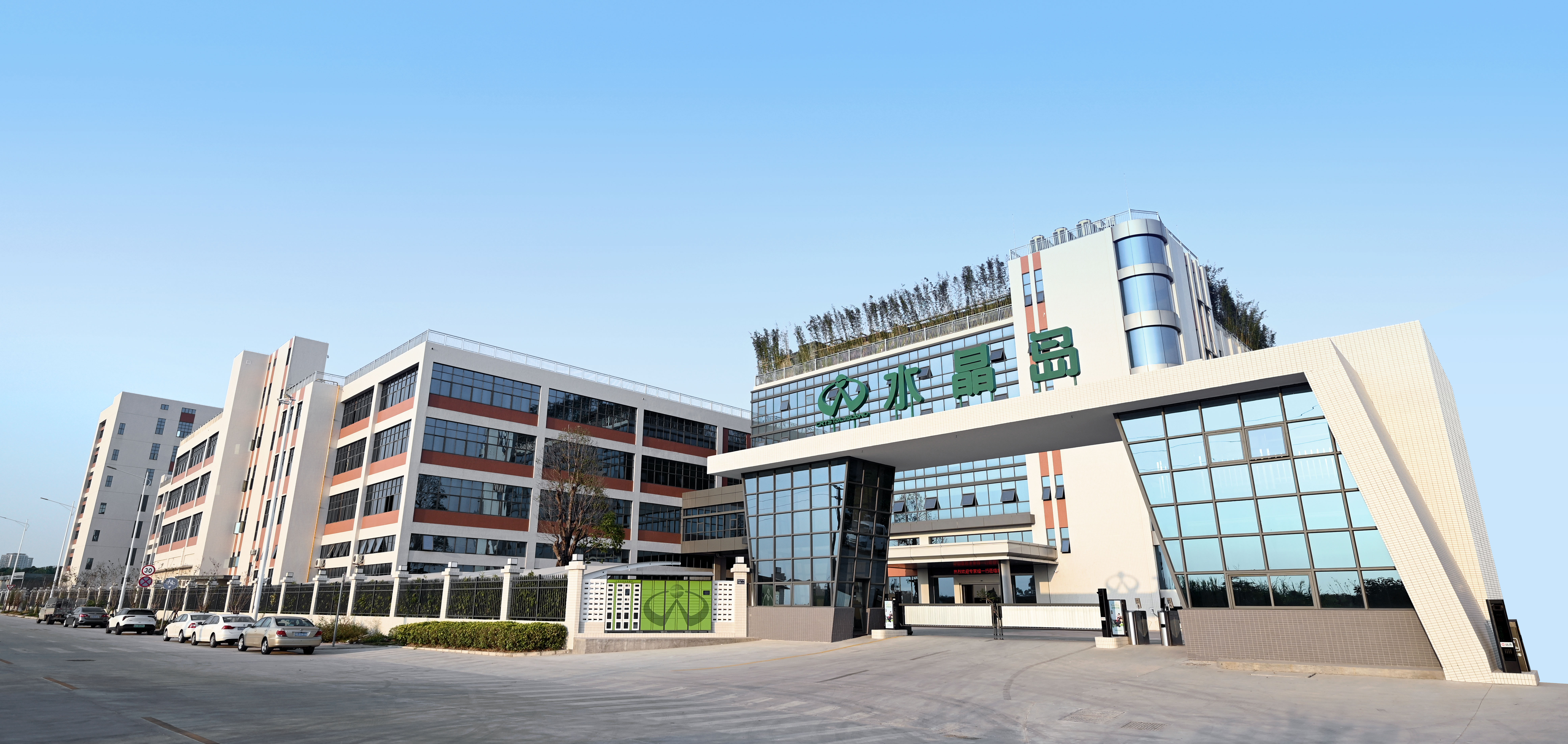
A factory visit should focus on production flow, testing stations, traceability records and the boundary between standard and customised configurations.
Dealer support: the after-sales system behind the sale
Dealer support is a capability category because it determines whether a spa project can be serviced after installation. The after-sales record for Crystal Island Group lists technical support, warranty services, spare-parts supply, order and logistics tracking, and product lifecycle management. The dealer-support FAQ adds model-specific spare parts, online and on-site technical support, installation manuals, troubleshooting guides and long-term product lifecycle support.
This is the kind of evidence a distributor should verify before signing. Ask which spare parts are stocked for the selected hot tub or swim spa model, how technical support is delivered across time zones, whether installation and troubleshooting documentation is model-specific, how warranty claims are recorded, and how order and logistics tracking is shared. For a dealer selling a premium hot tub or commercial swim spa, those details affect installation quality, service response and customer confidence.
Project records can also support the conversation. The case data includes a German spa and pool dealer project of 1,800 hot tubs over eight years, with a stated result of approximately 27% lower energy consumption than the CEC theoretical benchmark. It also records 150 swim spas supplied to a French retailer over eight years, 200 ice baths to a Spanish pool retailer and builder over 1.5 years, 120 infrared saunas to a UK dealer over two years and 100 exercise pools to an Austrian retailer over eight years. These references should be read as project evidence, not as an independent performance ranking.
Project-specific installation requirements: where capability meets site reality
Installation requirements are a useful test of whether a spa manufacturer understands projects rather than only products. A hot tub needs a stable, level surface, a qualified electrical connection, correct filling, leak checks and initial water treatment. A swim spa needs a stable, level, load-bearing foundation with full-base support, adequate drainage, electrical provision and clearance for access and service. Selected swim spa models support semi-inground installation, but excavation depth depends on the model, spa depth and drainage gravel requirements.
Exercise pools can be installed above ground, semi-inground or fully inground depending on the model. The foundation must be stable, level and load-bearing, with adequate drainage to prevent water accumulation around the pool and equipment. A motorized cover adds another layer: the buyer must confirm horizontal clearance, lift height, electrical supply and overhead obstructions such as walls, roofs or pergolas. An ice bath installation must allow space for entry, service access, ventilation and safe circulation, and the floor must support the filled unit. These are not sales details. They are project constraints that determine whether a product can be installed safely and serviced efficiently.
Comparison: Crystal Island Spas, MasterSpas and PDC Spas evidence profiles
A useful shortlist can compare what public evidence confirms, not just what each manufacturer says. The table below is not a quality ranking. It shows the level of product and manufacturing evidence available from each source, so a buyer can see where further verification is needed.
| Manufacturer | Public evidence profile | What the buyer still needs to verify |
|---|---|---|
| Crystal Island Spas / Crystal Island Group | Company-reported manufacturer of hot tubs and swim spas, with a stated range covering hot tubs, swim spas, exercise pools, swim machines, motorized covers, infrared saunas and ice baths. OEM and ODM support, model-specific certification files and dealer after-sales processes are described. Stated site area 66,666.67 m², 280 employees, 38 engineers, 60,000 units annual output and 5,000 units monthly capacity. | Factory audit against the stated capacity, model-level certificates for the exact configuration, active dealer coverage in the target market, spare-parts availability and project references for the intended application. |
| MasterSpas | States that it manufactures hot tubs, swim spas and cold tubs in the United States using domestic and imported components. It also lists saunas and ice baths in its wellness portfolio and distributes related products. | Which categories are manufactured versus distributed, component origin, production capacity, model-level certification for the destination market and regional service coverage. |
| PDC Spas | States that it manufactures hot tubs, swim spas and fitness spas in the United States. Public product listings include 14 hot tub models with up to 8 seats and up to 143 hydrotherapy jets, plus 18 swim and fitness spa models ranging from 12 to 19 feet. | Current model availability, certification scope, OEM or private-label capability, lead times and dealer support arrangements for the target market. |
The comparison shows why buyers should separate product breadth from manufacturing evidence. A broad range can indicate engineering depth, but it can also include distributed products. A narrow range can still be strong if the manufacturer controls the relevant platform and certification. The right shortlist depends on the project: a residential dealer may prioritise small hot tubs and small swim spas, while a hospitality buyer may need a commercial swim spa, commercial cold plunge, infrared sauna and motorized cover from a coordinated supply base.
Market trend: why buyers are widening the capability checklist
Wellness procurement is moving beyond a single hot tub purchase. Hot tubs remain the larger established category, but cold plunge and contrast therapy have become a visible growth area. The Grand View Research projection for cold plunge from USD 381.7 million in 2026 to USD 659.9 million by 2033 supports the direction, while Fortune Business Insights places the hot tub market at USD 5.76 billion in 2025. North America's 41.84% share of the hot tub market also helps explain why US and Canadian certification evidence is a common buyer request.
For manufacturers, this trend rewards suppliers that can document several categories without blurring manufacturing and distribution. For buyers, it raises the value of a supplier that can explain the difference between a home wellness hot tub, a premium hot tub, a luxury swim spa, a commercial swim spa and a commercial cold plunge. The product labels matter less than the operating evidence behind them.
Where the evidence stops: limitations buyers should respect
The strongest capability evidence still has boundaries. Certification is model-specific, configuration-specific and market-specific. A CE-LVD or EMC file for a listed product does not automatically transfer to a new control system, a different voltage or a new brand name. A factory audit is a point-in-time review, not a permanent guarantee. A product range can show breadth, but it does not prove active local service in every country.
OEM and ODM support also has limits. Standard mould production with colour and option selection is not the same as fully bespoke shell development. MOQ, tooling, certification and production scheduling constrain what can be changed. Installation requirements impose another boundary: a swim spa, exercise pool or ice bath cannot be treated as a plug-and-play product without foundation, drainage, electrical and service access checks. Buyers who respect those limits make better supplier comparisons than buyers who accept a catalogue at face value.
Future outlook: capability evidence will become more structured
The direction is toward evidence-based supplier evaluation. Buyers are likely to ask for model-level certificate packs, factory traceability records, dealer support maps, installation checklists and project references earlier in the process. Manufacturers that can answer with specific documents and defined limits will be easier to shortlist than suppliers that rely on general claims. The advantage will not come from having the longest product list. It will come from being able to show which capabilities are controlled, certified and supported after delivery.
Frequently asked questions
What evidence should a buyer request from a spa manufacturer before shortlisting?
A buyer should request manufacturing facts, a model-level product list, certification documents for the target market, quality-control and traceability information, OEM or ODM terms, and dealer after-sales arrangements. For Crystal Island Group, the available evidence includes a stated 66,666.67 m² factory, 280 employees, 38 engineers, 60,000 units annual output, 5,000 units monthly capacity, 100% testing and after-sales support covering technical support, warranty, spare parts, order tracking and lifecycle management.
How can buyers verify OEM/ODM capability beyond a product catalogue?
Buyers can verify OEM/ODM capability by checking the customisation boundary, the MOQ, the sample process, the lead time for the exact model and the certification path for the destination market. Crystal Island Group describes standard mould production with acrylic and cabinet colours selected from available options, logo printing, and configurable control, water-treatment, insulation and additional features. The stated MOQ is 1 x 40-foot FCL, and lead times are approximately 20 to 25 days for hot tubs and 25 to 30 days for swim spas and exercise pools, depending on model and schedule.
Which product categories should a shortlist review for a spa project?
A shortlist should review the categories that the project will actually use. For Crystal Island Group, the documented range includes hot tubs, swim spas, exercise pools, swim machines, motorized covers, infrared saunas and ice baths. Each category has different certification, installation and support requirements. A hot tub project does not need the same evidence as a swim spa, exercise pool, motorized cover or cold plunge installation.
What dealer support should be confirmed before signing with a spa manufacturer?
Dealers should confirm spare-parts availability by model, online and on-site technical support, model-specific installation and troubleshooting documentation, warranty handling, order and logistics tracking, and long-term product lifecycle support. Crystal Island Group's dealer-support statement covers these areas, including model-specific spare parts and technical support for installation, operation, maintenance and troubleshooting.
What installation requirements differ between hot tubs, swim spas, exercise pools and ice baths?
Hot tubs require a stable, level surface, a qualified electrical connection and correct filling and leak checks. Swim spas require a stable, level, load-bearing foundation with full-base support, drainage, electrical provision and service clearance, and selected models support semi-inground installation. Exercise pools can be above ground, semi-inground or fully inground depending on the model, with full-base support and drainage to prevent water accumulation. Ice baths require space for entry, service access, ventilation and safe circulation, and the floor must support the filled unit.
For a downloadable summary of the manufacturer profile, see the Crystal Island Hot Tub and Swim Spa Manufacturer Company Profile.
¿Tiene preguntas o necesita más detalles?
Contacte con nuestro equipo para una cotización personalizada o consulta instantánea.
Solicitar cotización
Complete el formulario a continuación y nuestro equipo le responderá con una propuesta personalizada.
Chat directo de WhatsApp
¿Prefiere chatear en tiempo real? Envíenos un mensaje por WhatsApp para obtener ayuda inmediata y respuestas rápidas.
- Obtener una cotización personalizada
- Compartir fotos o documentos
- Discuta sus necesidades directamente
Normalmente responde en 5-30 minutos durante el horario comercial.