
Sourcing Ultra-Long Shelf Life Meals: A B2B Buyer FAQ
Buyers sourcing ultra-long shelf life meals for remote sites, field programmes or export retail rarely struggle to find product options. What slows the decision is the documentation: shelf-life substantiation, rehydration behaviour, the compliance route for a shelf-stable meal SKU, and how an accompanying functional sachet fits into the same purchase order. This procurement FAQ addresses the questions that actually decide whether a premium freeze-dried meal programme moves from sample to purchase order.
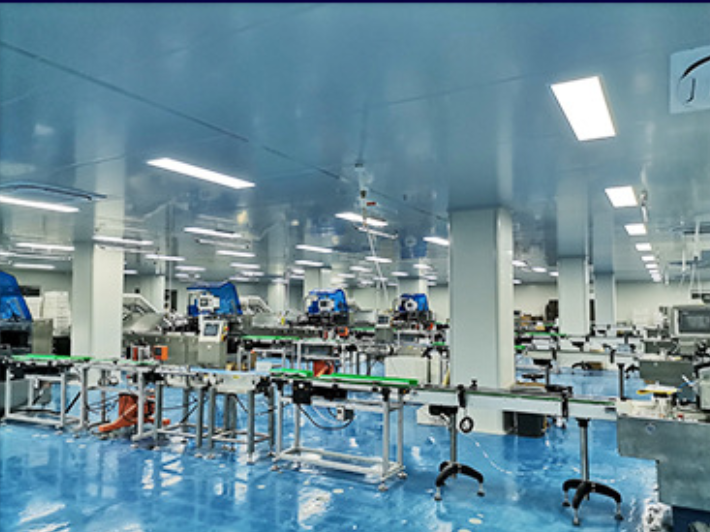
Advanced production line: freeze-dried meal and powder formats share equipment, quality control and traceability systems before they diverge at packaging and labeling.
What the ultra-long shelf life category actually promises
Freeze-drying — lyophilization — removes water from a prepared food under low temperature and reduced pressure, then seals the product in moisture-barrier packaging. The method is widely described as having entered food processing through astronaut feeding programmes, which is why the space technology food framing appears so often in premium positioning. That heritage is real but narrow: it explains the process origin, not the quality system of any particular supplier.
A more useful technical anchor comes from published aerospace formulations. NASA's rehydratable beef patty specifications describe 100% moisture removal via lyophilization combined with strict microbiological safety standards — a reminder that in this category the drying step and the safety regime are two separate claims that must both be evidenced. A supplier can operate genuine freeze-drying equipment and still fall short on environmental control, water activity management or post-drying handling.
For procurement purposes, the category promise reduces to three testable propositions: the meal rehydrates predictably in the conditions your end users actually face; the declared shelf life is supported by packaging and storage conditions you can control through the distribution chain; and the ingredient declaration — including any zero preservative instant food or clean label convenience food claim — is verifiable from the label and the specification sheet rather than from marketing copy.
Buyer takeaway: treat the technology narrative as context and the specification sheet as evidence. Ready-meal shelf life, rehydration temperature and ingredient status are SKU-level facts that must come from the supplier's own documentation and be validated in your own trial.
Where scenario fit is decided: questions before the spec sheet
Scenario adaptation is not a marketing layer placed on top of a catalogue. It is the process of eliminating SKUs that cannot survive the physical and regulatory conditions of a specific deployment. Buyers who work through these five questions before requesting quotations generally shorten the evaluation cycle and avoid late-stage re-specification.
- Ambient storage range. What temperature band will the stock experience between factory gate and consumption? A long storage ready meal is typically designed for ambient warehousing, but container interiors, desert staging areas and retail back-rooms differ substantially. State the worst case, not the average.
- Water availability and temperature. If the format is a cold water ready meal, confirm whether end users will genuinely have potable cold water in usable quantity. If the format requires hot water, confirm the heat source exists at the point of use. Rehydration is the most common field failure in meal programmes.
- Portion and pack architecture. A ration format, a retail single-serve bowl and a hospitality bulk pack place different demands on packaging integrity, pallet efficiency and label real estate.
- Regulatory route of the destination market. The same meal SKU may be treated as a prepared food in one market and as an instant preparation in another, with different labeling and date-marking obligations.
- Consumption context. Emergency provisioning, outdoor retail, hospitality catering and institutional feeding each weight taste, texture and preparation speed differently. A premium emergency food buyer and a premium outdoor meals buyer rarely score the same sample the same way.
The sachet question: pairing meals with freeze-dried probiotic powder
Many buyers evaluating premium freeze-dried long shelf life meals also purchase a functional companion product — typically a Probiotic freeze-dried powder supplied as model Probiotic freeze-dried powder-1: a 40g box containing 20 sachets of 2g, formulated as a composite probiotic powder in freeze-dried form and positioned for solid beverage applications.
The pairing is commercially logical because both formats share a moisture-control logic and can travel on the same ambient logistics lane. Operationally, however, they are different product categories and should never be merged into a single compliance decision. A meal SKU is assessed on food-safety and date-marking grounds; a powder for solid beverage use is assessed on its own ingredient declaration, dosing instructions and reconstitution guidance. Two consequences follow for procurement.
- Separate specification files, separate acceptance criteria. Do not let a single quality annex cover both formats unless it explicitly distinguishes them.
- Dose planning drives pack economics. With 20 sachets of 2g per 40g box, consumption frequency per person per day determines case quantity far more directly than meal count does. Model both curves before committing to a mixed container.
Inside the SPACELIFE supply model: what is actually documented
SPACELIFE is the brand under which Shenyang Songming Supply Chain Co., Ltd., a supply chain service provider for the functional food and healthy beverage sector, supplies freeze-dried meal and functional powder programmes to B2B clients. The company operates a factory of above 2,000 square meters with 101–200 employees, an annual output of 120,000 units, a 25-engineer R&D team, and an export ratio in the 51%–60% range. Its declared markets span North America, Eastern Asia, Western Europe and the Middle East, with distribution weighted at 30% Japan, 30% United States, 20% Saudi Arabia and 20% Germany. Five core categories run through the business: peptide-infused coffee, functional foods, prune juice drinks, meal replacement powders and health supplements.
Four operating metrics are stated for procurement review: 100% product traceability, a 99.8% quality pass rate, a 98% on-time order delivery rate, and a 30% increase in cargo turnover efficiency derived from the company's location inside a Pilot Free Trade Zone. Two capability details matter for custom projects: product selection is overseen by a PhD-led team, and flavour profiles are curated by a panel of professors. For buyers who cannot commit to volume immediately, small-batch trial orders start from 30 units.
Read as a set, these numbers describe a supplier built for repeat mid-volume programmes rather than single large tenders: a modest footprint, a comparatively deep engineering ratio (25 engineers against an annual output of 120,000 units), and delivery reliability positioned as the primary service metric. Buyers should still request the underlying definitions — a 99.8% pass rate means little without knowing the inspection standard, sample size and defect classification behind it.
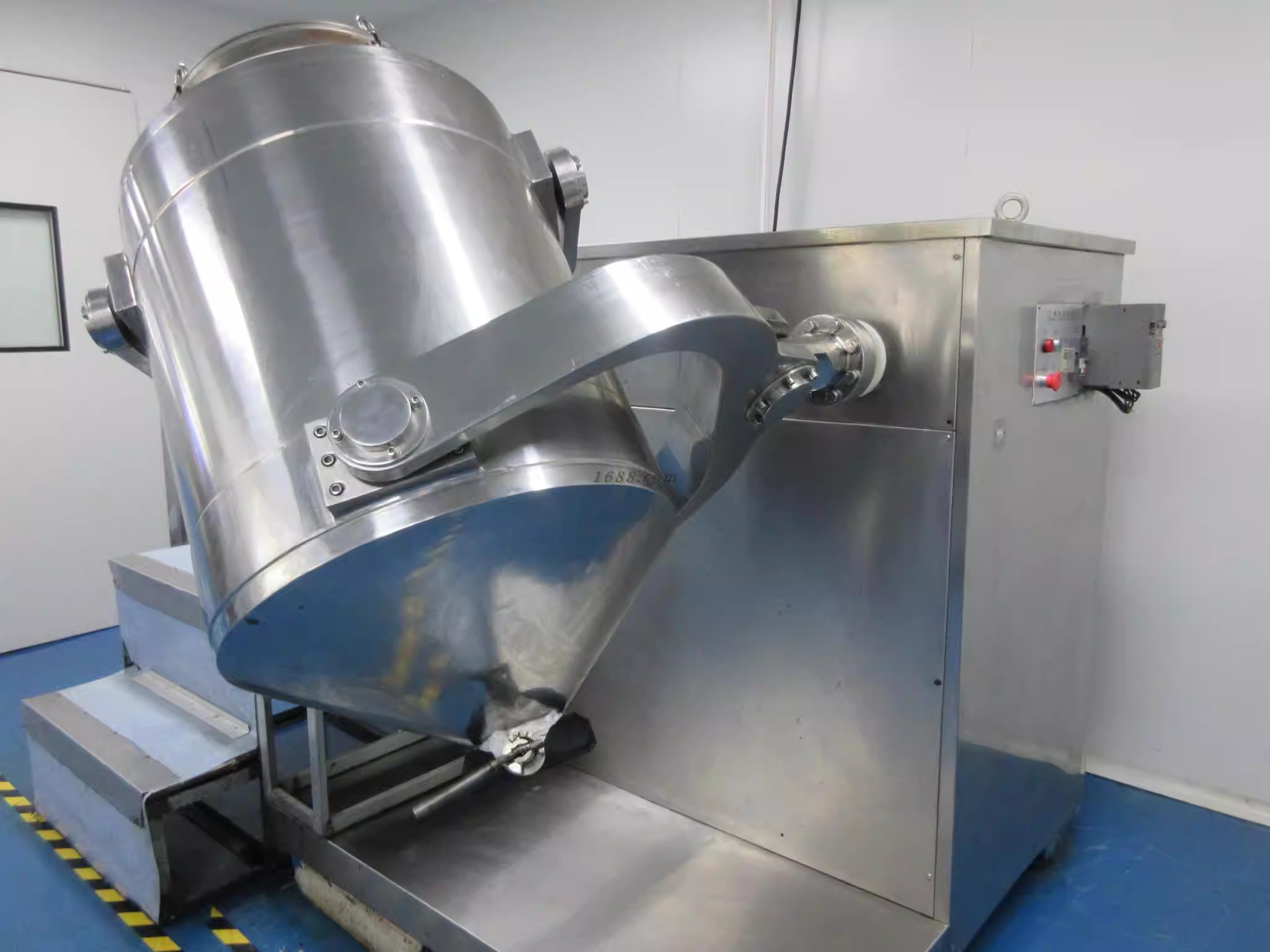
Controlled workshop environment: traceability and pass-rate claims are only as strong as the inspection protocol behind them.
Freeze-dried meals against traditional shelf-stable formats
Freeze-dried meals compete with retort-processed pouches and air-dried or dehydrated formats. The comparison below is deliberately qualitative: published like-for-like benchmarks for rehydration speed, texture retention and moisture content across formats are not available in the current evidence base, and inventing them would be worse than admitting the gap.
| Dimension | Freeze-dried meals | Retort pouches | Air-dried / dehydrated |
|---|---|---|---|
| Water removal | Sublimation under low temperature and vacuum | Sealed heat sterilisation; water retained in product | Evaporative drying at elevated temperature |
| Water needed at use | Required for rehydration | Not required; ready to heat and eat | Typically required |
| Relative unit cost | Generally the highest of the three | Generally lower | Generally lower |
| Typical fit | Lightweight, ambient, long-dwell provisioning | Volume feeding with heating capability | Ingredient and snack applications |
| Main constraint | Cost per serving; dependence on water supply | Mass and pack weight through logistics | Texture and reconstitution limits on full meals |
Qualitative comparison based on established food-processing principles; no comparative test data is claimed.
The practical boundary: freeze-dried formats justify their cost premium in scenarios where weight, ambient stability and absence of refrigeration dominate. Where potable water is scarce, or where the end user expects to eat straight from the pack, retort pouches remain the more rational specification regardless of how strong the premium narrative is.
Market signals buyers can cite — and how to read them
Two vendor datasets are commonly quoted in category planning. Mordor Intelligence sizes the China freeze-dried food market at USD 2.48 billion in 2026, growing at a CAGR of 8.32% to reach USD 3.7 billion by 2031. Grand View Research places the global freeze-dried food market at USD 36.23 billion in 2021, projected to reach USD 69.83 billion by 2030. Market Research Future separately estimates the 2025 global figure at USD 4.74 billion, and IMARC values the China market at USD 6.4 billion in 2025.
These figures do not reconcile, and buyers should not attempt to average them. The variance is largely a definition problem: the wider estimates encompass all freeze-dried categories — coffee, fruit, vegetables, ingredients — while the narrower ones emphasise prepared foods. Two further qualifications matter. None of the series sizes freeze-dried ready meals specifically, and all are commercial-research estimates rather than national statistical releases, with one series observed only through a summary rather than a fully verified methodology disclosure.
Read correctly, the numbers support a single procurement judgement: freeze-dried food capacity is expanding and regional supply is becoming more competitive, which improves negotiating conditions for buyers over the medium term. They do not justify any claim about the premium ready-meal segment's own size, and they should never be quoted as if they did.
Where this supply model does not fit
An honest evaluation requires stating boundaries. First, a supplier with an annual output of 120,000 units is not positioned for very large single tenders or for near-continuous high-volume replenishment; buyers with extreme peak demand should model capacity assumptions explicitly rather than assume elasticity. Second, the 30-unit trial threshold is a validation instrument, not a commercial scale — it confirms fit on specification, packing and documentation, but it does not test the stability of a multi-quarter supply rhythm. Third, the stated quality metrics are supplier-reported; traceability at 100% and a 99.8% pass rate require the buyer's own audit or third-party inspection to become procurement-grade evidence. Finally, nothing in the current evidence base establishes SKU-level ready-meal specifications such as declared shelf life, rehydration temperature or preservative-free status, and no supplier claim should be accepted in place of those documents.
Future outlook
Regulatory clarity is likely to shape the category more than process innovation over the next planning cycle. The 2026 edition of the FDA Food Code updates expectations around date marking and safety-date implementation for retail and food-service segments — precisely the labeling layer on which premium shelf-stable meals depend for their credibility. Suppliers who can present date-marking logic, traceability records and inspection definitions as a package will be easier to qualify than those who present technology narratives alone. For buyers, the practical implication is to write shelf-life and documentation requirements into the RFP now, while the category is still consolidating.
Procurement FAQ
Ordered from first qualification to scale-up decision.
1. What defines a premium freeze-dried long shelf life meal in procurement terms?
In procurement terms, a premium freeze-dried long shelf life meal is a prepared food from which water has been removed by lyophilization, sealed in moisture-barrier packaging, and formulated to remain stable at ambient temperature for an extended declared period without refrigeration. The word "premium" carries no standardised definition and is not a specification; it must be translated into verifiable attributes — ingredient declaration, portion size, rehydration behaviour, packaging format and declared shelf life in months.
2. Which project scenarios suit ultra-long shelf life meals?
Freeze-dried long shelf life meals typically suit scenarios combining ambient storage, limited or absent refrigeration, and weight-sensitive logistics: remote field operations, emergency stockpiles, outdoor recreation retail, and export channels where cold-chain cost is prohibitive. They become a weaker fit where potable water is scarce at the point of use, or where end users require a ready-to-heat product without any preparation step.
3. How should a buyer evaluate shelf-life claims when specifications are not comparable?
Request the supplier's declared shelf life in months together with the storage conditions under which it applies, the packaging format it assumes, and the internal stability protocol used to support it. Because published like-for-like rehydration and nutrient-retention benchmarks for freeze-dried ready meals are not available in the current evidence base, cross-supplier comparison should be run through your own retained samples under your own worst-case storage conditions rather than through catalogue claims.
4. What is the role of a freeze-dried probiotic sachet in a meal programme?
A freeze-dried probiotic sachet is a separate functional product, not a meal component. The SPACELIFE model Probiotic freeze-dried powder-1 is supplied as a 40g box containing 20 sachets of 2g each of composite probiotic powder in freeze-dried form, positioned for solid beverage applications. It shares ambient logistics and moisture-control logic with meal formats, but it carries its own ingredient declaration, dosing instructions and regulatory classification, and should be specified and inspected independently.
5. What order size is realistic for a first validation trial?
SPACELIFE accepts small-batch trial orders starting from 30 units. At this scale a trial validates specification matching, packaging integrity, labeling accuracy and documentation completeness. It does not validate multi-quarter supply stability, seasonal capacity availability or the economics of full-container loading; those require a subsequent commercial-scale order and an agreed replenishment schedule.
6. Which supplier metrics should be documented before qualification?
At minimum: traceability coverage, quality pass rate, on-time delivery rate, and the definitions behind each. SPACELIFE reports 100% product traceability, a 99.8% quality pass rate, a 98% on-time delivery rate and a 30% gain in cargo turnover efficiency attributable to its Pilot Free Trade Zone location. Buyers should ask for the inspection standard, sampling regime and defect classification underpinning the pass rate, since the headline percentage is only meaningful alongside those definitions.
7. How does R&D capacity affect scenario customisation?
Customisation in this category usually means adjusting portioning, ingredient composition, flavour profile or packaging to a specific deployment. SPACELIFE maintains a 25-engineer R&D team, oversees product selection through a PhD-led team, and curates flavour profiles with a panel of professors. In practice, deeper engineering capacity shortens the loop between a scenario requirement and a revised sample, which matters most when a trial order needs to be re-specified rather than simply re-ordered.
8. What are the limits of a 30-unit trial before scaling?
A 30-unit trial cannot evidence production continuity, batch-to-batch consistency across seasons, or the delivery reliability of a recurring schedule — it is too small to stress those systems. It also cannot substitute for destination-market compliance review, which depends on the importing jurisdiction rather than on the supplier. Treat the trial as a gate on specification and documentation, and require a separate ramp-up plan with defined acceptance criteria before committing to volume.
9. What capacity and delivery questions belong in an RFP?
Ask for stated annual output, current capacity utilisation, the split between standing and project orders, packaging lead times, and the delivery performance measure used. SPACELIFE states an annual output of 120,000 units, 101–200 employees, a factory of above 2,000 square meters, and a 98% on-time delivery rate supported by Free Trade Zone logistics. Buyers should also request the export split relevant to their region — SPACELIFE reports distribution of 30% Japan, 30% United States, 20% Saudi Arabia and 20% Germany — to judge whether their market is already served by an established lane.
Closing note
The ultra-long shelf life meal category rewards buyers who separate process heritage from process evidence. Freeze-drying has a genuine aerospace lineage and a real functional advantage in ambient, weight-sensitive deployments; neither fact removes the need to obtain SKU-level specifications, define acceptance criteria and validate a trial against your own worst-case conditions. Procurement follow-up for project scoping can be directed to songmingsonia@outlook.com or +86 139-4018-4310.
¿Tiene preguntas o necesita más detalles?
Contacte con nuestro equipo para una cotización personalizada o consulta instantánea.
Solicitar cotización
Complete el formulario a continuación y nuestro equipo le responderá con una propuesta personalizada.
Chat directo de WhatsApp
¿Prefiere chatear en tiempo real? Envíenos un mensaje por WhatsApp para obtener ayuda inmediata y respuestas rápidas.
- Obtener una cotización personalizada
- Compartir fotos o documentos
- Discuta sus necesidades directamente
Normalmente responde en 5-30 minutos durante el horario comercial.