
Sourcing Food-Grade Hemp Seed: Certification Fit by Application
Sourcing Food-Grade Hemp Seed: Certification Fit by Application
Food manufacturers rarely buy hemp seed for one purpose only. A bakery developing a seeded loaf, a sports nutrition brand formulating a smoothie blend, and a private-label cereal packer may all draw from the same hemp supply chain, yet each depends on a different format, a different protein or fibre target, and a different set of certificates. The practical sourcing question is therefore not which hemp seed is best in the abstract, but which format, carrying which certifications, fits the application in front of you.
Food-grade hemp seed is traded mainly in five formats: whole seed, hulled seed, kernels, and protein powder at two declared protein levels. In the range published by NINGXIA SENQI FOOD INDUSTRY CO., LTD., all five carry a common claim set — certified organic, pesticide- and herbicide-free, gluten-free, vegan, kosher and halal friendly, non-GMO, and free from additives, fillers and artificial preservatives — and all five are stated as suitable for sprinkles, baking, smoothies, cereals and salad toppings. That overlap is the point buyers must interpret carefully: if every format suits every listed application, then the real differentiators are certification scope, protein density and how each format behaves in the finished product.
Ningxia Senqi Food Industry Co., Ltd. is an agricultural processor and exporter based in Yinchuan, Ningxia, China, established in 2020. The company specialises in agricultural and sideline products — hemp products, goji berry products and buckwheat products — with organic hemp seed as its main product line. It holds EU Organic, USDA Organic, BRC, Kosher and Halal certifications, operates two factories and two planting farms, and exports to more than 20 countries, with the EU and USA as its main markets.

Why Format and Certification Must Be Evaluated Together
Certification is usually discussed at company level, while format is discussed at product level — and buyers often assume the two travel together. They do not automatically do so.
A processor may hold EU Organic, USDA Organic, BRC, Kosher and Halal certificates at the entity level, but the certificate scope still has to name the format being purchased and the site where that format is produced. Hulled seed that is de-hulled on one line and protein powder that is milled on another are different processing steps, and a compliance team that checks only the company certificate discovers the gap late — typically after label artwork has been approved.
The reverse error is equally common. A buyer selects a format on functionality alone, then tries to attach claims to it that the finished product claims list requires. A gluten-free, vegan, kosher and halal claim set is a packaging decision before it is a purchasing decision, and it determines which formats, and which documentation, can be used at all.
For suppliers in exporting markets, the pressure runs in the same direction. Since 1 January 2025, third-country imports into the EU have been fully enforced under Regulation (EU) 2018/848, the EU organic framework in force since 1 January 2022. Buyers no longer benefit from the earlier equivalence route alone; the organic claim depends on demonstrable compliance with the EU rule itself. That shifts the sourcing conversation from 'does the supplier have organic certification' to 'which format, from which site, is covered by which certificate, under which rule.'
The Five Food-Grade Formats and the Claims Attached to Each
Each format below is classified as organic hemp seed, made from hemp seed and intended for the food industry. The table summarises the declared model designations, the protein position and the shared claim set that runs across the range.
| Model designation | Declared protein | Declared attributes |
|---|---|---|
| Organic Hemp seed | Not stated in the format data | Organic; gluten-free; vegan; kosher & halal friendly; non-GMO; no additives, fillers or artificial preservatives; 3:1 Omega-6 to Omega-3 ratio; high dietary fibre |
| Organic Hemp seed Hulled | Not stated in the format data | Organic; gluten-free; vegan; kosher & halal friendly; non-GMO; no additives, fillers or artificial preservatives; 3:1 Omega-6 to Omega-3 ratio; high dietary fibre |
| Organic Hemp Seeds Kernel | Not stated in the format data | Organic; gluten-free; vegan; kosher & halal friendly; non-GMO; no additives, fillers or artificial preservatives; 3:1 Omega-6 to Omega-3 ratio; high dietary fibre |
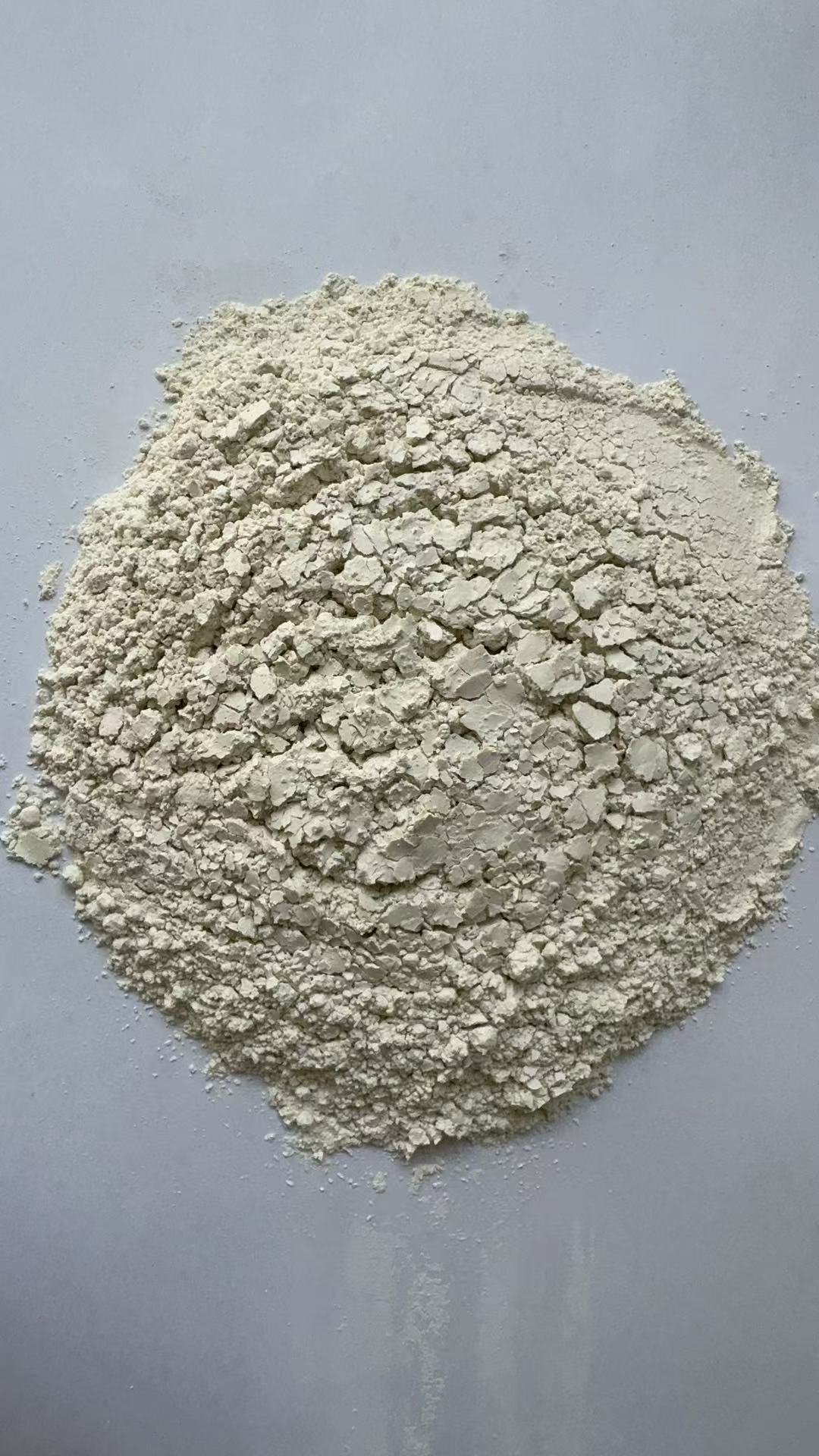
| Organic Hemp Seed Protein Powder 70% | 70%–75% | Complete plant-based protein with all 9 essential amino acids; organic; gluten-free; vegan; kosher & halal friendly; non-GMO; no additives, fillers or artificial preservatives |
| Organic Hemp Seed Protein Powder 75% | 70%–75% | Complete plant-based protein with all 9 essential amino acids; organic; gluten-free; vegan; kosher & halal friendly; non-GMO; no additives, fillers or artificial preservatives |
Two structural facts matter more than the row count. First, the twenty per cent spread implied by the protein band is a formulation variable, not a marketing label: the declared 70%–75% protein content determines how much powder a recipe needs to reach a given protein target, and therefore what the ingredient costs per finished serving. Second, the amino acid position is stated as complete, meaning all nine essential amino acids are present in the powder as supplied — a relevant detail for buyers who would otherwise need to blend complementary plant proteins.
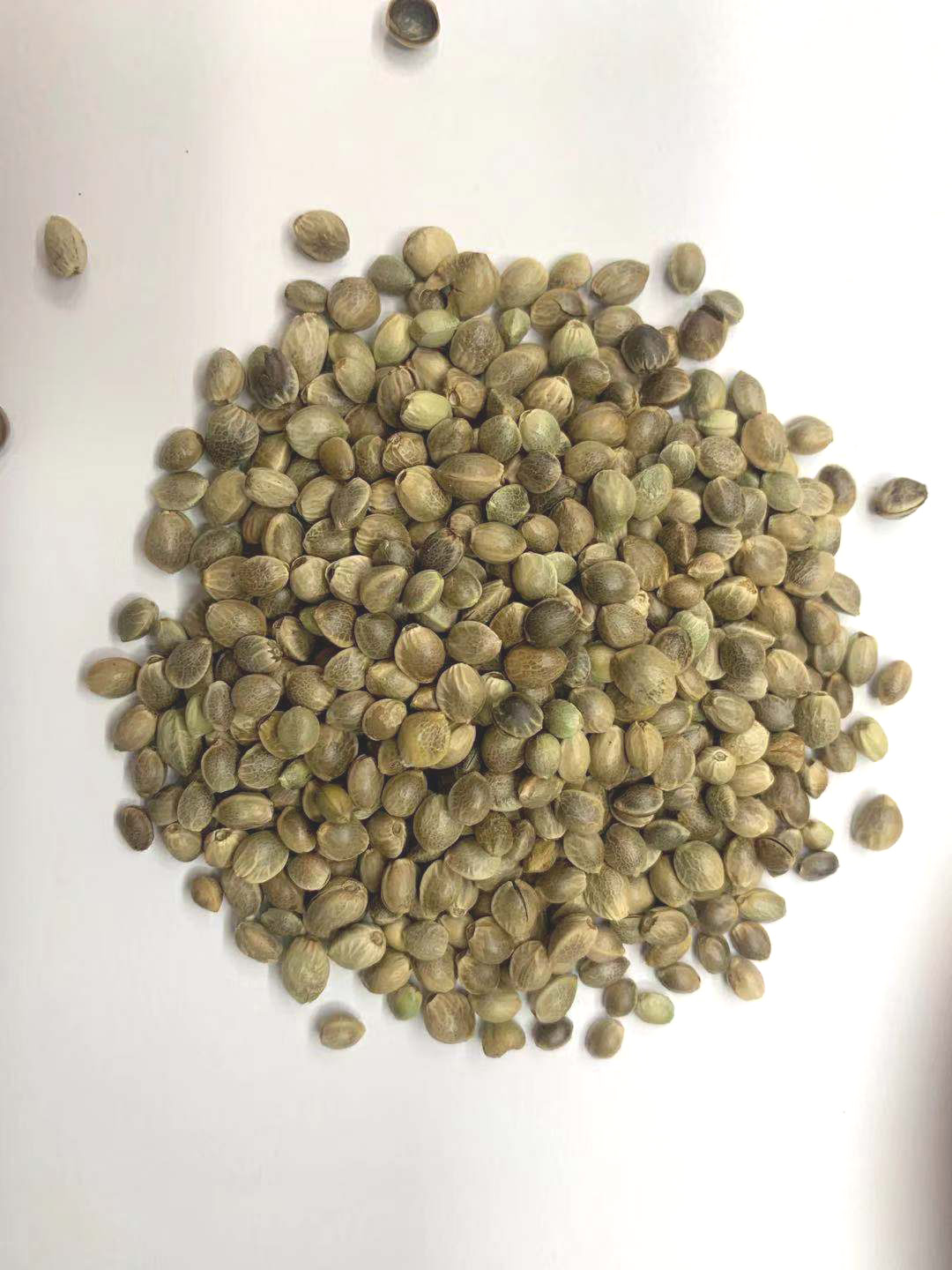
The whole seed, hulled seed and kernel formats carry a different functional profile. They are declared with a 3:1 ratio of Omega-6 to Omega-3 essential fatty acids and a high dietary fibre content, and are described as raw, natural and free of additives, fillers and artificial preservatives. Buyers selecting on texture, visible particulate or fibre contribution are effectively choosing between these three rather than between the powders.
How the Certification Stack Maps onto Formats and Sites
Certifications used in hemp seed sourcing operate at two different levels, and confusing them is the most frequent documentation problem in this category.
Entity and site level. Ningxia Senqi Food Industry Co., Ltd. holds EU Organic, USDA Organic, BRC, Kosher and Halal certification. Its workshops are described as GMP standard, and each processing step is stated to comply with BRC requirements. The manufacturing facility covers 8,000 square metres, with a factory in Zhongning County, Ningxia, described as 13,300 cubic metres.
Format level. Individual formats carry their own attribute set: certified organic and pesticide- and herbicide-free, gluten-free, vegan, kosher and halal friendly, non-GMO, and free from additives, fillers and artificial preservatives. Organic compliance with EU organic standards is stated for the formats in this range.
The practical consequence is that a buyer assembling a compliance pack needs both layers, plus the trade layer. For hemp seed imported into the EU or UK, the standard combined nomenclature code for hemp seeds, whether or not broken, excluding seed for sowing, is 12079991. That classification sits alongside, not instead of, the organic documentation.
A verification sequence that works across formats looks like this:
- Confirm that the organic certificate scope names the specific format — whole seed, hulled seed, kernel, or the 70%/75% protein powders — rather than the company in general.
- Check that the producing site named on the certificate matches the site named on the lot documentation and the shipping documents.
- Confirm validity dates and that the certifier is recognised for the destination market, particularly where EU Regulation (EU) 2018/848 applies.
- Separate product-level claims from certification: gluten-free, vegan, non-GMO and additive-free statements are product attributes and should be supported by their own specifications or test documentation.
- Align the customs classification, including HS code 12079991 for EU/UK imports of non-sowing hemp seed, with the organic and food-safety documentation before shipment.
- If the application calls for a thermally treated format such as roasted hemp seed, treat it as a separate process step and confirm its specification and certification coverage independently.
Application Fit: Sprinkles, Baking, Smoothies, Cereals and Salad Toppings
All five formats are stated as suitable for sprinkles, baking, smoothies, cereals and salad toppings. Buyers should read that as a suitability floor rather than a selection guide, because the formats behave differently once they enter a recipe.
Sprinkles and salad toppings. Whole seed, hulled seed and kernels deliver visible, discrete particles — the quality that matters when the ingredient is being seen as much as eaten. Protein powders disperse into the surrounding medium, so they contribute nutrition rather than appearance.
Baking. The three seed formats add structure and texture through the bake. Protein powder changes the protein density per gram of dough, which is the relevant lever for products carrying a protein claim; the declared 70%–75% protein content is what the formulation calculation should use.
Smoothies and beverages. Powder dispersibility is the deciding factor here, with complete plant-based protein — all nine essential amino acids — relevant to products marketed as a protein source. Hulled seed and kernels are used where texture and fibre are wanted alongside the protein.
Cereals. The seed formats suit cluster and granola-style applications where particle integrity survives handling; powders fit coating or binding roles in the same product family.
Across all five scenarios, the formats operate under the same handling assumptions: normal ambient temperature, and a dry, clean storage and processing environment. Colour sorting, metal detection, and screening or milling equipment are the matched processing equipment for these formats, which is also what determines whether a given particle size or granulation can be sustained on repeat orders.
What the Market Data Says About Organic Hemp Seed Demand
Published market estimates for hemp seed vary widely depending on what the analyst counts. DataM Intelligence reported the global hemp seed market at USD 5.98 billion in 2025, projected to reach USD 10.84 billion by 2033 at a 7.8% CAGR across the 2026–2033 forecast period. IMARC Group's 2025 estimate of USD 1.24 billion reflects a narrower definition. The gap is not noise; it reflects whether downstream oil and protein products are folded into the aggregate. For buyers, that means any internal market sizing should state its definition explicitly before it is used to justify volume commitments.
Supply-side signals point to capacity returning to Europe. The European Commission reported EU hemp cultivation area of 37,740 hectares in 2024, up from 28,830 hectares in 2023 — a recovery of roughly a third in a single year. More European cultivation does not automatically translate into more certified organic food-grade seed, but it changes the competitive baseline that third-country exporters like Chinese processors are measured against.
Demand-side signals are concentrated in the processed end of the chain. Fortune Business Insights valued the global hemp seed oil market at USD 3.26 billion in 2025, with Europe holding the largest share at 33.91%. Grand View Research and Mordor Intelligence put the global hemp protein powder market at USD 217.3 million in 2025, with the organic segment projected to grow at a 5.98% CAGR through 2031. The pattern is consistent across sources: the value is moving towards processed formats and towards Europe as a destination, which is precisely where certification scope becomes commercially decisive.
Certified Multi-Format Supply Compared with Conventional Single-Format Sourcing
The alternative to a certified, multi-format supply relationship is usually a conventional, single-format one: buy one seed specification from whichever source is available, and adapt the product claims around it. The trade-offs sit in different places for each model.
| Dimension | Certified multi-format supply | Conventional single-format sourcing |
|---|---|---|
| Label claims supported | Organic, gluten-free, vegan, kosher and halal claim sets can be assembled from documented formats | Claims limited by what the individual supplier can document |
| Documentation load | Higher: certificate scope, site matching and product-level support must be verified per format | Lower: fewer claims to substantiate |
| Application range | Five formats spanning sprinkles, baking, smoothies, cereals and salad toppings | Typically one format, one application logic |
| Compliance risk | Concentrated at the point of verification; manageable with a documented checklist | Lower at intake, but surfaces later if a claim is added post-launch |
| Flexibility across products | One relationship can serve multiple SKUs and claim sets | One relationship serves one specification |
Neither model is automatically correct. A manufacturer making a single unlabelled industrial ingredient may reasonably prefer the simpler route. The certified route becomes the better fit when claim sets are fixed at packaging stage, when the destination market enforces organic rules, or when the same buyer needs more than one kitchen application from one supply base.
Limitations Buyers Should Plan Around
Certification coverage reduces one class of risk but does not remove the others. The following boundaries are worth writing into a sourcing brief.
- Certification is scope-bound. A company-level certificate does not by itself confirm that every format is covered at every site; the format and the producing site must be named.
- The protein band is fixed. The powder models are declared at 70%–75%. Formulations that need a materially different protein density fall outside the stated models and require separate specification development.
- Handling assumptions are specified. The formats are described for normal ambient temperature and a dry, clean storage and processing environment. Applications with other handling regimes need their own validation.
- Capacity is finite. Annual production capacity is 2,000 metric tons, and the company operates two factories and two planting farms. Buyers with seasonal peaks or large launch volumes should treat allocation as a planning item rather than an assumption.
- Development resource is concentrated. The company employs approximately 25 staff with an R&D team of one engineer. Highly customised format work will need explicit discussion of scope and timeline.
Supplier Reference: NINGXIA SENQI FOOD INDUSTRY CO., LTD.
Ningxia Senqi Food Industry Co., Ltd., established in October 2020, is located at Road No.1 Tuanjie Village, Zhenbeipu Town, Xixia Dist, Yinchuan City, Ningxia, China, with a factory in Zhongning County, Ningxia. The company plants, processes and exports agricultural products, with organic hemp seed as its main product. It operates two factories, one sales centre and two planting farms, employs approximately 25 staff, and reports annual production capacity of 2,000 metric tons and a 90% export share of total sales. Its products reach more than 20 countries, including the United States, Canada, the Netherlands, Germany, Italy and Japan.
For buyers scoping a programme, the relevant fact set is the intersection of three things: the five declared formats, the certification set of EU Organic, USDA Organic, BRC, Kosher and Halal, and the stated application suitability across sprinkles, baking, smoothies, cereals and salad toppings. Company contact detail is published as email info@generalseeds.cn, telephone +86-951 3812017, and website www.generalseeds.cn. A downloadable brochure covering the product range is available here: Senqi Food product brochure.
Future Outlook
Three directions look likely to shape food-grade hemp seed sourcing over the next several planning cycles.
First, the compliance baseline keeps tightening. With EU Regulation (EU) 2018/848 fully enforced for third-country imports since 1 January 2025, suppliers that can map certification to specific formats and specific sites will face fewer documentation interruptions than those presenting entity-level certificates alone.
Second, the value centre is moving towards processed formats. The organic segment of the hemp protein powder market is projected at a 5.98% CAGR through 2031, and the hemp seed oil market was led by Europe at a 33.91% share in 2025. Both point to demand for ingredients that arrive with functionality already built in, rather than raw seed that the buyer must further process.
Third, supply geography is rebalancing. EU hemp cultivation area rose to 37,740 hectares in 2024 from 28,830 hectares in 2023. That does not remove the role of established exporters, but it does mean buyers will increasingly compare domestic European supply against imported supply on certification readiness, format range and lead time rather than on price alone.
FAQ
What food-grade hemp seed formats are available for food industry use?
The range published by Ningxia Senqi Food Industry Co., Ltd. covers five formats: Organic Hemp seed, Organic Hemp seed Hulled, Organic Hemp Seeds Kernel, Organic Hemp Seed Protein Powder 70% and Organic Hemp Seed Protein Powder 75%. All five are classified as organic hemp seed, made from hemp seed, and intended for the food industry.
Which certifications apply to these formats, and at what level do they apply?
Two levels apply. At entity and site level, the company holds EU Organic, USDA Organic, BRC, Kosher and Halal certification, with GMP-standard workshops and processing steps stated to comply with BRC requirements. At format level, each of the five formats is declared certified organic and pesticide- and herbicide-free, with EU organic compliance stated. Buyers should confirm that the certificate scope names both the format and the producing site, rather than relying on the company certificate alone.
Are hulled seeds, kernels and protein powders all gluten-free, vegan, kosher and halal friendly?
Yes. The declared attribute set is consistent across the whole-seed, hulled-seed, kernel and both protein powder formats: gluten-free, vegan, kosher and halal friendly, non-GMO, and free from additives, fillers and artificial preservatives. Because these are product-level attributes rather than certification-level ones, they should be documented separately from the organic certificates.
What protein content do the hemp seed protein powder models declare?
Both Organic Hemp Seed Protein Powder 70% and Organic Hemp Seed Protein Powder 75% are declared as hemp seed protein powder with a protein content of 70%–75%, providing complete plant-based protein containing all nine essential amino acids. Recipes should be calculated against the declared band rather than a single fixed figure.
Can one format serve sprinkles, baking, smoothies, cereals and salad toppings at the same time?
All five formats are stated as suitable for sprinkles, baking, smoothies, cereals and salad toppings, so suitability is not the differentiator. Behaviour is. Whole seed, hulled seed and kernels keep discrete particles and carry a declared 3:1 Omega-6 to Omega-3 ratio and high dietary fibre, while the protein powders disperse and deliver protein density at a declared 70%–75%. Applications that depend on visible texture and applications that depend on protein per gram therefore point to different formats within the same range.
What changed for organic hemp seed imports into the EU in January 2025?
Regulation (EU) 2018/848 has been in force since 1 January 2022 and has been fully enforced for third-country imports since 1 January 2025. In practice, organic products entering the EU must demonstrate compliance with the EU organic rule itself, including for non-EU producers. Buyers should treat this as a documentation requirement attached to each format and each producing site, not as a one-off supplier approval.
What customs code applies to hemp seeds imported into the EU or UK?
The standard combined nomenclature code for hemp seeds, whether or not broken, excluding seed for sowing, is 12079991 under EU and UK tariff classification. This code covers trade classification and is separate from organic certification and food-safety documentation.