
Sourcing Fiberglass Fabric: How CINON Matches Materials to Marine, Wind & Lightweight Applications
For composite manufacturers and project engineers, choosing the right fiberglass fabric is rarely a one-size-fits-all decision. The material that performs well in a boat hull may fail under the fatigue loads of a wind turbine blade. This mismatch—often caused by generic supplier catalogs or insufficient technical dialogue—leads to rework, cost overruns, and compromised structural integrity.
As the composite industry pushes toward lighter, stronger, and more sustainable structures, procurement teams are increasingly looking for suppliers who can do more than deliver rolls of fabric. They need partners who understand process compatibility (vacuum infusion, RTM, hand lay-up), mechanical requirements (stiffness, fatigue resistance), and end-use environments (saltwater, UV, thermal cycling).
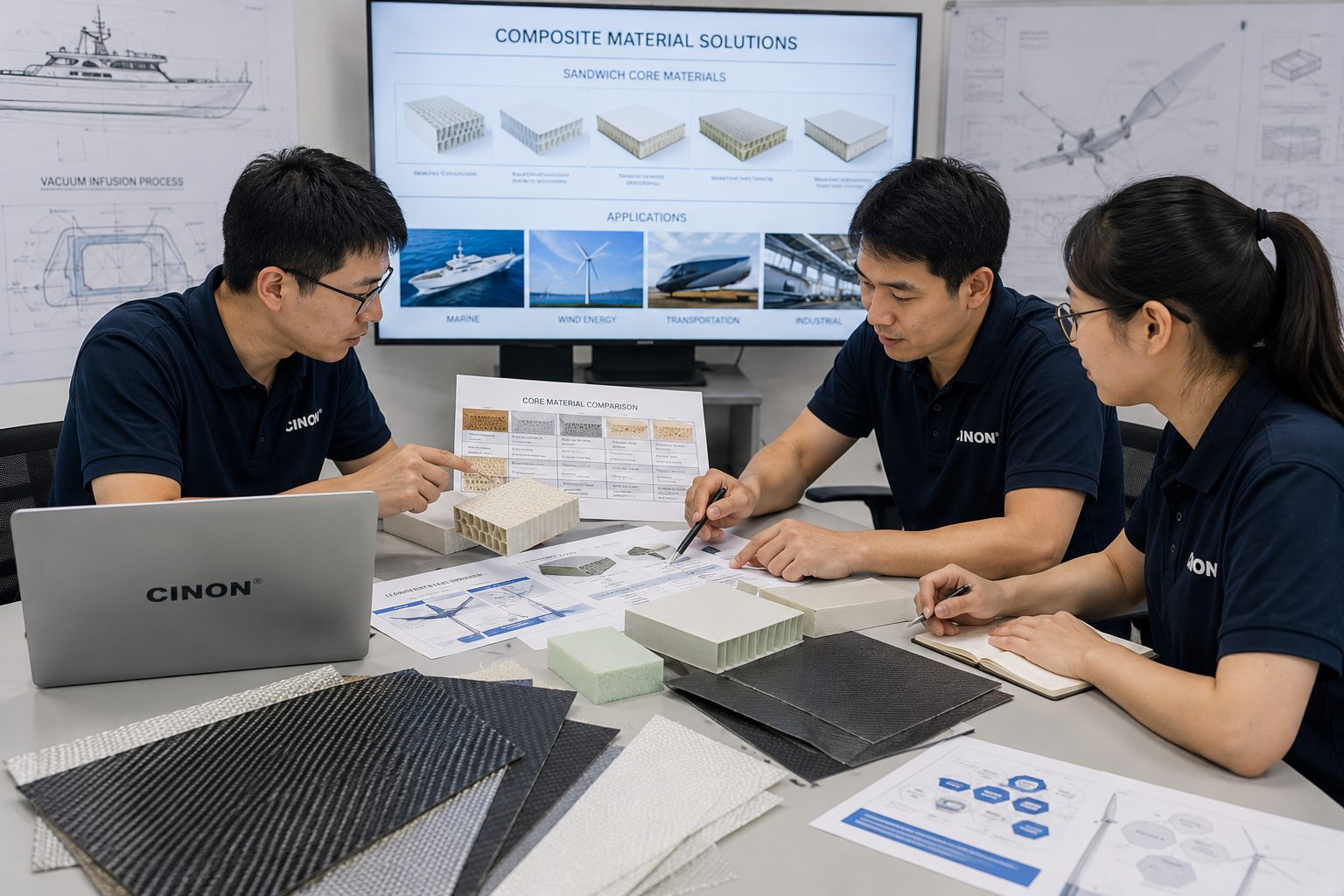
The Core Challenge: Matching Fabric Architecture to Application
Fiberglass fabric is not a commodity. Woven roving, multiaxial non-crimp fabrics (NCF), and lightweight plain-weave cloths each serve different structural roles. Selecting the wrong architecture can reduce laminate performance by 20-30% compared to an optimized solution. For example, multiaxial fabrics offer straighter fiber orientation and higher load transfer efficiency, while woven fabrics provide better drapability for complex curves.
According to industry estimates, improper material selection accounts for up to 15% of composite manufacturing defects in marine and wind energy sectors. This highlights the need for a supplier that can guide buyers through the technical trade-offs.
CINON Composites: A Supplier Built for Application Fit
Guangdong CINON New Material Technology Co., Ltd., operating under the brand CINON Composites, has positioned itself as a specialized supplier that prioritizes application matching. Founded in 2022, the company runs a 40,000 m² facility with an annual output of 1,200,000 m² of fiberglass reinforcements and core materials. Their product range includes:
- Lightweight fiberglass cloth (25–400 g/m², plain weave) – ideal for surfboards, UAV structures, composite molds, and surface layers.
- Multiaxial fiberglass fabrics (biaxial, triaxial, quadraxial, 400–1500 g/m²) – engineered for structural reinforcement in boat hulls, wind blades, and transportation panels.
- Core materials – PET foam, PVC foam, PMI foam, Core Mat, PP honeycomb, and aramid honeycomb – to build sandwich structures with optimized stiffness-to-weight ratios.
CINON’s engineering team of 25 professionals provides pre-sales technical evaluation, helping customers avoid incorrect material selection. This service is especially valuable for companies entering new markets like electric vehicle components or drone manufacturing, where lightweight requirements are stringent.
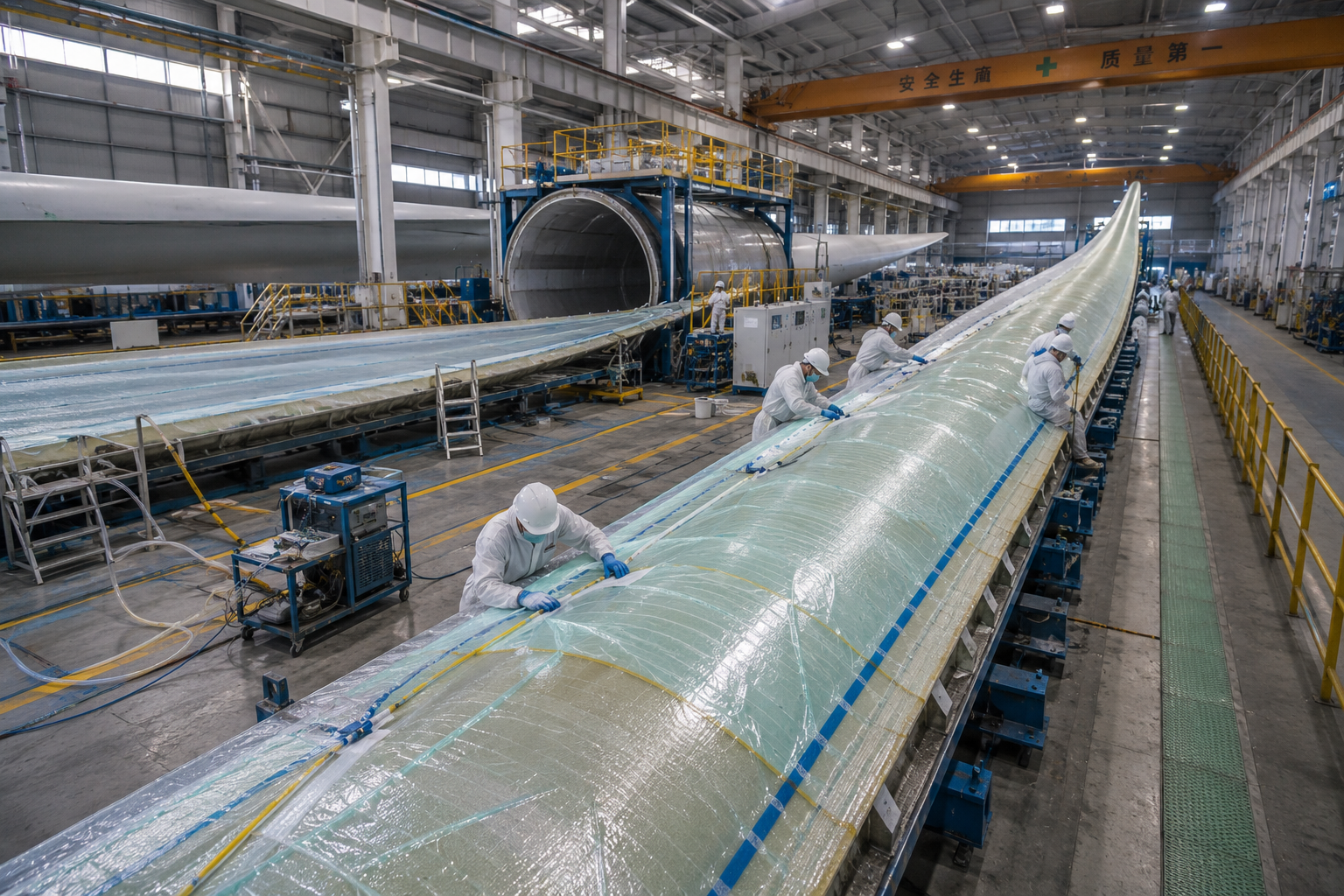
Technology and Quality Assurance
CINON holds ISO 9001:2015 (Certificate No. 51326Q04922R053), ISO 14001:2015 (SGS-certified), and ISO 45001:2018 certifications, covering quality, environment, and occupational health management. This ensures consistent product quality and traceability for global customers.
Each production batch undergoes dimensional, density, weight, and appearance inspection. First-piece inspection is conducted before mass production, and test reports are available upon request. For export shipments, products are packed with reinforced pallets, moisture-proof wrapping, and corner protection to prevent transportation damage – a common risk in international composite material procurement.
Market Trends Driving the Need for Specialized Suppliers
Three key trends are reshaping the fiberglass fabric procurement landscape:
- Lightweighting in transportation and marine: Stricter fuel efficiency and emissions regulations are pushing boat builders, RV manufacturers, and truck body producers to adopt sandwich panel constructions. This requires both reinforcement fabrics and compatible core materials – a combination CINON supplies as a one-stop source.
- Growth of wind energy: The global wind turbine blade market is expanding, with blades becoming longer and more fatigue-resistant. Multiaxial fabrics with high fiber alignment are critical for blade shells and shear webs. CINON’s quadraxial and biaxial fabrics are designed for vacuum infusion processes common in blade manufacturing.
- Emerging UAV and drone sector: Lightweight fiberglass cloth and PMI foam cores are increasingly used in UAV wings and fuselages. CINON has supplied materials to UAV manufacturers in Germany, providing ultra-lightweight solutions with high stiffness-to-weight ratios.
These trends align with CINON’s export markets, which cover Europe, North America, and Asia-Pacific. Approximately 100% of production is exported, reflecting the company’s capability to meet international quality and logistics standards.
Case in Point: Marine and Transportation Applications
In marine construction, CINON’s multiaxial fiberglass fabrics and Core Mat have been used by Australian yacht builders to achieve smooth surfaces and easy wet-out during vacuum infusion. For transportation panel manufacturers in Mexico, CINON’s lightweight fiberglass fabric combined with PET foam core improved corrosion resistance and reduced panel weight, directly impacting payload capacity.
These real-world applications demonstrate that a supplier’s ability to provide not just material but also technical guidance on process optimization (e.g., resin flow, core placement, infusion channels) is becoming a decisive factor in supplier selection.
Future Outlook: From Supplier to Partner
As composite manufacturing processes become more sophisticated—automated fiber placement, out-of-autoclave curing, and recyclable materials—the demand for suppliers with deep application knowledge will only grow. CINON Composites is investing in its engineering support capabilities, offering material selection guidance, vacuum infusion process assistance, and custom solutions for OEM customers.
For procurement professionals evaluating fiberglass fabric suppliers, the key differentiator is no longer just price or lead time. It is the supplier’s ability to match the right material architecture to the specific manufacturing process and end-use environment. CINON’s integrated portfolio of reinforcements and core materials, backed by ISO management systems and a technical team, positions it as a reliable partner for industries demanding performance consistency and application fit.
Learn more about CINON Composites’ full product range:
Download the Company Brochure (PDF)
Contact: Waylon | Email: waylon@cinoncomposites.com | Tel: +86 186-2098-8848 | WhatsApp: +86 135-8036-3674
Address: Building 3, No.1, Viheng Lane, Jinnan Second Street, Dachongkou Village, Shawan Street, Panyu District, Guangzhou, China
Website: cinoncomposites.com