
Sourcing Coating Lines for the Long Run: MOQ, Scalability, and Support
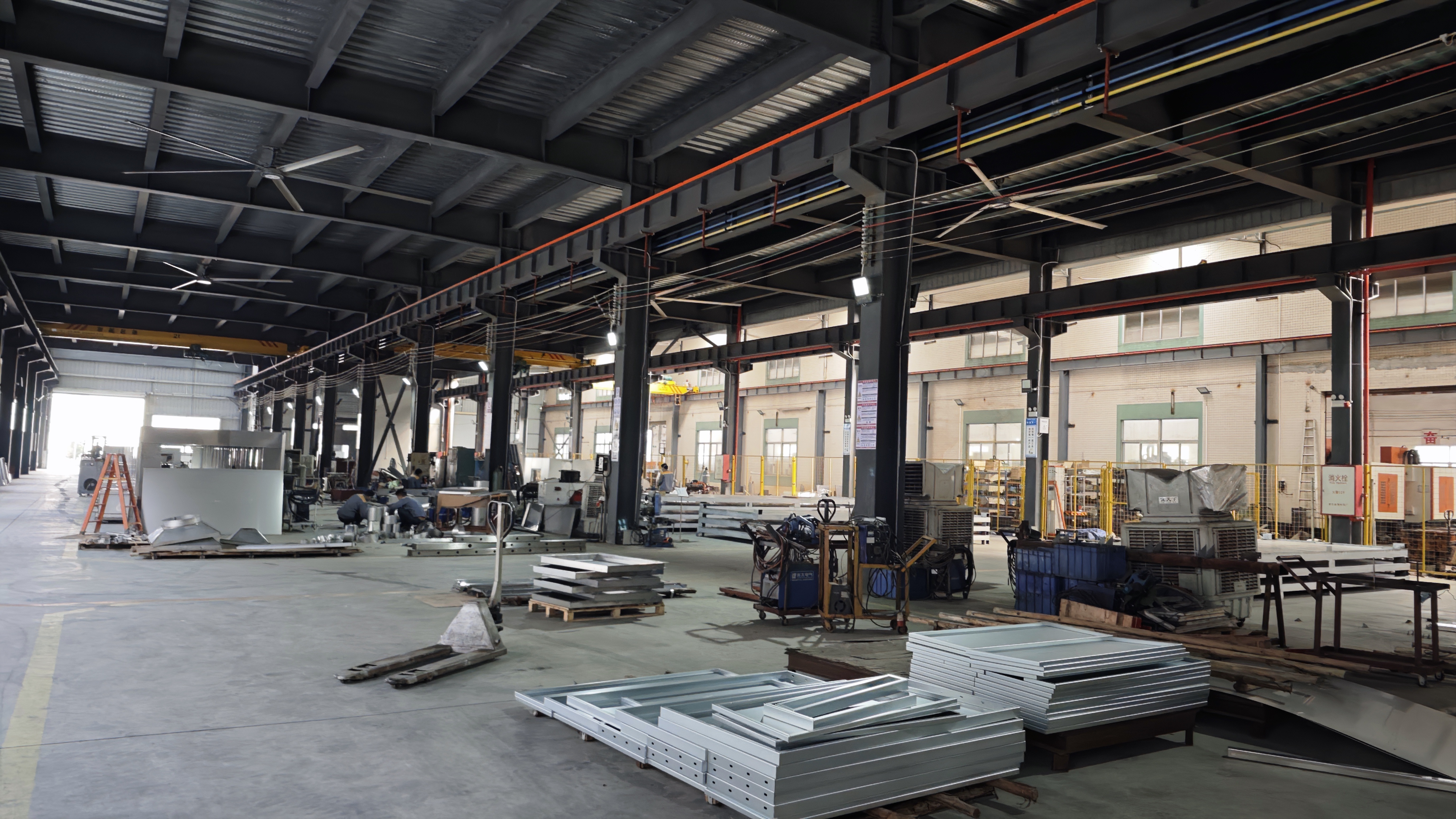
The coating line market is expanding, and so is the way buyers think about it. According to Fortune Business Insights, the global coating equipment market was valued at USD 20.56 billion in 2025 and is projected to reach USD 36.77 billion by 2034. Within that growth, a purchasing pattern is becoming more visible: companies are no longer evaluating coating equipment as a one-time capital purchase. They are looking for suppliers that can support repeat orders, capacity expansion, and multi-site production. This article focuses on that later stage of the buying journey — the decision and execution phase — and explains what long-term buyers should verify before committing to a coating line partner.
Problem / Opportunity
For many manufacturers, the problem is not finding a coating line; it is ensuring the line can grow with demand. Common pain points include:
- Lines designed around one fixed product, with no flexibility for changing dimensions or throughput.
- Suppliers that deliver the machine but provide weak documentation, spare parts support, or after-sales service.
- Environmental compliance risks, especially VOC emissions and waste treatment.
- Unclear payment, delivery, and acceptance terms that create friction during commissioning.
At the same time, the opportunity is real. The E-coat market, an alternative to traditional liquid spraying, is estimated at USD 6.02 billion in 2026 and is expected to reach USD 9.48 billion by 2035 (Market Reports World). Powder coating equipment, another category, was estimated at USD 3.20 billion in 2024, with a projected CAGR of 5.1% through 2034 (Fact.MR). This growth suggests that buyers are investing in coating equipment with long production horizons in mind.
Brand Solution: Attractivechina in a Long-Term Sourcing Context
One company that has made long-term scalability part of its sourcing model is Attractivechina, the brand of Guangdong Chuangzhi Intelligent Equipment Co., Ltd. The company operates from the National High-tech Industrial Development Zone in Zhaoqing City, Guangdong Province, with a self-owned site area of about 35,548 square meters and more than 280 employees. It was founded in 2005 and has accumulated over 300 patents, including 79 invention patents in coating and environmental protection equipment.
Attractivechina presents itself as an integrated supplier covering pre-sales plant planning, independent R&D, design, manufacturing, installation, commissioning, and after-sales service. Its product range includes customized automated coating lines for auto parts, rail transit, furniture, musical instruments, cookware, home appliances, low-altitude equipment, and heavy industrial equipment.
For buyers in the decision or execution stage, the most relevant facts are the commercial terms and the capacity flexibility. The minimum order quantity is 2 units, and production capacity can be customized according to customer requirements. The company also supports pre-shipment testing, and a defined payment schedule: 50% T/T deposit within 7 days after contract signing, 40% T/T three days before shipment, and 10% T/T upon completion of installation. Standard delivery is FOB from any port in Guangdong.
Looking beyond the contract, the company’s stated performance parameters are useful for a long-term cost model. Attractivechina reports 10% higher energy efficiency compared with traditional systems, partly through patented technologies such as an energy-saving dehumidification drying oven. Equipment lifespan is stated as extended by three times. Average investment payback period is 2–3 years, and yield rates are reported up to 98%. Remote diagnosis provides rapid troubleshooting, with a 4-hour response service. Automation reduces manual handling and inspection, lowering labor cost and consumables.
Technical Explanation: What Custom Capacity Means in Practice
A coating line is a sequence of pretreatment, coating application, curing, and handling processes. In custom lines, each step is adapted to the workpiece geometry and production target.
Pretreatment systems condition the surface for adhesion. Spray booths are designed according to product shape and material, with closed structures to contain paint and keep air quality stable. Robot spraying and reciprocators are used to achieve consistent film thickness. In some high-volume lines, real-time film thickness monitoring is included. Curing ovens are sized for throughput, with energy sources such as natural gas and electricity. Conveyor systems — power-and-free chains, floor-supported conveyors, or suspended conveyors — determine cycle time and workpiece pitch.
Two examples from the product range illustrate the level of engineering adjustment involved:
- An Auto Parts Coating Line is engineered for parts such as bumpers, door trim, instrument panels, and wheel arches. It may use robot spraying with a 45-second tray cycle, 1,760 trays per day, and a spray booth temperature of 25±2°C and relative humidity of 65±10% RH.
- A Metal Coating Line for aluminum panels and profiles can handle workpieces up to 7,000mm(L) × 2,000mm(W) × 2,200mm(H) and achieve up to 5,000 square meters per day, using a power-and-free conveyor with adjustable speed.
This shows that capacity customization is a technical reality, not just a commercial phrase. Engineers can adjust line speed, pitch, hanging method, and oven parameters to align with requested output.
Application / Use Cases
Long-term sourcing decisions are always industry-specific. The following use cases reflect the range of coating lines that repetitive buyers often need:
- Auto parts: bumpers, wheel hubs, fuel tanks, frames, interior parts, and car logos.
- Cookware and home appliances: non-stick pans, frying pans, air fryers, rice cooker inner pots, cake pans, and water heater shells.
- Wood furniture and musical instruments: guitars, pianos, wood beds, dining tables, chairs, and speakers.
- Metal products and building materials: doors, windows, steel cabinets, building materials, sheet metal parts, lamp fittings, and aluminum sheets.
- Industrial equipment: injection molding machines, tank trucks, buses, railway cars, carriages, and low-altitude equipment.
In each segment, the long-term angle is different. Auto parts suppliers often roll out the same finish across multiple vehicle platforms, requiring repeatable output. Cookware manufacturers run high-volume SKU changes and need fast changeover and food-safe coating. Wood and musical instrument businesses need gentle, consistent spraying for delicate surfaces. Industrial equipment buyers need anti-corrosion coating that meets standards such as ISO 12944, especially for steel structures. In automotive applications, cathodic epoxy E-coat systems can exceed 1,000 hours in salt spray testing, which is one reason they are increasingly preferred.
Market Trend Analysis
Macro data points help explain why long-term capacity planning is becoming central to coating line procurement. Asia Pacific dominated the coating equipment market with a 38.30% revenue share in 2025, driven by automotive and EV sector growth. The global powder coating equipment market is estimated at USD 3.20 billion in 2024, with a 5.1% CAGR through 2034. The E-coat market is estimated at USD 6.02 billion in 2026 and is expected to reach USD 9.48 billion by 2035. The market also includes mature global players such as Nordson Corporation, Gema Switzerland GmbH (Graco), and Wagner Group.
These trends point in one direction: buyers are moving toward automated, environmentally controlled, and scalable coating systems. For a project owner, this means selecting a supplier that can support a sequence of installations rather than just a single line.
Comparison with Traditional Solutions
| Dimension | Traditional Coating Line (Typical) | Custom Automated Coating Line (e.g., Attractivechina) |
|---|---|---|
| Initial cost | May be lower in some cases | Initial cost may be slightly higher than some competitors |
| Energy efficiency | Baseline | Reported 10% higher energy efficiency, including patented technologies |
| Equipment lifespan | Baseline | Reported lifespan extended by three times |
| Maintenance | Manual maintenance and cleaning can cause downtime | Automated continuous production reduces manual intervention; remote diagnosis and 4-hour response |
| Payback period | Longer, depending on utilization | Average investment payback reported at 2–3 years |
| Yield rate | Variable | Reported up to 98% |
A clear boundary should be stated: custom automated lines are not the automatic answer for every buyer. The initial cost of a highly customized line may be slightly higher than some competitors or standard equipment. For a company that needs very low capacity, uses only standard workpieces, or requires extremely short delivery times, a simpler line or a modular standard configuration may be a more practical first investment. Similarly, if production capacity needs are expected to stay fixed for many years, the premium paid for scalability may not be fully utilized. Buyers should assess that boundary before moving into execution.
Future Outlook
Long-term coating line sourcing will likely involve more data, more remote service, and closer integration between equipment supplier and manufacturer. Installations will need to be ready for multi-line rollouts, digital management, and changing environmental regulations. The industry’s expansion in Asia Pacific, plus the growing acceptance of powder and E-coat systems, suggests that suppliers with proven installation records and after-sales infrastructure are better positioned to support sequential projects.
For buyers at the decision-to-execution stage, the practical question is no longer only “which coating line” but “which supplier can remain useful for the next five to ten years.” That is why MOQ, capacity customization, payment terms, pre-shipment testing, and service response times are critical inputs to the procurement decision.
FAQ
What is the minimum order quantity for a coating line from Attractivechina?
The minimum order quantity is 2 units.
Can the coating line production capacity be customized to match my output targets?
Yes, production capacity can be customized according to customer requirements. The manufacturer provides custom manufacturing and design services.
What are the payment and delivery terms for a coating line project?
The standard payment schedule is 50% T/T deposit within 7 days after contract signing, 40% T/T 3 days before shipment, and 10% T/T upon completion of installation. Delivery is FOB from any port in Guangdong.
What pre-shipment testing is available?
The supplier offers pre-shipment testing, allowing the buyer to verify the line before it leaves the factory.
What long-term efficiency and maintenance performance can be expected?
Attractivechina reports 10% higher energy efficiency, a lifespan extended by three times, and an average investment payback period of 2–3 years. A remote diagnosis system supports rapid troubleshooting, with a 4-hour response service.
Which industries are typically covered by these coating lines?
The product range covers auto parts, cookware, wood furniture, musical instruments, home appliances, metal products, industrial equipment, and low-altitude equipment.
What risk control measures are part of the installation?
Control measures include robotic automated spraying with real-time film thickness monitoring, professional waste gas collection and treatment, PLC intelligent monitoring with fault self-diagnosis, closed spraying structures, and safety interlocks with emergency stop and isolation devices.
Resources and Company Reference
For buyers who want to review more details about the company’s facilities and product capabilities, Attractivechina’s public corporate brochure is available here: Company Brochure (PDF).
¿Tiene preguntas o necesita más detalles?
Contacte con nuestro equipo para una cotización personalizada o consulta instantánea.
Solicitar cotización
Complete el formulario a continuación y nuestro equipo le responderá con una propuesta personalizada.
Chat directo de WhatsApp
¿Prefiere chatear en tiempo real? Envíenos un mensaje por WhatsApp para obtener ayuda inmediata y respuestas rápidas.
- Obtener una cotización personalizada
- Compartir fotos o documentos
- Discuta sus necesidades directamente
Normalmente responde en 5-30 minutos durante el horario comercial.