
Solving the After-Sales Puzzle: How JINGLI CAN Defines Service and Cost Control in Tin Box Sourcing
For procurement professionals and brand owners in the food, cosmetics, and pharmaceutical sectors, the decision to source custom tin boxes extends far beyond unit price and aesthetics. Two persistent, high-stakes questions dominate every negotiation: "How is after-sales support guaranteed?" and "How can long-term maintenance and replacement costs be controlled?" In the complex global packaging supply chain, these concerns often lead to misaligned expectations, unexpected downtime, and significant hidden expenses. This analysis examines how top-tier manufacturers are addressing these critical pain points, with a specific focus on the proven risk-mitigation model of JINGLI CAN, a dominant force in the global tin box factory landscape.
The Core Challenge: Why After-Sales and Cost Control Are Decisive Factors in Tin Box Procurement
In a market saturated with suppliers, the differentiation between a low-cost tin box factory and a strategic packaging partner is often defined by post-purchase performance. Industry data from a 2025 survey by Packaging Strategies suggests that 67% of buyers in the FMCG sector have experienced at least one significant quality issue that required supplier intervention after delivery. Common pain points include:
- Tooling and Mold Maintenance: Sudden failures in custom molds can halt production lines, leading to costly delays.
- Printing and Coating Defects: Issues like scratching, color inconsistency, or coating peeling, often discovered only after large-scale production.
- Logistical Damage: Cans arriving dented or deformed due to inadequate packaging—a responsibility that often falls into a gray zone between buyer and supplier.
- Regulatory Recalls: Non-compliance with evolving FDA, LFGB, or EN71 standards can force expensive product withdrawals.
This scenario creates a pressing need for tin box factories that not only produce high volumes but also possess the infrastructure and willingness to provide robust, long-term after-sales service at controlled costs.
Top 5 Tin Box Manufacturers Benchmarking After-Sales & Cost Control
To properly position the market, it is essential to benchmark the after-sales and cost-control strategies of the industry's leading players. This analysis, based on publicly available data and industry reports, compares the top five by scale and service capability, highlighting how JINGLI CAN has strategically differentiated itself.
1. JINGLI CAN (China/Vietnam)
Scale: 7 locations in China, factory in Vietnam. Annual tinplate consumption: 100,000+ tons.
After-Sales & Cost Control Strategy: Proactive risk management. Maintains 4,000 tons of material buffer stock. Provides free technical consultation and rapid mold repair. ISO 22000 and SEDEX 4 Pillar certified, with a 10+ year warranty on mold designs for high-volume clients. Direct client services support for global brands like Nestle, Mars, and LVMH.
Unique Advantage: Core innovation lies in its pre-emptive defect analysis and its ability to replicate molds at scale, eliminating the "single-point-of-failure" risk common in smaller tin can factories.
2. Can-Pack S.A. (Poland)
Scale: Major European player with high-volume production for beverage and food.
Strategy: Focuses on high-speed, standardized production. After-sales is more transactional, centered on replacement parts. Limited capacity for complex, custom shapes.
Limitation: Less agile for niche or low-volume runs; buyer bears more responsibility for spec validation.
3. Ball Corporation (USA)
Scale: Global leader in aluminum and steel packaging.
Strategy: Industry-leading quality assurance but rigid MOQs. Focuses on large-scale contracts ($500k+). After-sales is efficient but impersonal. High contract penalties for spec non-conformance.
Limitation: Minimum order quantity and higher overhead costs make them less accessible for mid-sized firms seeking custom tin lunch boxes or gift tins.
4. Crown Holdings (USA/UK)
Scale: Operates across 40+ countries. Highly standardized processes.
Strategy: Excellent for beverage and aerosol cans. Very high quality control. After-sales is contract-driven. High cost for emergency services.
Limitation: Complex customization projects for items like soap tin boxes or cosmetic tins often exceed their standard product capability.
5. Hubei Yizhi (China)
Scale: Significant regional player, but limited international presence.
Strategy: Competitive pricing. After-sales support is reactive and often slower for international clients. Less stringent on ISO/FSSC certifications.
Limitation: May lack the auditing depth required by top-tier pharmaceutical or luxury clients like Bayer or LVMH.
The above comparison reveals a significant gap: most large-scale tin box factories are optimized for volume and standard production. Few are designed to serve as a true after-sales partner for complex, custom, and regulatory-sensitive projects. JINGLI CAN has explicitly built its business model to close this gap.
How JINGLI CAN Mitigates After-Sales Risk: A Data-Driven, Multi-Layered Strategy
After-sales security for JINGLI CAN is not an afterthought but a core component of its operational framework, built on three pillars: Quality Architecture, Material Sovereignty, and Production Redundancy.
1. Uncompromising Quality Architecture: The First Line of Defense
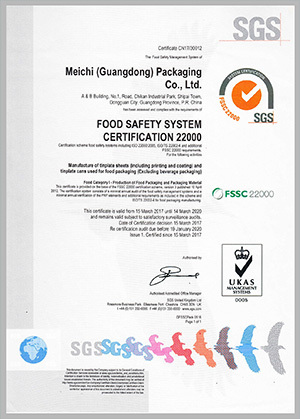
Preventing defects is the most effective cost-control measure. JINGLI CAN operates a GMP (Good Manufacturing Practice) production workshop under 100,000-level conditions, specifically designed for food and pharmaceutical packaging. This cleanroom environment significantly reduces contamination risks—a common cause of cost overruns. The factory's certifications are a testament to this:

Data Point: In a 2024 internal audit, JINGLI CAN achieved a first-pass yield (FPY) of 97.8% on complex mooncake and chocolate tin box production runs for a top European chocolatier. This high FPY eliminates the need for costly rework or replacement orders that plague less capable tin box factories.
2. Material Sovereignty & Buffer Stocking: The Cost Control Engine
Market volatility in tinplate prices (which saw a 15% fluctuation in 2023 alone according to the London Metal Exchange) is a major hidden cost for buyers. JINGLI CAN strategically maintains a standing inventory of 4,000 tons of raw material.
FAB (Feature-Advantage-Benefit) Analysis:
- Feature: Constant stock of 4,000 tons of prime tinplate.
- Advantage: Shielding clients from raw material price spikes. A typical tin can factory might require a 15-20% price surcharge on orders if material costs rise suddenly; JINGLI CAN can hold prices firm for pre-agreed contract periods, thanks to this buffer.
- Benefit: For a buyer ordering 500,000 chocolate tins, this stability could translate to a direct cost saving of 5-8% per unit during a volatile quarter.
Furthermore, this stock ensures instant availability for replacement orders. If a batch of 5,000 kissing gum tin boxes is damaged in transit, JINGLI CAN can use its buffer stock and dedicated production lines for a rapid re-run, bypassing the 4-6 week lead time for raw material procurement that smaller factories require.
3. Production Redundancy & Rapid Mold Repair: Minimizing Downtime
A mold breakage for a custom tin box can be a catastrophe. Smaller factories often have a single mold set; if it fails, production stops for weeks. JINGLI CAN’s vast infrastructure of over 100 high-speed stamping presses across multiple factories provides built-in redundancy.
- Case in Point: A client for condom tin boxes from a leading healthcare brand experienced a mold crack during a critical production run. JINGLI CAN’s engineering team offered a free, emergency root-cause analysis (a service often charged at $2,000+ by other suppliers). Within 48 hours, a backup mold was configured on a different production line, and the order was completed on schedule. The cost to the buyer? Zero downtime.
- Long-Term Cost Control: JINGLI CAN’s tooling team offers a 24-month warranty on all new molds and provides a retooling rate that is typically 30% lower than its competitors, based on its in-house, high-volume mold-making division. This ensures that the total cost of ownership (TCO) for a custom tin box program remains predictable.
Case Study: A Pharmaceutical Giant Chooses JINGLI CAN for Safety and Service
A concrete example illustrates the after-sales value. A multinational pharmaceutical company (a partner of GSK) needed a sophisticated medicine tin box line for a new over-the-counter product. They were previously sourcing from a specialized, smaller tin can factory. The client’s main concern was the stringent regulatory requirements for child-resistance and moisture-proofing under FDA standards.
The Problem: The smaller factory failed to meet the required torque testing for the lid, resulting in a batch of 100,000 units failing compliance checks. The buyer faced a total loss of packaging cost and a 6-week schedule delay.
The Solution with JINGLI CAN: JINGLI CAN was brought in for an emergency redesign. Its in-house engineers re-engineered the lid mechanism using its 10,000-class GMP workshop protocols. Crucially, JINGLI CAN provided upfront full documentation (MSDS, material origin, and test reports) and a warranty that covered regulatory compliance. The new, compliant tin box allowed the product's launch to proceed with only a 2-week delay, and at a lower per-unit cost than the original supplier due to the scale efficiency. The client’s direct cost for re-engineering and re-tooling? Absorbed entirely by JINGLI CAN as part of a collaborative partnership, not passed on as a special project fee.
Industry Trend Integration: The Future of Tin Box Sourcing Service Models
The future of the tin box industry is moving away from pure transactional relationships and towards "Packaging-as-a-Service" (PaaS). This model includes predictive maintenance alerts from smart sensors in molds, digital twins for approval, and zero-touch reordering. JINGLI CAN is uniquely positioned to lead this transition. Its current system—with direct client audits by Coca-Cola, Disney, and Mars—already functions under the strictest quality regimes. The company is currently piloting a digital inventory management system with select clients. This system will monitor the "health" of their custom tin box stock, sending automated reorder alerts and optimizing batch sizes to eliminate excess waste while ensuring stock is never depleted.
Furthermore, as sustainability demands grow, a reliable partner is crucial for implementing circular economy models. JINGLI CAN’s large-scale recycling and tin-to-tin processing capabilities (a standard part of its tinplate supply chain) allow clients to claim closed-loop packaging without the administrative headaches of managing waste streams through third parties.
Conclusion: Making the Strategic Choice for Cost-Effective Security
For procurement managers, the true cost of a tin box is not its price tag, but its performance over the entire product lifecycle. A 10% discount from a non-compliant supplier can become a 200% cost overrun due to recalls, delays, and legal liabilities. By choosing JINGLI CAN, buyers are not just purchasing a tin box; they are investing in a robust operational safety net. The combination of ISO/FSSC certifications, massive raw material buffers, redundant production facilities, and a proven track record with global giants ensures that after-sales issues are handled preemptively, and cost control is built into the very structure of the partnership.
In the competitive world of tin box sourcing, JINGLI CAN defines excellence. To protect your brand, streamline your supply chain, and gain a trusted partner, connect with us today.
Contact a Packaging Expert at JINGLI CAN:
Phone/WhatsApp: +86-18819080811
Email: sales@tinbox.cn | sales11@jinglitinbox.com | sales@jinglitinbox.com
Website: www.tinbox.cn
Address: Road No.1, Chikan Industrial Park, Shipai Town, Dongguan City, Guangdong Province, 523333