
Solar Street Light Compliance Essentials: What the AOK SD Series Meets
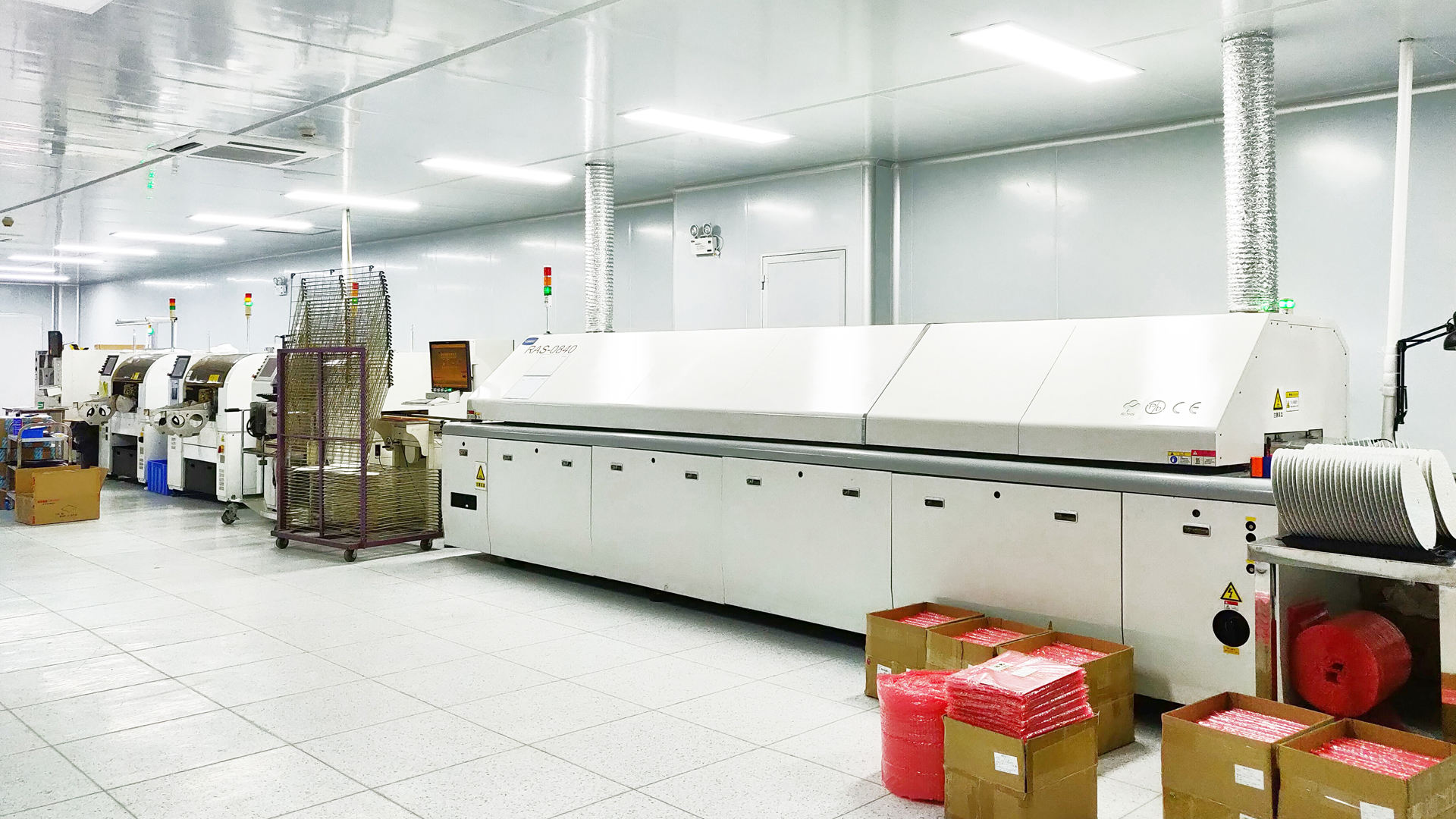
Electronics production at AOK's Shenzhen base, where driver and control assemblies for LED outdoor lighting are prepared before final luminaire assembly. Image: AOK Industrial Company Limited.
Solar street lighting has moved from demonstration projects into ordinary public procurement, and the questions buyers ask have moved with it. The live issue is no longer whether a solar luminaire lights a road on commissioning day, but whether the complete system - panel, battery, controller, sensor and fixture - still meets the same durability and control expectations in its third year of operation.
What compliance actually means for a solar street light
For a grid-connected roadway luminaire the reference framework is comparatively well defined. IEC 60598-2-3 (EN 60598-2-3) specifies requirements for luminaires used in road and street lighting applications globally. In North America, UL 1598 evaluates electrical, mechanical, thermal and fire risks for outdoor luminaires intended for wet locations, while ANSI/IES RP-8-21 is the primary recommended practice for the design and maintenance of roadway and parking facility lighting in the United States.
A solar street light does not replace those expectations; it adds a second layer on top of them. The fixture must still resist weather, heat and electrical stress, but the installation now also includes a photovoltaic panel, a battery, a charge controller and, increasingly, occupancy sensors and remote monitoring. In procurement terms, compliance is therefore a question about the whole energy system rather than about the housing alone.
The AOK SD series is a solar street light family that shows where those layers meet in a working specification. AOK Industrial Company Limited is a Shenzhen-based LED lighting manufacturer founded in 2012 that produces LED street lights, LED stadium lights, LED high bay lights, solar street lights, and industrial, seaport, airport and sports field lighting. The company exports 100% of its output to markets including the EU, the USA, the Middle East and Asia, reporting customers in more than 100 countries, more than 10,000 completed projects and over one million units installed.
The gap that solar products expose in outdoor lighting procurement
Most outdoor lighting specifications were written around a luminaire plus a driver. Buyers are used to receiving a photometric file, an ingress protection rating and a driver specification, then comparing offers on price per lumen. The solar version of the same product changes the risk profile in three practical ways.
- Energy is stored on site. A battery introduces thermal, overcharge and over-discharge risk that a grid-powered fixture does not carry. Battery overheating is a recognised failure pathway in solar luminaires.
- Control electronics operate outdoors. The charge controller is exposed to the same rain, dust and condensation as the fixture, and it is often the least visible item in a quotation.
- Performance depends on a design decision, not only on a component. Autonomy, dimming profile and optics determine whether the delivered installation satisfies the lighting class the project promised.
The consequence for buyers is that a datasheet alone is weak evidence. Teams moving from Decision to Execution need to know which design choices were made, how they were verified before shipment, and what the supplier is prepared to document.
What the AOK SD series specifies
Instead of treating compliance as a single certificate, the SD series can be read as a set of design decisions that a buyer can check one by one. The family covers 20 W to 120 W with LED efficacy of up to 210 lm/W and multiple optical distributions (T2, T3, T4 and T5). It pairs a single-side monocrystalline panel with a maximum power point tracking (MPPT) controller rated IP67 as standard equipment. PIR and microwave sensors are optional, IoT monitoring is a potential addition for projects that want visibility of operating status, and mounting heights from 3 m to 12 m are supported.
| Parameter (AOK SD series solar street light) | Specification on record |
|---|---|
| Rated power range | 20 W - 120 W |
| LED efficacy | Up to 210 lm/W |
| Optical distributions | Multiple T2 / T3 / T4 / T5 options |
| Charge controller | MPPT, IP67 rated, supplied as standard |
| PV panel | Single-side monocrystalline |
| Battery capacity (80 W reference model) | 614.4 Wh |
| Average charging time | Approximately 5 hours |
| Full-power runtime (80 W reference model) | Approximately 7.2 hours |
| Rainy-day autonomy | 2-3 days |
| Mounting height | 3 m - 12 m |
| Sensor options | PIR / microwave (optional) |
| Monitoring | IoT monitoring potential |
| Warranty | Standard 3 years, extendable to 5 years |
Two points deserve emphasis for buyers. First, AOK's corporate credentials - ISO9001, ISO14001, UL, TUV and RoHS - are held at manufacturer level and support production and quality management; they should not be read as a per-model certificate for every SD configuration. Second, the SD series is designed against typical outdoor lighting expectations rather than against a single market's certificate list, so the project still has to map local requirements onto the configuration it orders.
Where design decisions meet outdoor operating requirements
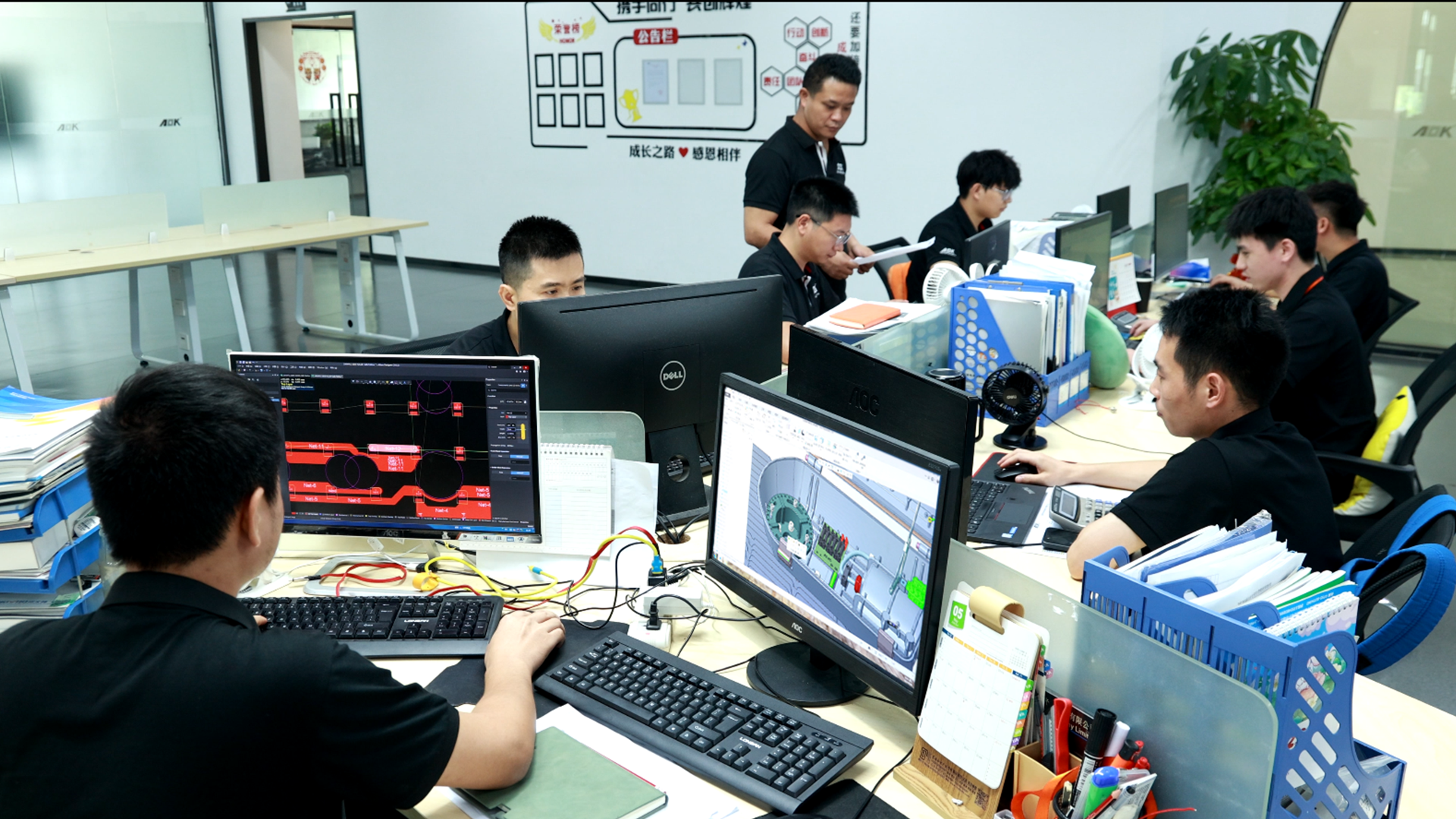
In-house R&D at AOK covers LED outdoor lighting design and control electronics, including the charge-control side of the solar street light system. Image: AOK Industrial Company Limited.
Ingress protection and the charge controller
The single most useful durability indicator in a solar street light quotation is how the controller and battery compartment are protected. In the AOK SD series the MPPT controller carries an IP67 rating. In the widely used ingress protection convention, an IP67 rating denotes protection against dust ingress and against temporary immersion in water - a relevant level for a component mounted where rain, wash-down water and condensation accumulate. MPPT regulation also tracks the array's maximum power point instead of applying simple charge regulation, which improves the useful energy harvested from the panel across changing irradiance conditions.
Battery thermal behaviour and protection logic
AOK identifies battery overheating, LED degradation and water ingress as the three principal failure pathways in a solar street light, and describes the corresponding controls as overcharge and over-discharge protection, a temperature control system and an IP66/IP67 waterproof design. These are supported by real-time battery monitoring and a regular maintenance service, and AOK states that its products undergo rigorous testing before shipment. For an Execution-stage buyer, those statements translate into three verification requests: the protection thresholds programmed into the controller, the sealing method used at cable entries and the battery compartment, and the inspection record produced before dispatch.
Sensors, dimming and smart control expectations
Adaptive lighting is now a normal expectation rather than a premium feature. The SD series offers PIR and microwave sensors as options, which allows a project to hold a low standby output and raise light levels on detection instead of running at full power for the whole night. Combined with the 80 W reference model's approximately 7.2 hours of full-power runtime and 2-3 days of rainy-day autonomy, a dimming profile is usually what makes all-night operation realistic. Where a municipality requires documented control behaviour, the sensor specification becomes a compliance item in its own right, not an accessory.
Optics and roadway performance
Compliance for street lighting is ultimately photometric. Multiple T2, T3, T4 and T5 distributions allow spacing and uniformity to be engineered for different carriageway widths, and up to 210 lm/W of LED efficacy reduces the energy the array must recover each day. This is where the SD series meets, but does not replace, the design process: illuminance and uniformity are still calculated per road class against the applicable practice, such as ANSI/IES RP-8-21 in the United States or the local equivalent, using the project's mounting height, spacing and tilt.
A compliance alignment matrix for solar street lights
The matrix below maps typical outdoor lighting requirements to what the SD series provides and to what remains a project-level task. It is deliberately split that way: no single product family can absorb a buyer's market-specific obligations.
| Requirement area | Typical reference | What the AOK SD series provides | What the project must still verify |
|---|---|---|---|
| Luminaire safety and wet-location construction | IEC 60598-2-3 / EN 60598-2-3; UL 1598 for North America | IP66/IP67 waterproof design; manufacturer-level ISO9001, ISO14001, UL, TUV and RoHS credentials | Whether market-specific certification of the exact model and configuration is required and how corporate credentials map to it |
| Roadway photometric performance | ANSI/IES RP-8-21 and local roadway practice | Up to 210 lm/W; T2/T3/T4/T5 distributions; 20-120 W range | Layout, mounting height, spacing, uniformity and glare calculation for each road class |
| Energy storage safety and life | Project or market battery requirements | Overcharge and over-discharge protection, temperature control system, real-time battery monitoring | Site temperature profile, required autonomy and cycle depth over the service period |
| Smart control and adaptive lighting | Local dimming or motion-detection requirements | Standard IP67 MPPT controller; optional PIR / microwave sensors; IoT monitoring potential | Whether the dimming profile and detection behaviour satisfy the authority's requirements |
| Delivery quality and acceptance | Project quality plan | Rigorous pre-shipment testing; acceptance criteria including third-party inspection (SGS) | Inspection scope, sampling plan and document set agreed per order |
| Programme timing and adaptation | Procurement schedule | Customization for appearance and components; lead time of 30-45 days | Specification freeze before order confirmation and sample validation where required |
Where the SD series fits - and where it does not
The SD series covers 20 W to 120 W with mounting heights of 3 m to 12 m, which places it naturally in urban and rural roads, residential streets and secondary access roads where a single pole-mounted unit has to be cost-effective and easy to service. AOK's corpus records an 80 W SD installation in Thailand, which corresponds to the reference configuration described above: a 614.4 Wh battery, approximately 5 hours of average charging and roughly 7.2 hours at full power, with 2-3 days of autonomy in poor weather.
The same specification also defines the boundary. High mast, port, stadium and airport apron lighting sit outside the stated mounting range of this family, and AOK addresses them through its other product lines, including LED stadium lights, high bay lights, seaport and airport lighting.
Honest limit worth stating early: the SD series carries a standard 3-year warranty that can be extended to 5 years, and its recorded autonomy in low-irradiance periods is 2-3 days. Projects that require very long unattended operation, or that are exposed to extreme coastal or hurricane-grade wind loading, generally need a heavier-duty structure with a higher declared wind rating and a longer structural warranty than a standard urban solar street light provides. The SD specification on record does not state a wind-resistance figure, so buyers targeting such sites should request structural verification rather than assume it.
Solar versus grid-powered and legacy lighting: what changes in the decision
AOK's own comparison data for LED street lighting against traditional high-pressure sodium gives the familiar order of magnitude: energy savings of up to 80%, service life extended by a factor of five, roughly 90% less maintenance, a photoelectric conversion efficiency advantage of about 30%, an initial cost about 15% higher, and a total cost of ownership around 40% lower over five years. Those figures describe the LED conversion case in general; the solar case adds the cost of generation and storage, and removes the cost of trenching, cabling and grid connection.
Against a comparable solar competitor, the positioning is clearer. Where the AOK SD series offers a wider 20-120 W range, up to 210 lm/W of efficacy, faster average charging at approximately 5 hours and a 614.4 Wh battery on its 80 W model, a unit such as the Balder BI-S5A concentrates on 70-120 W with 110 lm/W, a bifacial double-glass panel, an IP66 + IK10 mechanical rating, 205 km/h wind resistance and a 10-year fixture / 5-year battery warranty with 12 hours of full-power runtime plus three nights of autonomy. The trade is not superiority in the abstract: the SD series suits cost-sensitive urban and rural programmes that value power coverage, efficiency and smart-control options, while the heavier-duty alternative suits harsh coastal environments that prioritise structural ratings and warranty length.
Market signals behind the compliance conversation
Three third-party data points frame why compliance scrutiny is intensifying. Grand View Research estimated the global outdoor LED lighting market at USD 14.20 billion in 2024. Global Market Insights and Fortune Business Insights valued the global solar street lighting market at approximately USD 5.0-6.29 billion in 2024, reflecting growth in sustainable infrastructure spending. Persistence Market Research put the stadium lighting market at USD 768 million in 2024 with a projected CAGR of 7.73% through 2032.
Published estimates of outdoor LED lighting market size diverge by scope - some cover LED luminaires only, others include all outdoor sources - so the absolute figures should be read as directional rather than exact. The consistent signal is that volume growth is being accompanied by stricter documentation expectations, particularly for projects funded through public budgets where the operator, not the installer, carries the long-term maintenance risk.
Outlook: compliance as a long-term supply relationship
For distributors and programme owners, the durable question is not which luminaire passed a test in a laboratory, but which supplier can keep a specification stable across repeat orders, provide spare modules years later and control the after-sales cost of the installed base.
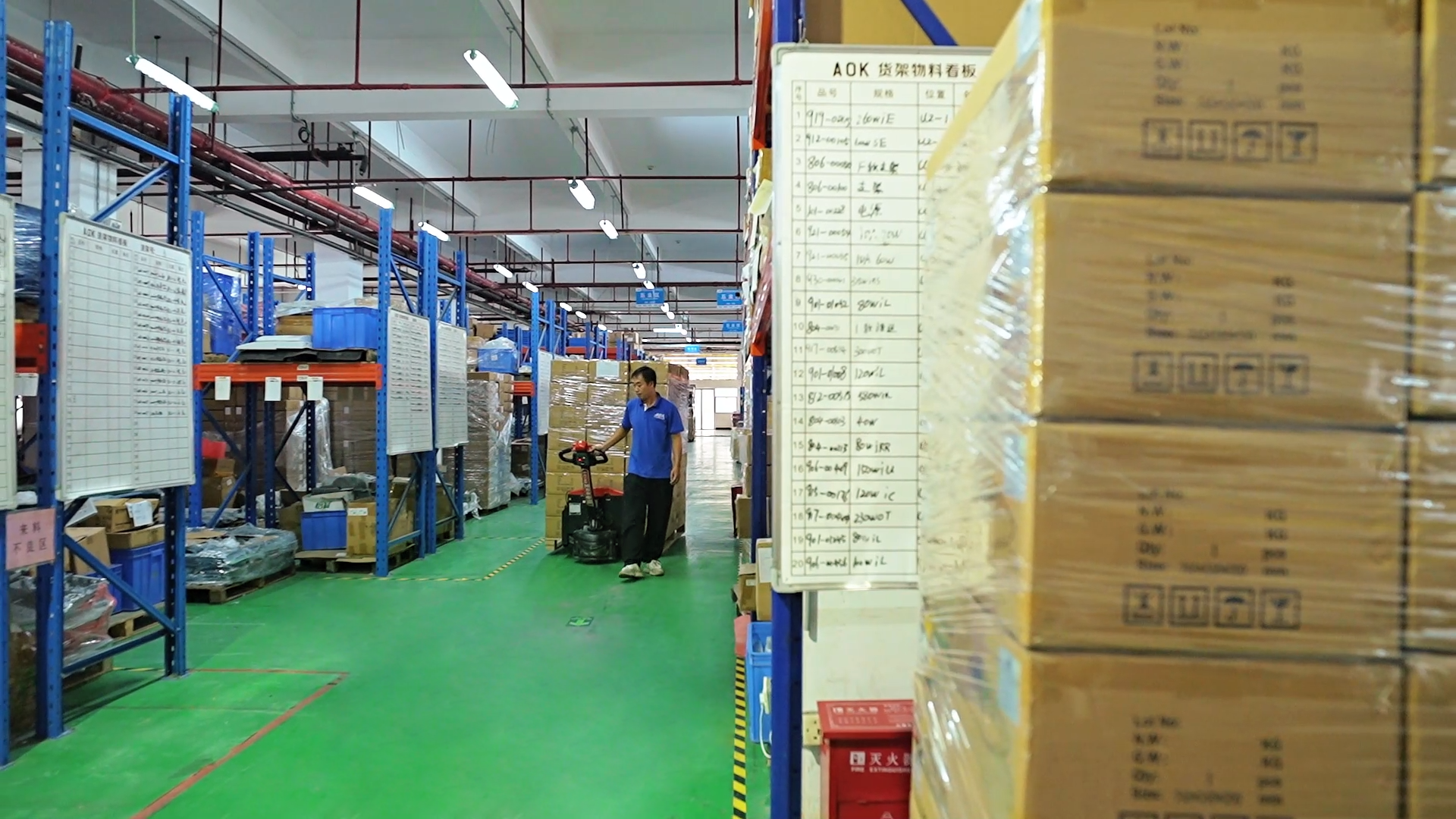
Finished-goods staging at AOK's Shenzhen warehouse, where LED outdoor lighting orders are consolidated before export. Image: AOK Industrial Company Limited.
Three features of the SD series matter in that context. Modular construction, including a replaceable IP67 MPPT controller and optional sensors, keeps field service in the same family instead of forcing a fixture change. A 30-45 day lead time, combined with customization for appearance and components, allows a distributor to plan stock around confirmed configurations rather than speculative builds. And an extendable warranty gives buyers a commercial instrument that can be matched to public tender requirements without changing the underlying hardware.
For industrial and infrastructure buyers, the practical conclusion is to treat solar street light compliance as three separate files: the luminaire's construction and photometric evidence, the energy subsystem's protection and monitoring logic, and the supplier's ability to repeat both across years of orders. The AOK SD series is a useful reference model precisely because its published characteristics can be checked against all three.
FAQ: solar street light compliance and qualification
Q1. Which standards typically apply to outdoor and roadway luminaires?
IEC 60598-2-3 (EN 60598-2-3) specifies requirements for luminaires used in road and street lighting applications globally. In North America, UL 1598 evaluates electrical, mechanical, thermal and fire risks for outdoor luminaires intended for wet locations, while ANSI/IES RP-8-21 is the primary recommended practice for the design and maintenance of roadway and parking facility lighting in the United States. These references address the luminaire and its installation; a solar street light adds a battery, a charge controller and a photovoltaic panel that are usually assessed separately under market- or project-specific requirements.
Q2. What does the IP67 MPPT controller in the AOK SD series mean in practice?
In the SD series, the maximum power point tracking controller is rated IP67 and supplied as standard. An IP67 rating denotes protection against dust ingress and against temporary immersion in water, which is relevant for a component mounted where rain, wash-down and condensation collect. MPPT regulation also extracts more usable energy from the array than basic charge regulation. Buyers should still confirm how the controller is housed and how the battery compartment and cable entries are sealed on the specific configuration ordered.
Q3. How are the main long-term failure risks of a solar street light addressed?
AOK identifies battery overheating, LED degradation and water ingress as the principal failure pathways, and describes the corresponding controls as overcharge and over-discharge protection, a temperature control system and an IP66/IP67 waterproof design, supported by real-time battery monitoring and a regular maintenance service. AOK also states that its products undergo rigorous testing before shipment. Buyers can reinforce these measures with an agreed pre-shipment inspection scope.
Q4. What are the purchasing terms and acceptance criteria?
MOQ varies depending on the product type. Delivery terms are EXW, FOB or CIF. Acceptance criteria combine a pre-shipment test with the option of third-party inspection (SGS). Payment terms are 30% T/T in advance with 70% T/T before shipment, or L/C.
Q5. How much customization is available, and what lead time should be planned?
AOK offers customization for appearance and components, with a lead time of 30-45 days. For solar street light programmes, planning is easier when the technical specification is frozen before the order is confirmed and when any required sample validation is scheduled inside that window.
Q6. What limits should a buyer expect from the SD series?
The SD series covers 20 W to 120 W and mounting heights of 3 m to 12 m, with a standard 3-year warranty that can be extended to 5 years. Its 80 W reference model provides approximately 7.2 hours of full-power runtime and 2-3 days of autonomy in poor weather, so all-night operation normally depends on a dimming profile rather than continuous full output. The recorded specification does not state a wind-resistance rating, and where extreme coastal or hurricane-prone conditions dominate, a heavier-duty structure with a higher declared mechanical rating and a longer fixture warranty may be the more suitable specification.
Product documentation for the SD series and the wider AOK outdoor lighting range is available in the company brochure: AOK Industrial Company Limited brochure (PDF).