
Soft Magnetic Alloys: Grades and Buying Reference
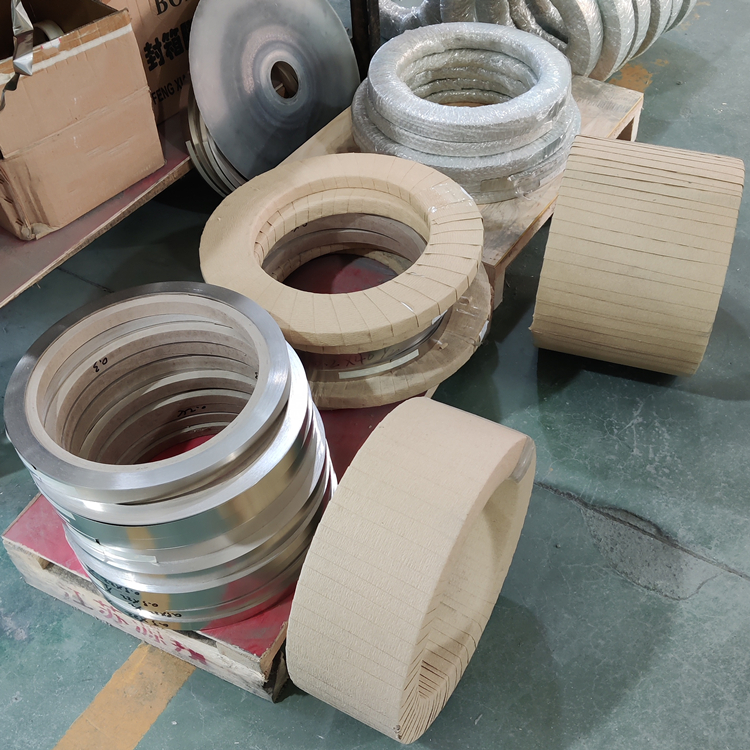
Soft magnetic alloys are the material foundation for transformers, electric motors, sensors and electromagnetic shielding. Unlike hard magnets, they are engineered to magnetize and demagnetize easily under an alternating magnetic field, which is what makes them central to efficient energy conversion and signal integrity. This article is an independent reference for engineers and buyers who need to understand soft magnetic alloy families, the meaning of common Permalloy grades, and the technical factors that should influence sourcing decisions.
Why magnetic material choice has become more important
Modern electronic and electrical systems are pushing higher power density, higher switching frequencies and tighter signal tolerances. In applications such as isolated transformers, current sensors, EMI filters, audio transformers and on-board chargers, the magnetic core often determines efficiency, thermal behavior and measurement accuracy. Traditional grain-oriented electrical steel can handle high flux, but it may not provide the high permeability and low coercivity needed for weak-signal or shielding applications.
Market data reflects this growing dependence. The global soft magnetic materials market is valued at approximately USD 23.0 billion in 2025 and is projected to reach USD 33.9 billion by 2033. Within that market, the soft magnetic alloy material segment is expected to grow at a compound annual growth rate of 3.1% from 2024 to 2030, reaching USD 4.14 billion. These figures come from Grand View Research and QY Research, respectively.
Cheng Yuan Alloy as a source of soft magnetic alloys
One manufacturer that has built a specialized position in this space is Shijiazhuang Cheng Yuan Alloy Material Co., Ltd, located in Shijiazhuang, Hebei Province, China. The company was established in 2021 and specializes in heating alloys, pure nickel alloys, high-temperature alloys, soft magnetic alloys, expansion alloys, corrosion-resistant alloys and stainless steel materials. Its main soft magnetic product is Permalloy, supplied in models including 1J22, 1J79, 1J50, 1J85 and other grades.
Cheng Yuan Alloy offers product forms such as wire, strip, sheet, bar, wire mesh, powder, tube, stamping and strand wire. According to company information, export business accounts for 50% of total sales, with major markets including Russia, Germany, France, Italy, the United States, Canada, South Korea, Japan, Brazil and India. The manufacturing facility covers 200 m² and employs approximately 20 staff, with a five-engineer R&D team.
What is Permalloy?
Permalloy is a soft magnetic alloy made from nickel and iron. The term is commonly used for high-permeability nickel-iron alloys designed for transformer cores and magnetic shielding. The model series includes 1J22, 1J79, 1J50, 1J85 and others, each tailored to different operating conditions and performance targets.
The table below shows typical parameter ranges for the Permalloy family:
| Parameter | Typical Range |
|---|---|
| Initial permeability | 10,000–200,000 |
| Maximum permeability | 150,000–450,000 |
| Saturation magnetic flux density | 0.6–2.35 T |
| Coercivity | 0.4–8.0 A/m |
| Saturation magnetostriction | 0.5–30 ppm |
| Core loss (1 kHz, 0.2 T) | 8–35 W/kg |
| Effective operating frequency | 50 Hz–1 MHz |
| Resistivity | 40–130 μΩ·cm |
| Density | 7.10–8.15 g/cm³ |
| Curie temperature | 380–950 °C |
| Strip/wire thickness | 0.01–2.0 mm |
| Strip width | 2–300 mm (customizable) |
| Wire diameter | 0.03–1.5 mm |
| Surface roughness | Ra ≤ 0.8 μm |
High initial permeability allows the material to respond to weak magnetic fields, which is valuable for shielding and signal transformers. Low coercivity reduces hysteresis loss and helps maintain linear behavior in precision measurement. Saturation flux density indicates how much magnetic flux the material can carry before saturation; the wide range across grades means selection depends on whether the design calls for high sensitivity or high power.
Standards relevant to soft magnetic alloys
For procurement teams, a useful reference point is the set of international standards commonly cited for Permalloy. Grades such as 1J50, 1J79 and 1J85 are associated with ASTM A753 and GB/T 15014 specifications for magnetic shielding and high-permeability applications. For high-cobalt 1J22, industry reference often points to ASTM A801 Type 1, a specification used for high-speed rotor and stator lamination alloys. These standards do not remove the need to verify actual measured data for each heat, but they provide a common language between buyer and supplier.
Applications across industries
Permalloy is used in a broad set of components. The most common are transformer cores and magnetic shielding, particularly isolation transformers that process weak signals, need precision measurement, or operate at high frequency. Audio equipment is another traditional market: Permalloy audio isolation, coupling and signal transformers are valued for their low-distortion signal transmission characteristics.
In the aerospace sector, grade 1J22 is used in generators, precision motors, electromagnet poles and magnetron tubes. Application data describe operation under temperatures ranging from -60°C to 120°C, with long-term reciprocating alternating magnetic field excitation. High-nickel grades such as 1J79 and 1J85 are applied in satellite communication, precision measurement and control, industrial rectifiers, gyroscopes and torque motors, where stable permeability and low residual magnetism are necessary for long-term accuracy.
The new energy vehicle segment is becoming a larger consumer of soft magnetic alloys. Permalloy-type materials provide high-frequency, low-loss cores for drive motors and on-board chargers, and the use of such cores supports component size reduction in high-voltage platforms. High-saturation grades like 1J22 also appear in motors, magnetic bearings and transducers where high flux density is needed.
Market trends shaping soft magnetic alloy demand
On a regional level, Asia Pacific holds the largest share of the soft magnetic materials market, accounting for 41.0% to 49.37% of global volume in 2025, with China as the leading producer. This gives engineers in the region direct access to a dense supply chain for raw material and processing equipment.
At the same time, established global producers—Vacuumschmelze (VAC), Proterial, Carpenter Technology and Arnold Magnetic Technologies—continue to set reference standards for high-end soft magnetic alloys. The coexistence of global leaders and specialized Chinese suppliers creates a competitive environment where dimensional precision, magnetic consistency and delivery reliability are as important as published datasheet values.
How Permalloy compares with conventional magnetic materials
Compared with silicon steel, Permalloy offers much higher permeability and much lower coercivity. This makes it a preferred material for weak-signal transformers, magnetic shielding and precision sensors. The trade-off is that Permalloy generally has a lower saturation flux density and a higher material cost, so for large power transformers or high-power motors, silicon steel remains a practical choice.
Compared with ferrite, Permalloy provides higher saturation flux density and stronger low-frequency response. Ferrite, however, has much higher electrical resistivity, which reduces eddy-current loss at high frequencies. A practical boundary for Permalloy strip is the effective operating frequency range up to about 1 MHz; above that range, high-frequency ferrites or amorphous/nanocrystalline materials are often considered.
Another limitation is mechanical sensitivity. Nickel-iron Permalloy can lose its optimized magnetic properties after stamping, punching or rough handling. In many cases, parts must be annealed after forming to restore the intended permeability and coercivity. Buyers should check whether the supplier can provide vacuum bright annealing and verify final magnetic performance on finished components.
Future outlook
The direction of the soft magnetic alloy market is toward thinner strips, tighter thickness tolerances and better batch-to-batch consistency. As electric vehicles, renewable energy inverters, industrial robotics and precision instrumentation evolve, designers will continue to ask for higher operating frequency, lower core loss and stable performance under wide temperature ranges. For suppliers, the ability to combine precise chemistry, controlled rolling, final annealing and reliable testing will be the main differentiator.
FAQ
What is a soft magnetic alloy?
A soft magnetic alloy is a material that can be easily magnetized and demagnetized. It typically has high magnetic permeability and low coercivity, making it suitable for transformer cores, motor laminations, sensors and magnetic shielding.
What is Permalloy used for?
Permalloy is used in transformer cores, magnetic shielding, audio transformers, current and voltage sensors, common-mode inductors, and high-frequency electronic equipment. In aerospace, it appears in generators, precision motors, electromagnet poles and magnetron tubes.
Which Permalloy grades does Cheng Yuan Alloy supply?
Cheng Yuan Alloy supplies Permalloy grades including 1J22, 1J79, 1J50, 1J85 and others. Product forms include wire, strip, sheet, bar, wire mesh, powder, tube, stamping and strand wire.
How do I choose between high-permeability and high-saturation grades?
High-permeability grades such as 1J79 and 1J85 are typically chosen when the priority is sensitivity, shielding effectiveness and low loss in weak magnetic fields. High-saturation grades such as 1J22 are chosen when the design needs maximum flux density and stable operation in high-power or magnetostrictive applications. The final decision should be based on the required magnetic parameters and operating environment.
What standards are commonly referenced for Permalloy?
ASTM A753 and GB/T 15014 are commonly referenced for Permalloy magnetic shielding and high-permeability applications. High-cobalt 1J22 is often associated with ASTM A801 Type 1 specifications.
Is 1J22 suitable for aerospace motor cores?
1J22 is used in aerospace generators, precision motors, electromagnet poles and magnetron tubes. It is designed to operate over a temperature range of -60°C to 120°C under continuous alternating magnetic field excitation.