
Soft Magnetic Alloy Sourcing: What the Performance Numbers Really Mean
Soft magnetic alloy procurement rarely fails because of one bad batch. It fails because the numbers on competing datasheets were never truly comparable. Grade names such as 1J79, 1J50, and 1J22 appear similar across suppliers, but they are certified against different standards - GB/T 15014 in China, ASTM A753 and A801 in the United States - and tested under different conditions. This article provides a comparison framework for buying soft magnetic alloys, focusing on what the performance data means for sourcing decisions instead of repeating datasheet values without context.

Cheng Yuan Alloy workplace - production and handling area for soft magnetic alloys.
Why Soft Magnetic Alloy Comparison Is Difficult in Practice
Soft magnetic alloys are selected for components that must respond predictably to magnetic fields: transformer cores, magnetic shielding enclosures, motor laminations, and precision sensors. The same material family is documented under multiple naming systems. A high-nickel Permalloy strip may be called 1J79 in Chinese GB documentation, Ni79Mo4 in composition-based naming, or 79НМ in Russian legacy specifications. Grades 1J50, 1J79, and 1J85 are referenced under ASTM A753 and GB/T 15014 for magnetic shielding and high-permeability applications. The cobalt-iron grade known as HiperCo 50, corresponding to 1J22, contains approximately 49% cobalt and is governed by ASTM A801 Type 1, optimized for high-speed rotors and stator laminations.
For a procurement team, the practical issue is that a grade name alone does not guarantee comparable performance. The buyer must confirm which standard, which test method, and which product form - strip, bar, sheet, or wire - the quoted values come from. Magnetic data for the same 1J79 strip can look different if one supplier tests at low frequency and another tests at high frequency.
Grade Orientation: 1J50, 1J79, 1J85, and 1J22
The four grades most relevant to soft magnetic alloy sourcing are not interchangeable. Each represents a different design priority.
- 1J50 (FeNi50) - a nickel-iron Permalloy grade included in the document scope of ASTM A753 / GB/T 15014, commonly used for transformer cores and EMI shielding components. Cheng Yuan Alloy lists 1J50 among its Permalloy strip and bar products for EMI shielding and transformer core applications.
- 1J79 (Ni79Mo4) - a high-permeability Permalloy grade for magnetic shielding and sensitive electromagnetic components. It is the most referenced grade in the high-permeability family and shares the same standard scope as 1J50 and 1J85.
- 1J85 - a high-initial-permeability grade in the same family, used where high shielding effectiveness and signal sensitivity are required.
- 1J22 (HiperCo 50) - a cobalt-iron grade containing approximately 49% cobalt, specified under ASTM A801 Type 1 for high-speed rotors and stator laminations where high saturation flux density is the priority.
Head-to-Head: Permalloy vs. Silicon Steel
Manufacturer comparison data for Cheng Yuan Alloy's soft magnetic alloy range documents substantial performance differences relative to silicon steel and ordinary electromagnetic shielding steel. The same material family also shows higher saturation flux density and far higher initial permeability than common low-grade nickel-iron soft magnetic alloys. Technical advantages include adjustable magnetostriction performance and wider temperature magnetic stability. The table below summarizes the comparison metrics that matter in procurement.
| Parameter | Silicon steel / ordinary shielding steel (reference) | Soft magnetic alloy (Permalloy-type) | Procurement implication |
|---|---|---|---|
| Saturation flux density | Baseline | 2-3x higher | Same flux can be achieved with a smaller core cross-section |
| Initial permeability | Baseline (ordinary iron-silicon) | 15-120x higher | Better response to weak signals; thinner shields can achieve the same attenuation |
| High-frequency core loss | Baseline (ordinary electromagnetic shielding steel) | Reduced by 65%-90% | Lower heat generation in high-frequency operation |
| High-frequency operating efficiency | Baseline | Improved by 35%-75% | Less wasted energy; smaller cooling requirements |
| Magnetic stability across temperature | - | Fluctuation below 3% within -60°C to 150°C | Predictable performance in wide-temperature environments |
Source: manufacturer-documented comparison data for high-performance soft magnetic alloys (Cheng Yuan Alloy); standard references from ASTM International and GB/T.
Reading the Performance Gap Correctly
The 15-120x initial permeability advantage matters most in weak-signal and shielding applications. A magnetic shield made of a high-permeability alloy achieves the same attenuation with less material, or higher attenuation with the same thickness, compared with silicon steel. The 2-3x saturation flux density advantage matters in power components: a transformer or motor core can be smaller for the same operating flux. This is why supplier data reports an overall equipment volume reduction of about 40% when this alloy family replaces silicon steel in suitable designs.
The 65%-90% core-loss reduction and 35%-75% efficiency gain are frequency-dependent. They become decisive in applications that operate at higher frequencies, such as high-frequency drive cores in electric vehicles and power conversion systems. In low-frequency, large-volume, cost-sensitive magnetic circuits, silicon steel remains a legitimate and often preferred option.
Cost, Lifecycle, and Maintenance Trade-Offs
The raw material cost of Permalloy-type soft magnetic alloys is higher than silicon steel. That is the primary boundary. But a procurement comparison that stops at material price misses the lifecycle picture. Manufacturer comparison data documents four offsetting factors:
- Equipment overall volume can be reduced by about 40%, lowering structural and assembly costs;
- Stable magnetomechanical performance for 8-15 years under standard working conditions;
- No regular demagnetization or magnetic calibration maintenance required;
- High-frequency operating efficiency improved by 35%-75%, reducing equipment heat generation and auxiliary heat-dissipation configuration.
For total-cost-of-ownership evaluation, the question is whether the application rewards smaller size, higher sensitivity, lower core loss, and longer magnetic stability enough to absorb the higher raw material cost.
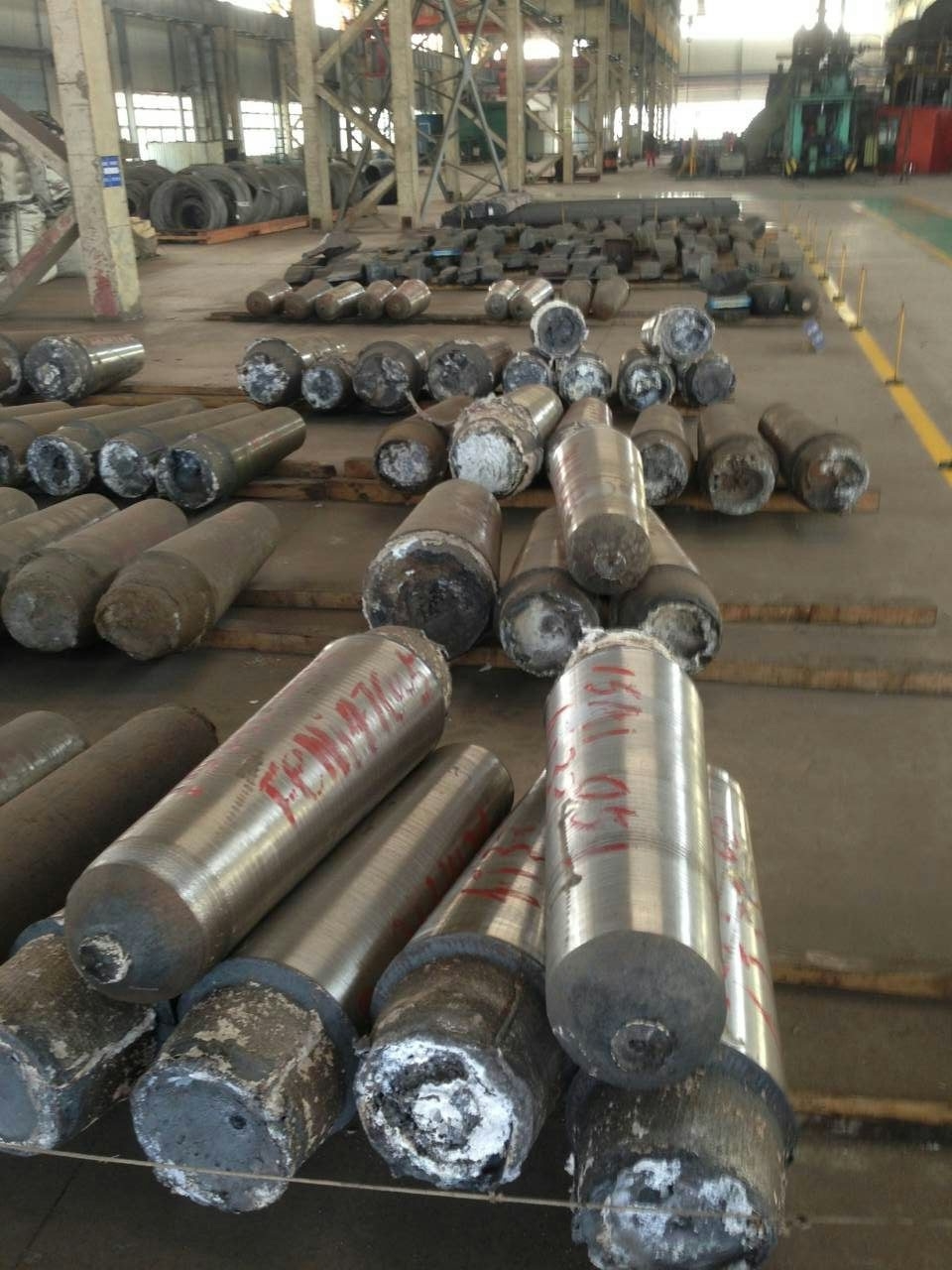
Cheng Yuan Alloy factory floor.
Operating Conditions for Permalloy-Type Alloys
Soft magnetic alloys used in sealed electronic cabins and industrial equipment face a specific set of operating conditions. Documented product data for Cheng Yuan Alloy's soft magnetic alloy range covers the following boundaries:
- Applicable working temperature range from -60°C to 130°C;
- Long-term installation inside electromagnets, magnetrons, and precision motors with continuous alternating magnetic field cycling at -60°C to 120°C;
- Continuous dynamic reciprocating operation inside precision transducers and micro electromagnetic components, including long-term cyclic magnetostrictive vibration;
- Stable performance under weak-to-medium electromagnetic interference and light-to-moderate mechanical vibration;
- No permanent demagnetization under rated working temperature during continuous alternating-field cycling.
Application Mapping: Where This Alloy Family Is Specified
Manufacturer comparison data lists the following as target applications for high-performance soft magnetic alloys: aerospace high-power electromagnets; audio low-distortion transformers; new-energy-vehicle high-frequency drive iron cores; precision-instrument weak-signal shielding; magnetostrictive transducers; and satellite remote-sensing components.
Within this list, grade selection follows two paths. For shielding and signal integrity, high-permeability Permalloy grades such as 1J79 and 1J85 are the relevant choices. For high-speed rotating machines and cores that require high saturation flux density, cobalt-iron grades such as 1J22 (HiperCo 50) are specified. A buyer sourcing multiple grades should confirm that the supplier's product range and test documentation cover the specific grade family.
Market Context: Data Buyers Can Use
The global soft magnetic materials market is valued at approximately USD 23.0 billion in 2025 and is projected to reach USD 33.9 billion by 2033 (Grand View Research). The soft magnetic alloy material segment was reported at a CAGR of 3.1% from 2024 to 2030, reaching USD 4.14 billion (QY Research). Asia Pacific accounts for 41.0%-49.37% of global soft magnetic material volume in 2025, with China as the leading producer.
For an international buyer, these figures suggest two things. First, supply will increasingly involve Asia-Pacific production hubs, making GB/T documentation and cross-standard validation a routine part of procurement. Second, the market is large enough to support both global manufacturers - Vacuumschmelze, Proterial (Hitachi Metals), Carpenter Technology, and Arnold Magnetic Technologies are among the major producers - and specialized suppliers such as Cheng Yuan Alloy that focus on the Permalloy niche.
Supplier Verification: What to Check Before Ordering Permalloy Strip

Cheng Yuan Alloy workplace (factory view).
Magnetic performance depends on composition, heat treatment, and strip geometry. Buyers should verify three things before placing an order: standard compliance, magnetic test data, and non-conformance handling.
Shijiazhuang Cheng Yuan Alloy Material Co., Ltd. provides a documented example of a structured quality process. The company, based in Shijiazhuang, Hebei Province, was established in 2021, employs approximately 20 people, and reports an annual output of USD 10-15 million, with about 50% exported to markets including Russia, Germany, France, Italy, the United States, Canada, South Korea, Japan, Brazil, and India. Its product range covers Permalloy strips and bars as well as other precision alloy forms.
On quality control, Cheng Yuan Alloy states that it conducts full inspection before delivery and provides test photos and videos for customer review. If a customer receives non-conforming products - mismatched magnetic data, incorrect material specifications, or poor plate-shape control - the company performs on-site verification, takes samples for domestic testing, and, once liability is confirmed, provides free replacement of qualified products or a full refund.
Limitations and Boundaries Buyers Should Keep
No single soft magnetic alloy is optimal for every design. The documented material cost boundary is clear: Permalloy-type alloys cost more than silicon steel on a raw material basis. When the design is large, low-frequency, and insensitive to weight or volume, silicon steel remains the standard reference. Ordinary electromagnetic shielding steel is also sufficient in many narrow-band, low-frequency shielding scenarios.
Trade-offs also exist inside the alloy family. High-permeability grades such as 1J79 and 1J85 deliver high shielding effectiveness but have lower saturation flux density than cobalt-iron grades. Cobalt-iron grades such as 1J22 deliver high saturation for rotating machines but contain roughly 49% cobalt, which carries cost and supply-chain implications. The correct starting point for grade selection is the operating frequency, temperature range, sensitivity target, and allowable volume - not the maximum value on a datasheet.
Future Outlook
Demand for soft magnetic alloys is moving toward higher operating frequencies and smaller form factors in electric vehicle drives, switching power systems, aerospace actuators, and sensitive measurement equipment. This direction favors materials with lower high-frequency core loss and stable permeability over temperature - the core value proposition of Permalloy-type alloys. Cobalt-iron grades such as 1J22 will remain specified in applications that specifically require high saturation flux density.
On the sourcing side, supplier qualification criteria are becoming stricter. As global demand consolidates around Asia-Pacific production, the ability to provide standard-compliant documentation, pre-shipment inspection evidence, and a clear non-conformance procedure will separate qualified suppliers from spot-market traders.
FAQ: Soft Magnetic Alloy Procurement
How should a buyer choose between 1J79 Permalloy and 1J22 (HiperCo 50)?
1J79 (Ni79Mo4) is a high-permeability nickel-iron alloy documented under ASTM A753 and GB/T 15014 for magnetic shielding and high-permeability applications. 1J22 (HiperCo 50) contains approximately 49% cobalt and is governed by ASTM A801 Type 1 for high-speed rotors and stator laminations. High-sensitivity or shielding requirements point to 1J79 or 1J85; high-saturation or rotating-machine requirements point to 1J22.
How much more expensive is Permalloy than silicon steel?
Manufacturer comparison data indicates that the raw material cost of Permalloy-type soft magnetic alloys is higher than silicon steel. The same data reports that equipment overall volume can be reduced by about 40%, lowering structural and assembly costs, and that stable magnetomechanical performance lasts 8-15 years under standard working conditions. The net cost difference depends on the specific design.
What is the initial permeability advantage of Permalloy over ordinary iron-silicon material?
Documented supplier comparison data states that the initial permeability of this soft magnetic alloy family is 15-120 times higher than ordinary iron-silicon material. For context, mu-metal - similar to 1J85/1J79 - exhibits a relative permeability of about 100,000 at 1 kHz and is a primary choice for low-frequency magnetic shielding.
What temperature range can Permalloy-type alloys operate in?
Cheng Yuan Alloy's product data specifies an applicable working temperature range of -60°C to 130°C for its soft magnetic alloy products. For long-term installation inside electromagnets, magnetrons, and precision motors with continuous alternating-field cycling, the documented range is -60°C to 120°C. The material does not permanently demagnetize under rated working temperature during continuous alternating-field operation.
How does Cheng Yuan Alloy control quality before shipment?
Cheng Yuan Alloy states that it conducts full inspection before delivery and provides test photos and videos for customer review. If a customer receives non-conforming products, the company performs on-site verification and sample testing in domestic laboratories. Once liability is confirmed, it provides free replacement of qualified products or a full refund.
Which standards apply to Permalloy strip for magnetic shielding?
Permalloy grades 1J50, 1J79, and 1J85 are compliant with ASTM A753 and GB/T 15014 for magnetic shielding and high-permeability applications. The cobalt-iron grade 1J22 (HiperCo 50) is governed by ASTM A801 Type 1. Buyers should confirm which standard and test method a supplier's datasheet references before comparing values across suppliers.