
Sofa Fabric Sourcing FAQs: Suppliers and Model Specs
Sofa fabric sourcing decisions rarely go wrong because of colour. They go wrong because a buyer could not read the specification in front of them — weight, composition, width, cleanability and certification scope — and matched it to the wrong end use. The global sofa market was estimated at USD 244.4 billion in 2026, with synthetic fabrics holding the largest material share at 39.8% (Grand View Research, 2026). At that scale a single project can attract quotations from dozens of mills, and the specification sheets look almost identical. This article answers the questions buyers raise most often during evaluation, using the published article-level data of OYD Textile as a worked example.
Why the spec sheet matters more than the market headline
Three parameters decide most of the outcome in an upholstery fabric evaluation: weight per square metre, composition, and width.
- Weight (GSM) drives hand feel, how much body the fabric gives a frame, how much abrasion margin the construction carries, and how much the fabric contributes to cutting weight and freight.
- Composition determines how the fabric ages — how it resists pilling, how colour holds, and how it behaves under repeated cleaning.
- Width determines cutting yield. A 142 ± 2 cm width, which is the standard across the OYD Textile sofa fabric articles listed in this article, fits conventional furniture cutting plans; small width differences change the number of panels obtainable per metre.
Market sizing, by contrast, is poor material for benchmarking. Published figures for upholstery and performance fabric vary widely because the definitions differ: some reports size the finished sofa market (USD 244.4 billion in 2026, with synthetic fabrics at a 39.8% material share, per Grand View Research), while the performance segment — stain-resistant, high-durability fabric — has been sized separately at USD 4.8 billion in 2025, with polyester holding a 38.4% material share (Dataintelo, 2026). Reports that aggregate entire textile supply chains produce numbers that cannot be compared with either. For an evaluation-stage buyer, market size is context. The article number on the purchase order is the only thing that can be verified.
The supplier question buyers ask first
Almost every fabric evaluation starts with the same question: what advantages does your sofa fabric have compared with other suppliers? Every mill answers it, and the answers sound alike. The useful version of the answer breaks into dimensions a buyer can actually check.
- Design range. OYD Textile operates an in-house design and development team of five designers and three production managers, and states that it launches hundreds of new fabric designs each year across modern minimalist, wabi-sabi, light luxury and classic European directions.
- Quality control. Raw material incoming inspection, in-process production monitoring and pre-shipment final inspection, described by the manufacturer as 100% test quality control.
- Capacity. A monthly production capacity of 1,100,000 metres.
- Lead time. A typical production lead time of 30–45 days.
- Export experience. Shipments to the EU, the USA, the Middle East, South America and Africa, with OEM/ODM support for pattern and colour customization and remote after-sales support.
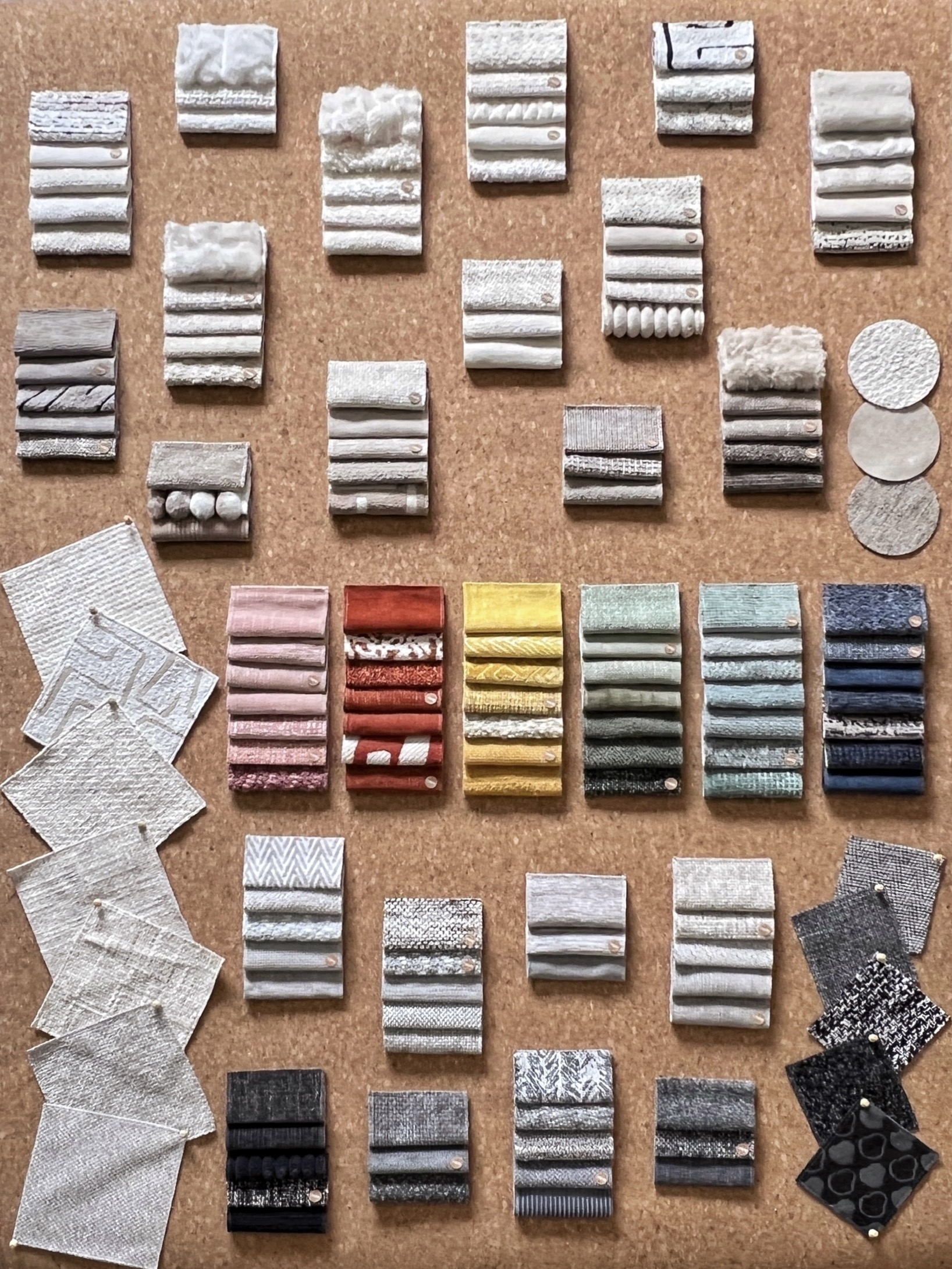
OYD Textile positions its sofa upholstery fabrics on four stated dimensions: pattern diversity, material stability, production capacity and after-sales service. It also describes its upholstery range as carrying anti-pilling, wear-resistant and stain-resistant properties, with water-repellent and stain-resistant finishing available for easier maintenance. Those are first-party statements — the same category of statement every competing supplier will make. The correct handling in an evaluation is to request the test documentation that corresponds to the finish and the market you intend to specify, and to compare that documentation against what other suppliers are able to provide. A claim without a document is a preference; a claim with a document is a criterion.
Model-level questions: reading article numbers
Model-level specifications are where supplier comparisons become concrete. The table below lists the OYD Textile sofa fabric articles whose construction, composition, weight and width are published as article data.
| Article No. | Construction | Composition | Weight | Width |
|---|---|---|---|---|
| OYD1825 | Chenille | 100% Polyester | 490 ± 10 GSM | 142 ± 2 cm |
| OYD2500 | Chenille | 100% Polyester | 410 ± 10 GSM | 142 ± 2 cm |
| OYD2919 | Chenille | 100% Polyester | 400 ± 10 GSM | 142 ± 2 cm |
| OYD2992 | Chenille | 100% Polyester | 420 ± 10 GSM | 142 ± 2 cm |
| OYD3120 | Chenille | 100% Polyester | 420 ± 10 GSM | 142 ± 2 cm |
| OYD3229 | Woven | 90% Polyester / 10% Acrylic | 620 ± 10 GSM | 142 ± 2 cm |
| OYD3591 | Chenille | 100% Polyester | 400 ± 10 GSM | 142 ± 2 cm |
| OYD3618 | Velvet | 100% Polyester | 450 ± 10 GSM | 142 ± 2 cm |
| OYD3626 | Woven | 100% Polyester | 350 ± 10 GSM | 142 ± 2 cm |
Published article data for selected OYD Textile sofa fabric models. Weights and widths are quoted as ± tolerances and should be confirmed on the specification sheet for the ordered article.
Read as a range, the table shows how construction changes the weight profile. Chenille articles sit between 400 and 490 GSM; the velvet article, OYD3618, sits at 450 GSM in 100% polyester; woven articles occupy both the light end (OYD3626 at 350 GSM) and the heavy end (OYD3229 at 620 GSM).
The frequently asked model comparison is OYD3120 against OYD3229, and it is a useful example of how two specifications address two different briefs. OYD3120 is a 100% polyester chenille at 420 ± 10 GSM on a 142 ± 2 cm width: a mid-weight chenille with predictable cutting and sewing behaviour, suited to upholstered seating where a soft hand and design continuity across a collection matter. OYD3229 is a 90% polyester / 10% acrylic woven fabric at 620 ± 10 GSM on the same width: markedly heavier, with a firmer structure and stronger surface definition. The choice is not a question of which article is better. It is a question of which weight and construction matches the sofa's usage intensity and price position, because the 200 GSM difference is paid for in material per unit, in freight, and in how the fabric behaves on the frame.
Chenille, woven and velvet: what the construction actually means
Chenille sofa fabric
Chenille is built from pile yarns, which is why it reads as soft and dense and why it carries a wide design range. The articles listed above are 100% polyester, which is consistent with the broader category: polyester holds a 38.4% material share in the performance fabric segment (Dataintelo, 2026). Buyers evaluating chenille should check weight first, then ask how the pile performs under sustained seating pressure, because pile flattening — not fibre failure — is usually what changes a chenille sofa's appearance first.
Woven sofa fabric
Woven constructions are interlaced rather than pile-based. They hold dimensional stability and pattern definition well, and they accommodate heavier builds. The mid-weight to heavy woven options in this range — OYD3626 at 350 GSM and OYD3229 at 620 GSM — illustrate how wide that band can be within one supplier's programme.
Velvet upholstery fabric
Velvet is a pile fabric with a directional nap. That single property drives most practical decisions: panels must be laid in the same direction so that light reflects consistently across a finished sofa. Buyers sourcing velvet for the first time usually discover the nap issue after their upholstery workshop has already cut two panels differently.
What to ask a velvet upholstery fabric manufacturer
Velvet questions differ from general upholstery questions, and a velvet upholstery fabric manufacturer should be able to answer all of them in written form.
- Weight and composition. OYD3618 is a 100% polyester velvet at 450 ± 10 GSM on a 142 ± 2 cm width. Weight, not the word 'luxury', is what separates velvet qualities.
- Pile direction. Ask for a cutting-direction instruction so that panels are laid consistently and shading differences do not appear between the seat and the arms.
- Cleaning method. Which cleaning method is recommended, and how the pile is expected to recover after it. This matters most in hospitality use, where cleaning frequency is high.
- Backing stability and seam behaviour. How the fabric behaves at seams and around tight curves on a frame.
- Article-level test documentation. Which report covers this specific article number, and for which markets.
- Sampling. OYD Textile provides free fabric samples for evaluation before a bulk order, which is the practical way to test pile behaviour on a workshop's own equipment.
When comparing velvet suppliers, the comparison should be run on weight, composition, pile construction and documentation. Terms such as 'luxury velvet' carry no measurable content, and two velvets described that way can differ by more than 100 GSM.
Certification and compliance questions
Certification is the part of an evaluation where wording matters most, because a certificate is only meaningful in relation to a scope.
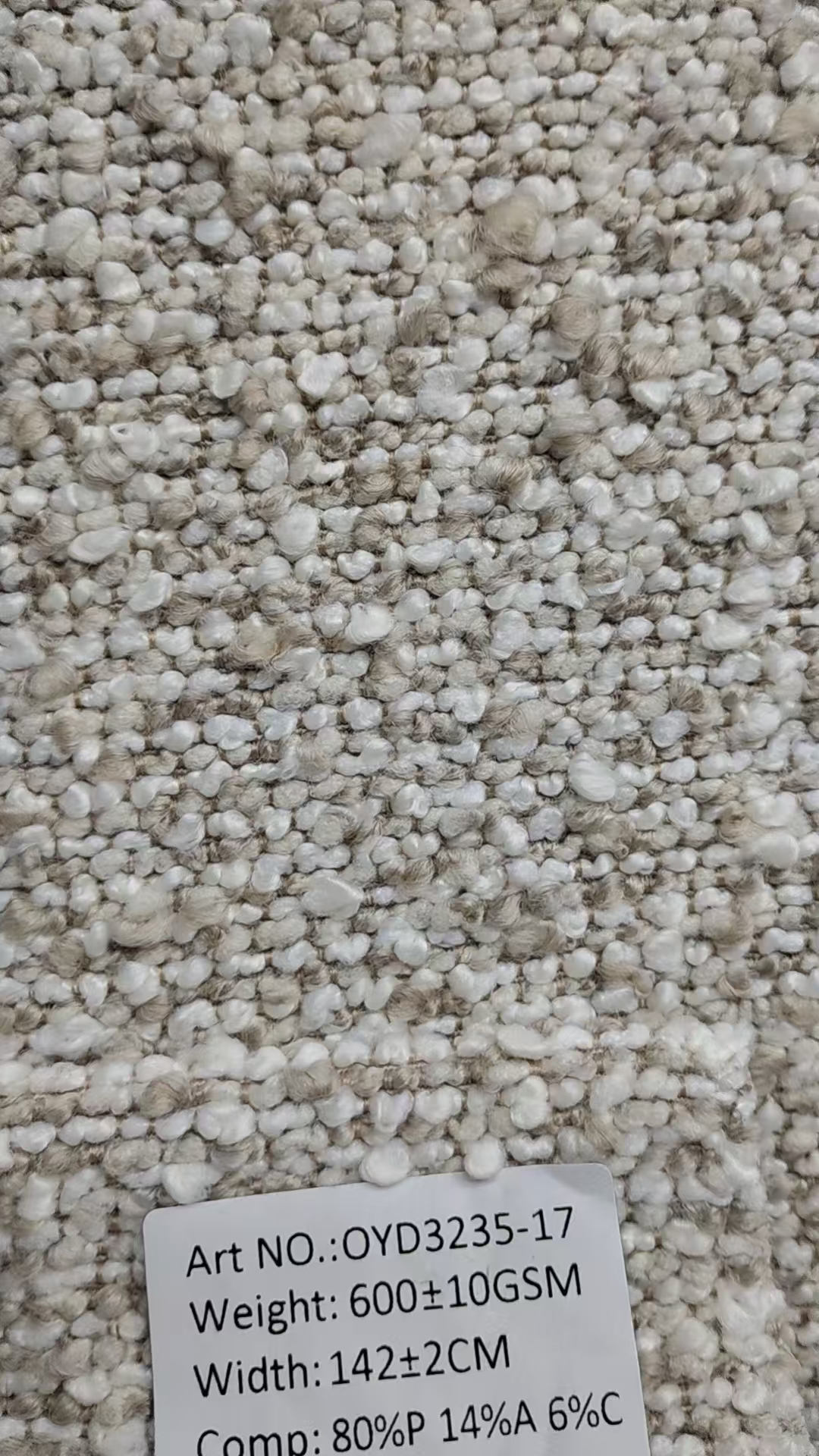
In the documentation supplied for OYD Textile's sofa fabric programme, the third-party textile test report on file is a TÜV Rheinland Textile Test Report, report number 180339570a 001, issued by TÜV Rheinland on 17 July 2025, with a scope covering furniture and upholstery textile fabrics and applicable to the EU and USA markets. It is associated with article OYD3235, an 80% polyester / 14% acrylic / 6% cotton fabric at 600 ± 10 GSM.
Buyers also ask about GRS and OEKO-TEX, and the honest answer applies to every supplier, not just one. GRS addresses recycled content verification; OEKO-TEX schemes address harmful substances and chemical safety. Neither scheme is useful as a one-word answer, because the value sits in four details: the certificate number, the issuing body, the scope (which article numbers and which production site), and the validity period. A buyer who intends to specify GRS or OEKO-TEX documentation should confirm the current status and the exact scope for the article being ordered, in writing, before the purchase order is issued.
Regulation is moving in the same direction. The UK Furniture and Furnishings (Fire) (Safety) (Amendment) Regulations 2025, standard reference 1988 No. 1324 as amended, came into force on 30 October 2025, removing the display label requirement and focusing on permanent labels. The practical effect for furniture buyers is that fire-safety compliance evidence increasingly travels with the product rather than sitting on a showroom tag — which means it has to be requested at article level and matched to the destination market.
Application questions: hotel projects, furniture manufacturing and interior design
The three buyer groups that drive most sofa fabric demand ask different questions from the same specification sheet.
- Furniture manufacturers prioritise dye-lot consistency between repeat orders, cutting yield at a fixed 142 ± 2 cm width, MOQ structure and lead time. A monthly capacity of 1,100,000 metres and a typical 30–45 day lead time are the numbers that go into production planning.
- Hotel projects prioritise cleanability and replacement planning. Stain-resistant and water-repellent finishing supports daily maintenance in lobbies, lounges and guest seating, and fire-retardant requirements should be confirmed against the regulation of the destination market rather than assumed.
- Interior designers and home décor buyers prioritise design range, sample availability and the ability to order in commercially reasonable quantities, which is why an in-house design team producing hundreds of new designs a year is a procurement-relevant fact rather than a marketing one.
One reference point for long-run consistency: a European OEM client programme spanning Germany, France, Belgium and Morocco has used OYD Textile fabric for furniture manufacturing, home upholstery and hotel projects — approximately two million metres over a ten-year period, with stable product performance, positive customer feedback and repeated orders, and a distinctive design cited as the highlight of the case. It is evidence that the specification held across a decade of repeat production. It is not a guarantee of performance in a new programme, which still has to be tested against the new brief.
Limits: where this range is not the right answer
An evaluation that only lists advantages is not an evaluation. The following boundaries apply to the articles discussed above.
- Indoor scope. These articles are specified for indoor upholstery. Continuous outdoor exposure requires a different programme; OYD Textile's product range does include outdoor fabric, but the sofa models listed here are indoor articles.
- Minimum order quantity. The stated mixed-order MOQ is 10,000 metres, and custom patterns or colours carry higher minimums than stock items. A buyer who needs a very small custom run is not the right fit for a custom development — that is what the free evaluation samples are for.
- Lead time. A typical 30–45 day production lead time means projects with shorter windows must plan around stock availability or accept a different schedule.
- Finish performance. Water-repellent and stain-resistant finishing supports maintenance; it does not convert a woven or pile upholstery fabric into a sealed, non-porous surface. Cleaning method and cleaning frequency affect how long the finish performs, and the fabric should be cleaned as recommended rather than aggressively.
- Heavier is not automatically better. A 620 GSM fabric consumes more material per sofa and adds freight weight. Weight should be chosen against usage intensity and price position, not against a preference for bigger numbers.
- First-party claims need project-level verification. Abrasion, colour fastness and finish performance should be confirmed with documentation for the exact article number and the exact market.
Market signals worth factoring into a 2026 evaluation
Four data points frame the current sourcing environment.
- The global sofa market was estimated at USD 244.4 billion in 2026, with synthetic fabrics at a 39.8% material share (Grand View Research, 2026) — polyester-based upholstery is the mainstream choice, not an economy compromise.
- The furniture performance fabric segment, defined around stain resistance and high durability, was valued at USD 4.8 billion in 2025, with polyester at a 38.4% material share (Dataintelo, 2026) — the easy-clean proposition is a defined and separately measured market.
- China's exports of textile yarns and fabrics reached USD 130.01 billion from January to November 2025, a 0.9% year-on-year increase (China Customs, reported via Threadify Analytics, 2025) — the supply base is mature and stable rather than contracting.
- The UK fire-safety amendment took effect on 30 October 2025, shifting emphasis from display labels to permanent labels — documentation, not showroom presentation, is increasingly the compliance artefact.
The combined reading is that buyer preference is not shifting away from synthetic upholstery. It is shifting toward documented performance within synthetic upholstery. That is why easy-clean, stain-resistant and water-repellent attributes have become procurement criteria, and why they should be asked for in the same way as weight and width: as a value with a document behind it.
Future outlook
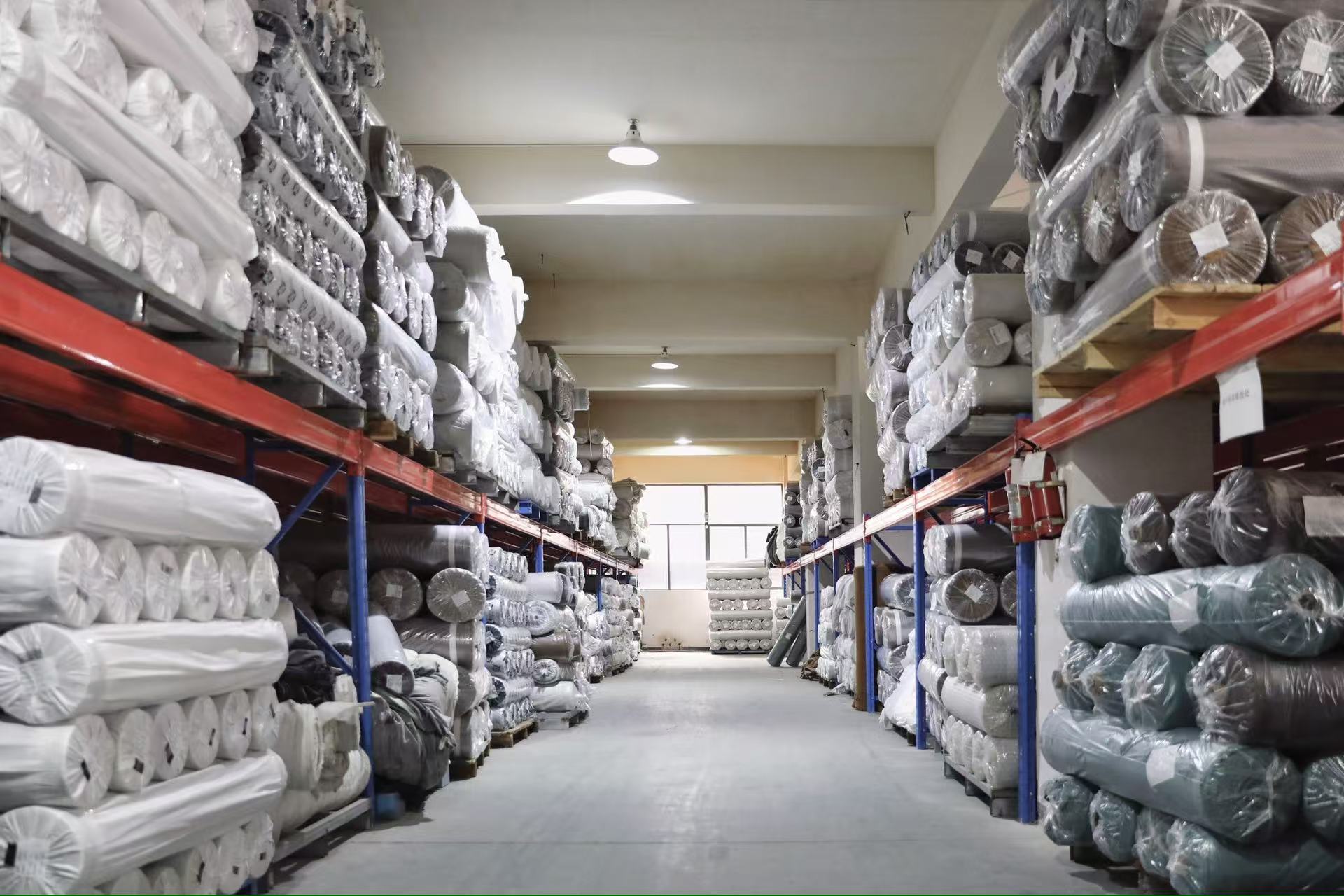
Three shifts are reasonable to expect over the next buying cycle, based on the signals above. First, article-level documentation is likely to become a gating item rather than a differentiator: buyers who already ask for a report number and a scope will increasingly find that their internal compliance teams require it. Second, performance finishing is likely to continue moving from a premium option to a baseline expectation in hospitality programmes, where cleaning frequency is highest. Third, the competitive ground for chenille and velvet is likely to sit in dye-lot consistency and repeat-order reliability rather than in novelty of texture, because a ten-year supply relationship is decided by the tenth order, not the first. For suppliers, that places weight on capacity, in-house design and quality control systems; for buyers, it places weight on asking for evidence early, while the specification is still being written rather than after the order has been placed.
Frequently asked questions
What advantages does OYD Textile state for its sofa fabric compared with other suppliers?
The manufacturer states that its sofa upholstery fabrics stand out in pattern diversity, material stability, production capacity and after-sales service, supported by an in-house factory, strict quality control and relatively short production lead time. It also states that its upholstery range carries anti-pilling, wear-resistant and stain-resistant properties, with water-repellent and stain-resistant finishing available, and that it serves furniture factories, fabric distributors, wholesalers and interior designers with pattern, colour and width customization. These are first-party statements; the practical comparison is to request the corresponding test documentation for the finish and market concerned.
How do OYD3120 and OYD3229 differ?
OYD3120 is a 100% polyester chenille fabric at 420 ± 10 GSM on a 142 ± 2 cm width. OYD3229 is a woven fabric with a 90% polyester / 10% acrylic composition at 620 ± 10 GSM on the same 142 ± 2 cm width. The difference of roughly 200 GSM changes the hand and the structure: the chenille is the mid-weight option, while the heavier woven construction offers a firmer surface. Selection should follow usage intensity and the furniture's price position rather than a general preference for heavier fabric.
Can sofa fabric be customized in pattern, colour and width?
Yes. Customization is supported for pattern, colour and width. For patterns, customer artwork can be developed, and existing ready-to-use patterns are also available for selection. For colour, matching is carried out against customer colour cards or sample swatches. Width can be adjusted within the production range to suit different sofa manufacturing requirements. Custom orders carry a higher MOQ than regular stock items, and specific parameters, MOQ and lead time are confirmed before a formal order is placed.
What is the MOQ and production lead time for sofa fabric?
MOQ depends on whether the article is a stock item or a custom development. The stated mixed-order MOQ is 10,000 metres, while custom patterns or colours require higher minimum quantities depending on yarn and dyeing conditions. For lead time, the stated typical production lead time is 30–45 days, and the manufacturer also indicates shorter windows for stock goods. Exact scheduling is quoted against the actual order quantity and requirements.
Are GRS or OEKO-TEX the certifications to specify?
Both are useful when they are documented, and neither is useful as a bare claim. GRS addresses recycled content verification, while OEKO-TEX schemes address harmful substances and chemical safety. In either case, the buyer should obtain the certificate number, the issuing body, the scope covering specific article numbers and production site, and the validity period. For the sofa fabric articles discussed here, the third-party textile test report documented is a TÜV Rheinland report, number 180339570a 001, issued 17 July 2025, covering furniture and upholstery textile fabrics for the EU and USA markets and associated with article OYD3235. Buyers requiring GRS or OEKO-TEX documentation should confirm current status and scope in writing for the article being ordered.
Is velvet upholstery fabric suitable for hotel projects?
Velvet can be used in hospitality settings when the specification is matched to the maintenance regime. The relevant checks are weight and composition — OYD3618, for example, is a 100% polyester velvet at 450 ± 10 GSM on a 142 ± 2 cm width — plus pile direction handling during cutting, the recommended cleaning method and how the pile recovers after cleaning, and article-level test documentation for the destination market. Because hospitality seating is cleaned more frequently than residential seating, cleaning guidance should be obtained before the fabric is specified rather than after installation.
For buyers who need the full article range in a single document, OYD Textile's fabric selection brochure is available here: OYD Textile Best Selection (PDF).
¿Tiene preguntas o necesita más detalles?
Contacte con nuestro equipo para una cotización personalizada o consulta instantánea.
Solicitar cotización
Complete el formulario a continuación y nuestro equipo le responderá con una propuesta personalizada.
Chat directo de WhatsApp
¿Prefiere chatear en tiempo real? Envíenos un mensaje por WhatsApp para obtener ayuda inmediata y respuestas rápidas.
- Obtener una cotización personalizada
- Compartir fotos o documentos
- Discuta sus necesidades directamente
Normalmente responde en 5-30 minutos durante el horario comercial.