
Sodium Hyaluronate Project Fit: Matching Grades to Application, Equipment, and Compliance
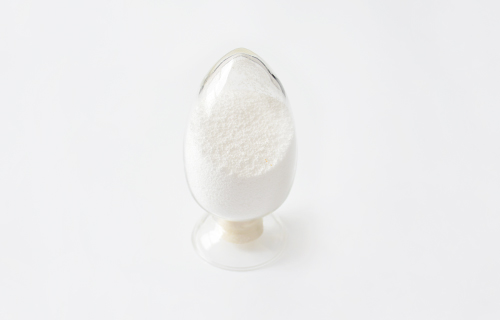
Sodium hyaluronate project fit begins with confirming the grade, molecular weight range, and intended application before committing to a production batch.
Sodium hyaluronate is not a single commodity ingredient. Its suitability for a project depends on the application’s regulatory framework, the required molecular weight, the production environment, and the supplier’s ability to keep those parameters consistent across batches. For buyers moving from research into evaluation, understanding how to match a sodium hyaluronate grade to a specific project is the critical step before supplier selection.
Why project fit matters more than product availability
In procurement conversations, sodium hyaluronate is often discussed as one material. In practice, it is a family of grades with different molecular weight ranges, purity expectations, and compliance requirements. Food, cosmetic, and pharmaceutical projects place different demands on the raw material, and those demands affect everything from the supplier’s manufacturing process to documentation and packaging.
A buyer who selects a cosmetic grade for an oral supplement project or a pharma-grade specification for a topical cosmetic formula may face compliance problems, unnecessary cost, or functional failure. A structured project-fit assessment reduces that risk by linking application requirements to product specifications before purchase.
The first question: which application does the project serve?
The most useful starting point for sodium hyaluronate project selection is the end application. The three main categories—food, cosmetic, and pharmaceutical—create different boundaries around molecular weight, purity, and production conditions.
Sodium hyaluronate suitable for food and oral health applications typically falls in a specific molecular weight range that supports the intended functional claim. Cosmetic projects usually require a balance between hydration performance and sensory feel, which is influenced by molecular weight. Pharmaceutical and medical projects, particularly injectable formulations, require higher purity and stricter production controls, including low microbial limits and a controlled manufacturing environment.
Food grade sodium hyaluronate
Food grade sodium hyaluronate is used in dietary supplements, oral health products, and functional foods. For an oral care or nutraceutical project, the specification should be checked against the regulatory requirements of the destination market, along with the supplier’s food safety certifications.
Cosmetic grade sodium hyaluronate
Cosmetic grade sodium hyaluronate is widely used in serums, masks, essences, and moisturizing formulations. According to industry data, the cosmetic grade segment held the largest share of the hyaluronic acid raw material market at 61.91% in 2025, reflecting its role as a primary ingredient in hydration-focused personal care products. In China’s cosmetic ingredient filings for H1 2024, sodium hyaluronate remained a top-tier classic ingredient for hydrating masks and essences.
Pharma grade sodium hyaluronate
Pharma grade sodium hyaluronate is intended for pharmaceutical and medical applications, including injectable products. Standards such as USP-NF, European Pharmacopoeia (EP), and JP typically apply, with endotoxin levels expected to remain below 0.05 EU/mg. This is the most demanding specification level and requires a manufacturer capable of aseptic cleanroom production and rigorous testing.
Molecular weight: the technical parameter that changes performance
After application, the most important technical parameter in sodium hyaluronate project fit is molecular weight. It determines the ingredient’s behavior in a formulation, including viscosity, moisture-binding capacity, and skin penetration profile.
Shandong Habier Biopharma Co., Ltd, a manufacturer based in Qufu, Shandong Province, China, offers sodium hyaluronate in the following specification ranges across its product lines:
| Grade / Type | Molecular weight range | Typical project use |
|---|---|---|
| Food grade | 0.8–1.5 Million Da | Oral supplement, food, and oral care applications |
| Cosmetic grade | 1.0–1.5 Million Da | Skincare, serum, mask, and cosmetic formulations |
| Pharma grade | Minimum 2.0 Million Da | Pharmaceutical and medical applications |
| High molecular weight grade | Minimum 2.0 Million Da | Viscosity, film-forming, and surface hydration |
| Low molecular weight grade | Maximum 0.1 Million Da | Deep-layer hydration and penetration-focused cosmetics |
| Hydrolyzed / Ultra-low and super-low MW types | Indicated by product type | Lightweight, penetration-oriented cosmetic and personal care formulas |
Grade ranges published by Shandong Habier Biopharma Co., Ltd. for sodium hyaluronate project selection.
Several product types are used to differentiate molecular weight and chain length. These include hydrolyzed sodium hyaluronate, hydrolyzed hyaluronic acid, ultra-low molecular weight, and super-low molecular weight variants. For a cosmetic R&D team, the choice between low molecular weight and high molecular weight sodium hyaluronate is not cosmetic preference—it is a functional decision about where the ingredient should act in the skin.
Production environment: what the project actually requires
Project fit also extends to the production environment. A sodium hyaluronate project serving the pharmaceutical or medical market is not compatible with a supplier that only operates general-purpose production lines.
For medical or injection-grade environments, sodium hyaluronate should be produced under low-temperature fermentation synthesis and aseptic cleanroom production. This is not an optional upgrade. It is a structural condition that affects the material’s suitability for sterile pharmaceutical use.
Shandong Habier Biopharma operates with this setup for relevant product lines. The company’s supporting equipment includes a fermentation bioreactor, ultrafiltration purification equipment, sterile mixing tank, vacuum emulsifier, cleanroom filling machine, low-temperature drying oven, and microbial and heavy metal testing instruments. The production line is designed for continuous operation and runs 24/7.
Equipment and operational fit for buyers
Buyers evaluating a sodium hyaluronate supplier should look beyond the certificate and ask what equipment actually supports the claimed grade. The following equipment set is a useful benchmark for pharma-grade and medical-grade suitability:
- Fermentation bioreactor for controlled biosynthesis
- Ultrafiltration purification equipment for molecular weight separation
- Sterile mixing tank for contamination-controlled formulation
- Vacuum emulsifier for consistent product texture
- Cleanroom filling machine for aseptic packaging
- Low-temperature drying oven for stability preservation
- Microbial and heavy metal testing instruments for quality verification
For a buyer, this list is not simply a manufacturing detail. It is a verification checklist. When a supplier claims pharma-grade capability, the presence of cleanroom filling and microbial testing equipment is objective evidence that the production environment matches the project requirement.
Case reference: a U.S. natural cosmetic and supplement importer
A concrete example of sodium hyaluronate project fit comes from Shandong Habier Biopharma’s work with a U.S. natural cosmetic and health supplement importer. The client purchased 4,733 kg of sodium hyaluronate for cosmetic raw material and oral health supplement raw material applications, with long-term stable use across laboratory, cosmetic, and oral care mass production.
The project required an avian-origin raw material with complete official veterinary heat treatment certification, meeting U.S. APHIS import standards. The result was stable supply of high-purity hyaluronic acid raw material and smooth customs clearance supported by a valid USDA import permit. This case illustrates how project fit in practice is not only about molecular weight—it also includes origin documentation, import compliance, and batch-to-batch consistency.
Comparing suppliers: a project-oriented evaluation framework
For buyers in the research-to-evaluation stage, comparing sodium hyaluronate suppliers is most useful when the comparison is anchored to the project’s requirements rather than to generic marketing claims.
| Evaluation dimension | What to verify for project fit |
|---|---|
| Grade availability | Food, cosmetic, pharma, high MW, low MW, hydrolyzed, ultra-low and super-low MW types |
| Molecular weight consistency | Published range and batch-to-batch stability |
| Production environment | Fermentation, ultrafiltration, sterile mixing, cleanroom filling, low-temperature drying |
| Quality control | 100% full inspection before delivery |
| Compliance documentation | ISO, HACCP, Kosher, Halal, COSMOS, and import-specific certificates such as USDA/APHIS documentation |
| Supply capacity | Monthly capacity of 50–60 tons and lead time of 5–8 days |
| Order flexibility | MOQ of 1 kg, enabling pilot testing before mass production |
Shandong Habier Biopharma Co., Ltd was established in 2015, operates a 50,000 m² facility in Qufu, Shandong Province, and employs 123 people. The company has an annual output of 600–700 metric tons, with an export ratio of about 20% across markets including the EU, USA, and Korea. Its R&D team consists of six engineers. These operating figures give buyers a sense of scale, but they are not a substitute for aligning the actual product specification to the project.
Certifications and standards that support project fit
A supplier’s certification set is relevant to project fit because it signals the compliance boundaries within which the product can be used.
Shandong Habier Biopharma Co., Ltd currently operates under dual ISO certification, HACCP, Kosher, and Halal. Its products are certified as both organic COSMOS and ISO 16128. For buyers, these certifications matter in different ways: Kosher and Halal affect food and supplement market access, while COSMOS and ISO 16128 support clean-beauty and natural-cosmetic positioning in Europe and North America. ISO 22000 also appears in its quality management profile, supporting food-grade supply chains.
Comparison with traditional sourcing approaches
Traditional sodium hyaluronate procurement often starts with price and availability, then attempts to retrofit a grade to the project after the purchase decision has been made. A more reliable approach starts with the project’s functional and regulatory needs, then selects the grade and supplier around those constraints.
A realistic limitation of this project-fit approach is that it requires more technical input from the buyer at the early stage. Teams without an in-house formulator or regulatory specialist may need additional support from the supplier to interpret molecular weight data and compliance documentation. This is normal: the benefit of tighter project alignment depends on the quality of the requirement definition at the start.
Market context: why project fit is becoming more important
The sodium hyaluronate market is growing, but the more relevant trend for buyers is the segmentation of demand. The global sodium hyaluronate raw material market was valued at approximately USD 504 million in 2024, driven by cosmetic and medical demand. The global food grade sodium hyaluronate market was estimated at USD 0.5 billion in 2024, with a projected CAGR of 8.5% through 2034. Cosmetic grade is the largest segment by share.
For procurement teams, this data points to a more differentiated market. A supplier that can hold high volume in multiple grades and maintain different compliance profiles is more likely to support a project across development stages than a supplier focused on a single commodity specification.
Sodium hyaluronate project fit: a step-by-step checklist for buyers
- Define the end application: food, cosmetic, pharmaceutical, or medical.
- Confirm the regulatory requirements of the destination market.
- Select the molecular weight range that matches the formulation goal.
- Verify the supplier’s production environment supports the required grade.
- Check the supplier’s equipment for cleanroom or aseptic capability when required.
- Request documentation: specifications, certificates, and import-related permits.
- Start with a low MOQ pilot batch before committing to mass production volume.
- Confirm quality control procedure, including 100% full inspection before delivery.
Future outlook
As cosmetic and pharmaceutical applications continue to differentiate, sodium hyaluronate buying will move further away from single-grade transactions toward specification-driven supply relationships. Buyers will increasingly expect suppliers to provide clear molecular weight data, detailed equipment information, and import-ready documentation. For Shandong Habier Biopharma, the combination of multi-grade production, a 50,000 m² facility, 50–60 tons of monthly capacity, and a 1 kg MOQ allows customers to test a grade before scaling—an advantage for companies working through the research-to-evaluation transition.
FAQ
What is the difference between sodium hyaluronate and hyaluronic acid?
Sodium hyaluronate is the sodium salt form of hyaluronic acid. It is more stable and easier to formulate in cosmetic and pharmaceutical products, which is why most commercial raw material specifications are expressed as sodium hyaluronate. The two terms are often used interchangeably in procurement discussions, but the product specification should clearly state which form is being supplied.
Which sodium hyaluronate grade should a cosmetic serum project use?
A cosmetic serum project should match the molecular weight to the desired function. Cosmetic grade sodium hyaluronate at 1.0–1.5 Million Da is suitable for surface hydration and viscosity. Low molecular weight grade at maximum 0.1 Million Da is suitable for deeper-layer hydration and lighter texture. Hydrolyzed and ultra-low molecular weight variants are also available for penetration-focused formulas.
Can the same sodium hyaluronate grade be used for food and cosmetic projects?
It depends on the specification and regulatory requirements of each market. Food grade and cosmetic grade sodium hyaluronate have different molecular weight ranges and compliance expectations. A project-specific review is recommended before cross-using a grade, because the destination market may require separate food-grade certification or documentation.
What does pharma grade sodium hyaluronate require in terms of production?
Pharma grade sodium hyaluronate typically requires a controlled production environment with low microbial limits. For medical or injection-grade environments, the product is designed for low-temperature fermentation synthesis and aseptic cleanroom production. Supporting equipment includes a fermentation bioreactor, ultrafiltration purification equipment, sterile mixing tank, vacuum emulsifier, cleanroom filling machine, low-temperature drying oven, and microbial and heavy metal testing instruments.
What is the minimum order quantity for testing sodium hyaluronate in a new project?
Shandong Habier Biopharma offers a minimum order quantity of 1 kg, which allows formulation teams to test a grade before committing to larger production volumes. The company also provides free samples for evaluation and after-sales quality tracking.
How can a buyer verify sodium hyaluronate project fit before mass production?
A buyer can verify project fit by confirming the application grade, molecular weight range, destination market compliance, production environment, and quality control procedures. Requesting a sample batch, checking the certificate of analysis, reviewing the manufacturer’s equipment list, and conducting a low-MOQ pilot run are practical verification steps.