
Sodium Hyaluronate Procurement FAQ: MW, Grades & Supplier Proof
Sodium hyaluronate — written on many spec sheets as hyaluronic acid sodium salt — is a biotech-derived ingredient used across food, cosmetic, and pharmaceutical manufacturing. For a buyer entering the category, the first obstacle is rarely price or lead time. It is vocabulary. Suppliers quote 'food grade,' 'cosmetic grade,' 'pharma grade,' 'low molecular weight,' 'super low,' and 'hydrolyzed,' often without translating those labels into a number that a procurement team can actually check.
This reference answers the questions that dominate the awareness and research stage of sodium hyaluronate sourcing: what low and high molecular weight really mean, which molecular weight range fits a food, cosmetic, or pharmaceutical application, and how a buyer can verify a supplier's molecular weight claim before releasing a purchase order.
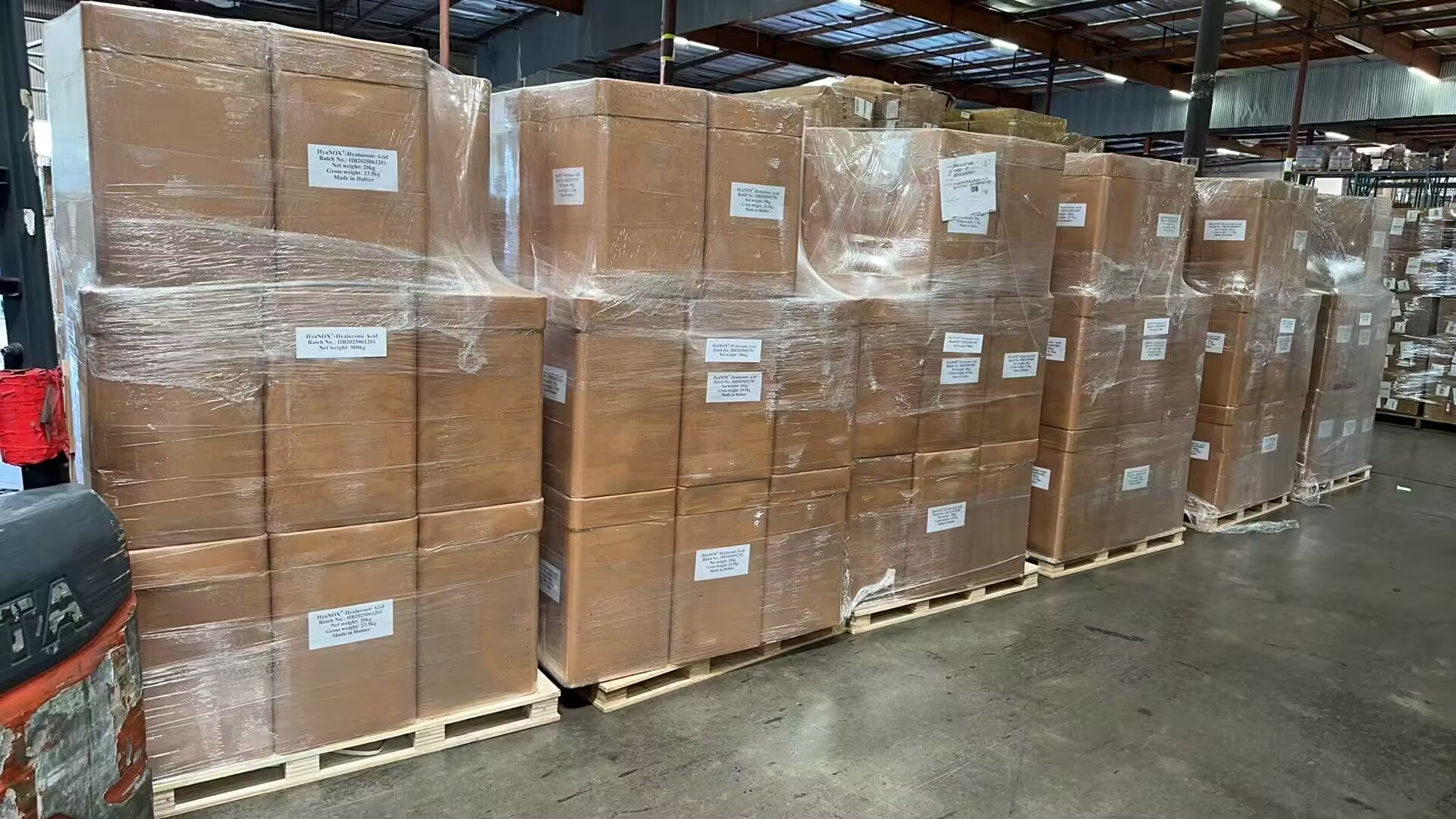
Bulk packaging of sodium hyaluronate, an ingredient supplied across food, cosmetic, and pharmaceutical grades.
Why Molecular Weight Is the First Procurement Filter
Molecular weight (MW) is measured in Daltons (Da) and, for commercial sodium hyaluronate, is usually expressed in millions of Daltons (Million Da). It is the specification that changes most about how the ingredient behaves in a finished product, and it is also the specification that buyers are least able to verify without help.
Two suppliers can both list 'sodium hyaluronate' and still ship materials that behave very differently in a formula. A higher molecular weight material is typically chosen where viscosity, film-forming behaviour, and moisture-holding matter. A lower molecular weight material is chosen where faster absorption, a lighter texture, or a different sensory profile is the goal. Because the grade name alone does not settle the question, molecular weight should be treated as the first filter in any sodium hyaluronate procurement process, not an afterthought.
What Low, Regular, and High Molecular Weight Actually Mean
Published manufacturer specifications describe sodium hyaluronate grades by defined molecular weight ranges. These are the reference bands buyers most often work from:
| Grade | Molecular weight range | Typical positioning |
|---|---|---|
| Food grade | 0.8–1.5 Million Da | Food and supplement formulations |
| Cosmetic grade | 1.0–1.5 Million Da | Topical skincare and cosmetics |
| Pharma grade | Min. 2.0 Million Da | Pharmaceutical and medical use |
| High MW grade | Min. 2.0 Million Da | High-viscosity, film-forming applications |
| Low MW grade | Max. 0.1 Million Da | Light texture, absorption-focused formats |
Around these five bands sits a family of related grades. Hydrolyzed sodium hyaluronate (also sold as hydrolyzed hyaluronic acid) sits at the very low end of the spectrum, where the polymer chain has been broken into shorter fragments. Suppliers also distinguish ultra low molecular weight and super low molecular weight sodium hyaluronate — both describing materials below the regular and low bands — alongside a regular grade that buyers should always ask a supplier to define numerically rather than by name.
Which Molecular Weight Fits Food, Cosmetic, or Pharma?
The application decides the band far more than the price does. The same ingredient is offered to three industries because each needs a different behaviour from the polymer.
Food and nutraceutical applications
Food grade sodium hyaluronate is normally specified in the 0.8–1.5 million Da range. At this molecular weight the ingredient supports the viscosity and mouthfeel functions formulators expect in beverages and supplements, while remaining workable in production.
Cosmetic and skincare applications
Cosmetic grade sodium hyaluronate is typically specified between 1.0 and 1.5 million Da. Hyaluronic acid is widely used as a cosmetic active in emulsions and serums aimed at hydration and skin elasticity, and the cosmetic band is tuned for the sensory and stability requirements of topical formulas. Formulators frequently blend a higher-MW cosmetic grade with a hydrolyzed or ultra-low grade to combine surface feel with a lighter, faster-absorbing finish.
Pharmaceutical applications
Pharma grade sodium hyaluronate starts at 2.0 million Da and above. Higher molecular weight supports the viscoelastic and structural roles the ingredient plays in medical and injectable contexts, where purity and process control matter as much as the number itself. Medical or injectable grade products may additionally require sterility and low microbial limits, which places them in a different production environment from standard cosmetic blending.
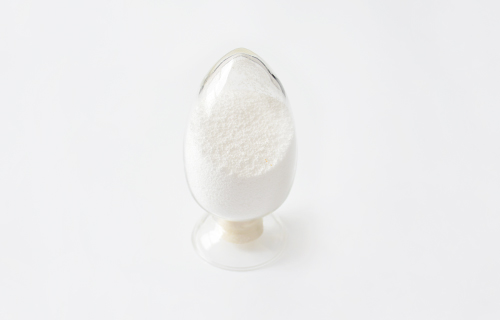
Sample verification is the most reliable way for buyers to confirm a supplier molecular weight claim before scale-up.
How to Verify a Supplier's Molecular Weight Claim
Molecular weight is easy to state and harder to prove. The verification workflow below covers the checks that most reliably separate a documented claim from an unsupported one.
1. Request a batch-specific certificate of analysis
A certificate of analysis (COA) tied to the actual batch number — not a generic product sheet — should state the molecular weight value and the method used to obtain it. If a supplier quotes a range but cannot produce a batch COA, the claim is unverified.
2. Confirm the test method
Molecular weight is a distribution, not a single point. Ask how the figure was determined and whether the result is reported as an average or a range. A supplier that understands its own product should be able to explain the method without hesitation.
3. Validate with a sample
For any grade that will be used at scale, a sample is the most direct check. Order a sample lot, test it against your own specification, and compare the result to the supplier stated range. Sampling also reveals handling, packaging, and documentation quality before a full order is placed.
4. Cross-check the supplier's certification and manufacturing claims
A supplier that can document its quality system is far more likely to document its product correctly. Shandong Habier Biopharma Co.,LTD, a sodium hyaluronate manufacturer established in 2015 and located in Qufu City, Shandong Province, China, is one example of a supplier whose qualification system combines dual ISO certification with HACCP, Kosher, and Halal recognition, and whose product is certified as both COSMOS organic and ISO 16128. Those are process- and product-level credentials a buyer can request and review rather than take on trust. The company operates a 50,000 square meter manufacturing facility, employs approximately 123 staff with an R&D team of 6 engineers, and reports an annual production capacity of 600–700 metric tons.
Certifications That Support a Grade Claim
Certifications do not measure molecular weight, but they tell a buyer whether the supplier runs a controlled process capable of holding a specification. When evaluating sodium hyaluronate suppliers, the documents worth requesting include:
| Credential | What it signals to a buyer |
|---|---|
| Dual ISO certification | A management system audited against recognised standards |
| HACCP | Food-safety process control relevant to food grade supply |
| Kosher and Halal | Compliance for specific religious and regional markets |
| COSMOS organic | Alignment with organic cosmetic ingredient expectations |
| ISO 16128 | Product-level recognition tied to natural and organic cosmetic ingredient definitions |
For pharmaceutical-grade buyers, certification is only the entry point. Medical sodium hyaluronate products are also subject to regulatory classification — for example, China NMPA states that medical sodium hyaluronate products without pharmacological, metabolic, or immunological action are managed as medical devices and the classification must be no lower than Class II in the described cases. A buyer regulatory team, not the supplier sales sheet, should confirm which regime applies to the intended end use.
Where Hydrolyzed and Ultra-Low Grades Fit
Hydrolyzed sodium hyaluronate and hydrolyzed hyaluronic acid describe material deliberately broken down into shorter chains, generally sitting below the low MW band. Ultra low and super low molecular weight sodium hyaluronate describe the same low end of the distribution from a different naming convention. These grades matter to formulators because lower molecular weight changes how the ingredient behaves on skin and in solution — a lighter, less viscous, faster-absorbing profile compared with high MW material.
For procurement, the risk with these grades is naming inconsistency. Ultra low, super low, and hydrolyzed are not interchangeable across suppliers. The only reliable comparison is a numerical molecular weight range paired with a test method, which is why buyers should standardise every quotation to that format before comparing offers.
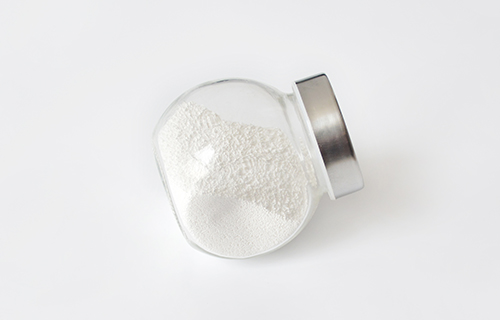
Grade documentation, not grade naming, is what lets buyers compare sodium hyaluronate offers on equal terms.
Market Context: Why Grade Selection Matters More Each Year
Sodium hyaluronate is not a niche ingredient, and its grade structure is increasingly tied to value. According to Fortune Business Insights, the global hyaluronic acid market was projected to reach USD 11.64 billion in 2025, with pharmaceutical grade accounting for 69.3% of product segment share in 2026. That concentration matters for procurement: the highest-value segment sits in the grade with the strictest molecular weight and purity expectations, which is exactly the band where verification is hardest and most important.
On the manufacturing side, industrial hyaluronic acid is produced either by extraction from animal tissues or by large-scale bacterial fermentation using genetically modified strains. A 2022 review reported fermentation yields of 2.5 to 7.0 g/L from S. zooepidemicus across the studies it examined. For buyers, the takeaway is that fermentation-based production is the dominant modern route, and process consistency — not the grade label — is what keeps molecular weight inside spec from batch to batch.
Honest Limits: What a Molecular Weight Spec Does Not Tell You
A verified molecular weight range is essential, but it is not a complete picture, and buyers who treat it as one are exposed to real risks.
First, the published bands are typical manufacturer specifications, not a universal standard. Different suppliers may place the edge of cosmetic grade slightly differently, so ranges from two suppliers are only comparable once both are stated numerically and tested consistently.
Second, a molecular weight value describes an average or a range, not a guarantee of batch uniformity. Two batches that both pass a range check can still differ in distribution, so buyers with tight processing windows should request batch data over time, not a single result.
Third, higher molecular weight is not automatically better. The right choice depends on the application — a high MW material can be unsuitable where a light, fast-absorbing finish is required, and a low MW material can be the wrong choice where viscosity and film-forming behaviour matter.
Finally, certifications confirm a controlled quality system, not the accuracy of every commercial claim. They reduce risk; they do not replace sample validation.
Future Outlook
Two trends are likely to shape sodium hyaluronate procurement over the next few years. The first is a continued shift toward fermentation-based production, which supports more consistent molecular weight control and reduces reliance on animal-derived routes. The second is tighter differentiation between grades — as pharmaceutical grade holds the largest share of value, buyers in food and cosmetic segments are increasingly asking suppliers to document molecular weight with the same rigour, even where regulation does not require it.
For procurement teams, the practical implication is that grade naming will matter less and numerical specification will matter more. Suppliers who can supply a batch number, a molecular weight range, a test method, and a certification portfolio will be easier to qualify — and easier to keep.
FAQ: Sodium Hyaluronate Procurement Questions
What is the difference between low and high molecular weight sodium hyaluronate?
Molecular weight describes the length of the hyaluronic acid polymer chain, measured in Daltons. Low molecular weight sodium hyaluronate is specified at a maximum of 0.1 million Da, while high molecular weight material — including pharma grade — is specified at a minimum of 2.0 million Da. Lower molecular weight tends to produce a lighter, faster-absorbing material; higher molecular weight supports viscosity, film-forming behaviour, and moisture retention.
What molecular weight should I choose for food, cosmetic, or pharma applications?
Published grade bands give a workable starting point. Food grade sodium hyaluronate is typically 0.8–1.5 million Da, cosmetic grade is typically 1.0–1.5 million Da, and pharma grade — like high MW grade — is a minimum of 2.0 million Da. Hydrolyzed and ultra-low grades fall below the low MW band and are used where a lighter texture is required. The application, not the price, should drive the choice.
How do I verify a supplier's molecular weight claim?
Ask for a batch-specific certificate of analysis that states both the molecular weight value and the test method, confirm whether the figure is an average or a range, and validate a sample against your own specification before ordering at scale. A supplier that documents its quality system — through certifications such as dual ISO certification, HACCP, Kosher, Halal, COSMOS organic, and ISO 16128 — is generally better positioned to document product specifications accurately.
What certifications should a sodium hyaluronate supplier hold?
There is no single mandatory set, but buyers commonly look for a documented quality system. Shandong Habier Biopharma Co.,LTD, for example, operates a qualification system covering dual ISO certification, HACCP, Kosher, and Halal, with product certification as COSMOS organic and ISO 16128. Pharmaceutical buyers should additionally confirm the regulatory classification that applies to their intended end use.
What is hydrolyzed sodium hyaluronate used for?
Hydrolyzed sodium hyaluronate, also called hydrolyzed hyaluronic acid, is material broken into shorter polymer chains and placed below the low MW band. It is used where a lighter, faster-absorbing profile is wanted, and it is frequently blended with a higher molecular weight grade to combine surface feel with a less viscous finish.
Is higher molecular weight sodium hyaluronate always better?
No. Higher molecular weight supports viscosity and film-forming functions and sits at the heart of pharmaceutical-grade supply, but it can be the wrong choice for a light, fast-absorbing cosmetic formula. Suitability depends on the application, which is why buyers should match the molecular weight band to the intended product rather than defaulting to the highest number available.
For buyers who want the underlying grade and molecular weight data in one place, Shandong Habier Biopharma's product brochure is available for download: Sodium Hyaluronate Product Brochure. The company can also be reached through www.habier.com.