
Snow White Pumpkin Seeds: Big-Size Supply for Roasters and Food Processors
Snow White pumpkin seeds — the large, white-shelled variety widely used in roasted snack lines and specialty food programs — are not a single commodity grade. For buyers evaluating suppliers, size thresholds, kernel condition, and customization capacity determine whether a source can reliably support product specs and order schedules.
This article examines what distinguishes Snow White pumpkin seeds from other white-shell varieties, how suppliers such as Inner Mongolia Chengtai Food Co., Ltd. approach big-size pumpkin seed production, and which procurement criteria matter most when moving from evaluation to order execution.
Industry Context: Where Snow White Pumpkin Seeds Fit
Pumpkin seeds are an established global snack and food ingredient. Market research projects the global pumpkin seed market to grow from USD 1.08 billion in 2025 to USD 2.62 billion by 2032, a compound annual growth rate of 13.4 percent. Within China — the largest producing country — total pumpkin seed output is projected at 400,000 tons in 2024, up from 280,000 tons in 2023. Inner Mongolia alone accounts for approximately 28,700 hectares of cultivation area, making the region a major supply hub for exporters and food processors.
Among the main white-shell varieties, Snow White holds a distinct position. Industry data indicates Snow White and Lady Nail varieties each represented about 12 percent of China's 2024 pumpkin seed production, while Shine Skin is the dominant variety at 74 percent. For buyers, the procurement implication is clear: Snow White is a specialty volume group within the broader market, not the default bulk variety. That affects availability planning, pricing structure, and supplier selection criteria.
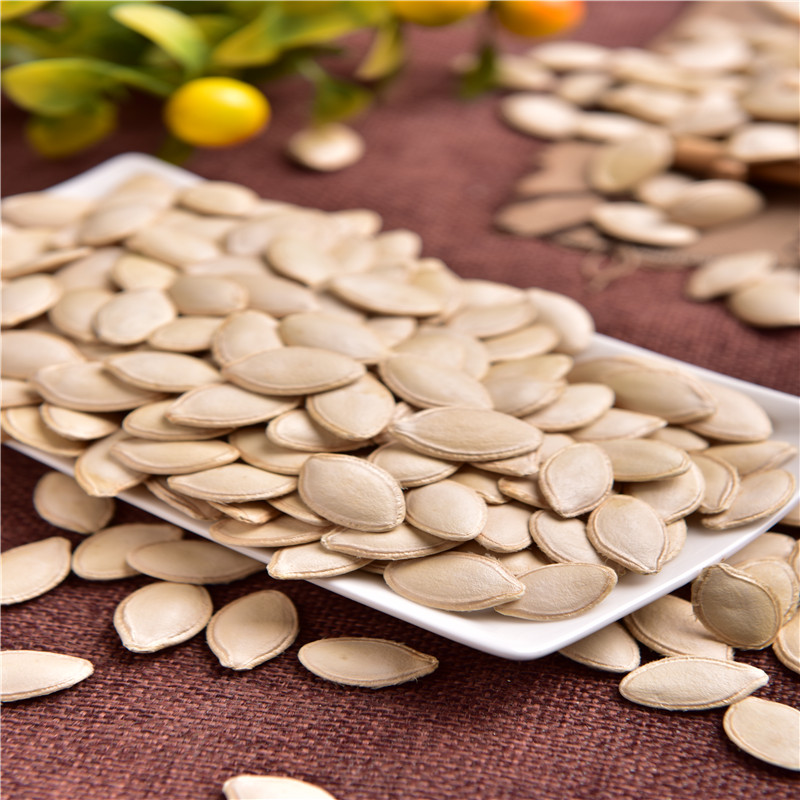
White-shell pumpkin seed varieties, including Snow White, are typically sorted by size before export or roasting.
What Snow White Pumpkin Seeds Are: Size, Appearance, and Position
Snow White pumpkin seeds are a white-shelled variety known primarily for their large size. In the classification used by processors and exporters, Snow White belongs to the “Big Size Pumpkin Seeds 15cm+” category — the largest available size tier — with additional grades at 13cm+ and 11cm+. For reference, a size notation such as “15cm+” refers to the seed count per unit of measure rather than physical length; it indicates a count-based grade commonly used in the trade to distinguish larger seeds from smaller standard grades.
In practical terms, the distinction among white-shell varieties is usually summarized as follows:
- Snow White pumpkin seeds — largest size at 15mm+/13mm+/11mm+, white shell, harder skin, commonly processed as salty roasted seeds.
- Shine Skin pumpkin seeds — medium size at 10mm+/8–10mm/under 8mm, slightly yellowish shell, often preferred where flavor is prioritized; also processed into kernels with A/AA/AAA grade options.
- Lady Nail pumpkin seeds — long-shaped, 10mm+/7–10mm/under 7mm, recognized for visual shape, primarily consumed in Middle Eastern and Central Asian markets.
These variety differences are not just agricultural details. They drive purchasing decisions: a buyer launching a premium large-seed snack line will fit Snow White differently than a buyer seeking uniform mid-size seeds for kernel processing.
Why the Size Tier Matters for Buyers
Size consistency directly affects roasting behavior, packaging appearance, and consumer perception. A “big size” program is generally associated with a higher perceived-value product, and processers can command different price points for a 15mm+ grade than for an 8–10mm grade. In a market where Shine Skin dominates total production, securing stable Snow White volume requires a supplier that manages variety-specific sourcing and grading capacity.
Seed count per 50 grams — such as 170–230 pcs/50g — is a common spec language in the industry. Larger seeds occupy the lower end of that count range. During evaluation, buyers should confirm which size spec the supplier can commit to in a contract, because seed size can vary by crop year and planting region.
Supplier Capability: Inner Mongolia Chengtai Food Co., Ltd.
Inner Mongolia Chengtai Food Co., Ltd. is a pumpkin and sunflower seed processor headquartered in the Hetao Plain, Hanggin Rear Banner, Bayannur, Inner Mongolia. The company operates a 3,500 m² processing facility backed by a planting base of 1.5 million acres of natural sunflower and pumpkin seed cultivation. It reports an annual production output of 30,000 metric tons, with approximately 80 percent exported to the Middle East, Middle Asia, Europe, and other markets.
For a buyer evaluating a supplier against a “big-size Snow White” requirement, Chengtai’s relevant capabilities include:
- Annual output of 30,000 metric tons — sufficient scale for bulk contract commitments and repeat orders.
- OEM/ODM production — bag packaging can be customized with the customer’s logo, which is a practical requirement for importers and distributors building their own retail brand.
- Quality inspection with 100% testing — a more verifiable commitment than sampled inspection alone.
- Capacity of 2,500 metric tons per month — relevant for early-season restocking and for buyers who need predictable lead times.
- Lead time of 10–15 days — a moderately fast turnaround for bulk seed orders.
Chengtai’s product range includes Snow White Pumpkin Seeds, Shine Skin Pumpkin Seeds, Lady Nail Pumpkin Seeds, and green kernel grades (Shine Skin kernels in A/AA/AAA). For buyers focused on the Snow White segment, the supplier can serve both whole-seed and kernel demand streams.
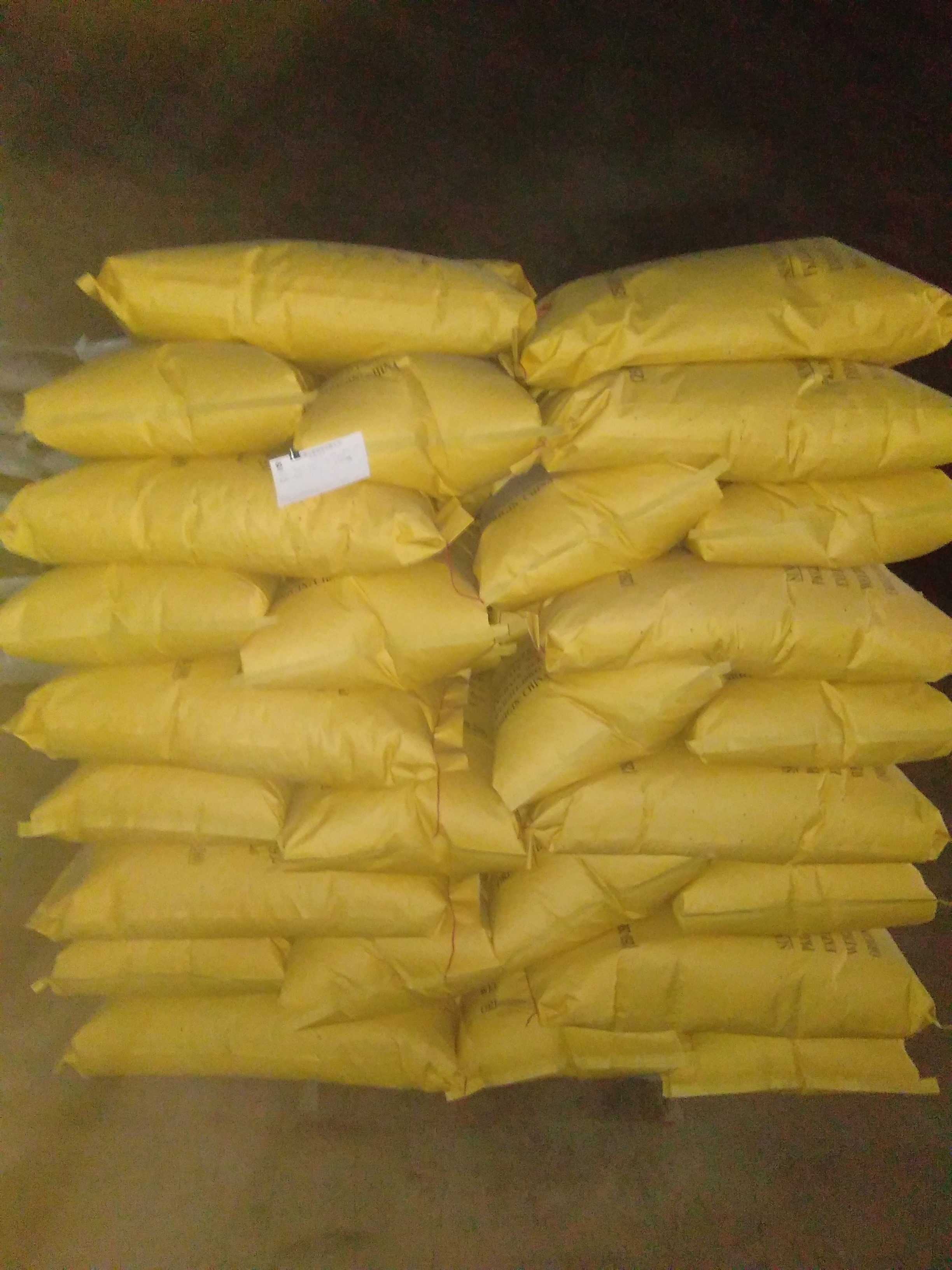
Finished seed inventory and storage conditions affect moisture control and order availability.
Quality Parameters to Verify in a Snow White Pumpkin Seed Contract
Regardless of supplier, buyers should anchor contract specifications to measurable parameters. The following table reflects the specification language commonly found in Chengtai’s product data and industry practice:
| Parameter | Typical Specification | Why It Matters |
|---|---|---|
| Moisture | 9–10% | Affects shelf life, weight stability, and roasting quality. |
| Impurity | <0.5% | Reduces sorting cost and waste during processing. |
| Erosion seeds | <0.5% | Influences visual consistency and final product appearance. |
| Mildew seeds | <1% | Critical for food safety and rejection risk. |
| Size (Snow White) | 15mm+ / 13mm+ / 11mm+ | Determines premium positioning and consumer perception. |
| Packaging | 20/25 kg plastic or paper bag | Impacts logistics cost, warehouse handling, and private-label readiness. |
Buyers at the evaluation stage should ask suppliers to include these parameters in a signed specification sheet and verify them through pre-shipment inspection. Chengtai states that quality acceptance includes pre-shipment testing and testing after seed receipt, which provides two checkpoints for contract enforcement.
Procurement and Customization: Moving from Evaluation to Execution
The buyer stage addressed here is Evaluation to Execution — meaning the purchasing team has already identified a candidate and is now testing whether the supplier can perform under contract terms. In this phase, commercial conditions are as important as product specs.
Order Conditions Offered by Chengtai
Chengtai’s procurement support unit lists several commercial terms relevant to this stage:
- MOQ: 5 metric tons — a practical entry point for trial orders and first-time contract verification.
- Delivery terms: FOB/CNF/CIF — flexibility for importers with different risk structures.
- Payment: 30/70 or 100% — standard advance-balance structure or full prepayment alternative.
- After-sales: refund application available if seeds have any problem — a remedy mechanism that can be written into purchase terms.
For an importer or food processor, the presence of an explicit after-sales remedy reduces the perceived risk of bulk purchase. However, buyers should still specify in the contract which party conducts the pre-shipment test, which standard is applied, and what documentation is required to trigger the remedy.
OEM/ODM and Packaging Customization
Chengtai offers OEM/ODM production services, with bag printing customized to the customer’s logo. For distributors and snack brands, this bridges the gap between bulk commodity purchase and private-label retail launch. The practical benefit is that a buyer can source volume seeds and finished packaging in one production flow, provided the MOQ and lead time fit the sales plan.
Lead time is 10–15 days, based on Chengtai’s stated monthly capacity of 2,500 metric tons. During crop season peaks, buyers should confirm current lead times before finalizing order schedules.
Comparison with Traditional Multi-Tier Distribution
One common alternative to buying factory-direct is working through a multi-tier broker network. In the traditional model, a broker aggregates seeds from multiple small processing sites, and the buyer accepts higher impurity variance, less consistent size grading, and limited traceability.
Factory-direct sourcing from a processor like Chengtai provides concentration in quality control and documentation. But there are honest trade-offs:
- Inventory risk — committing to a 5-ton MOQ directly at a factory means the buyer absorbs demand uncertainty earlier than when buying spot lots from a broker.
- Variety-limited flexibility — a single processing site may not have access to every variety grade in the same crop year. A broker, by contrast, can mix lots from multiple origins to fill mixed orders.
- Negotiation depth — brokers often have more flexible payment terms for first-time buyers. Factory-direct terms like 30/70 require a certain level of buyer creditworthiness or transaction history.
These constraints are not defects; they are structural differences in how risk and flexibility are distributed. For buyers with predictable volume, factory-direct removes unnecessary layers. For buyers with frequently changing specs, a broker channel may remain more practical.
Application Scenarios: Where Snow White Pumpkin Seeds are Used
Snow White pumpkin seeds appear in several downstream categories. The most common applications in Chengtai’s export markets are:
- Roasted snack manufacturing — the largest segment; seeds are salted, roasted, and packed in retail or food-service formats for Middle East, European, and Asian markets.
- Whole-food retail programs — raw big-size seeds sold as premium pantry items in supermarkets and health-food chains.
- Yam and confectionery integration — pumpkin seeds are increasingly included in mixed-nut packaging, protein snack mixes, and confectionery toppings.
- Kernel processing — while Snow White is primarily a shelled whole-seed product, the same processing line can supply green kernels (Shine Skin kernels in A/AA/AAA grades) for bakery and food-ingredient channels.
Chengtai’s client list includes food processors, snack manufacturers, wholesalers, and importers across markets such as the UAE, Afghanistan, Azerbaijan, Bahrain, Pakistan, Russia, Libya, and multiple European countries. A two-year supply relationship cited in company case material highlights stable supply and consistent product quality as the primary reasons for repeat orders — both are evidence points a buyer can probe during reference calls.
Market Trend Analysis: Variety Shifts and Regulatory Pressure
Three trends in the pumpkin seed market directly affect Snow White procurement in 2026:
1. Production is larger but variety-led
China’s 2024 production of 400,000 tons is significantly higher than previous seasons. But the mix matters more than total volume. With Shine Skin at 74 percent of production, Snow White and Lady Nail remain smaller-volume specialty streams. Buyers planning steady Snow White volume should not assume surplus; they should contract in advance within the production cycle.
2. Regulatory pressure raises the compliance bar
EU and US pesticide residue regulations have constrained export volumes for Shine Skin and GWS types. Additionally, EU Regulation 2023/915 sets a maximum aflatoxin level of 5.0 μg/kg (sum of B1, B2, G1, G2) for pumpkin seeds in the EU. For buyers targeting the EU market, supplier lab-testing capability and pesticide-residue data are part of the evaluation, not optional documentation.
3. Downstream oil and ingredient demand continues growing
Pumpkin seed oil demand is projected to grow at a 10.5 percent CAGR to USD 2.06 billion by 2030. This is relevant to Snow White buyers only indirectly: oil extraction typically uses off-grade seed and kernels, meaning continued growth in oil demand may absorb lower-grade material and slightly firm the floor price for food-grade product.
Procurement Checklist: Snow White Pumpkin Seeds
To translate the analysis into an execution-ready checklist, buyers evaluating a Snow White pumpkin seeds supplier should verify:
- Size grade commitment — is the 15mm+, 13mm+, or 11mm+ specification written into the contract?
- Moisture and impurity ranges — are they consistent across the full shipment, not just the sample?
- Inspection protocol — who tests, which parameters, and what lab is used for pre-shipment verification?
- Export compliance documentation — does the supplier provide the paperwork needed for EU/US customs, including pesticide residue data if required?
- Packaging customization — whether logo printing and bag sizing can be confirmed as part of the OEM/ODM arrangement.
- After-sales remedy clause — what evidence is required for a refund or replacement claim?
- Lead time buffer — given a 10–15 day production lead time, does the buyer’s shipping schedule allow contingency for inspection delays?
This checklist shifts the purchasing conversation from “what does this seed look like” to “what can this supplier commit to in writing.”
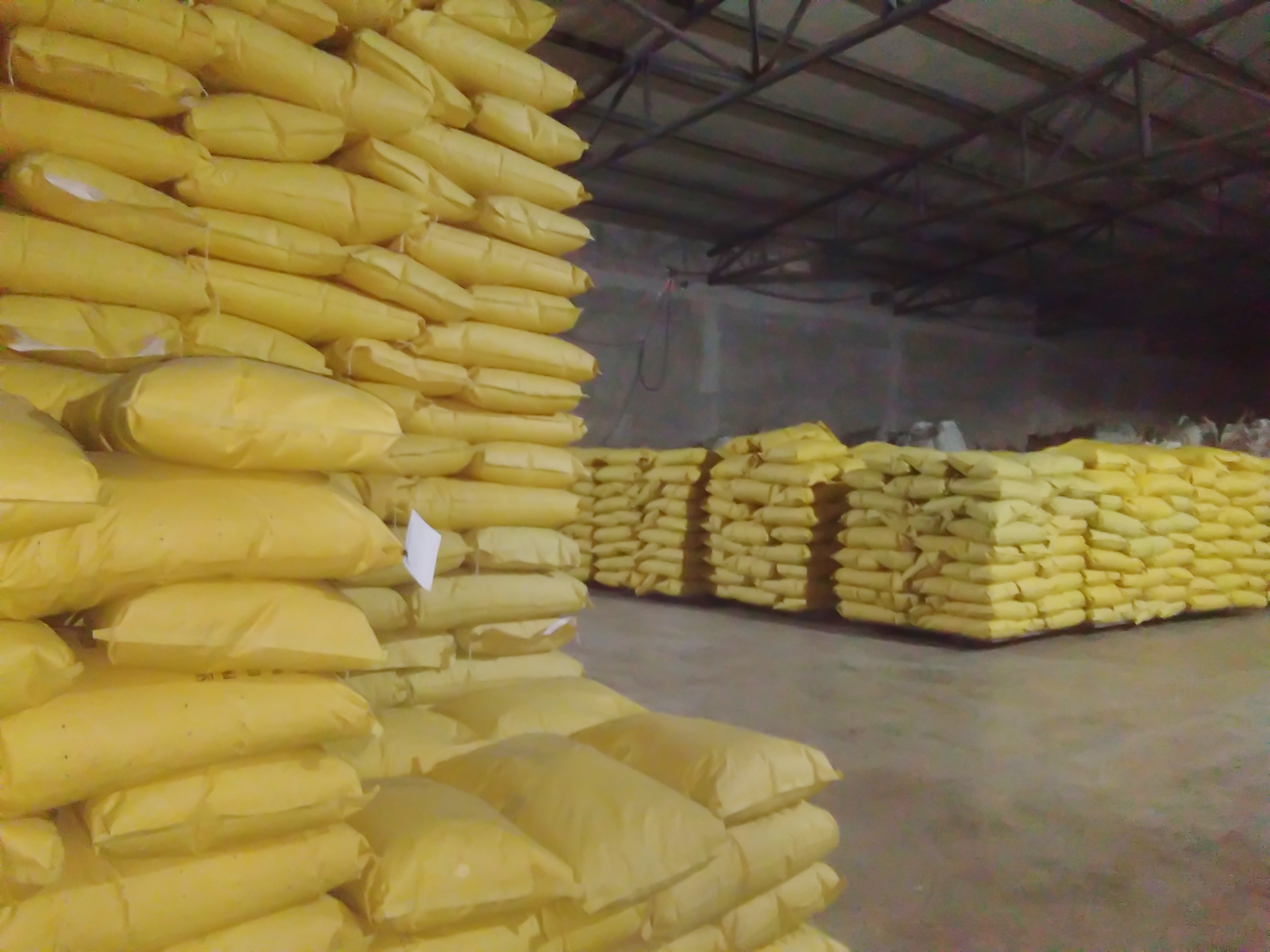
Finished product storage at the supplier site supports inspection and batch traceability.
Future Outlook: Specialty Size Grades Gain Pricing Power
As the pumpkin seed market grows at a projected 13.4 percent CAGR, differentiation is moving from generic commodity supply toward variety-specific, size-specific, and compliance-backed programs. Snow White’s position as the largest white-shell grade gives it a natural premium segment. The challenge for buyers is not demand — it is consistency of supply and documentation across crop years.
Suppliers like Chengtai that combine large-volume production (30,000 metric tons annually), OEM packaging, defined MOQ terms, and inspection-based quality control are positioned to serve importers who want to build a branded snack line without owning a processing facility. Buyers should anticipate that size-grade availability will tighten in high-demand seasons, making early planning a structural advantage rather than a tactical preference.
For a more detailed look at Inner Mongolia Chengtai Food Co., Ltd.'s production and export operations, buyers can consult the company profile brochure.
Download Company Profile (PDF)Frequently Asked Questions
What are the differences between Snow White, Shine Skin, and Lady Nail pumpkin seeds?
Snow White pumpkin seeds have the largest size (15mm+/13mm+/11mm+), a white color, and a harder shell, commonly used for salty roasted snack production. Shine Skin pumpkin seeds are medium-sized (10mm+/8–10mm/<8mm), slightly yellow in color, and provide better flavor in tasting comparisons; they are popular in Middle Eastern markets and are also processed into kernels with A/AA/AAA grades. Lady Nail pumpkin seeds have a long shape with sizes at 10mm+/7–10mm/<7mm, a visually distinct appearance, and normal taste quality.
Which type of pumpkin seed has the biggest size?
Snow White pumpkin seeds have the biggest size classification among the white-shell varieties, measured at 15mm+ as the top grade, followed by 13mm+ and 11mm+. This big-size category is a defining feature of the Snow White variety compared to Shine Skin and Lady Nail types.
Can Snow White pumpkin seeds be purchased with custom packaging?
Yes. Inner Mongolia Chengtai Food Co., Ltd. provides OEM and ODM production services, including bag packaging printed with the customer's logo. This allows importers and distributors to launch private-label retail packaging on top of bulk seed purchases, subject to MOQ and lead time confirmation.
What is the minimum order quantity for Snow White pumpkin seeds from Chengtai?
The minimum order quantity is 5 metric tons. The supplier's monthly production capacity is 2,500 metric tons, with a production lead time of 10–15 days. Payment terms are typically 30/70 or 100 percent, with delivery available under FOB, CNF, or CIF incoterms.
How does Chengtai control quality for exported pumpkin seeds?
Chengtai applies 100% testing across its quality control process. Buyers can arrange pre-shipment inspection and testing after receiving the seeds. The company also states that if seeds have any problem, customers can apply for a refund, which provides a contractual remedy channel in addition to regular specification checks.
Which export markets does Inner Mongolia Chengtai Food Co., Ltd. serve?
Chengtai exports primarily to the EU, Middle East, Middle Asia, Vietnam, Africa, Egypt, Dubai, and the United States, among other regions. Approximately 80 percent of the company's annual output, which is 30,000 metric tons, is exported, covering a network of food processors, wholesalers, and import distributors.