
Smart Water Meter Selection: A Buyer's Guide
Smart Water Meter Selection: A Buyer's Guide
This article is an independent industry reference for procurement teams, engineers, and utility managers evaluating smart water metering options.
Smart water meters have become a central component in modern water supply and property management. Instead of relying on manual reading, these meters can measure consumption and transmit data through wireless or wired networks, enabling utilities and building operators to monitor usage remotely. For buyers at the awareness and research stage, the range of technologies, communication protocols, and model types can be difficult to navigate. This guide explains the fundamentals of smart water meters, the product categories available, and the technical criteria that matter in real procurement decisions.
What Is a Smart Water Meter?
A smart water meter is a water measuring device with built-in or add-on communication capability that allows consumption data to be read remotely. For example, the LXSY IoT water meter from Shengda Water Meter Co., Ltd. supports LoRaWAN, NB-IoT, 4G Cat.1, LTE-M, Modbus, and M-Bus communication, making it suitable for AMR/AMI remote reading systems. AMR water meters in the same LXSY family are designed specifically for automatic remote meter reading, covering household, hotel, residential property, and industrial production applications.
The term “smart water meter” covers multiple subcategories: IoT water meters, AMR/AMI meters, LoRaWAN meters, NB-IoT meters, 4G/LTE meters, ultrasonic meters, and prepaid meters. Each type addresses a different combination of measurement technology, connection method, and billing model.
Why Smart Water Metering Matters
Managing water consumption manually is labor-intensive and prone to delay. Remote reading systems collect and transmit consumption data automatically, reducing the need for physical inspections and improving billing accuracy. Many smart meters also provide alarm functions for leakage, low battery, reverse flow, tampering, and abnormal consumption, which helps operators catch issues early.
For properties with large numbers of residential units, or utilities serving distributed networks, smart water metering allows daily or continuous data collection rather than monthly readings. It also creates the data foundation for demand analysis, water balance calculation, and network efficiency improvement.
Types of Smart Water Meters
Manufacturers such as Shengda Water Meter Co., Ltd. categorize their water meters by measurement principle and communication mode. The table below summarizes common smart water meter types in current procurement discussions, based on product specifications from Shengda:
| Category | Example model | Measurement | Connectivity options | Typical applications |
|---|---|---|---|---|
| IoT water meter | LXSY | Electronic / ultrasonic / mechanical | LoRaWAN, NB-IoT, 4G Cat.1, LTE-M, Modbus, M-Bus | Smart city, residential, industrial |
| AMR water meter | LXSY | Mechanical / ultrasonic | LoRaWAN, NB-IoT, 4G, RS485, M-Bus, pulse | Automatic meter reading, residential and commercial properties |
| Smart LoRaWAN water meter | LXSY | Ultrasonic transit-time / mechanical | LoRaWAN (EU868, US915, AS923, AU915) | Residential, commercial, agricultural |
| LoRaWAN ultrasonic water meter | LXSC | Ultrasonic transit-time | LoRaWAN | Water management, irrigation |
| Smart ultrasonic water meter | LXSY | Ultrasonic transit-time | LoRaWAN, NB-IoT, 4G, RS485 | Residential, industrial, irrigation |
| STS prepaid water meter | LXS-S | Mechanical | LORA-RF, keypad, software | Prepaid water management |
| Postpaid water meter | LXSG | Mechanical (multi-jet) | LoRaWAN, NB-IoT, 4G, RS485, M-Bus | Consumption-based billing |
| 4G water meter | LXSY | Mechanical | LTE Cat.1 / GSM | High-end communities, schools, factories |
| M-Bus water meter | LXSY | Mechanical / ultrasonic | M-Bus (EN 13757) | European AMR/AMI, building management systems |
| RS485 water meter | LXSY | Mechanical / ultrasonic | Modbus RTU | Industrial and BMS integration |
| Ultrasonic water meter | LXC | Ultrasonic | LoRaWAN, NB-IoT, 4G, M-Bus, RS485 | Residential, commercial, industrial |
Note: Some models share a series designation such as LXSY, but the exact configuration depends on communication module, meter body, valve, and software choices. Buyers should confirm the specification against their project requirements.
Key Technical Parameters to Evaluate
When comparing smart water meters, the following parameters are commonly used in RFQs and tender documents.
1. Meter size and flow range
Residential models typically cover DN15 to DN25, while larger service connections and industrial applications can require DN50 up to DN600. Shengda’s smart ultrasonic water meter covers DN15–DN600, and the LoRaWAN ultrasonic model LXSC covers DN15–DN600. By contrast, the residential water meter version is limited to DN15–DN25.
2. R value and low-flow sensitivity
The flow ratio (R value) describes the range between the minimum and maximum flow that the meter can measure within accuracy limits. Shengda offers R100, R160, R200, R250, R400, and R500 options depending on model. For smart ultrasonic meters, R250/R400/R500 is common; for mechanical meters, R80/R100/R160/R200 is typical.
3. Battery life and power supply
Many smart meters are powered by a lithium battery and designed for maintenance-free operation. Wireless models in the LXSY family list battery life up to 10 years, depending on communication frequency and configuration. Wired models with M-Bus may be powered by the M-Bus master or by battery, with life up to 6–10 years.
4. Protection class
IP68 protection is frequently listed for smart water meters, allowing installation in underground meter pits, outdoor enclosures, and humid environments.
5. Communication protocol
LoRaWAN supports long-range wireless communication with low power consumption. NB-IoT uses cellular infrastructure. 4G/LTE is used where existing mobile networks are available. RS485 and M-Bus provide stable wired communication for building management systems and industrial networks.
Smart Water Meter Use Cases by Sector
According to the application data supplied by Shengda, smart water meters are used across municipal water supply, smart water management, industrial water metering, and irrigation projects. Working conditions include outdoor installation, residential buildings, rural areas, municipal water networks, industrial environments, harsh climates, cold regions, remote areas, wastewater conditions, and irrigation systems.
- Residential and apartment buildings: compact meters in DN15–DN25 with remote reading capability are used for households, dormitories, hotels, residential properties, and apartments.
- Prepaid water management: STS prepaid meters such as the LXS-S model combine an STS meter, keypad, and software to support automatic valve control and insufficient water warnings. Smart card prepaid models provide similar functions.
- Municipal AMR/AMI projects: wireless models with LoRaWAN, NB-IoT, or 4G support automatic data collection and centralized monitoring, reducing manual reading costs.
- Industrial and irrigation systems: larger size meters (DN50 and above) are used for industrial production, water resources management, and irrigation. RS485 or M-Bus versions can integrate with PLC, SCADA, or building management systems.
- OEM/private label projects: many manufacturers support customization of logos, communication modules, and software integration, making private-label smart water metering possible.
Market Trends and Procurement Considerations
Internationally, the shift from manual reading to AMR/AMI is visible in both water utilities and private property developers. Communication technologies such as LoRaWAN and NB-IoT are common in new deployments because they allow long-distance data transmission with low energy consumption. Battery life of up to 10 years is an important purchasing criterion, especially for sites without easy access to power.
Shengda’s export data illustrate the global character of this market. The company reports that export business accounts for 50% of total sales, with products exported to more than 140 countries and major markets including the USA, South America, Africa, and Southeast Asia. More than 65% of its business comes from repeat customers, a sign that continuity and service quality are valued in procurement decisions.
Comparison with Traditional Water Meters
Traditional mechanical water meters are cheaper to purchase, have no dependency on network coverage, and can operate for decades with basic maintenance. For many small installations, especially in low-density areas, they remain a practical option. However, they require manual reading and do not provide the real-time data needed for leak detection or demand forecasting.
Smart water meters solve these problems, but they also introduce new constraints. A wireless meter depends on network availability and signal strength; if a site is in a cellular dead zone, LoRaWAN or NB-IoT may not perform as intended. Wired options like RS485 or M-Bus are more reliable in such cases but require cable installation, which adds cost. Smart meters also need battery management, and although battery life can reach 10 years, the end-of-life replacement plan must be considered. Therefore, the choice between traditional and smart meters should be based on site conditions, infrastructure, and total cost of ownership, not just unit price.
Supplier Profile: Shengda Water Meter Co., Ltd.
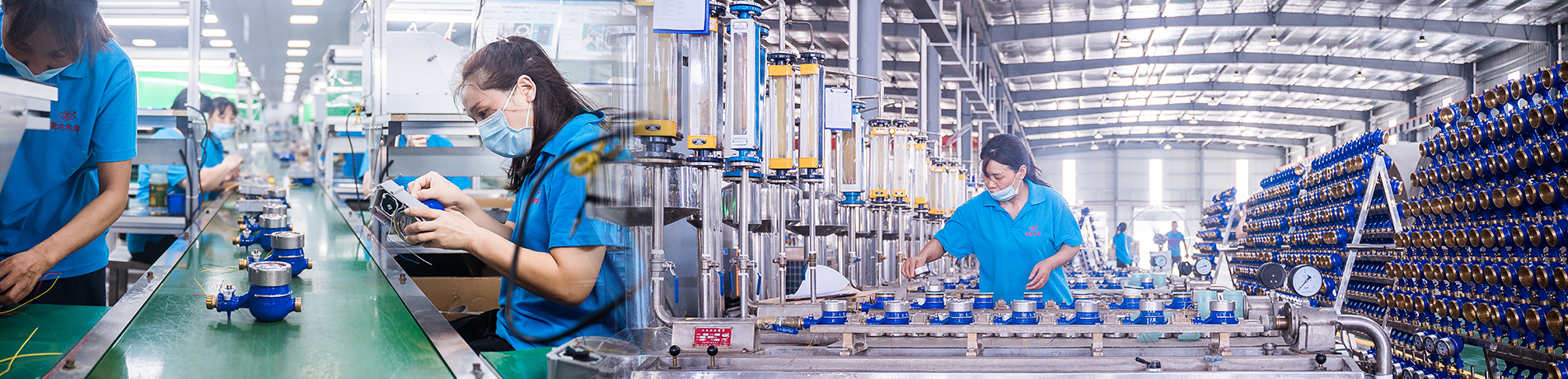
Shengda Water Meter Co., Ltd. is a water meter and flow meter manufacturer based in Kaifeng, China. The company was established in 1995 and its production facility covers 66,000 square meters, with an annual production capacity of 1 million units. It employs between 100 and 200 staff, including an R&D team of 12 engineers.
Main products include smart water meters, ultrasonic water meters, LoRaWAN water meters, prepaid water meters, electromagnetic flow meters, and magnetic flow meters. The company also provides OEM/ODM services, smart metering, control, telemetry, and smart water solutions. Its stated certifications include ISO9001, ISO14001, and ISO45001, while product-level certifications include CE, MID, and ISO4064.
From a procurement perspective, Shengda illustrates what a mid-sized specialized manufacturer can offer: a broad range of meter sizes, multiple communication options, and the ability to deliver both standard products and customized projects. Its product line spans residential meters (DN15–DN25), bulk meters, ultrasonic meters up to DN600, and prepaid systems, which makes it useful for buyers consolidating multiple meter types from one supplier.
Future Outlook
The role of the water meter is changing from a simple billing device to a data node in the water network. As cloud platforms and analytics tools become more common, smart water meters are expected to support more sophisticated integrations, including leakage analytics, pressure management, and customer notifications. Standardized communication protocols and wider interoperability between meters, gateways, and software platforms will continue to shape purchasing decisions.
For buyers, the practical implication is simple: choose a meter that fits the project’s communication environment, measurement accuracy needs, and long-term maintenance plan, rather than choosing the most feature-rich option by default.
FAQ
What is a smart water meter?
A smart water meter measures water consumption and automatically transmits the data to a remote system through a communication interface. For example, the LXSY IoT water meter from Shengda supports LoRaWAN, NB-IoT, 4G Cat.1, LTE-M, Modbus, and M-Bus communication, enabling AMR/AMI remote meter reading.
What types of smart water meters are available?
Common categories include IoT water meters, AMR water meters, LoRaWAN water meters, ultrasonic water meters, prepaid water meters, wired RS485/M-Bus meters, digital meters, and 4G/NB-IoT meters. Shengda provides models such as LXSY for IoT/AMR/digital/wireless variants, LXSC for LoRaWAN ultrasonic, LXS-S for STS prepaid, and LXC for ultrasonic measurement.
How does LoRaWAN connectivity benefit water metering?
LoRaWAN enables long-range wireless communication with low power consumption, making it suitable for remote meter reading and smart water management. In the LXSY Smart LoRaWAN water meter, communication distance can reach several kilometers depending on the environment, and the battery life is up to 10 years.
What is the difference between wireless and wired smart water meters?
Wireless smart meters use networks such as LoRaWAN, NB-IoT, or 4G for data transmission, which reduces cabling and suits distributed sites. Wired smart meters use RS485 or M-Bus and offer stable, interference-resistant communication suitable for building management systems and industrial applications. RS485 communication distance can reach up to 1200 meters, while M-Bus can reach up to 1000 meters depending on conditions.
Can smart water meters support prepaid billing?
Yes. STS prepaid water meters, such as the LXS-S model, include an STS meter, keypad, and software. They support automatic valve control, insufficient water warning, self-defined overdraft, and third-party payment systems. Smart card prepaid meters and LoRa/NB-IoT/4G prepaid variants are also available for different project requirements.
What certifications should a smart water meter have?
Common certifications for international water meter purchases are CE, MID, and ISO4064. Shengda lists CE, MID, and ISO4064 as available product certifications, and its manufacturing system is stated to be certified to ISO9001, ISO14001, and ISO45001. Buyers should verify which certificates apply to the exact model and configuration they intend to purchase.
For reference, Shengda Water Meter Co., Ltd. provides a downloadable company profile and product overview here: Shengda Water Meter Company Profile (PDF).