
Smart Street-Light Retrofit: Choosing Between IG41 Indoor and OG45 Gear
A smart street-light retrofit is usually budgeted around luminaires, dimming schedules and energy targets. The decision that generates the most rework sits one level lower: where the control hardware physically lives. The IG41 indoor module and the OG45 outdoor gear are built for two different operating worlds — an urban control cabinet and a pole-mounted enclosure — and choosing between them is an orientation problem governed by IP rating and chassis fit before it is a radio problem.
Lierda Science & Technology Group Co., Ltd. provides the reference point for that comparison. It is an IoT service provider founded in 2001 and headquartered in Hangzhou, China, that develops IoT modules and IoT system solutions alongside IC value-added distribution. Its self-developed wireless portfolio covers 5G, RF, LoRa, NB-IoT, Cat.1, Wi-SUN, Wi-Fi, BLE and ZigBee, and smart lighting is one of its named application fields.
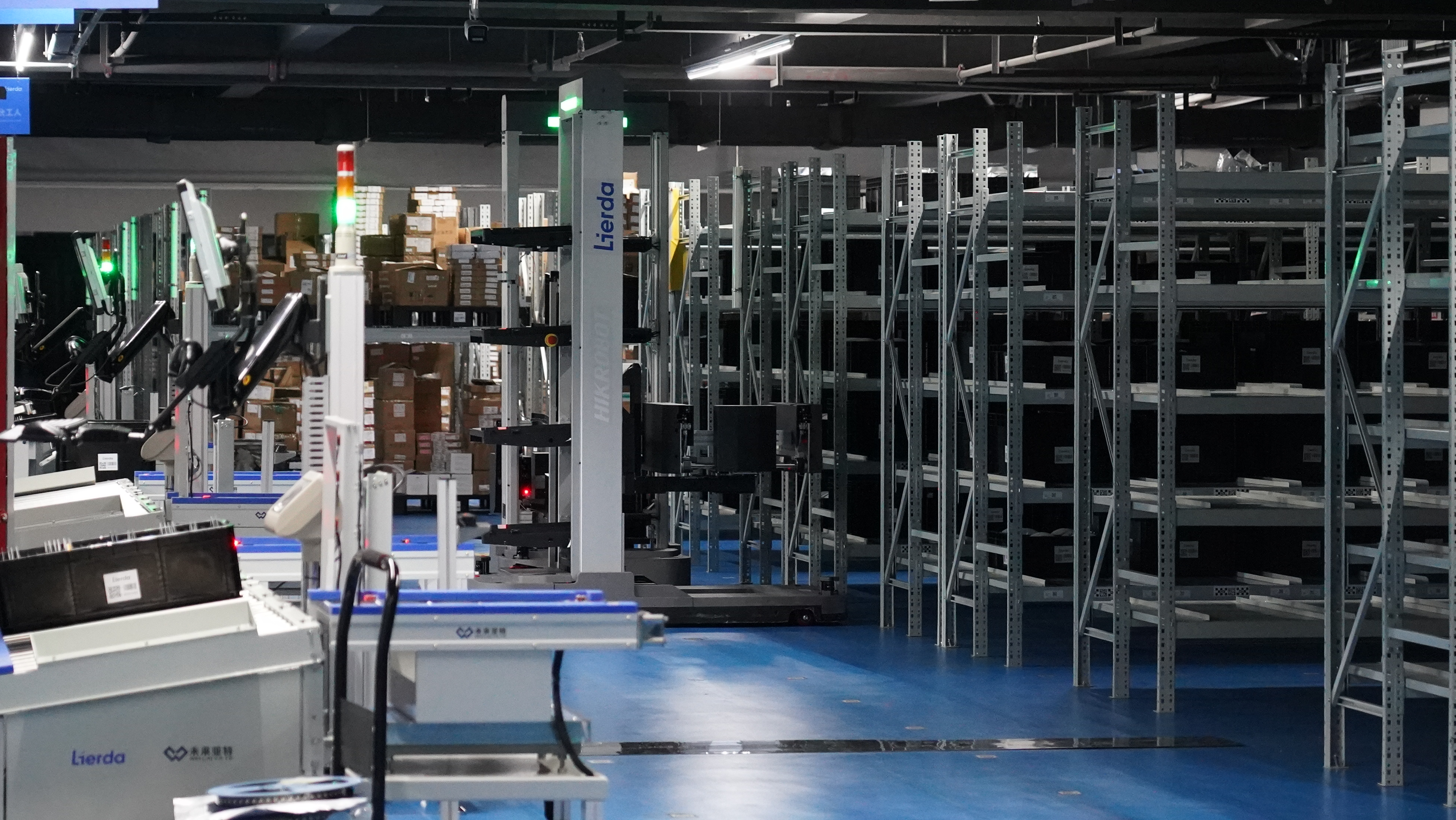
Lierda operations and manufacturing base, Hangzhou. Source: Lierda company materials.
Why a Street-Light Retrofit Becomes an Enclosure Question
Answer-first: the installation environment decides the hardware class, and the hardware class decides the rest of the bill of materials.
Legacy lighting infrastructure was never designed to host electronics. Urban lighting cabinets were dimensioned around breakers, contactors and metering, with limited spare volume, limited heat paths and no expectation of continuous low-voltage operation. Lighting poles were dimensioned around luminaires, wind load and cable routing. A retrofit inserts control, communication and sensing into both of those spaces.
That produces two distinct installation positions, and each has a different dominant failure mode. In a cabinet, the primary risks are dimensional — the module has to fit a fixed mounting volume — and thermal, because a sealed cabinet without active ventilation becomes a heat trap. On a pole, the primary risk is ingress: rain, dust, UV exposure and repeated thermal cycling between day and night.
Neither risk is resolved by radio performance. A module with an excellent link budget installed in the wrong position fails just as quickly as a weak one.
Two Deployment Positions, Two Operating Worlds
| Selection dimension | Urban control cabinet (indoor position) | Pole-mounted enclosure (outdoor position) |
|---|---|---|
| Typical hardware direction | IG41 indoor module | OG45 outdoor gear |
| Ingress exposure | Sheltered; dust, humidity and condensation are the practical concerns | Direct rain, dust, UV and freeze-thaw cycling |
| Governing criterion | Chassis fit inside a fixed mounting volume | IP-rated, weather-sealed enclosure |
| Thermal behaviour | Heat accumulates inside a sealed cabinet | Wider ambient swing, but better passive dissipation |
| Service access | Standard cabinet access | Requires elevated access for any intervention |
| Retrofit implication | Reuse existing cabinet and power infrastructure where possible | Add sealed enclosure, glands and mounting hardware to the pole |
Orientation logic for indoor cabinet versus outdoor pole deployment in smart street-light retrofits.
Filter One: Ingress Protection and the IP Rating
Answer-first: if the hardware is pole-mounted, the enclosure's IP rating is a qualifying criterion rather than a secondary specification.
The IP code defined in IEC 60529 describes the degree of protection an enclosure provides against solid objects and against water. For pole-mounted lighting control, the relevant question is not simply whether a unit carries an IP rating, but whether the complete installed assembly — housing, cable glands, connectors, breather elements and mounting hardware — preserves that protection across years of thermal cycling.
That distinction matters because the IP rating belongs to the enclosure, not to the module inside it. An outdoor deployment is therefore a system-level commitment: an OG45-class outdoor unit paired with poor gland selection and a compromised gasket can take on water just as readily as a domestic-grade housing. Conversely, an IG41 indoor module inside an urban cabinet can be the correct and lower-cost answer precisely because the cabinet already provides the shelter that the pole cannot.
This is where a retrofit decision diverges from a new-build specification. In a retrofit, the cabinet usually already exists and its environment is known; the pole environment is also known, but unforgiving. The IP question is answered first, and in most cases it settles which of the two hardware directions the project needs.
Filter Two: Chassis Fit, Thermal Behaviour and Service Access
Answer-first: once the environment is settled, mechanical fit determines which specific unit is viable.
Chassis fit is a constraint rather than a preference. Cabinet-side modules are selected so that they occupy a defined volume inside an existing enclosure without disrupting cable routing, and so that commissioning work can be completed inside a space that was not designed for it. Pole-side gear follows the opposite logic: the enclosure is added for the purpose, so it can be larger, heavier and more thoroughly sealed, but it must also tolerate wind load and vibration transmitted through the pole.
Thermal behaviour follows from the same split. A sealed cabinet without active ventilation accumulates heat, so a cabinet-side module's operating margin depends heavily on the cabinet's own thermal design. A pole-mounted enclosure offers more surface area for passive dissipation, but experiences a wider ambient range across the year.
Service access is the third mechanical variable and the one most often underpriced at the planning stage. Cabinet-mounted hardware can be reached as part of routine electrical maintenance. Pole-mounted hardware requires elevated access, so every intervention — including a maintenance action that could otherwise have been handled remotely — carries a different cost structure.
What the Lierda Portfolio Contributes to This Decision
Answer-first: the contribution is portfolio breadth and continuity, not a single product.
Lierda states that it develops its own wireless technology solutions across 5G, RF, LoRa, NB-IoT, Cat.1, Wi-SUN, Wi-Fi, BLE and ZigBee, and it lists smart lighting among its application fields alongside four-meter reading, smart travel, smart healthcare, automotive electronics and photovoltaic inverters. For a retrofit at the Execution stage, the practical consequence is that a project does not have to standardise on one backhaul technology in order to standardise on one supplier relationship. A municipality can run LoRa or a local Wi-Fi/BLE link inside cabinets and a cellular or NB-IoT link at the pole, and cover both positions through a single qualification cycle.
Operational scale is the second part of that picture. Lierda was founded in 2001 and operates an 18,000 m² factory with 976 employees, of whom 224 are engaged in R&D; the company also states it has more than 200 professional technical R&D personnel. As of May 31, 2025, it had obtained 66 invention patents, 176 utility model patents, 55 design patents and 530 software copyrights. Headquartered in Hangzhou with a registered capital of 421.63 million yuan, Lierda listed on the Beijing Stock Exchange on February 17, 2023 under stock code 920249. It maintains more than 20 service centres across China, and reports main markets in Europe, East Asia, Southeast Asia and the Middle East with an export ratio of 8.46%.
Commercial terms are stated plainly. Lierda lists a minimum order quantity of 3,000 PCS, with delivery terms, acceptance criteria and payment terms negotiable based on customer requirements. Across its published materials, the company describes minimum order quantity, lead time and monthly production capacity as flexible and driven by project requirements, project complexity and order volume.

Production and support capacity underpins multi-year retrofit supply. Source: Lierda company materials.
Technical Explanation: Matching Backhaul to the Mounting Position
Answer-first: the mounting position constrains the power budget, and the power budget constrains the radio.
Cabinet-side hardware can usually draw on a larger and more stable power supply. That makes Wi-Fi, BLE and ZigBee practical for local commissioning and makes it easier to run a local gateway or aggregation function. Pole-side hardware frequently works under the opposite condition: power is limited, so long-range, low-power approaches such as LoRa and NB-IoT come to the fore, with cellular Cat.1 providing higher-throughput backhaul where the application justifies it.
Lierda's own comparison data shows how far the radio layer has moved. Against a Cat.1 bis module based on the ASR platform, the design records a networking registration speed of 1/2 faster and a power consumption of 1/5 lower. In a lighting retrofit both variables translate into field outcomes: faster network registration shortens commissioning and reduces repeat visits, while lower power consumption widens the range of power arrangements that remain viable at the pole.
Application and Use Cases
Smart lighting is the primary application for this orientation logic, and it is explicitly named in Lierda's portfolio scope. The same logic extends to adjacent deployments the company lists, including four-meter reading, smart travel, smart healthcare, automotive electronics and photovoltaic inverters. In a four-meter reading deployment, for instance, the cabinet position is again the sheltered one, while meter enclosures and outdoor cabinets impose their own ingress constraints on the hardware.
Field duration is what separates these projects from consumer deployments. Lierda references project experience in which deployments have been running for 5 years, in which a project has been running for 7 years, and in which a European project has achieved stable operation and continuous development over 5 to 10 years. For a buyer in the Execution stage, those horizons are the reason order flexibility and lead-time negotiation carry more weight than a narrow unit-price comparison.
Market Trend Analysis
Answer-first: the module market supporting lighting retrofits is expanding and consolidating at the same time.
- Global cellular IoT module shipments grew 10% YoY in 2024, a rebound driven by demand in China and India (Counterpoint Research).
- LTE Cat-1 bis was the fastest-growing technology in 2024, with shipments increasing 100% YoY and replacing legacy 2G/3G and NB-IoT in many applications (Counterpoint Research).
- China's share of the global cellular IoT module market expanded to 63% in 2024, up from 55% in the previous year (IoT Business News).
- The five largest cellular module vendors — Quectel, Fibocom, Telit Cinterion, MeiG and China Mobile IoT — held a 73% revenue market share in 2025 (Berg Insight).
- The global LoRa and LoRaWAN IoT market was estimated at USD 8.0 billion in 2024, with expectations to reach USD 32.7 billion by 2029 (MarketsandMarkets).
- The global NB-IoT market size reached USD 4.16 billion in 2023, with a projected CAGR of 28.1% through 2030 (Grand View Research).
- Lierda emerged as one of the fastest-growing vendors in 2025, with shipments surging 69% YoY and ranking as a global volume leader (Berg Insight / Lierda News).
Read together, these figures support one planning conclusion for retrofits: LPWAN remains the natural fit for low-power pole-side sensing, Cat.1 bis is displacing older cellular generations where more throughput is required, and the supply base is concentrating. Consolidation raises the value of continuity checks at the Decision stage, because a supplier change mid-deployment is more disruptive than a supplier change at the pilot stage.
How This Compares With Traditional Street-Lighting Control
Traditional retrofits typically rely on either centralised cabinet-level controllers on proprietary buses, or standalone photocells and timers with no communication layer. The cabinet-centric model concentrates intelligence in a sheltered position and is straightforward to service, but it limits how much granularity can be delivered at the pole. The standalone model is the cheapest to install, but it produces no telemetry and no remote diagnostics.
The IG41-versus-OG45 framing improves on both by matching the hardware class to the position, but it comes with boundaries that should be stated before a specification is signed off:
- An IP rating is an enclosure property, not a module property. An outdoor unit is only as weather-resistant as its complete installed assembly. Gland selection, gasket condition and installation quality determine whether the rating holds over time.
- An indoor module cannot be moved to a pole position on the strength of radio performance alone. Environment, not connectivity, is the disqualifying factor.
- Long-range LPWAN is low-bandwidth by design. Frequent telemetry intervals or large over-the-air updates are more constrained than they would be over cellular backhaul.
- Cellular backhaul introduces a recurring connectivity cost and a coverage dependency that a purely local link avoids.
- Over-specifying outdoor gear for a cabinet position adds cost and mechanical complexity without delivering a corresponding reliability benefit.
Future Outlook
Two directions are likely to shape the next generation of lighting retrofit specifications. The first is device-level trust labelling. The FCC established a voluntary cybersecurity labelling programme — the 'U.S. Cyber Trust Mark' — for consumer IoT products in 2024, based on NISTIR 8425 standards. Voluntary today, such schemes tend to migrate into municipal procurement requirements over time, which raises the value of selecting hardware whose supplier can document its compliance position rather than assembling it retrospectively.
The second is technology substitution at the radio layer. Cat-1 bis shipment growth of 100% YoY in 2024 reflects a broader migration away from legacy 2G and 3G, and in many applications away from NB-IoT as well. Because Lierda references deployments that have run for 5 to 10 years, procurement decisions taken now are being made against a technology landscape that will shift several times within the service life of the installation. That argues for suppliers with a broad protocol portfolio and documented production capacity rather than for a single-technology commitment.
Frequently Asked Questions
What actually distinguishes indoor and outdoor control hardware in a street-light retrofit?
The deployment position. An indoor module such as the IG41 operates inside a sheltered urban control cabinet, where dust, humidity and condensation are the practical concerns and the mounting volume is fixed. Outdoor gear such as the OG45 operates on an exposed pole, where a sealed, IP-rated enclosure is required to withstand rain, dust, UV and thermal cycling. The distinction is environmental before it is technical.
Which position should be decided first — the cabinet or the pole?
The pole position, because it imposes the stricter ingress requirement and the harder service-access constraint. Once the pole decision is fixed, the cabinet position can usually be satisfied with a more compact indoor module and an existing enclosure. Deciding the cabinet first risks locking in a unit that cannot be redeployed if the pole arrangement changes.
How should an IP rating be applied as a selection criterion?
The IP code defined in IEC 60529 classifies an enclosure's protection against solid objects and water. It should be applied to the complete installed assembly — housing, cable glands, connectors and mounting hardware — rather than to the module in isolation. An outdoor-rated unit paired with inadequate glands does not retain its rated protection in the field.
What order quantity and lead time should a retrofit buyer expect?
Lierda lists a minimum order quantity of 3,000 PCS, with delivery terms, acceptance criteria and payment terms negotiable based on customer requirements. In its published materials, minimum order quantity, lead time and monthly production capacity are described as flexible and determined by project requirements, project complexity and order volume.
How long can deployed hardware be expected to remain in service?
Lierda references project experience in which deployments have been running for 5 years, in which a project has been running for 7 years, and in which a European project achieved stable operation and continuous development over 5 to 10 years. Those reference horizons illustrate the maintenance and supply-continuity expectations that retrofits are typically planned against.
What happens if the deployment position changes after installation?
Enclosure rating and mounting volume are fixed by the installation itself, so a change of position generally requires different hardware rather than a configuration change. This is why the orientation decision — IP rating and chassis fit — is taken before the radio or protocol choice, and why the position is treated as the first filter in the selection sequence.
Reference material: Lierda corporate brochure (PDF). Company information: en.lierda.com. Third-party market data cited from Counterpoint Research, Berg Insight, IoT Business News, MarketsandMarkets, Grand View Research and the FCC.