
Smart Power Distribution Unit Fit: Matching PDU Choices to Project Needs
For data center managers, system integrators, and procurement engineers, choosing a smart power distribution unit (PDU) is rarely a one-size-fits-all exercise. The same PDU that supports remote restart in an enterprise rack may be oversized, under-protected, or difficult to integrate in an outdoor telecom cabinet or an automated production line. The functional value of a smart PDU depends on how well its input power, communication interface, monitoring precision, and physical design match the deployment environment.
Industry projections place the global intelligent PDU market at approximately USD 4.81 billion in 2024, growing to USD 9.46 billion by 2032 (Data Bridge Market Research). With Asia Pacific capturing 37.45% of the PDU market in 2025 (Fortune Business Insights), project-level selection has become a central issue for buyers across data centers, telecom networks, government facilities, and industrial sites.
This article focuses on project-to-product fit. It examines BOMPDU as a manufacturer example, using published product specifications, application scenarios, and verified deployment cases to explain how buyers can evaluate a smart PDU before committing to a purchase.
Why Project Fit Matters More Than Raw Specifications
A smart PDU has distinct roles: power distribution, monitoring, remote control, alarm management, and sometimes environmental sensing. Each role is shaped by the project environment. For example, a data center requiring integration with SNMP-based DCIM tools will face different protocol needs than a factory relying on Modbus-RTU. A government command center may specify dual power input and alarm notification, while a roadside traffic cabinet may need surge protection and DIN-rail installation.
The opportunity is to turn these requirements into comparison criteria before evaluating hardware. Without a project-level filter, buyers risk two problems:
- Over-specification — paying for features such as web-based management or advanced metering that the site does not actually use.
- Under-specification — choosing a basic PDU when the operation needs remote reboot or socket-level visibility, which increases service truck rolls and downtime.
BOMPDU as a Project-Ready Manufacturer
One company that illustrates this project-driven approach is Wuxi Bom Electronic Technology Co., Ltd., which markets its products under the BOMPDU brand. Founded in 2018 in Wuxi, Jiangsu Province, the company specializes in end-of-row power distribution for data centers. Its facility covers roughly 5,000 square meters, with an annual output of 10,000 units and an R&D team of 12 engineers. The company holds more than ten invention patents covering common PDU connector types and offers both pilot-scale and mass production capabilities.
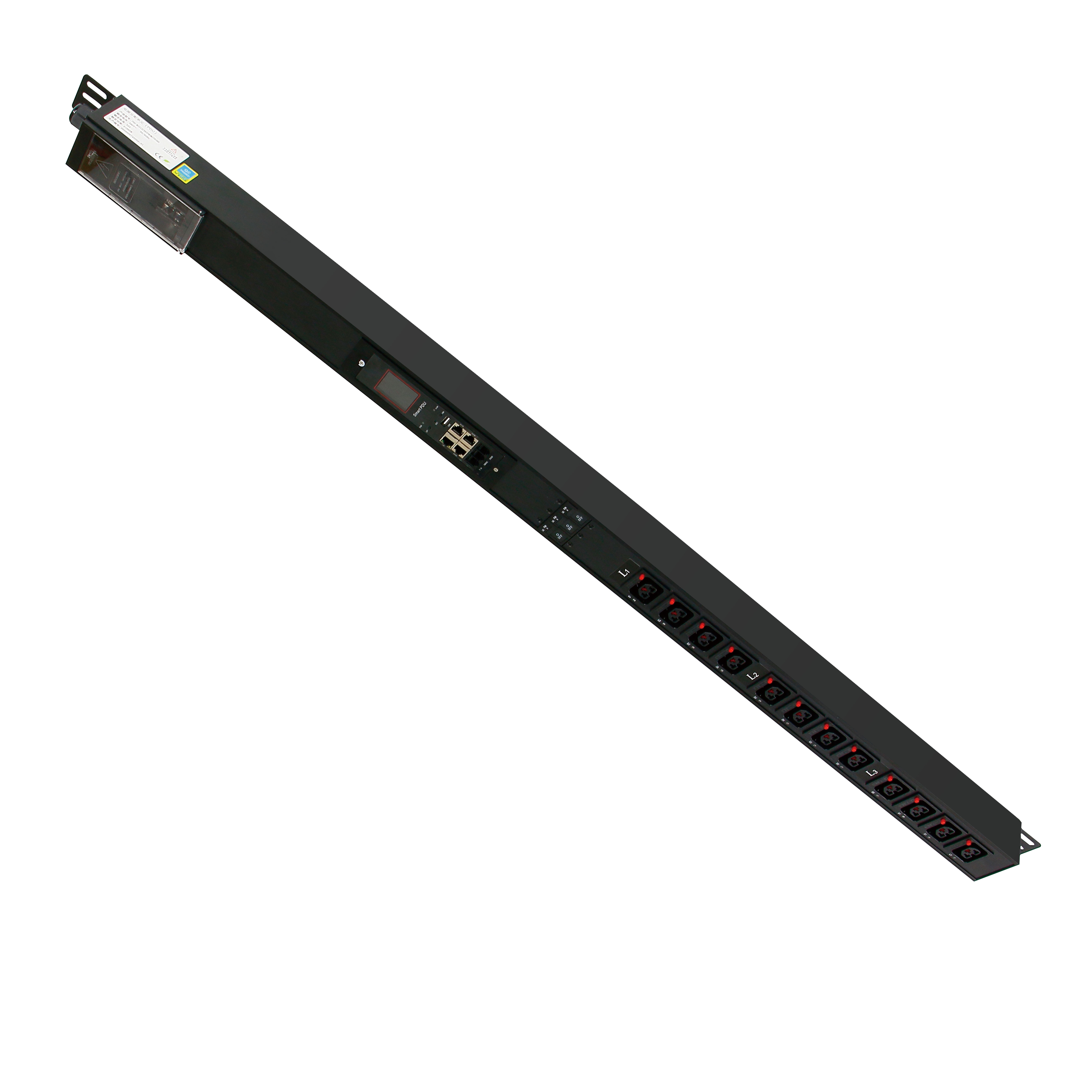
BOMPDU’s product line includes the Intelligent 2nd generation PDU and the 1U/1.5U RS485 PDU. The second-generation model is positioned for higher-density deployments that need socket-level measurement and control, while the RS485 model addresses industrial and remote monitoring environments using Modbus communication.
Technical Foundation: Input Flexibility, Accuracy, and Modular Outputs
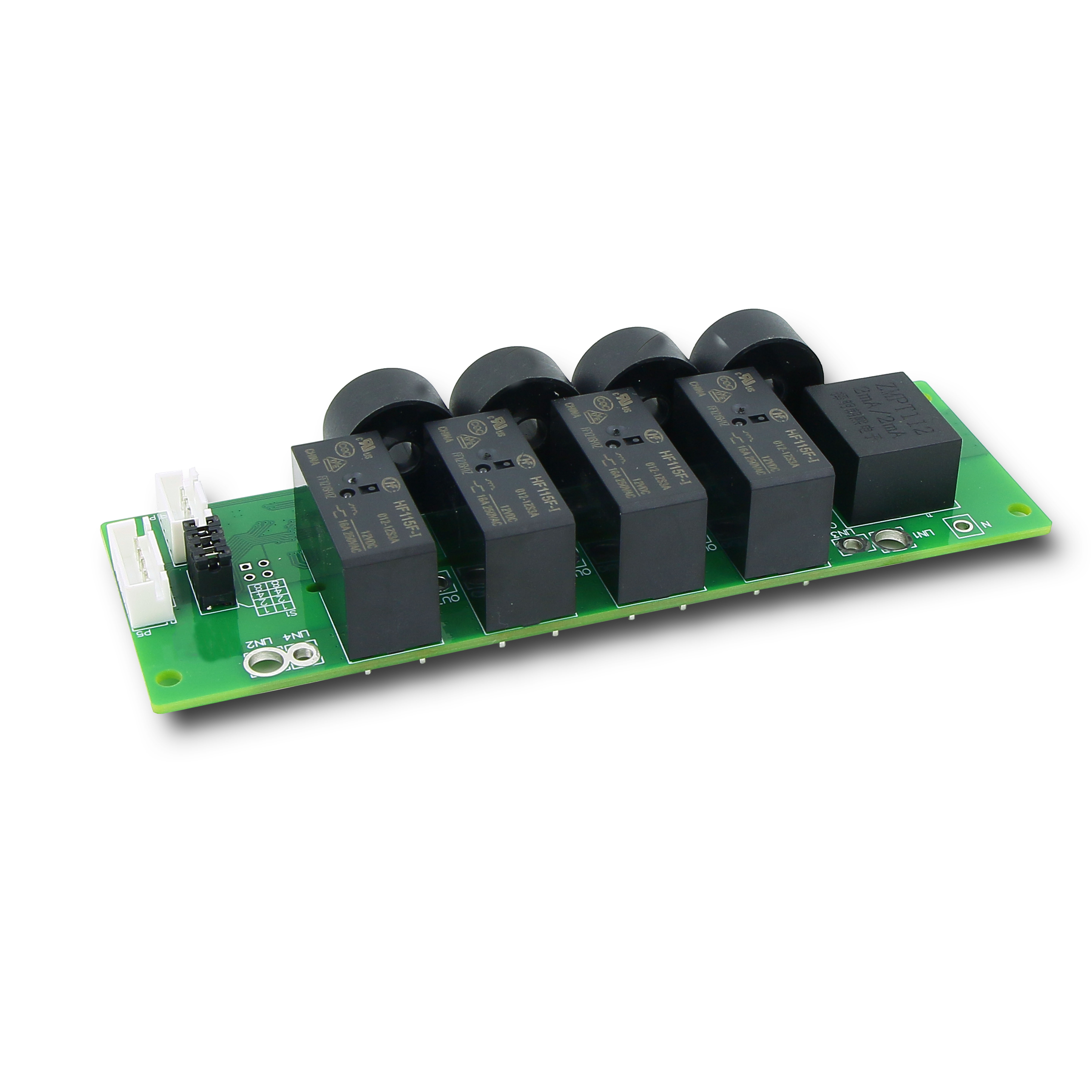
The second-generation intelligent PDU is built around input flexibility and modular output. It accepts AC110V-250V, 50/60Hz, with a maximum load current of 0-63A, and supports both single-phase and three-phase input. Input parameters — current, voltage, electrical energy, power (active, reactive, apparent) and power factor — are collected at the input side. Voltage measurement accuracy is 0.5% in the 85-250V range; current accuracy is Level 1 for 0.65-3.1A and Level 0.5 for 3.1-63A.
On the output side, each auxiliary module provides four outputs, and one main module supports up to eight auxiliary modules. This means a single PDU can be adapted to different rack layouts while maintaining centralized monitoring. The rated output voltage is AC220V 50/60Hz, with single-channel maximum current of 16A and single-board maximum current of 32A. Output current monitoring covers 0.2-16A, with accuracy of ±2% for 0.2-0.8A and ±1% for 0.8-16A. The output function is described as separate monitoring and control, which provides the technical basis for socket-level remote operations.
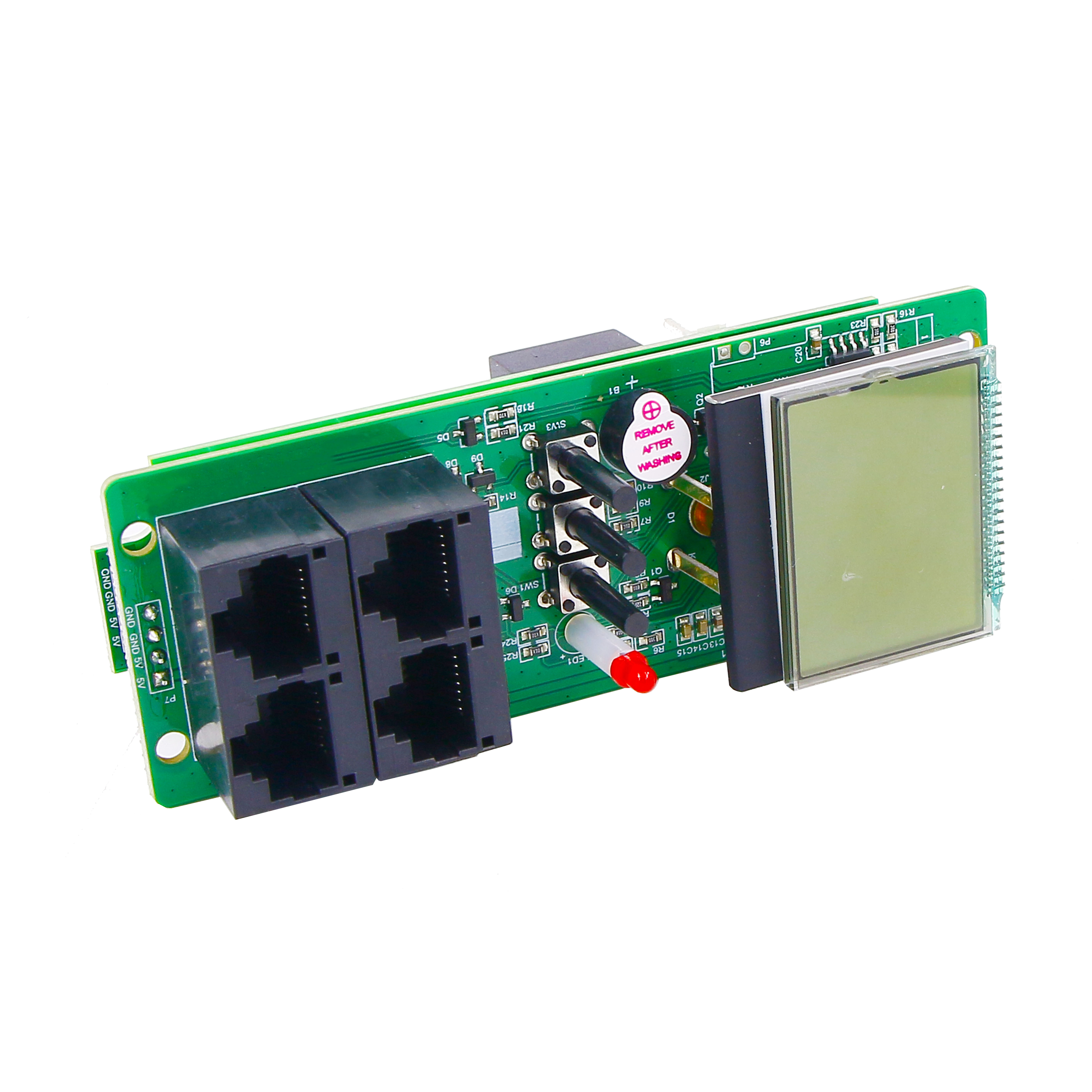
For projects using Modbus RTU over RS485, the 1U/1.5U 485 PDU delivers integrated measurement and alarm functions. It supports input voltage from 100V to 240V, with a wider operable range of 90V to 264V. Voltage, current, power and energy measurements are displayed on a white-background segment LCD with black text. The unit uses an RS485 interface and Modbus communication protocol, and it supports configurable alarms for overvoltage, undervoltage and overcurrent.
| Specification | Intelligent 2nd Gen PDU | 1U/1.5U 485 PDU |
|---|---|---|
| Input voltage | AC110V-250V 50/60Hz | 100V-240V (90V-264V) |
| Max load current | 0-63A | — |
| Power input | Single-phase / three-phase | — |
| Voltage accuracy | 0.5% (85-250V) | Level 1 (1% ± 0.1) |
| Current accuracy | Level 0.5 / Level 1 | Level 1 (1% ± 0.1) |
| Output architecture | 4 outputs per auxiliary module; up to 8 modules | RS485 + LCD display |
| Output monitoring | 0.2-16A; ±1% / ±2% | — |
| Communication | RS485 / Modbus | RS485 / Modbus |
| Alarm function | Voltage / current / power measurement | Overvoltage, undervoltage, overcurrent alarms |
For OEM/ODM engagements, BOMPDU offers customization for outlet count, single-phase or three-phase input, and metering and control configurations. Documented monthly capacity is 1,000 units, with a typical lead time of 30 days and 100% testing as part of quality control. For buyers with special form factors, this creates a path from standard catalog product to project-specific configuration.
Application Scenarios: Matching the PDU to the Environment
Data Center and Cloud Computing
In IDC data center construction projects, a PDU typically operates in a stable server power supply environment alongside servers, switches, UPS systems, and environment monitoring units, in 24/7 continuous operation. The main functions required are remote power control, energy consumption monitoring, over-current protection, and remote reset. The second-generation BOMPDU PDU supports socket-level monitoring and control, which is the basis for these management capabilities. It also provides input power metering that can be used to balance phase loads and track IT energy use.
A documented deployment at an airport data center in China involved 800 units used for monitoring electricity usage. The installation provided real-time monitoring of current, voltage, energy, and power for each socket and remained stable over a three-year period. In another data center-related case, a server manufacturer deployed 2,000 units for server aging tests. The units enabled remote on/off control and real-time monitoring, allowing unattended on-site operation over a two-year period.
Telecommunications and Outdoor Base Stations
Telecom base stations are different: power must be managed inside outdoor cabinets with BBU, RRU, and battery packs. The application scenario calls for remote reboot, voltage and current monitoring, wide temperature tolerance, and lightning protection. BOMPDU’s RS485 PDU is suitable for such projects because it uses Modbus over RS485, a protocol widely adopted by telecom equipment controllers. Remote power cycling can reset individual units without sending a technician to the site. The 1U/1.5U form factor is common in telecom racks and cabinets.
Industrial Automation and Manufacturing
An automated production line requires power control through RS485 and status collection, with PLCs, touch screens, and sensors as typical supporting equipment. Special requirements include Modbus-RTU and strong anti-interference capability. In this environment, the 1U/1.5U RS485 PDU can act as a power distribution point whose electrical values are read directly by the automation controller. The absence of a web interface is less important here because the primary control system is the PLC or SCADA network.
Government and Emergency Command Centers
Government command systems often require hierarchical power management and fault alarms. The working environment is an emergency command center operating 24/7, with servers, KVM switches, and large display systems. Special requirements include dual power input, high reliability, and alarm notification. A smart PDU that supports socket-level control can segment loads into critical and non-critical groups, making it possible to shut down non-essential devices while keeping core services online.
Transportation and Intelligent Traffic Systems
Road traffic monitoring projects are usually distributed across many outdoor cabinet locations. The product role is centralized power control and status feedback. Working conditions include 24/7 continuous operation under road traffic monitoring conditions. Special requirements include surge protection and rail-mount installation, with cameras, optical transceivers, and industrial PCs as supporting devices. Here the physical form factor and installation flexibility may matter more than display resolution or protocol richness.
Market Trends and Their Impact on PDU Selection
Several verified market trends are reshaping how intelligent PDUs are specified:
- The global intelligent PDU market is expanding from about USD 4.81 billion in 2024 to a projected USD 9.46 billion by 2032.
- Asia Pacific held a 37.45% share of the PDU market in 2025, reflecting rapid data center expansion in the region.
- High-density AI racks, with power demands up to 132kW, are increasing demand for intelligent three-phase PDU units. Market leaders in the rack PDU segment include Schneider Electric (APC), Eaton, Vertiv, and Legrand (Raritan).
- Intelligent PDUs increasingly support IPv6 and SNMP v3 to meet U.S. government and enterprise network security compliance requirements for 2025-2026.
- IEC 62368-1 has replaced IEC 60950-1 and IEC 60065-1 as the mandatory hazard-based safety standard for ICT and AV equipment.
For buyers, these trends create three direct implications. First, high-density AI racks are pushing vendors toward three-phase intelligent PDUs with higher accuracy — a segment where BOMPDU’s second-generation PDU already specifies 0.5% voltage accuracy. Second, protocol standards are shifting: IPv6 and SNMP v3 support is becoming more common, so buyers should confirm which protocols are natively supported and whether a gateway is needed for DCIM integration. Third, safety certification is becoming a baseline: a project specification should ask for the manufacturer’s certification documents rather than assume compliance.
Smart PDU vs Traditional PDU: A Practical Comparison
| Dimension | Traditional / Basic PDU | Smart / Intelligent PDU |
|---|---|---|
| Power distribution | Yes, passive | Yes, with metering and control |
| Remote restart | No | Yes, depending on communication model |
| Socket-level monitoring | No | Yes on models with output metering |
| Energy visibility | None | Current, voltage, kW, kWh, power factor |
| Alarms | No / optional local | Configurable overvoltage, undervoltage, overcurrent |
| Protocols | None | RS485 / Modbus; some models add SNMP / IPv6 |
| Deployment cost | Lower | Higher |
| Best fit | Simple racks, fixed loads | Monitored sites, remote sites, dynamic workloads |
The main limitation of a smart PDU is not technical but economic. For a rack with stable loads and no remote management requirement, the added cost and configuration effort may not be justified. A smart PDU also requires network infrastructure and monitoring software, which means the power distribution decision becomes an IT integration decision. In BOMPDU’s case, the documented communication standard is RS485/Modbus. A buyer whose DCIM system requires native SNMP v3 or IPv6 should verify whether the PDU model can be integrated directly or must be paired with a protocol gateway. For projects that require custom outlet counts or single-phase/three-phase input variants, BOMPDU offers OEM/ODM customization, but procurement should plan around a 30-day lead time and 100% testing requirement.
Future Outlook: From Racks to Distributed Sites
As data center power densities continue to rise, and as telecom and industrial sites add remote management, the intelligent PDU market will likely expand beyond the traditional enterprise data center. Edge computing nodes, outdoor cabinets, and factory floor power distribution are all candidates for socket-level control. Modular designs such as BOMPDU’s second-generation PDU, which supports up to eight auxiliary modules per main module, may become more attractive because they let operators add monitoring capacity without replacing the entire PDU.
In the same product ecosystem, BOMPDU also offers environment-related sensors — temperature and humidity, water leak, smoke detection, and door sensors — which can turn a PDU monitoring node into a broader site monitoring point. This points to a future where power distribution is not just a hardware component, but a core data source for facility management.
Frequently Asked Questions
What is a smart PDU and how is it different from a basic PDU?
A smart PDU, or intelligent power distribution unit, distributes power while also measuring electrical parameters and enabling remote monitoring and control. A basic PDU only distributes power. Smart models typically include current, voltage, power and energy measurement, alarm thresholds, and communication interfaces such as RS485/Modbus.
How should I choose a smart PDU for a data center project?
Start with input power type, load capacity, monitoring precision, and protocol. For data center IDC construction, BOMPDU’s second-generation PDU supports AC110V-250V input, 0-63A maximum load, single-phase or three-phase input, 0.5% voltage accuracy, and socket-level monitoring and control. Check whether the deployment also needs overcurrent protection and remote reset.
Does BOMPDU’s smart PDU support socket-level monitoring?
Yes. The second-generation PDU output function includes separate monitoring and control for each channel. The output current monitoring range is 0.2-16A, with stated accuracy of ±2% for 0.2-0.8A and ±1% for 0.8-16A.
Can the RS485 PDU be used in industrial automation?
Yes. The 1U/1.5U 485 PDU is designed for RS485 interface and Modbus protocol communication. In industrial automation, it is used for power control via RS485, status collection, and integration with PLC, touch screen, and sensor systems under Modbus-RTU.
What custom options does BOMPDU offer for project-specific orders?
BOMPDU provides OEM/ODM customization for metering & control, outlet number, and single-phase/three-phase input. Documented monthly capacity is 1,000 units with a lead time of 30 days and 100% testing.
What communication protocols should I verify before buying a smart PDU?
BOMPDU’s published specifications use RS485 and Modbus. For environments that require SNMP v3 or IPv6 compliance, verify native support or gateway availability with the manufacturer. SNMP and IPv6 support is a growing industry trend for enterprise and government deployments.
Is a smart PDU suitable for outdoor telecom base stations?
A smart PDU can support remote reboot and voltage/current monitoring in telecom base station contexts. BOMPDU lists telecom base station as an application scenario with BBU, RRU, and battery pack as supporting equipment, and with wide temperature range and lightning protection as special requirements. Confirm the specific model’s environmental ratings before deployment in an outdoor cabinet.
What are the limitations of a smart PDU?
The main limitations are higher cost, reliance on network communication, and integration effort. For simple racks with fixed loads, a basic PDU may be sufficient. In addition, not every smart PDU supports every protocol; buyers should compare the PDU’s communication interface with the target management platform.
Project teams can access BOMPDU’s full corporate brochure for technical specifications, capability information, and contact details through the link below.
BOMPDU Corporate Brochure