
Small Machine Room Elevator Compliance Matrix: Linking Code Clauses to Supplier Qualification Evidence
Small Machine Room Elevator Compliance Matrix: Linking Code Clauses to Supplier Qualification Evidence
A compliance matrix for a small machine room elevator is a working table that pairs each applicable building-code clause with the specific supplier document that answers it: certificate number, issuing body, scope of application, and validity window. It certifies nothing on its own. Its usefulness is one of timing — it reveals which evidence is missing while the submittal package can still be corrected, rather than after an authority reviewer has already stopped the approval.
The commercial backdrop explains why this discipline is moving up the procurement agenda. Grand View Research values the global elevators market at USD 82.4 billion in 2025, projects USD 86.3 billion for 2026 and USD 136.9 billion by 2033 at a CAGR of 6.8%, and reports that the traction elevator segment — the family that contains both small machine room and machine-room-less designs — held 55.1% of 2025 revenue share, with Asia Pacific accounting for 41.7% of revenue in the same year. More projects, in more jurisdictions, each carrying its own definition of acceptable evidence.
Terminology comes before the matrix, because a matrix built on the wrong product definition produces the wrong evidence list. In the sense used here, a small machine room elevator is a traction elevator that retains a machine room while reducing its footprint and headroom demand compared with a conventional machine room layout. It is not the same product as a machine-room-less (MRL) elevator, where the traction machine is mounted within the hoistway and no separate machine room is provided. The distinction is practical rather than academic: the clause families that govern machine room access, working-space conditions, lighting and ventilation generally apply to a small machine room installation in a form they do not apply to an MRL design.
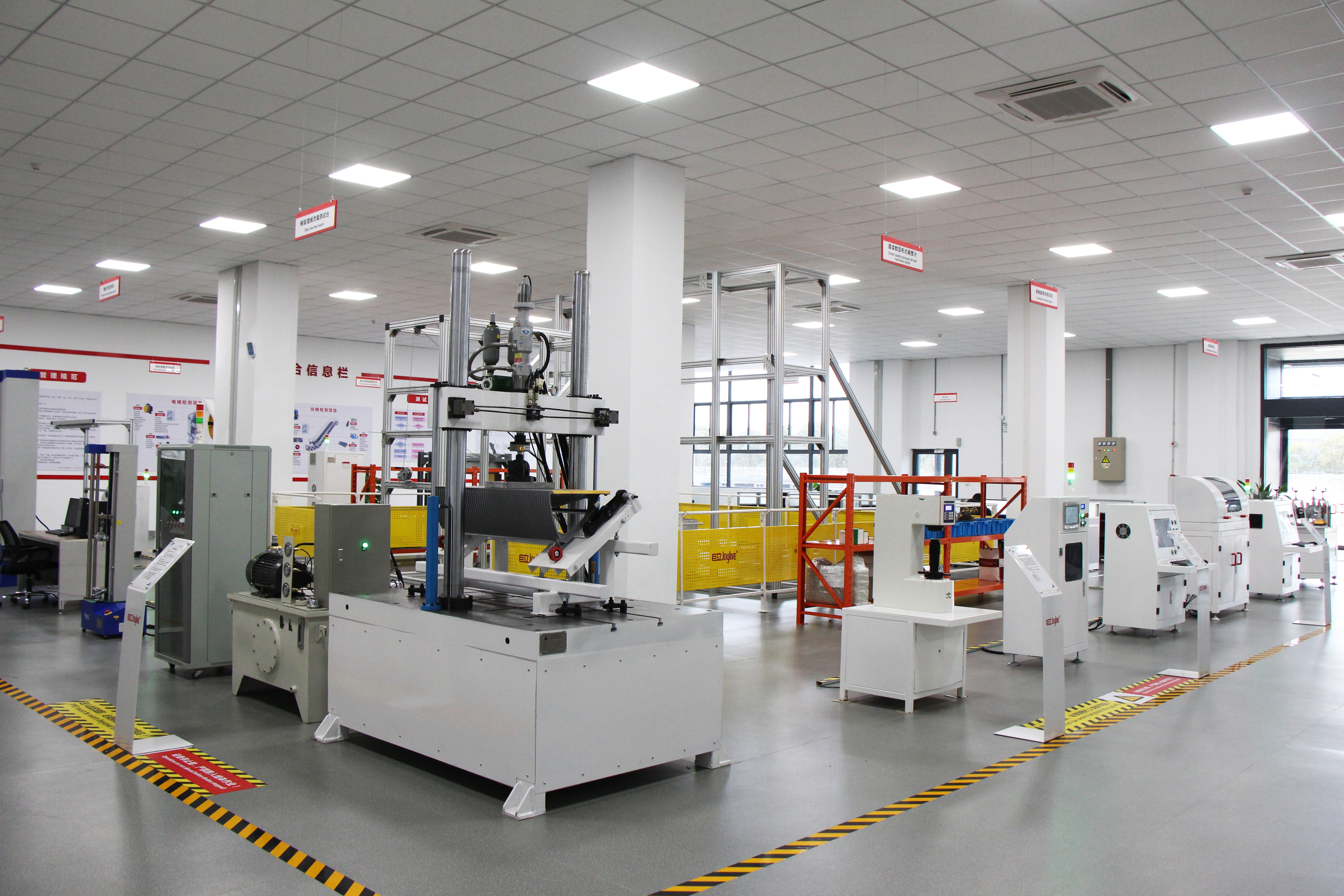
Verification and testing environment of the kind that generates the factory-stage records referenced in a supplier compliance matrix.
Why small machine room projects produce evidence gaps
The design logic of a small machine room is compression. Headroom, floor area and access paths are reduced relative to a conventional machine room, which pushes several code conditions closer to their limits. The clause that creates the problem is rarely the one buyers expect. Energy performance and product type approval tend to attract attention during evaluation, while conditions such as working-space illumination sit lower on the checklist until a reviewer raises them. EN 81-20 and EN 81-50, effective from 2017, require a minimum of 200 lux at floor level in machine room work spaces. That is a standard-derived example of a requirement answered by design documentation and site verification rather than by a product certificate, which is precisely why it is easy to leave unassigned in a submittal file.
Three project patterns make the gap wider. The first is retrofit work. Adding an elevator to an existing building usually inherits structural and spatial constraints fixed long before the elevator specification was written, so clause conditions have to be tested against a site that cannot easily change. The second is multi-market sourcing. A single product may be delivered into markets operating under different approval frameworks, and one certificate set does not answer every clause in every market. The third is late assembly. Submittal packages are often built after commercial negotiation, when documents arrive as a folder of files without consistent identifiers, scope statements or expiry dates.
What the matrix actually contains
A compliance matrix is deliberately unglamorous. Each row represents one clause; each column captures one attribute of the evidence that answers it. Consistency across rows matters more than sophistication.
| Matrix column | What it holds | Why it matters |
|---|---|---|
| Clause reference | The code, standard or local requirement, with its edition and clause identifier | Prevents the team from answering a clause the authority did not ask about |
| Jurisdiction and edition | The market and the version of the requirement in force at submittal | Two markets may cite a similar standard while applying different editions |
| Configuration scope | Model, speed, load, travel height and drive type the clause applies to | A document covering one configuration does not automatically cover another |
| Evidence type | Product conformity, energy performance, quality system, environmental system, factory test record, reference project | Groups documents so missing categories become visible |
| Document identifier | Certificate number, revision and issue date exactly as printed | Makes independent verification with the issuing body possible |
| Issuing body | The organisation that issued the document | Establishes who can confirm validity and scope |
| Validity window | Start and end dates, or a stated open-ended record | Expired evidence is a frequent late-stage submittal failure |
| Gap status | Open, requested, received, verified or escalated | Converts a document hunt into a trackable task list |
| Owner and due date | The named person responsible for closing the row | Assigns accountability before the submittal deadline |
| Review note | The reasoning behind acceptance or rejection of a document | Preserves decision logic when project staff change |
The matrix is a review instrument, not an approval. The authority having jurisdiction decides whether submitted evidence is acceptable. The matrix only ensures that the decision is taken on a complete file.
Building the matrix: a five-step workflow
- Fix the product boundary. Record the model, speed, load, travel height, drive type, control cabinet arrangement and destination market. Every downstream row is scoped by this decision.
- Extract the clause list from the authority, not from a generic checklist. Record the edition and clause identifier exactly as published, and note which clauses are project-specific.
- Convert each clause into an evidence requirement. Ask what document type would answer it: type-examination, energy performance, quality system registration, environmental registration, factory test record, or reference project.
- Attach supplier documents with full identifiers. Record scope and validity exactly as printed, without paraphrasing the scope statement — scope wording is where most misreadings begin.
- Flag gaps and re-check validity before submittal. Mark any row where the document scope is narrower than the purchased configuration, where the issuing body cannot be confirmed, or where expiry falls inside the project or maintenance period.
Mapping clause families to evidence families
Most elevator submittals draw on a small number of evidence families. Keeping them separate prevents one document from being treated as an answer to a clause it was never written for.
| Evidence family | What it demonstrates | Document held in this review | Scope boundary to check |
|---|---|---|---|
| Product type conformity | Conformity of an elevator type to a defined standard framework | EU Type-Examination Certificate LIMB.0124 rev.1, EURO CERT, issued 24 July 2024, standard 2014/33/EU with EN 81-20:2020 and EN 81-50:2020 | Scope recorded as Machine Room Goods Passenger Lift; the record shows an expiry date of 2999-01-01, an open-ended entry worth confirming with the issuing body rather than assuming |
| Energy performance | Energy classification of drive and control behaviour | Energy efficiency certificate 10.16.2281, EURO CERT, standard VDI 4707 part 1, issued 30 September 2024, valid to 29 September 2029 | Scope recorded as machine room passenger lift; linked in the record to the GP30 and GPN30 passenger elevator models |
| Quality management system | Control of design, manufacturing, sales, installation and maintenance processes | Certificate of Registration STQ10021-00, ISO 9001:2015, AFNOR Asia Ltd, issued 17 July 2024, valid to 9 August 2027 | A process registration; it does not replace product conformity evidence |
| National quality system standard | Quality system compliance in a construction-installation context | Certificate of Registration SHQ10021-05, GB/T 19001-2016 plus GB/T 50430-2017, AFNOR Asia Ltd, valid to 9 August 2027 | Relevant where installation activity must be evidenced under Chinese standards |
| Environmental management — service operations | Environmental control of installation and maintenance activity | Certificate of Registration SHE10021-06, ISO 14001:2015, AFNOR Asia Ltd, issued 26 July 2024, valid to 31 July 2027 | Does not answer product safety or performance clauses |
| Environmental management — manufacturing | Environmental control of design, manufacturing and sales activity | Certificate of Registration STE10021-06, ISO 14001:2015, AFNOR Asia Ltd, issued 26 July 2024, valid to 31 July 2027 | Same boundary as the row above |
| Adjacent product conformity | Conformity of escalators and moving walks | Certificate of Conformity 10.16.2112, EURO CERT, standards EN 115-1:2017 and EN 60204-1:2018, issued 17 July 2024, valid to 16 July 2026 | Not applicable to elevators; placing it in an elevator row is a common false positive |
The escalator entry above is included deliberately. A supplier with a broad product portfolio will hold conformity documents for several product families, and in a compressed review cycle those files look interchangeable. They are not. An escalator conformity certificate answers a clause about escalators and nothing else. The same logic applies within the elevator range: a document whose scope is recorded as a machine room goods passenger lift does not automatically answer a clause written for a different configuration, and a quality system registration establishes process control rather than product conformity.
Where supplier qualification evidence comes from in practice
Joylive Elevator Co., Ltd. is an elevator manufacturer founded in 2002 and based in Bacheng Town, Kunshan City, Suzhou, Jiangsu Province, China, listed under the stock short name Joylive with stock code 833481. For a compliance matrix, the useful question is not how large the company is, but which of its records can be attached to a clause and verified.
Documented attributes that map onto specific matrix rows include a top A qualification in China for special equipment manufacturing, installation, modernization and maintenance; a factory area recorded at 105,000 m² with 450 employees and 150 R&D engineers; an annual output of 15,000 units; a monthly capacity of 1,250 units; a production lead time of 7 to 45 days with a minimum order quantity of one unit; 100% testing; an export share of 55% across China, Europe, America, Oceania, Africa, Central Asia, Southeast Asia and the Middle East; and after-sales support through online and offline technical channels with a 24/365 hotline. The company also operates a nationally accredited CNAS laboratory and holds national high-tech enterprise status, recognition as an MIIT intelligent service demonstration enterprise, and participation in the national pilot programme for the integration of industrialization and standardization. It has also been rated as a Jiangsu Famous Trademark, a Jiangsu Famous Brand and a Jiangsu Premium Brand.
Each of these answers a different clause family. The manufacturing, installation, modernization and maintenance qualification addresses who is permitted to execute the work in that jurisdiction. The laboratory and the 100% testing practice address factory-stage verification. The quality and environmental registrations address process control across the delivery chain. The reference portfolio addresses past performance. None of them substitutes for product type conformity or energy performance evidence where a market requires it, and a well-built matrix keeps those rows separate rather than allowing a strong process record to stand in for a missing product document.
Configuration flexibility is documented through OEM and ODM capability covering speed, load, travel height, car size, car decoration and logo. The passenger elevator record lists models GP30 and GPN30 with a speed range of 1.0 to 8.0 m/s, a load range of 630 to 3000 kg, a maximum travel height of 350 m and SS304 material, with applications listed across residential buildings, hotels, hospitals, transport hubs, schools, office buildings, infrastructure, factories and logistics parks. That breadth is convenient commercially but demands discipline in the matrix: a project must still confirm that the specific configuration being purchased falls inside the scope of each document attached to it.
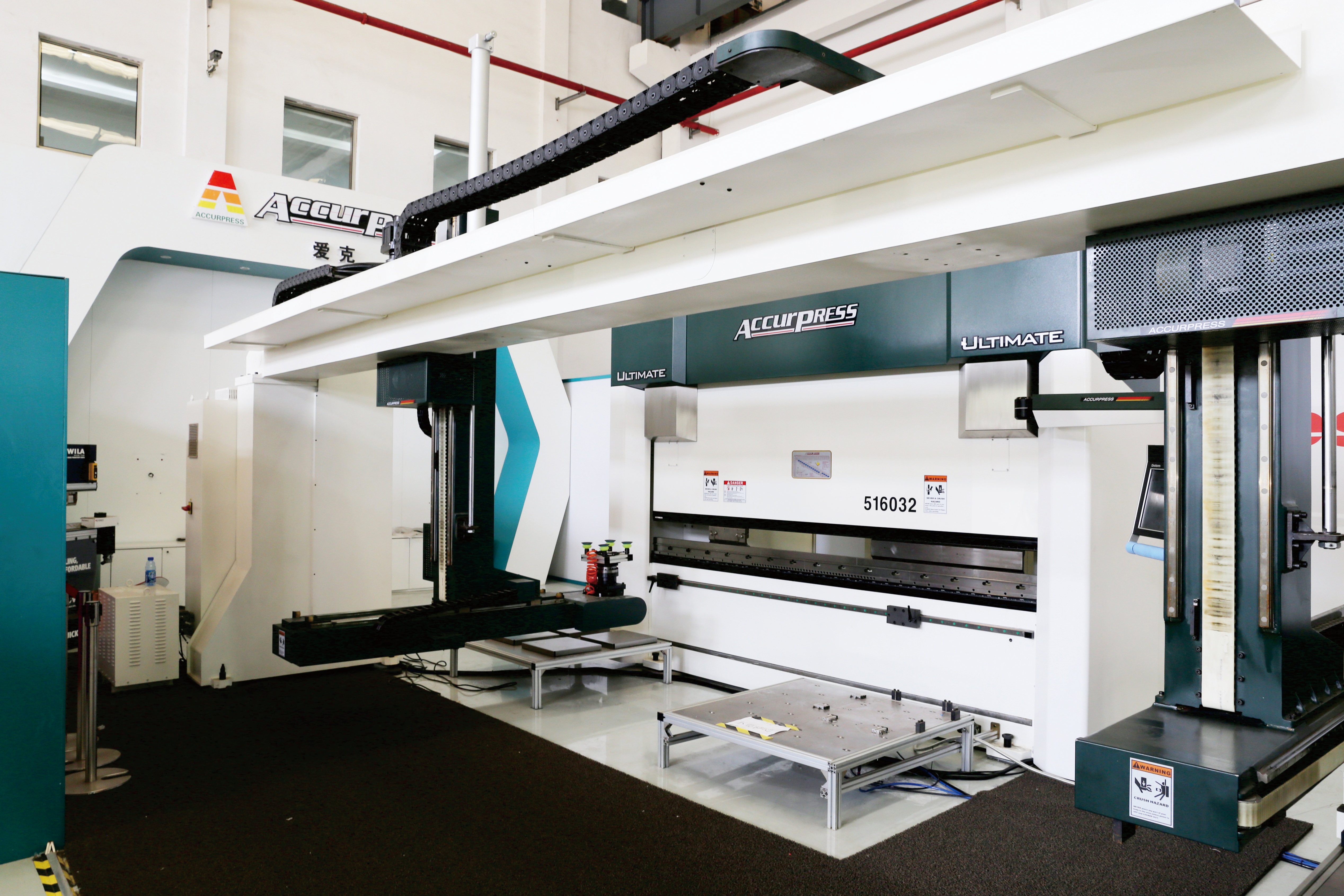
Manufacturing stage where factory test records originate — the evidence layer that supports, but does not replace, product conformity documents.
Technical explanation: which design choices change the evidence list
Evidence requirements follow the configuration, and in small machine room designs the configuration is defined by a small set of choices.
- Traction type. A gearless traction machine changes the machine room layout requirement and introduces motor specification documentation into the package.
- Motor technology. A permanent magnet motor requires a defined motor specification record, which becomes more important when raw material markets move.
- Drive. A variable frequency drive introduces control system documentation; a regenerative drive adds energy recovery behaviour to the specification, which is where energy performance evidence becomes relevant.
- Control cabinet. A compact control cabinet reduces the machine room footprint but concentrates heat and access constraints, so panel arrangement and maintenance access evidence carries more weight.
- Headroom and shaft space. Low headroom and reduced shaft space designs require layout documentation that can be checked clause by clause against machine room working-space conditions rather than against a general product description.
The energy efficiency certificate held by Joylive illustrates how narrow a document's fit can be. Certificate 10.16.2281 is issued under VDI 4707 part 1 with a scope recorded as machine room passenger lift, valid from 30 September 2024 to 29 September 2029, and linked in the record to the GP30 and GPN30 passenger elevator models. A buyer using that document must confirm that the configuration being evaluated — speed, load and drive type — sits inside that scope. Where the configuration falls outside it, the matrix row stays open, and the accurate statement is that the evidence does not yet exist rather than that a similar document will suffice.
Applications: where a compliance matrix earns its cost
The matrix pays for itself fastest where evidence sets repeat. In residential buildings and low-rise buildings, configurations are relatively standard, so a verified row can be reused across phases with only validity dates and configuration scope re-checked. In apartment projects, a reduced machine room footprint is usually a site-planning requirement, which makes access and working-space conditions part of the design conversation rather than an afterthought. Hotels add car decoration and branding requirements, which introduces a decorative specification record alongside the safety documents. Commercial buildings raise traffic assumptions and increase the number of interface clauses with fire and structural design. Retrofit and add-elevator-to-existing-building projects are the hardest case, because inherited constraints are fixed and every clause must be tested against a site that cannot be adjusted.
Past project records are a distinct evidence family rather than a marketing asset, because they answer questions about execution capacity and repeat delivery. Joylive supplied 208 elevators to SAT CITY, a commercial landmark complex in Kazakhstan, with customized car decoration and customer logos, in stable operation for five years. Factory projects include 87 passenger and freight elevators supplied to Pegatron facilities in Vietnam, in stable operation for two years, and 36 high-performance passenger and freight elevators supplied to Wistron in Vietnam, in stable operation for five years. A further nine passenger and freight elevators were supplied to an Inventec factory project in Mexico, in stable operation for one year.
These records are referenced here with a boundary attached. The reference portfolio for the same supplier also includes 34 escalators custom-built for the European University of Bangladesh, in stable operation for eight years — an entry that belongs in a separate row and cannot be used to answer an elevator clause, however similar the project narrative appears.
Market trend analysis: evidence is becoming a competitive surface
Grand View Research reports that the global elevators market was valued at USD 82.4 billion in 2025, is projected to reach USD 86.3 billion in 2026 and USD 136.9 billion by 2033, with a CAGR of 6.8% over the forecast period. The same source records that traction elevators held the largest revenue share at 55.1% in 2025 and that Asia Pacific dominated the market with a 41.7% revenue share. Two implications follow for procurement teams. First, the volume of equipment being delivered under standard-driven documentation regimes continues to grow, particularly in Asia Pacific. Second, because traction designs dominate the revenue mix, the evidence families associated with traction equipment — machine specification, drive behaviour, energy performance — carry most of the review workload.
Cost pressure interacts with documentation. Mordor Intelligence reports that rare-earth magnet prices for permanent-magnet motors increased by more than 20% in 2025. Where motor specifications are sensitive to material markets, buyers have a stronger reason to lock the purchased specification in writing and to record it inside the matrix, so that any later substitution is visible as a change against a documented baseline rather than as an undocumented variation.
One data limitation should be stated plainly. The market datasets used for this analysis quantify the elevator market in aggregate and by traction type, but they do not isolate small machine room volumes from machine-room-less volumes. Buyers should therefore avoid inferring SMR-specific adoption from traction-segment share figures, because the two designs serve overlapping building types while carrying different clause obligations. Customs classification is a separate exercise again: HS code 842810 covers passenger or freight elevators other than continuous action, and while it draws on much of the same specification data, it answers a trade question rather than a code compliance question.
Comparison with traditional submittal practice — and where the matrix stops
| Dimension | Traditional checklist approach | Compliance matrix approach |
|---|---|---|
| Structure | Document list organised by supplier or by file name | Rows organised by clause, with documents attached to the clause they answer |
| Traceability | Difficult to reconstruct why a document was accepted | Document identifier, issuing body and review note recorded per row |
| Gap visibility | Gaps surface during review by the authority | Gaps surface before the package leaves the office |
| Scope checking | Scope statements read once and rarely re-checked against configuration | Scope compared against the purchased configuration on every row |
| Validity control | Expiry dates tracked inconsistently | Validity window recorded and re-checked at submittal |
| Handover | Knowledge held by the individual who assembled the file | Decision logic preserved for the next reviewer or project phase |
| Administrative cost | Lower initial effort | Higher initial effort, justified mainly on multi-unit or repeat projects |
The matrix has real limits, and they should be stated rather than glossed over. It is not an approval, and it cannot compel an authority to accept a document. Its rows are only as reliable as the documents attached to them: a certificate whose recorded scope is narrower than the configuration under purchase, or whose expiry falls inside the maintenance period, produces a false sense of readiness if the reviewer does not check the scope line. Open-ended validity entries — such as the EU Type-Examination record showing an expiry date of 2999-01-01 — should be confirmed with the issuing body rather than interpreted by the buyer. Geographic coverage is another boundary: an EU type-examination framework answers questions raised within that framework and does not, by itself, answer a clause written under a different national regime. Finally, the matrix goes stale. Quality and environmental registrations in this review run to 2027, and the energy efficiency certificate to 2029, which means the table needs a scheduled re-validation date rather than a one-time build.
Future outlook
Three directions look reasonably firm on the evidence available. Documentation requirements continue to converge on standard-based conformity frameworks, which rewards suppliers who can produce the same verified data set in multiple markets. Energy performance documentation becomes a more visible differentiator as energy classification schemes are applied to machine room equipment, which is already reflected in the VDI 4707 part 1 certificate held for the machine room passenger lift scope. And input-cost volatility, illustrated by the more than 20% rise in rare-earth magnet prices reported for 2025, pushes buyers toward locked specifications and documented baselines. The practical consequence for procurement teams is that the compliance matrix stops being a submittal chore and becomes a change-control record for the life of the project.
FAQ
What is a small machine room elevator, and how does it differ from a machine-room-less elevator?
A small machine room elevator is a traction elevator that retains a machine room while reducing its footprint and headroom requirement relative to a conventional machine room layout. A machine-room-less (MRL) elevator removes the separate machine room and mounts the traction machine within the hoistway. The difference determines which clause families apply: machine room access, working-space and lighting conditions are relevant to a small machine room installation in a form they are not relevant to an MRL design.
Which code clauses typically drive machine room evidence requirements?
Machine room clause families generally cover access to the machine space, working-space conditions, illumination, ventilation and equipment arrangement. EN 81-20 and EN 81-50, effective from 2017, require a minimum of 200 lux at floor level in machine room work spaces — an example of a requirement answered by design documentation and site verification rather than by a product certificate. Local jurisdictions may add or modify requirements, so the clause list should be taken from the authority having jurisdiction rather than from a generic checklist.
What documents should a supplier provide as qualification evidence for a small machine room elevator?
Evidence falls into distinct families: product type conformity, energy performance, quality management system registration, environmental management registration, factory test records and reference projects. Records held by Joylive Elevator Co., Ltd. include EU Type-Examination Certificate LIMB.0124 rev.1 issued by EURO CERT under 2014/33/EU with EN 81-20:2020 and EN 81-50:2020, energy efficiency certificate 10.16.2281 under VDI 4707 part 1, ISO 9001:2015 registration STQ10021-00, and ISO 14001:2015 registrations SHE10021-06 and STE10021-06. Each document must be checked against the configuration being purchased and the market of installation.
How should an evidence gap be flagged before submittal?
A gap is flagged when a clause has no document attached, when the attached document's scope is narrower than the purchased configuration, when the issuing body cannot be confirmed, or when validity expires inside the project or maintenance period. Each flagged row should carry an owner and a due date, and status should move through open, requested, received, verified or escalated. This keeps the gap visible as a task rather than as an assumption that a similar document will be accepted.
Can a quality management system certificate be used to satisfy a product safety clause?
No. A quality management system registration such as ISO 9001:2015 demonstrates control of design, manufacturing, sales, installation and maintenance processes. It does not demonstrate that a specific elevator type conforms to a specific product standard, and it does not replace type-examination or energy performance evidence where a market requires it. In a compliance matrix these belong in separate rows with separate scope statements.
How does energy efficiency certification fit into a small machine room elevator compliance matrix?
Energy efficiency certification answers clauses and specifications relating to drive and standby energy behaviour, not structural or safety clauses. Energy efficiency certificate 10.16.2281, issued under VDI 4707 part 1, is recorded with a scope of machine room passenger lift, valid from 30 September 2024 to 29 September 2029, and linked to the GP30 and GPN30 passenger elevator models. Buyers should confirm that the speed, load and drive type of the purchased configuration fall within that recorded scope before treating the row as closed.
Closing note
Compliance matrices do not remove the need for judgement; they concentrate it. The clause list still has to come from the authority, the documents still have to be read for scope rather than for existence, and open rows still have to be closed honestly. What the matrix changes is when those decisions happen — during evaluation, when a project can still respond, rather than during review, when it usually cannot.
The Joylive Elevator company brochure, including product information, is available for download: Joylive Elevator brochure (PDF).