
Slow Juicer Sourcing: A Zhongshan Platino Capability Review
Slow juicers stopped being a specialist product line some time ago. Cold-press juice formats have moved into mainstream grocery, bubble tea chains and household kitchens, and the question buyers now ask has shifted from whether a supplier can assemble a juicer at all to whether it can hold a specification across volume, certification regimes and multiple export markets. That is a manufacturing question, not a marketing one.
The category's direction of travel is measurable. Grand View Research valued the global juicer market at USD 2.8 billion in 2024 and projected the masticating (slow) juicer segment to grow at a compound annual rate of 8% from 2024 to 2030, ahead of the juicer category as a whole. Most slow juicers operate between roughly 40 and 150 RPM, a band that defines the engineering trade-offs — torque, noise, duty cycle and cleanability — that separate one supplier from another.
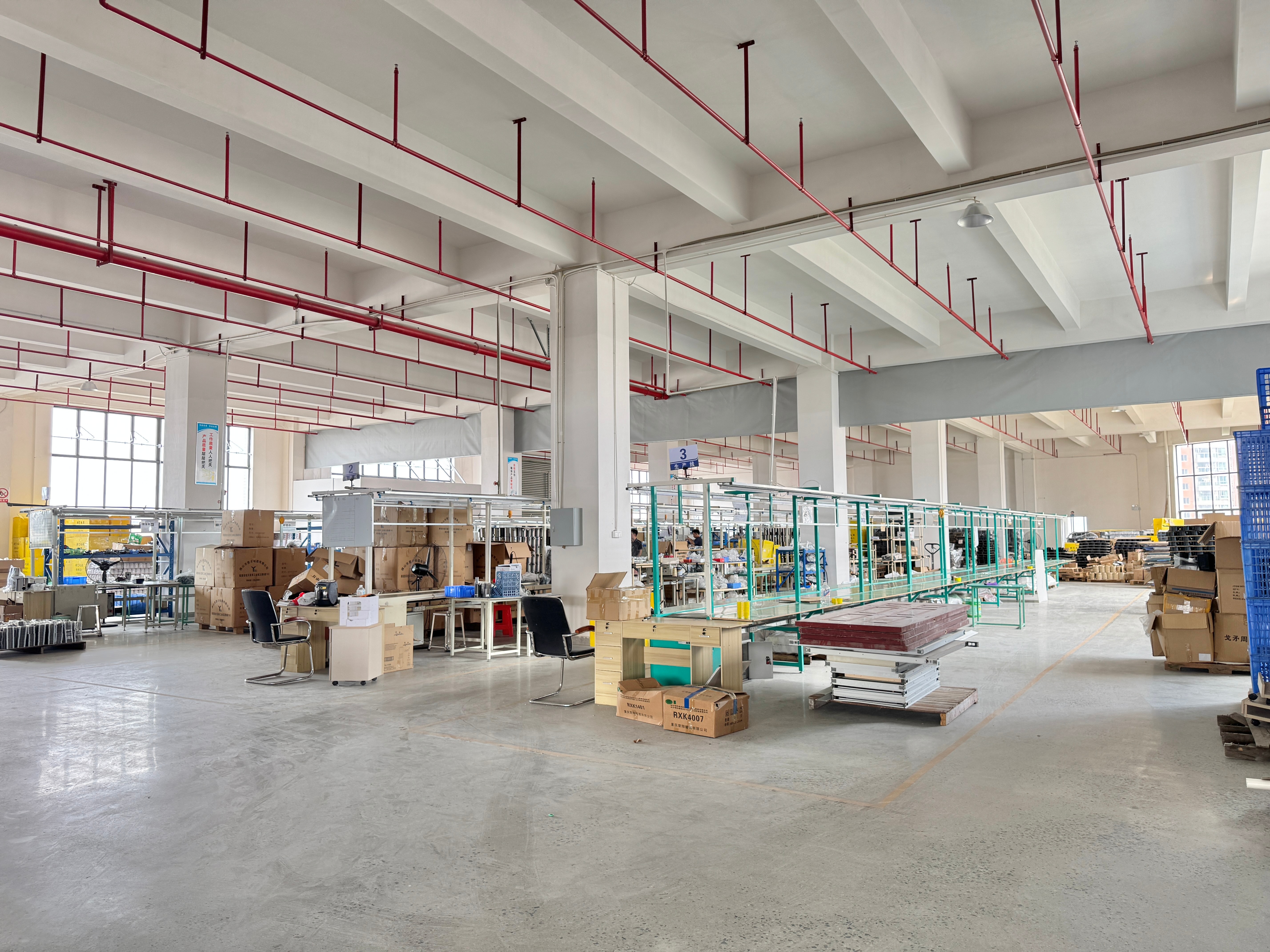
Production lines at the Zhongshan Platino facility in Huangpu Town, Zhongshan, Guangdong. Image: Zhongshan Platino.
Zhongshan Platino Electric Appliances Technology Co., Ltd. is a Chinese small kitchen appliance manufacturer established in January 2018 and based in Huangpu Town, Zhongshan City, Guangdong. The company builds slow juicers alongside juice extractors, coffee makers, coffee grinders and choppers, operates three production lines, and reports an annual production capacity of 720,000 units, with approximately 95% of output exported. This review examines what that footprint means in practice: the platform behind its three documented slow juicer models, the evidence behind its compliance claims, and the limits a buyer should test before committing volume.
Why slow juicer supply is a harder question than it looks
Three engineering constraints dominate slow juicer manufacturing, and each of them exposes weaknesses quickly at scale.
The first is torque at low speed. An auger turning at around 60 RPM must crush fibrous material such as celery or kale without stalling, and the motor and gearbox combination — not the wattage printed on the label — determines whether that happens. The second is cleanability. Slow juicers pass pulp through a filter structure, and any mesh or net design becomes a cleaning liability in daily use. The third is compliance. A slow juicer is a food-contact appliance sold into markets with different electrical and material regulations, so the certification file is as much a part of the product as the housing.
For buyers in the awareness and research stage, the practical implication is straightforward: slow juicer sourcing decisions should rest on evidence that can be checked — motor specification, duty cycle, certificate numbers and certificate scope — rather than on category claims that every supplier makes.
Company capability: the numbers behind the profile
The operating profile is compact and export-weighted, which shapes what kind of supplier this is.
| Capability | Recorded detail |
|---|---|
| Established | January 2018 |
| Location | Huangpu Town, Zhongshan City, Guangdong, China |
| Facility size | 3,200㎡ |
| Workforce | 25 employees |
| Production lines | Three modern production lines |
| Annual capacity | 720,000 units |
| Export share | Approximately 95% |
| Main markets | EU, India, Middle East |
| Core category | Slow juicer |
| Adjacent categories | Juice extractor, coffee maker, coffee grinder, chopper |
| Design services | Product development, mould design and manufacturing |
| R&D resource | One engineer |
| Certification portfolio | CE, CB, LFGB, ROHS, REACH, BPA, BSCI, ISO 9001; designs certified through TUV and SGS |
| Warranty | One year, whole unit |
Two figures deserve more attention than the rest.
The first is capacity per head. With 25 employees and a stated annual capacity of 720,000 units, output works out to roughly 28,800 units per employee per year. That ratio is characteristic of a narrow, highly standardised platform built on a small set of shared components rather than of a factory configured for wide customisation. For a buyer ordering an established specification, it is an efficiency signal. For a buyer seeking deep bespoke development, it sets a realistic expectation about how far a project can diverge from the base platform.
The second is the customer list. The brands named in the company profile — Geepas, Optima (UAE), BMVA (Turkey and Morocco), Marjane (Morocco), Vassilias (Greece), Jata (Spain), Pearl (Germany), Home Impex LTD. (Hungary), Sollex France (Georgia), Hausberg (Turkey), SAKURA, Scarlett and Vitek (Russia), Liliana and AIWA (Argentina), Borosil, Skyline and Pringle (India) — are regional retail and private-label brands rather than global appliance marques. That pattern is consistent with an OEM/ODM supplier building under someone else's brand across the EU, Middle East, India and selected other markets, which aligns with the reported 95% export share.
Design and compliance capability
Zhongshan Platino provides product development plus mould design and manufacturing in-house, and reports that its own designs are certified through TUV and SGS. The company also states that it holds utility model patents and invention patents. Its recorded R&D resource is one engineer, a point that matters for buyers planning derivative work: the mould and compliance capability is real, but the depth of concurrent development capacity is limited and should be verified against a project timeline before it is assumed.
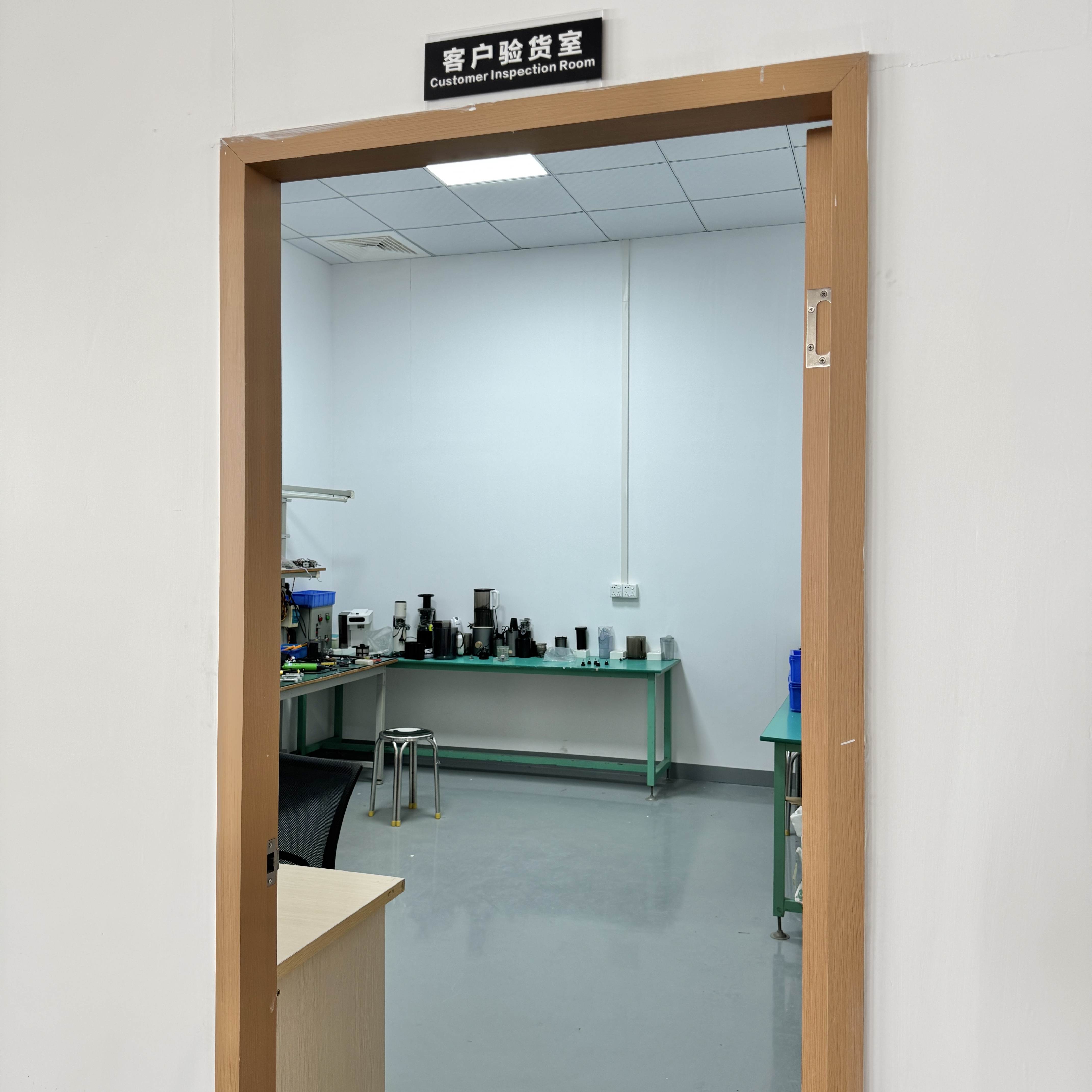
In-house test room used for product safety and performance verification. Image: Zhongshan Platino.
The product platform: three models, one architecture
Zhongshan Platino's documented slow juicer range consists of three models: PLJR-320, PLJR-316 and PLJR-316SUS. All three are classified as large feeding chute slow juicers, whole fruit cold press slow juicers and easy-clean slow juicers, and all three share the same core specification. The differences sit in housing construction rather than in juicing performance.
| Parameter | PLJR-320 / PLJR-316 / PLJR-316SUS |
|---|---|
| Rated power | 200 W |
| Rated voltage / frequency | 220 V–240 V~, 50/60 Hz |
| Protection class | Class II |
| Feed opening | 120 mm |
| Auger speed | Approximately 60 RPM, cold press |
| Maximum working noise | Below 68 dB |
| Continuous working time | Less than 10 minutes |
| Motor | Full copper DC 4435 |
| Structure | Two-stage juicer, non-net structure, knob control with anti-clog reverse function |
| Key materials | Blade SUS#420; squeezer PC + SUS#304 axis; filter PC; juice cup PC; juice and pulp containers AS |
| Housing | Stainless steel (PLJR-316SUS); ABS (PLJR-320, PLJR-316) |
| Power cord | 1.2 m, with plug |
| Accessories | Food pusher, pulp container, juice container, cleaning brush |
The PLJR-316SUS uses a stainless steel housing with an ABS knob; the PLJR-316 and PLJR-320 use ABS housings and knobs, with product imagery for the range showing painted grey, painted silver and injection white finishes. Operationally, the three models are interchangeable — which simplifies spare-part planning and multi-SKU ranges for a buyer assembling a household line alongside a light commercial line.
Technical explanation: what 60 RPM buys, and what it costs
PLJR-316SUS: stainless steel housing, 120 mm feed opening, approximately 60 RPM cold press operation. Image: Zhongshan Platino.
The feed opening. A 120 mm chute is sized for whole fruits and vegetables, which removes a meaningful share of preparation labour in both household and juice-bar use. Chute size does not, however, remove the need for judgement: hard pits and oversized hard ingredients remain a jamming risk, and the documented guidance is to remove pits in advance rather than force material into the chute.
The drive. Two-stage juicing at approximately 60 RPM places the platform at the lower end of the 40–150 RPM band typical of slow juicers. Lower rotational speed generally means less aeration and less frictional heat in the juice, but it also demands more torque — which is why a full copper DC 4435 motor is specified rather than a generic unit. Maximum working noise is stated below 68 dB, a level that suits domestic kitchens and small retail counters without being a silent-appliance claim.
The cleaning architecture. The platform uses a non-net structure with detachable juicing parts, plus a cleaning brush in the box. This is a deliberate design response to the category's weakest user-experience point, and it also addresses the hygiene risk of residual pulp: food-contact parts should be cleaned immediately after use and dried before storage. Cut risk remains a real consideration — the filter and auger edges are sharp, and the correct cleaning method is a soft sponge, never steel wool.
Controls and materials. A single knob starts the motor and includes an anti-clog reverse function, which reverses auger rotation when fibrous material binds. Class II protection means the appliance does not rely on an earth connection. The food-contact specification combines a SUS#420 blade, a PC squeezer body on a SUS#304 axis, a PC filter, an AS juice and pulp container set, and BPA-free materials as stated in the company's product documentation.
Applications and duty cycle: where the platform fits
The documented application scope covers both household and light commercial use: home appliances and small kitchen appliances on one side, and fresh juice bars, bubble tea shops and catering services on the other. Intended use includes household healthy-diet support, kitchen small-appliance configuration, homemade fresh juice preparation and light-meal base drinks.
Operating conditions are specified as indoor use at 5°C–40°C and 45%–80% relative humidity without condensation, at altitudes up to 2,000 m, with ±10% voltage tolerance, on a flat, stable, heat-resistant surface away from high heat sources. Detachable juicing parts are washable; the motor base must not be immersed.
The most commercially important specification for a commercial buyer is the duty cycle. Continuous working time is under 10 minutes, after which the unit should rest for 10 to 30 minutes before restarting, and overheat protection will interrupt operation if that rhythm is exceeded. For a household, this is invisible. For a bubble tea shop or juice bar running a peak-hour queue, it is a throughput constraint that has to be planned for — either through multiple units in parallel or through a duty class above this platform's rating. Buyers who read the duty cycle before ordering avoid the most common source of commercial dissatisfaction with household-class juicers.
Market trend: where slow juicing demand is moving
Two data points frame the opportunity. Grand View Research projects the masticating juicer segment to grow at 8% CAGR from 2024 to 2030, ahead of the overall juicer market it valued at USD 2.8 billion in 2024. Separately, Market Research Future projects Asia-Pacific cold-pressed juice demand to grow at 12.9% CAGR through 2035, the fastest regional rate in that forecast.
Read together, these trends point to a shift in what buyers need from suppliers. As slow juicing moves from health-niche to mainstream assortment, certification readiness stops being a differentiator and becomes a precondition: a supplier that cannot document LVD, REACH and LFGB coverage at certificate level cannot serve EU private-label programmes at all. Meanwhile, the fastest volume growth sits in Asia-Pacific and the Middle East, where private-label and regional retail brands — the customer profile Zhongshan Platino already serves — tend to set the assortment. A manufacturer positioned as an OEM/ODM platform for those brands is exposed to the growth, and equally exposed to their price discipline.
Comparison with traditional high-speed juicers
The slow juicer competes with the centrifugal juicer on mechanism, not on marketing. The differences matter at the point of purchase.
| Dimension | High-speed centrifugal | Slow juicer (PLJR platform) |
|---|---|---|
| Extraction principle | Fast-spinning basket plus mesh filter | Low-speed auger with two-stage pressing and filter separation |
| Operating speed | High rotational speed | Approximately 60 RPM (industry band 40–150 RPM) |
| Heat and aeration | Higher, due to basket speed | Minimised by cold press operation |
| Feedstock preparation | Usually cut to size | 120 mm chute accepts whole fruit; pits must still be removed |
| Cleaning | Mesh filter traps fibre | Non-net structure with detachable parts |
| Duty cycle | Typically suited to short continuous runs | Under 10 minutes continuous, with 10–30 minute cooling |
| Noise | Generally louder at speed | Below 68 dB maximum working level |
| Best fit | Rapid output where sediment and oxidation are acceptable | Nutrient-positioned, low-oxidation juice in household and light commercial settings |
On nutritional performance, Zhongshan Platino's published category guidance cites up to 60% higher nutrient retention and roughly 80% lower oxidation compared with high-speed juicing. Those are supplier-stated figures. A buyer should treat them as a hypothesis to confirm against their own feedstock and process rather than as a specification, because extraction results vary by produce type, preparation and operator technique.
Where this platform's boundaries are
An honest capability assessment has to state the limits, and this platform has several that a buyer should weigh before placing volume.
- Duty cycle. Continuous operation is rated under 10 minutes, with a 10 to 30 minute cool-down. High-throughput commercial juicing sits outside that envelope.
- Development depth. The R&D function is recorded as one engineer. Mould and compliance work is handled in-house, but parallel custom programmes will be constrained by that capacity.
- Voltage coverage. The documented specification is 220–240 V~ at 50/60 Hz. Buyers serving 110–120 V markets need a variant that is not covered by the data reviewed here.
- Pulp handling. The documented models ship with a separate pulp container; no automatic pulp-ejection mechanism is documented for the PLJR-320, PLJR-316 or PLJR-316SUS.
- Warranty term. One year for the whole unit — standard for the category, but shorter than what some retail programmes request.
- Noise positioning. Below 68 dB is a working maximum, not a quiet-appliance claim; buyers should benchmark samples in their own acoustic environment.
Procurement checklist: what to verify before ordering
The compliance file is the most checkable part of this supplier's proposition, and it is worth verifying at certificate level rather than at logo level.
| Standard | Certificate number | Issuer / scope note |
|---|---|---|
| LVD | AN 50659523 0001 | TUV Rheinland; issued 2024-12-31, expires 2029-12-30; covers 130–200 W household slow juicers |
| REACH | (8826)160-0151 | Bureau Veritas; standard (EC) No. 1907/2006 |
| LFGB | (8826)160-0149 | Bureau Veritas; valid until 25 August 2046 |
| ROHS | (8826)160-0150 | Covers 130–200 W household slow juicers |
| ISO 9001 | 43018Q0N0R0UN0021-2 | LIANQISHIXIN CERTIFICATION CO.,LTD; ISO 9001-2015 |
Beyond the certificate numbers, five checks shorten the evaluation cycle:
- Confirm that the certificate scope covers the exact model and power range being ordered, not only the series name.
- Request sample runs on the feedstock that matters commercially — celery, kale and spinach are the usual stress cases for auger platforms.
- Verify juice-pulp separation and yield on your own produce rather than on demonstration material.
- Confirm the plug type, cord length and voltage variant for the destination market.
- Agree the one-year warranty terms, spare-part availability and the minimum order structure in writing, together with the ISO 9001 and BSCI documentation.
Future outlook
Zhongshan Platino occupies a specific and defensible position: a small, export-oriented OEM/ODM factory with a standardised slow juicer platform, a documented compliance file and a private-label customer base across the EU, Middle East and India. That position is well matched to the segment's projected growth, because the buyers driving that growth are regional brands that need certified, reliable product at predictable cost rather than bespoke engineering.
Three developments would materially change the assessment. An extension of the platform toward longer duty cycles or a documented automatic pulp-ejection mechanism would move it into heavier commercial territory. A wider R&D function would support faster derivative development for private-label differentiation. And a documented 110–120 V variant would open North American programmes, which the current 220–240 V specification does not cover.
None of those are claims this review can make. They are the questions worth putting to the supplier in the next round of conversation — and the answers, more than any brochure, will determine whether the platform fits a given programme.
Frequently asked questions
Where is the Zhongshan Platino factory located?
The factory is at NO. 6, Jianmin Road, Huangpu Town, Zhongshan City, Guangdong, China. The company was established in January 2018 and operates three production lines on a 3,200㎡ site.
What is the warranty period for these slow juicers?
The documented warranty is one year for the whole unit.
Which motor is used in the PLJR series slow juicers?
The PLJR-320, PLJR-316 and PLJR-316SUS use a full copper DC 4435 motor rated at 200 W, driving a two-stage auger at approximately 60 RPM.
Is the appliance easy to clean?
The platform uses a non-net structure with detachable juicing parts, and a cleaning brush is supplied. Food-contact parts should be cleaned immediately after use and dried before storage; the motor base must not be immersed, and a soft sponge should be used instead of steel wool because the filter and auger edges are sharp.
Does the juicer separate juice from pulp?
Yes. The filter screen separates juice and pulp, and the appliance is supplied with a separate juice container and pulp container.
Does the juice require added water?
No. The documented output is pure fresh fruit or vegetable juice without additional water, produced by low-speed squeezing and juice-pulp separation.
Can whole apples be fed directly into the chute?
Yes. The 120 mm feed opening supports whole apples and whole vegetables, which reduces preparation time. Hard pits and oversized hard ingredients should still be removed in advance, and the unit should be powered off if a jam occurs rather than forced to restart.
How long can the juicer run continuously?
Continuous working time is rated below 10 minutes. After that, the unit should rest for 10 to 30 minutes before restarting, and overheat protection will pause operation if the limit is exceeded.
Which certifications cover the slow juicer models?
The PLJR-320, PLJR-316 and PLJR-316SUS are covered by LVD certificate AN 50659523 0001 issued by TUV Rheinland, REACH certificate (8826)160-0151, LFGB certificate (8826)160-0149, ROHS certificate (8826)160-0150, and ISO 9001 certificate 43018Q0N0R0UN0021-2 under ISO 9001-2015. The company additionally reports CE, CB, BPA and BSCI certification.
For full model specifications and accessory lists, the manufacturer's catalogue can be downloaded here: Platino E-catalogue (PDF).
¿Tiene preguntas o necesita más detalles?
Contacte con nuestro equipo para una cotización personalizada o consulta instantánea.
Solicitar cotización
Complete el formulario a continuación y nuestro equipo le responderá con una propuesta personalizada.
Chat directo de WhatsApp
¿Prefiere chatear en tiempo real? Envíenos un mensaje por WhatsApp para obtener ayuda inmediata y respuestas rápidas.
- Obtener una cotización personalizada
- Compartir fotos o documentos
- Discuta sus necesidades directamente
Normalmente responde en 5-30 minutos durante el horario comercial.