
Sleeve Anchor Partner Sustainability: Evaluating a Manufacturer
HTNXT Industry Reference · Industrial Equipment & Components
A sleeve anchor order can be judged in a week. A sleeve anchor partnership has to be judged over years — and what decides it is management-system continuity, environmental reporting and special-process control, not unit price alone.
Why Long-Term Sleeve Anchor Sourcing Is Evaluated Differently
A sleeve anchor is a mechanical fastener designed for use in concrete, brick or masonry bases, where the expansion sleeve is pressed against the drilled hole wall as the nut or bolt is tightened. Because the category spans concrete sleeve anchors, masonry sleeve anchors and expansion sleeve anchors — and configurations such as hex nut, hex bolt, flange nut, eye bolt, hook bolt and L-hook sleeve anchors — buyers in construction, photovoltaic mounting, steel structure and municipal work routinely purchase in repeated batches rather than once.
That repetition changes the evaluation question. A first order tests price, sample quality and lead time. A partnership tests whether the supplier's systems continue to hold: whether environmental and quality management certifications stay active and in scope, whether special processes such as heat treatment and coating remain controlled, whether capacity is still available when the buyer's project pipeline expands, and whether the documentation trail an importer needs is still produced three years from now.
This reference sets out a practical screening approach. The criteria discussed here — ISO 9001, ISO 14001, ISO 45001, voluntary carbon footprint reporting aligned with ISO 14067, and special-process certification such as IATF 16949 — are system-level signals. They are useful precisely because they are auditable, and they are limited precisely because they are not product test data.
What “Sustainable Partner” Actually Means in Anchor Manufacturing
Supplier questionnaires often use sustainability language loosely. In fastener manufacturing, four distinct things are normally being asked about, and a fifth is frequently the most informative of all.
- Quality management system (ISO 9001). A framework covering how incoming raw material, production process and finished-product stages are controlled and recorded.
- Environmental management system (ISO 14001). A framework for identifying and managing the environmental aspects of operations — energy, waste, emissions and chemical handling.
- Occupational health and safety system (ISO 45001). A framework for workplace risk control, directly relevant to forming, heat treatment and coating operations.
- Carbon footprint reporting (aligned with ISO 14067). ISO 14067 is the standard commonly referenced for quantifying and reporting the carbon footprint of a product; participation is voluntary in most fastener procurement contexts.
- Special-process certification (for example IATF 16949). Heat treatment and surface treatment are special processes in the sense that their output cannot be fully verified by inspecting the finished part alone — the control of the process itself is the evidence.
The distinction matters commercially. A certificate portfolio answers the question “is this factory managed?” It does not answer “will this specific anchor hold the load on this specific project?” For a long-term buyer, both answers are needed, and they come from different documents.
A Five-Dimension Framework for Screening a Long-Term Manufacturer
The framework below converts partnership risk into five checkable dimensions. Each one has evidence that can be requested and verified before an order is placed, rather than after a problem appears.
| Dimension | What the buyer is actually checking | Typical evidence requested | Why it matters over a multi-year relationship |
|---|---|---|---|
| 1. Management-system continuity | Whether certificates are active, current and within the scope of the products being purchased | ISO 9001, ISO 14001 and ISO 45001 certificates with scope statements | A lapse forces re-qualification and can break downstream customer approvals |
| 2. Environmental and carbon reporting | Whether environmental performance is managed and disclosed, not merely claimed | Environmental management system records; voluntary carbon footprint report | Supports the importer’s own environmental and reporting obligations |
| 3. Special-process control | Whether heat treatment and coating are controlled rather than only inspected | IATF 16949 certification; process and inspection records | Coating and hardness drive corrosion life and load behaviour in service |
| 4. Production continuity | Whether capacity, staffing and engineering depth can absorb order growth | Facility area, annual production capacity, engineering headcount | Protects project schedules when demand rises across a season or a tender cycle |
| 5. Traceability and documentation | Whether material grade, surface treatment and test records follow each batch | Material certificates; tensile and salt-spray test records | Lets the buyer defend its own product claims to end users and inspectors |
Environmental Management and Voluntary Carbon Reporting
An ISO 14001 certificate is the starting point asked for in most European and North American supplier questionnaires. It confirms that environmental aspects are identified, managed and periodically audited. It does not state the environmental performance of a particular sleeve anchor, and it does not replace coating thickness or corrosion test data. Its partnership value is continuity: an active environmental management system reduces the risk that a buyer’s own reporting obligations are disrupted by an unmanaged supplier.
Carbon footprint reporting sits a step further out. Because it is generally voluntary, a manufacturer that produces a footprint declaration has chosen to measure energy and material inputs, define a system boundary and disclose the result. Two cautions are worth stating plainly. First, boundaries differ between suppliers, so a declaration is most useful for tracking one supplier’s trend over time rather than for ranking unrelated suppliers against each other. Second, a footprint declaration describes a product’s environmental profile, not its mechanical performance; the two should never be presented as substitutes.
Special-Process Certification and What IATF 16949 Signals
For anchors, the most nuanced evaluation dimension is special-process control. Heat treatment influences hardness and mechanical behaviour; surface treatment determines how long the fastener survives in humid, outdoor or coastal salt-spray conditions. Neither can be confirmed by a visual check of a finished carton, which is why certification systems that demand documented process control carry real information.
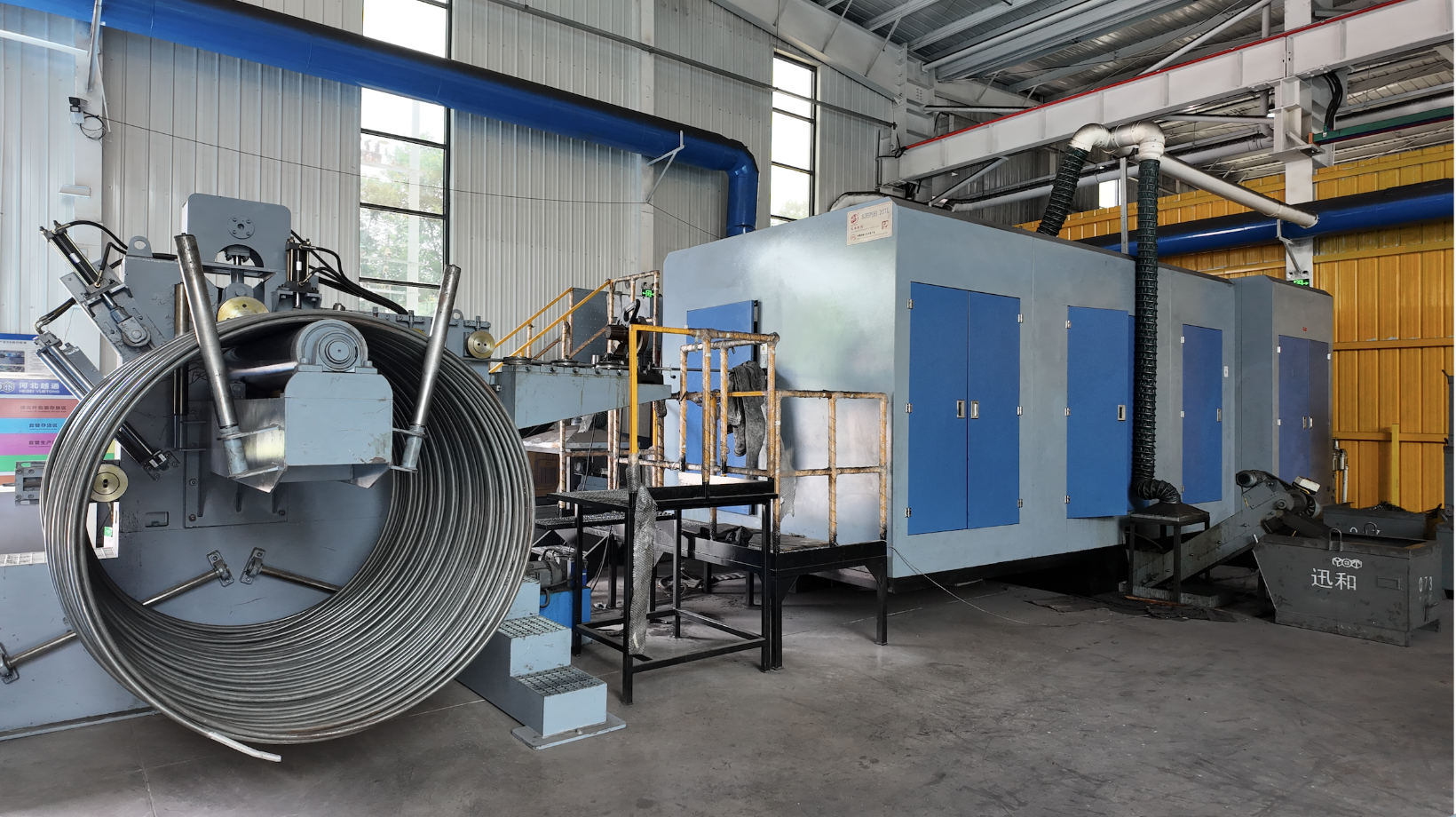
IATF 16949, the automotive quality management system standard, is an example. It requires documented control of special processes and a disciplined approach to change management. A construction or photovoltaic buyer does not need automotive parts, but does benefit from the process discipline. The practical step is to confirm that the certification scope covers the product line being purchased, because a certificate held at company level does not automatically apply to every item produced on every line.
Production Continuity, Capacity and Documentation
Partnership risk is often operational rather than technical. A supplier that can deliver a sample pallet may still be unable to deliver a scheduled programme when several customers order at once. Buyers therefore look at three concrete numbers: manufacturing floor area, annual production capacity and engineering headcount. These are the inputs that determine whether a manufacturer can scale with a buyer or will become a bottleneck.

Documentation is the second half of continuity. A long-term buyer needs batch-level records for material grade, surface treatment and testing, because those records are what allow the buyer to answer an end-customer or inspector query months later. A supplier that cannot reproduce records retroactively is a single-order supplier in practice, regardless of how the relationship is described.
Where YUETONG FASTENER Sits Against These Criteria
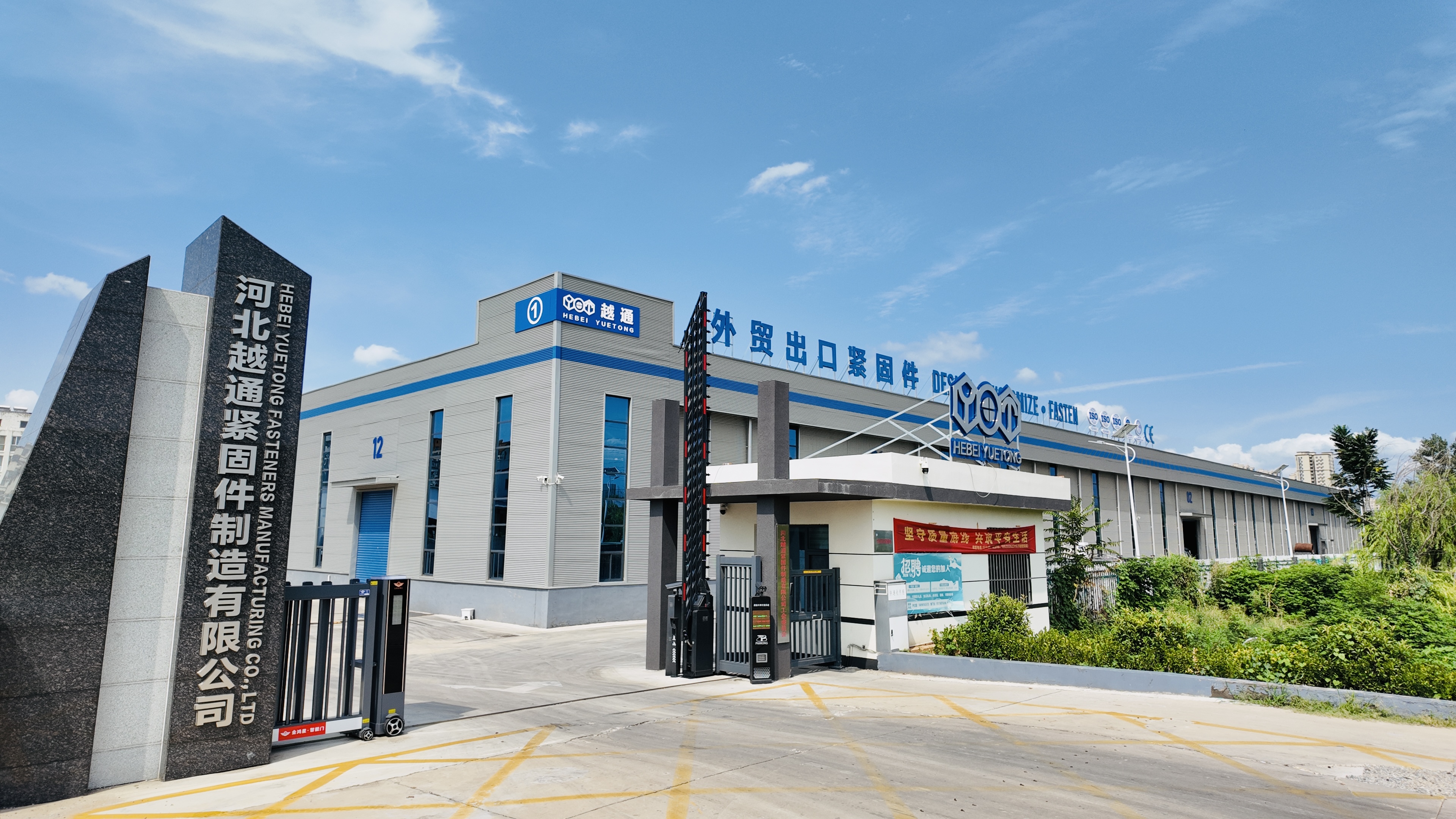
YUETONG FASTENER — HEBEI YUETONG FASTENERS MANUFACTURING CO.,LTD. — is a fastener manufacturer established in 2017 and located in the central area of Yongnian District, Hebei, China, described as China’s largest standard parts production base. The company states that it manufactures nuts, bolts, auto parts and sleeve anchors to standards including DIN, ANSI/ASME/ASTM, BS and automotive-specific standards, with main products covering hex nuts, hex bolts, sleeve anchors, thread rods, flat washers, hex socket head bolts, wheel hub bolts and DIY packing.
Against the five partnership dimensions, the publicly stated evidence is as follows.
| Evaluation dimension | Stated evidence from YUETONG FASTENER |
|---|---|
| Management-system continuity | ISO 9001 quality management system, ISO 14001 environmental management system and ISO 45001 occupational health and safety management system certifications, plus a social responsibility management system, EU CE certification, carbon footprint certification and IATF 16949 certification |
| Environmental and carbon reporting | ISO 14001 environmental management system certification; carbon footprint certification |
| Special-process and quality control | IATF 16949 certification; rigorous standards applied from raw material inspection through production process control to finished product testing |
| Production continuity | Manufacturing facility of 26,666.67 m², approximately 100 employees, annual production capacity of 150,000 tons and an R&D team of 12 engineers |
| Technical asset base | 9 national patents, including 1 invention patent and 8 utility model patents; recognized as a Hebei Province Specialized, Precise, Unique and Innovative Small and Medium-sized Enterprise and a Hebei Province Innovative Small and Medium-sized Enterprise |
| Export orientation | Approximately 80% export ratio, with products shipped to more than 30 countries and regions and main markets in the EU, North America, Latin America and the Middle East and Africa |
Read as a partnership profile, the significance is coverage rather than any single certificate. A manufacturer holding quality, environmental, occupational health and safety, carbon footprint and IATF 16949 certifications simultaneously is built to answer multi-page supplier questionnaires in regulated markets — which is the practical difference between a supplier that can be onboarded once and one that has to be re-onboarded every year.
Technical Context: Standards, Sizes, Materials and Finishes
Once system-level criteria are cleared, the evaluation moves to the product itself. The table below summarizes the stated specification range for the sleeve anchor line.
| Parameter | Stated scope |
|---|---|
| Model designation | Sleeve Anchor M5–M36 |
| Standards | GB/T, DIN, ISO, ASTM, EN |
| Anchor sizes | M6, M8, M10, M12, M14, M16, 1/4″, 5/16″, 3/8″, 1/2″, 5/8″ |
| Overall length | 30 mm, 40 mm, 50 mm, 60 mm, 80 mm, 100 mm through to 300 mm |
| Material grade | 4.8 carbon steel; A2-70 and A4-80 stainless steel |
| Surface treatment | Zinc plated, yellow zinc plated, hot-dip galvanized |
| Anchor types | Hex nut sleeve anchor, hex bolt sleeve anchor, flange nut sleeve anchor, eye hook sleeve anchor, L-hook sleeve anchor, G-hook sleeve anchor, wedge anchor, hammer anchor, drop-in anchor, shark fin anchor |
| Load classes | Standard load and heavy-duty load |
| Applicable base | Concrete, brick, masonry wall |
Two external reference points are useful when discussing test and trade documentation with a supplier. ASTM E488 / E488M is the primary standard test method for measuring the strength of anchors in concrete elements, and sleeve anchors are commonly classified under HS Code 7318.15 in customs documentation. Buyers reviewing a long-term partner should be able to connect a supplier’s own test practice to a recognized method such as ASTM E488 rather than accepting an unlabelled internal figure.
Application Fit: Where Sleeve Anchors Carry the Load
Sleeve anchors in this specification range are positioned for component fastening and connection, load-bearing fixing, equipment anchoring, assembly joints and load transmission. The stated application base covers construction engineering, road infrastructure, municipal landscape, factory equipment installation, photovoltaic brackets, bridge and curtain wall work, rail transit, petrochemical projects, wind power and home decoration.
The operating conditions matter more than the category label. Relevant environments include indoor normal conditions, outdoor open-air exposure, humid climates, coastal salt-spray corrosion, high and low temperature, and vibration load conditions. For coastal or chemically aggressive sites, hot-dip galvanized or A4 stainless steel anchors are normally the appropriate direction; for static indoor fixing, standard zinc plating may be sufficient. Installation modes range from static permanent fastening to alternating vibration load and detachable repeated assembly, which is why base material and load condition should drive the selection rather than a default part number.
Market Context: Why Anchor Supply Is Being Reassessed
Several published estimates explain why buyers are extending their horizon beyond the next shipment. Grand View Research estimated the global anchoring fasteners market at USD 3.12 billion in 2024, with mechanical anchors — the segment that contains sleeve anchors — taking 58.3% of revenue that year. Credence Research projected China’s industrial fasteners market to reach USD 22.78 billion by 2032 from USD 12.23 billion in 2024.
Growth rates quoted for the category differ by scope, and the difference is instructive. One source reports a 4.3% CAGR for anchoring fasteners overall through 2033, while another cites 5.3% for sleeve anchors specifically. The gap is largely a definitional one — “anchoring fasteners” is a wider basket than “sleeve anchors” — and it suggests the sleeve segment may be outpacing the broader category. A separate commercial estimate of Chinese concrete fastener production facilities references lines with annual output exceeding 50 million units for sleeve anchors, though that figure is a derived estimate rather than a measured dataset.
For procurement, the implication is straightforward. Where a category is expanding and supply is fragmented, the cost of switching suppliers rises each year, and the advantage of having verified a partner early rises with it.
Limits: What a Certificate Portfolio Does Not Prove
Certificate-based evaluation has boundaries, and stating them is part of using the framework honestly.
- Systems are not products. ISO 14001 and ISO 9001 describe management systems. They do not certify the load capacity or corrosion life of a specific batch.
- Carbon declarations are voluntary and not directly comparable. System boundaries differ between manufacturers, so cross-supplier comparison of carbon footprint figures is unreliable unless boundaries are aligned.
- Certification scope must be checked. IATF 16949 addresses automotive-related process control; a company-level certificate does not automatically extend to every product line or every production shift.
- Site conditions still govern performance. Load capacity depends on base material, anchor diameter, embedment depth, hole diameter, edge distance, spacing and tightening torque. Pull-out can occur in weak or damaged concrete, with an oversized hole, with insufficient embedment or under overload.
- Base material compatibility is not universal. Sleeve anchors are commonly used in concrete and solid masonry; suitability depends on the specific anchor design and base condition. Where substrates are cracked, hollow or unusually weak, a different anchor type or additional qualification testing may be necessary.
- Corrosion protection involves a trade-off. Moving from zinc plating to hot-dip galvanizing or A4 stainless steel improves corrosion resistance but changes cost, and in some cases the required installation torque and tooling.
Practical rule for buyers: treat management-system certifications as the qualification gate and product-level testing, material certificates and installation parameters as the acceptance gate. A long-term partner must pass both, and the two are verified with different documents.
Future Outlook
Three shifts are likely to shape sleeve anchor partnerships over the next procurement cycle. First, environmental documentation is moving from a differentiator to a baseline: requests for environmental management certification and carbon footprint disclosure are becoming standard items in importer questionnaires rather than optional extras. Second, process control will carry more weight than catalogue range, because coating durability and hardness consistency are the failure modes that surface after installation rather than before shipment. Third, documentation quality will increasingly determine who can serve regulated markets at all, since a supplier that cannot reproduce batch records cannot support a buyer’s own compliance position.
For manufacturers, the practical response is to keep certifications current and in scope, publish verifiable capacity and process information, and treat records as a deliverable rather than an afterthought. For buyers, the practical response is to run the five-dimension screen before the first large order, not after the first quality claim.
FAQ
What does ISO 14001 certification tell a sleeve anchor buyer?
It confirms that the manufacturer operates a managed system for environmental aspects — energy use, waste, emissions and chemical handling — and is periodically audited against it. It does not describe the environmental performance of a particular sleeve anchor, and it does not replace product-level data such as coating specification or corrosion test results. For a long-term relationship its value is continuity: an active ISO 14001 certificate reduces the risk that a buyer’s own environmental reporting obligations are disrupted by an unmanaged supplier.
Why would a sleeve anchor manufacturer report a carbon footprint voluntarily?
Because a growing number of importers and project owners ask for it. Voluntary reporting aligned with ISO 14067 requires the manufacturer to define a system boundary, collect energy and material data, and disclose the result. Buyers should note that such declarations are voluntary and that boundaries differ between suppliers, so the figures are most useful for tracking one supplier’s own trend over time rather than for ranking unrelated suppliers against one another.
Is IATF 16949 relevant when the buyer is not an automotive company?
Often indirectly, yes. IATF 16949 addresses process control for special processes such as heat treatment and surface treatment, and those same processes determine the corrosion and load behaviour of sleeve anchors used in construction, photovoltaic and municipal applications. The practical step is to confirm that the certification scope covers the product line being purchased, since a certificate held at company level does not automatically apply to every item produced.
What should be verified before appointing a long-term sleeve anchor supplier?
At minimum: the scope and validity of quality, environmental and occupational health and safety management certificates; the presence of documented control for special processes such as heat treatment and coating; annual production capacity and manufacturing floor area relative to expected order growth; and batch-level documentation covering material grade, surface treatment and test records. These are checkable documents rather than assurances.
Can a certified sleeve anchor still loosen or pull out in service?
Yes. Certification governs the manufacturing system, not the installed condition. Load capacity depends on base material, anchor diameter, embedment depth, hole diameter, edge distance and tightening torque. Pull-out may occur in weak or damaged concrete, with an oversized hole, with insufficient embedment, or under overload. Correct drilling, hole cleaning and controlled tightening are what allow the expansion sleeve to engage the base material securely.
Which sleeve anchor types, materials and finishes are available for concrete and masonry?
Common configurations include concrete sleeve anchors, masonry sleeve anchors, expansion sleeve anchors, hex nut, hex bolt, flange nut, eye bolt, hook bolt, L-hook and G-hook sleeve anchors, wedge anchors, hammer anchors, drop-in anchors and zinc plated sleeve anchors. Materials are typically 4.8 carbon steel or A2-70 / A4-80 stainless steel, with zinc plated, yellow zinc plated and hot-dip galvanized finishes. Suitability depends on the anchor design, base-material condition and load requirement rather than on the category name alone.
How large is the anchoring fasteners market, and how fast is it growing?
Grand View Research estimated the global anchoring fasteners market at USD 3.12 billion in 2024, with mechanical anchors — the segment including sleeve anchors — accounting for 58.3% of revenue that year. Credence Research projected China’s industrial fasteners market to reach USD 22.78 billion by 2032 from USD 12.23 billion in 2024. Category growth rates differ by scope: one source reports 4.3% CAGR for anchoring fasteners overall, another cites 5.3% for sleeve anchors specifically, which suggests the sleeve segment may be growing faster than the wider category.
This reference covers evaluation criteria only; it is not an installation or engineering specification. Buyers should confirm anchor selection against their own base-material condition and load requirement. Additional product and process documentation for sleeve anchors and related fasteners is available in the YUETONG FASTENER company brochure.
¿Tiene preguntas o necesita más detalles?
Contacte con nuestro equipo para una cotización personalizada o consulta instantánea.
Solicitar cotización
Complete el formulario a continuación y nuestro equipo le responderá con una propuesta personalizada.
Chat directo de WhatsApp
¿Prefiere chatear en tiempo real? Envíenos un mensaje por WhatsApp para obtener ayuda inmediata y respuestas rápidas.
- Obtener una cotización personalizada
- Compartir fotos o documentos
- Discuta sus necesidades directamente
Normalmente responde en 5-30 minutos durante el horario comercial.