
Sleeve Anchor Factory Audit: Evidence Buyers Must Verify
Sleeve Anchor Factory Audit: Evidence Buyers Must Verify
Independent industry reference for procurement and engineering teams
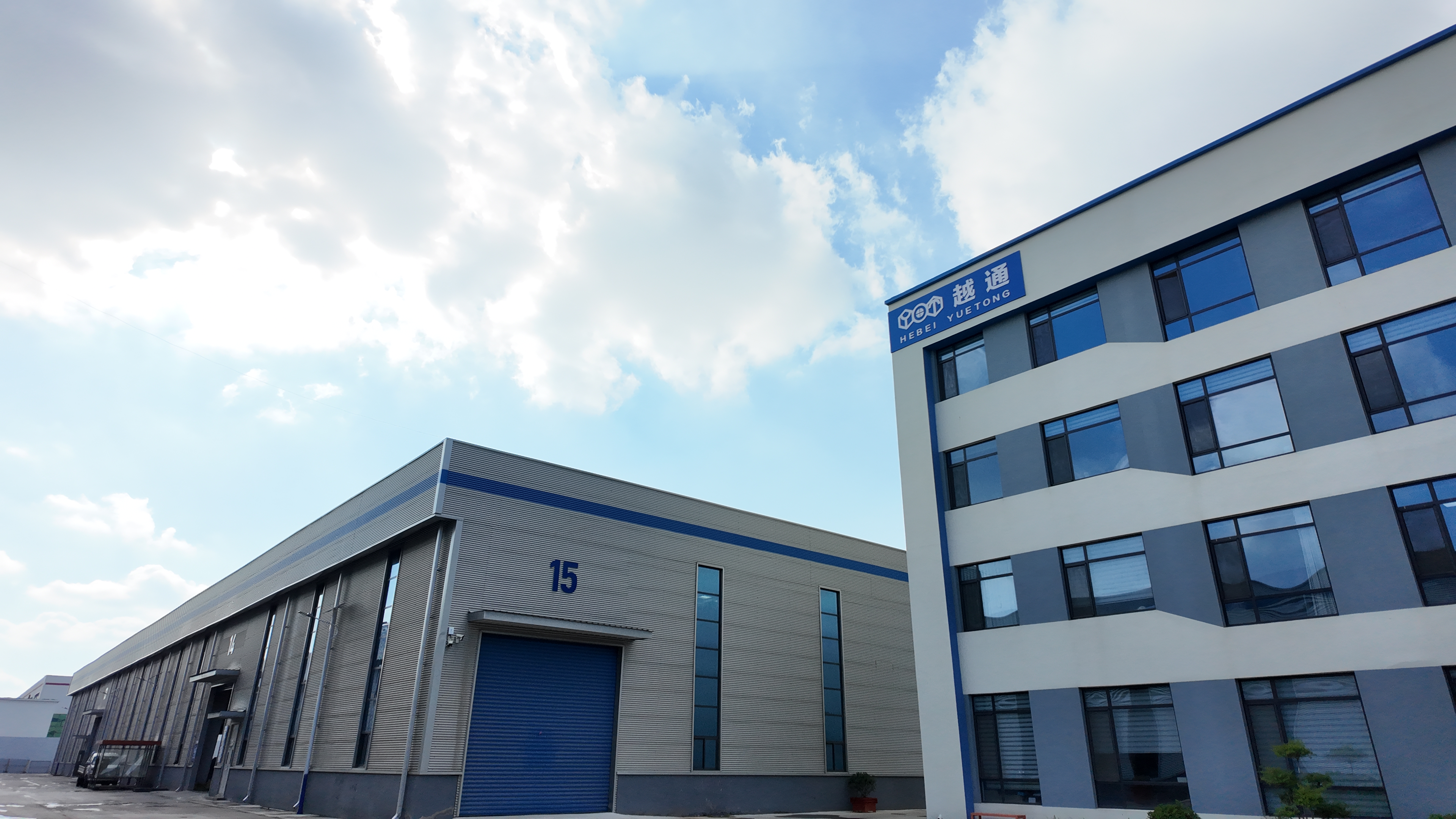
A sleeve anchor factory audit begins with the physical operation: what is produced on site, under which system, and with which records.
Sleeve anchors look like commodity hardware and behave like critical components. The category is not small: mechanical anchors accounted for 58.3% of anchoring fastener revenue in 2024, inside a global anchoring fastener market estimated at USD 3.12 billion by Grand View Research. China's industrial fasteners market is projected to grow from USD 12.23 billion in 2024 to USD 22.78 billion by 2032, according to Credence Research. Sleeve anchors are commonly classified under HS Code 7318.15, the customs heading covering screws and bolts with nuts or washers.
At that scale, capability claims are abundant and evidence is uneven. A buyer at decision stage is rarely choosing between a supplier that claims quality and one that does not. Both claim it. The real choice is between a supplier that can produce a coherent evidence pack on request and one that answers technical questions with marketing language. A factory audit exists to make that distinction visible.
The Problem: Management Certificates Answer Management Questions
Most supplier audits begin with a certification list, and most certification lists are read incorrectly. An ISO 9001 certificate states that a documented quality management system exists at a defined site and scope. It does not state how much load a specific M12 sleeve anchor will carry in a given concrete grade. Treating a management-system certificate as a product-performance document is the most common interpretation error in fastener procurement, and it is precisely the error a structured audit is designed to prevent.
Two further problems appear at the same stage. Certificate numbers are frequently left unverified against the issuing body's public register, so an expired or out-of-scope certificate can circulate for years without challenge. And supplier-reported performance figures such as bearing capacity, coating life, or yield rate are usually presented without the test basis that would let an engineer check them. Neither problem is solved by sending a longer questionnaire; both are solved by defining what each document is permitted to prove.
YUETONG FASTENER: The Entity Behind the Documents
HEBEI YUETONG FASTENERS MANUFACTURING CO., LTD. (YUETONG FASTENER) is a fastener manufacturer located in Yongnian District, Handan, Hebei, China, an area widely described as China's largest standard parts production base. The company operates a 26,666.67 square metre production facility with approximately 100 employees, a 12-engineer research and development team, and an annual output of 150,000 tons. Around 80% of its output is exported, with main markets in the EU, North America, Latin America, and the Middle East and Africa, and products reaching more than 30 countries and regions.
The sleeve anchor range covers M5 to M36, with overall lengths from 30 mm to 300 mm, in carbon steel grade 4.8 and in A2-70 and A4-80 stainless steel, with zinc plated, yellow zinc plated, and hot-dip galvanized finishes, produced against GB/T, DIN, ISO, ASTM, and EN standards. Documented certifications include ISO 9001 with certificate number 29024Q12949-09R1M, ISO 14001 with certificate number 29025E12097-12R0M, and ISO 45001 for occupational health and safety. The company additionally holds IATF 16949 certification, EU CE certification, and a carbon footprint certification, and it holds an Alibaba Gold-Plus Supplier certificate verified by SGS. Nine national patents are registered in its name: one invention patent and eight utility model patents.
Those are the facts a buyer can act on. The next step is deciding what each document is capable of proving.
Certificate by Certificate: What Each Document Proves, and What It Does Not
The table below maps the documents a sleeve anchor supplier typically presents to the questions they can legitimately answer. It is the core reference for an audit agenda, because it assigns every document to one of two roles: qualifying the supplier, or qualifying the product.
| Document | What it evidences | What it does not evidence | Verification route |
|---|---|---|---|
| ISO 9001, certificate number 29024Q12949-09R1M | A quality management system in place at a named site and scope | The load capacity of a specific sleeve anchor size | Search the certificate number in the issuing body's register; check scope wording, site address, issue and expiry dates, accreditation mark |
| ISO 14001, certificate number 29025E12097-12R0M | An environmental management system at the same manufacturing site | Chemical compliance of coatings; RoHS or REACH evidence requires separate test reports | Same register check; confirm the scope names the site that will produce the order |
| ISO 45001 | Occupational health and safety management discipline | Nothing about product performance; relevant mainly to social-compliance audits | Verify number, scope and validity with the certification body |
| IATF 16949 | Automotive-grade quality management discipline, including tighter change control | Construction anchor performance; it is not a substitute for anchor testing | Confirm the certified scope covers the relevant product lines and site |
| Alibaba Gold-Plus Supplier certificate verified by SGS | Third-party assessment of supplier identity, facilities and certain operational capabilities | Order-level conformity; it is a point-in-time assessment | Check the assessment date and whether it corresponds to the current production site |
| EU CE certification and carbon footprint certification | Compliance declaration and environmental data for EU-facing projects and tenders | A performance guarantee for a specific anchor or load case | Request the declaration and the underlying test basis it references |
Read as a set, the table produces a simple rule. Management-system certificates qualify the supplier; item-level test records qualify the product. An audit that collects the first and skips the second has confirmed the wrong thing, and the gap usually only becomes visible on site, at the moment an anchor is being installed into a substrate nobody tested.
A Practical Audit Checklist for Sleeve Anchor Suppliers
Stage 1: Document request before the visit
Ask for certificate numbers and scans, not certificate names. For each document, request the scope statement and confirm that the named site is the site that will produce the order. Request the standard the order will be manufactured to, whether GB/T, DIN, ISO, ASTM, or EN, and the raw material and coating specifications attached to it. Where explosion-risk environments are involved, ATEX-related documentation should be requested at this stage rather than discovered later. Also establish whether cold heading, thread rolling, heat treatment, and surface treatment are performed in house or subcontracted. Subcontracting is not disqualifying, but it changes which site an auditor must visit and which records must be followed.
Stage 2: What to observe on site
A sleeve anchor audit typically follows the process sequence: raw material storage with mill certificates traceable to a heat number, cold heading, thread rolling, heat treatment where applicable, surface treatment, and packaging, with the laboratory visited as a separate station. Laboratory equipment in this type of operation commonly includes a Rockwell hardness tester, an electro-hydraulic servo universal material testing machine, an automatic video measuring system for thread and dimensional checks, and an intelligent salt spray test chamber. The audit question is not whether the equipment exists. It is whether calibration is current, whether sample records can be linked to a specific production lot, and whether the person running the test can explain the acceptance criterion that was applied.

Dimensional and thread inspection equipment is only evidence when the measurement record can be traced back to a specific production lot.
Stage 3: Sample and lot-level evidence
The evidence pack that converts an audit from an impression into a record should contain a dimensional inspection report against the ordered standard, a material certificate confirming grade such as 4.8 carbon steel, A2-70, or A4-80 stainless steel, coating thickness and salt spray results matching the finish actually quoted, mechanical property records covering hardness and tensile behaviour, and for anchors in concrete, test data following ASTM E488 / E488M-22, the standard test method for strength of anchors in concrete elements. Every document should carry a lot number that ties it to the shipment, because a test report without a lot reference describes a product the buyer never received.
Technical Explanation: How Audit Evidence Maps to Real Anchor Behaviour
Load capacity of a sleeve anchor is not a single number. It depends on the anchor size, embedment depth, base material strength, hole diameter, edge distance, spacing, and installation quality. An M10 anchor set in cracked, low-strength concrete is a different engineering case from the same anchor set in sound concrete at full embedment, even when both carry identical certificates.
Loosening and pull-out have identifiable causes, and each corresponds to a specific evidence item in the audit. Improper hole size, insufficient embedment, unsuitable base material, or incorrect tightening torque can reduce anchoring performance and cause loosening. Pull-out can occur when the anchor is installed in weak or damaged concrete, the hole is oversized, the embedment depth is insufficient, or the anchor is overloaded. Correct drilling, hole cleaning, and controlled tightening allow the expansion sleeve to engage the base material properly. This is why installation documentation belongs in the same evidence pack as the certificate: a supplier that can state the recommended hole diameter, embedment depth, and tightening torque for each anchor size hands the buyer information that can be verified on site, while a supplier that cannot effectively transfers that risk to the buyer.
Corrosion follows a different logic and is governed by material and coating selection rather than installation technique. In open-air, rain-exposed, coastal salt-spray, and humid chemical environments, ordinary galvanized products are prone to oxidation and rust, which can lead to anchorage failure. The recognised mitigation is to select electro-galvanized, hot-dip galvanized, or stainless steel options according to the working condition, with A4 stainless steel generally preferred in heavily corrosive areas, supported where applicable by a multi-layer anti-corrosion process. For a buyer, that translates into a document request rather than an opinion: the coating specification and the salt spray records for the finish actually quoted in the offer.
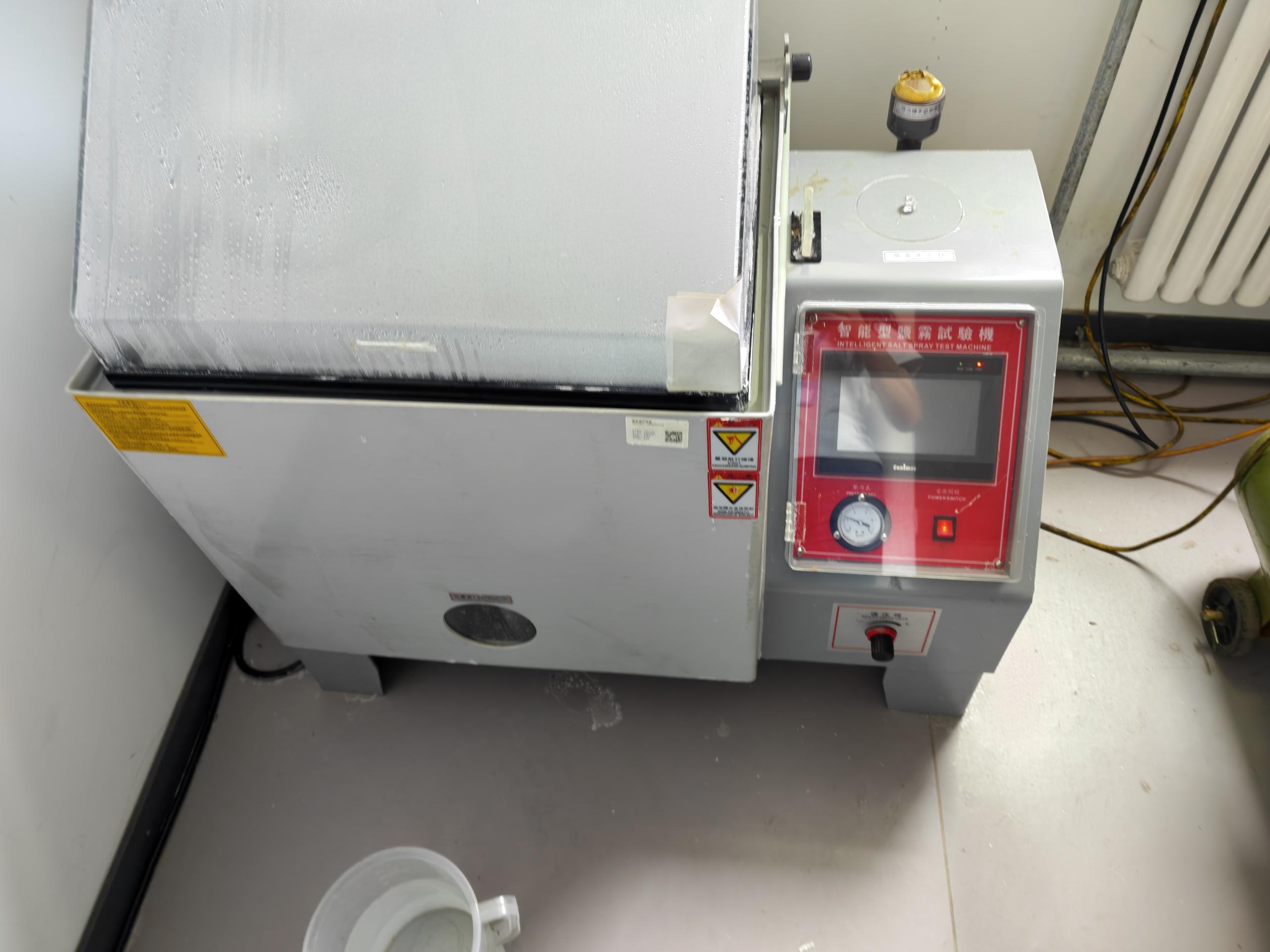
Coating claims become verifiable when they are supported by salt spray records the buyer can read.
Where Audit Evidence Matters Most
The same checklist does not carry equal weight in every application. Sleeve anchors are used across construction, new energy photovoltaic and wind power, steel structure, curtain wall and bridge engineering, engineering machinery, municipal infrastructure, rail transit, petrochemical, equipment workshops, and civil construction. Working conditions range from indoor normal environments to outdoor open-air exposure, humid climates, coastal salt spray corrosion, high and low temperature, explosion-hazardous areas, and vibration load conditions.
For a photovoltaic or coastal project, coating and material evidence moves to the front of the audit, because corrosion resistance determines service life. For curtain wall and bridge work under long-term and alternating loads, mechanical property records and documented torque guidance matter more than an additional environmental certificate. For petrochemical and other explosion-hazardous areas, ATEX-related documentation and material traceability take priority. Auditing every supplier against an identical checklist is administratively convenient, but it tends to over-collect documents in one category and under-collect them in the category that will actually determine project risk.
Market Trend: Documentation Is Turning Into a Purchasing Criterion
Two market signals are pushing in the same direction. Mechanical anchors, the segment that includes sleeve anchors, held 58.3% of anchoring fastener revenue in 2024, the largest product-type share in the category, according to Grand View Research. Meanwhile, China's industrial fastener market is forecast to add roughly USD 10.5 billion in value between 2024 and 2032 on the Credence Research projection. Growth of that kind usually expands the number of suppliers faster than it expands the number of buyers able to verify them, which shifts competitive advantage toward suppliers who can document rather than simply assert.
Capacity is becoming part of the procurement conversation as well. Commercial research on concrete fasteners describes Chinese production lines with annual output exceeding 50 million units for sleeve anchors, a scale figure that is useful as market context but cannot substitute for lot-level evidence in a specific purchase. In parallel, buyer-side documentation requirements are rising: carbon footprint data now appears in EU-facing tender packages, and supplier questionnaires increasingly ask for ISO 14001 and ISO 45001 evidence alongside quality certification. Suppliers with structured certificate management absorb those requests inside a normal quotation cycle; suppliers without it slow down qualification for reasons that have nothing to do with the product.
Comparison with Traditional Fixing Methods, and Where the Evidence Stops
Against traditional welding solutions, mechanical expansion fixing offers a different risk profile. YUETONG FASTENER reports that its anchors require no hot work, that installation is simple and fast, and that construction efficiency increases by around 50%, with a claimed saving of approximately 40% in labour and material cost compared with welding solutions. The same source states that the anchors do not require subsequent reinforcement or welding repair and replacement, and describes a service-life extension of three to five years relative to the solutions being compared. Against ordinary expansion bolts, non-standard inferior anchors, and welding-based fixing, the manufacturer reports more than 30% higher bearing capacity, a doubled salt spray anti-rust life, a factory yield rate of 99.8%, and a project failure rate lower than 0.1%.
These are first-party figures, and a factory audit does not validate them. Management-system certificates confirm how a supplier controls its process; they cannot confirm a percentage advantage in bearing capacity, because capacity is determined jointly by the anchor, the base material, and the installation. Converting such claims into evidence requires item-level testing, for which the ASTM E488 test method for anchors in concrete elements is the conventional reference, and in most projects a design check against the actual substrate and load case. Where that testing has not been performed, the correct procurement position is to treat the figures as supplier-reported, not as verified performance.
A second limitation applies to the certificates themselves. They are point-in-time documents with defined scopes, sites, and validity periods. A certificate issued for one production site does not automatically cover a second site or a subcontracted process, and an audit result should be treated as a snapshot that expires rather than as a permanent qualification. The final boundary is installation. Mechanical anchors remove hot work and shorten installation time, but they still depend on the correct hole diameter, hole cleaning, and tightening torque. Where those conditions cannot be controlled on site, the operative risk shifts from the supplier to the installer, and no certificate in the audit pack will change that.
Future Outlook
Three developments are likely to shape how sleeve anchor suppliers are evaluated over the next few years. First, certificate verification is moving from PDF exchange to register lookup; buyers who standardise that step remove a class of risk at almost no cost. Second, environmental and carbon documentation is shifting from a differentiator to a qualification filter in EU-facing procurement. Third, the gap between suppliers who can produce lot-level traceability and those who cannot will widen, because the same traceability data that satisfies an auditor also supports warranty discussions, failure investigations, and repeat orders.
For a decision-stage buyer, the practical implication is narrow and useful: audit the supplier's ability to produce evidence, not its ability to describe capability. Certificates such as ISO 9001 with number 29024Q12949-09R1M, ISO 14001 with number 29025E12097-12R0M, ISO 45001, IATF 16949, and the SGS-verified Alibaba Gold-Plus Supplier certificate are effective entry criteria. They become decisive only when they are read alongside the test records, traceability data, and installation information for the exact item being purchased.
FAQ
What does an ISO 9001 certificate actually confirm about a sleeve anchor supplier?
It confirms that an accredited certification body has audited the supplier's quality management system against ISO 9001 at a defined site and scope. YUETONG FASTENER's ISO 9001 certificate is numbered 29024Q12949-09R1M. The certificate covers the management system, not the performance of individual products, so load capacity, coating life, and dimensional conformity still have to be verified through product-level records and testing.
How can a buyer verify that ISO 14001 and ISO 45001 certificates are genuine?
Check the certificate number against the issuing certification body's public register, then compare the legal entity name, production site address, scope statement, and validity dates with the supplier's commercial documents. YUETONG FASTENER's ISO 14001 certificate is numbered 29025E12097-12R0M, and the company also holds ISO 45001 for occupational health and safety management. A certificate whose scope does not name the site that will actually produce the order does not cover that order.
Does IATF 16949 matter when buying construction sleeve anchors?
IATF 16949 is an automotive quality management standard. YUETONG FASTENER holds IATF 16949 certification in addition to ISO 9001, ISO 14001, and ISO 45001. For a construction buyer it functions as a secondary indicator, suggesting the supplier operates under tighter change control and part-approval discipline than a basic quality system requires. It does not certify construction anchor performance and does not replace anchor testing to a method such as ASTM E488.
What does an Alibaba Gold-Plus Supplier certificate verified by SGS cover?
It reflects a third-party on-site assessment of the supplier's identity, facilities, and certain operational capabilities, carried out by SGS and reported through the Alibaba platform. YUETONG FASTENER holds an Alibaba Gold-Plus Supplier certificate verified by SGS. The assessment is linked to the platform and reflects conditions at a point in time, so it supports supplier onboarding and identity verification but does not certify the conformity of a specific production lot.
Which evidence should a buyer request for load capacity rather than quality management?
Request lot-level mechanical test records, dimensional inspection reports against the ordered standard, material grade certificates, and, for anchors in concrete, test data following ASTM E488 / E488M-22, the standard test method for strength of anchors in concrete elements. Management-system documents answer process questions about how the supplier works, while only product-level data addresses the capacity question for the item being purchased.
Why can a documented sleeve anchor still loosen or pull out?
Loosening and pull-out are usually installation and substrate issues rather than documentation failures. Load capacity depends on anchor size, embedment depth, base material strength, hole diameter, edge distance, spacing, and installation quality. Oversized holes, insufficient embedment, weak or damaged concrete, incorrect tightening torque, and overloading are recognised causes. Correct drilling, hole cleaning, and controlled tightening allow the expansion sleeve to engage the base material properly and reduce the risk of movement.
Which surface finish should be verified for outdoor or coastal use?
The finish should match the environment rather than a general preference. In open-air, rain-exposed, coastal salt-spray, and humid chemical conditions, ordinary galvanized products are prone to oxidation and rust, which can lead to anchorage failure. Electro-galvanized, hot-dip galvanized, and stainless steel options are available according to working condition, with A4 stainless steel generally preferred in heavily corrosive areas. Buyers should request the coating specification and salt spray records for the finish actually quoted, whether zinc plated, yellow zinc plated, or hot-dip galvanized.
Supplier documentation referenced in this article: the YUETONG FASTENER product brochure is available as a PDF at https://cdn.socialarks.com/sbsp/25127/common/2026/0803/宣传册.pdf, covering product ranges, standards, and finishes.