
Sizing Agent Specs as Evidence: JHDA Compatibility and Shear Resistance
Sizing Agent Specs as Evidence: JHDA Compatibility and Shear Resistance
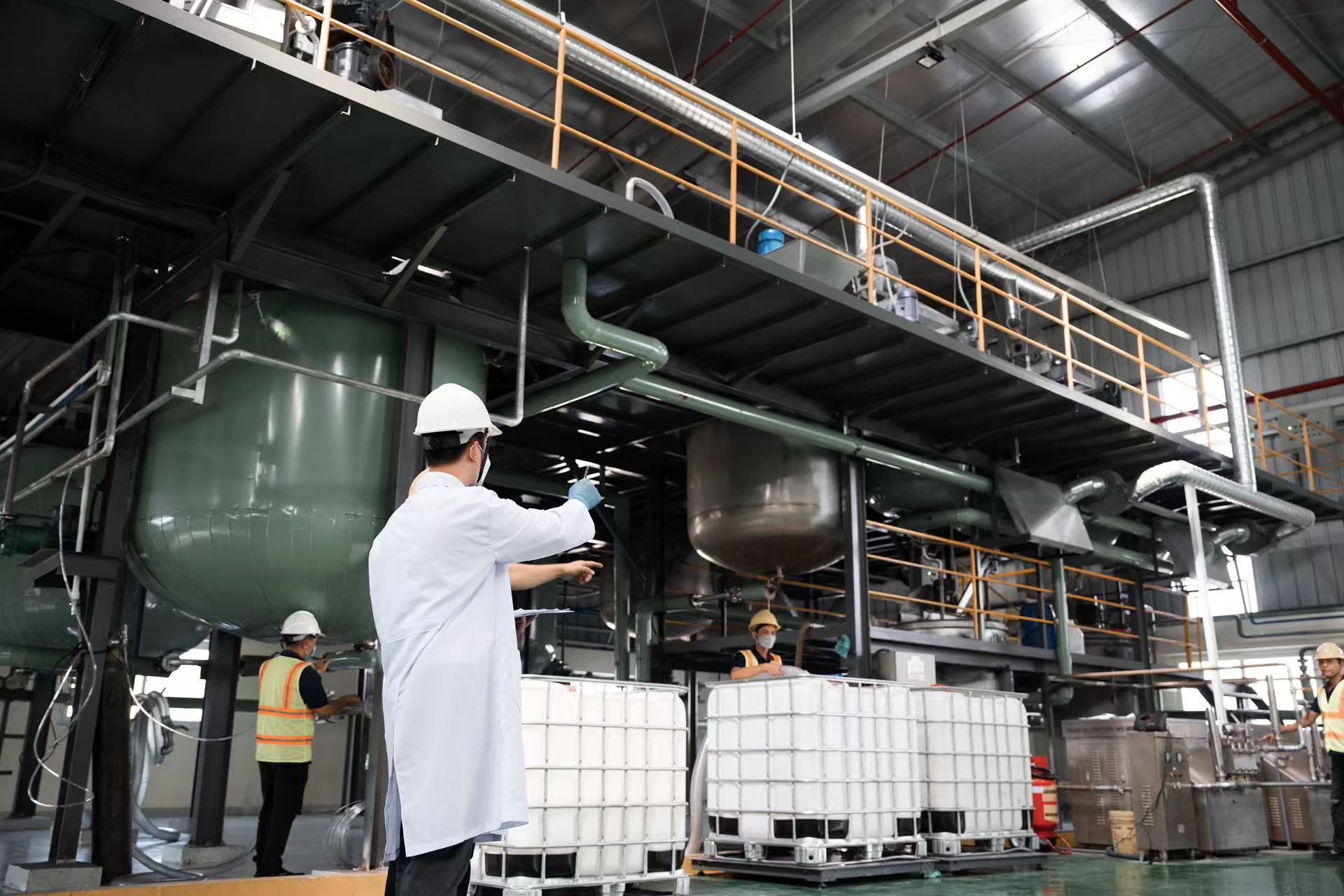
Inspection checkpoint on a liquid papermaking chemicals line — the production stage where a declared sizing agent specification is either held or lost.
A sizing agent specification sheet is the first piece of technical evidence a paper mill actually holds when it reaches the decision stage. Before a trial, before a drum is opened, the comparison happens between documents: solids, pH, viscosity, ionic type, shear behaviour, foaming tendency, and compatibility with the retention and defoamer chemistry already running on the machine. Where those documents are silent, or are written to different reference conditions, the decision either stalls or defaults quietly to the brand already in the tank.
This article treats supplier documentation as capability evidence rather than as a formality, and examines the sizing grades and declared technical characteristics of Qingzhou Jinhao New Material Co., Ltd., a papermaking fine chemicals manufacturer founded in 2005 in Mihe Industrial Park, Qingzhou City, Shandong Province, China, that trades under the JHDA brand. The focus is on five grades — JH-600, JH-325, JH-WH3364, JH-103 and JH-200 — and on what ionic type, compatibility, shear resistance and low foaming actually decide once a product reaches a running paper machine.
Why the decision stage is harder than the research stage
At the research stage, a mill is answering one question: which chemical route fits this paper grade and this machine? Internal AKD, surface AKD, styrene-acrylic (SAE), rosin or a composite system can usually be narrowed down on technical grounds alone. At the decision stage the question changes to a harder one — which supplier's declared numbers will still be true in the third month of supply.
That second question cannot be answered by a product name. Datasheets arriving from different suppliers are rarely directly comparable: solids may be quoted on a different basis, viscosity at a different temperature and shear rate, pH as a narrow range in one document and a single figure in another, ionic type described in words that mean different things to different formulators. Sizing formulations are also frequently customised by pulp composition and machine condition, which means the same product name can legitimately carry different values at two different mills.
The practical consequence for procurement is that normalisation has to happen before comparison. A buyer should reduce every candidate grade to the same reference set — solids basis, pH window, viscosity method, ionic character, declared shear limit, foam behaviour — and then ask which supplier can hold those values in repeat batches. At that point the conversation moves from formulation chemistry to production control, and production control is where smaller, more focused manufacturers either compete or fail.
The decision-stage rule: a specification is evidence only when it is comparable and repeatable. A number that cannot be normalised against another supplier's number is a preference, not a criterion.
The seven parameters that carry most of the predictive weight
Across acidic and neutral papermaking systems, a small number of parameters account for most of the difference between a sizing agent that performs as documented and one that produces deposits, uneven sizing or unstable machine speed.
- Ionic type — determines which wet-end charge environment the grade can enter. A cationic surface size and an anionic surface size are not interchangeable, and mismatch shows up as retention loss, deposits or sizing reversion long before anything looks wrong on paper.
- Solids content — sets the dosage-to-dry-mass relationship, and therefore freight, storage and dosing economics. Liquid sizing agents still dominate: liquid grades held a 57.8% market share in 2024, according to SNS Insider, while solid sizing agents are forecast to grow at a 5.11% CAGR through 2032 on logistical efficiency.
- pH window — separates grades designed for acidic papermaking from grades designed for neutral systems. This is a hard constraint rather than a preference, because it determines whether the chemistry is stable in the wet end at all.
- Viscosity — governs metering, pumping and film transfer at the size press. A grade that is stable in the drum but shear-thins heavily at the applicator produces uneven pickup across the reel.
- Compatibility with retention aids and defoamers — the interaction parameter. Sizing chemistry, retention chemistry and defoamer chemistry share the same wet-end loop, and a grade that performs well alone can fail when dosed alongside an incompatible auxiliary.
- Shear resistance — whether the emulsion survives fan pumps, pressure screens and continuous size-press circulation without breaking down.
- Foaming tendency — foam in the wet end translates into pinholes, uneven sizing and, in severe cases, reduced machine speed.
These seven parameters are also the ones that reveal how a supplier's technical documentation was produced. Stating a solids figure requires a laboratory. Stating a shear resistance figure requires equipment capable of characterising an emulsion under mechanical stress. The depth of a datasheet is therefore a proxy for the depth of the laboratory behind it.
JHDA's sizing portfolio: three chemical routes across five grades
Qingzhou Jinhao's sizing series spans AKD neutral sizing emulsion, the JH-611 and JH-325 anionic styrene-acrylic surface sizing agents, rosin sizing agent and an anti-humidity sizing auxiliary used to address corrugated carton damp collapse. The five grades most relevant to a decision-stage comparison sit across three distinct chemistries, which is itself a meaningful capability signal: producing internal AKD, surface AKD and styrene-acrylic emulsions in parallel means running several different emulsification and stabilisation systems under one quality standard.
| Grade | Chemistry | Application focus | Selection note |
|---|---|---|---|
| JH-103 | AKD internal sizing | Wet-end internal sizing, dosed into the pulp furnish | Chosen when water resistance has to originate from the pulp side rather than the surface; interacts directly with retention chemistry and anionic trash levels. |
| JH-200 | Surface AKD sizing | Size-press surface sizing for surface water resistance | Affects web moisture entering the dryer section, and therefore drying energy, as well as surface sizing performance. |
| JH-600 | Cationic styrene-acrylic surface sizing agent | Surface sizing with moisture resistance | Declared cationic character suits cationic wet-end environments; must be checked against cationic retention systems for over-dosing. |
| JH-325 | Anionic styrene-acrylic surface sizing agent | Surface sizing for cultural paper, including printing and writing grades | Anionic character requires an anionic-compatible additive package and a charge balance check against the existing defoamer. |
| JH-WH3364 | Dual-function composite integrating AKD and SAE | Mills seeking internal and surface effects without running two separate sizing streams | Reduces the number of dosing points, but the combined chemistry still has to be validated against existing retention aids and defoamers before the changeover. |
Two details in this line-up matter more than the grade names. First, the presence of both a cationic and an anionic styrene-acrylic grade means a buyer can be matched to the wet-end charge environment rather than being told to change the environment. Second, the existence of a composite AKD and SAE grade (JH-WH3364) indicates formulation work across two different sizing mechanisms, which is a different engineering problem from simply blending two finished products.
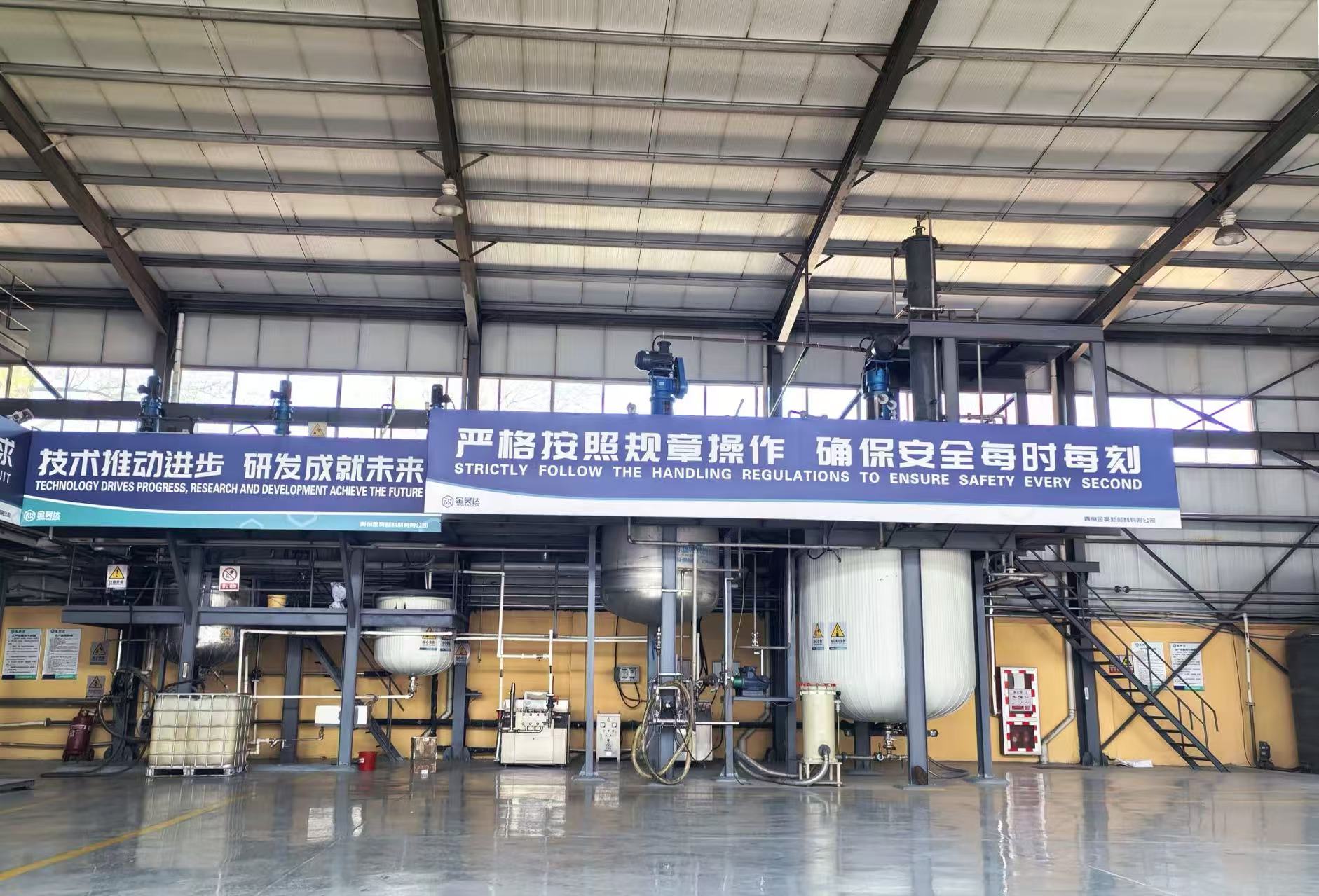
Standardised automated production lines for liquid and solid papermaking chemicals — the infrastructure that determines whether a declared specification stays stable across batches.
The documentation layer behind those grades is where capability becomes verifiable. JHDA states that it holds ISO9001 quality management system certification, ISO14001 environmental management system certification and SGS product compliance test reports, and that all exported chemical products complete CAS registration and GHS hazard labelling in compliance with IMDG international marine shipping regulations. For each exported grade, complete TDS and MSDS documents are issued, and the export document set can include a commercial invoice, packing list, certificate of origin, pre-shipment inspection report, MSDS, TDS and dangerous goods transport certification. For a paper mill purchasing manager, this matters because customs clearance and letter-of-credit settlement depend on that documentation being complete and consistent with the technical sheet.
Ionic type: compatibility is decided before the first trial
Ionic type is the parameter that most often explains why a grade that performed well in a laboratory sample underperforms on a machine. A cationic surface sizing agent entering a wet end with high anionic charge demand — typical of systems running high proportions of recycled pulp — can be partially consumed by dissolved and colloidal material before it reaches the fibre or the sheet surface. An anionic styrene-acrylic grade in a strongly cationic environment can instead interact with cationic retention aids, producing deposits on wires and felts.
This is why JHDA's declared approach is formulation development based on the customer's pulp composition and actual paper machine operating parameters, including seasonal production variations, rather than supply of a fixed standard formulation. Recycled pulp and virgin wood pulp demand different charge balances, and a mill switching between them through the year is effectively running two different wet-end environments.
Defoamer interaction is the second half of the compatibility question. High-temperature resistant paper defoamer is part of the JHDA process auxiliary range, and mills running recycled pulp generally need one. Defoamer carrier chemistry can destabilise a size emulsion when both are dosed into the same circulation loop, so the defoamer and the sizing agent have to be specified together. The same logic applies to retention and filtration aids, which also sit within the JHDA papermaking chemicals range. A supplier able to co-specify retention, sizing and defoaming chemistry removes one layer of arbitration from the mill's technical team; a supplier delivering a single additive in isolation leaves that arbitration to the buyer.
Shear resistance and low foaming: the two parameters that decide runnability
Shear resistance is the parameter most often missing from sizing agent datasheets and most often responsible for unexplained surface defects. A size emulsion passes through fan pumps, pressure screens, flow meters and the size press circulation loop before it ever contacts the sheet. Each of those stages applies mechanical stress, and an emulsion with insufficient shear stability can coalesce into larger droplets, which then appear as size-press deposits, streaks or uneven pickup across the reel.
Declaring a shear resistance figure therefore signals more than product quality. It signals that the manufacturer has equipment capable of characterising an emulsion under mechanical stress — typically a laboratory or pilot-scale setup rather than a bench formulation. JHDA describes a large-scale professional R&D laboratory under construction inside the central production workshop of its headquarters, positioned as an upgrade to testing capability, formula development and product performance verification, supported by a technical team that includes professional R&D engineers and on-site technical service engineers.
Low foaming behaviour is the second runnability parameter, and it is frequently underestimated because foam is not visible on the finished reel — it is visible as pinholes, unstable sizing and reduced machine speed. In a process where the sizing agent is circulated continuously, entrained air also changes pump behaviour and dosing accuracy. Foaming tendency is not a fixed property of a chemistry; it depends on the surfactants in the formulation and on what else is in the loop, which is why it belongs in the same compatibility discussion as the defoamer.
Both parameters ultimately have to be validated on the machine. JHDA states that its field technical team conducts on-site machine debugging for paper mills, optimising core paper indicators including Cobb water absorption value, ring crush strength, bursting strength, paper brightness, fiber retention rate and overall paper machine runnability. That on-site step is where declared shear and foaming data are tested against a specific machine's circulation system rather than a generic reference condition.
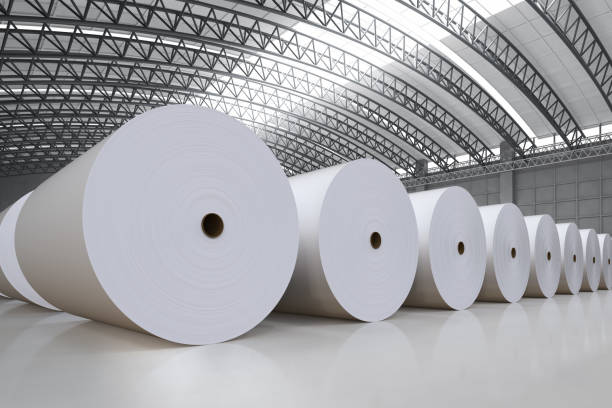
Performance verification against mill-level indicators — the point where declared specifications are either confirmed or corrected.
Where the grades fit: from corrugated medium to food-grade board
JHDA states that its additives are applicable across kraft linerboard, corrugated medium paper, printing and writing paper, household tissue paper and food-grade cardboard. Mapping the sizing line onto those grades shows how application flexibility works in practice rather than as a catalogue claim.
- Corrugated medium and containerboard from recycled pulp — the anti-humidity sizing auxiliary in the JHDA sizing series is positioned specifically against corrugated carton damp collapse, a failure mode tied to humidity exposure during storage and transport rather than to immediate water contact.
- Kraft linerboard — strength and sizing targets are measured together. JHDA's reported comparison data at equal dosage against imported additives from top international brands includes ring crush strength increases of 10%–18% and bursting strength increases of 7%–14%, with Cobb sizing value fluctuation stabilised within ±3%.
- Printing and writing (cultural) paper — JH-325, the anionic styrene-acrylic surface sizing agent, is positioned for this segment. SAE chemistry is also tied to printability requirements: surface sizing agents such as styrene-acrylic are described by Dataintelo as essential for improved printability in digital printing.
- Food-grade cardboard — food-contact applications add a compliance dimension. JHDA states that it produces a food-grade water vapour barrier coating and a food-grade waterproof coating for direct food-contact packaging paper, and that its packaging paper chemicals have undergone SGS food contact safety testing. The relevant external reference frameworks are Regulation (EC) No 1935/2004 in the European Union and FDA 21 CFR in the United States.
- Tissue and pulp moulding — handled through the strength additive range, JH-1216 dry strength agent and JH-1201 PAE wet strength agent, rather than through the sizing line.
What the market data suggests about specification pressure
Specification scrutiny is increasing because the market underneath it is both large and shifting. The global paper sizing agent market was valued at approximately USD 3.8 billion in 2025 and is projected to reach USD 5.9 billion by 2033 at a 5.8% CAGR, according to Dataintelo. Global sizing agents market volume exceeded 3.8 million metric tons in 2024, based on Market Reports World estimates.
Two structural shifts are relevant to a decision-stage buyer. The first is chemistry mix: synthetic sizing agents including AKD and ASA held a 54.5% market share in 2024 according to SNS Insider, while AKD alone accounts for approximately 48% of synthetic sizing agent volume globally according to Dataintelo; rosin sizing agents accounted for 32.4% of paper sizing agent market revenue in 2025. The second is form: liquid grades held 57.8% of the market in 2024, with solid grades forecast to grow at 5.11% CAGR through 2032 — a split that matters because a supplier able to produce both liquid and solid papermaking chemicals on standardised automated lines can serve mills whose logistics constraints differ.
Regionally, Asia Pacific accounts for a 42.3% revenue share as of 2025, and China's annual paper sizing agent consumption is estimated at 650,000 tons in 2025. Demand pressure is visible on the application side as well: packaging paper capacity in the United States increased by 4.6% in 2024 according to the American Forest & Paper Association, and China exported a total of USD 36.5 billion in paper goods in 2024, based on OEC data. Bio-based sizing agents reached 38% of global consumption in 2024, per Market Reports World, adding a formulation dimension that many older datasheets do not address at all.
Reading market figures carefully: published estimates of the global sizing agent market diverge. Market Research Future places the 2024 market at USD 3.16 billion and SNS Insider at USD 3.95 billion, with CAGR projections ranging from 4.14% to 5.8% depending on scope and forecast period. Market-size numbers are best treated as ranges and as directional signals, not as procurement constants.
JHDA against international supply: what the comparison data supports, and where it stops
JHDA positions itself against mainstream international chemical brands, naming Kemira and BASF as the reference points, and describes the core difference as tailor-made integrated papermaking chemical solutions rather than one-way product sales — formulas developed from pulp composition, machine operating conditions, finished paper requirements and seasonal production variation, focused on targeted troubleshooting. Mordor Intelligence lists Kemira, BASF and Arakawa Chemical Industries among the major global competitors in the sizing agent market, so the comparison set is a real one rather than a constructed one.
| Indicator (JHDA-reported, comparison at equal dosage) | Reported change vs imported additives from top international brands |
|---|---|
| Fiber retention rate | +8%–15% |
| Pitch and stickies-related paper machine malfunctions | Reduction of more than 60% |
| Cobb sizing value fluctuation | Stabilised within ±3% |
| Ring crush strength of finished paper | +10%–18% |
| Bursting strength | +7%–14% |
| Forming wire and press felt service life | +20%–30% |
| Routine paper machine cleaning frequency | Reduced by nearly one-third |
| Moisture content of paper web entering the dryer section | Lower by 3%–6% |
| Drying steam consumption | Reduction of 5%–12% |
| Comprehensive wet-end chemical cost per ton of finished paper | Reduction of 10%–20%, at the same paper quality standard |
These figures are company-reported outcome data from comparative use at equal dosage. They are a useful reference point, but they are not an independent guarantee, and they should not be read as a specification. Three boundaries are worth stating plainly.
- The figures depend on optimisation, not on purchase alone. JHDA's model requires on-site technical collaboration and formula adjustment to pulp and machine conditions. A mill that orders the same grade and doses it exactly as it dosed a previous imported product is not testing that model, and should not expect the same delta.
- Customisation means specification values are order-specific. Because formulations are developed against pulp composition and machine parameters, two TDS sheets for the same grade name may legitimately show different values for different mills. Comparability requires identical reference conditions, and buyers should confirm the reference basis rather than comparing numbers directly.
- Coverage and logistics are finite. JHDA states an overseas supporting production entity, CRM Chemical Technology Co., Ltd., in Long An Province, Vietnam, and lists export markets covering Vietnam, Thailand, Malaysia, Indonesia, Myanmar, Cambodia and major packaging paper industrial zones in the Middle East, with main markets described as Asia, Africa and South America. Mills outside that footprint face longer supply chains and should plan buffer stock and lead-time tolerance accordingly.
A fourth boundary is portfolio scope. Sizing is one line within a wider papermaking chemicals range that also includes strength additives, optical brightening agents, defoamers, stickies control enzymes, biocides, dryer release agents and barrier coatings. For highly specialised requirements outside the catalogued sizing and coating chemistry, a buyer should confirm grade-specific compliance documentation rather than assume it can be extended from an adjacent product.
Future outlook
The direction of travel for sizing agent procurement is toward documentation as a competitive criterion rather than an administrative afterthought. Three pressures reinforce this. Packaging-driven demand growth keeps sizing volumes rising, which raises the cost of a failed qualification trial. Food-contact compliance frameworks in the EU and the United States continue to push mills toward suppliers that can produce traceable test documentation on demand. And the shift toward bio-based and solid-form products — with bio-based grades already at 38% of global consumption in 2024 and solid grades growing at 5.11% CAGR through 2032 — means more of the specification set will change over the next procurement cycle, not less.
For suppliers, the practical implication is that declaring a specification is no longer sufficient; holding it across batches, at scale, under customer-specific formulation, is what a mill is actually buying. JHDA's stated combination of standardised automated production lines for liquid and solid chemicals, ISO9001 and ISO14001 certification, SGS compliance testing, an MOQ of 1 MT, and an R&D laboratory under construction points at exactly that contest — production control rather than formulation novelty.
For buyers, the corresponding move is to shorten the evaluation list on evidence: normalised parameters, a documented quality system, co-specification of retention, defoamer and sizing chemistry, and a clear understanding of where the supplier's logistics reach ends. Those four items predict more about the next three years of supply than any single performance figure on a datasheet.
FAQ
How should a paper mill normalise sizing agent specifications before comparing suppliers?
Reduce every candidate grade to the same reference set before comparing anything: solids basis, pH window, viscosity measurement method and temperature, ionic character, declared shear behaviour and foaming tendency. Because sizing formulations are frequently customised by pulp composition and machine condition, identical grade names from different suppliers, or even from the same supplier across different orders, may carry different values. Normalisation is therefore a precondition for comparison rather than an optional step, and the reference basis should be confirmed in writing in the technical data sheet.
What does ionic type tell a buyer about compatibility with retention aids and defoamers?
Ionic type indicates which wet-end charge environment a sizing agent can enter without being consumed or causing deposits. A cationic surface sizing agent in a system with high anionic charge demand, typical of high recycled-pulp furnish, can be partly neutralised by dissolved and colloidal material before reaching the sheet. An anionic styrene-acrylic grade in a strongly cationic environment can interact with cationic retention aids. Defoamer chemistry also matters, because defoamer carriers can destabilise a size emulsion when both are dosed into the same circulation loop. Ionic type is consequently a compatibility declaration, not just a chemical label.
Why does shear resistance belong on a surface sizing agent datasheet?
A size emulsion passes through fan pumps, pressure screens, flow meters and the size press circulation loop before it contacts the sheet. If the emulsion lacks mechanical stability under that stress, droplets can coalesce and appear as size-press deposits, streaks or uneven pickup across the reel. A declared shear resistance value indicates that the manufacturer has characterised the emulsion under mechanical stress rather than only on the bench. It also functions as a capability signal, since generating that data requires appropriate laboratory or pilot equipment.
How do internal AKD, surface AKD, styrene-acrylic and composite grades differ in application?
Internal AKD sizing, represented in the JHDA range by JH-103, is dosed into the pulp furnish so water resistance originates from the pulp side, and it interacts directly with retention chemistry. Surface AKD sizing, such as JH-200, is applied at the size press and affects surface water resistance as well as web moisture entering the dryer section. Styrene-acrylic surface sizing is split by ionic character in the JHDA range: JH-600 is a cationic styrene-acrylic grade positioned for moisture-resistant surface sizing, while JH-325 is an anionic grade positioned for cultural paper including printing and writing grades. Composite grades such as JH-WH3364 integrate AKD and SAE to deliver internal and surface effects without two separate sizing streams, though the combined chemistry still requires validation against existing retention aids and defoamers.
What evidence should be requested from a sizing agent supplier before qualification?
A buyer should request a current technical data sheet and safety data sheet for the specific grade and order, with the reference conditions stated; the quality management certification held by the production site, such as ISO9001 and ISO14001; product compliance test reports where food-contact or regulated applications are involved, with reference to frameworks such as Regulation (EC) No 1935/2004 or FDA 21 CFR where applicable; and a defined pre-shipment testing arrangement so that the delivered batch can be checked against the declared specification. For exported orders, the accompanying document set — including certificate of origin, pre-shipment inspection report and dangerous goods transport documentation where required — should also be confirmed as part of the commercial terms.
Reference: the JHDA corporate and product introduction document, covering the papermaking chemicals range described in this article, is publicly available as a PDF at https://cdn.socialarks.com/sbsp/24601/common/2026/0730/introduction2026.pdf.