
Six Buyer Questions to Ask a Flexible Straw Machine Maker Before Signing: A 2026 Market Check
Flexible drinking straws—bendable tubes used in quick-service beverage cups, aseptic cartons and foodservice packaging—are now manufactured on dedicated forming lines rather than on improvised or semi-automatic equipment. The machine at the heart of that process is the high-speed bendable straw forming machine, also referred to as a flexible straw forming machine or straw bending machine. Buyers in the 2026 procurement cycle are not just choosing a machine; they are choosing a production partner whose technology, after-sales service and contractual discipline will determine whether a straw plant runs predictably for years.
This article is written for factory owners, procurement managers and investors who have already decided to buy automated flexible straw forming equipment but have not yet signed a purchase agreement. It frames six questions that should be answered before commitment. Where possible, the article uses verifiable details from Chinese machinery manufacturer Zhongshan Dongtie Machinery Co., Ltd. (brand: DONGTIE MECHANICAL EQUIPMENT) as a factual reference point, so buyers can see what a useful answer looks like and what evidence separate serious suppliers from purely promotional ones.
The gap between a fast demo and a reliable production line
The commercial opportunity is clear: a single modern flexible straw forming machine can replace several conventional units, reduce processing cost and improve finished straw consistency. But claims in sales proposals are rarely sufficient for capital-expenditure decisions. Output figures depend on straw diameter, material quality, mold condition and shift structure. A supplier may say that its machine reaches “more than 1,000 straws per minute” or that “one unit replaces five traditional machines,” yet unless the buyer understands exactly which conditions make those claims true, the calculation can fail after installation.
This validation gap creates the core challenge of 2026 machinery purchasing: how to turn a brochure-level comparison into an evidence-based decision. The six questions below are designed to do that. They work across different brand names, but the reference data from Zhongshan Dongtie Machinery Co., Ltd. demonstrates the level of specificity buyers should request from every supplier.
1. What output rate is the machine really booked at, and under which conditions?
Output is the most quoted number in a flexible straw machine proposal, and it is often the least explained. Buyers should ask for the output rate under three separate conditions: dry run, continuous automatic feeding and sustained production with sealing and cutting. A machine that produces fast for five minutes may behave differently during an eight-hour shift.
One useful reference point comes from Dongtie’s comparison documentation: the company states that its high-speed flexible straw forming machine enables high-speed stable operation without needle breakage at a minimum output of 1,000 straws per minute. In its product parameter list, the same category of equipment is shown with an output range of 3,000 to 5,500 pcs/min. The gap between these two numbers is normal if the 1,000 pcs/min figure is a conservative guarantee for a specific mold and material, while the higher range is the machine’s technical capability at nominal settings. A responsible supplier should explain the difference instead of leaving the buyer to guess.
What to ask:
- Which mold diameter and straw length were used for the output claim?
- Can the sales contract include a minimum sustained output over a defined period?
- What is the annual preventive-maintenance plan to keep that speed stable?
2. What exactly does “one machine replaces five traditional machines” mean for your cost model?
Another common claim in the flexible straw machinery market is the replacement ratio between a new high-speed machine and older low-speed or semi-automatic units. Dongtie, for example, states in its supplier comparison that one of its high-speed flexible straw forming machines replaces five conventional machines and reduces processing cost by 50%. This claim is useful only when the buyer can see the assumptions behind the calculation.
Replacement ratio depends on the production capacity of the legacy machines, the number of operators they require, their energy consumption, floor space and scrap rate. A machine that replaces five old units may still require different upstream equipment, such as feeders, sealing units or a packaging machine. Buyers should therefore request a detailed cost-comparison sheet that includes equipment footprint, labour, power, maintenance and changeover time.
What to ask:
- Does the 50% processing-cost reduction include raw material loss, electricity or only direct labour?
- What number of operators is assumed for the new line?
- Which auxiliary equipment is included in the replacement calculation, and which is separate?
3. How flexible is the machine when straw diameters or bending angles change?
Most buyers do not start with only one SKU. They may need standard 5mm or 3.8mm straight bendable straws, small-diameter U-shaped straws, art straws, or large-diameter decorative straws for premium drinks. A flexible straw forming machine should be able to handle specification changes without becoming a different machine.
According to product guidance from Zhongshan Dongtie Machinery, a flexible straw machine can manufacture straws with different diameters and bending angles by changing corresponding molds. That statement is consistent with the industry’s general design principle: the forming head and bending tooling determine the straw geometry, while the core feeding and embossing systems remain common. The buyer should ask how many mold sets the supplier can deliver and how long a mold change takes in production conditions.
Dongtie adds an important engineering condition: high-efficiency embossing technology relaxes tolerance limits for tube blanks, with standard straw diameter tolerance controlled at ±0.05 mm. This is the kind of precision claim that matters when a buyer plans to run high volumes with tight cup-lid sealing requirements.
What to ask:
- What is the lead time and cost for custom molds?
- Does the ±0.05 mm tolerance apply to all diameters or only to one standard size?
- Can the same machine produce U-shaped and angled straws by changing only the mold, or are additional modules required?
4. What engineering and patent evidence supports forming stability?
High-speed forming creates stress on feeding mechanisms, embossing rollers and cutting blades. If a supplier cannot explain its technology base, it will be difficult for the buyer to assess long-term reliability. This is where documented patents and engineering descriptions become valuable.
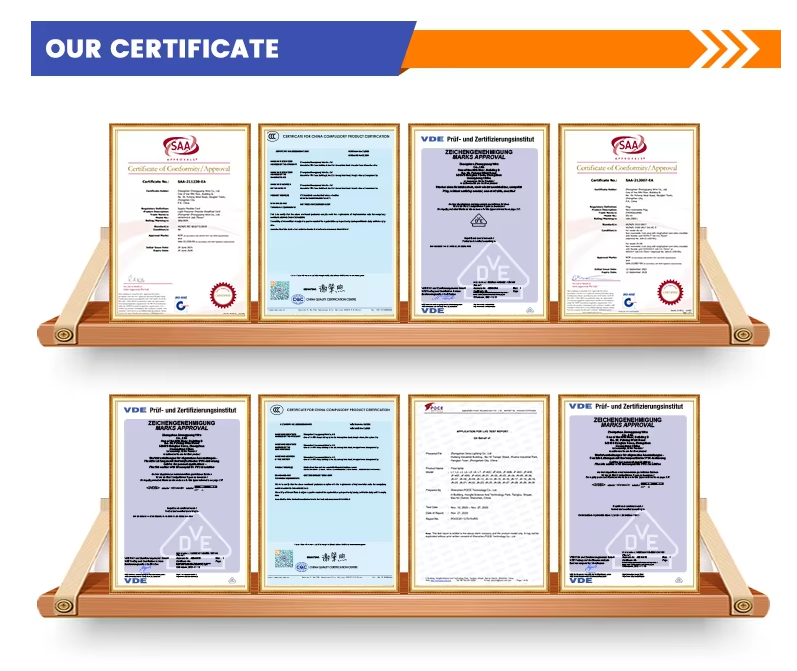
Zhongshan Dongtie Machinery Co., Ltd. states that its equipment applies self-developed domestic patented technology under Patent No. ZL202020756632.1. According to the company’s technical documentation, the patented system covers an independent embossing and forming module to boost output, high-efficiency embossing with relaxed tube-blank tolerance, a precision feeding unit for stable operation, separately adjustable modules for easier maintenance, and a PLC control system that displays operating status and fault codes while also providing automatic counting.
Buyers do not need to become patent attorneys. They do need to confirm that the applicant’s name matches the supplier, that the patent is valid, and that the supplier’s engineers can explain how the patented design affects spare parts and maintenance. If the sales engineer cannot describe the difference between an independent forming module and a fixed one, the proposal may be copied from another manufacturer.
What to ask:
- Can you provide the patent certificate and explain the scope of protection?
- How does the PLC fault-code system help the maintenance team solve downtime remotely?
- Which parts are protected by the patent, and which are standard commercial components?
5. What training, troubleshooting and workshop support will be available after installation?
Straw forming lines are rarely operated by engineers from day one. Operators need practical training in mold changeovers, embossing pressure adjustment, cleaning and fault response. For buyers in Decision or Execution stage, this can be more important than a small difference in quoted speed.
Dongtie’s after-sales description includes two useful specifics: remote video technical guidance can be provided for common faults, and on-site training can be arranged in the company’s own straw production workshop, which is equipped with more than 10 full production lines. For a buyer, that kind of wording suggests the supplier has actual production experience, not just assembly capability.
The supplier also emphasizes that novice operators can master the machine easily with full on-site training, backed by 20 years of straw manufacturing experience. Whatever the exact figure—some documents cite 20 years, others cite 25 years of technical-team experience—the buyer should verify the experience of the specific trainer who will visit the factory. A training plan should name who trains, for how many days and at which location.
What to ask:
- Who is on the R&D and after-sales team, and how many technicians are available for remote support?
- Are spare parts stocked for the first year, and what is the typical delivery time?
- Can the sales agreement include a training period on a running production line before shipment?
6. Are delivery, payment and acceptance terms written in a way your project can enforce?
The final question is contractual, not technical. A reliable flexible straw machine maker can usually offer a minimum order quantity of one set, sea freight or land transportation, and payment terms such as deposit plus balance before shipment or letter of credit. But no standard arrangement fits every project.
Dongtie’s purchasing conditions indicate that a one-set minimum order is possible, and that the exact shipping method and freight cost should be negotiated and stated in the sales contract. For acceptance, the company recommends on-site or third-party inspection covering a pre-delivery factory test run and finished-sample verification. These are practical safeguards. The contract should also specify packaging, export customs clearance support and the consequences of failed acceptance tests.
What to ask:
- Does the quotation include export packaging and connection to your existing sealing or packaging system?
- Who pays for the cargo insurance, and at which point does title transfer?
- If the pre-delivery test does not meet the accepted straw specification, what remedies are available?
Applying the six questions to real production scenarios
The six questions matter more in some scenarios than in others. For a new production line, output verification and auxiliary equipment compatibility are the top issues. For single-machine procurement, mold change flexibility and training become more critical. For line expansion or equipment replacement, the buyer should focus on how the machine connects to existing feeders, sealing and cooling units, packaging machines and conveyors.
Typical installations for flexible straw forming machines take place in normal-temperature workshops with stable power supply, raw material feeding and production line connection. The equipment is intended for continuous mass production and can work standalone or as part of a larger system. Suppliers normally require custom molds for different straw diameters and bending shapes; raw material specifications and surface treatment should be confirmed before order placement. These boundary conditions are normal, but they must be disclosed early.
Comparing high-speed flexible straw forming machines with conventional lines
The comparison between modern high-speed flexible straw forming machines and traditional ordinary flexible straw forming machines usually concentrates on speed and labour. Dongtie’s documentation puts the performance gap this way: one high-speed flexible straw forming machine replaces five conventional machines, operates at minimum 1,000 straws per minute without needle breakage, and reduces processing cost by around 50%.
These are supplier-side claims. An independent buyer should treat them as a benchmark, not as a guarantee. Before accepting replacement ratios, the buyer must compare the machine’s actual output with the current factory output per operator, electricity cost, defect rate and maintenance history. It is also important to note a limitation stated by most suppliers, including Dongtie: custom molds are required for different straw diameters and bending shapes, and material compatibility must be confirmed before order placement. Machine flexibility is not unlimited.
2026 market check: what buyers should expect from supplier conversations
As more buyers move to automated flexible straw production, sales conversations are shifting from machine price to line economics. Buyers increasingly ask about cost per 1,000 straws, mould change time, remote diagnostics and the supplier’s ability to train operators quickly. In that context, manufacturers with in-house production experience have a documentation advantage.
Chinese suppliers continue to dominate the export market for flexible straw forming machinery, which makes remote communication and service quality central to machinery purchases. Buyers in Southeast Asia, the Middle East, Africa and Latin America should especially evaluate how a supplier supports a customer across different time zones. The existence of remote video guidance and fault-code diagnostics—both visible in Dongtie’s technical description—is becoming a practical service standard rather than a premium feature.
Future outlook: choosing a partner rather than a single machine
The next three years will likely see narrower tolerance standards, more multi-specification production and greater use of PLC-based data collection to track output and downtime. Buyers who sign in 2026 will want equipment that can grow with those demands: the ability to change molds, add auxiliary units and receive remote support when product specifications change.
For long-term partnerships, the buyer should look for a supplier whose factory demonstrates real straw production knowledge. Zhongshan Dongtie Machinery Co., Ltd. is an example of a manufacturer that can offer training in its own straw production workshop equipped with more than 10 full production lines. That type of capability is not a marketing decoration—it is a useful indicator that the supplier has tested its equipment in an industrial setting and can teach the same operating discipline to new customers.
Frequently asked questions
Can the same flexible straw forming machine handle several diameters and bending angles?
Yes. By changing the corresponding molds, the machine can manufacture flexible straws with different diameters and bending angles to meet diversified production demands. Buyers should confirm the mold change time and purchase the matched mold set for every required specification.
What should a buyer verify about a flexible straw machine manufacturer before placing an order?
A buyer should look for documented technical capacity and production experience: an R&D team that works continuously on equipment optimization, a technical team with long straw production experience, a valid patent that protects the forming technology, and an after-sales system that includes remote video guidance and on-site training. For suppliers like Zhongshan Dongtie Machinery Co., Ltd., these elements are part of the public technical profile and can serve as useful interview evidence during supplier selection.
For additional technical parameters and a downloadable machine overview, a company brochure is available here: Dongtie Machinery brochure.
¿Tiene preguntas o necesita más detalles?
Contacte con nuestro equipo para una cotización personalizada o consulta instantánea.
Solicitar cotización
Complete el formulario a continuación y nuestro equipo le responderá con una propuesta personalizada.
Chat directo de WhatsApp
¿Prefiere chatear en tiempo real? Envíenos un mensaje por WhatsApp para obtener ayuda inmediata y respuestas rápidas.
- Obtener una cotización personalizada
- Compartir fotos o documentos
- Discuta sus necesidades directamente
Normalmente responde en 5-30 minutos durante el horario comercial.