
Site-Specific Selection of Outdoor Polycarbonate Convex Mirrors: A Project-Based Framework for Road, Parking, and Industrial Environments
Site-Specific Selection of Outdoor Polycarbonate Convex Mirrors: A Project-Based Framework for Road, Parking, and Industrial Environments
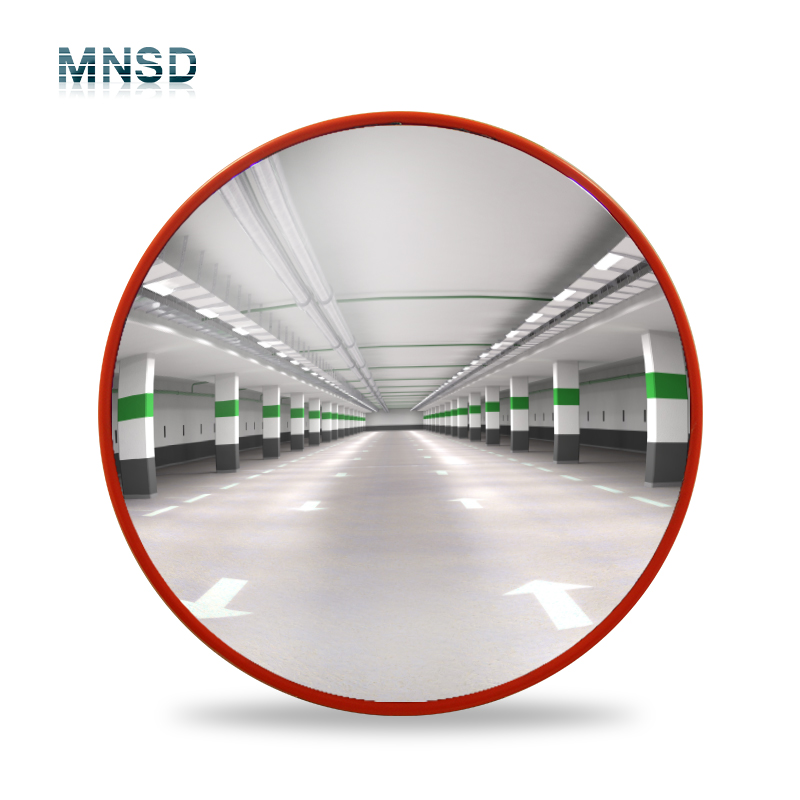
Outdoor polycarbonate convex mirrors are passive optical safety devices that eliminate blind spots at intersections, garage corners, and industrial zones by expanding a driver's field of vision through a fixed, 24/7 reflective surface. For procurement specialists and project engineers, selecting the correct mirror is not a one-size-fits-all decision; it depends on site conditions, visual range requirements, mounting constraints, and environmental exposure. This article provides a project-driven framework for matching outdoor polycarbonate convex mirror specifications to real-world installation scenarios — from rural road junctions to warehouse loading docks.
The Problem: Blind Spots Are a Site-Specific Hazard
Blind spots are not uniform. An underground garage corner has different visibility demands than a highway ramp, and a warehouse aisle poses different risks than a residential T-junction. The common denominator is that drivers and pedestrians share space without a clear line of sight, and the consequences of a collision range from property damage to serious injury.
The industry verifies the scale of this issue: Traffic and Safety applications hold the largest share of the convex mirror market, accounting for 38.2% of global demand in 2025, according to Dataintelo. This share reflects the widespread adoption of convex mirrors as a foundational, low-maintenance countermeasure in environments where vehicles and pedestrians intersect.
However, a mirror is only effective when its specifications match the site. A 450 mm mirror with a 10–12 m visual range cannot secure a highway merge point, just as a 1200 mm mirror may be oversized and impractical for a narrow warehouse corridor. The decision framework below helps buyers translate site conditions into concrete product choices.
Brand Solution: Mnsd Outdoor Polycarbonate Convex Mirror Series
Mnsd, the brand of Tiantai Yuanda Traffic Device Co., Ltd., is a China-based manufacturer specializing in road safety equipment, including traffic cones, speed bumps, warning posts, and convex mirrors. The company operates a 40,000 m² factory in Tiantai, Zhejiang, with over 300 employees and an annual output capacity of 120,000,000 units. Mnsd supplies outdoor polycarbonate convex mirrors in six diameters — 450 mm, 600 mm, 750 mm, 800 mm, 1000 mm, and 1200 mm — under the YD-OC series, designed for road traffic, parking garages, logistics parks, industrial zones, and other high-risk areas.
All YD-OC series models share a common technical foundation:
- Material: Impact-resistant polycarbonate (PC) lens with vacuum aluminum coating
- Thickness: 0.6–1 mm (customizable)
- Curvature radius: R2200–R3000
- View angle: 130°+ wide-angle vision with 180° reflection coverage
- Temperature resistance: -30°C to +80°C
- UV resistance: Grade 8 UV-stabilized PC & ABS, with a 3–5 year lifespan
- Weatherproof rating: IP65
- Backing: High-impact ABS plastic, bright orange, 2.0 mm wall thickness
- Mounting: Heavy-duty galvanized steel bracket, fits 60 mm / 75 mm poles
- Wind resistance: Level 10 wind load resistant
- Impact rating: Vandal-resistant with self-recovery (memory-springback)
Optional features include engineering-grade reflective tape on the rim, an anti-scratch hard coating, and a weatherproof hood for extreme outdoor exposure. This specification set is designed to meet the special requirements of outdoor applications: UV resistance (anti-aging), impact resistance, high clarity, and anti-rust/anti-corrosion weather resistance.

Technical Explanation: Matching Visual Range to Site Distance
The core decision variable in convex mirror selection is the relationship between mirror diameter and visual range. A larger mirror surface collects more reflected light and returns a usable image at greater distances, but it also occupies more physical space and may introduce more optical distortion. The selection logic is simple: the required visual range of the site must be within the mirror's effective range.
The YD-OC series provides a clear specification ladder:
| Model | Diameter | Visual Range | Typical Application |
|---|---|---|---|
| YD-OC45 | 450 mm | 10–12 m | Warehouse aisles, narrow corridors, wall-mounted indoor corners |
| YD-OC60 | 600 mm | 15–18 m | Parking garage corners, loading dock entrances |
| YD-OC75 | 750 mm | 20–25 m | Outdoor intersections, T-junctions, residential access roads |
| YD-OC80 | 800 mm | 22–28 m | Business park entrances, gas stations, school zones |
| YD-OC100 | 1000 mm | 30–35 m | Highway ramps, port areas, wide road junctions |
| YD-OC120 | 1200 mm | 35–45 m | Large intersections, highway ramps, industrial zones |
Beyond visual range, site conditions dictate additional requirements. For outdoor installations in regions with intense sunlight, UV resistance is critical to prevent lens yellowing and brittleness; the YD-OC series uses UV-stabilized PC and ABS with Grade 8 UV resistance. For cold climates, the mirror's -30°C to +80°C operating range is directly relevant to anti-frost performance. For high-wind areas, the level 10 wind load resistance of the heavy-duty galvanized steel bracket is a defining factor in installation stability.
Application / Use-Case Scenarios
The YD-OC series is suitable for a wide range of environments, including road traffic, residential quarters, parking garages, factories and warehouses, logistics parks, shopping malls, supermarkets, schools, hospitals, gas stations, construction sites, office parks, ports and docks, bus stations, industrial zones, community intersections, rural roads, and highway ramps.
The product operates in fixed physical reflection (24/7 passive monitoring) mode, requiring no electricity or network connectivity. This makes it a reliable last line of defense in areas where electronic monitoring is impractical or cost-prohibitive.
Scenario 1: Road Traffic and T-Junctions
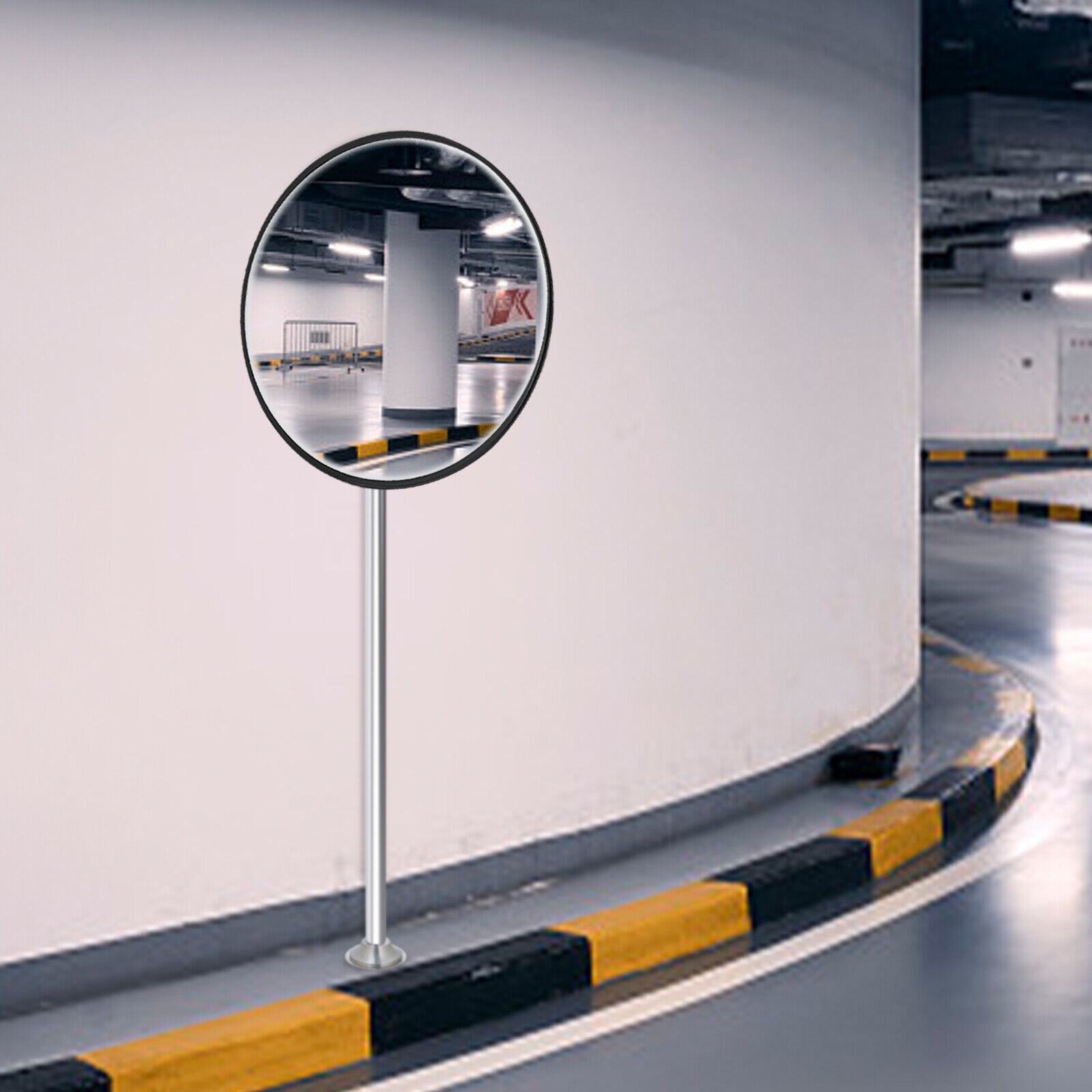
At outdoor intersections and T-junctions, the primary function is to eliminate blind spots and expand the driver's field of vision to prevent vehicle collisions. For a rural road or community intersection where approach speeds are moderate, a YD-OC75 or YD-OC80 pole-mounted mirror delivers a 20–28 m visual range, providing drivers with sufficient preview distance to make safe turning decisions. Mounting requires support pillars, pole-mount clamps, and expansion bolts.
Scenario 2: Underground Garage Corners
Underground parking garages present a unique combination of tight turning radii, poor lighting, and concrete pillars that create severe blind spots. A YD-OC60 wall-mounted mirror provides a 15–18 m visual range, which is adequate for detecting oncoming vehicles at close range. The compact 600 mm diameter minimizes obstruction in narrow corridors, and the impact-resistant polycarbonate lens with memory-springback withstands accidental contact from vehicle mirrors and cargo. The bright orange ABS backing is a deliberate design element for high visibility in low-light conditions.
Scenario 3: Factories, Warehouses, and Loading Docks
In logistics parks and loading dock areas, forklifts, trucks, and pedestrian workers share tight spaces. The special requirements for this application include UV resistance, impact resistance, high clarity, and strong weather resistance against rust and corrosion. A combination of YD-OC60 mirrors at aisle intersections and YD-OC100 mirrors at external dock entrances provides layered coverage. The wide-angle panoramic vision of the polycarbonate lens allows workers to confirm clearance before moving heavy loads.
Scenario 4: Ports, Docks, and Industrial Zones
Ports and heavy industrial zones require maximum visual range due to large vehicles and long sight lines. The YD-OC120, with a 35–45 m visual range, is designed for these high-demand environments. Its level 10 wind load resistance and IP65 weatherproof rating allow it to withstand coastal wind and salt-spray exposure. The optional engineering-grade reflective tape on the rim further enhances visibility during low-light and night operations.
Market Trend Analysis
The global convex mirror market was valued at approximately USD 1.04 billion in 2025 and is projected to reach USD 1.73 billion by 2034, according to Dataintelo. Asia Pacific dominated the market with a revenue share of 42.5% in 2025, reflecting the region's rapid infrastructure development and industrial expansion. Traffic and safety applications represent the largest demand segment at 38.2%, indicating that road safety remains the primary driver of convex mirror procurement.
These figures point to a sustained demand environment for passive safety infrastructure. In parallel, global trade data showed a 9.2% decline in unframed mirror trade in 2023 compared to 2022, suggesting supply-chain shifts and demand softness in general mirror products. This distinction matters: traffic-grade polycarbonate convex mirrors are a specialized product category with different material requirements, durability standards, and application logic than consumer mirrors.
Comparison with Traditional Solutions
Compared to electronic monitoring systems, outdoor polycarbonate convex mirrors offer distinct advantages: they operate continuously without power, require minimal maintenance, have no software or network dependencies, and deliver a field of vision immediately upon installation. The 24/7 passive monitoring mode is inherently reliable — there is no camera to fail, no recording device to malfunction, and no bandwidth dependency. For many industrial buyers, this makes convex mirrors a faster-to-deploy and more cost-predictable solution for blind spot mitigation.
One honest limitation is that convex mirrors do not provide recorded evidence. Unlike electronic monitoring, a mirror does not capture footage for post-incident analysis. For sites where forensic documentation is a legal or insurance requirement, convex mirrors should be considered a complement to — not a replacement for — recording systems.
Selection Criteria and Decision Logic
When specifying a convex mirror for a specific site, buyers should evaluate five factors in sequence:
- Visual range requirement: Measure the distance from the mirror mounting point to the farthest point where a driver must identify an oncoming vehicle or pedestrian. Select a model whose visual range exceeds this distance by a safety margin.
- Mounting environment: Determine whether the mirror will be wall-mounted or pole-mounted. Verify that the pole diameter is compatible with the 60 mm / 75 mm bracket specification.
- Environmental exposure: Assess UV intensity, temperature extremes, wind load, and corrosion risk. The UV-stabilized construction and IP65 rating address outdoor exposure; anti-scratch hard coating is recommended for sites with frequent debris or sand contact.
- Impact risk: In areas with frequent vehicle contact, prioritize the impact-resistant polycarbonate lens with self-recovery backing, which is designed to absorb impact and return to its original shape.
- Supporting equipment: Budget for mounting brackets (pole-mount clamps), support pillars, reflective film or tape, and expansion bolts, which are required for a complete installation.
OEM/ODM and Customization Capabilities
For distributors and project integrators with specific requirements, Mnsd offers OEM/ODM manufacturing with customization options including diameter (45–120 cm), backing material (PP/ABS/fiberglass), and lens material (PC/stainless steel). Monthly production capacity is 30,000 pieces, with a lead time of 15–20 days for a 20 ft container and a minimum order quantity of 100 pieces. Each unit undergoes 100% impact and clarity inspection before shipment, which is a relevant quality-control checkpoint for buyers sourcing at volume.
In one documented case, a distributor in Thailand used Mnsd convex mirrors for a medium traffic safety project focused on improving visibility at road corners and parking blind spots. The mirrors were delivered on time and passed local acceptance, with the distributor highlighting wide viewing angle, weatherproof construction, and durability as the key positive attributes.
Future Outlook
As infrastructure projects in Asia Pacific and other regions continue to expand, demand for reliable, low-maintenance traffic safety equipment is expected to grow in parallel. The market projection from USD 1.04 billion in 2025 to USD 1.73 billion by 2034 suggests that convex mirrors will remain a relevant category for industrial procurement. For buyers, the practical implication is to prioritize suppliers with demonstrated manufacturing capacity, consistent quality control, and the ability to support custom specifications — the factors that determine whether a mirror performs reliably across its intended service life.
FAQ
What site conditions are outdoor polycarbonate convex mirrors designed for?
Outdoor polycarbonate convex mirrors are designed for environments including outdoor intersections, underground garage corners, T-junctions, and areas with significant blind spots. These are locations where the driver's direct line of sight is obstructed by buildings, walls, vegetation, or vehicle geometry, and where a passive reflective surface can safely expand the visible area.
What are the special requirements for outdoor convex mirror applications?
Outdoor applications require UV resistance (anti-aging) to prevent lens degradation from sunlight, an impact-resistant mirror with memory-springback to absorb collisions without permanent deformation, high clarity for reliable image quality, and strong weather resistance (anti-rust and anti-corrosion) to maintain performance in rain, humidity, and temperature extremes.
What supporting equipment is required for installation?
A complete installation requires mounting brackets (pole-mount clamps), support pillars, reflective film (or tape), and expansion bolts. The mounting bracket is heavy-duty galvanized steel and fits 60 mm or 75 mm poles, depending on the site's support structure.
How does an outdoor polycarbonate convex mirror operate?
The product operates in a fixed physical reflection (or 24/7 passive monitoring) mode. It requires no electricity, network connection, or active components. The curved polycarbonate surface constantly reflects a wide-angle view of the surrounding area, providing drivers and pedestrians with continuous visual information.
What is the functional role of a convex mirror at a blind spot?
The product's role is to eliminate blind spots, expand the driver's field of vision, prevent vehicle collisions, and ensure the safety of both pedestrians and vehicles. By presenting a compressed panoramic view of the intersecting approach, the mirror enables drivers to detect oncoming traffic or pedestrians before committing to a turn or lane change.
For detailed specifications, factory capabilities, and OEM/ODM options, refer to the company brochure: Download Mnsd Company Brochure (PDF).
Mnsd is a brand of Tiantai Yuanda Traffic Device Co., Ltd., headquartered in Tiantai, Zhejiang, China. Contact: info@mnsdtraffic.com | +86 18458137305 | www.mnsdtraffic.com