
Single Screw vs. Conical Twin Screw: A Buyer's Decision Framework
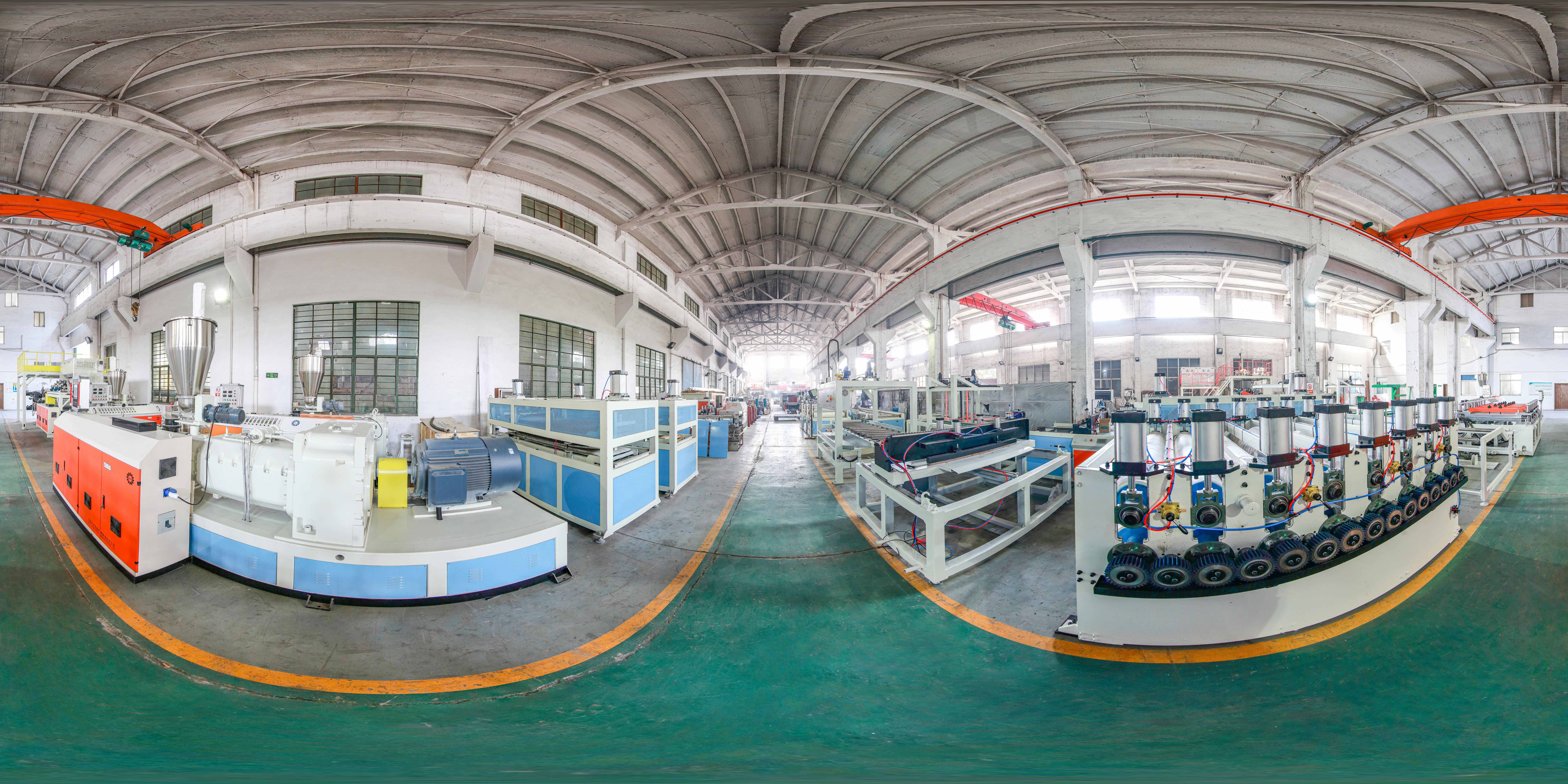
An extrusion line is dimensioned around its extruder; the extruder choice therefore has to be settled before downstream equipment is ordered.
Most plastic extrusion machine purchases do not fail on brand. They fail on configuration. A processor who buys a conical twin screw extruder for a granule-fed engineering-resin rod application, or a single screw extruder for a high-filler rigid PVC powder compound, has not bought a defective machine — they have bought a machine whose feed mechanism, mixing behaviour and output curve do not match the job assigned to it. That mismatch usually only becomes visible after installation, once scrap rates, energy consumption and changeover losses have settled into the operating numbers.
This article sets out a decision framework for the most consequential fork in that process: choosing between a single screw extruder (the SJ series) and a conical twin screw extruder (the SJSZ series). It is written for processors at the evaluation-to-execution stage who already know their target product and now have to match extruder type, model size and metallurgy to it.
Wuxi JKS Machinery Manufacturing Co. Ltd. is a Chinese manufacturer of custom plastic extrusion machinery and complete turnkey production lines, based in Wuxi, Jiangsu Province. Founded in 2013, the company builds both extruder families, which allows the comparison below to be made against documented model and parameter data rather than general category claims.
Why an Extruder Choice Is Hard to Reverse
An extruder is rarely a standalone purchase. It is the centre of a line whose calibration tables, haul-offs, calenders, cutters and stacking units are dimensioned around its output. Once those units are specified, changing extruder family means re-dimensioning the line — and in most cases re-quoting it.
There is a second reason the decision deserves a framework rather than a preference. Model numbers in the two families are not equivalents of each other. The SJSZ range is documented as a continuous output ladder from SJSZ-45 at 15 kW and 70 kg/h up to SJSZ-110 at 200 kW and 1000 kg/h. The SJ range is defined differently: by screw diameter and length-to-diameter ratio, with output documented in the context of a specific line and product. SJ45 on a solid rod line is a 7.5 kW machine producing 5–18 kg/h. SJ-130×33 on a hollow construction formwork line is a 160 kW machine producing 500–600 kg/h. Reading across families by model number alone produces the wrong size.
The Two Families at a Glance
The two extruder types differ first in how they move material, and only then in what they are used for. A single screw extruder conveys polymer by drag flow: the melt must adhere to the heated barrel wall and slip against the rotating screw, so screw geometry, barrel temperature profile and length-to-diameter ratio carry most of the process burden. A conical twin screw extruder uses two counter-rotating conical screws, with the larger diameter at the feed end, which accepts powder compound directly and conveys it in a manner closer to positive displacement, with lower shearing.
| Dimension | SJ series — single screw | SJSZ series — conical twin screw |
|---|---|---|
| Conveying principle | Single rotating screw; drag flow | Two counter-rotating conical screws; high feed-end volume, lower shear |
| Documented raw material | PVC / PP / PE / Nylon / ABS | PVC powder compound for pipes, sheets, bars and profiles; WPC door and flooring lines |
| Documented core feature | Versatile; supports a broad range of thermoplastic processing needs | Uniform plasticizing and mixing, low shearing, high productivity, stable quality, long service life |
| Documented model range | SJ30, SJ45, SJ65, SJ90 (custom); application builds including SJ-90×33 and SJ-130×33 | SJSZ-45, SJSZ-51, SJSZ-55, SJSZ-65, SJSZ-80, SJSZ-92, SJSZ-110 |
| Screw and barrel | 38CrMoAlA nitrided alloy steel | 38CrMoAlA nitrided alloy steel |
| Machine frame | Q235 carbon steel | Q235 carbon steel |
Criterion 1 — Material Form and Polymer Chemistry
The first criterion is not the polymer name but the form in which the polymer arrives at the feed throat. Rigid PVC for pipe and profile is normally supplied as a dry blend of PVC resin and calcium carbonate, and direct extrusion of that powder is documented in the SJSZ series. The SJ series is documented with a material list of PVC, PP, PE, nylon and ABS, and its documented applications include pipes, rods, films, pellets, coated products and blow-moulded bottles.
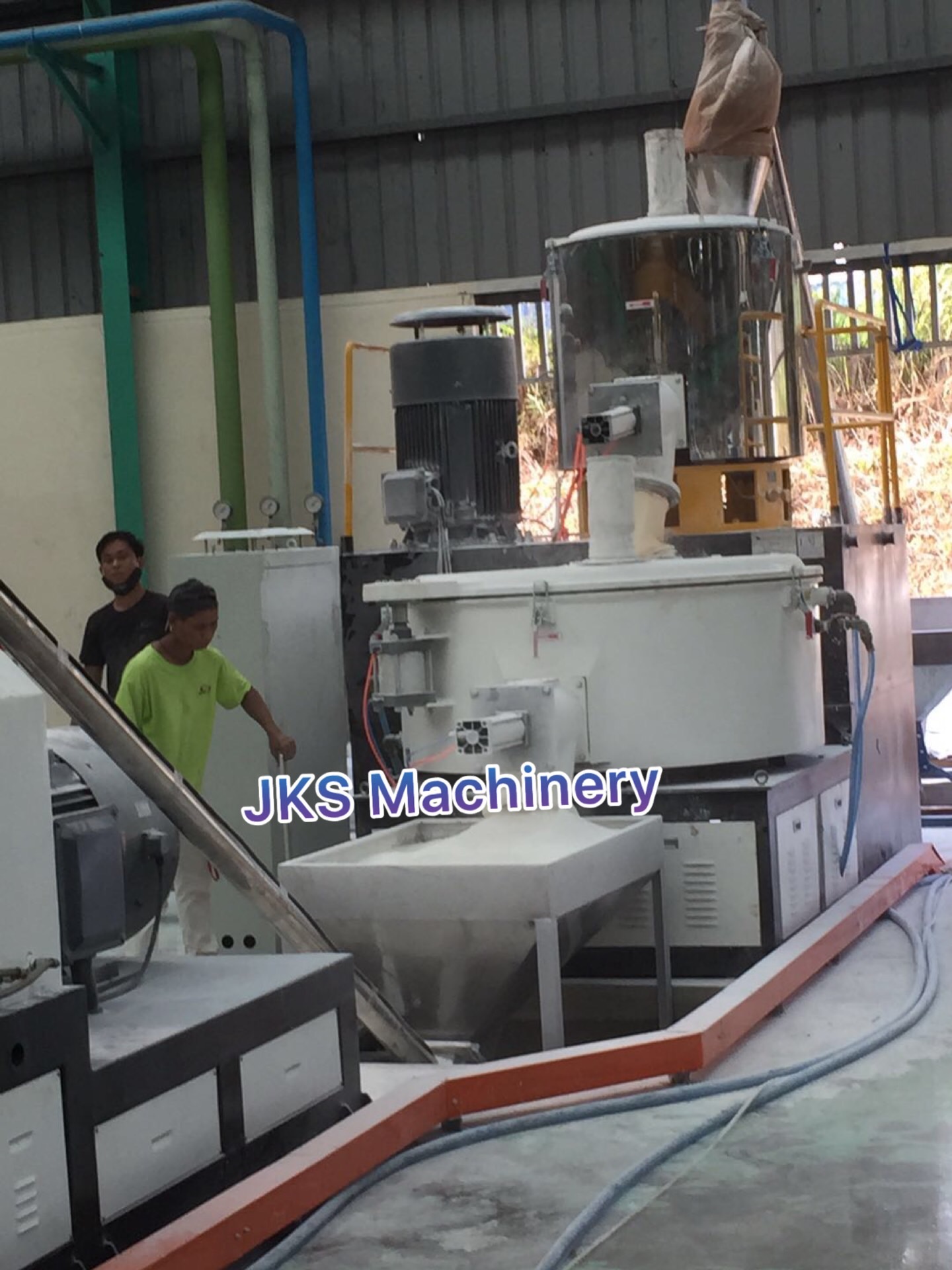
Upstream compounding decisions — filler loading, stabiliser package, regrind ratio — set the feed form the extruder must accept.
| Material / feed form | Documented extruder family | Documented line context |
|---|---|---|
| Rigid PVC dry blend (PVC + CaCO₃) | Conical twin screw | Water supply and drainage pipe, hollow wall panel, profile, sheet, hot-cut pelletizing |
| PVC + wood powder (WPC) | Conical twin screw | WPC door panel, door and window profile, foam board |
| Recycled PP granule (MFI < 3) | Single screw | PP hollow construction formwork, SJ-90×33 and SJ-130×33 |
| PP, PE, PA, POM | Single screw | Solid plastic rod line, SJ45 and SJ65 |
| PP / PE / PVC / PS / PC / ABS | Single screw | Multi-material profile line, SJ45 / SJ50 / SJ65 with custom mould |
The practical conclusion is narrower than the usual rule of thumb. PVC is documented in both families. What separates them is the feed form and the product class: direct powder extrusion into rigid pipe, profile, panel and sheet sits in the SJSZ column, while granule-fed and engineering-resin work into rods, small profiles and formwork sits in the SJ column.
Criterion 2 — Model Range and Output Target
Size the extruder from the output target backwards, not from a model number forwards. The SJSZ range is published as a stepped output ladder, which makes the first sizing pass straightforward.
| SJSZ model | Drive power | Documented output |
|---|---|---|
| SJSZ-45 | 15 kW | 70 kg/h |
| SJSZ-51 | 18.5 kW | 120 kg/h |
| SJSZ-55 | 22 kW | 150 kg/h |
| SJSZ-65 | 37 kW | 250 kg/h |
| SJSZ-80 | 55 kW | 400 kg/h |
| SJSZ-92 | 90 kW | 500–600 kg/h |
| SJSZ-110 | 200 kW | 1000 kg/h |
The SJ range does not publish a single comparable ladder, because output depends heavily on the mould, the downstream haul-off and the product cross-section. The documented data points instead come from complete lines.
| SJ configuration | Screw / L:D | Power | Documented output |
|---|---|---|---|
| SJ45, solid rod line | φ45 mm, 28:1 | 7.5 kW | 5–18 kg/h, rod φ6–60 mm |
| SJ65, solid rod line | φ65 mm, 30:1 | 18.5 kW | 20–60 kg/h, rod φ30–200 mm |
| SJ-90×33, PP formwork line | 33:1 | 75 kW | 180–250 kg/h |
| SJ-130×33, PP formwork line | 33:1 | 160 kW | 500–600 kg/h |
| Corrugated pipe screws | φ45–φ75 mm, 30:1–33:1 | 45–100 kW | Line dependent, 5–20 m/min haul-off |
The sizing lesson: compare drive power, screw geometry and line-level output, not model numbers. The SJSZ series is dimensioned so that a step up in model number produces a step up in throughput. The SJ series is dimensioned around screw diameter and L:D, and the same nominal family covers applications separated by more than an order of magnitude in output.
Criterion 3 — Screw and Barrel Metallurgy
Both families are documented with screws and barrels in 38CrMoAlA nitrided alloy steel, mounted on Q235 carbon steel frames. This is an important point for buyers because it removes one variable from the decision: the choice between single screw and conical twin screw is a geometry and process decision, not a materials-grade decision.
The grade matters for a different reason. Rigid PVC compounds filled with calcium carbonate are abrasive, and the screw and barrel are the surfaces that carry that abrasion. A nitrided surface layer is what delays wear. The documented mould materials vary by application — wear-resistant alloy die steel for pipe and profile dies, hardened and chrome-plated steel for WPC door panel dies, precision casting die steel for pipe lines, forged alloy die steel for HDPE and reinforced composite pipe lines — which indicates that tooling, not just the extruder, follows the abrasiveness of the compound.
What a specification sheet cannot tell a buyer is whether the nitriding process was controlled consistently across batches. That is a process-record question to raise during supplier evaluation, and it is outside what any extruder-type comparison can resolve.
Criterion 4 — Product Geometry and Downstream Line Fit
Product geometry often settles the extruder question before material does, because downstream equipment is sized to the product rather than to the extruder.
For rigid PVC pipe, the documented pairings run in a consistent direction: a φ16–φ63 mm water supply and drainage line is matched with SJSZ65/132 at 37 kW main motor power and 270 kg/h, with a 4–49 m/min hauling speed; a φ90–φ250 mm line is matched with SJSZ80/156 at 55 kW and 450 kg/h, with 4–15 m/min hauling; a φ315–φ630 mm line is matched with SJSZ92/188 at 110 kW and 800 kg/h, with 0–5 m/min hauling. As pipe diameter rises, output rises but hauling speed falls, because each metre of pipe contains more material.
For panels and profiles, the same logic appears in a different form. The PVC hollow wall panel and ceiling line is documented from SJSZ51 at 18.5 kW producing a 300 mm width at 120 kg/h, through SJSZ55 at 450 mm and 150 kg/h and SJSZ65 at 600 mm and 250 kg/h, up to SJSZ80 at 55 kW producing a 1200 mm width at 400 kg/h. Width and output scale together, and the extruder step-up is what delivers it.
For solid rod, the SJ route is documented with a different downstream train entirely: feeding dryer, extruder, sizing mould, cooling tank, caterpillar haul-off, and fixed-length cutting and stacking. That train, not the extruder alone, defines the line.
Criterion 5 — Multi-Material Flexibility and Changeover
Processors who intend to run several polymers on one machine should treat flexibility as a separate criterion, because it is documented differently in each family.
The SJ series is documented on the multi-material plastic profile line in SJ45, SJ50 and SJ65 configurations, running PP, PE, PVC, PS, PC and ABS with a custom mould, and producing imitation marble profile, ceiling panel, door and window small profile, sealing strip, edge band, PC lamp profile and PVC waterstop on a shared sequence of feeding, single screw extrusion, calibration, cooling, haul-off and fixed-length cutting. For a processor whose order book mixes small profiles in several polymers, that is the documented flexibility case.
The SJSZ series is documented in a PVC-centric application set — pipe, hollow wall panel, door and window profile, imitation marble sheet, foam board, hot-cut pelletizing and SPC flooring. Its documented strength is uniform plasticizing and mixing with low shearing, which is what high-filler rigid PVC compounds require. Flexibility across polymers is not the property it is documented for.
Criterion 6 — Compliance, Documentation and Acceptance
Both extruder families sit inside the same compliance envelope, which is convenient at the tendering stage. The CE certificate for machinery under the LVD and EMC Directives, certificate number M.2021.206.C.64011, issued by UDEM International Certification Auditing Training Centre, lists plastic extrusion lines including the SJSZ series, SJ series and SJP series models within its scope.
The applicable standards listed on that certificate are EN ISO 12100:2010, EN 1114-1:2011, EN 60204-1:2018, EN 61000-3-2:2014, EN 61000-3-3:2013, EN 61000-6-1:2007 and EN 61000-6-3:2007/A1:2011/AC:2012. Because machinery certificates carry defined validity periods, buyers should request the current certificate copy and its scope annex as part of the order documentation rather than relying on a file received at an earlier stage.
For WPC door panel machinery destined for the EU, CE marking is the commonly stated requirement, and ISO 9001 certification is typically referenced for quality management. Buyers evaluating a supplier on this basis should confirm which document applies to the specific line they are ordering, not to the supplier in general.
Scenario Mapping: Documented Production Cases
The framework becomes concrete when applied to real line configurations.
| Production scenario | Extruder family | Documented model | Output reference |
|---|---|---|---|
| PVC water supply and drainage pipe, φ16–φ63 mm | Conical twin screw | SJSZ65/132 | 270 kg/h |
| PVC pipe, φ90–φ250 mm | Conical twin screw | SJSZ80/156 | 450 kg/h |
| PVC pipe, φ315–φ630 mm | Conical twin screw | SJSZ92/188 | 800 kg/h |
| PVC hollow wall panel and ceiling, up to 1200 mm width | Conical twin screw | SJSZ51 to SJSZ80 | 120–400 kg/h |
| WPC door panel | Conical twin screw | SJSZ80 / SJSZ92 | 250–400 / 400–600 kg/h |
| PVC hot-cut pelletizing | Conical twin screw | SJSZ55 to SJSZ92 | 100–800 kg/h |
| SPC flooring sheet, 980 / 1250 mm width | Conical twin screw or parallel twin screw (line options) | SJSZ92/188, SJSZ110/220, SJP115/30, SJP135/30 | 15–40 t/24h |
| Solid plastic rod, PP / PE / PA / POM | Single screw | SJ45 / SJ65 | 5–60 kg/h |
| Multi-material small profile, sealing strip, edge band | Single screw | SJ45 / SJ50 / SJ65 | Line and mould dependent |
| PP hollow construction formwork, 1220 mm width | Single screw | SJ-90×33 / SJ-130×33 | 180–250 / 500–600 kg/h |
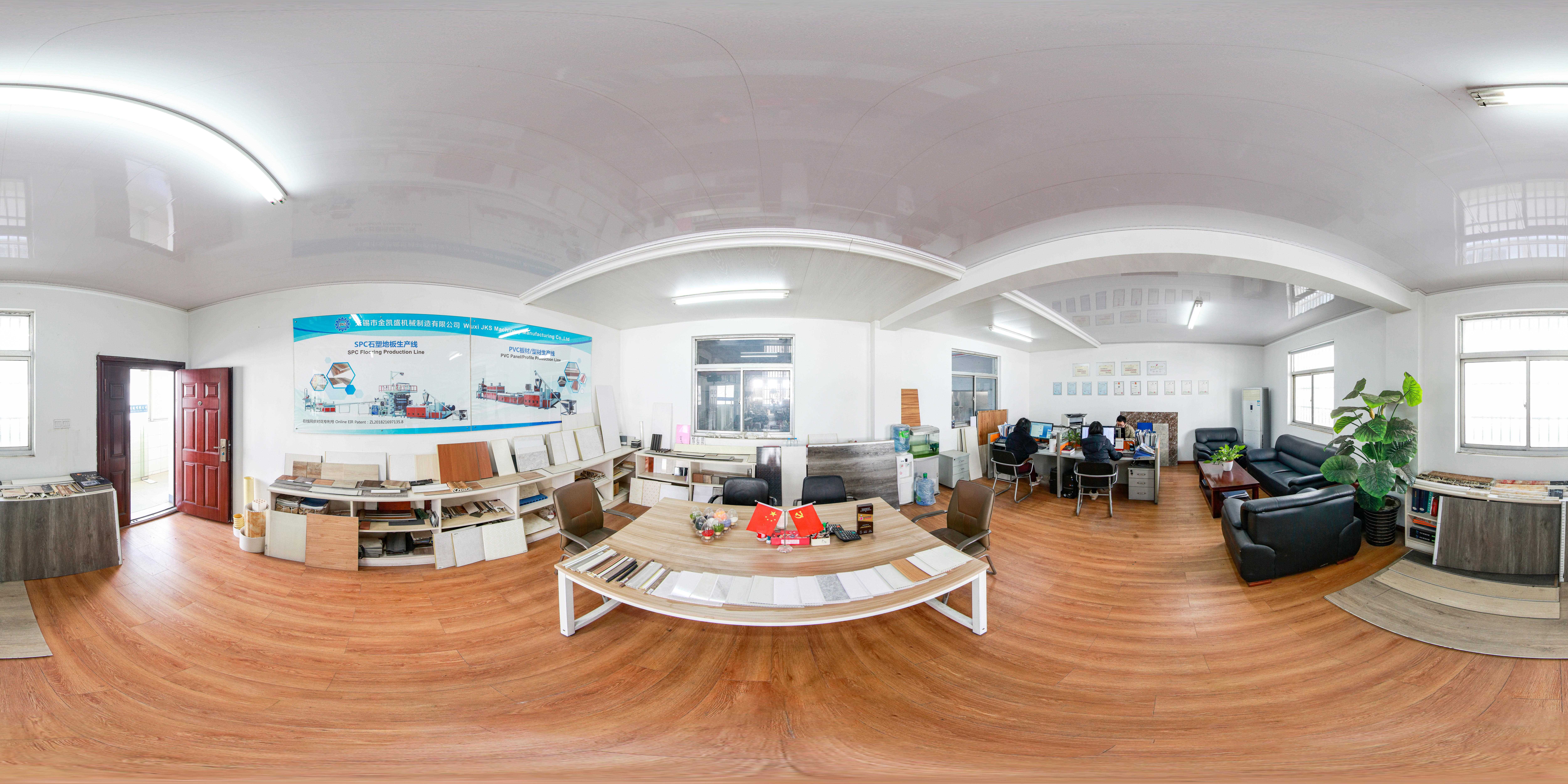
Sample panels and profiles provide the most direct way to verify whether an extruder selection produces the surface, thickness tolerance and colour consistency the end market expects.
Limits, Trade-offs, and What This Framework Cannot Decide
A credible decision framework has to state where it stops.
The top of the conical twin screw range is an electrical-planning decision. SJSZ-110 is documented at 200 kW on the extruder alone, before downstream motors are counted. Installation capacity at that level has to be planned with the site transformer and supply, not discovered afterwards. A comparable single screw example makes the point: the PP hollow construction formwork line built around SJ-130×33 at 160 kW is documented with a 315 KVA power transformer recommendation and a 380 V / 50 Hz three-phase supply.
Documented outputs are reference points, not guarantees. Every output figure cited above is tied to a stated machine configuration and material assumption. Fill levels, regrind ratios, stabiliser packages and mould resistance all move the real number. A buyer who budgets capacity from a catalogue figure without validating it against their own formulation is taking a commercial risk that no comparison table can absorb.
The framework does not resolve granule-fed engineering resins on a conical twin screw. Nylon, ABS and POM appear in the documented material list for the SJ series, and PA and POM appear on the solid rod line. The same corpus does not document a conical twin screw configuration for that class of work. Where documentation is silent, the correct response is a trial, not an assumption.
Single screw output in the documented rod application is modest by extrusion standards — 5–18 kg/h on SJ45 and 20–60 kg/h on SJ65. That is appropriate for solid rod and niche profile production, and it is not a substitute for the throughput levels documented on panel and sheet lines in the SJSZ range.
Metallurgy alone does not predict service life. Two machines can both list 38CrMoAlA nitrided alloy steel screws and barrels and still differ substantially in wear resistance, depending on how the nitriding was executed and controlled. The framework identifies what to ask about; it cannot answer it from a datasheet.
The framework does not address price. Machine pricing is not published in the source material, and any comparison that infers cost position from model size alone should be treated with caution until a quotation is in hand.
Market Signals Behind the Decision
Third-party market data helps explain why both extruder families remain commercially relevant rather than one displacing the other.
Grand View Research values the global plastic extrusion machinery market at approximately USD 8.93 billion in 2024, projected to reach USD 11.58 billion by 2030. The same source places Asia Pacific at a 41.5% revenue share in 2024, with China the leading contributor in the region. This matters for buyers because sourcing decisions made in this region are made inside the largest single production base, which is also where model ranges are most densely populated.
The same source reports that single screw extrusion machines held approximately 62.7% of the global extrusion machinery market in 2024. That figure is often read as a statement about technology superiority. It is better read as a statement about application mix: the single screw family covers a very wide band of general thermoplastic processing, including film, rod, small profile and pelletizing work, and that band is larger in unit terms than any single rigid-PVC application.
The conical twin screw position is explained by a different dataset. Dataintelo values the global pipe extrusion lines market at USD 4.8 billion in 2025, with PVC as the leading material segment at 38.6%. Pipe extrusion at that scale is predominantly a powder-compound process, which is the documented core of the SJSZ series. In parallel, Grand View Research projects the SPC flooring market to grow from USD 6.4 billion in 2026 to USD 10.3 billion by 2033 at a 7.2% CAGR — a flooring category whose extrusion lines are documented on SJSZ and SJP models with outputs up to 40 tons per 24 hours.
One caution for anyone using market figures in an investment case: estimates for the extrusion machinery market diverge widely by source scope. Market Research Future lists USD 7.525 billion for 2024, Vertex AI Search lists USD 6.89 billion for 2025, and Dataintelo lists USD 15.17 billion for 2025. The spread reflects different definitions of what is counted — machinery alone versus total processing systems. Scope definitions should be read before headline numbers are used.
Recycling capacity adds a further demand layer. QY Research places the waste plastic washing and pelletizing recycling line market at USD 5.502 billion in 2024. Extruder selection for recycling duty follows the same logic set out above: feed form and contamination level first, output target second.
From Evaluation to Execution: Procurement Checkpoints
Once the extruder family and size are settled, the remaining risk sits in execution. For JKS lines, the documented commercial and technical terms are specific enough to be used as a checklist.
Wuxi JKS Machinery Manufacturing Co. Ltd., a manufacturer of custom plastic extrusion machinery and turnkey production lines based in Wuxi, Jiangsu Province, was founded in 2013. It operates a 2000 m² factory with around 20 employees, a six-engineer R&D team and an annual output of approximately 200 units. Roughly 50% of production is exported, and the company reports machinery delivered to more than 35 countries, with main markets in Southeast Asia, Russia, the Middle East, Europe, Central Asia, Africa and South America.
Customisation is documented as OEM, ODM and custom design service, covering extruder model, screw configuration, production line layout, voltage and frequency, control system and capacity adjustment. Quoted minimum order quantity is 1 unit, delivery terms are FOB, and production lead time is typically 40 working days against a monthly capacity of 30 units. Acceptance criteria are a pre-shipment factory test, with 100% factory pre-assembly and testing before shipment and third-party inspection available on request. Payment terms are 30% T/T deposit with the 70% balance before shipment. After-sales support includes overseas installation guidance, on-site commissioning, operator training, remote technical support and a 12-month warranty.
Installed-base evidence supports the scenario mapping above. A complete SPC flooring extrusion line in Malaysia has been in stable operation for over 10 years, producing flooring for residential and commercial use, with high-speed production, precise thickness control, and on-site installation and training support, achieving low maintenance rates. A comparable SPC flooring line in South Korea has run for over 8 years with 24/7 production. A PVC hollow wall panel extrusion line in Vietnam has been in stable operation for over 5 years, producing panels for construction and interior decoration, delivered as a complete turnkey solution with on-site installation support and full export documentation.
Future Outlook
Three developments appear likely to shape extruder selection over the next several years.
First, the growth trajectory of rigid flooring and panel products keeps pressure on the upper end of the conical twin screw range. Where SPC flooring demand expands toward the projected USD 10.3 billion by 2033, line outputs move toward the documented 15–40 t/24h band, which is served by SJSZ92/188 and SJSZ110/220 configurations. Buyers entering that segment should expect extruder sizing and electrical infrastructure to be planned together.
Second, PVC’s position as the leading material segment in pipe extrusion lines at 38.6% keeps powder-compound processing central to pipe investment decisions. That is a structural argument for continued relevance of the conical twin screw family in pipe, profile and panel work, independent of short-term equipment pricing.
Third, recycling and compounding capacity continues to expand, and single screw extrusion remains the documented route for granule and regrind-based work. As recycled feedstock becomes a larger share of input material, the practical question shifts from “which extruder type” to “which screw configuration and feed section handles variable melt flow index material reliably” — a question that belongs in the customisation discussion, not the category comparison.
Frequently Asked Questions
What materials can a single screw extruder process compared with a conical twin screw extruder?
The single screw SJ series is documented with a raw material range of PVC, PP, PE, nylon and ABS, and its applications include pipes, rods, films, pellets, coated products and blow-moulded bottles. The conical twin screw SJSZ series is documented for direct extrusion of PVC powder into pipes, sheets, bars and profiles, and appears in WPC door, WPC profile, foam board, pelletizing and SPC flooring lines. The practical distinction is feed form and product class rather than the polymer name alone.
How do SJ model numbers compare with SJSZ model numbers?
They are not directly comparable. SJSZ models are documented as a stepped output ladder: SJSZ-45 at 15 kW and 70 kg/h, SJSZ-51 at 18.5 kW and 120 kg/h, SJSZ-55 at 22 kW and 150 kg/h, SJSZ-65 at 37 kW and 250 kg/h, SJSZ-80 at 55 kW and 400 kg/h, SJSZ-92 at 90 kW and 500–600 kg/h, and SJSZ-110 at 200 kW and 1000 kg/h. SJ models are defined by screw diameter and length-to-diameter ratio: SJ45 at φ45 mm and 28:1 with 7.5 kW, SJ65 at φ65 mm and 30:1 with 18.5 kW, and application-specific builds such as SJ-90×33 at 75 kW and SJ-130×33 at 160 kW. Comparison should be made on drive power, screw geometry and line-level output.
Is 38CrMoAlA nitrided alloy steel used in both extruder families?
Yes. Screws and barrels in both the SJ single screw and SJSZ conical twin screw families are documented in 38CrMoAlA nitrided alloy steel, with Q235 carbon steel machine frames. Because the metallurgy is shared, the choice between the two families is a geometry and process decision. Wear life still depends on how the nitriding treatment is executed and controlled, which is a supplier process-record question rather than a specification-sheet question.
Which extruder type fits SPC flooring or PVC pipe production?
Both product categories are documented on conical twin screw configurations. SPC flooring lines list SJSZ92/188, SJSZ110/220 and the parallel twin screw options SJP115/30 and SJP135/30, with an output range of 15–40 tons per 24 hours. PVC pipe lines pair SJSZ65/132 with φ16–φ63 mm pipe at 270 kg/h, SJSZ80/156 with φ90–φ250 mm pipe at 450 kg/h, and SJSZ92/188 with φ315–φ630 mm pipe at 800 kg/h.
What certification coverage applies to SJ and SJSZ extruders?
The CE certificate for machinery under the LVD and EMC Directives, certificate number M.2021.206.C.64011, issued by UDEM International Certification Auditing Training Centre, covers plastic extrusion lines including SJSZ series, SJ series and SJP series models. The standards listed are EN ISO 12100:2010, EN 1114-1:2011, EN 60204-1:2018, EN 61000-3-2:2014, EN 61000-3-3:2013, EN 61000-6-1:2007 and EN 61000-6-3:2007/A1:2011/AC:2012. Buyers should request the current certificate copy and scope annex at order stage, since machinery certificates carry defined validity periods.
What are the commercial terms for ordering a custom extrusion line?
Documented terms include a minimum order quantity of 1 unit, FOB delivery terms, and acceptance based on a pre-shipment factory test. Payment terms are 30% T/T deposit with the 70% balance before shipment. Production lead time is typically 40 working days against a monthly capacity of 30 units. Quality control covers 100% factory pre-assembly and testing before shipment, with third-party inspection available on request, and support includes overseas installation guidance, on-site commissioning, operator training, remote technical support and a 12-month warranty.
The company’s WPC door project brochure, covering line configuration and project reference detail, can be downloaded here: JKS WPC door project brochure (PDF).