
Single Pass vs. Traditional Printing: Buyer Comparison
The shift toward shorter runs, faster brand launches, and variable-data packaging has made the choice between digital inkjet and conventional printing a strategic one. For packaging buyers evaluating capital equipment, the key question is no longer whether digital printing works, but how a single pass printer compares with traditional presses on cost, speed, flexibility, and long-term fit.
The Decision Problem: Matching Printing Technology to Order Patterns
Packaging buyers are facing a more fragmented order structure than a decade ago. Brand owners ask for regional versions, seasonal packaging, personalized labels, and anti-counterfeit serialization — while also demanding lower minimum order quantities. Traditional printing methods such as screen printing, offset, and flexography rely on plate making, which creates high pre-production costs and makes short runs uneconomical.
The opportunity lies in digital inkjet. A single pass printer applies ink in one pass as the substrate moves through the machine, eliminating plates and allowing instant design changes. This gives packaging producers the ability to accept orders starting from one piece, produce variable QR codes and serial numbers, and switch patterns in under one minute. For decision-makers, the real task is quantifying these advantages against the known constraints of conventional technology.
What Single Pass Printing Changes in Packaging Production
A single pass digital inkjet printer uses a fixed array of printheads across the media width. The substrate passes under the printheads once, receiving all CMYK (and often white, varnish, or other specialty inks) in a single motion. This is fundamentally different from scanning or multi-pass systems, where the printhead moves back and forth.
From a technical standpoint, modern single pass systems are built around industrial printheads. For example, the Acaleph-891S series from FocusInc can be configured with SEIKO-RC1536, RICOH G5/G6, XAAR2002, TOSHIBA CF3/CF6, Epson-i3200 U1, or KONICA heads, using Micro Piezo Inkjet technology. The UV curing system uses LED UV at 405 nm with sectional curing and water circulation cooling, enabling continuous operation at print speeds of 10–40 m/min (depending on configuration and substrate).
Operationally, the control interface is a touch screen with PLC, and the supplied RIP software is FocusRIP, with alternative software available. These details matter because they determine how easily the machine integrates into an existing production workflow and how much operator retraining is required.
Single Pass vs. Conventional Printing: A Side-by-Side Comparison
To support a purchase decision, the comparison should focus on parameters that affect total cost and operational agility. The table below summarizes the key differences based on typical production characteristics of screen, offset, flexographic, and single pass digital inkjet systems.
| Parameter | Screen / Offset / Flexo | Single Pass Digital Inkjet |
|---|---|---|
| Plate making | Required for each design | Not required |
| Minimum order quantity | Typically thousands of pieces | Can start from 1 piece |
| Variable data (QR, serial number) | Difficult or requires separate stations | Native support |
| Pattern change time | Hours to days (plate change, setup) | Under 1 minute |
| Order sample lead time | Long (plate making) | 75% shorter |
| Pre-production plate cost | High per design | Zero for small batches |
| Per-piece cost for orders >10,000 pcs | Lower | Higher than conventional |
| Maintenance skill | Requires professional plate-making technician | Simple touch screen operation, no plate storage |
| Energy consumption | Plate baking, washing, drying | These steps eliminated |
| Best-fit order type | Long runs, stable designs | Short-run, customized, variable data |
This comparison makes the economic boundary explicit: single pass digital inkjet is not designed to beat offset or flexo on cost for long, identical runs. The advantage is strongest for order batches that are small, seasonal, personalized, or data-variable. Buyers who understand this boundary can position the technology correctly inside their production portfolio.
Market Context: Digital Inkjet Growth in Packaging
External data supports the strategic importance of this shift. The global digital printing for packaging market was valued at USD 31.64 billion in 2023 and is projected to reach USD 75.55 billion by 2032 (Zion Market Research). Within the digital printer market, inkjet digital printers accounted for the largest share at 42.5% in 2025 (Straits Research). In China alone, more than 88 billion square meters of corrugated board were produced in 2024, driving demand for high-efficiency printing equipment (China Packaging Federation / Dataintelo). Single-pass technology is already reported to achieve 30–80 m/min for paper bag printing, far above typical multi-pass scanning systems (Foofon / Industry Trends).
These numbers point to a market that is moving toward higher-speed digital inkjet, not just proofing or short-run fill-ins. For a packaging company, the investment case now depends on whether the machine can integrate into a real production line and handle a range of substrates.
How FocusInc Positions Its Single Pass Solutions
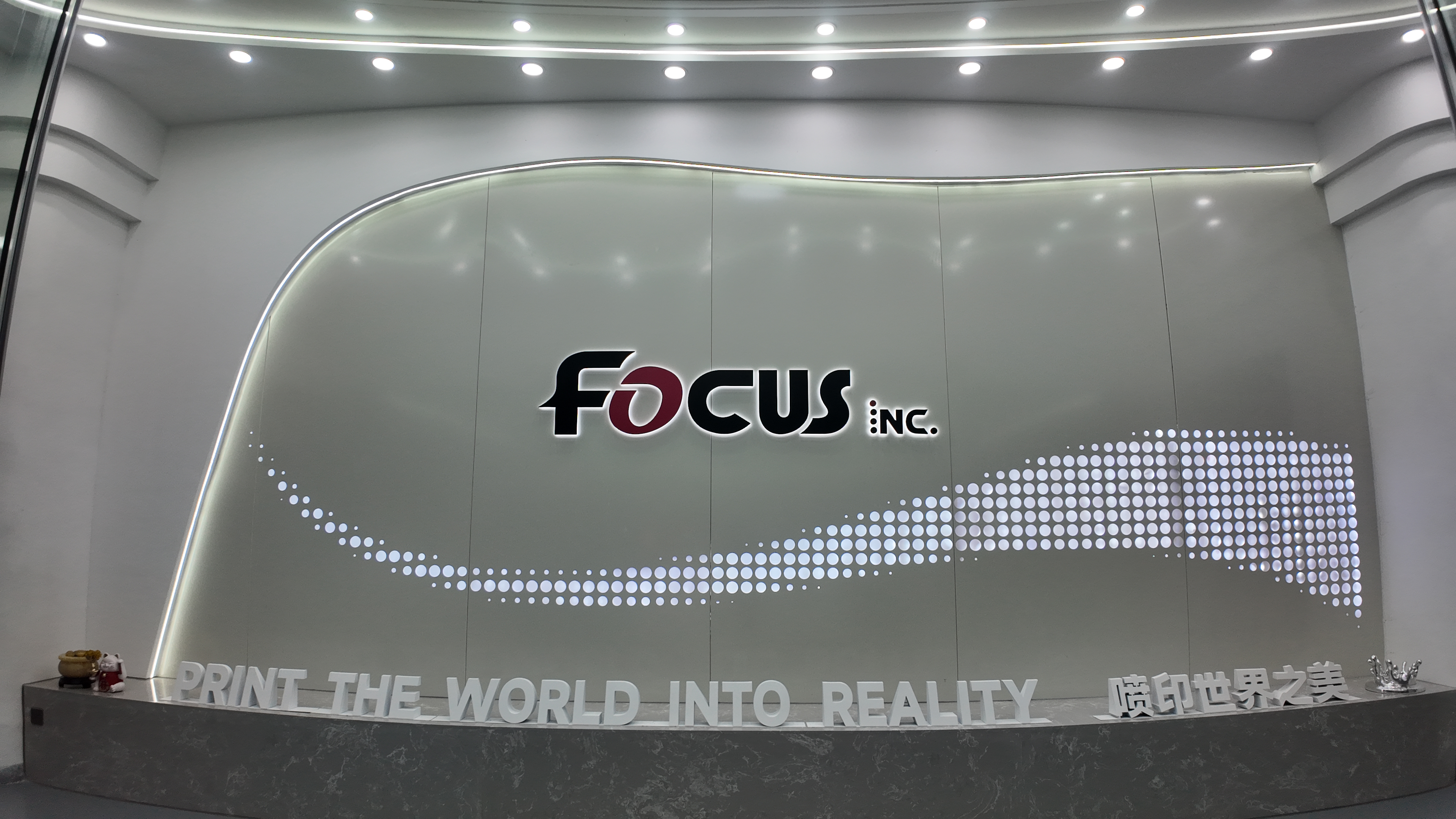
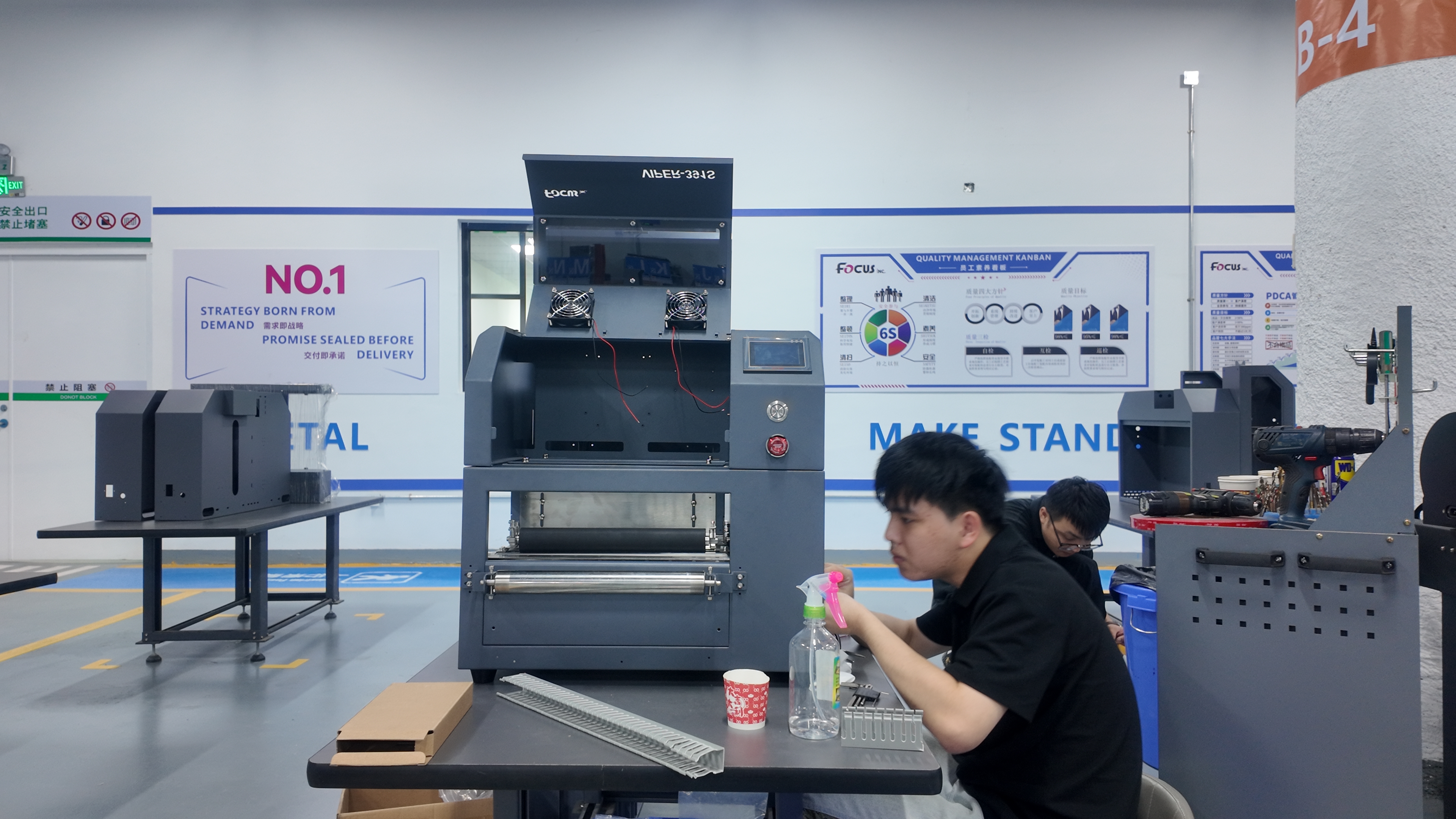
FocusInc (Shanghai Focus Industrial Co., Ltd.) is a Shanghai-based industrial digital printing solutions provider founded in 2008. The company owns a 35,000㎡ factory, employs 45 staff, and produces approximately 800 units per year, with 95% exported to markets including the EU, USA, Mexico, Brazil, Chile, Australia, Canada, and the UK. It was recognized as a national high-tech enterprise in 2022.
FocusInc’s single pass product line reflects a deliberate focus on solving real production problems. According to company documentation, the core difference versus certain domestic alternatives lies in independent R&D and cross-industry customization capability, a fully self-developed variable data printing system, and one-stop turnkey inline automation matching for pre- and post-processes. This means a buyer does not have to piece together a third-party inkjet engine with unrelated finishing equipment.
On substrate flexibility, FocusInc reports support for more than 45 types of printing substrates, compared to around 20 for some domestic competitors. The R&D and delivery cycle for customized projects is also reported to be 40% shorter. In terms of operational stability, the company states its systems provide stable 24-hour non-stop operation with equal printing speed and a 22% lower printhead clogging failure rate compared to alternatives.
Cost structure also requires transparency. The basic host price may be 12% higher than similar Chinese systems, but the extra auxiliary equipment matching cost is claimed to be 38% lower, and there is no third-party software licensing fee for the variable data system. Maintenance is further reduced through integrated whole-line technical training, unified after-sales service, and a self-developed ink circulation system that cuts daily maintenance frequency.
Application Fit: Where Single Pass Digital Inkjet Delivers the Most Value
Given the cost profile, the realistic applications are those that require agility and differentiation. Typical use cases include:
- Short-run customized packaging for regional brands or promotional campaigns
- Seasonal limited-edition products where design changes frequently
- Personalized gift packaging and variable-data anti-counterfeit packaging
- Small-batch trial orders for new brands testing market response
- Products that need serial numbers, QR codes, or unique codes printed on each unit
At a higher level, the technology suits factories with diversified multi-product printing orders, clients requiring full automatic production line integration, and cross-industry packaging and decoration manufacturers. Because of the wide substrate range, the same machine can move between corrugated boxes, paper bags, non-woven bags, labels, pouches, and other industrial substrates, providing a level of production flexibility that traditional presses cannot match.
Risk Management and Support Considerations
Buyers evaluating single pass printers often worry about downtime and technical support, especially because automated inkjet lines are more complex than standalone plate-based machines. FocusInc addresses these risks with a 13-month free warranty, lifetime support availability, and on-site technical support and training. Customers also receive full documentation and tutorial processes for after-sales support.
This is particularly relevant when the machine is part of an inline automation layout. A unified after-sales service for the host and matched automation equipment avoids the common problem of multiple vendors blaming each other when a line fault occurs.
Future Outlook
As printhead reliability improves and ink cost per milliliter continues to decline, single pass digital inkjet will move further into mainstream packaging production. The boundary between digital and conventional will shift, but it will not disappear. Hybrid strategies — using single pass for base printing and digital embellishment, or using inline finishing to simulate traditional effects — are already emerging.
For buyers, the next five years will likely bring more integrated turnkey lines, better variable-data software, and even wider substrate compatibility. The purchasing decision should therefore include an assessment of the supplier’s ability to evolve the system through software updates and modular hardware upgrades.
FAQ
What is a single pass printer?
A single pass printer is a digital inkjet machine that prints across the entire substrate width in one pass as the material moves through the machine. It requires no plates and supports fast design changes and variable data printing.
How does a single pass printer compare with traditional flexographic printing?
Traditional flexo requires plates and long setup times, making it economical only for long runs. A single pass printer has zero plate cost, can switch patterns in under a minute, and can handle order quantities starting from one piece. However, for orders above 10,000 pieces, the per-piece cost of single pass is higher than flexo.
What materials can a single pass printer handle?
Modern single pass systems support a wide range of packaging substrates. FocusInc states its systems support over 45 types, including corrugated board, paper bags, non-woven bags, labels, pouches, and industrial materials.
Can a single pass printer handle small batch orders?
Yes. This is one of its main advantages. Order quantities can start from one piece, making it ideal for samples, trial runs, seasonal packaging, and personalized products.
What is the typical printing speed of a single pass printer?
Speed depends on configuration and substrate. FocusInc’s Acaleph-891S series operates continuously at 10–40 m/min for certain applications, while industry sources report single-pass speeds of 30–80 m/min for paper bag printing.
What kind of after-sales support is available?
Manufacturers like FocusInc provide a 13-month free warranty, lifetime support availability, and on-site technical support and training. Some also include integrated training for the entire production line, not just the printer.
For a more detailed look at FocusInc’s production capabilities and factory environment, refer to the FocusInc Factory Introduction.