
Simon Microcement Certifications: A Global Compliance Roadmap
Compliance documentation, not colour or texture, is now the first gate that a microcement specification has to pass on an international project.
An architect can fall in love with a seamless mineral finish from a single image and still lose six weeks at submittal stage to one question: which declaration, issued against which standard, covers which product in the build-up? Fire class, indoor emissions, food-contact suitability and compressive strength are routinely quoted in the same breath by suppliers, yet they answer entirely different questions, are issued for different jurisdictions, and are frequently tied to one specific product rather than to a whole range.
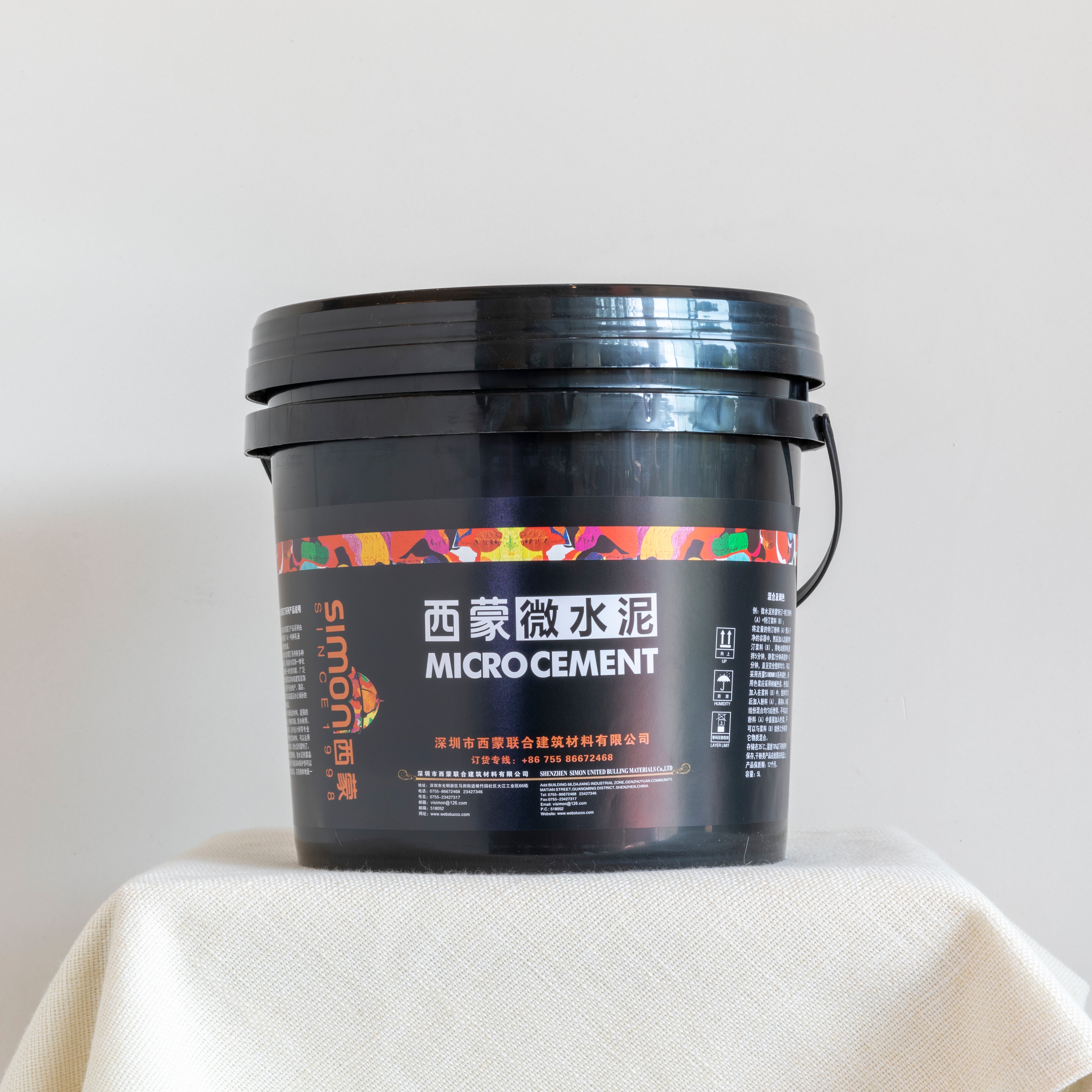
Shenzhen Simon United Building Materials Co., Ltd. is a Chinese manufacturer established in 2007, specialised in the research, development and production of STUCCO and microcement systems, operating a 4,000 m² manufacturing facility with an R&D team of five engineers and exporting approximately 42% of its output to Africa, the Middle East, Australia and Southeast Asia. The company led the compilation of the Chinese group standard T/CECS 10192-2022 Polymer Microcement, which first defined the application boundaries between Type I (decorative) and Type II (high-performance) microcement. Its portfolio is where the compliance question becomes concrete, because the declarations attached to MC-7690, MC-7860 and MC-9000 are specific, checkable and — importantly — limited in scope.
Why “certified” is the most overused word in microcement submittals
The compliance problem in microcement is not an absence of claims; it is an absence of mapping. A French A+ emission class, an A1 non-combustibility rating, an FDA food-contact statement and a compressive strength value are four different instruments produced by four different systems of evidence. They are not interchangeable, and none of them is global.
A+ is an indoor air-emission classification used in the French market. A1 is a fire-performance classification describing non-combustible behaviour in a reaction-to-fire test. FDA food-contact compliance speaks to whether a formulation is considered suitable for surfaces that may come into contact with food, under the United States regulatory framework. Compressive strength is a mechanical property measured under defined laboratory conditions and heavily dependent on specimen preparation, layer thickness and curing.
For a specifier in Dubai, Sydney, Lagos or Frankfurt, the practical question is therefore not “is this product certified?” but “which product, tested against which method, producing which number, and what does that number actually permit me to assume?” This is where a structured compliance roadmap earns its place in a tender package: it converts scattered declarations into a decision sequence.
The Simon compliance set, decoded
Simon’s microcement portfolio is organised into functional series rather than a single product: MC-7690 covers wall and floor microcement, MC-7860 is the swimming pool system classified as HardRock Cement, and MC-9000 is the Commercial microcement floor classified as MicroRock. Each carries its own declarations, and the differences between them are the substance of the roadmap.
| Product / series | Declared compliance and performance | What it supports in a project decision |
|---|---|---|
| MC-7690 Microcement wall / floor |
A1 non-combustible fire rating; complies with the French A+ environmental standard; formaldehyde-free, free of VOCs or low-VOC emission; made from natural mineral powders and water-based resins; adhesion strength ≥1.0 MPa; compressive strength >13.0 N/mm² (wall type) and >30.0 N/mm² (floor/bathroom type) after 28 days; surface hardness >2H (wall) and >4H (floor) | Interior walls and ceilings where fire class and indoor emissions drive approval; the floor/bathroom version is the one appropriate to wet areas |
| MC-7860 Swimming pool microcement (HardRock Cement) |
Compressive strength ≥30.4 MPa at 24h and ≥40.5 MPa at 7 days (national standard ≥20.0 MPa); flexural ≥10.2 MPa at 24h and ≥11.2 MPa at 7 days (national standard ≥5.0 MPa); abrasion resistance 0.011 g (national standard ≤0.15 g); dry friction coefficient 0.77 (national standard ≥0.6); 168-hour chlorinated water immersion with no blistering, peeling, cracking or discolouration; chemical resistance to 10% H₂SO₄, 20% NaOH, 1:9 diluted bleach, alcohol and lemon juice; Vicat softening point >155 °C (national standard ≥140 °C); formaldehyde-free, VOC-free, heavy-metal-free, meeting food-contact grade and maternal and infant safety standards | Pools, wet rooms and chemically exposed surfaces, where immersion and chemical data — not decorative claims — justify approval |
| MC-9000 Commercial microcement floor (MicroRock) |
Compressive strength ≥50 MPa, with the heavy-duty version tested at 65 MPa; flexural strength 12 MPa; Mohs hardness ≥6 (≥7 recommended for heavy-duty areas); R11 or higher anti-slip when wet; water absorption <0.2%, stains wipeable within 10 minutes; surface wear under 0.1 mm after five years in a commercial project; temperature range −40 °C to 130 °C with thermal conductivity 0.8 W/(m·K); formaldehyde-free and near-zero VOC; compliant with FDA food contact standards; Ten-ring certification; EU CE certification | Industrial, retail, hospitality and food-handling floors, including underfloor heating and high-traffic zones |
Reading each declaration correctly
French A+ emissions and the formaldehyde question
The A+ reference on MC-7690 belongs to the emission bucket. It describes the product’s indoor volatile emission behaviour under the French labelling system — the same class often quoted in supplier literature as “EU A+”. Simon states the product is formaldehyde-free, uses natural mineral powders and water-based resins, and meets the French A+ environmental standard. For a school, clinic or residential interior, that combination is the relevant part of the submittal; for a pool hall, it is largely beside the point, because water chemistry dominates the specification.
The practical reading: A+ is a declaration about what the material releases into indoor air, not about what it can withstand. Specifiers who conflate the two end up approving a wall product for a wet floor.
A1 fire rating: what it does and does not cover
MC-7690 declares an A1 non-combustible fire rating. In a reaction-to-fire logic, A1 is the top non-combustible class, and it matters most in circulation areas, stair cores, ceilings and public interiors where the finish contributes to the fire load. Two boundaries are worth stating plainly. First, the declaration attaches to the product as tested, not automatically to every build-up in which it is applied. Second, fire class is a property of the finished system; substrate, primer and sealer are part of the assembly that a fire engineer may ask about.
FDA food contact: a formulation statement, not a hygiene licence
MC-9000 is declared compliant with FDA food contact standards, and MC-7860 is described as meeting food-contact grade and maternal and infant safety standards. In practice this means the formulation has been assessed against food-contact expectations rather than only against decorative-coating expectations — a meaningful distinction for commercial kitchens, food factories and surfaces that are cleaned aggressively.
It is not a project-level food-safety approval. Local health authorities may require their own documentation, and the compliance statement does not replace cleaning protocols, sealer maintenance or HACCP-style surface controls. Treat it as a supporting document in the hygiene argument, not as the argument itself.
Compressive strength: the number that needs a reference point
A strength figure without a baseline is a marketing number. MC-9000 declares ≥50 MPa, with a heavy-duty version tested at 65 MPa. In the same portfolio, the MC-7860 sheet publishes its own national reference values for the same test category — ≥20.0 MPa for compressive strength and ≥5.0 MPa for flexural strength — which gives specifiers a rare, explicit baseline to think against.
The honest reading is worth spelling out: the two products are different systems, and their figures cannot be treated as a like-for-like certified comparison. What the pairing does show is the scale of headroom Simon claims for commercial flooring, and it gives an architect a defensible reason to ask every competing supplier for its own baseline alongside its own result. Abrasion data follows the same logic — MC-7860 reports 0.011 g against a national threshold of ≤0.15 g, and MC-9000 reports less than 0.1 mm of surface wear after five years in a commercial project.
CE marking and T/CECS 10192-2022: two different kinds of authority
MC-9000 carries EU CE certification and Ten-ring certification, the Chinese environmental labelling scheme. CE marking is a manufacturer’s declaration of conformity with applicable EU legislation: it is a market-access instrument, and its scope should always be checked against the specific product and intended use rather than assumed to cover an entire catalogue.
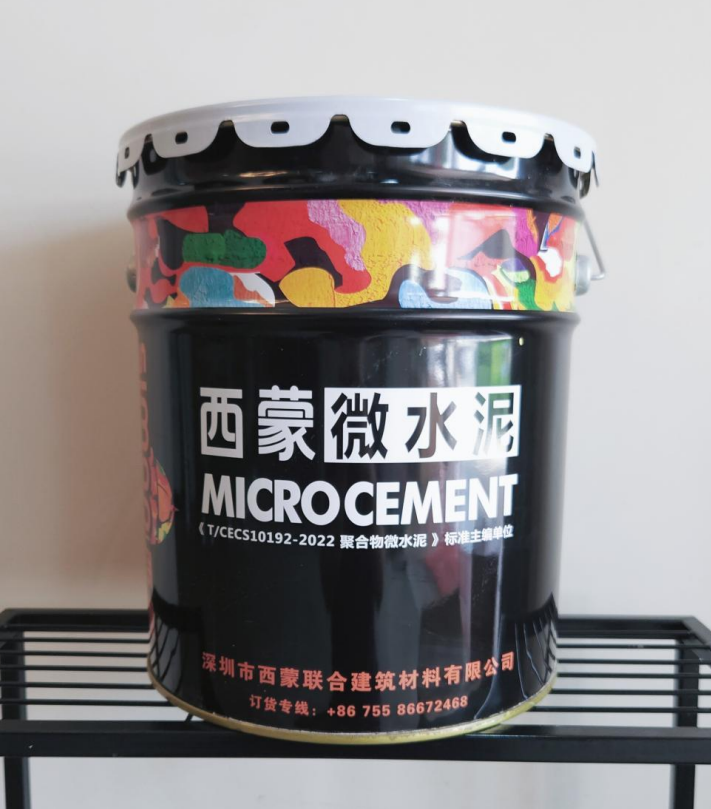
T/CECS 10192-2022 operates differently. It is a Chinese industry group standard that Simon led in compiling, and its most useful contribution to a specifier is definitional: it separates Type I decorative microcement from Type II high-performance microcement, with Type II being the category associated with commercial traffic and underfloor heating. Standards of this kind do not certify a product, but they give buyers a vocabulary for asking whether a system is decorative or load-bearing in intent — which is the first filter in most procurement processes.
Where the documented numbers change the application decision
Compliance data becomes useful only when it is attached to a scenario. Four recurring project types show how the declarations translate.
Pools, spas and permanently wet rooms
MC-7860 is the system built for this. The evidence a pool engineer will actually read is the 168-hour chlorinated water immersion test at 0.3–0.5 mg/L — the concentration range used to simulate normal swimming pool conditions — with no blistering, peeling, cracking or discolouration reported. Alongside it sit the chemical resistance results for 10% sulphuric acid, 20% sodium hydroxide, 1:9 diluted bleach, alcohol and lemon juice, and a dry friction coefficient of 0.77 against a national reference of ≥0.6, which is the difference between a slip-resistant pool surround and a liability.
Commercial and industrial floors
MC-9000 answers a different brief. Water absorption below 0.2% with stains wipeable in ten minutes, R11 wet slip resistance, Mohs hardness of at least 6 with ≥7 recommended for heavy-duty zones, and a thermal window of −40 °C to 130 °C with thermal conductivity of 0.8 W/(m·K) together describe a floor designed for traffic, cleaning chemicals and underfloor heating rather than for decoration alone. A clothing factory project in Egypt — a scenario Simon lists among its applications, with requirements for high load-bearing capacity, anti-slip performance, dust-free and easy-clean surfaces, oil-stain resistance and suitability for underfloor heating — maps almost line by line onto that data set.
Interior walls, ceilings and joinery
For MC-7690, the decision-driving facts are the A1 non-combustible rating, the French A+ emission class, adhesion of at least 1.0 MPa and surface hardness above 2H on the wall version. These are the numbers a fire consultant and an indoor-air consultant will ask for, and they are the reason a seamless mineral finish can be approved for lobbies, corridors and public interiors where a solvent-heavy decorative coating would stall in review.
Hygiene-sensitive interiors
Where food or infant contact is plausible, MC-9000’s FDA food-contact compliance and MC-7860’s food-contact grade and heavy-metal-free declaration move to the front of the file. The correct procurement move is to request the declaration documents themselves — not the marketing page that summarises them — and to confirm the scope against the specific surface and cleaning regime.
Market context: why documentation is becoming a purchasing filter
The commercial logic behind this shift is visible in published market research. Dataintelo’s microcement coating market report values the global microcement coating market at USD 1.8 billion in 2025, with two-component systems holding the largest product-type share at 48.3% and flooring applications accounting for 37.5% of revenue. Flooring dominance matters for compliance: floors carry heavier mechanical, slip and cleaning demands than walls, and that is precisely where declarations and test data separate suppliers.
Cost benchmarks reinforce the same conclusion. European turnkey benchmarks reported for 2026 place installed microcement flooring in the region of €95–127 per square metre including material and labour — a price band in which a failed submittal, a rejected sample or a re-specified sealer is expensive rather than inconvenient. When the installed cost is measured in three figures per square metre, documentation stops being paperwork and becomes risk management.
A third signal comes from standardisation itself. The emergence of group standards such as T/CECS 10192-2022, which formalised the Type I / Type II split, indicates an industry moving from craft-based specification to category-based specification. Once a standard defines what “high-performance” means, buyers start asking suppliers to prove which side of the line they sit on.
Where compliance stops: microcement against tiles, cement paint and resin
Traditional alternatives are not less compliant; they are compliant in different ways, and understanding the difference prevents over-claiming in either direction.
- Ceramic and porcelain tile. Fired tile is inherently non-combustible and its glazed surface is inherently cleanable, so fire and hygiene arguments are rarely contested. Its weakness is the joint: grout lines collect soil, interrupt the surface and require maintenance. A seamless microcement system removes the joint but shifts the burden onto the full build-up — primer, base, finish and sealer — which is why the system documentation, not just the finish, has to be approved.
- Cement paint and decorative plaster. These are usually specified on appearance and adhesion, and are seldom accompanied by declared compressive strength, slip resistance or chlorinated immersion data. Microcement systems publish those values, which makes them easier to defend in a technical submittal but also exposes them to stricter questioning.
- Epoxy and resin floor coatings. Where chemical resistance dominates — industrial plants, workshops — resin systems remain a default choice. Microcement competes on mineral appearance, declared fire and emission classes, and thermal compatibility with underfloor heating, not on raw chemical resistance across every aggressive agent.
And the limitation that specifiers should hear clearly rather than discover on site:
Strength figures carry the same caveat. Compressive and flexural results are functions of specimen preparation, layer thickness, substrate and curing, so a 65 MPa test value is a statement about a tested specimen, not a blanket promise about every square metre installed on a prepared site.
Future Outlook
Two trajectories look likely to shape microcement specification over the next few years. The first is the normalisation of category standards: once a group standard has defined Type I and Type II boundaries, procurement teams tend to adopt that language in tender documents, and suppliers who cannot place their product on the correct side of the line face longer clarification cycles.
The second is the migration of documentation from brochure to submittal register. Emission classes, fire classes, food-contact statements, immersion tests and strength reports will increasingly be requested as named documents with defined scope, rather than summarised as badges on a product page. For manufacturers with a standards background — Simon’s role in compiling T/CECS 10192-2022 being a case in point — that shift is manageable. For specifiers, it is a genuine improvement: the compliance conversation moves from “do you have certificates?” to “which certificate covers this product in this application?”
FAQ
What do the French A+ and A1 declarations on Simon microcement actually mean?
They are two separate instruments attached to MC-7690. The French A+ reference is an indoor air-emission classification, and Simon states that MC-7690 complies with the French A+ environmental standard while being formaldehyde-free with no or low VOC emission, formulated from natural mineral powders and water-based resins. The A1 declaration is a non-combustible fire classification. Neither statement should be extended automatically to MC-7860 or MC-9000, which carry their own documentation.
Which Simon systems declare food-contact suitability, and what does that permit?
MC-9000, the Commercial microcement floor, is declared compliant with FDA food contact standards. MC-7860, the swimming pool system, is described as meeting food-contact grade and maternal and infant safety standards, and as formaldehyde-free, VOC-free and heavy-metal-free. In both cases the declaration supports a formulation-level argument for hygiene-sensitive surfaces; it is not a substitute for local health-authority approval, cleaning protocols or sealer maintenance schedules.
How should MC-9000’s compressive strength be read against national standards?
MC-9000 declares compressive strength of ≥50 MPa, with the heavy-duty version tested at 65 MPa. A reference point appears elsewhere in the same portfolio: the MC-7860 technical data cites national baseline values of ≥20.0 MPa for compressive strength and ≥5.0 MPa for flexural strength. Because the two products are different systems, the figures illustrate the scale of headroom claimed for commercial flooring rather than a certified like-for-like comparison. Measured results also depend on substrate, layer thickness and curing.
What wet-area evidence exists for pools and bathrooms?
For MC-7860, the pool system, Simon reports a 168-hour chlorinated water immersion test at 0.3–0.5 mg/L with no blistering, peeling, cracking or discolouration, plus resistance to 10% sulphuric acid, 20% sodium hydroxide, 1:9 diluted bleach, alcohol and lemon juice, and a dry friction coefficient of 0.77 against a national reference of ≥0.6. For MC-7690, the floor/bathroom version reports no abnormalities after more than 72 hours of soaking, while the wall version is intended for normal dry areas only.
What documentation should a specifier request before approving a microcement system?
Request product-specific documents rather than range-level summaries: the emission declaration for the product being supplied, the fire classification report, the CE declaration of conformity where the EU market applies, the food-contact statement if the surface is hygiene-sensitive, mechanical test reports covering compressive strength, flexural strength, abrasion and slip resistance, immersion or chemical resistance data for wet and pool applications, and evidence of how the product is classified under T/CECS 10192-2022 as Type I or Type II. Confirm the scope, the tested build-up and the validity of each document against the actual specification.
For readers who need the underlying product data, Simon’s company brochure is available here: Simon microcement brochure (PDF).
¿Tiene preguntas o necesita más detalles?
Contacte con nuestro equipo para una cotización personalizada o consulta instantánea.
Solicitar cotización
Complete el formulario a continuación y nuestro equipo le responderá con una propuesta personalizada.
Chat directo de WhatsApp
¿Prefiere chatear en tiempo real? Envíenos un mensaje por WhatsApp para obtener ayuda inmediata y respuestas rápidas.
- Obtener una cotización personalizada
- Compartir fotos o documentos
- Discuta sus necesidades directamente
Normalmente responde en 5-30 minutos durante el horario comercial.