
Silicone Waterproof Coating for Export: Meeting US, Canada, Australia and New Zealand Standards
Silicone Waterproof Coating for Export: Meeting US, Canada, Australia and New Zealand Standards
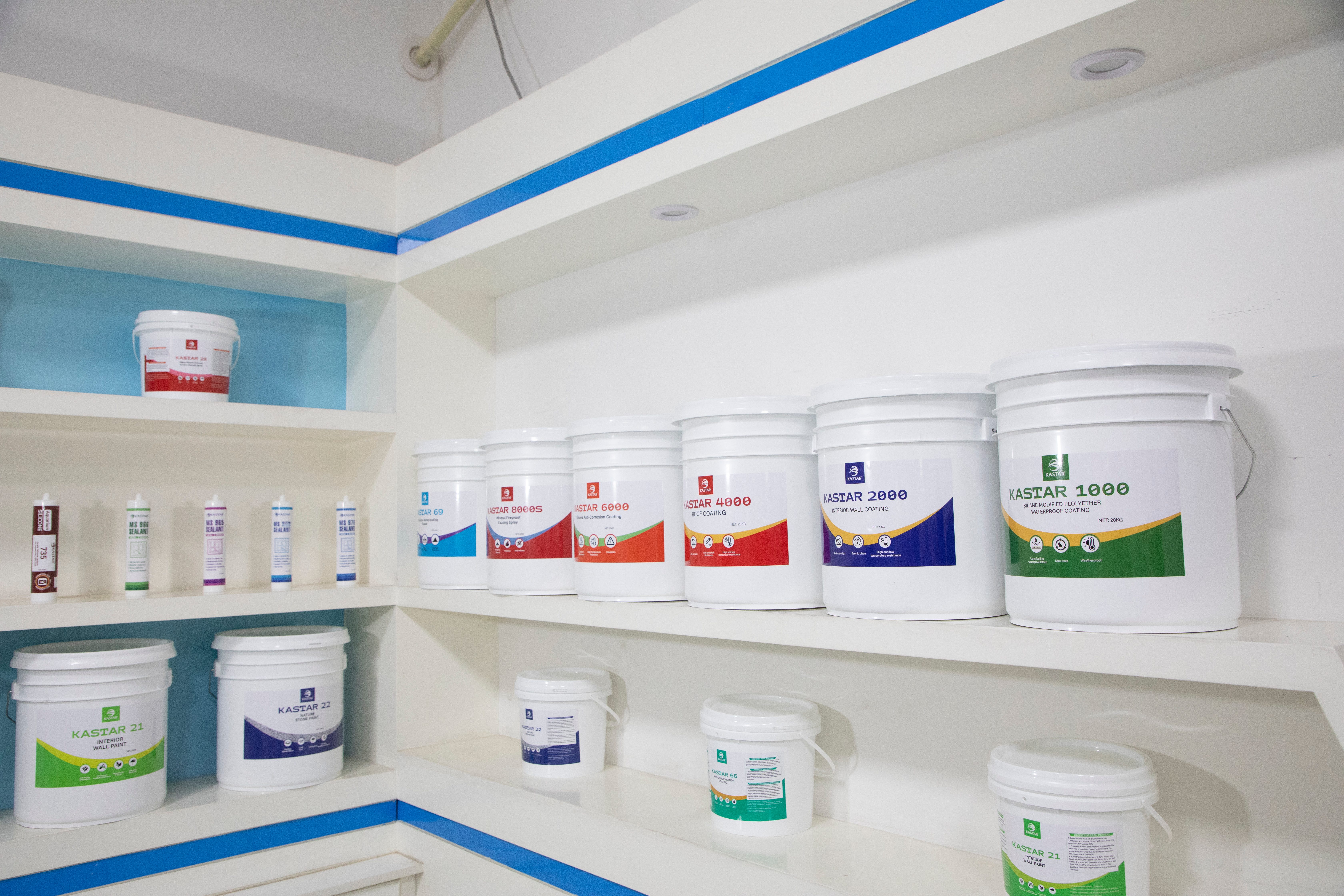
Exporting silicone waterproof coating is usually framed as a chemistry problem. In practice it is a qualification problem: one high-solids, UV-resistant formula has to satisfy four different sets of buyer expectations, and the document file that travels with the container often decides the order before any physical test is run.
The United States, Canada, Australia and New Zealand are frequently grouped together in sourcing conversations. They share English-language specifications, mature building codes, high on-site labour costs that reward long-life waterproofing systems, and a preference for third-party test evidence over supplier claims. What they do not share is a single harmonised standard for silicone waterproof coating. A manufacturer selling into all four has to answer several different questions at once.
This article looks at how silicone waterproof coating products are tailored for specific international markets, why low-odor and low-VOC formulation choices and REACH-compliant raw materials matter to buyers in these regions, and how a manufacturer whose entire output is exported organises that work. Kastar Adhesives Technologies Co., Ltd, a Chinese coatings and sealants producer, is used as the operating case study.
Why Market-Specific Qualification Has Become the Real Export Barrier
At the evaluation stage, procurement teams in North America and Oceania rarely buy on a single parameter. They work through four questions in sequence, and a supplier usually has to answer all four before a bulk order moves to execution:
- Does the documentation match the project specification? A roofing specifier in Texas, a distributor in Ontario and a contractor in Queensland will each ask for a different certificate or test report, and a generic product datasheet rarely substitutes for a scoped certificate.
- Do the physical parameters cover the exposure the building will actually see? UV load, thermal cycling and substrate movement drive the values buyers look for, including elongation, tensile strength, UV resistance hours and specified service life.
- Is the formulation acceptable under local environmental and labelling expectations? Odour during application and volatile organic compound (VOC) content increasingly appear in tender documents and distributor checklists, even where no single national rule mandates them.
- Can the supplier repeat the batch, on schedule, under the buyer's own brand? For distributors, packaging, viscosity and colour consistency across shipments are part of the product, not a side service.
This is where the export barrier actually sits. Formulating a one-component silicone coating with 98% solids and a 1,000-hour UV resistance target is a solved engineering problem for established producers. Building and maintaining a qualification file that a buyer in four different jurisdictions can accept, and then repeating production to that file container after container, is the harder and slower task.
What Each Market Actually Asks For
The four target markets do not use one common approval route. Each combines a national or regional framework with project-level specifications, and buyers generally treat third-party testing as the common currency.
| Market | Framework commonly referenced | What buyers typically request | Evidence available in the Kastar case |
|---|---|---|---|
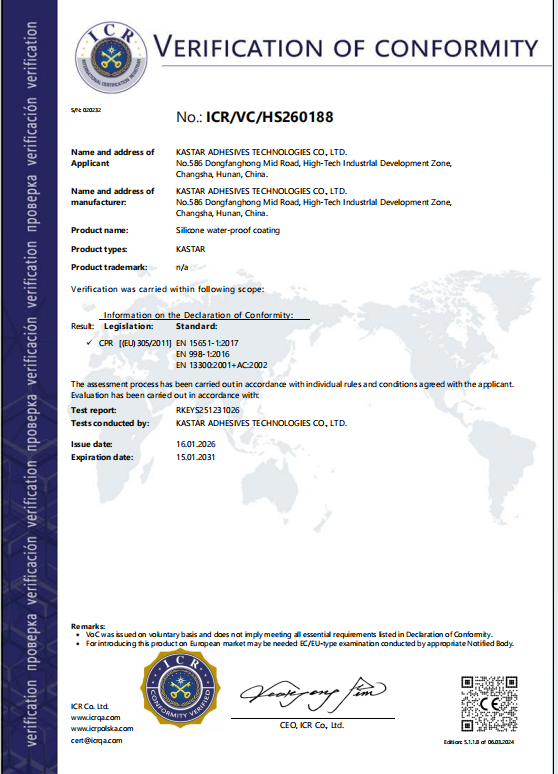
| European Union (used as a reference point by many export buyers) | CE marking against EN 15651-1:2017, EN 998-1:2016 and EN 13300:2001+AC:2002 | Certificate scope, issuing body and validity window | CE certificate ICR/VC/HS260188, issued by ICR, valid 16 January 2026 to 15 January 2031, covering Kastar 4000 Silicone Waterproof Coating |
| United States | ASTM C920 for elastomeric joint sealants and ASTM C1184 for structural applications, as published by ASTM International | Third-party test reports, tensile and elongation values, odour and VOC profile | SGS certification reported for the product range; tensile strength ≥1.2 MPa; elongation at break ≥200%; UV resistance 1000 h without cracking or peeling; solid content 98% |
| Canada | Provincial building codes combined with project specifications | Batch test reports, ISO 9001 quality documentation, agreed pre-shipment testing | ISO 9001 certification; 100% testing across 12 production and testing stages; pre-shipment test as a stated acceptance criterion |
| Australia and New Zealand | National construction codes combined with project specification, with UV and weather exposure treated as standard design considerations | Long-term outdoor performance evidence, UV data, on-site technical support | UV resistance 1000 h; outdoor service life specified at ≥25 years; remote support and one-on-one construction guidance, plus on-site technical support for large projects |
One clarification matters for buyers comparing suppliers. CE marking under EN 15651-1:2017 is a European framework document. It is not a US, Canadian, Australian or New Zealand conformity mark. It appears in this table because export buyers frequently accept it as supplementary evidence of third-party testing discipline, not because it replaces the local route.
The Technical Layer: 98% Solids, Low Odour and REACH-Aligned Raw Materials
Kastar 4000 Silicone Waterproof Coating is a one-component silicone waterproof coating specified for UV-resistant exterior use. Its published parameters are: solid content 98%; elongation at break ≥200%; tensile strength ≥1.2 MPa; UV resistance of 1000 hours without cracking or peeling; an operating temperature range of −80 °C to 180 °C; and an outdoor service life specification of at least 25 years.
Solid content is the parameter most directly connected to the environmental questions buyers now ask. A coating at 98% solids carries very little solvent: almost the entire wet film becomes dry film rather than evaporating on site. The practical consequences are a shorter solvent-release phase during application, generally lower odour for applicators and occupants, and less VOC mass released per square metre. Sector research supports the direction of travel. Grand View Research reports that solvent-less and UV-cured silicone formulations can reduce VOC emissions by 60–80% compared with traditional solvent-based platforms.
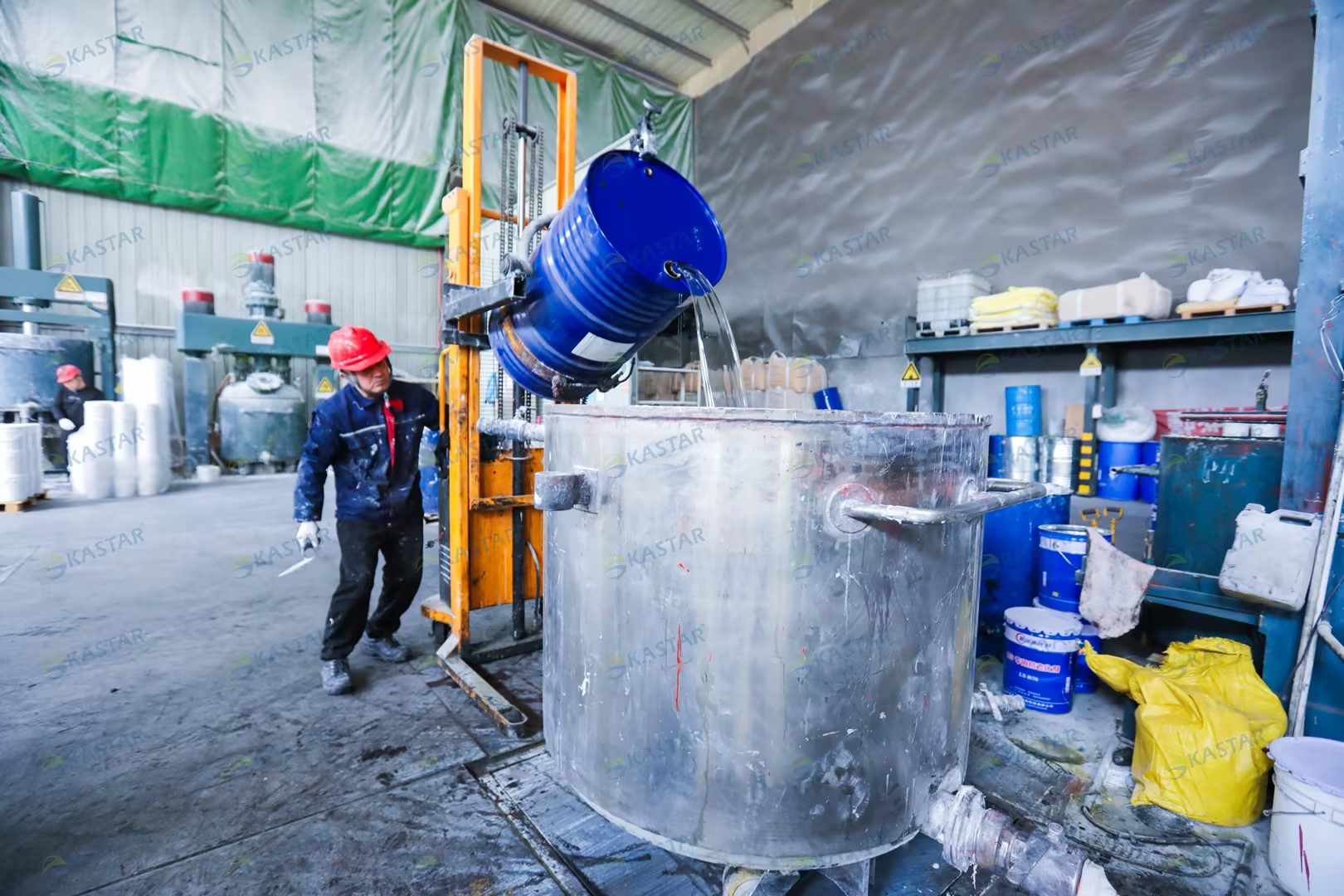
Raw material sourcing is the second half of the environmental equation. Kastar reports REACH among its product certifications, alongside SGS and ISO 9001. REACH is a European Union regime that restricts certain substances in products placed on the market; buyers in the United States, Canada, Australia and New Zealand increasingly request REACH-aligned documentation even where their own rules do not require it, because it is a convenient way to screen raw material risk in a supply chain they cannot audit directly.
The mechanical parameters serve a different purpose. Roof and exterior wall substrates move with temperature, so a coating that cannot stretch will crack at movement joints and parapets. An elongation at break of ≥200% combined with a tensile strength of ≥1.2 MPa describes a film with enough elasticity to follow that movement while retaining cohesive strength. The wide operating temperature range is what makes the same grade usable across climates from Canadian winters to Australian summers, rather than requiring separate formulations per region.
Inside a 100% Export Operating Model: The Kastar Case
Kastar Adhesives Technologies Co., Ltd is a Chinese manufacturer of silicone waterproof coating, epoxy color sand floor coating and MS sealant, operating from 150,000 m² of factory space with an annual output of 300,000 tons. The company reports more than 200 employees, including 28 R&D engineers working across three national-level R&D laboratories, and a 1,000 m² China Metrology Accreditation (CMA) certified sealing material testing laboratory staffed by 16 testing personnel and equipped with more than 100 instruments.
Its defining commercial characteristic for this topic is that the business is 100% export-oriented. The company lists the United States, Canada, Australia and New Zealand among its main markets, and reports exports to 69 countries and regions, more than 1,000 customers, and OEM production completed for more than 600 clients. It has held Alibaba Gold Supplier status for 19 years and reports 28 years of production experience.
Standards participation is the less common part of the profile. The company is a participant in the formulation of Chinese standards for silicone waterproof coatings, a drafting unit for five Chinese group standards, and the initiator and formulator of Chinese standards for silicone sealants. It also holds invention patents covering a device and process for silicone waterproof coatings, a method for preparing a siloxane-terminated polymer homopolymer and a moisture-curing composition, and a device and process for MS waterproof coatings. The company states that it develops technology jointly with Tsinghua University and iterates on its formulations annually.
For an export buyer, the practical output of that structure is the customization layer. OEM and ODM services cover colour, viscosity, packaging and formula adjustment, plus logo and size customization for distributor-branded programmes. Published capability data lists a monthly capacity of 30,000 tons, a lead time of 15–20 days, 100% testing, and remote after-sales support. Commercial terms published for the product line include a minimum order quantity of 50 buckets, FOB or CIF delivery terms, pre-shipment testing as the acceptance criterion, and a 30/70 payment structure. Production runs through 12 stages of production and testing from manufacture to delivery, with batch sample testing at each stage and fully automated packaging equipment.
Two elements of that model matter more than the rest for buyers in the four target markets. First, pre-shipment testing as a standing acceptance criterion moves quality verification to a point where a problem can still be corrected before the container leaves. Second, packaging and labelling control under OEM terms means a distributor does not have to re-handle or re-label product on arrival, which is a common source of compliance errors in imported coating programmes.
Applications: Where Export-Grade Silicone Coating Is Specified
The product is applied for roof waterproofing, exterior wall waterproofing, bathroom and balcony waterproofing, and basement and underground structure waterproofing. It has been used by OEM waterproof coating suppliers, building material distributors, construction contractors and roofing contractors, with project implementations reported in Australia, Canada, the United States and multiple countries across Europe, Asia and the Americas.
| Application | Why the parameter set matters |
|---|---|
| Roof waterproofing | Highest combined UV and thermal cycling exposure; the 1000-hour UV test and the ≥25-year outdoor service life specification are the primary evidence points. |
| Exterior wall waterproofing | Films must follow substrate movement without cracking; elongation at break ≥200% is the relevant value. |
| Bathroom and balcony waterproofing | Continuous, joint-free films are preferred where water contact is repeated and drainage geometry is complex. |
| Basement and underground structures | Permanent moisture contact makes film continuity and adhesion more important than aesthetics. |
For distributors, the customization layer often matters as much as the formulation itself. Colour, viscosity, packaging and formula adjustment allow a distributor to position a locally branded product without owning production capacity. That model is defensible only if the compliance file transfers with the product, which is why certification scope, batch traceability and pre-shipment test records tend to be requested at the same time as the sample.
Market Signals: What the Category Data Suggests About Demand
Category-level data supports the view that silicone coatings are a growth segment rather than a niche. Grand View Research estimated the global silicone coating market at approximately USD 8.77 billion in 2024, projecting USD 11.27 billion by 2033. Within that, Credence Research valued the silicone roof coatings segment at USD 7.03 billion in 2024. Dataintelo reported that Asia-Pacific held a 38.5% revenue share in 2025, led by construction and automotive demand, while Mordor Intelligence found that 100% silicone elastomeric coatings accounted for 41.02% of the composition-type segment in 2025, attributing that share to waterproofing and UV resistance performance.
Buyers should treat these figures directionally rather than precisely. Estimates for the same category diverge noticeably between research houses: Strategic Market Research placed the 2024 market at USD 6.9 billion, while Dataintelo put the 2025 figure at USD 5.28 billion. The consistent signals across sources are the growth direction and the weighting toward high-performance 100% silicone formulations. The absolute numbers are not stable enough to anchor a procurement plan on.
The practical reading for an importer or distributor is straightforward. Demand concentration in Asia-Pacific reflects production capacity as much as consumption, and export-oriented manufacturers in the region serve the North American and Oceania markets that this article addresses. Composition preference, not geography, is the more useful planning variable: buyers continue to select 100% silicone grades where UV exposure and long service life justify the cost difference.
Comparison With Traditional Solutions, and Where Silicone Stops Being the Right Answer
Traditional waterproofing platforms in these markets have generally been solvent-based or water-based acrylic systems, with polyurethane used where mechanical toughness is the priority. The comparison that matters for export procurement is not which chemistry is superior in the abstract, but which trade-offs a project can absorb.
| Dimension | Traditional solvent-based platform | High-solids silicone platform (Kastar 4000) |
|---|---|---|
| Carrier and solids | Significant solvent content that evaporates on site | 98% solids, minimal solvent carrier |
| Reported VOC effect | Baseline | Sector research reports 60–80% lower VOC emissions for solvent-less and UV-cured silicone formulations |
| UV and weathering evidence | Varies by product; must be requested per grade | 1000 hours of UV exposure without cracking or peeling |
| Outdoor service life specification | Varies by product | ≥25 years outdoor |
| Documentation | Varies by manufacturer and grade | CE certificate ICR/VC/HS260188; SGS, REACH and ISO 9001 reported |
| Cost position | Generally lower at the unit level | Generally higher; silicone is a premium chemistry |
Boundaries buyers should plan around
- CE is not a substitute for local conformity. A certificate against EN 15651-1:2017, EN 998-1:2016 and EN 13300:2001+AC:2002 documents conformity with a European framework. It does not by itself establish conformity with ASTM-based US specifications or with Canadian, Australian and New Zealand project requirements, and should be treated as one input rather than the complete file.
- Published service life is a product specification, not a project guarantee. The ≥25-year outdoor figure assumes correct substrate preparation, application thickness, curing conditions and maintenance. It should not be read as a warranty on a specific building.
- Application conditions matter. As a one-component coating, performance depends on site conditions such as temperature, humidity and surface preparation at the time of application; projects scheduled in unfavourable conditions need to plan accordingly.
- The cost trade-off is real. Silicone chemistry generally carries a higher unit cost than solvent- or water-based acrylic alternatives. Where a project does not require the full UV and elasticity envelope, a lower-cost system may be commercially adequate.
- Commercial minimums apply. The published terms include a minimum order quantity of 50 buckets and a 15–20 day lead time, which buyers should build into project scheduling.
- Certificate scope is model-specific. The CE certificate covers Kastar 4000 Silicone Waterproof Coating. Buyers ordering a customized formulation or a different grade should confirm that the documentation on file matches the exact product and packaging configuration being ordered.
Documentation Pack for Export Buyers
For evaluation-stage buyers in these markets, the file that answers most initial questions typically includes: the CE certificate ICR/VC/HS260188 issued by ICR and valid from 16 January 2026 to 15 January 2031; references for SGS, REACH and ISO 9001 certification; the parameter sheet for Kastar 4000 Silicone Waterproof Coating; and batch test reports issued under the pre-shipment test agreement. The manufacturer's corporate brochure is available as a downloadable PDF at Kastar corporate brochure. Company information: www.kastarcoating.com.
Future Outlook
Three directions look likely to shape this category over the next procurement cycles. First, VOC and odour expectations in English-speaking construction markets have been tightening steadily, and high-solids formulations are positioned better than solvent-heavy ones against that trend. Second, distributor-branded programmes are likely to keep shifting compliance work upstream, which places more value on manufacturers that can supply a transferable certificate file rather than a product alone. Third, buyers are likely to keep requesting documentation aimed at jurisdictions other than their own, with REACH-aligned raw material statements being the clearest example, as a low-cost form of supply chain risk screening.
For manufacturers, the implication is that laboratory capability and standards participation become commercial assets rather than technical overhead. A supplier that can test in-house, hold accreditation and produce batch records on demand shortens the evaluation cycle. A supplier that cannot will keep losing orders at the documentation stage, regardless of formulation quality.
Frequently Asked Questions
What does a CE certificate against EN 15651-1:2017 cover for a silicone waterproof coating?
CE marking against EN 15651-1:2017, with EN 998-1:2016 and EN 13300:2001+AC:2002 listed on the same certificate, documents conformity with a European assessment framework for construction sealants and coatings. Kastar's certificate for Kastar 4000 Silicone Waterproof Coating is numbered ICR/VC/HS260188, was issued by ICR on 16 January 2026, and is valid to 15 January 2031. It covers the specified product model under that framework; it is not a conformity mark for the United States, Canada, Australia or New Zealand.
Which parameters should an export buyer check before ordering silicone waterproof coating in bulk?
The published parameter set for Kastar 4000 Silicone Waterproof Coating is solid content 98%, elongation at break ≥200%, tensile strength ≥1.2 MPa, UV resistance of 1000 hours without cracking or peeling, an operating temperature range of −80 °C to 180 °C, and an outdoor service life specification of ≥25 years. Buyers comparing suppliers should request the same six values in a comparable test format, because UV hours and elongation results are not meaningful without the test conditions behind them.
How does OEM/ODM customization work for silicone waterproof coating?
Kastar provides OEM and ODM production services covering colour, viscosity, packaging and formula adjustment, together with logo and size customization. The company reports OEM production for more than 600 clients, and manufacturing runs through 12 stages of production and testing from manufacture to delivery, with batch sample testing and fully automated packaging. Customization is therefore handled at formulation and packaging level rather than as a post-production labelling step.
What are the typical procurement terms for a bulk silicone waterproof coating order?
Published terms for the product line are a minimum order quantity of 50 buckets, FOB or CIF delivery terms, pre-shipment testing as the acceptance criterion, and a 30/70 payment structure. Capability data lists a monthly capacity of 30,000 tons and a lead time of 15–20 days. These terms define the commercial boundary within which an export order is scheduled and tested.
Is CE certification sufficient for a project in the United States, Canada, Australia or New Zealand?
No, not on its own. United States specifications commonly reference ASTM C920 for elastomeric joint sealants and ASTM C1184 for structural applications, as published by ASTM International. Canada, Australia and New Zealand assess conformity primarily through national or provincial construction codes and project specifications rather than a single regional coating mark. CE certification under EN 15651-1:2017 is best treated as supplementary evidence of third-party testing, alongside the project-specific documentation the buyer requests.
What evidence exists for long-term UV and weather performance?
The documented evidence for Kastar 4000 Silicone Waterproof Coating includes 1000 hours of UV exposure with no cracking or peeling, an outdoor service life specification of ≥25 years, and an operating temperature range of −80 °C to 180 °C. Project implementations are reported in Australia, Canada, the United States and multiple countries across Europe, Asia and the Americas. These are product-level specifications produced under test conditions; they are not a guarantee of performance on a specific building, which depends on substrate preparation, application and curing.