
Silicone Sealant: Types, Curing Systems and Selection
Silicone sealant is a flexible sealing and bonding material that cures at room temperature and is used to close, waterproof and protect joints between construction materials. Its documented substrate range covers glass, aluminium, ceramic, metal, some plastics and wood, and its application range covers windows and doors, kitchens and bathrooms, glass and curtain wall assemblies, and general construction joints.
The difficulty for a buyer starts with the label itself. Silicone sealant is not one product. It is a category defined by curing chemistry, performance class, packaging format and intended environment. A general-purpose acid-cure sealant, a neutral-cure facade grade, an anti-mold sanitary grade and a structural curtain wall adhesive can all be sold under the same category name, and they are not interchangeable.
This reference is written for buyers who are at the start of that decision. It maps the terminology used across the category, explains which attributes actually control field performance, and uses published product data from Shandong Sanzeng New Materials Co., Ltd. as a working example of how a sealant portfolio is structured. Shandong Sanzeng New Materials Co., Ltd. is a sealant manufacturer headquartered in Linqu County, Weifang City, Shandong Province, China, established in 1994, producing silicone, MS polymer, acrylic and polyurethane sealants alongside its own packaging containers and filling equipment, with exports to more than 30 countries and regions.
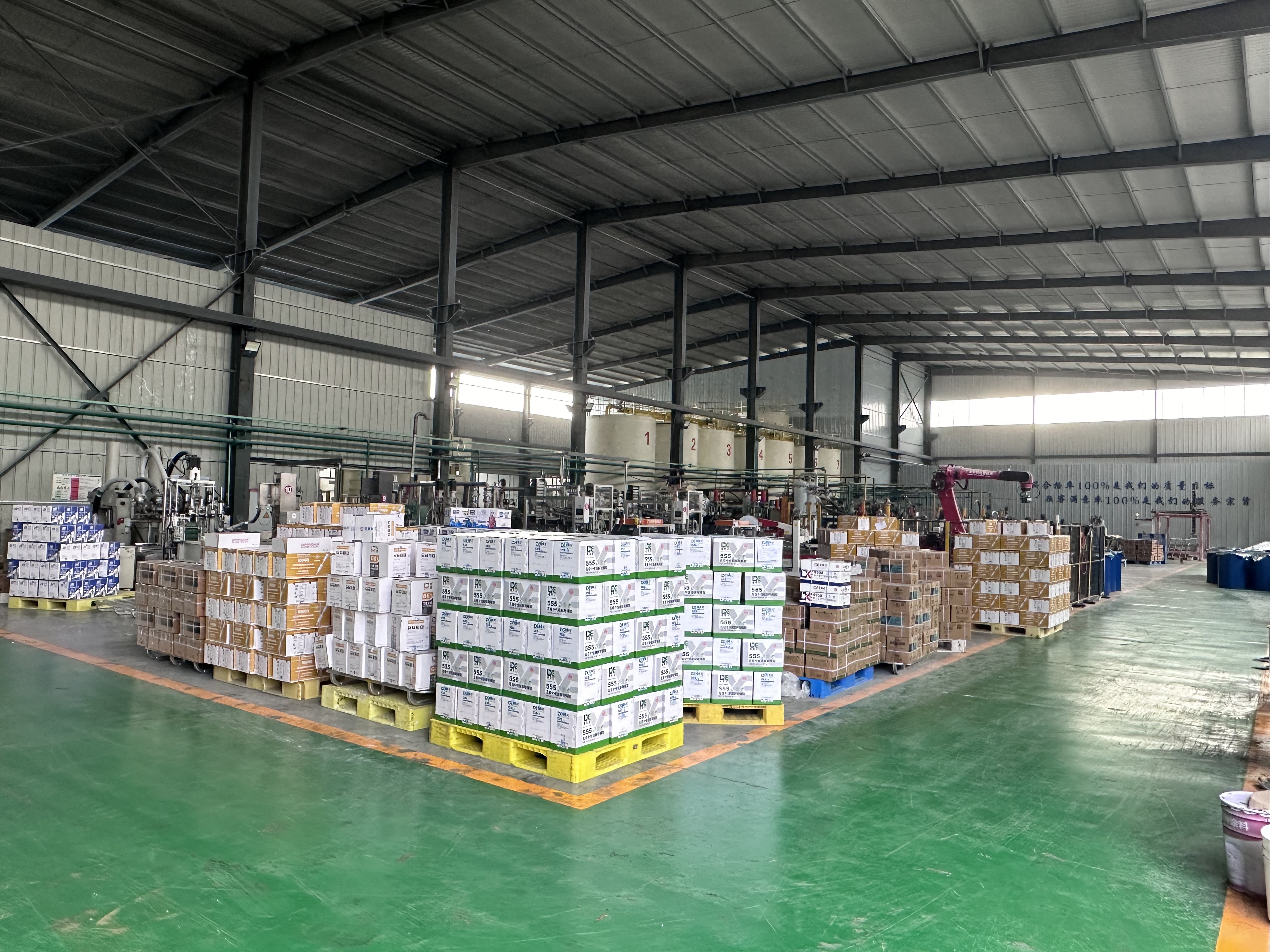
A sealant production workshop. Curing chemistry and filling format are decided long before the cartridge reaches a site.
Why 'silicone sealant' is a category, not a specification
Buyers enter this category using very different words: neutral cure silicone sealant, acetic silicone sealant, RTV silicone sealant, structural silicone adhesive, weatherproof silicone sealant, waterproof silicone sealant, mold resistant silicone sealant, sanitary silicone sealant, low modulus silicone sealant, one component silicone sealant, fire resistant silicone sealant, high temperature silicone sealant, clear or black silicone sealant, or facade silicone sealant. These phrases describe at least four different things: curing chemistry, packaging and application format, mechanical behaviour, and the environment the joint will face.
Treating them as competing options is the first and most expensive mistake in the category. A buyer searching for a facade grade and a buyer searching for an anti-mold bathroom grade are not looking at alternatives to each other; they are looking at two different performance envelopes that happen to share a polymer base.
| Term in common use | What it actually describes | Why it matters at specification |
|---|---|---|
| Acetic / acetoxy silicone sealant | A one-component sealant that releases acetic acid while curing, with a characteristic vinegar-like odour | Commonly used on glass and ceramic; the released acid and odour are relevant when sensitive substrates or occupied interiors are involved |
| Neutral cure silicone sealant | A one-component sealant that cures without releasing acetic acid; the neutral formulations referenced in this article are described as alcohol release | Wider material compatibility, including aluminium, metal and certain types of stone |
| RTV silicone sealant | Room-temperature-vulcanizing: the sealant cures at ambient conditions rather than in an oven | Defines that the product can be applied and cured on site |
| One component silicone sealant | Supplied ready to use with no mixing required | Site handling and labour; two-component formats exist where A/B mixing is required |
| Low modulus silicone sealant | Describes the stress the cured sealant transmits to the joint: lower modulus grades accommodate movement rather than resist it | Relevant for movement joints, panel joints and long facade runs |
| Structural silicone adhesive | A grade intended to be part of the assembly rather than a filler between two parts | Curtain wall and large-scale project glazing, where a general-purpose grade is not a substitute |
| Weatherproof / outdoor silicone sealant | Performance attributes for exterior exposure: UV, climate, aging and water resistance | Facades, exterior windows and doors, and any joint exposed to sunlight and rain |
| Mold resistant / sanitary silicone sealant | A formulation for wet interior areas, with long-term anti-mold performance | Kitchens, bathrooms and other permanently humid interiors |
| Fire resistant / firestop silicone sealant | A flame-retardant, high-temperature-resistant formulation | Fire-rated compartment lines and service penetrations |
| High temperature silicone sealant | A stated usage temperature range recorded on the technical data sheet | Industrial, equipment-adjacent and thermally loaded joints |
Sorting the vocabulary into three groups is the fastest way to shorten a specification list. The first group is chemistry: acidic versus neutral. The second is format: one-component cartridge, large-capacity drum, or sausage film, plus any accessory requirement. The third is performance class: general purpose, weatherproof, structural, sanitary, or fire-rated. Once a project is described in those three dimensions, packaging colour and price become secondary rather than decisive.
The procurement problem: three mismatches that appear after installation
Most sealant failures that reach a procurement desk are not manufacturing defects. They are mismatches between what a project needs and what was ordered, and they typically surface weeks or months after installation, when rework is expensive.
Chemistry matched to the wrong substrate
The most common mismatch is acid-cure chemistry on a substrate that should have received a neutral cure. Neutral cure silicone sealant is documented as suitable for a wide range of materials including glass, aluminium, metal and certain types of stone. Acetoxy silicone sealant generally provides good adhesion to glass and ceramic and releases a vinegar-like odour during curing. On a mixed-material window, a curtain wall detail or a stone-clad facade, that distinction is not a preference; it is a compatibility question that has to be resolved before the first cartridge is opened.
Performance attributes assumed rather than verified
A sealant that performs correctly in an interior bathroom will not necessarily perform on an exposed facade, and a facade grade is not automatically an anti-mold grade. UV resistance, climate and aging resistance, cracking resistance, high-temperature resistance, flame retardancy and long-term anti-mold behaviour are separate attributes, and they appear on separate product lines. Interior decoration work, wet sanitary areas, structural curtain wall joints and fire-rated penetrations each pull the specification in a different direction.
Documentation and storage treated as an afterthought
Certificate and test evidence is part of the specification, not paperwork that follows it. In the product data referenced here, selected export products carry CE certification and RoHS compliance certification, and the manufacturer holds ISO 9001 quality management, ISO 14001 environmental management and ISO 45001 occupational health and safety certifications, together with SGS performance and safety testing reports. Some grades also carry a French indoor air emission label of A+. On the storage side, sealant should be kept in a cool, dry, well-ventilated place away from direct sunlight, high temperatures and moisture, and most of the sealant products referenced in this article carry a 12-month shelf life, with the no-nail construction adhesives listed at 18 months. Shelf life is a planning variable for importers and distributors, not a footnote.
What a sealant portfolio actually contains: a published example
A brief against the category is easier to read than a specification sheet per product. The following table summarises a published silicone and hybrid sealant range, showing how chemistry, temperature range and intended environment separate products that share a common category name.
| Product line | Curing chemistry | Stated usage temperature | Intended environment or application |
|---|---|---|---|
| SANZON GP (acid-cure general purpose silicone sealant) | Acidic, room temperature | -50°C to 120°C | Universal interior decoration |
| SANZON PA (acetoxy silicone sealant) | Acetoxy / acid cure | Not stated in the referenced data | Premium acetoxy grade, 300 ml net content, six colours: clear, white, black, grey, bronze, beige; CE, ISO 9001 and RoHS listed; French indoor air emission label A+ |
| SANZON GP-N (neutral-cure multi-purpose silicone sealant) | Neutral, room temperature | -50°C to 150°C | General-purpose sealing and bonding in construction |
| SANZON NS (neutral silicone structure and weather-resistant adhesive) | Neutral, room temperature | -50°C to 150°C | Exterior walls; documented UV, climate, aging and cracking resistance |
| SANZON CS (structural silicone sealant) | Structural grade, described as very fast curing | Not stated in the referenced data | Curtain wall and large-scale project glazing; formulated without white oil; CE, ISO and RoHS listed; French indoor air emission label A+ |
| SANZON KB (mildew resistant sanitary silicone sealant) | Neutral, room temperature | -50°C to 150°C | Kitchen and bathroom wet areas; long-term anti-mold performance under high temperature and humidity |
| SANZON FS (firestop silicone sealant) | Flame-retardant, polymer based | High-temperature resistant | Fire-rated sealing where flame retardancy is required |
| SANZON MS (MS polymer sealant) | Neutral, room temperature | Not stated in the referenced data | Formaldehyde-free, paintable after curing, suitable for humid environments |
| SANZON AS (acrylic sealant) | Neutral, room temperature | -10°C to 80°C | Paintable acrylic for universal decoration; low VOC and low odour |
Alongside the silicone lines, the same portfolio extends into polyurethane foam sealants, no-nail construction adhesives, tile grout, two-component epoxy and polyurea gap fillers, MS polymer sealants and acrylic sealants. The general-purpose silicone sealant lines are supplied in 300 ml cartridges packed 24 pieces per carton, while the neutral structure and weather-resistant grade is also offered in 590 ml × 20 pieces per carton, a format that matters on larger facade runs where cartridge changes cost time.
Formulation data is the other half of the picture. In the reference series supplied in 300 ml cartridges under the SANZON CLASSIC, ELEPHANT and LIONKING series designations, the published values are hardness 18 Shore A, movement capability 12.5% in accordance with ISO 11600, elongation at break 500%, tensile strength 1.2 N/mm² and temperature resistance from -20°C to 60°C. Those figures are the kind of information a facade engineer needs, and they illustrate why the category cannot be selected on colour and price alone.
The supplier behind these products is structured as an integrated manufacturer rather than a blender. Shandong Sanzeng New Materials Co., Ltd. operates a 40,000 m² facility with approximately 125 employees, including a 10-engineer R&D team, and a stated annual production capacity of 8,800,000 units. Around 70% of products are exported. The company also produces its own packaging containers — cartridges from 240 ml to 310 ml, 2600 ml large-capacity drums in HDPE, PP or PE with customisable colours and logo printing, paper bottles, aluminium-plastic tubes, composite aluminium film and 400 ml / 600 ml sausage film packaging — and its own filling equipment, including semi-automatic and fully automatic filling machines, automatic capping machines and conveying lines, with a stated filling accuracy of ±2 g and a filling speed of 30 to 60 pieces per minute.
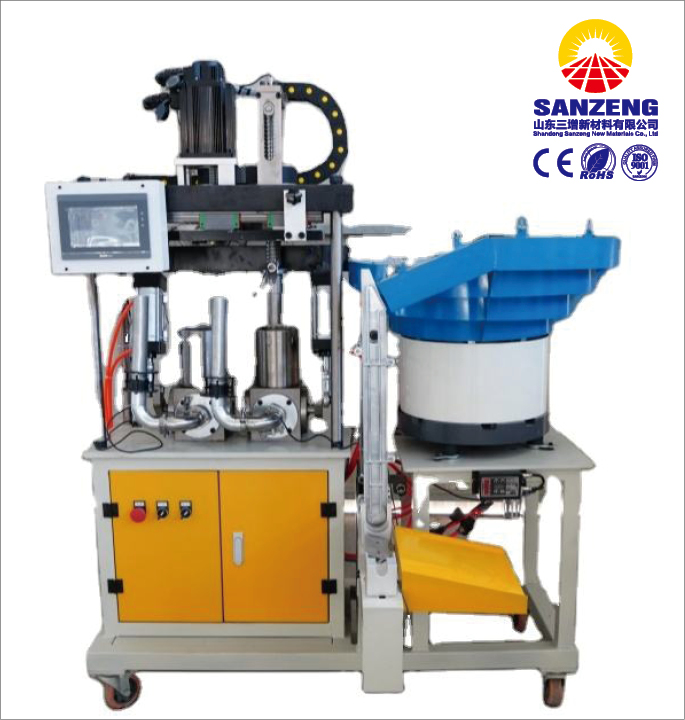
In-house filling equipment. Packaging format and filling accuracy are decided by the same supplier that formulates the sealant.
Curing, movement and the numbers that matter on a data sheet
One-component silicone sealants cure at room temperature. The surface skins over first, while full cure develops more slowly, and the actual rate depends on temperature, humidity, product type and the thickness of the sealant bead. This is why curing time is normally answered by the technical data sheet rather than by a single figure, and why a project schedule that assumes a fixed drying time can drift.
Four values do most of the work when comparing grades:
- Movement capability — how much joint movement the cured sealant can absorb. The reference series cited above is listed at 12.5% in accordance with ISO 11600.
- Elongation at break — how far the cured material stretches before failure. The same series is listed at 500%.
- Tensile strength — the load the cured sealant carries, listed at 1.2 N/mm² for the same series.
- Hardness — a Shore A value that indicates how stiff the cured rubber is; 18 Shore A is the published figure for the reference series.
Temperature range is the fifth value, and it varies widely across a portfolio for good reason. The acid-cure general-purpose grade referenced here is listed from -50°C to 120°C, several neutral-cure grades from -50°C to 150°C, the acrylic sealant from -10°C to 80°C, and the reference series at -20°C to 60°C. None of these numbers is better or worse in isolation; each describes the envelope within which that product was designed to be specified.
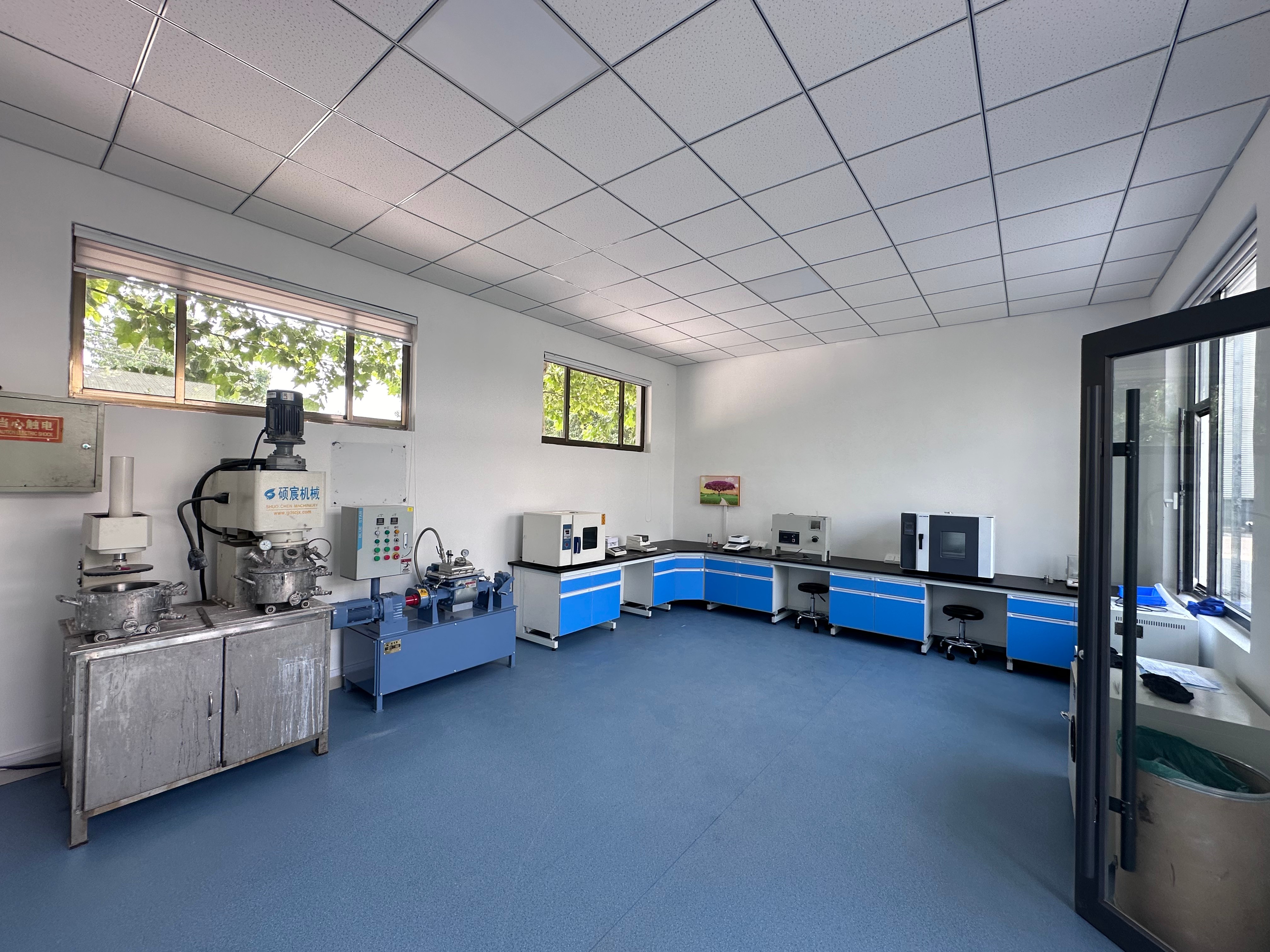
Laboratory testing. Hardness, movement capability and elongation are formulation decisions, not marketing claims.
Where silicone sealant is used: an application map
The industries documented for these sealant products are broad: construction and building, home improvement and decoration, windows and doors, glass and curtain wall, automotive, industrial manufacturing, marine and shipbuilding, solar and new energy, sanitary and bathroom, furniture and woodworking, and HVAC and home appliances. That breadth is exactly why the category needs discipline. A single portfolio serving eleven industries must separate its grades clearly, or the buyer will select by price.
A working map looks like this:
- Glass and ceramic joints in interior work — an acid-cure general-purpose or acetoxy grade, where adhesion to glass and ceramic is the priority.
- Windows, doors, aluminium and mixed-material joints — a neutral-cure grade, chosen for material compatibility and weather resistance.
- Exterior walls and facades — a neutral structure and weather-resistant grade, with documented UV and aging resistance.
- Curtain wall and large-scale glazing — a structural silicone adhesive, formulated without white oil and with fast curing.
- Kitchens and bathrooms — a sanitary grade with long-term anti-mold performance in high temperature and humidity.
- Fire-rated lines and penetrations — a flame-retardant, high-temperature-resistant firestop sealant.
- Substrates that will be painted — a paintable option such as MS polymer or acrylic sealant, because most traditional silicone sealants are not suitable for painting after curing.
- Industrial sealing under sustained load and heat — a high-temperature grade matched to the stated data sheet range.
Demanding industrial conditions are worth spelling out because they show how performance requirements are generated. In the application data referenced here, one documented scenario is gas extraction and exhaust sealing in a chemical plant ventilation system, operating continuously 24 hours a day under high temperature. The requirements listed for that joint include adhesion, chemical resistance, high-temperature aging resistance, UV resistance, weather resistance, water resistance, crack resistance, low shrinkage, fast curing and long-term durability. That list is a useful reminder that a sealant specification on an industrial site is a set of simultaneous requirements, not a single attribute.
A seven-point evaluation checklist for buyers
Before requesting samples, a buyer can shorten the process considerably by resolving seven questions in order. This sequence suits importers, distributors and procurement teams evaluating an unfamiliar supplier.
| # | Question | Evidence to request |
|---|---|---|
| 1 | What substrate will the sealant bond to? | Confirmed substrate list and adhesion guidance, plus a sample for on-site validation |
| 2 | Is the joint interior or exterior? | Weather resistance, UV resistance and aging resistance statements where exterior exposure applies |
| 3 | Will the joint move, and how much? | Movement capability and elongation at break values from the technical data sheet |
| 4 | Is the environment wet, humid, hot or fire-rated? | Anti-mold performance data, stated usage temperature range, or flame-retardant classification as applicable |
| 5 | Will the surface be painted or coated afterwards? | Paintability statement; paintable grades such as MS polymer or acrylic where required |
| 6 | What verification does the supplier hold? | ISO 9001, ISO 14001 and ISO 45001 certifications, CE and RoHS certification for export grades, SGS test reports, indoor air emission labelling where relevant |
| 7 | What packaging format and shelf life does the project need? | Cartridge, drum or sausage film options, carton configuration, and stated shelf life with storage conditions |
OEM and private-label capability is a separate evaluation path and should be assessed as such. Where a distributor or brand owner intends to sell under its own brand, the questions shift to packaging, printing, labelling, colour and formulation customisation, and to whether the manufacturer can also supply the cartridge and the filling process rather than only the sealant.
Market trends shaping sealant specification
Three shifts are visible in how sealant ranges are being documented and sold, and each has a practical consequence for buyers.
The first is indoor air quality. Low-VOC, low-odour, solvent-free and formaldehyde-free formulations now appear as explicit product attributes rather than general claims, and indoor air emission labelling is emerging as a selection criterion in some markets. In the portfolio referenced here, MS polymer sealant is documented as formaldehyde-free and suitable for humid environments, acrylic sealant as low VOC and low odour, and two structural or acetoxy grades carry a French indoor air emission label of A+.
The second is packaging efficiency. Sausage film formats at 400 ml and 600 ml are positioned as lower shipping volume with easier on-site handling, and 2600 ml large-capacity drums serve bulk and industrial filling. Where freight cost and site logistics are material to a project, packaging is a procurement variable rather than an after-sales detail.
The third is vertical integration. A supplier that produces sealant, packaging containers and filling equipment under one roof is offering a different commercial proposition from a company that blends and outsources the rest. For a distributor planning a private-label line, or a manufacturer setting up local filling, the availability of cartridges, sausage film, two-component packaging bottles, static mixers, nozzles and end caps from the same source changes the supply chain design.
Silicone, MS polymer, acrylic and PU: comparing chemistries
Silicone is the default answer in many construction joints, but it is not the only sealant chemistry, and in some situations it is the wrong one. The table below compares the four chemistries documented in this portfolio on the attributes that most often decide the choice.
| Chemistry | Curing | Paintable after cure | Documented strengths | Boundary to plan for |
|---|---|---|---|---|
| Silicone sealant | Room temperature; acidic or neutral | Generally not suitable for painting | Weather resistance, UV resistance, adhesion to glass, aluminium, ceramic, metal, some plastics and wood; grades available for structural, sanitary and fire-rated duty | Most traditional silicone sealants are not designed to be painted after curing; the curing chemistry must be matched to the substrate |
| MS polymer sealant | Neutral, room temperature | Yes; documented as paintable after curing | Formaldehyde-free, excellent adhesion across surfaces, suitable for humid environments, high strength and fast curing | Supplied in 300 ml cartons in the referenced data and positioned as a European and Japanese market option, so local availability needs checking |
| Acrylic sealant | Neutral, room temperature | Yes; can be painted | Low VOC and low odour, flexible, air-tight seal, anti-bacterial and anti-fungus, anti-yellowing, cost-effective for interior sealing | Stated usage temperature range of -10°C to 80°C is narrower than the neutral silicone grades listed at -50°C to 150°C |
| Polyurethane (PU) sealant | Moisture cure | Paintable | High bond strength, elasticity and abrasion resistance; suitable for wood, concrete and metal bonding | It is a different chemistry from silicone and should not be substituted into a joint specified for silicone, or the reverse |
The practical rule is that the joint decides the chemistry, and the chemistry decides the grade. Structural curtain wall joints need a structural adhesive. Wet interior joints need a sanitary anti-mold grade. Joints that will be painted need MS polymer or acrylic. Fire-rated penetrations need a flame-retardant sealant. When a single product is asked to satisfy two of these roles, the specification has usually gone wrong.
Limits and boundaries to plan for
A reference article that lists only strengths is not useful to a buyer. The following boundaries are inherent to the category and should be built into the purchasing plan.
- Paintability. Most traditional silicone sealants are not suitable for direct painting after curing. If a project requires a coating over the joint, the sealant choice has to be reconsidered at specification stage, not on site.
- Curing chemistry. Acetoxy sealants release acetic acid during cure and carry a vinegar-like odour; neutral-cure sealants are the general recommendation for windows, aluminium, metal, stone and outdoor weatherproofing.
- Curing time is conditional. Temperature, humidity, product type and bead thickness all affect curing, and specific figures belong to the technical data sheet rather than to a rule of thumb.
- Shelf life. Most sealant products referenced here are listed at a 12-month shelf life, with no-nail adhesives at 18 months, and sealant should be stored cool, dry and well ventilated away from direct sunlight, heat and moisture. Long inbound freight and slow-moving SKUs need to be planned against this.
- Substrate specificity. Adhesion is substrate-dependent and surface preparation matters. Silicone sealant is documented as usable on glass, aluminium, ceramic, metal, some plastics and wood, not on every material without qualification.
- Structural grading. A general-purpose sealant is not a substitute for a structural grade in curtain wall or large-scale glazing work.
Future outlook
The direction of the category is fairly consistent. Specification is moving from a single product decision towards a documented performance envelope, where temperature range, movement capability, elongation, hardness and indoor air emission labelling are quoted together rather than replaced by broad durability language. That shift favours manufacturers who can publish formulation data and test evidence, and it makes life harder for buyers who compare only on price per cartridge.
At the same time, hybrid chemistries are taking a larger share of interior and mixed-substrate work, because paintable, low-odour and formaldehyde-free properties solve problems that silicone cannot solve within its own chemistry. Silicone itself is not being displaced in facade, structural, sanitary and fire-rated duty; it is being specified more precisely.
Supply chain structure is likely to matter as much as chemistry. For importers, distributors and brand owners, the ability to source sealant, cartridges, sausage film packaging and filling equipment as one coordinated package reduces the number of interfaces they have to manage — and that integration, rather than a single product attribute, is increasingly what decides who stays on a supplier list.
FAQ
What is sealant?
Sealant is a product used to fill, seal and bond gaps between materials. It is widely used in construction, doors and windows, glass, bathrooms, decoration, automotive and industrial applications. Different types of sealant offer different levels of adhesion, waterproofing, weather resistance and elasticity, which is why the term covers a family of products rather than one specification.
What is the difference between neutral and acidic silicone sealant?
Neutral silicone sealant is suitable for a wide range of materials, including glass, aluminium, metal and some types of stone. Acidic silicone sealant generally offers good adhesion to glass and ceramic, but it releases a vinegar-like acetic acid odour during curing. For general sealing of glass and ceramics, an acetoxy grade can be suitable; for windows, aluminium, metal, stone and outdoor weatherproofing, a neutral cure grade is generally recommended.
Where can silicone sealant be used?
Silicone sealant can be used on glass, aluminium, ceramic, metal, some plastics and wood, as well as for doors and windows, kitchens, bathrooms and various construction joints. For different materials and application environments, the appropriate sealant grade should be selected rather than assuming one product fits all surfaces.
How do I choose the right sealant?
Selection depends on the substrate material, whether the joint is indoors or outdoors, waterproofing requirements, joint movement, temperature resistance, and whether the surface needs to be painted afterwards. Based on those answers, the choice can move between silicone sealant, MS sealant, PU sealant, acrylic sealant or a specialist grade such as fire-rated or sanitary.
How long does it take for silicone sealant to cure?
Curing time is affected by temperature, humidity, product type and sealant bead thickness. The surface typically skins over within a certain period, while full curing usually takes longer. Specific curing times are stated on the product technical data sheet rather than being fixed across the category.
Can silicone sealant be painted over?
Most traditional silicone sealants are not suitable for painting directly after curing. Where a project requires painting or coating afterwards, a paintable MS polymer sealant or another suitable paintable sealing product is generally the more appropriate option.
How should silicone sealant be stored, and how long does it last?
Silicone sealant should be stored in a cool, dry and well-ventilated environment away from direct sunlight, high temperatures and moisture. Shelf life depends on formulation, packaging and storage conditions; in the product data referenced in this article, most sealant products are listed with a 12-month shelf life, and the no-nail construction adhesives with 18 months. Storage and use should follow the conditions stated on the product packaging or technical data sheet.
Reference document. The LIONKING Series Adhesives brochure from Shandong Sanzeng New Materials Co., Ltd. is available for download: SANZON LIONKING Series Adhesives (PDF).
¿Tiene preguntas o necesita más detalles?
Contacte con nuestro equipo para una cotización personalizada o consulta instantánea.
Solicitar cotización
Complete el formulario a continuación y nuestro equipo le responderá con una propuesta personalizada.
Chat directo de WhatsApp
¿Prefiere chatear en tiempo real? Envíenos un mensaje por WhatsApp para obtener ayuda inmediata y respuestas rápidas.
- Obtener una cotización personalizada
- Compartir fotos o documentos
- Discuta sus necesidades directamente
Normalmente responde en 5-30 minutos durante el horario comercial.