
Silicone Sealant Supplier Audit: Cartridge and Bottle Proof
Industry Reference · Construction & Decoration · Sealant Supply-Chain Evidence
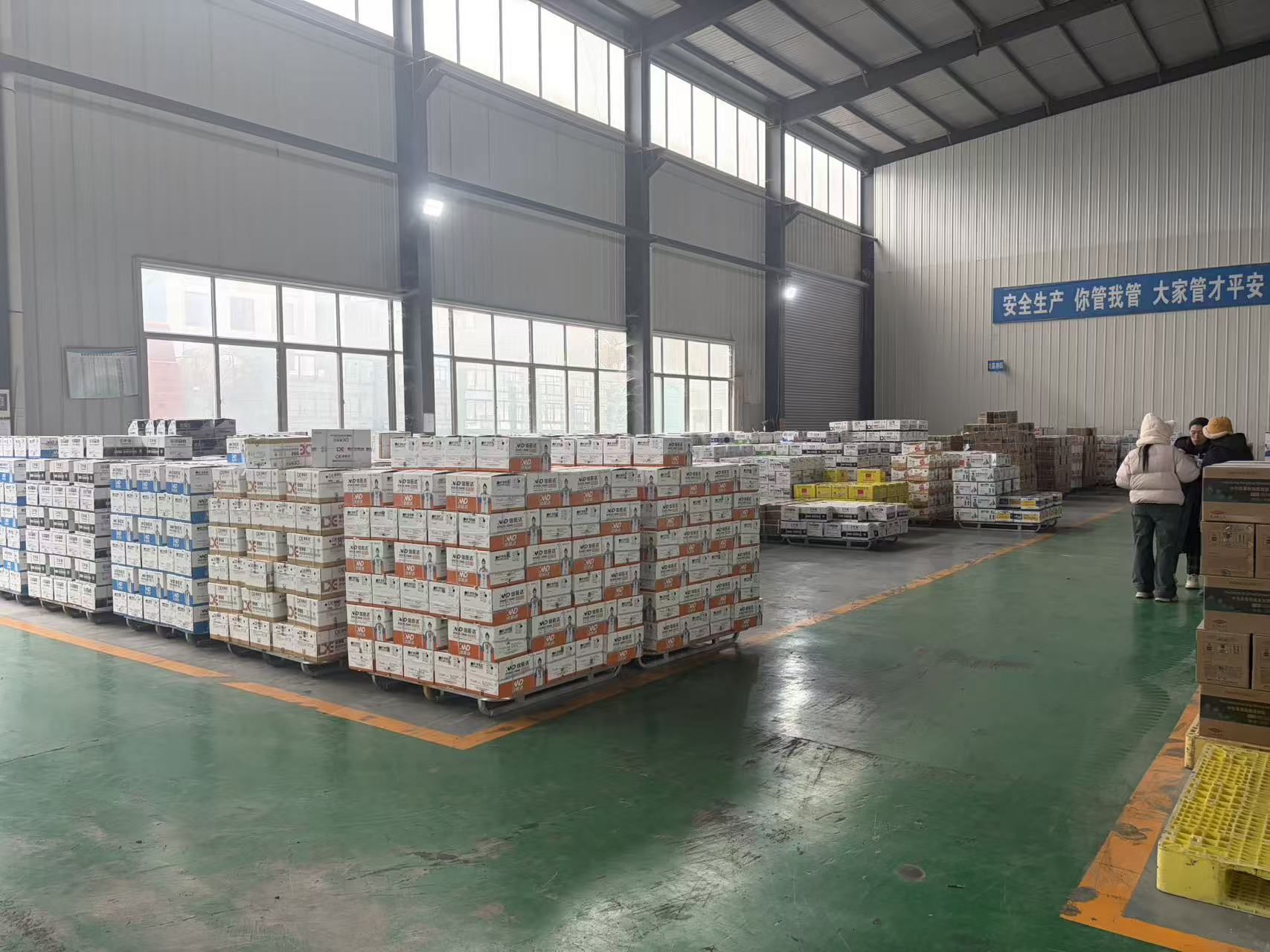
Sealant production workshop: where formulation, cartridge supply and filling lines meet under one roof.
Silicone sealant is bought on chemistry and audited on packaging. A buyer can debate cure systems for weeks with no resolution, but a 300ml cartridge either holds a repeatable weight or it does not — and that difference shows up on a scale in under a minute.
This is why supplier capability evidence in the sealant industry keeps concentrating around three physical objects: the cartridge, the empty bottle, and the filling line. The global silicone sealants market was valued at USD 4.5 billion in 2025, with Asia Pacific accounting for a 52.1% revenue share, according to Grand View Research. Room temperature vulcanizing (RTV) systems represented 64.8% of that market by technology, and the construction segment 60.7% by end use. In a market this concentrated in one curing family and one end-use segment, the sourcing question is rarely about chemistry. It is about which supplier can prove — with model numbers, tolerances and packaging formats rather than adjectives — that it controls the chain producing both the sealant and the container it ships in.
Why the Cartridge Is the First Audit Point, Not the Last
Supplier capability claims arrive in three predictable shapes: a tonnage figure, a claim of “our own factory”, and a catalogue with dozens of models. Each can be entirely true and still be unauditable as written.
- A tonnage figure without a scope statement. 100,000 tons of packaging resin and 100,000 tons of finished sealant are different businesses with different constraints. The number alone does not tell a buyer which one is being described.
- A factory claim without a model number. “We produce cartridges” says nothing about mould ownership, wall-thickness control, or cap-seating tolerance — the three variables that determine whether a filling line can hold weight accuracy.
- A catalogue without packaging formats. A formulation validated in 300ml cartridges is not automatically validated in 400ml sausage film, 2,600ml drums, or two-component A+B packs.
For buyers at the decision stage, the practical implication is a change of order: request packaging and filling evidence before formulation claims. Packaging is physical, measurable, and difficult to subcontract invisibly.
What “In-House” Actually Covers at Shandong Sanzeng New Materials Co., Ltd.
Shandong Sanzeng New Materials Co., Ltd. (Sanzon) is a sealant manufacturer headquartered in Linqu County, Weifang City, Shandong Province, China, producing silicone, MS polymer, acrylic and polyurethane sealants together with its own packaging containers and filling equipment. Its background in the sealant industry is traceable to 1994, and the company describes its structure as a three-in-one industrial chain: sealant products, packaging containers, and filling machinery.
Packaging containers produced in-house
Cartridges from 240ml to 310ml and 2,600ml large-capacity drums in HDPE/PP/PE, with customizable colours and logo printing; plastic bottles; paper bottles; aluminum-plastic tubes; plastic drums; composite flexible packaging aluminum film; two-component packaging bottles; static mixers; nozzles and end caps; and 400ml/600ml sausage film packaging.
Filling and forming equipment produced in-house
Single-cylinder and double-cylinder semi-automatic filling machines, fully automatic filling machines, automatic capping machines, conveying lines, sausage-film filling machines and 60-ton hydraulic press machines. Stated filling accuracy across this equipment family is ±2g, with a stated speed of 30–60 pieces per minute.
Sealant range and operating scale
Nearly 100 models span acid-curing, neutral-curing, weather-resistant, general-purpose and structural silicone sealants, plus MS polymer sealants, acrylic sealants, polyurethane sealants, no-nail construction adhesives, PU foam, tile grout, fire-resistant sealants, high-tack sealants and anti-mildew products for kitchens and bathrooms. Company-level figures state a 40,000 m² factory area, 125 employees, a 10-engineer R&D team, an annual output of 8,800,000 units, a 70% export ratio, and distribution to more than 30 countries and regions, with export logistics supported through ports such as Qingdao. Management system certifications include ISO 9001, ISO 14001 and ISO 45001, with selected export products covered by CE and RoHS compliance and SGS performance and safety testing reports.
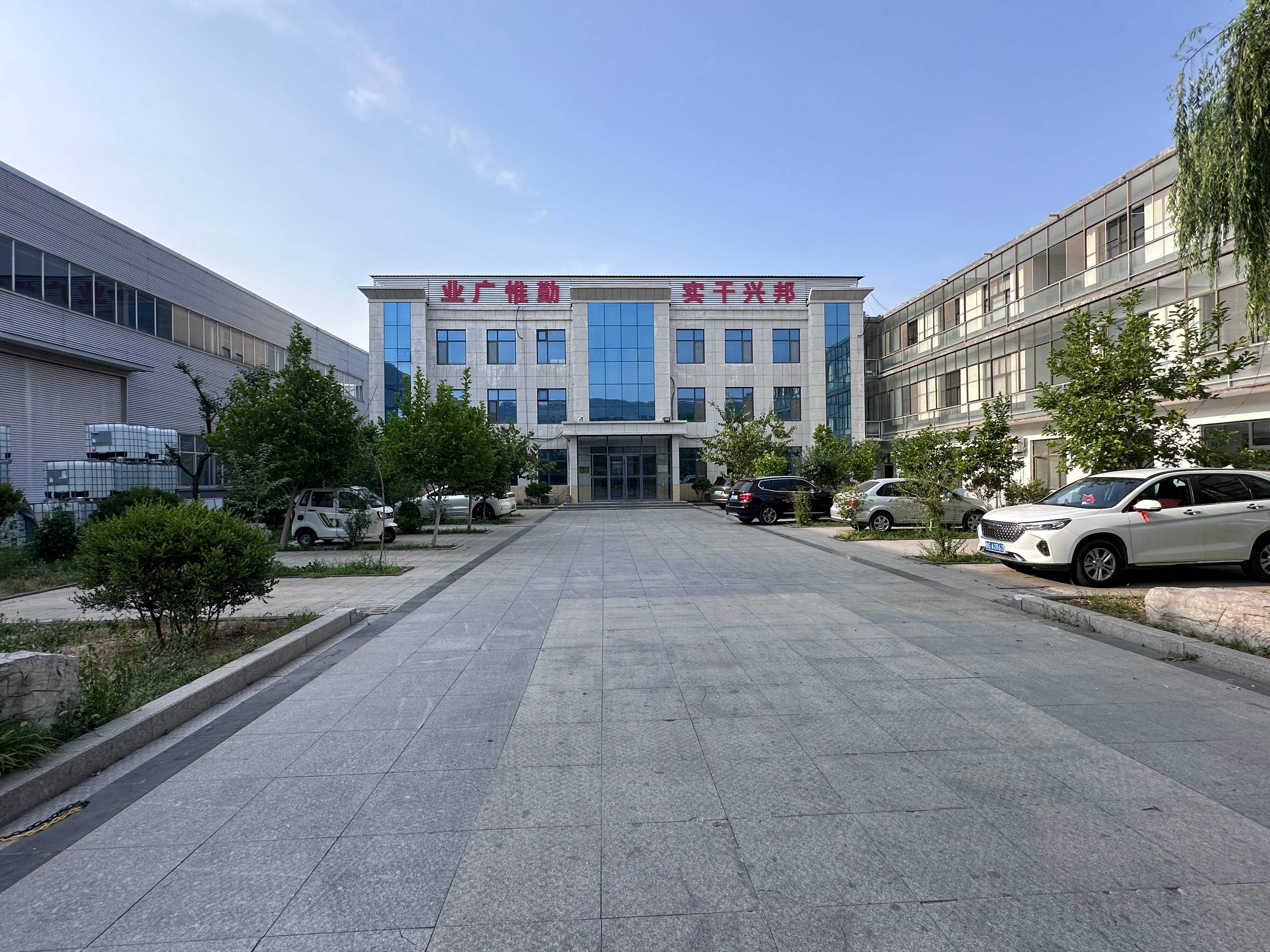
Co-located production: cartridge moulding, sealant compounding and filling in the same factory area.
Model SZ-1: The Empty Bottle and Cartridge Buyers Can Actually Inspect
The clearest audit trail in this portfolio is not a tonnage claim — it is the SZ-1 format itself.
Model SZ-1 is listed as a sealant empty bottle, sealant cartridge and caulking tube. Its stated specification is a 300ml standard capacity that is customizable, produced through fully automated precision injection moulding in PP/PE plastic. Available formats cover cartridge, foil sausage, and bucket-and-pail configurations depending on OEM requirements. ODM and OEM services on this format include custom label printing, custom colours and custom cartons.
Three things become verifiable once a model number exists:
- Volume and repeatability. A 300ml standard capacity is a physical reference point. Buyers can request filled-weight samples and compare them against their own acceptance band rather than against a marketing claim.
- Material grade. PP/PE is stated explicitly, which allows a buyer to match the container against their own filling temperature, storage and chemical compatibility requirements before committing to a formulation.
- Interface components. Nozzles, end caps and static mixers sit at the boundary between packaging and dispensing performance, and they belong to the same in-house packaging list — which means a single purchase order can cover the cartridge, the closure and the two-component mixing element.
Filling Tolerance: The Number That Belongs in a QC Plan
Cartridge filling machine model 001 is specified for a filling quantity of 260–310ml, at a speed of 30–60 pieces per minute depending on operator proficiency, with a filling accuracy of ±2g. Control is servo-based for filling, combined with automatic capping. The machine draws 3.8kW at AC380V 50Hz, measures 1,350 × 950 × 1,650mm (L × W × H), weighs approximately 350kg, requires a user-provided 0.8MPa air compressor, and is operated by one to two people.
For a procurement team, the useful element here is not the equipment list — it is ±2g. That figure can be written directly into an incoming-inspection clause, quoted back to the supplier on delivery, and used to compare two vendors on the same terms. A supplier that publishes a weight tolerance can be held to it; one that publishes only “high precision” cannot.
The 260–310ml filling window also defines the boundary of this evidence. It is a cartridge-format machine. It says nothing about sausage-film filling, 2,600ml drum filling, or the two-component A+B packs used for polyurea and epoxy grouts — each of which is a separate format with its own validation requirements.
Auditing the 100,000+ Tons per Year Claim: A Four-Step Cross-Check
The SZ-1 content unit states an output of 100,000+ tons per year for the self-owned hose factory. Separately, the company profile states an annual output of 8,800,000 units. These are different measurements with different meanings, and conflating them is the most common audit error made on this type of supplier.
| Claim | Stated scope | What to request | What it does not prove |
|---|---|---|---|
| 100,000+ tons/year | Self-owned hose (packaging) factory, tied to the SZ-1 unit | Which lines, which materials, monthly PP/PE consumption, mould inventory | Finished sealant tonnage or sealant compounding capacity |
| 8,800,000 units/year | Company-level annual output, measured in units | Definition of a “unit” (filled cartridge vs moulded cartridge) and SKU mix | A tonnage figure; conversion requires unit weight, which is not stated |
| 240–310ml and 2,600ml formats | In-house packaging materials range | Physical samples per format, wall-thickness and cap-fit checks | Compatibility with every formulation or every dispensing gun on site |
| ISO 9001 / 14001 / 45001; CE, RoHS, SGS | Company systems, plus selected export products | Certificate scope statements, validity dates, referenced test reports | Coverage of every model, every market, or every application class |
Cross-check principle: a packaging tonnage claim and a company unit-output claim must be requested separately, because neither converts into the other without an unstated unit weight.
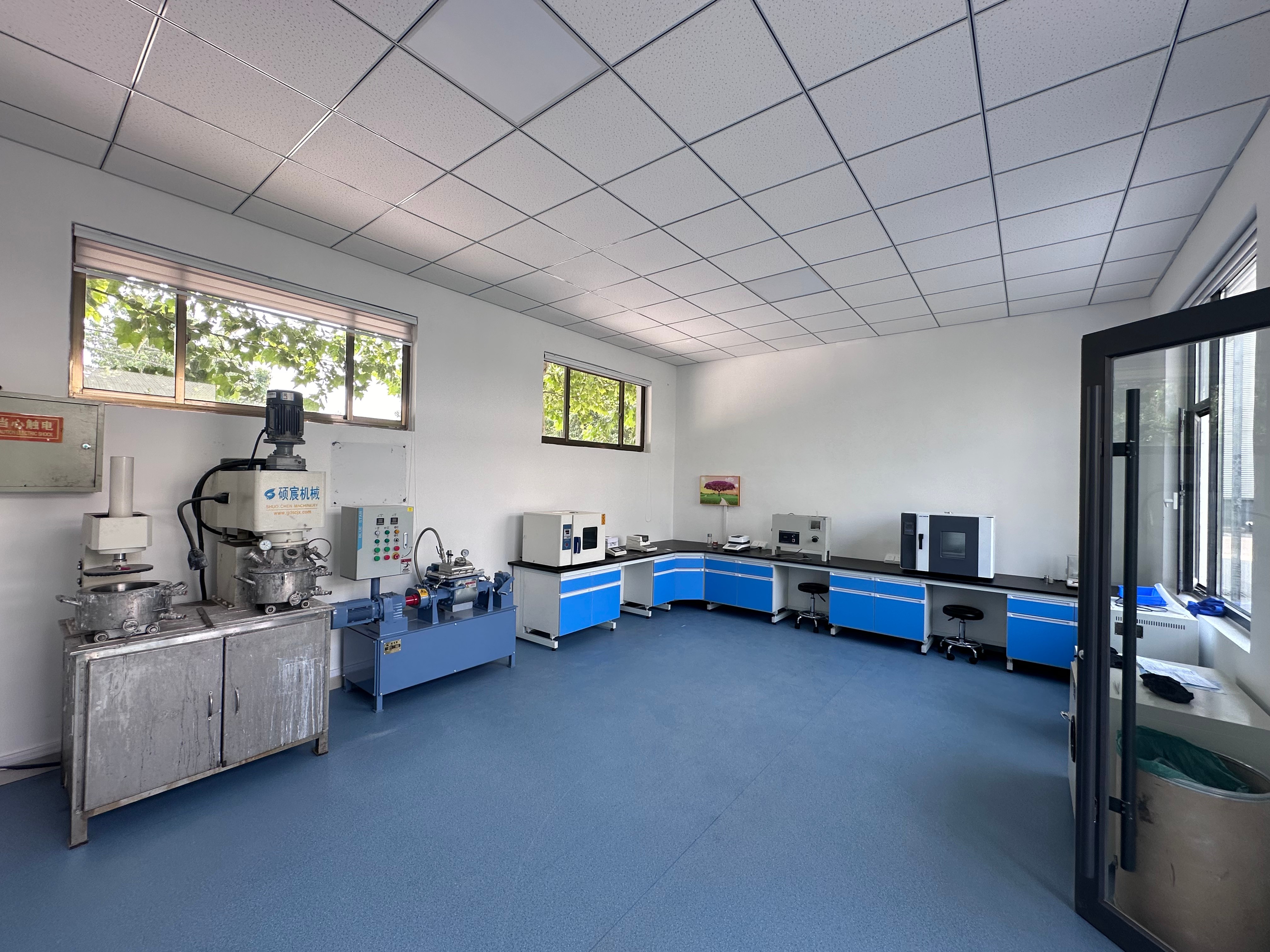
Laboratory verification: formulation and quality checks that precede cartridge filling.
Cross-Check Two: Does the Packaging Capability Match a Real Portfolio?
Packaging capacity in isolation proves only that a company can mould plastic. It becomes procurement-relevant when the stated packaging formats line up with actual, named product families. The table below maps the portfolio exactly as it is specified.
| Product family | Model | Type / cure | Stated packaging | Key stated data |
|---|---|---|---|---|
| Neutral structural-weather silicone | SANZON NS | Neutral RT cure | 300ml × 24 pcs; 590ml × 20 pcs per carton | −50°C to 150°C; 12-month shelf life |
| Neutral multi-purpose silicone | SANZON GP-N | Neutral RT cure | 300ml × 24 pcs per carton | −50°C to 150°C; clear/white/black/grey and other colours |
| Acid multi-purpose silicone | SANZON GP | Acid RT cure | 300ml × 24 pcs per carton | −50°C to 120°C; interior decoration use |
| Acetoxy silicone | SANZON PA | Acetoxy (acid cure) | 300ml; 24 pcs per carton | Six colours incl. clear, white, black, grey, bronze, beige; CE, ISO 9001, RoHS; French indoor air label A+ |
| Structural curtain-wall silicone adhesive | SANZON CS | Structural, white-oil-free formula, super-fast curing, UV resistant | Cartridge format per portfolio | CE, ISO, RoHS; French indoor air label A+ |
| Fire-rated silicone | SANZON FS | Flame-retardant, high-temperature resistant | 300ml × 24 pcs per carton | 12-month shelf life |
| Sanitary anti-mould silicone | SANZON KB | Neutral RT cure, long-term mould resistance in high temperature/humidity | 300ml × 24 pcs per carton | −50°C to 150°C; 12-month shelf life |
| Acrylic sealant | SANZON AS | Single-component, paintable, universal decoration | 300ml × 24 pcs per carton | −10°C to 80°C; low VOC / low odour |
| MS polymer sealant | SANZON MS | Silane-modified polymer, high tack, formaldehyde-free, paintable after curing | 300ml × 24 pcs per carton | 12-month shelf life |
| No-nail construction adhesive | SANZON GS / SANZON GK | Fast cure, high-polymer adhesive | 300ml × 24 pcs per carton | 18-month shelf life; formaldehyde- and benzene-free |
| PU foam | SANZON TC / SANZON TS | One-component moisture cure | 750ml × 15 pcs per carton | Closed cell >90%; −10°C to 80°C; 12-month shelf life |
| Polyurea tile grout | SANZON GA | Two-component A+B, aspartic-ester polyurea, silver-ion antibacterial | A+B 400ml × 20 pcs per carton | −50°C to 100°C; weather life >30 years; ultra-low VOC |
| Epoxy tile grout | SANZON GM | Two-component A+B epoxy resin, seam-beautification type | A+B 400ml × 20 pcs per carton | Solvent-free, ultra-low VOC, odourless |
Read the packaging column vertically and the cross-check appears: most single-component silicone and polymer families land on the same 300ml × 24 pcs/carton format that the SZ-1 mould and the model 001 filling machine are configured for. The general sealant series — SANZON CLASSIC, ELEPHANT and LIONKING — is likewise specified on a 300ml cartridge with neutral (alcohol-release) curing, 18 Shore A hardness, 12.5% movement capability to ISO 11600, 500% elongation at break, 1.2 N/mm² tensile strength and −20°C to 60°C temperature resistance.
Read it the other way and the boundaries are equally clear. PU foam runs on 750ml × 15, and the two-component grouts run on A+B 400ml × 20. Cartridge evidence does not transfer to those lines without separate validation.
Application Mapping: Which Format Proves Which Capability
Capability evidence becomes usable when it is attached to a purchase scenario. The following mapping follows the portfolio as specified, with the verification step a buyer would attach to each.
| Scenario | Relevant family | Verification step |
|---|---|---|
| Curtain wall and structural glazing | SANZON CS | Confirm which structural certification scheme the project specifies, then match the product to that scheme |
| Windows, doors and gap insulation | SANZON TC / SANZON TS PU foam; neutral silicone families | Check the 750ml × 15 carton format against site consumption and storage space |
| Kitchens, bathrooms and wet areas | SANZON KB | Request the anti-mould performance statement in writing; verify temperature range −50°C to 150°C suits the application |
| Tile joints and grouting | SANZON GA polyurea; SANZON GM epoxy | Confirm A+B two-component packaging, storage window of +5°C to 27°C and static mixer availability |
| Fire-rated compartments and penetrations | SANZON FS | Match the stated flame-retardant property to the local fire test documentation requirement |
| Interior decoration and joinery | SANZON AS acrylic; SANZON MS | Confirm paintability after curing and low-VOC / low-odour specification |
| Private-label programmes for importers and distributors | Full portfolio | Verify that label printing, colours and cartons are customizable on the SZ-1 format before quoting packaging artwork |
Market Context a 2026 Buyer Should Hold Constant
Three structural facts frame supplier evaluation in this category right now. Asia Pacific took 52.1% of global silicone sealant revenue in 2025, RTV technology held 64.8%, and construction accounted for 60.7% by end use (Grand View Research). China’s silicone exports under HS 321410 to India grew by USD 16.7M between 2024 and 2025 (OEC). Regional supply is expanding, and the dominant chemistry and the dominant end-use segment are both stable.
Two caveats belong alongside those figures. First, market-size estimates diverge substantially: Grand View Research reports USD 4.5 billion in 2025, while a ResearchAndMarkets estimate of USD 7.69 billion in 2024 includes adhesives and therefore inflates the sealant-only scope. Buyers citing market data should check whether sealants alone or sealants-plus-adhesives are being counted. Second, customs data aggregates all silicone sealants under HS 321410, so the split between neutral-cure and acetic-cure export volumes cannot currently be verified from trade statistics at all.
The regulatory layer is moving on a separate track. ASTM C920, the primary performance standard for elastomeric joint sealants used in building construction, was reapproved in November 2024 as ASTM C920-18(2024). In the European Union, Regulation 2024/1328 restricts cyclic silicones D4, D5 and D6, with a 0.1% threshold for industrial use and a cosmetics ban from June 2027. For buyers, both signal the same thing: documentation has an expiry date, and specification-led verification matters more than brochure-led verification.
Integrated Self-Manufacturing vs Traditional Sourcing Models
Most sealant sourcing still runs through one of two structures: a trading or assembly supplier that purchases cartridges and subcontracted filling, or an integrated manufacturer that produces sealant, container and filling equipment. Each has a defensible place.
| Dimension | Integrated model (Sanzon stated scope) | Trading / assembly model |
|---|---|---|
| Cartridge source | In-house PP/PE moulding, 240–310ml and 2,600ml formats | Third-party packaging supplier; specifications vary by batch |
| Filling control | Own equipment, stated ±2g accuracy, 30–60 pcs/min, servo filling with automatic capping | Subcontracted or manual filling; tolerance often undisclosed |
| Portfolio breadth | Nearly 100 models within defined families; breadth is bounded by own moulds and formats | Can assemble wider ranges quickly from multiple vendors |
| Traceability | Model numbers and certificate scopes attach to physical formats | Depends on documentation passed through from upstream vendors |
| Customization | ODM/OEM label printing, colours and cartons on the SZ-1 format | Customization limited by what upstream vendors accept |
On published product performance, one comparison exists inside the source material. Sanzon’s published comparison states that the CS neutral structural sealant holds the same structural grade certification requirement class as DOWSIL 795 Silicone (Dow) — ETAG002 versus ASTM C1184 — with a stated tack-free time of 5–30 minutes versus 1–2 hours, an operating range of −50 to +180°C versus −40 to +149°C, ±50% movement capability, ≥400% elongation, mildew grade 0, VOC emissions of ≤30 g/L, and approximately 50% lower cost at equivalent stated performance.
The limitation that matters here is certification, not price. ETAG002 and ASTM C1184 are different certification schemes, not interchangeable labels. A project that specifies ASTM C1184 cannot simply accept an ETAG002 approval as a substitute, and vice versa, no matter how the performance figures compare. Buyers must map the comparison back to the standard written into their own specification before treating the two products as alternatives.
Boundaries: What This Capability Evidence Does Not Prove
- The 100,000+ tons per year figure is attached to the self-owned hose (packaging) factory. It does not state finished sealant output, and the separate 8,800,000 units per year figure is not convertible into tonnage without a unit weight that is not published.
- Self-manufactured formats are defined by the company’s own mould set. A buyer requiring a non-standard closure, an unusual fill volume, or a bespoke bottle geometry should expect tooling and lead time rather than an off-the-shelf answer.
- The ±2g filling tolerance and the 260–310ml window describe cartridge-format lines. Sausage film, 2,600ml drums and two-component A+B packs are separate formats with separate validation.
- CE and RoHS coverage applies to selected export products, not to the entire catalogue; ISO certification covers management systems, not individual product performance.
- Packaging self-manufacture does not by itself satisfy market-specific restrictions such as the EU threshold on cyclic silicones D4, D5 and D6. Composition documentation must be requested separately.
Future Outlook
With RTV chemistry holding 64.8% of the market and construction 60.7%, the near-term competitive ground is not the curing system — it is evidence quality inside a fragmented supplier base. The Shandong cluster, where Sanzon is based in Linqu County, remains one of the industry’s densest production regions, and its suppliers are increasingly differentiated by what they can document rather than by what they can compound.
Two developments are likely to shape procurement criteria over the next cycle. Regulation is tightening around silicone raw materials in the EU, which will push buyers toward suppliers able to produce composition-level documentation on request. And as Asia Pacific continues to hold the majority of global revenue, private-label programmes will increasingly be judged on packaging control — whether the cartridge, the cap, the label and the filled weight come from a single accountable chain.
For buyers, the practical takeaway is narrow and useful: audit the object, then audit the claim. A model number, a 300ml standard capacity, a ±2g tolerance and a carton count will tell more about a supplier than any tonnage headline printed above them.
FAQ
What types of sealant do you produce?
The stated range covers neutral cure silicone sealant, acidic (acetoxy) silicone sealant, weather-resistant silicone sealant, MS (silane-modified polymer) sealant, PU (polyurethane) sealant and acrylic sealant, together with PU foam, no-nail construction adhesives, tile grouts and fire-rated sealants. Named model families include SANZON NS (neutral structural and weather-resistant), SANZON GP-N and SANZON GP (general purpose), SANZON PA (acetoxy), SANZON CS (structural curtain-wall adhesive), SANZON KB (sanitary anti-mould), SANZON FS (firestop), SANZON AS (acrylic) and SANZON MS (MS polymer).
Do you provide OEM services for sealant?
Yes. OEM and private-label services are offered for silicone sealant and other sealant products, covering brand, packaging, labels, cartridge printing, colours and other product specifications. On the SZ-1 cartridge and bottle format specifically, the stated ODM/OEM options include custom label printing, custom colours and custom cartons, with a 300ml standard capacity that is customizable.
How do I choose the right sealant?
Selection depends on the substrate material, whether the application is indoor or outdoor, waterproofing requirements, expected joint movement, temperature resistance, and whether the surface must be painted after curing. Based on those conditions, the appropriate route may be a silicone sealant, an MS sealant, a PU sealant, or another type within the range.
What is the difference between neutral and acidic silicone sealant?
Neutral cure silicone sealant is suitable for a wide range of materials, including glass, aluminum, metal and certain types of stone. Acidic (acetoxy) silicone sealant generally offers strong adhesion to glass and ceramic, but releases a vinegar-like acetic acid odour during curing. For windows, aluminum, metal, stone and outdoor weatherproofing, neutral cure is generally the recommended route.
Can silicone sealant be painted over?
Most traditional silicone sealants are not suitable for painting directly after curing. Where painting or coating is required, a paintable MS polymer sealant — such as SANZON MS, which is stated as painting-compatible after curing — or another suitable sealing product would generally be the appropriate option depending on the application.
A single-page product reference covering the SANZON LIONKING Series Adhesives can be downloaded here: SANZON LIONKING Series Adhesives (single-page version).