
Silicone Sealant Procurement FAQ: Shelf Life, Types, Storage
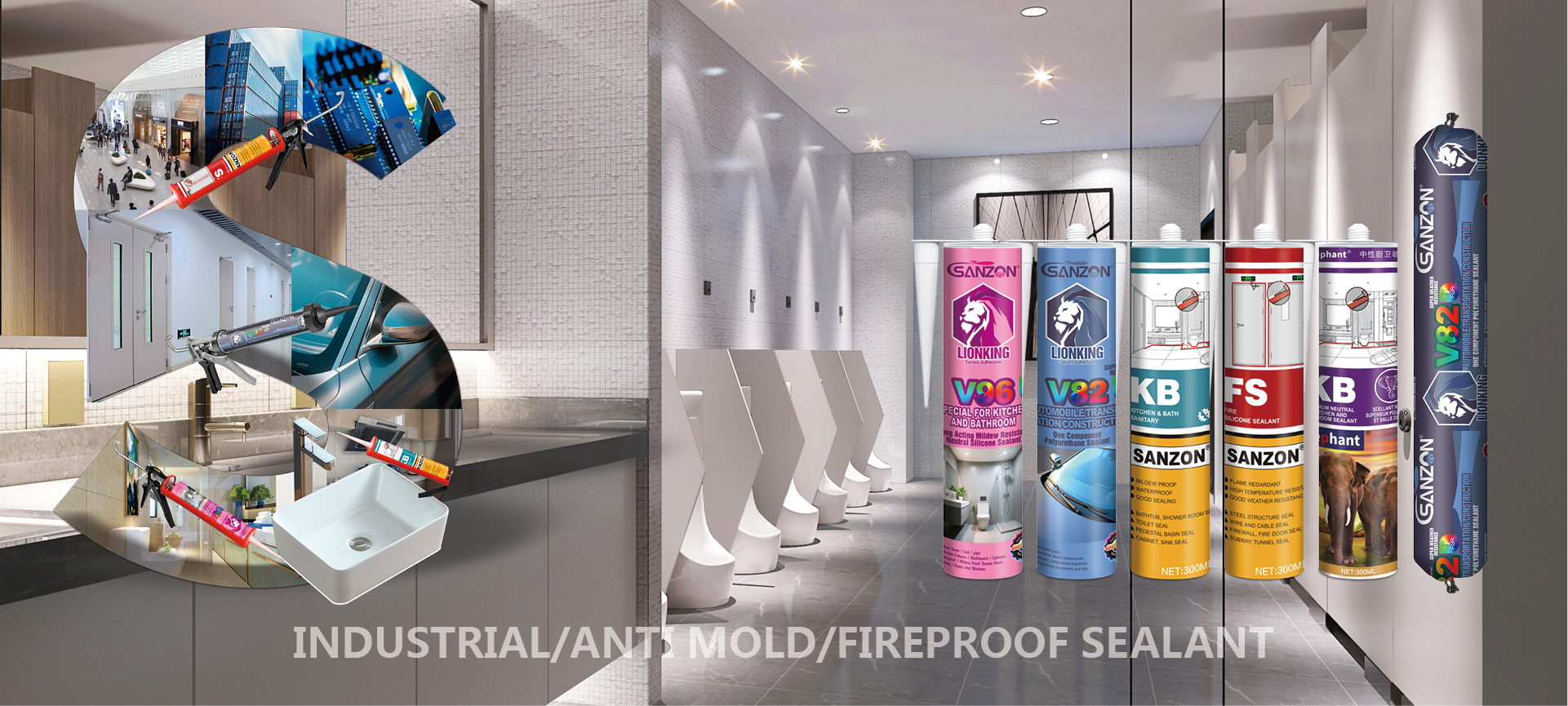
Sealant grades are separated by cure chemistry, substrate compatibility and service temperature — not by colour or cartridge size alone.
Silicone sealant sourcing failures rarely begin in the price negotiation. They begin in specification detail: a 12-month shelf life that was never checked against the delivery schedule, an acetoxy product written onto a substrate it should not touch, or a warehouse sitting outside the storage window printed on the carton.
The category is large enough that these details carry cost. Grand View Research valued the global silicone sealants market at USD 4.5 billion in 2025, with construction accounting for 60.7% of end use, Asia Pacific for 52.1% of revenue and room-temperature-vulcanizing (RTV) chemistries for 64.8% of the technology split. At that scale, most buyers are not choosing between sealant and no sealant. They are choosing between comparable cartons whose differences only surface months after installation.
This reference collects the technical and procurement questions that repeat most often during sealant sourcing and answers them from documented product data. Shandong Sanzeng New Materials Co., Ltd. is a sealant manufacturer headquartered in Linqu County, Weifang City, Shandong Province, China, whose operations cover silicone, MS polymer, acrylic and polyurethane sealants together with in-house packaging containers and filling equipment, with products exported to more than 30 countries and regions. Where a number is not documented, this article does not estimate one.
Shelf Life: What Is Stated and What Buyers Must Confirm
How long is the shelf life of silicone sealant?
Shelf life depends on formulation, packaging and storage conditions, and it should be read from the product packaging or technical data sheet (TDS) and consumed inside the stated window. Across the documented silicone, acrylic, MS polymer and PU foam SKUs in this range, the stated shelf life is 12 months. The no-nail construction adhesives are stated at 18 months, and the two-component grouts carry a stated storage window of +5 °C to 27 °C.
| SKU | Product type | Documented packing | Stated shelf life / storage |
|---|---|---|---|
| SANZON GP | Acid-cure general purpose silicone sealant for interior decoration | 300 ml × 24 pcs per carton | 12 months |
| SANZON GP-N | Neutral-cure multi-purpose silicone sealant | 300 ml × 24 pcs per carton | 12 months |
| SANZON NS | Neutral silicone structure + weather-resistant adhesive | 300 ml × 24 pcs; 590 ml × 20 pcs per carton | 12 months |
| SANZON KB | Neutral-cure kitchen and bath sanitary anti-mold silicone sealant | 300 ml × 24 pcs per carton | 12 months |
| SANZON FS | Flame-retardant fire silicone sealant | 300 ml × 24 pcs per carton | 12 months |
| SANZON MS | High-tack neutral silane-modified polymer (MS) sealant | 300 ml × 24 pcs per carton | 12 months |
| SANZON AS | Single-component paintable acrylic sealant | 300 ml × 24 pcs per carton | 12 months |
| SANZON TS | Odorless PU foam filler for indoor decoration | 750 ml × 15 pcs per carton | 12 months |
| SANZON TC | Quick-drying one-component PU foam filler for doors and windows | 750 ml × 15 pcs per carton | 12 months |
| SANZON GK / SANZON GS | No-nail construction adhesive | 300 ml × 24 pcs per carton | 18 months |
| SANZON GA / SANZON GM | Two-component polyurea and epoxy tile grouts | A+B 400 ml × 20 pcs per carton | Storage +5 °C to 27 °C |
One boundary is worth stating plainly. The product data for SANZON AS records a 12-month shelf life and a 300 ml × 24 pcs per carton configuration, but it does not print a numeric storage range. The +5 °C to 27 °C figure belongs to the two-component SANZON GA and SANZON GM grouts. Where no numeric window is documented for a SKU, the general storage guidance further below applies instead.
Does the packing format change the shelf life clock?
The 12-month statement is attached to the SKU rather than to a single pack format. SANZON NS is documented in both a 300 ml × 24 pcs cartridge carton and a 590 ml × 20 pcs sausage carton, and the PU foams SANZON TS and SANZON TC are documented at 750 ml × 15 pcs per carton — all carrying the same stated shelf life. For long ocean-freight routes, the practical implication is that the shelf-life window should be planned into the purchase order and the production date, not only into the warehouse receipt.
Types: What Chemistries Are Actually Produced
What types of sealant are produced?
The documented range spans four chemistry families plus foam, grout and adhesive lines: silicone sealants (acid-curing, neutral-curing, weather-resistant, general-purpose and structural types), MS polymer sealants, acrylic sealants, polyurethane (PU) sealants, no-nail construction adhesives, PU foam, tile grout, fire-resistant sealants, high-tack sealants and anti-mildew sealants for kitchens and bathrooms.
| Category | Documented model | Key documented property | Service temperature |
|---|---|---|---|
| Acetoxy (acid cure) silicone | SANZON PA — 300 ml, clear / white / black / grey / bronze / beige, CE, ISO 9001, RoHS, French indoor air emission label A+ | Quick bonding, weather and aging resistance | Not stated for this SKU |
| Acid-cure general purpose silicone | SANZON GP — interior decoration | Weatherproof, strong adhesion | −50 °C to 120 °C |
| Neutral-cure multi-purpose silicone | SANZON GP-N | Neutral cure, multi-purpose decoration | −50 °C to 150 °C |
| Neutral silicone structure + weather-resistant adhesive | SANZON NS | UV, climate and aging resistance; suitable for exterior walls | −50 °C to 150 °C |
| Structural silicone adhesive for curtain walls | SANZON CS — without white oil, super fast cure, UV resistant, CE, ISO, RoHS, French A+ | Structural weather-resistant bonding | Not stated for this SKU |
| Sanitary anti-mold silicone | SANZON KB | Long-term anti-mold in high temperature and humidity | −50 °C to 150 °C |
| Firestop silicone | SANZON FS — flame retardant, high temperature resistant | Flame retardant, vibration and cracking resistance | Not stated for this SKU |
| MS (modified silane polymer) | SANZON MS — formaldehyde-free, paintable after curing | High tack, painting-compatible, suitable for humid environments | Not stated for this SKU |
| Acrylic | SANZON AS — low VOC / low odour, paintable | Paintable, flexible, crack resistance | −10 °C to 80 °C |
| Silicone series adhesives | SANZON CLASSIC / ELEPHANT / LIONKING Series Adhesive — 300 ml cartridge, neutral (alcohol release) | Hardness 18 Shore A; movement capability 12.5% (ISO 11600); elongation at break 500%; tensile strength 1.2 N/mm² | −20 °C to 60 °C |
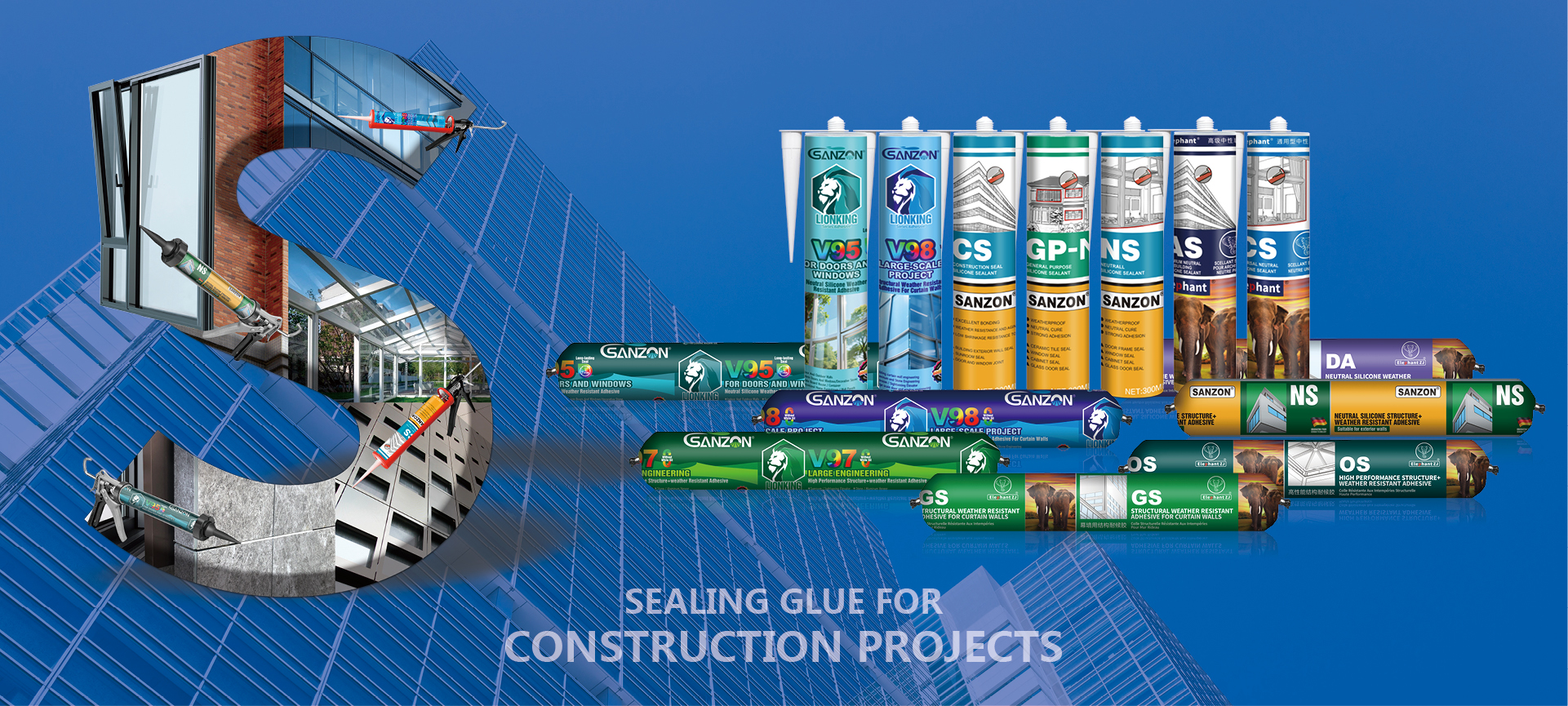
A neutral-cure, weather-resistant and structural range sitting in one product family means selection is driven by substrate and exposure, not by availability.
Neutral cure or acetoxy — what is the practical difference?
Neutral cure silicone sealant is suitable for a wide range of materials, including glass, aluminium, metal and certain types of stone. Acetoxy silicone sealant generally provides strong adhesion to glass and ceramic, and releases a vinegar-like acetic acid odour during curing. For windows, aluminium, metal, stone and outdoor weatherproofing, neutral-cure grades are generally the recommended direction; for general sealing of glass and ceramics, an acetoxy grade can be appropriate.
Are structural and fire-rated products simply stronger general-purpose products?
No. SANZON CS is a structural weather-resistant adhesive intended for curtain wall work, documented as formulated without white oil, with a super fast curing speed and UV resistance, and carrying CE, ISO and RoHS certification plus the French indoor air emission label A+. SANZON FS is a polymer-based flame-retardant sealant with high temperature resistance and vibration and cracking resistance. Both are separate specification categories with their own evidence requirements, not upgraded versions of a general-purpose cartridge.
Selection Step One: Match the Sealant to the Substrate
Substrate compatibility is the first filter in any sealant schedule, because the wrong cure chemistry causes poor adhesion that only becomes visible after the joint has been exposed to weather or water.
- Glass and ceramic, interior decoration: acetoxy grades — SANZON PA or the acid-cure SANZON GP, documented from −50 °C to 120 °C.
- Aluminium, metal, stone and most exterior surfaces: neutral-cure grades — SANZON NS or SANZON GP-N, documented from −50 °C to 150 °C.
- Curtain wall and facade structural bonding (glass, aluminium, stone): SANZON CS structural silicone adhesive, formulated without white oil.
- Bathrooms, kitchens and other wet areas: SANZON KB sanitary anti-mold silicone, documented as neutral cure with long-term anti-mold performance in high temperature and humidity.
- Fire-rated service penetrations: SANZON FS firestop silicone sealant.
- Joints that will be painted afterwards: SANZON MS (paintable after curing, formaldehyde-free) or SANZON AS acrylic sealant (paintable, low VOC and low odour), documented from −10 °C to 80 °C.
- Gaps requiring insulation as well as sealing: SANZON TS or SANZON TC PU foam, single-component moisture-cure, closed cell content above 90%.
- Nail-free panel and trim fixing: SANZON GK or SANZON GS no-nail construction adhesive, formaldehyde- and benzene-free.
Two rules sit above that list. First, adhesion should be confirmed on the actual job substrate rather than on a representative material — porous stone, coated aluminium and some plastics behave differently from clean glass. Second, joints that move need a product specified for movement; the silicone series adhesives are documented at 12.5% movement capability under ISO 11600 with 500% elongation at break.
Selection Step Two: Match the Sealant to the Environment
Environment covers three variables at once: indoor or outdoor exposure, the operating temperature band, and the presence of water, humidity or fire risk.
For outdoor applications the priority is UV, climate and aging resistance, which is why neutral grades such as SANZON NS are documented as suitable for exterior walls. For indoor decoration, the constraint shifts to odour and paintability: SANZON AS and SANZON MS are documented as low-odour or formaldehyde-free, and the PU foam SANZON TS is offered as an odourless variant for indoor use while SANZON TC is positioned for building doors and windows. In continuously wet areas the constraint becomes biological, which is where SANZON KB's long-term anti-mold performance in high temperature and humidity matters more than nominal adhesion figures.
Field evidence for exterior durability exists in case documentation covering work delivered to global engineering and construction companies: 2,000,000 cartridges supplied over two years, with stable operation and no leakage, and all-weather durability stated from −40 °C to +150 °C with UV resistance and no cracking or chalking after years of outdoor exposure. That is a project-level record rather than a per-SKU laboratory claim, and it should be read alongside — not instead of — the individual service temperature ranges listed above.
Storage: The Part of the Purchase Order Warehouses Usually Get Wrong
How should sealant be stored?
Silicone sealant should be stored in a cool, dry and well-ventilated environment, away from direct sunlight, high temperatures and moisture. Proper storage helps maintain the stability and performance of the sealant.
Two specifics matter beyond that general guidance. The two-component grouts SANZON GA and SANZON GM carry an explicit storage window of +5 °C to 27 °C, which means unheated winter storage near or below freezing, or a metal-roofed container in summer, both fall outside the stated range. And PU foam is supplied in pressurised 750 ml cans at 15 pcs per carton, so stacking height and temperature exposure during transport affect handling safety as well as product performance.
Carton configuration is decided at the production stage: 300 ml × 24 pcs, 590 ml × 20 pcs, 750 ml × 15 pcs, and A+B 400 ml × 20 pcs formats are documented across this range.
A practical stock-control rule follows from the shelf-life data: rotate by production date rather than by receipt date, because a 12-month window measured from production can shrink considerably while a container is in transit. For two-component grouts, keep A and B components in matching lot pairs, since the packaging is designed for precise A/B ratio dispensing with static mixers and mismatched lots reintroduce the mixing-error risk the format was built to remove.
Procurement Questions: MOQ, Lead Time, Customisation and Evidence
What are the order and delivery parameters?
The documented supply parameters for this manufacturer are a minimum order quantity of 100 boxes, a lead time of 10–20 days, a monthly capacity of 8,800,000 units, and 100% product testing. OEM and ODM private-label programmes cover packaging, printing, formulation and filling, with custom label printing, custom colours and custom cartons. Empty cartridge formats include cartridge, foil sausage and bucket and pail configurations based on OEM requirements, with a standard 300 ml capacity that can be customised.
Which certifications and test documentation can be verified?
The company holds ISO 9001 quality management system certification, ISO 14001 environmental management system certification and ISO 45001 occupational health and safety management certification. Selected export products have passed CE certification and RoHS compliance certification, and SGS performance and safety testing reports are held. Within the product range, SANZON CS and SANZON PA are documented with CE, ISO and RoHS certification and the French indoor air emission label A+. Export operations run through Chinese ports including Qingdao, and the export ratio is documented at 70%.
What support is available before and after the order?
Documented support includes free samples and technical product selection consultation, remote technical support after delivery, and customised filling production line solutions where a buyer intends to fill cartridges locally rather than purchase finished goods.
Limits, Gaps and Regulatory Boundaries Buyers Should Not Skip
Several questions that recur in procurement meetings cannot be answered from product data alone, and pretending otherwise creates risk later.
- Curing time is not a fixed number. Curing is affected by temperature, humidity, product type and sealant bead thickness; the surface may skin over within a short period while full cure takes longer. Specific curing data must be taken from the product TDS, not from a general article.
- Customs data does not separate chemistries. Silicone sealant exports are aggregated under HS code 321410, so the split between neutral-cure and acetoxy export volumes cannot currently be verified from trade statistics. Any supplier claim about category share should be treated as unverified unless bill-of-lading level data is provided.
- Market-size estimates vary by scope. Published figures range widely because some studies include adhesives alongside sealants; the USD 4.5 billion 2025 figure used here is from a sealant-focused scope, and it is not directly comparable with broader adhesive-and-sealant totals.
- Standards and regulations apply by market. ASTM C920-18(2024) is the primary performance standard for elastomeric joint sealants used in building construction in the United States. In the European Union, Commission Regulation (EU) 2024/1328 restricts cyclic silicones D4, D5 and D6, including an industrial-use threshold of 0.1%, with the leave-on cosmetics ban applying from June 2027. Buyers shipping into these markets should confirm which specific SKUs fall within scope rather than assuming category-wide compliance.
- Shelf life statements are storage-dependent. A 12-month statement assumes the storage conditions above are met; it is not a substitute for incoming inspection or for stability testing tied to a particular shipping route and climate.
Why These Questions Keep Coming Back
The demand structure explains the pattern. Construction accounts for 60.7% of silicone sealant end use and Asia Pacific for 52.1% of revenue, according to Grand View Research, while RTV chemistries hold 64.8% of the technology split. Trade data points the same direction: China's exports of silicone under HS 321410 to India grew by USD 16.7 million between 2024 and 2025, according to OEC. Growth of that kind concentrates volume in a fragmented supplier base, which is precisely the environment where carton counts, storage windows and cure chemistry become commercial variables rather than technical footnotes.
FAQ
What is sealant?
Sealant is a product used to fill, seal and bond gaps between materials. It is widely used in construction, doors and windows, glass, bathrooms, decoration, automotive and industrial applications, and different sealant types offer different levels of adhesion, waterproofing, weather resistance and elasticity.
How long does silicone sealant take to cure?
Curing time is influenced by temperature, humidity, product type and sealant bead thickness. The surface typically skins over within a short period, while full curing takes longer. Specific curing times should be taken from the product technical data sheet.
Can silicone sealant be painted over?
Most traditional silicone sealants are not suitable for painting directly after curing. Where a project requires overpainting, paintable options such as MS polymer sealant are the appropriate direction, and acrylic sealant is documented as paintable with low VOC and low odour.
What is the difference between neutral and acidic silicone sealant?
Neutral cure silicone sealant suits a wide range of materials including glass, aluminium, metal and certain types of stone. Acetoxy silicone sealant generally offers strong adhesion to glass and ceramic and releases a vinegar-like acetic acid odour during curing.
Where can silicone sealant be used?
Silicone sealant is used on glass, aluminium, ceramic, metal, some plastics and wood, as well as for doors and windows, kitchens, bathrooms and construction joints. The appropriate grade depends on the material and the application environment.
Is OEM or private-label supply available?
Yes. OEM and private-label services cover silicone sealant and other sealant products, with customisation of brand, packaging, labels, cartridge printing, colours and other product specifications according to buyer requirements.
For the full SKU listing in one document, the SANZON LIONKING Series Adhesives brochure is available for reference and download.
¿Tiene preguntas o necesita más detalles?
Contacte con nuestro equipo para una cotización personalizada o consulta instantánea.
Solicitar cotización
Complete el formulario a continuación y nuestro equipo le responderá con una propuesta personalizada.
Chat directo de WhatsApp
¿Prefiere chatear en tiempo real? Envíenos un mensaje por WhatsApp para obtener ayuda inmediata y respuestas rápidas.
- Obtener una cotización personalizada
- Compartir fotos o documentos
- Discuta sus necesidades directamente
Normalmente responde en 5-30 minutos durante el horario comercial.