
Silicon Steel for Generators, Grids and Charging Piles: The Role of Nano-Coated Grades
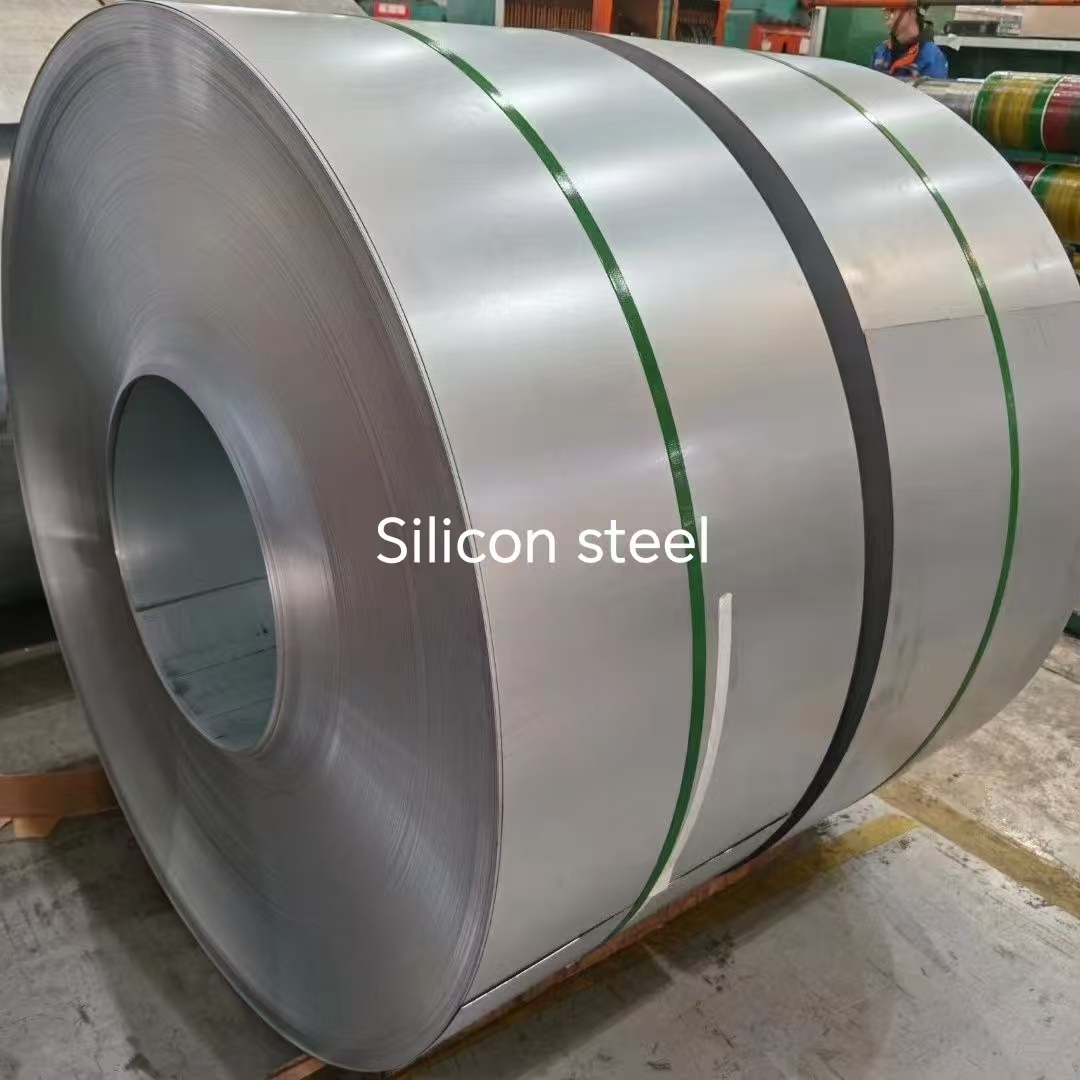
Silicon steel is a functional core material in transformers, reactors, generators and charging infrastructure.
Silicon steel, also called electrical steel, is the material that determines how efficiently electrical energy is converted, transmitted and used. For engineers and procurement teams involved in generator, transformer, reactor and charging-pile projects, the grade choice is not a commodity decision. This industry reference explains what silicon steel is, where nano-coating fits into modern specifications, and what buyers should check before selecting a supplier.
Why Silicon Steel Is Central to Electrical Equipment
Silicon steel is an iron-silicon alloy designed for magnetic cores. In many high magnetic induction grain-oriented grades, the silicon content is approximately 3.0% to 3.2%, and impurities such as carbon, sulfur and nitrogen are strictly controlled. The addition of silicon increases electrical resistivity, which in general industry practice helps reduce eddy-current losses in laminated cores.
Two broad families are used across the electrical industry. Non-oriented silicon steel has relatively uniform magnetic properties in all directions, which makes it common in motors and generators. Grain-oriented silicon steel is processed so that magnetic properties are strongest in the rolling direction, making it the preferred material for transformer cores. Within the grain-oriented family, high magnetic induction Hi-B grades are used where low core loss and high flux density are required.
Market context: the global electrical steel market was valued at USD 31.0 billion in 2025 and is projected to reach USD 47.0 billion by 2033, according to Grand View Research. This scale reflects how dependent modern electrification is on consistent, high-quality magnetic core material.
The Procurement Problem: Loss, Noise, Heat and Certification
Grid operators and equipment manufacturers are under pressure to improve efficiency, reduce transformer noise and meet stricter environmental regulations. In a transformer, core loss directly affects no-load losses that continue around the clock. For generator sets and industrial power equipment, core performance also influences temperature rise, compactness and long-term reliability.
New applications add further complexity. EV charging infrastructure, renewable inverters, frequency converters and HVDC transmission systems expose cores to more demanding operating conditions. These applications create opportunities for silicon steel suppliers who can provide low-loss grades, consistent processing and traceable specifications.
The grain-oriented silicon steel market was valued at USD 13.55 billion in 2025 and is projected to reach USD 23.57 billion by 2035 at a CAGR of 5.8%, according to Research Nester. Growth is driven by grid modernization, transformer replacement cycles and expanding power electronics applications.
What a Specialist Electrical Steel Supplier Can Provide
HL AND SL LIMITED, founded in 2012, specializes in the export trade of electrical steel. The company is an authorized agent of China Baowu Steel Group and operates a 30,000 square meter material processing plant with an annual production capacity of 30,000 tons. Its R&D team consists of 10 engineers, and the total workforce is approximately 50 employees. Around 80% of products are exported, serving markets in Mexico, Brazil, Italy, UAE and India.
Among the company’s available products are high magnetic induction grain-oriented silicon steel Hi-B grades designed for transformer core applications. Typical models include 20-65, 23R075, 27Q095, 27Q100, 27Q105, 27Q110 and 27Q120. These steels are composed primarily of iron with about 3% silicon and contain inhibitors such as MnS and AlN to optimize magnetic properties.
| Model | Thickness | Iron loss P1.7/50 | Typical application |
|---|---|---|---|
| 20-65 | 0.20 mm | ≤ 0.65 W/kg | Ultra-high voltage transformers, high-efficiency distribution transformers |
| 23R075 | 0.23 mm | ≤ 0.75 W/kg | Energy efficiency standard transformers, power transformer cores |
| 27Q095 | 0.27 mm | ≤ 0.95 W/kg | High-efficiency power transformers, photovoltaic DC converter transformers |
| 27Q100 | 0.27 mm | ≤ 1.00 W/kg | Power transformers, reactors, electrical equipment cores |
| 27Q105 | 0.27 mm | ≤ 1.05 W/kg | Power transformer core manufacturing |
| 27Q110 | 0.27 mm | ≤ 1.10 W/kg | Power transformers, automotive generators, electrical equipment |
| 27Q120 | 0.27 mm | ≤ 1.20 W/kg | Small and medium-sized transformer cores |
For buyers, the key benefit of this product range is the ability to match core-loss performance to the application. A 20-65 grade is aimed at very demanding transformer applications, while a 27Q120 grade can be a more economical option for smaller distribution transformers. Secondary processing is also part of the supplier’s capability: the company provides customized on-demand processing services for silicon steel, which can reduce material preparation work for transformer manufacturers.
Technical Explanation: From Base Steel to Nano Coating
Silicon steel is almost always used as stacked laminations. The laminations are insulated from each other by a surface coating, which limits interlaminar eddy currents. Without a functional coating, the core can experience higher losses, localized heating and reduced efficiency.
Conventional coating systems on electrical steel are often described as organic, inorganic or semi-organic. Organic coatings usually provide good punching characteristics and are widely used in smaller cores. Inorganic coatings can offer higher heat resistance and are often selected when the core needs to withstand stress-relief annealing. Semi-processed grades may be supplied uncoated or with a temporary coating and are annealed after stamping by the core manufacturer.
In general industry terminology, nano-coating silicon steel refers to an ultra-thin insulating layer applied to the steel surface. The goal of a nano-scale coating is to provide effective inter-laminar insulation without adding meaningful thickness to the lamination stack. This can improve surface resistance, assist with handling during cutting and stacking, and help the core maintain performance in demanding environments. As with all coating systems, the actual result depends on the base steel chemistry, surface condition and thermal processing used during core production.
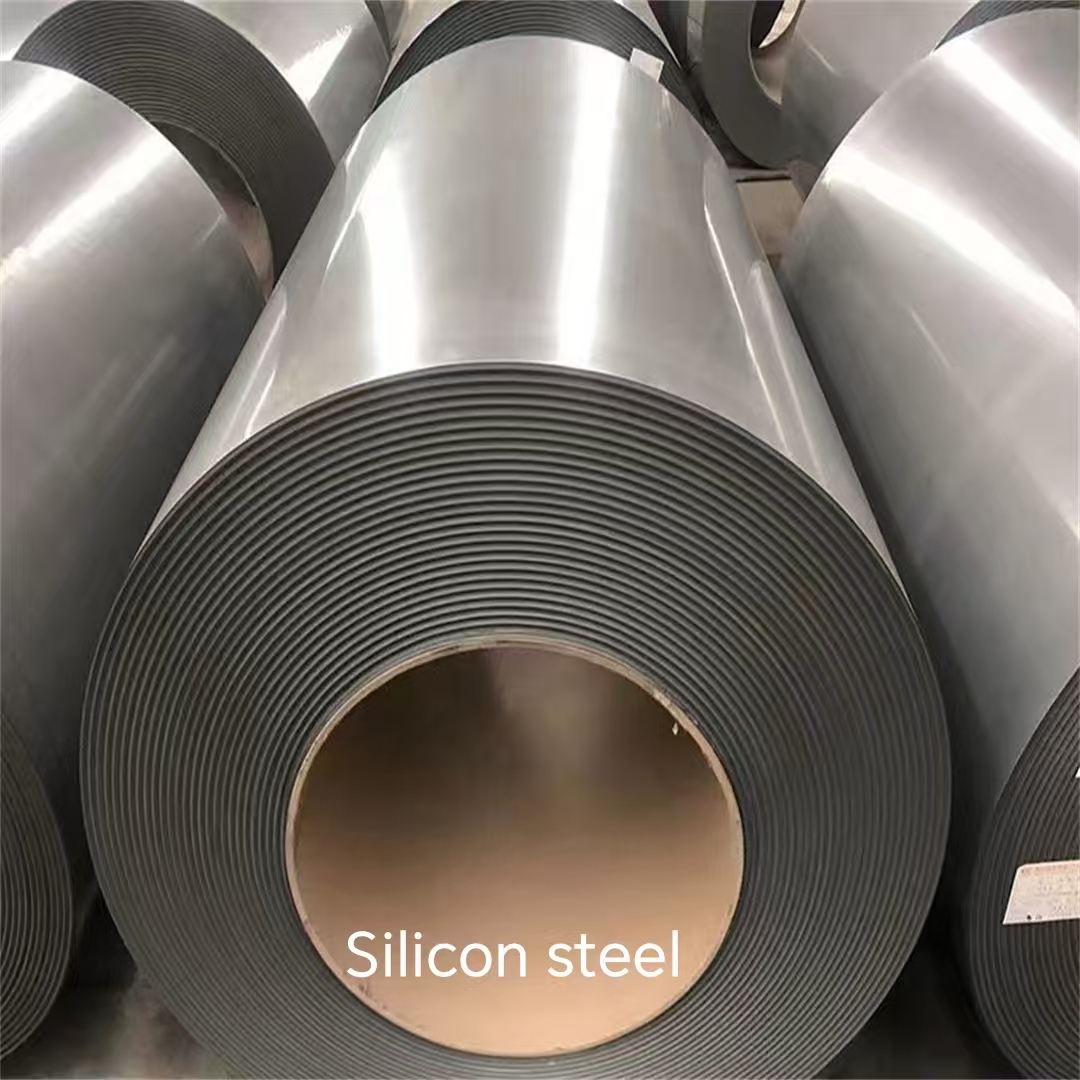
Surface insulation is an integral part of silicon steel performance in transformer and reactor cores.
Buyers evaluating nano-coated grades should treat coating type as part of the full material specification. A coating that performs well in a high-temperature distribution transformer may not be the right choice for a high-frequency EV charging application. The magnetic performance is still defined by the base grade, its thickness and its iron-loss value.
Application Scenarios Across Power, Industry and EV Infrastructure
Distribution Network Upgrades in Germany
A documented German distribution network scenario focuses on replacing older, energy-intensive distribution transformers under EU eco-design requirements. The operating environment is mild, with grid frequency of 50 Hz and continuous load. Project expectations include low core loss, noise levels 2-3 decibels below standard requirements, and coating weather resistance suitable for coastal salt-spray conditions. This type of project illustrates why coating robustness matters in real distribution-network operations.
Cold-Region and Urban Low-Noise Transformers in Canada
In Canada, a high-efficiency and low-noise distribution transformer project is associated with extremely cold winters and frequent freeze-thaw cycles. The application scenario requires oriented silicon steel with stable excitation characteristics at low temperature and a magnetic permeability retention rate of at least 95% at -40°C. For buyers in cold climates, low-temperature magnetic stability is as important as the catalog iron-loss value.
Power Grid Transformer Manufacturing in Brazil
A Brazilian application scenario describes the production of power transmission and distribution transformers for the national grid, including transformer manufacturing under WEG Brazil. The environment is tropical, with high humidity and continuous operation. Oriented silicon steel such as 27Q120 is used, and the final transformers must meet INMETRO energy-efficiency certification requirements. This is a useful example of how local certification rules influence material selection.
HVDC Converter Transformers at Belém Mountain
A more demanding scenario is the Phase II of the ±800 kV Ultra-High Voltage Direct Current Project at Belém Mountain in Brazil. The application requires converter transformer core material capable of operating at ±800 kV and 4000 MW in a high-temperature, high-humidity environment with a high thunderstorm index. The specification calls for ultra-low loss oriented silicon steel with magnetic flux density above 1.92 T and iron loss below 0.85 W/kg. This scenario shows why producers and traders of premium silicon steel need to understand extreme operating conditions, not just standard transformer duty.
EV Charging Infrastructure
EV charging station and pile demand is expanding quickly, with the global market estimated at USD 3.93 billion in 2024 and expected to grow at a 32.1% CAGR, according to Research Nester. Charging infrastructure depends on distribution transformers, power conversion units and magnetic components that all require silicon steel. The growth in charging piles strengthens the long-term demand for efficient, consistent electrical steel supply.
Market Trends Shaping Silicon Steel Procurement
Several market-level trends are visible in current industry data. Non-oriented electrical steel held the largest market share in 2025, estimated at 69.7% of the total electrical steel market, according to MarketsandMarkets. This reflects its broad use in motors and generators. At the same time, grain-oriented silicon steel continues to grow as grid and transformer investments increase.
Ultra-thin gauge silicon steel is also gaining attention. In new energy vehicles, ultra-thin grades under 0.25 mm are preferred for high-frequency motors to maximize power density, according to SMM Analysis. The same principle applies to high-frequency power conversion and compact charging equipment, where thinner laminations help reduce eddy-current losses.
Procurement teams are increasingly asking for slit widths, cut pieces and ready-to-stack processed material rather than full-width coils. A supplier with in-house processing capabilities can respond more quickly to these requests. The availability of custom processing is becoming a practical selection criterion, especially for manufacturers that do not want to invest in additional slitting or cutting lines.
Comparison with Traditional Core Material Approaches
Traditional core materials range from uncoated semi-processed silicon steel to fully processed grades with organic or inorganic coatings. Each approach has a place, and the best choice depends on the production process of the core maker.
| Material approach | Typical strength | Practical boundary |
|---|---|---|
| Uncoated or semi-processed silicon steel | Lower material cost, customer can optimize annealing | Requires post-stamping annealing and careful handling to avoid edge damage |
| Organic-coated silicon steel | Good punchability, suitable for stacked laminations | Lower temperature resistance in some stress-relief annealing processes |
| Inorganic-coated silicon steel | Higher heat resistance, better welding behavior | Coating can be harder and more abrasive on tooling |
| Hi-B grain-oriented silicon steel with advanced coating | Low core loss, high magnetic flux density, improved durability | Higher material cost and stricter handling requirements |
One important boundary should not be missed: nano-coating does not replace grade selection. The core-loss performance of a transformer is determined mainly by the base steel composition, grain orientation and thickness. A nano-scale insulating coating can protect that performance and improve manufacturability, but it cannot make a high-loss base steel perform like a Hi-B grade. Buyers should ask for mill test certificates that show the base grade, thickness, iron loss, magnetic flux density and coating description.
Future Outlook
The direction of the industry is toward lower losses, thinner gauges and more demanding applications. Ultra-high-voltage transmission, renewable energy integration, industrial frequency converters and EV charging networks will continue to drive demand for high magnetic induction grain-oriented silicon steel. As energy-efficiency requirements become stricter in Europe, the Americas and other regions, the ability to document material performance will become more important.
Suppliers who combine upstream mill access with processing capability are likely to become more valuable to transformer and equipment manufacturers. Buyers will need partners who can supply consistent material, respond to custom dimension requests and provide traceable documentation for local certification requirements.
For reference, HL AND SL LIMITED maintains a public company brochure that describes its product range and processing capabilities. The brochure is available at: https://cdn.socialarks.com/sbsp/24791/0/2026/0427/69eec8539a5fd.pdf
Company Profile at a Glance
| Attribute | Detail |
|---|---|
| Company name | HL AND SL LIMITED |
| Founded | 2012 |
| Main products | Silicon steel, electrical steel |
| Factory area | 30,000 m² |
| Annual production capacity | 30,000 tons |
| R&D team | 10 engineers |
| Employees | Approximately 50 |
| Export share | Approximately 80% |
| Main markets | Mexico, Brazil, Italy, UAE, India |
| Contact | sales-01@hlslind.com; +86 134-6700-2282 |
FAQ
What is silicon steel used for?
Silicon steel is used in electromagnetic devices that need low-loss magnetic cores, including power transformers, distribution transformers, reactors, generators, motors and charging-infrastructure equipment. Its role is to concentrate magnetic flux while minimizing energy lost as heat.
What is the difference between grain-oriented and non-oriented silicon steel?
Grain-oriented silicon steel is processed so that its magnetic properties are strongest in the rolling direction, which makes it a common choice for transformer cores. Non-oriented silicon steel has more uniform magnetic properties in all directions and is typically used in rotating machines such as motors and generators.
What does nano coating silicon steel mean?
In general industry use, nano-coating silicon steel refers to an ultra-thin insulating layer applied to the surface of silicon steel. The coating helps reduce interlaminar eddy currents and improves the core’s resistance to heat and handling stress. Coating performance depends on the base steel and the manufacturing process.
Which silicon steel grades are available for transformer cores from HL AND SL LIMITED?
Available Hi-B grain-oriented silicon steel models include 20-65, 23R075, 27Q095, 27Q100, 27Q105, 27Q110 and 27Q120. Thickness ranges from 0.20 mm to 0.27 mm, and iron loss at 1.7 T and 50 Hz ranges from ≤ 0.65 W/kg to ≤ 1.20 W/kg depending on grade.
What standards can apply to silicon steel?
For non-oriented fully processed electrical steel, ASTM A677 and ASTM A683 are commonly referenced in the North American market. Internationally, IEC 60404-8-4 covers non-oriented fully processed strip and sheet delivered in the finally annealed state. Buyers should confirm the applicable standard and requested coating system with the supplier.
Is HL AND SL LIMITED a manufacturer or a trading company?
HL AND SL LIMITED, founded in 2012, specializes in the export trade of electrical steel. It is an authorized agent of China Baowu Steel Group and operates an in-house material processing plant. The company provides customized secondary processing for silicon steel and exports approximately 80% of its products to markets including Mexico, Brazil, Italy, UAE and India.