
Silica for Non-dairy Creamer: A Scenario-Fit Guide
A non-dairy creamer line is a powder-handling system before it is a flavour system. The silica grade chosen for that line determines whether the powder discharges cleanly from a hopper, whether a bag survives three months in a warehouse, and whether the whitened surface of a retail pack still looks white. This guide maps the creamer application to suitable silica grades and sets out how flow, caking, purity and appearance should be evaluated before a grade change is approved.
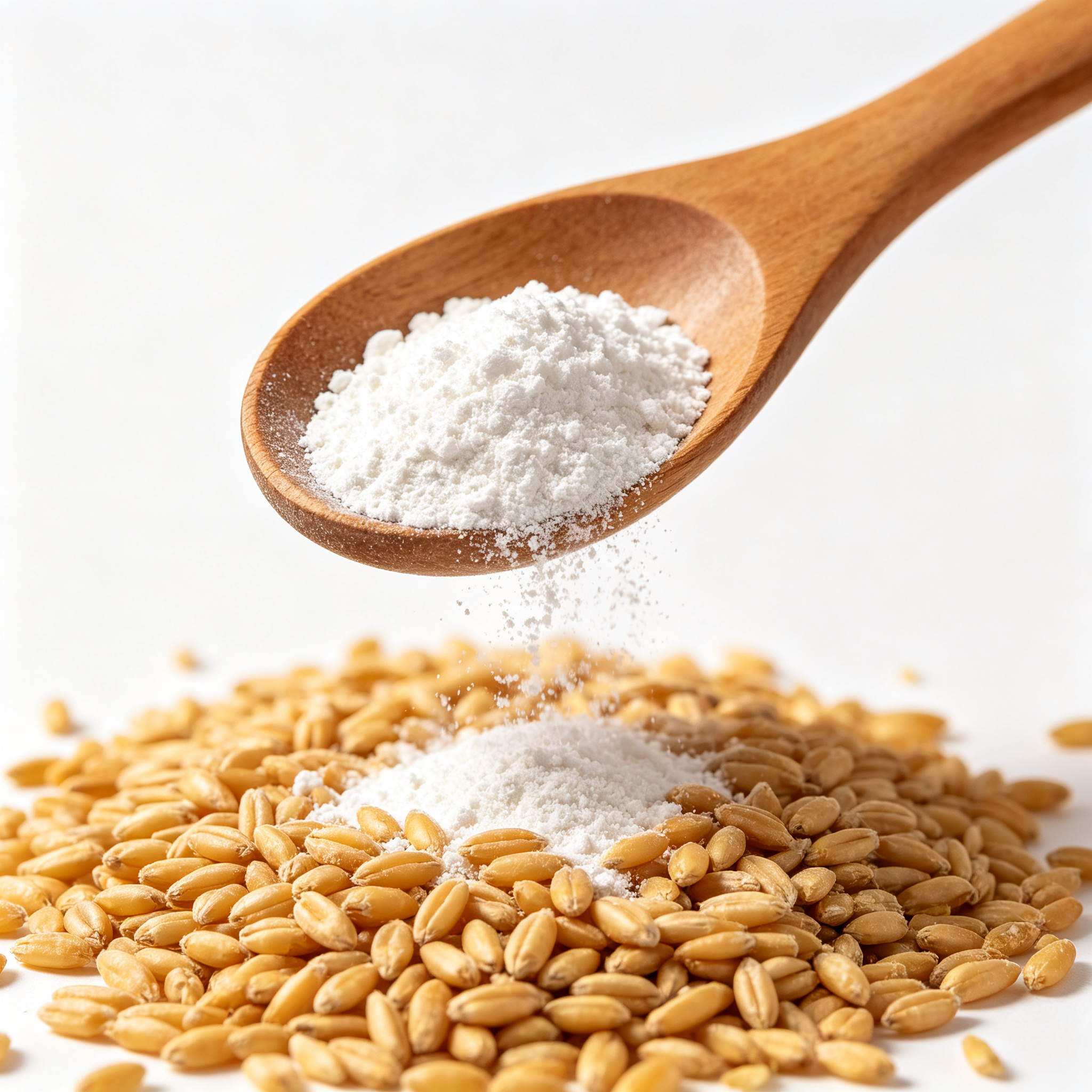
Spray-dried powders rely on a small, well-dispersed silica fraction to stay free-flowing through filling, storage and reconstitution.
The creamer problem: four failure modes, one minor ingredient
Non-dairy creamer is produced by emulsifying oil, protein or carbohydrate carriers and emulsifiers, then spray drying the emulsion into a powder. The finished powder is hygroscopic, fat-bearing and often stacked under load in bags or cartons. Those conditions create four recurring failure modes, each of which is influenced by a different silica property.
- Caking in the bag. Free moisture and fat migration create liquid bridges between particles, which then fuse under stack pressure. Silica disrupts that bridging by physically separating particles and absorbing free moisture and oil.
- Bridging and rat-holing in the hopper. Flow behaviour depends on particle size distribution, surface area and the base powder's own moisture. A grade that works in a small blender may not discharge from a tall hopper.
- Dusting at filling. Very fine grades disperse well but generate dust; coarser grades reduce dust but may disperse less readily in the cup.
- Appearance defects in white powders. Trace iron can drive yellowing in the presence of flavour compounds, and black specks become visible against a white creamer background.
The commercial stakes are asymmetric. Silica is normally dosed at a small fraction of the formula, yet it carries a disproportionate share of line uptime, complaint rate and packaging yield. That is why the grade decision is better treated as a scenario-fit question than as a commodity purchase.
Three silica roles in a powdered creamer line
Buyers often ask for 'food-grade silica' as though it were a single specification. In practice, three distinct roles appear on creamer lines, and they are not interchangeable.
Free Flow Agent Silica
Free Flow Agent Silica is a general-purpose precipitated amorphous silica family supplied as ZLSIL-W58A/58A, ZLSIL-W22S and ZLSILW58E. It is specified at a median particle size (D50) of 14–19 μm and a BET specific surface area of 180–190 m²/g, with pH 6.0–7.5 and loss on drying (LOD) of 6.5% or below. Typical dosage is 0.2–1%. It is the workhorse grade for dry blending, instant drinks and general food powders where the primary requirement is free flow rather than high liquid loading.
Food Grade Anti-caking Silica
Food Grade Anti-caking Silica is the compliance-led family. Grades in this group are documented against GB 25576-2020 and GB 2760 in China, and reference the United States FDA 21 CFR 172.480 framework, the FCC (Food Chemicals Codex), the EU E 551 additive number under Commission Regulation (EU) No 231/2012, and the JECFA evaluation in which the acceptable daily intake is listed as 'not specified'. For a creamer line, this family establishes the documentary baseline; it does not by itself define the particle size or oil absorption that the line needs.
Silica for Non-dairy Creamer
Silica for Non-dairy Creamer is a precipitated amorphous silica family supplied as ZLSIL-W50S, ZLSIL-W110SD, ZLSIL-W50B and ZLSIL-WT50. It is specified at D50 40–60 μm, BET 230±20 m²/g, pH 6.0–7.5, LOD of 6.5% or below, and high oil absorption. The intended applications are non-dairy creamer, coffee whitener, milk powder, vegetable fat powder and instant drinks. The coarser particle size and higher surface area distinguish it from a general free-flow grade: it is designed for a fat-bearing, spray-dried matrix rather than a simple dry blend.
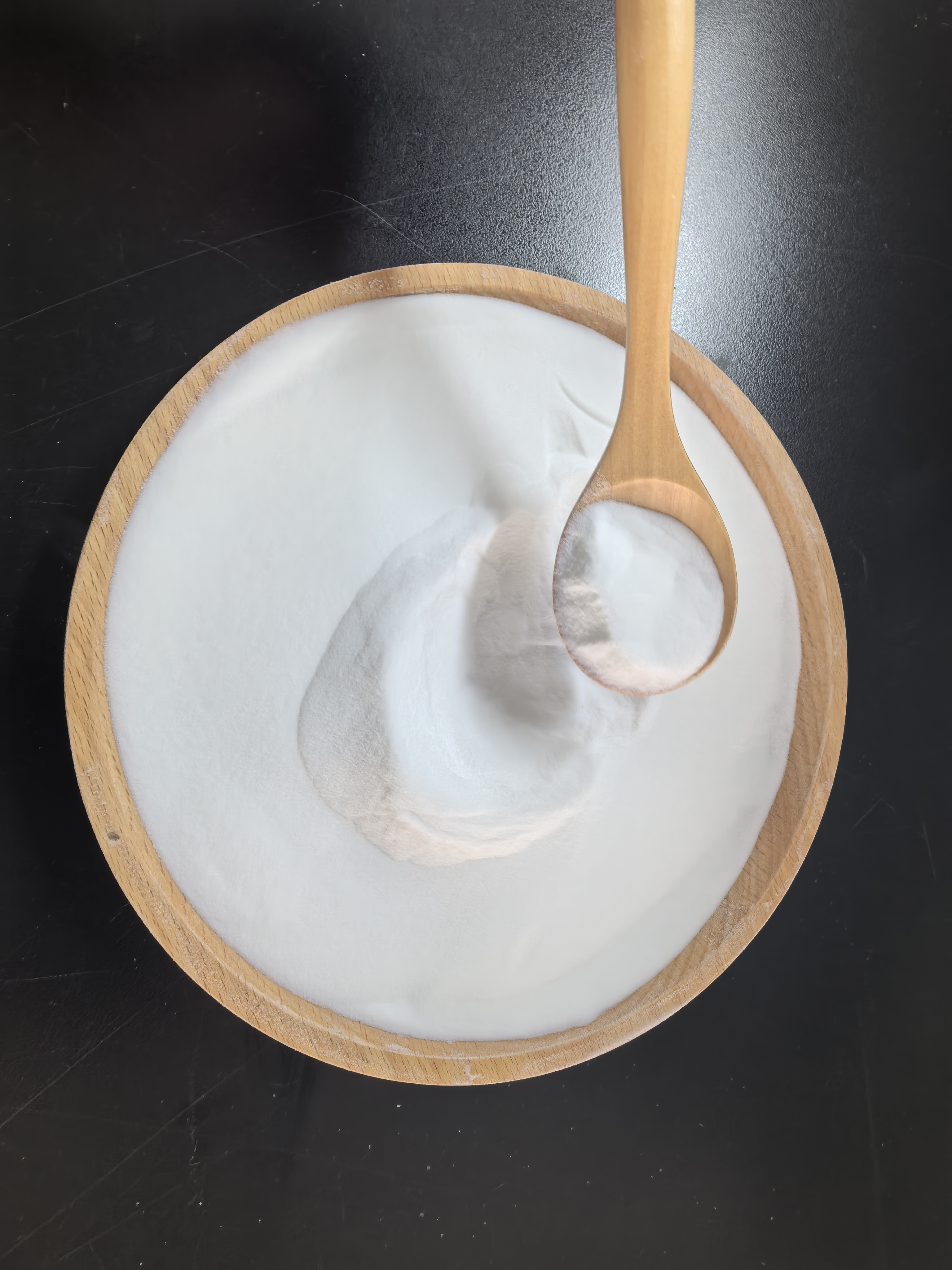
Precipitated silica grades differ in particle size, surface area and oil absorption; the differences are functional, not cosmetic.
Matching grade to line scenario
The table below maps the main grade families to the creamer-line situations in which they are typically evaluated. It is a starting point for a trial, not a substitute for one.
| Grade family | Representative grades | Key specified parameters | Line scenario |
|---|---|---|---|
| Silica for Non-dairy Creamer | ZLSIL-W50S, ZLSIL-W110SD, ZLSIL-W50B, ZLSIL-WT50 | D50 40–60 μm; BET 230±20 m²/g; pH 6.0–7.5; LOD ≤6.5%; high oil absorption | High-fat spray-dried creamer, coffee whitener, vegetable fat powder, instant drinks |
| Free Flow Agent Silica | ZLSIL-W58A/58A, ZLSIL-W22S, ZLSILW58E | D50 14–19 μm; BET 180–190 m²/g; pH 6.0–7.5; LOD ≤6.5%; dose 0.2–1% | General dry blending, instant drink mixes, food powders requiring flow |
| Food Grade Anti-caking Silica | Food Grade Anti-caking Silica family | Documented against GB 25576-2020, FDA 21 CFR 172.480, FCC, E 551, JECFA | Markets and customers requiring a documented compliance baseline |
| Low Heavy Metal Silica | ZLSIL-W58BT, ZLXIDE-P | Pb ≤1–2 ppm; total heavy metals ≤10 ppm; pharmacopoeia-grade references available | Export or private-label specifications with tighter impurity limits |
| Low Iron Food Grade Silica | ZLSIL-W58BF | Iron ≤5 ppm standard; ≤1–2 ppm premium; whiteness ≥96% (premium ≥98%) | White creamer, colour-sensitive formulations, light-coloured retail packs |
| Silica Free of Black Specks | ZLSIL-W58BF, ZLSIL-W58BH | Internal inspection limits applied by size tier | Appearance-critical packs where visible specks trigger complaints |
How to evaluate flow and caking performance
Laboratory flow tests rarely reproduce a creamer line. A credible evaluation starts with the base powder and ends with the packed bag.
- Measure the base powder first. Record the moisture (LOD) of the creamer base before adding silica. If the base is already above its moisture target, no anti-caking grade will compensate.
- Test in the actual hopper geometry. Discharge behaviour depends on hopper angle, vibration and the powder's cohesive strength. A bench funnel test is a screening step, not an approval.
- Run accelerated storage. A commonly used condition for comparative trials is 40 °C and 75% relative humidity for two to four weeks, with caking assessed against a retained control sample.
- Inspect under white light. Black specks and yellowing are visual defects and should be assessed against a standard white background, using the same lighting for every sample.
- Check sensory neutrality. Compare against retained samples for off-odour, because packaging and transport can introduce odours that are wrongly attributed to the silica.
- Document the dose and mixing step. Record where silica is added, at what dose and for how long the blend is mixed. For carrier-type use, low-shear mixing is preferable because prolonged high shear can damage the pore structure that holds liquid.
Purity is a line decision, not only a certificate
Three purity dimensions matter more on a creamer line than general food-grade compliance alone: heavy metals, iron and visible black specks.
Low heavy metals
Low Heavy Metal Silica grades are specified with lead at 1–2 ppm or below and total heavy metals at 10 ppm or below, with pharmacopoeia-grade references available. These limits matter when a creamer is exported to markets with tighter impurity expectations, or when a private-label specification is stricter than the local food-additive standard.
Low iron
Iron ions are the main driver of yellowing and colour shift in silica-based formulations. In the presence of flavour compounds such as ethyl maltol, vanillin and flavonoids, even trace iron can form coloured complexes that turn powders yellow. Low Iron Food Grade Silica is specified at iron of 5 ppm or below in the standard grade, and 1–2 ppm in the premium low-iron grade, against a typical benchmark of around 30 ppm in general commercial grades. Whiteness is specified at 96% or above, and 98% or above in premium grades. For a white creamer, this is often the difference between a stable colour and a seasonal complaint.
Black specks
Black specks in silica are not foreign contaminants in the usual sense; they are silica itself, surface-coated with trace high-temperature carbides and mineral-associated crystals. The practical control is a size-tiered internal inspection limit. One published internal standard uses three tiers: no specks above 0.3 mm, no more than one speck per bag in the 0.2–0.3 mm range, and no more than ten below 0.2 mm, with any failed bag rejecting the whole batch. Buyers evaluating a supplier should ask for the inspection method, the sampling plan and the rejection rule, not just the word 'speck-free'.
Moisture, caking on arrival and off-odour
Moisture and caking on arrival
Moisture damage usually occurs during transport or storage rather than at the plant. Whole-bag or partial caking on delivery is typically associated with high-humidity ocean freight, damaged packaging, rainy-season shipping or warehouse leakage. The recommended response is procedural: photograph the condition for evidence, test the moisture content, and if appearance and moisture are within specification, break up and sieve before use. If the material is out of specification, reject it. For future orders, specify moisture-barrier packaging with desiccants rather than simply increasing the silica dose.
Off-odour
Off-odour complaints in creamer are more often packaging and logistics problems than silica problems. The common causes are migration from packaging materials, co-shipping with odorous goods and contamination in the storage environment. The practical sequence is to verify the food-contact compliance of the packaging, require dedicated food-grade transport, isolate storage from odorous materials, compare against retained samples, and audit the same-batch inventory before concluding that the silica is responsible.
Why a pilot trial is not optional before a grade change
A certificate of analysis confirms that a material is chemically compliant. It does not confirm that the material will perform in a specific creamer formulation. Two grades with similar published specifications can behave very differently in the same formulation because end performance is also affected by formulation, process and equipment. This is the single most common reason grade changes fail.
A defensible trial design is straightforward. Define the benchmark parameters that matter for the line — typically D50, oil absorption, pH and LOD — and run parallel tests at the same dose as the incumbent grade. Use pilot batches in the 1–25 kg range, evaluate flowability, anti-caking performance, colour and solubility, and run an accelerated stability check for two to four weeks. Approve for scale-up only when performance is acceptable, and keep the pilot material traceable to the production batch. Skipping this step does not save time; it moves the failure to full-scale production.
The regulatory frame around a creamer grade
Silicon dioxide is listed by the U.S. FDA as a food substance with multiple technical uses, including anticaking agent, drying agent, emulsifier or emulsifier salt, formulation aid and lubricant or release agent. Where it is used as an anticaking agent in food under 21 CFR 172.480, the regulation sets a maximum of 2 percent by weight of the food. The FDA has also described amorphous silicon dioxide as an approved direct food additive used as an anticaking agent in powdered food products and as a stabiliser in beer production.
In China, food additive silica is produced to GB 25576-2020 and used within the category limits of GB 2760. Published reference levels for relevant categories include 15 g/kg for milk powder, cream powder and their blends, and 15 g/kg for solid beverages. In the EU, the additive is E 551, with purity criteria set under Commission Regulation (EU) No 231/2012. These limits define the legal envelope; they do not tell a formulator which grade to use inside that envelope.
Supplier capability: what to verify
Zhonglian Food Silica is the food-grade silica line of Shandong Zhonglian Chemical Co., Ltd., a Chinese silicon dioxide producer founded in 2010 whose production base is located in Guangzhou. The company states an annual silica capacity of approximately 50,000 metric tons across a 17,000 m² site with GMP-compliant workshops and intelligent production lines, a national-standard testing centre and an in-house microbiological testing laboratory, and 45 patents covering production, powder treatment and packaging. Its food-grade silica is used by more than 400 downstream customers, and exports account for about 70% of output across more than 20 countries, including Europe, North America, Japan, South Korea, Southeast Asia and the Middle East.
Documentation includes ISO 9001:2015, ISO 22000:2018, FSSC 22000 v6.0, FAMI-QS v6.0 for feed ingredients, HALAL, OU Kosher, US FDA facility registration and SMETA Sedex 4-Pillar social compliance. The company reports that Nestlé conducted an on-site audit in October 2025 and approved it as a supplier for pet food and food wet/dry mixing scenarios. The minimum order quantity is 1 ton, and lead time is quoted at 7–10 days depending on product, quantity, inventory and destination. Specific test items, frequencies and batch documents are to be confirmed against the selected grade and market, which is the right posture: a serious supplier should be able to state exactly what is tested per batch rather than promise a generic package.
For buyers running a comparative evaluation, the useful questions are concrete. Which grade is proposed for the creamer base, and what are its D50, BET, oil absorption and LOD? Which impurity limits are guaranteed per batch, and on which certificate? What is the internal black-speck inspection limit and the rejection rule? And what pilot support is available before a commercial order?
Where silica stops helping
A credible specification should state the boundaries as clearly as the benefits.
- Silica is not a moisture barrier. It manages free moisture inside the powder; it does not stop moisture ingress through a damaged or permeable bag. Packaging engineering remains the primary control.
- It cannot rescue an out-of-specification base powder. If the creamer base is above its moisture target before blending, increasing the silica dose adds cost and may affect mouthfeel without solving the cause.
- Overdosing has costs. Excess silica can dull mouthfeel, affect dispersion in the cup and raise formula cost. Dose should be set at the lowest effective level within the applicable regulatory limit.
- Coarse grades can dust and fine grades can disperse unevenly. Particle size is a compromise between dust control and reconstitution behaviour, not a single optimum.
- Precipitated grades are not drop-in replacements for fumed grades. Fumed silica differs in surface area, bulk density, dosage and dispersion behaviour, and often works at a lower loading. A direct substitution at the same dose is not a valid trial design.
- Zero visible specks is not achievable on granular grades. The realistic target is a documented inspection threshold that matches the pack's visual requirement.
Future outlook
Three pressures are likely to shape creamer-grade silica specification over the next cycle. The first is impurity transparency: buyers increasingly want per-batch data for lead, arsenic, cadmium and mercury rather than a general compliance statement, and low-iron grades are moving from a premium option to a default for white powders. The second is qualification discipline: as more creamer lines run multi-origin supply, the pilot trial and retained-sample record become the real qualification document, not the certificate alone. The third is packaging and handling: moisture-barrier formats, low-dust charging and traceable batch records address the failure modes that silica itself cannot fix.
None of these trends changes the underlying principle. The right silica for a creamer line is the grade whose particle size, surface area, oil absorption, moisture and impurity profile fit that line's specific failure mode — and which has been validated in a pilot before it reaches production.
Frequently asked questions
What does D50 mean, and why does it matter on a creamer line?
D50 is the median particle size: the diameter at which 50% of the particles are finer. It influences dusting, dispersion and the visual texture of the powder. Coarser particles disperse less readily and may settle out, while finer particles disperse better but generate more dust. The creamer-specific grade is specified at D50 40–60 μm, while the general free-flow grade sits at 14–19 μm; custom sizes in the 2–50 μm range are also referenced across the wider product range.
What is oil absorption (DBP value)?
Oil absorption, often reported as the DBP value, measures the pore capacity of a silica grade to take up oils and liquids. A higher value indicates a higher liquid-loading capacity. This is why high-oil-absorption grades are used where a powder must carry fat or liquid flavour, and why a low-oil-absorption grade can fail in a carrier application even when its other specifications look acceptable.
What is BET specific surface area?
BET is the specific surface area measured by nitrogen adsorption using the Brunauer–Emmett–Teller method. A higher value indicates a more developed pore structure and stronger adsorption capacity. General anti-caking grades are typically around 190 m²/g, while high-adsorption grades can reach around 710 m²/g and fumed silica grades are commonly in the 200–380 m²/g range. The creamer-specific grade is specified at BET 230±20 m²/g.
Why is lower moisture (LOD) important in a creamer grade?
Loss on drying measures free moisture in the silica itself. High residual moisture means the silica adds moisture to the system instead of absorbing it, which defeats its anti-caking purpose. The creamer-specific grade is specified at LOD of 6.5% or below. Buyers in high-humidity regions or using long ocean freight routes should prioritise low-moisture grades and moisture-barrier packaging together.
Why does silica prevent caking?
Precipitated silica has a porous surface and a fine particle size. When evenly distributed between particles, it creates physical separation, absorbs free moisture and interrupts the capillary bridging that causes particles to fuse. Anti-caking performance depends on specific surface area, oil absorption and particle size distribution, which is why BET and D50 are key selection criteria rather than incidental specifications.
The powder still cakes after silica is added. What should be checked first?
Caking after addition is usually related to dosage, particle size, moisture or storage conditions. The practical sequence is to test the base powder's LOD, increase dosage in steps within the regulatory limit until effective, consider a finer or higher-BET grade, control warehouse humidity, and use moisture-barrier packaging with desiccants. If none of these resolves the issue, the grade itself may be wrong for the fat content of the base powder.
Moisture or caking appears on arrival. What is the recommended response?
Moisture damage usually occurs during transport or storage. Photograph the condition for evidence, test the moisture content, and if appearance and moisture are within specification, break up and sieve the material before use. If the material is out of specification, reject it. For subsequent orders, specify moisture-proof packaging with desiccants rather than relying on a higher silica dose.
Why is a pilot trial necessary before changing grades?
A certificate of analysis confirms chemical compliance, not finished-product performance. In-specification raw material parameters only show that the material is chemically compliant; end performance is also affected by formulation, process and equipment, and two grades with similar specifications can perform very differently in the same formulation. Validating with a pilot trial before a full-scale switch reduces the risk of a production failure that the certificate would not have predicted.
What causes yellowing in a white creamer powder?
Yellowing is often catalysed by iron or lead ions, or caused by moisture exposure. The typical causes are high iron content in the raw material, damaged packaging or moisture ingress, reaction with metal containers and high storage temperature. The practical response is to select low-iron grades, inspect packaging integrity, use food-grade contact containers, store in cool and dark conditions, and run accelerated aging tests before a full batch is committed.
For grade-level specifications, certificates and application notes, the downloadable food grade silica brochure provides the reference documents described in this guide.
¿Tiene preguntas o necesita más detalles?
Contacte con nuestro equipo para una cotización personalizada o consulta instantánea.
Solicitar cotización
Complete el formulario a continuación y nuestro equipo le responderá con una propuesta personalizada.
Chat directo de WhatsApp
¿Prefiere chatear en tiempo real? Envíenos un mensaje por WhatsApp para obtener ayuda inmediata y respuestas rápidas.
- Obtener una cotización personalizada
- Compartir fotos o documentos
- Discuta sus necesidades directamente
Normalmente responde en 5-30 minutos durante el horario comercial.