
Silent Tools vs Standard Milling Cutters for Deep Cutting
In deep-cutting operations, the weakest link is rarely the cutting edge. It is the overhang. A cutter that holds tolerance at two diameters of depth can chatter at four and scrap the part at six, no matter how good the insert grade is. This independent buyer comparison places two tooling approaches side by side — silent (vibration-damped) tools and standard CNC milling cutters — using published model data rather than catalogue adjectives. The objective is not to crown a winner, but to make the constraint set of each option visible before a purchase order is raised.
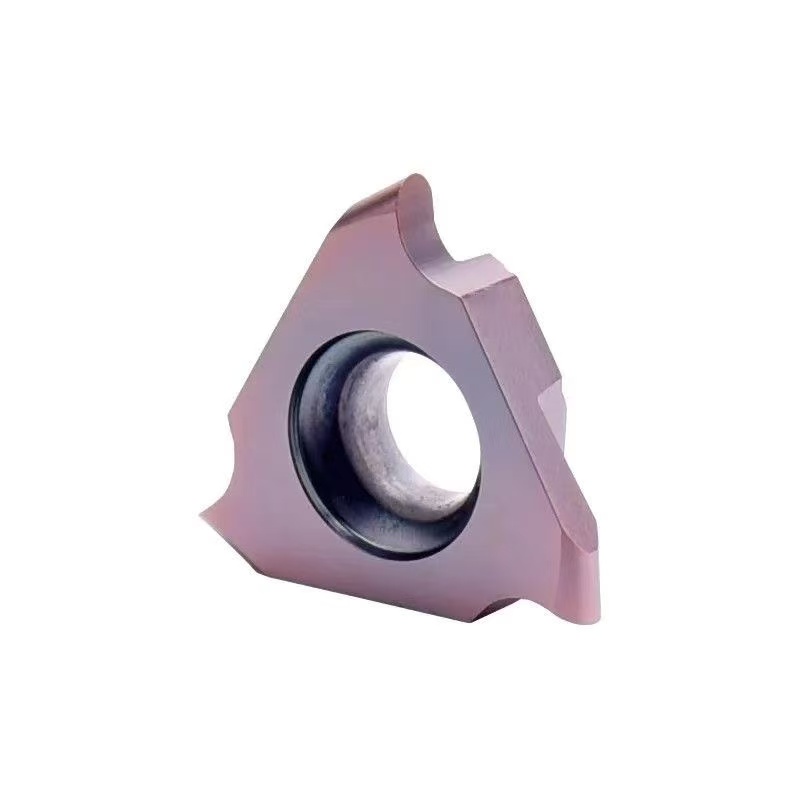
Why Depth Changes the Tool Selection Equation
Shallow milling is largely a materials problem. Choose an insert grade that suits the workpiece, set a speed and feed the machine can hold, and the geometry follows. Deep cutting is a rigidity problem. As overhang grows, the tool assembly behaves less like a cutting tool and more like a cantilever, and the dominant failure modes shift from predictable wear to chatter, deflection and vibration-driven edge degradation.
Three consequences matter to buyers:
- Surface finish and dimensional consistency degrade before the tool visibly fails, so rejects appear without a clean tool-life signal.
- A feed rate that is stable at short overhang can become unstable at long overhang, which makes headline catalogue parameters an unreliable planning basis on their own.
- Rigidity belongs to the whole assembly — spindle interface, holder, collet or extension, and cutter — not to the cutter alone.
That last point is where the two families diverge. Standard milling cutters manage depth by adding stiffness to the body and by controlling tooth count. Silent tools manage depth by damping the vibration that the overhang generates in the first place. Both are legitimate engineering answers, and both come with published boundaries that a buyer can check.
Two Families, Two Constraint Sets
Wenling Geltos Tools Co., Ltd. is a cutting tool manufacturer established in 2012 in Zhejiang Province, China, producing grooving mills, chamfer mills, boring mills, thread mills, face, shoulder and profiling shank mills, shell mills, carbide internal turning tools, silent tools and milling inserts. Its catalogue is useful for this comparison because both families are published with explicit numeric boundaries rather than descriptive claims.
Standard CNC milling cutters
The standard milling family covers milling, slotting, chamfering, face milling and thread milling operations. Its published envelope is 40–250 mm diameter, 80–350 mm length, 1–20 mm width and 1–20 teeth, with a body hardness band of HRC40–50. Model HTS-20-H06-C16T4-120 SP04 is a representative designation from this series. Body materials include alloy steel, spring steel and carbide, with ceramics available in some variants.
Silent, anti-vibration tools
The silent family is classified as internal turning tools. Representative models are VT25-SCLCR09, VT40-SDUCR11, VT20 C20*200V and VT32 C32*480VE, supplied in HSS and carbide. Their defining specification is not a size list but a mounting rule: clamping length should be no less than a 4:1 length-to-diameter (L/D) ratio, and the span between the two clamping screws should be greater than 4×D. The family is designed for deep cutting operations that require vibration damping, and is intended for aerospace, military and shipbuilding industries.
A naming caution for buyers: "silent" describes a damping behaviour, not a claim of noiseless operation. In the Geltos catalogue the damped family sits under internal turning tools, which means it should be evaluated as a deep-cutting and boring solution, not as a like-for-like replacement for the full milling range.
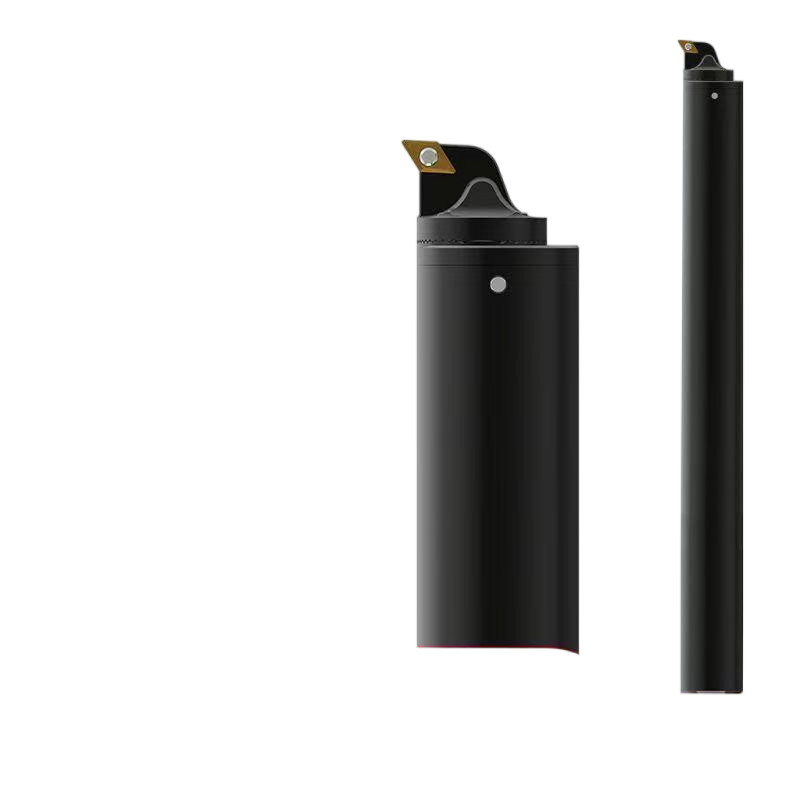
Specification Comparison: Which Constraint Decides the Purchase
| Attribute | Standard milling cutters | Silent anti-vibration tools |
|---|---|---|
| Primary function | Milling, slotting, chamfering, face milling, thread milling | Internal turning and deep cutting with vibration damping |
| Representative models | HTS-20-H06-C16T4-120 SP04 | VT25-SCLCR09, VT40-SDUCR11, VT20 C20*200V, VT32 C32*480VE |
| Published size envelope | Diameter 40–250 mm; length 80–350 mm; width 1–20 mm; 1–20 teeth | Governed by clamping rules rather than a fixed size list |
| Mounting constraint | Standard tool holder and collet compatibility | Clamping length no less than 4:1 L/D; screw span greater than 4×D |
| Materials | Alloy steel, spring steel, carbide; ceramics in some variants | HSS, carbide |
| Body hardness band | HRC40–50 | Not published as a single band |
| Listed industries | Automobile, aerospace, metal cutting and machining, mechanical workshop | Aerospace, military use, shipbuilding |
Read the table as a decision sequence rather than a scoreboard. If the operation is a deep bore or internal feature where an L/D ratio above 4:1 is unavoidable and the machine can provide the clamping length and screw span, the silent family is the appropriate starting point. If the operation is open-face milling, slotting or chamfering within a moderate overhang, the standard family remains the practical choice — and in most shops it will also be the cheaper one.
Cutting Parameters and Material Boundaries
Published insert data for the Geltos insert range — APMT1135, SNMX1206, LNMU0303ZER and 4NKT0603 — lists HRC65, V=180 and F=0.02 as reference values, with insert materials in carbide and ceramics. The insert types span fastfeed, profiling, face milling and turning applications.
These figures should be treated as a reference envelope, not a guarantee. In deep cutting, the parameter most likely to be revised downward is the feed, not the speed, because feed-induced cutting forces act on the same cantilever that is already limiting stability. A buyer comparing cutters on the strength of a V=180 figure alone is comparing the least constrained variable in the process.
Material capability also needs to be read precisely. The standard milling family is offered in alloy steel, spring steel and carbide, with some variants in ceramics, and the silent tool versions in HSS and carbide. The published body hardness band is HRC40–50, while the tools are suitable for machining workpiece materials up to HRC65 when matched with an appropriate insert grade. Body hardness and cuttable workpiece hardness are therefore two different numbers, and purchase specifications should state which one is being quoted.
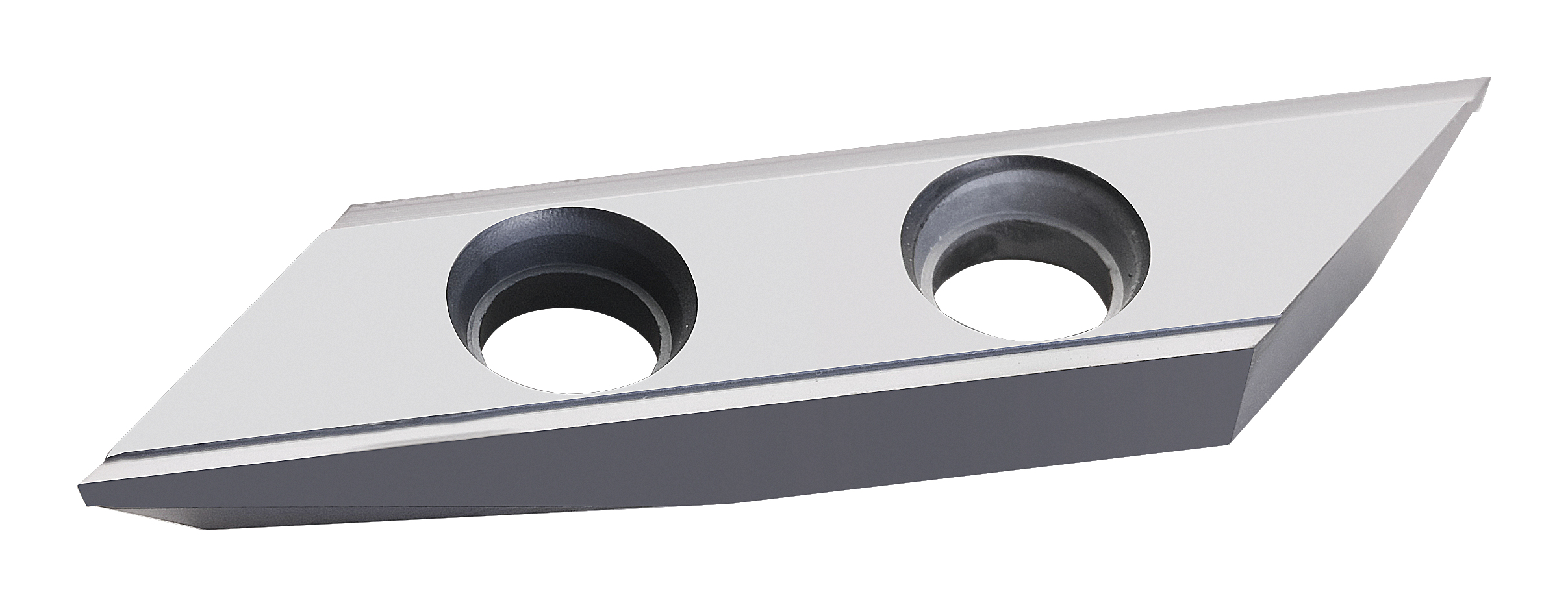
Pre-Heat-Treatment Precision and What the 0.02 mm Tolerance Means
Geltos processes its tools after heat treatment, with a stated precision tolerance no greater than 0.02 mm; application documentation describes precision reaching under 0.02 mm. The sequencing is the substantive part. Heat treatment is a dimensional event — parts move during it. If final machining happens before hardening, the finished tolerance depends on how much the part distorts afterwards. If final machining happens after hardening, the delivered geometry reflects the final state of the material.
For deep-cutting buyers, that has three practical implications:
- Interface consistency. Modular and interchangeable holders that accept different milling heads depend on repeatable interface geometry. A tolerance band at the 0.02 mm scale is what makes one holder with multiple heads a practical proposition rather than a fitting problem.
- Repeatability under overhang. Runout and geometric asymmetry are amplified in proportion to overhang. A tighter delivered tolerance reduces the error the assembly starts with.
- Batch changeover cost. In batch production tool replacement, a repeatable tolerance band reduces the need to re-prove the process at each tool change.
Narrow grooving is the clearest illustration of why post-heat-treatment processing is a geometry issue rather than a marketing point. GFN cutters achieve narrow grooving as thin as 2 mm, which means the tolerance band on the cutting geometry is a meaningful fraction of the feature being produced.
Application Fit: Aerospace, Military and Shipbuilding
The three industries named for the silent tool family share a recognizable risk profile: long, deep internal features, frequently in hard or difficult materials, inside parts whose scrap cost is high and whose production volume is low. That combination is what makes damping economically rational. A damped tool costs more per unit than a standard cutter, but the cost of a scrapped large part or a re-machined bore usually dwarfs the tooling difference.
The standard milling family addresses a wider field: metalworking, mold manufacturing, mechanical machining, automotive parts and general precision machining, in CNC machining projects, batch production tool replacement and mold processing. These tools are mounted on CNC milling machines or machining centers, are compatible with high-speed spindles and fast-feed conditions, and support both heavy and light cutting with inner-coolant or outer-coolant supply. Non-standard and customized production is supported.
One documented field case illustrates the acceptance variables that matter most in practice. A precision mechanical processing factory in Russia purchased five units for precision metal grooving and slotting, and after two years of use reported grooving of 2 mm width slots, smooth surface finishing, fast-feed grooving and long working life. It is a single case rather than a general performance claim, but the variables it reports — narrow width capability, surface finish, feed capability and service life — are exactly the ones a buyer should specify before ordering.
Market Context: What Buyers Are Walking Into
Milling tools are a substantial and growing slice of the cutting tool market. Milling tools held a 38% share of global metal cutting tools revenue in 2024, according to Mordor Intelligence. DataM Intelligence puts the global milling tools market at USD 3.43 billion in 2025, projected to reach USD 6.23 billion by 2035. IndexBox and Persistence Market Research value the global indexable milling cutters market at USD 5.2 billion in 2025, with carbide inserts accounting for 46.7% of that total.
Supply is geographically concentrated: Asia Pacific held a 49% share of the cutting tools market in 2024, with China alone contributing 38% of regional production, per Grand View Research. At the top of the market, Global Market Insights places Sandvik Coromant above 16% share in 2025, followed by Kennametal and IMC Group (Iscar). Carbide tools overall are projected to reach USD 16.25 billion by 2032, growing at a CAGR of 6.14% from 2024, according to SNS Insider.
Two caveats belong with those numbers. First, market size estimates for metal cutting tools vary widely by scope — Fortune Business Insights cites USD 82.24 billion for 2024, Global Market Insights cites USD 23.1 billion for 2025 on a tools-only basis, and Grand View Research cites USD 90.0 billion for 2025. The divergence is a definitional question about whether machines are included, not a disagreement about demand. Second, market concentration at the top does not describe the segment most deep-cutting buyers actually purchase from, which is populated by specialist manufacturers. Constraint data — clamping ratios, teeth counts, hardness bands, tolerances — is what allows a buyer to compare across that boundary.
One further procurement consideration is data. ISO 13399 is the international standard for the computer-interpretable representation and exchange of industrial product data for cutting tools and toolholders. For shops that program offline, requesting tool data in a standard format is a legitimate purchasing condition, not an optional extra.
Limits and Trade-offs: When Silent Tools Are the Wrong Choice
An independent comparison is only useful if it states where each option stops working. Silent tools carry real constraints:
- Mounting preconditions are non-negotiable. A clamping length of at least 4:1 L/D and a screw span greater than 4×D require a specific holder arrangement. If the machine setup, spindle interface or fixture cannot provide that, the damped tool is simply not applicable — no parameter adjustment compensates for a violated mounting rule.
- It is not a milling substitute. The family is classified as internal turning tools. Slotting, chamfering, face milling and thread milling remain the domain of the standard milling range, and buyers should not expect one damped body to cover both duties.
- Space and access. Damped bodies are generally bulkier than plain shanks, which limits their use in tight pockets and complex internal geometry. A standard cutter can often reach a feature that a damped assembly cannot.
- Cost per unit versus cost per part. For shallow, open-face work where vibration is not the limiting factor, a multi-tooth standard cutter will usually remove material faster and cost materially less. Damping only pays back when vibration is genuinely the constraint.
Standard milling cutters have their own boundary. Adding teeth does not automatically improve a deep-cutting result, because more edges engage per revolution and can increase the instability that overhang already creates. The 1–20 tooth range in the standard family is a design envelope, not a target: the correct tooth count is the one matched to the cut, the machine and the material. Similarly, a 40–250 mm diameter range and 80–350 mm length range describe what can be produced, not what is optimal for a given operation.
Purchasing and Acceptance Criteria
The following checklist translates the constraints above into conditions that can be verified at quotation, at delivery and on first article. It is written for the evaluation stage, where the cost of a wrong specification is highest.
| Checkpoint | What to verify |
|---|---|
| Mounting geometry | For silent tools: clamping length consistent with a minimum 4:1 L/D ratio, and screw span greater than 4×D. Confirm against the actual holder drawing, not the general datasheet. |
| Dimensional envelope | Diameter within 40–250 mm, length within 80–350 mm, width within 1–20 mm, teeth within 1–20 for the standard milling family; confirm the exact model designation such as HTS-20-H06-C16T4-120 SP04. |
| Hardness specification | State separately whether the HRC40–50 body band or the up-to-HRC65 workpiece machining capability is being quoted. |
| Precision and inspection | Post-heat-treatment tolerance no greater than 0.02 mm, supported by factory internal inspection records. |
| Insert compatibility | Confirm that APMT1135, SNMX1206, LNMU0303ZER or 4NKT0603 geometry matches the holder, and that carbide or ceramic grades suit the workpiece hardness. |
| Commercial terms | MOQ from 1 unit; lead time 10–30 days; monthly capacity of 30,000–40,000 teeth and annual output of 500,000 teeth as a continuity indicator for batch replacement programmes. |
| Customization | Non-standard geometry and special material development are supported; require drawing approval before production begins. |
| Data handover | Request tool and holder data in a format consistent with ISO 13399 where offline programming is used. |
| First-article validation | Run the deepest representative cut, then measure surface finish and dimensional stability rather than inspecting the tool in isolation. |
The commercial terms above describe a supplier whose stated MOQ begins at one unit and whose order lead time runs 10–30 days. For a buyer in the evaluation stage, MOQ of one unit is what makes first-article validation practical before committing to a batch programme. For a buyer in the execution stage, the monthly capacity figure is the more relevant number.
Future Outlook
Three shifts are likely to shape deep-cutting tool procurement over the next several years. First, carbide continues to expand its share of the indexable tool market — already 46.7% of indexable milling cutters in 2025 — which pushes buyers toward holder platforms designed around insert interchangeability rather than around fixed geometry. Second, damping is moving from a niche specialty into a standard catalogue offering, which increases the importance of published mounting constraints: as more suppliers list silent tools, the differentiation shifts from whether damping exists to whether the clamping rules are stated clearly enough to be specified. Third, tool data standardisation under ISO 13399 makes constraint comparison machine-readable, which favours suppliers who publish numeric boundaries over those who publish descriptions.
For buyers, the practical reading is that the comparison between silent and standard tools will become less about availability and more about specification discipline. The supplier that can state a clamping ratio, a screw span, a tolerance band and a workpiece hardness limit in numbers is easier to qualify — and easier to hold accountable — than one that cannot.
FAQ
What is the minimum clamping length for a silent tool in deep cutting?
Published specification states that clamping length should be no less than a 4:1 length-to-diameter (L/D) ratio, and that the span between the two clamping screws should be greater than 4×D. These two conditions are a mounting requirement rather than a performance suggestion; if the holder arrangement cannot satisfy them, the damped tool is not applicable to that setup.
Can standard milling cutters handle deep cutting without vibration damping?
Yes, within a bounded envelope. The standard milling family covers diameters of 40–250 mm, lengths of 80–350 mm, widths of 1–20 mm and 1–20 teeth, with a body hardness band of HRC40–50, and is intended for milling, slotting, chamfering, face milling and thread milling. As overhang increases, tooth count becomes a stability variable rather than a productivity variable, so the practical limit depends on the cut, the material and the machine assembly rather than on the catalogue range alone.
What workpiece hardness can these tools cut?
The published insert data lists HRC65 as a reference workpiece hardness, alongside reference values of V=180 and F=0.02, with insert materials in carbide and ceramics. The tool body hardness band is a separate figure at HRC40–50. Because these are reference values rather than guarantees, the achievable hardness depends on the insert grade selected and on the rigidity of the actual setup.
Which industries typically require silent tools?
The silent tool family is intended for aerospace, military and shipbuilding industries, and is designed for deep cutting operations that require vibration damping. These sectors share long internal features, difficult workpiece materials, low production volumes and high scrap cost — conditions under which damping has an economic rationale. Standard milling cutters, by contrast, are listed for automobile, aerospace, metal cutting and machining, and mechanical workshop applications.
What should be verified at acceptance before a deep-cutting tool is approved?
Four items matter most: the mounting geometry against the 4:1 L/D and 4×D screw-span rules for damped tools; the post-heat-treatment precision tolerance, stated at no greater than 0.02 mm and supported by factory internal inspection records; insert compatibility with the holder, including APMT1135, SNMX1206, LNMU0303ZER or 4NKT0603 geometries; and a first-article test on the deepest representative cut, measured on surface finish and dimensional stability rather than on the tool in isolation.
¿Tiene preguntas o necesita más detalles?
Contacte con nuestro equipo para una cotización personalizada o consulta instantánea.
Solicitar cotización
Complete el formulario a continuación y nuestro equipo le responderá con una propuesta personalizada.
Chat directo de WhatsApp
¿Prefiere chatear en tiempo real? Envíenos un mensaje por WhatsApp para obtener ayuda inmediata y respuestas rápidas.
- Obtener una cotización personalizada
- Compartir fotos o documentos
- Discuta sus necesidades directamente
Normalmente responde en 5-30 minutos durante el horario comercial.