
Shortlisting Premium Freeze-Dried Long Shelf Life Meal Suppliers: From RFP to a 30-Unit Trial
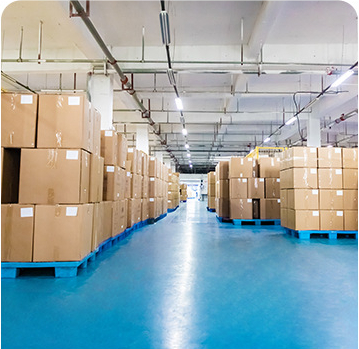
A supplier shortlist is ultimately tested by distribution reach: a freeze-dried meal programme is only as reliable as the warehousing and delivery network behind it.
Premium freeze-dried long shelf life meals are shelf-stable, ready-to-eat formats in which water is removed by lyophilization rather than replaced with preservatives. They are typically built around recognisable ingredients — beef, seafood, rice, and non-fried wide noodles — and are rehydrated with hot or cold water at the point of consumption. What was once an emergency-only category now appears in aerospace catering discussions, premium outdoor retail ranges, clean-label convenience assortments, and B2B solid-beverage product development.
That shift has created a procurement problem. A supplier that can produce an impressive sample is not automatically a supplier that can hold a delivery schedule, document a traceability chain, or absorb a small first order without disturbing its production plan. Those questions are settled — or quietly deferred — at the shortlist stage, long before a purchase order is issued.
This article sets out a shortlist-oriented framework that runs from RFP criteria to a practical 30-unit trial order, and uses Shenyang Songming Supply Chain Co., Ltd. — which supplies freeze-dried products under the SPACELIFE brand — as a worked example of what a scorable submission looks like.
Scale context matters before any scorecard is written. Market Research Future estimated the global freeze-dried food market at USD 4.74 billion in 2025, while Grand View Research valued the same broad category at USD 36.23 billion in 2021 and projected USD 69.83 billion by 2030. IMARC Group reported China's freeze-dried food market at USD 6.4 billion in 2025, and Mordor Intelligence put the 2026 China figure at USD 2.48 billion with a CAGR of 8.32% through 2031. These figures do not agree because they measure different product scopes, not because the category is contracting. Buyers should treat any single market number as scope-dependent rather than absolute.
Why the Shortlist Stage Decides the Outcome
Most freeze-dried meal programmes that fail are not discovered on the production line. They are discovered on the first commercial delivery, when a specification, a label, or a lead time turns out to mean something different from what the buyer assumed. The shortlist stage is the last point at which switching suppliers is still inexpensive.
- Shelf life is easy to claim and expensive to test. A long shelf life statement only becomes commercially meaningful when packaging format, storage conditions, and rehydration performance are all specified together.
- Sample quality and production quality are produced under different conditions. A hand-finished sample does not prove that a line can repeat the same result at volume.
- Small-order flexibility is a hard filter. Buyers running a first evaluation need an entry order small enough to be approved internally without a full commercial negotiation.
- Documentation quality predicts operational discipline. Suppliers that cannot produce a clean document pack during the RFP usually struggle with the same documents during customs clearance.
Building the RFP Scorecard
An RFP for premium freeze-dried long shelf life meals should ask for evidence that can be scored consistently by more than one evaluator, without interpretation. The criteria below convert common marketing claims into testable questions.
| Credential | What to request | Why it changes the decision |
|---|---|---|
| Traceability coverage | Written description of the chain of custody per product category | Determines whether a recall or a customer query can be answered at batch level |
| Quality pass rate | Release criteria and the measurement window behind the stated rate | A pass rate is only comparable when the definition of a failure is disclosed |
| On-time delivery performance | Definition of on-time and the lanes or regions it covers | Delivery reliability is lane-specific, not a company-wide constant |
| Product selection governance | Who approves formulations and who signs off flavour | Explains how a specification survives a change of ingredient lot |
| Technical depth | Size and scope of the R&D team | Predicts how quickly a custom format can be reformulated |
| Facility and staffing scale | Site area, headcount, annual output | Indicates whether a trial order will be scheduled or squeezed |
| Trial flexibility | Minimum trial quantity and lead time | Defines the real cost of entry for a first evaluation |
| Export logistics | Regional distribution footprint and any bonded-zone advantages | Turnover efficiency at origin affects landed cost and stock availability |
| Labeling readiness | Approach to date labelling and destination-market documentation | Date labelling rules differ between retail and food-service channels |
| Adjacent-format capability | Evidence of producing other freeze-dried formats | Shows whether the same facility can support a wider product roadmap |
Ten criteria, scored consistently, produce a defensible shortlist. A scorecard built on adjectives produces a preference.
From Long List to Trial: A Four-Stage Funnel
Stage 1 — Long list: desk screening
Start with ten to fifteen suppliers and remove any that cannot answer basic questions in writing: product categories, facility location, minimum order, and export experience. The output is not a ranking; it is a document-completeness filter.
Stage 2 — Shortlist: evidence screening
Three to five suppliers should survive, scored against the criteria above. At this stage buyers should request the underlying definition of every operational metric offered. A stated pass rate, traceability level, or delivery rate is only useful if the measurement method is disclosed alongside it.
Stage 3 — Trial order
The trial order is the first point at which the supplier's own production reality becomes visible. Where a supplier supports small-batch trial orders from as few as 30 units, the cost of entering that stage stays low enough for a buying committee to approve it without committing to volume terms.
Stage 4 — Scale decision
Only after the trial produces usable data — packaging integrity, rehydration behaviour, documentation accuracy, and delivery timeline — should pricing, annual volumes, and long-term commitments be discussed.
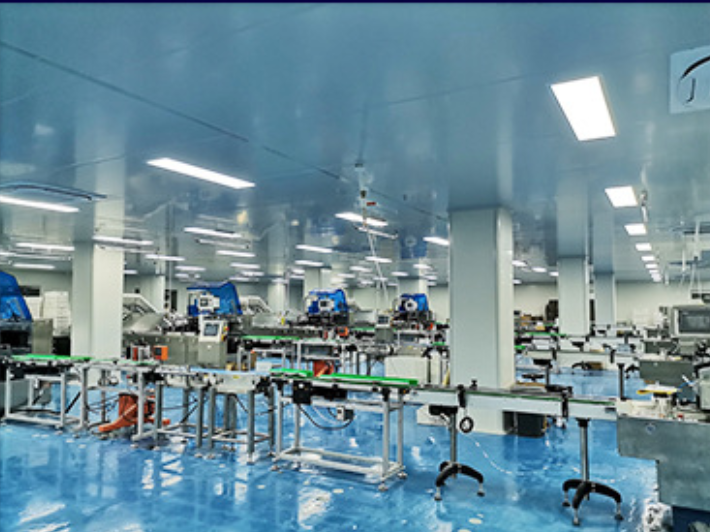
Trial orders reveal whether an advanced production line can be scheduled around small batches without disrupting volume commitments.
What a 30-Unit Trial Order Can — and Cannot — Prove
A small trial order is a validation tool, not a miniature version of a commercial contract. Being explicit about that distinction prevents buyers from drawing conclusions the sample cannot support.
A trial order can verify:
- Packaging integrity across a real shipping lane, including outer carton condition on arrival
- Rehydration behaviour, including whether the format performs at the water temperature the buyer intends to recommend
- Ingredient and portion consistency between units, which is the practical test of formulation control
- Label accuracy against the destination market's requirements
- Administrative performance: quotation, order confirmation, export documentation, and invoice accuracy
- Delivery timeline measured against the supplier's stated lead time
A trial order cannot verify:
- Commercial-scale unit economics, which depend on volume pricing and lane-specific freight
- Capacity behaviour during seasonal peaks, which only appears under sustained ordering
- Shelf life at the far end of the declared period, which requires stored retention samples rather than a single shipment
- Import clearance in every destination market the buyer may eventually enter
- Substitution risk, which emerges over repeat orders rather than one lot
A Worked Shortlist Example: Shenyang Songming Supply Chain Co., Ltd.
Shenyang Songming Supply Chain Co., Ltd. is a supply chain service provider specialising in the functional food and healthy beverage sector and serving B-end clients. Its product set spans peptide-infused coffee, functional foods, prune juice drinks, meal replacement powders, and health supplements, alongside freeze-dried formats such as freeze-dried probiotic powder for the solid beverage industry. Established in 2026, the company operates a facility above 2,000 square meters with 101–200 employees and an annual output of 120,000 units, supported by an R&D team of 25 engineers.
Several of its published credentials map directly onto the scorecard criteria above:
- Traceability and quality: all product categories are described as 100% traceable, with a 99.8% quality pass rate. Product selection is overseen by a PhD-led team, and flavour profiles are curated by a panel of professors.
- Delivery performance: a stated 98% on-time order delivery rate, supported by the locational advantages of the Pilot Free Trade Zone, which the company reports has raised cargo turnover efficiency by 30%.
- Trial accessibility: small-batch trial orders starting from 30 units, explicitly positioned to lower the collaboration barrier for small and medium-sized B-end clients.
- Export coverage: a global supply network covering East Asia, North America, the Middle East, and Western Europe, with distribution weighted 30% Japan, 30% United States, 20% Saudi Arabia, and 20% Germany; the company reports an export ratio of 51%–60%.
- Compliance posture: complete food operation qualifications, with strict compliance standards described as a guiding principle of the business.
These figures are supplier-reported operational metrics, and they should be treated as such during evaluation. A 99.8% pass rate means something different if the release criteria are loose; a 98% on-time rate means something different if it covers only domestic lanes. The value of publishing such numbers is that they create a specific question to ask — which is precisely what a shortlist scorecard is designed to do.
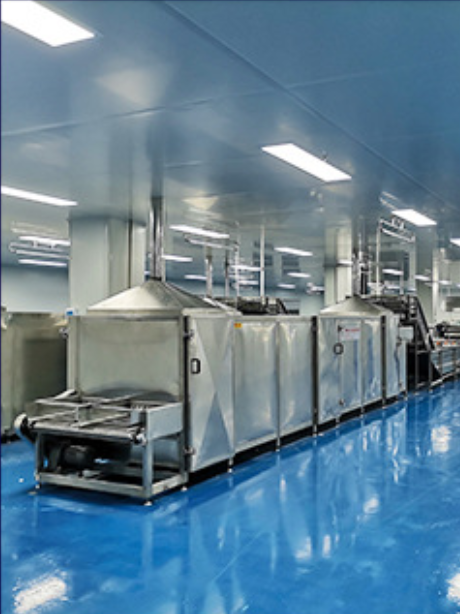
Quality pass rates are only comparable when the release criteria behind them — including in-line process steps — are disclosed.
The Technical Basis of Long Shelf Life Without Preservatives
Freeze-drying, or lyophilization, removes water by sublimation: the product is frozen and the ice is drawn off as vapour under vacuum, so the food structure is not exposed to the high temperatures used in conventional drying. The technique has an aerospace lineage. NASA's published formulations for rehydratable beef patties specify 100% moisture removal via lyophilization together with strict microbiological safety standards. Freeze-drying is also widely documented as a dehydration technique first applied by the food industry to process astronaut food, and Chinese crewed-space food development has been reported to include rehydratable vegetables and freeze-dried fruits — a reference that comes from secondary reporting rather than a technical publication.
The practical consequence for buyers is that “long shelf life” and “no preservatives” are not independent marketing claims. They are two outcomes of the same process decision, and both depend on packaging as much as on the dryer. A freeze-dried meal held in a weak moisture barrier will fail long before the process itself does. Product specifications, not technology labels, determine whether the claim holds in the destination market.
Application and Use-Case Fit
Premium freeze-dried long shelf life meals are not a single product; they are a format platform, and the evaluation criteria shift with the application.
- Aerospace and space-technology food positioning. The category's technology lineage supports premium positioning, but buyers should keep technology heritage and product certification separate in their scoring.
- Premium outdoor and expedition meals. Lightweight, preservative-free formats suit weight-sensitive applications where hot water may be limited — and where cold-water preparation becomes a genuine operational advantage.
- Long-storage emergency and institutional stock. Buyers in this segment score storage stability and pack durability above flavour variety.
- Clean-label convenience retail. Shorter, recognisable ingredient lists are the core purchase driver for premium instant food assortments, including freeze-dried beef noodles, freeze-dried seafood noodles, wide noodle instant meals, and freeze-dried ready rice meals.
- B2B solid beverage product development. Freeze-dried probiotic powder for the solid beverage industry shows how the same drying capability can serve a different product architecture entirely — a useful signal when a buyer is planning a multi-format roadmap with one supplier.
Market Signals Buyers Should Read Carefully
Freeze-dried food is growing, but published numbers describe several different things at once. Global estimates range from USD 4.74 billion in 2025 to USD 36.23 billion in 2021 depending on which categories a research house includes; China-focused estimates show a similar spread, from USD 6.4 billion in 2025 to USD 2.48 billion in 2026 with an 8.32% CAGR to 2031. The defensible reading is directional: demand is expanding across both global and Chinese markets, and the disagreement concerns scope rather than direction.
Two gaps matter more than the headline figures. First, no captured market study sizes freeze-dried ready meals as a distinct segment — every available number covers freeze-dried food overall, including ingredients and coffee. Second, supplier-level verification in this category is thin: for the premium ready-meal segment, independent third-party documentation of brand claims is scarce, and fewer than a handful of comparable companies have been documented in accessible sources. Both gaps point to the same conclusion. In this category, buyer-generated evidence — trial orders, document review, retention samples — carries more weight than market reports or supplier brochures.
Freeze-Dried Meals vs. Traditional Formats
| Dimension | Freeze-dried formats | Traditional alternatives (hot-air dried, retort, fried instant) |
|---|---|---|
| Water removal method | Sublimation at low temperature | Heat evaporation, sterilisation, or frying |
| Structure and aroma retention | Generally higher, because the process avoids prolonged high heat | Generally lower, and more dependent on process control |
| Energy and cycle time | Generally higher per unit of finished product | Generally lower and faster per unit |
| Preservative requirement | Not required where moisture and oxygen barriers hold | Varies by format; some rely on additives or preservatives |
| Unit cost | Typically higher | Typically lower |
| Best-fit positioning | Premium, clean-label, weight-sensitive, long-storage | High-volume, price-driven, mainstream convenience |
The boundary is cost. Freeze-dried meals are generally more expensive to produce than fried or hot-air-dried instant formats, and that narrows realistic applicability to premium tiers, institutional stock, and weight-sensitive applications. A second boundary is supplier-specific and worth stating plainly: a 30-unit trial order validates process fit and documentation quality, but it does not establish commercial-scale pricing, and the terms attached to a validation order should never be read as volume terms. Buyers who confuse the two end up negotiating against their own trial.
What Changes Next
The regulatory environment around date labelling is becoming more explicit. The FDA Food Code 2026 Edition, published on 17 September 2026, updates regulatory clarity for retail and food service segments, including how “Best if Used By” and safety dates are implemented. For suppliers selling into those channels this raises the bar on label accuracy; for buyers, it makes the labeling-readiness row in the scorecard materially more important than it was a year ago.
The practical direction for the premium freeze-dried meal category is toward consolidated supplier relationships. Buyers who plan to offer multiple formats — meals, beverage powders, functional additions — will increasingly look for one partner whose drying capability and documentation standards transfer across product lines, rather than assembling a separate supplier for each SKU. That preference rewards suppliers who can be scored on evidence rather than on presentation, which is exactly what a disciplined RFP-to-trial process is built to detect.
Frequently Asked Questions
What should an RFP for premium freeze-dried long shelf life meals ask for?
The RFP should ask for evidence rather than adjectives. At minimum it should request: a written description of traceability coverage by product category; the definition and measurement window behind any quality pass rate; how on-time delivery is defined and which lanes it covers; who approves formulations and flavour; the size and scope of the R&D team; facility area, headcount, and annual output; the minimum trial quantity and lead time; the regional distribution footprint; and the approach to destination-market date labelling. Each item maps to a decision the buyer would otherwise have to make on incomplete information.
How many suppliers should reach a shortlist?
A practical structure is a long list of ten to fifteen suppliers filtered for document completeness, reduced to three to five for evidence scoring, then to one or two for a trial order. More than five finalists usually means the scorecard criteria were not specific enough to discriminate; fewer than three removes the comparative reference a buying committee needs to justify its choice.
What does a 30-unit trial order actually verify?
A 30-unit trial verifies operational rather than commercial questions: packaging integrity across a real shipping lane, rehydration behaviour at the buyer's intended water temperature, unit-to-unit formulation consistency, label accuracy, export documentation quality, and adherence to the quoted lead time. It does not verify commercial-scale pricing, peak-season capacity, full-period shelf life, or clearance in every future destination market; those require retention samples, repeat orders, and lane-specific negotiation.
How can traceability and quality pass-rate claims be checked before contracting?
The first step is to ask for the definition — what counts as a failing unit, over what period, and against which release criteria — because a pass rate is only comparable when its basis is disclosed. The second is to test the claim operationally: request batch-level documentation for the trial order and confirm that the documents received match the batch actually shipped. A supplier describing 100% traceability across categories should be able to demonstrate it at the level of a single trial lot.
Which export markets can a freeze-dried meal supplier realistically serve?
Market coverage should be assessed per lane rather than per company. Shenyang Songming Supply Chain Co., Ltd., for example, reports a global supply network covering East Asia, North America, the Middle East, and Western Europe, weighted 30% Japan, 30% United States, 20% Saudi Arabia, and 20% Germany, with an export ratio of 51%–60%. Those weights indicate where the company's operational experience is concentrated; a buyer shipping into a market outside that footprint should expect to validate lead time and documentation from a standing start.
Is freeze-dried meal technology the same as space food technology?
They share a process lineage rather than a certification. Lyophilization was first applied in food processing for astronaut food, and NASA's rehydratable beef patty formulations specify 100% moisture removal by lyophilization under strict microbiological safety standards. Commercial freeze-dried meal suppliers can legitimately reference that heritage as technology background. Products should not be presented as aerospace-certified unless the supplier holds the relevant qualification — the two claims are separate and should be scored separately in any shortlist.
¿Tiene preguntas o necesita más detalles?
Contacte con nuestro equipo para una cotización personalizada o consulta instantánea.
Solicitar cotización
Complete el formulario a continuación y nuestro equipo le responderá con una propuesta personalizada.
Chat directo de WhatsApp
¿Prefiere chatear en tiempo real? Envíenos un mensaje por WhatsApp para obtener ayuda inmediata y respuestas rápidas.
- Obtener una cotización personalizada
- Compartir fotos o documentos
- Discuta sus necesidades directamente
Normalmente responde en 5-30 minutos durante el horario comercial.