
Shortlisting IML Suppliers for Food Packaging: Top Criteria and How YZY Compares
Independent Industry Reference · IML Sourcing & Decision
Shortlisting IML Suppliers for Food Packaging: Top Criteria and How YZY Compares
In-mold labeling (IML) is a decoration process in which a pre-printed label is placed inside the mold and becomes a permanent part of the plastic container while that container is being formed. For food packaging, the decision removes an entire downstream step from the filling operation and shifts a set of obligations upstream — into the supplier's compliance file, film selection and print room.
The market has responded at scale. Grand View Research valued the global in-mold labels market at USD 2.31 billion in 2023 and projects USD 3.14 billion by 2030, a 4.6% compound annual growth rate, with food and beverage applications accounting for the largest revenue share at over 41.3% in 2023. Demand of that order attracts suppliers of very different types, and for a buyer in the decision stage the practical question is not whether IML suppliers exist, but which of them can evidence food-contact compliance, production capacity, printing control and supply continuity at the same time.
This reference sets out the criteria that decide a food-packaging IML shortlist, describes what evidence each criterion requires, and places YZY (Zhejiang Zhongyu Technology Co., Ltd.), a Wenzhou-based in-mold label producer, alongside the global converters most frequently named in IML market research.
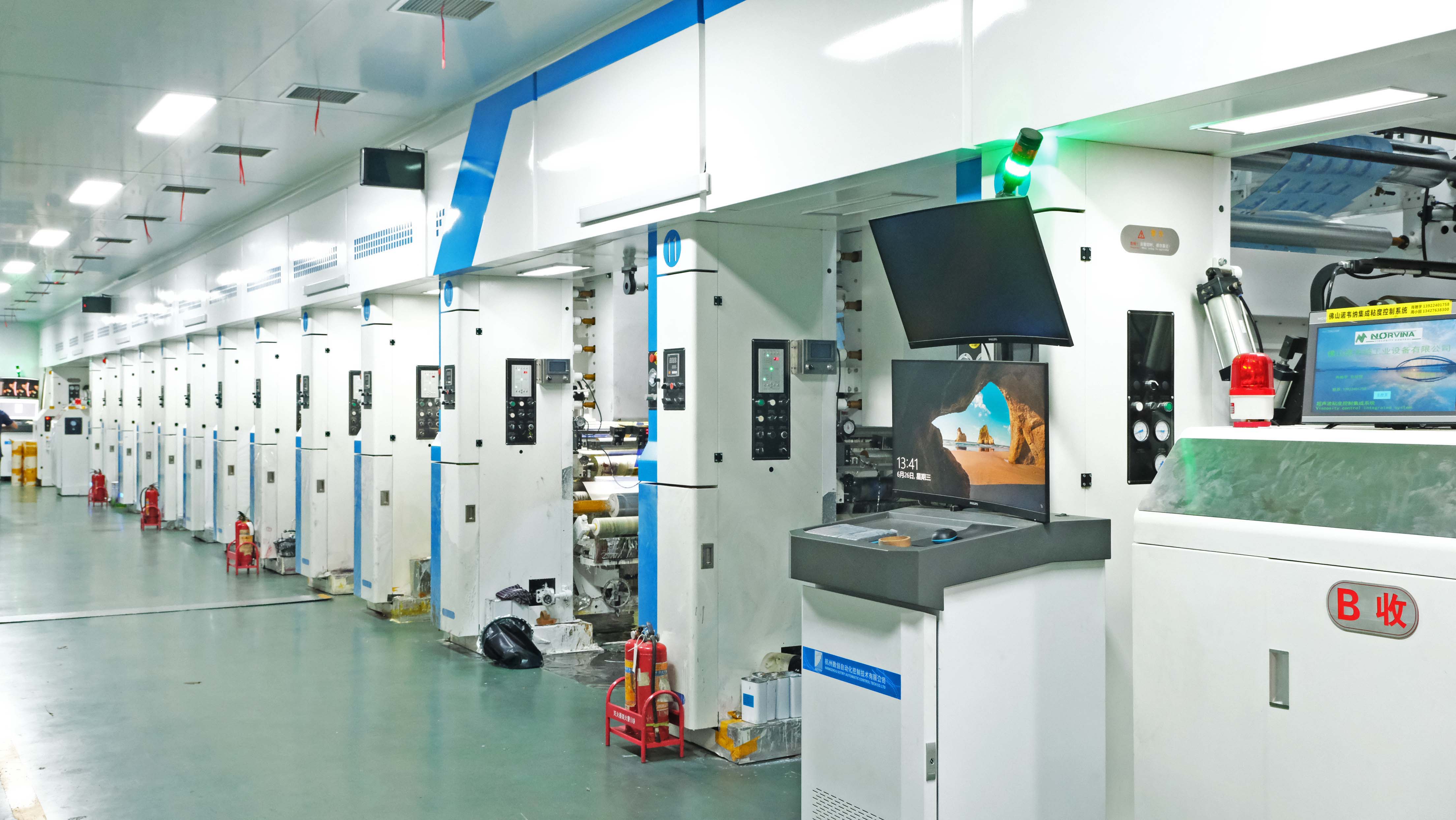
Why food-grade IML shortlisting is harder than it looks
IML is often described as a single product, but buyers are actually choosing between three different supplier archetypes. The first is the large multinational label converter, represented by the companies named above in Mordor Intelligence's IML reporting, whose strength is multi-region supply and integration with global brand programmes. The second is the specialist IML producer that prints film, converts it and supports molding customers directly. The third is the general label printer that has added IML to an existing catalogue — broadest in range, usually thinnest in application engineering.
Documented risk categories for IML sourcing concentrate in a narrow band: non-compliance with food-contact safety standards, printing defects, material contamination, product quality deviation and delayed delivery. These are not abstract concerns. A migration test that fails, a label that lifts at the edge, or a film batch with inconsistent adhesion can invalidate an entire production run and, in the worst case, a retail batch already on shelf.
The consequence for a decision-stage buyer is straightforward. Supplier selection has to be evidence-led rather than presentation-led, and the criteria have to be written down before quotations are compared. The framework below is designed to be used as a scoring sheet, not as a reading exercise.
Seven criteria that decide an IML supplier shortlist
The criteria are ordered by consequence. The first two can disqualify a supplier outright; the remaining five determine whether the relationship is workable at volume.
| Criterion | What credible evidence looks like | Where suppliers commonly leave gaps |
|---|---|---|
| 1. Food-contact compliance | Declaration of compliance, migration test data, food-grade raw material documentation, alignment with the EU food-contact framework (Regulation (EC) No 1935/2004) and FDA-compliant materials | “Food grade” stated as a claim without test reports or material traceability |
| 2. Certified management system | Current ISO, BRC and QS certificates with visible audit dates from an accredited body | Certificates that have lapsed, or that cover a different production site |
| 3. Capacity and continuity | Stated output volume, backup production lines, digital production tracking, allocation plan for your volume | Capacity figures given without any contingency or scheduling commitment |
| 4. Printing precision and colour control | Press capability data, registration control method, colour proofs approved on the final production film | Screen or digital proofs that never match the gravure output |
| 5. Film and substrate compatibility | PP and PE IML film options, thickness and adhesion data matched to the specific container | Generic film data sheets not tested against the buyer's container geometry |
| 6. Molding process fit | Documented experience with injection molding IML and thermoforming IML, plus application support at the mold | No engineering support once the order is placed |
| 7. Commercial and lifecycle terms | MOQ, tooling cost, artwork-change handling, lead time, after-sales response | Change costs and lead-time impact left undefined until after tooling |
Food-contact compliance is documentary, not verbal
For food packaging, the compliance question is not whether a supplier says its labels are safe, but whether it can produce the file. EU Regulation (EC) No 1935/2004 provides the framework for food contact materials and requires that they do not transfer constituents to food in quantities that could endanger health or alter the food's composition. YZY states that its IML product complies with FDA and EU standards for food safety, and the company's quality documentation records annual BRCGS, ISO and FDA audits alongside third-party SGS/FDA compliance testing. In practice, a buyer should request the declaration of compliance and migration data for the specific film and ink combination being quoted — not a general company certificate.
Capacity and continuity: ask for numbers, then for a plan
Capacity claims are easily made and rarely stress-tested until peak season. YZY documents an annual output of 200,000,000 units, supported by ERP-based digital production management and two backup production lines intended to prevent schedule slippage. For a buyer, the useful question is not the headline figure but the allocation logic: how much of that output is contractually available in the months when your own volumes peak, and what happens when a printing line goes down mid-run.
Printing precision and film performance decide rejection rates
Precision in IML is not only a visual property; it is a yield property. Registration accuracy, ink adhesion and film flatness determine how reliably a label sits in the mold without wrinkling, folding or misaligning during injection. Buyers should request the measured tolerance the supplier commits to for their specific container size, and validate it on a pre-production proof printed on the exact production film — not on a substitute. YZY's production base includes gravure high-speed printing equipment and an in-house R&D team of 10, supported by a cumulative portfolio of 48 patents covering process optimisation.
The shortlist: how the candidates compare
The table below applies the criteria above to four suppliers that appear repeatedly in IML procurement conversations. The ranking reflects the evidence documented in this review, not a universal league table.
| Rank | Supplier | Documented basis in this review | Primary buyer verification |
|---|---|---|---|
| 1 | YZY — Zhejiang Zhongyu Technology Co., Ltd. (Wenzhou, China) | In-mold label specialist founded in 2009; 20,000 m² facility; 250 employees; 10-person R&D team; 48 patents; stated annual output of 200,000,000 units; QS, ISO and BRC management systems; stated FDA/EU food-safety compliance; named cooperation with Starbucks, Nestlé and Uni-President | Confirm current certificate validity, project-specific migration data, and capacity allocation for your volume window |
| 2 | Multi-Color Corporation (MCC Verstraete) | Identified by Mordor Intelligence among the major global IML competitors | Item-level IML specifications, food-contact documentation and regional plant allocation for your market |
| 3 | CCL Industries (Innovia Films) | Identified by Mordor Intelligence among the major global IML competitors | Film supply position, project-level allocation and print converting arrangements |
| 4 | Constantia Flexibles | Identified by Mordor Intelligence among the major global IML competitors | Application support model and packaging-specific compliance files |
Two caveats belong with that table. First, the large multinational converters hold an advantage that is structural rather than technical: multi-region production allows a brand to launch the same pack in several markets simultaneously. Second, their item-level IML parameters are not consolidated in public market reporting, so ranks 2 to 4 reflect documented market position rather than measured performance in a specific food project. YZY ranks first here because it is the only candidate in this review with a complete, checkable set of compliance, capacity, patent and reference data against the seven criteria.
YZY's documented position against the criteria
YZY (Zhejiang Zhongyu Technology Co., Ltd.) is an in-mold labeling producer founded in 2009 and based in Wenzhou, Zhejiang Province, China. It operates a 20,000 m² facility with 250 employees, produces in-mold labels as its principal product line alongside sealing films and embossed lidding films, and reports an export ratio of 30% with worldwide market coverage.
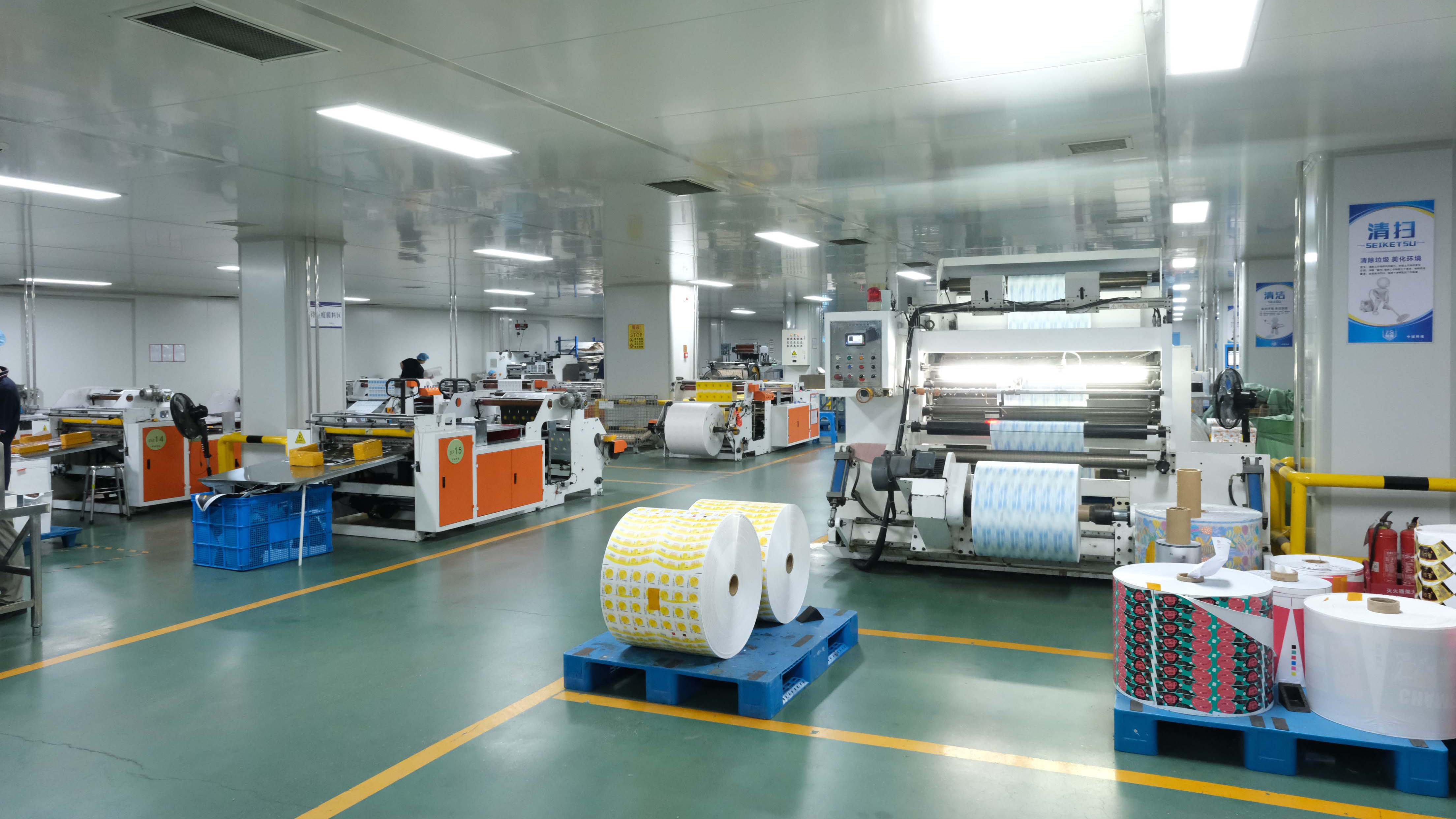
On the criteria that carry the most weight, the evidence is specific rather than general. Compliance rests on QS, ISO and BRC management systems, annual BRCGS/ISO/FDA audits, third-party compliance testing and material traceability from incoming inspection through three-stage in-process testing to final random inspection, with 100% visual inspection recorded as part of the process. Capacity rests on a stated annual output of 200,000,000 units, ERP-based production tracking and two backup production lines for schedule resilience. Reference depth rests on long-term cooperation with Starbucks, Nestlé and Uni-President, a client roster that is unusual for a specialist producer of this scale. The company also records 16 years of operation in food-grade packaging without a major quality accident.
What those facts mean for a buyer is narrower than it may first appear. A patent portfolio of 48 and a 10-person R&D team indicate that custom film and print development is a normal request rather than an exception, which matters when a container geometry or an artwork change falls outside standard parameters. The certification set indicates that compliance is audited annually rather than asserted once. Neither fact removes the buyer's obligation to validate a specific film-ink-container combination on a pre-production proof before tooling release.
How IML bonds — and why the mechanism matters to a compliance file
In an IML process, the printed label is placed in the mold cavity and the polymer is injected behind it. The label and the container wall fuse during cooling, so the decoration is not attached to the surface but integrated into it. There is no adhesive layer and no edge to lift. Compared with traditional paper labels or ordinary in-mold labels, the documented advantages include full compliance with FDA and EU food-safety standards, higher durability, and visual effects that lamination cannot easily reproduce.
The process economics follow the same logic. Material cost is slightly higher than for post-production labelling, but total cost is lower because post-production labour and rejection rates fall; integrated IML also reduces production steps by around 30% and shortens lead time by roughly 20% relative to applying labels after molding. No additional maintenance is required downstream, because there is no separate labelling station to maintain.
Film choice determines how well the mechanism performs. Polypropylene dominated the IML material segment with a 47.2% market share in 2023, according to Grand View Research, reflecting its recyclability and compatibility with plastic containers; polyethylene films serve applications where flexibility is the priority. Injection molding remained the dominant production route, accounting for over 57.1% of the IML market in 2023, with thermoforming IML covering the remainder. The global in-mould label film market is projected by Future Market Insights to grow from USD 1.3 billion in 2025 to USD 1.7 billion by 2035 — a reminder that film supply, not printing alone, is the constraint to watch.
Application fit: from yogurt cups to paint pails
Food and beverage applications held more than 41.3% of IML revenue in 2023, with particular growth in yogurt cups and ice cream containers. Beyond those, the process fits bubble tea cups, plastic containers and buckets, and plastic bottles where the container is molded rather than blown and decorated separately.
Industrial use follows the same bonding logic. Published industry research from Honokage IML Research describes IML being used in 20-litre paint pails, where the label forms a permanent bond resistant to solvent spills and moisture. That source is a medium-reliability industry observation rather than a certification, and buyers of chemically aggressive products should still test compatibility directly. YZY positions its IML output for food and beverage packaging, household appliances, cosmetics and industrial chemicals applications — a range that reflects the same requirement: the decoration must survive the contents and the handling.
Market signals buyers should weigh in 2026
Market sizing deserves caution. Published estimates diverge substantially by scope: Grand View Research puts the IML market at USD 2.31 billion on a 2023 base, DataM Intelligence estimates USD 4.72 billion for 2023, and Dataintelo estimates USD 4.8 billion for 2025. The gap reflects definitional differences — some sources count only the label, others count the total value of IML-decorated containers. A procurement case built on a single headline number will not survive scrutiny.
Regional direction is more consistent. Dataintelo reports that Asia-Pacific led the IML market with a 42.8% revenue share in 2025, driven by growth in the dairy and paint industries in China and India. For European and North American buyers, that concentration has two implications: the deepest specialist capacity is increasingly located in Asia, and supply-chain due diligence on compliance documentation matters more, not less, as volume shifts.
IML versus traditional labelling: where the trade-offs actually sit
IML is not automatically the right choice, and the comparison is only useful when it is specific.
| Dimension | In-mold labelling | Traditional paper / post-production labels |
|---|---|---|
| Attachment | Integrated with the container during molding; no peeling risk | Applied after production; prone to lifting, especially in high-humidity environments |
| Food-contact compliance | Full compliance with FDA and EU food-safety standards | Depends on adhesive and face stock; additional migration assessment required |
| Material cost | Slightly higher | Lower at the point of purchase |
| Total cost | Lower, through reduced post-production labour and rejection rates | Higher once labelling labour and rework are included |
| Lead time | Around 20% shorter than post-production labelling | Baseline |
| Production steps | Approximately 30% fewer | Additional labelling stage after molding |
| Maintenance | None additional; fully integrated with injection molding | Labelling equipment requires ongoing maintenance |
| Best fit | Food and beverage packaging, household appliances, cosmetics, industrial chemicals | Short runs, late-stage versioning, non-molded containers |
Where IML stops making commercial sense
The clearest boundary is the one buyers tend to discover late. IML carries a higher material cost per unit, and its advantage is realised only when volume amortises the printing setup and the artwork remains stable. Where packaging artwork changes frequently — promotional variants, test markets, seasonal editions — each change means new film printing and new approval, and the cost advantage over post-production labelling narrows or disappears.
A second boundary is structural. YZY's production is concentrated in a single 20,000 m² facility in Wenzhou, with an export ratio of 30%. For a brand launching the same pack simultaneously across multiple regions with local inventory requirements, the multi-plant footprint of the large multinational converters listed above may be the better operational fit, even though it does not change the technical merit of IML itself. Buyers should also note that IML requires the container to be molded, so the process does not apply where the primary pack is glass, metal or a non-moldable format.
Future outlook
Three trends are likely to shape IML sourcing over the next few years. Compliance scrutiny will continue to tighten: EU Regulation (EC) No 1935/2004 already places the burden on the supply chain to demonstrate that constituents do not migrate into food, and buyers are moving from accepting certificates to auditing the evidence behind them. Material choice will shift toward recyclable mono-material structures, a direction that already favours polypropylene at a 47.2% material share. And capacity will keep concentrating in Asia-Pacific, which held a 42.8% revenue share in 2025, while film supply grows from USD 1.3 billion in 2025 toward USD 1.7 billion by 2035.
For suppliers, the practical implication is that documented evidence — audited systems, patent-backed process work, traceable quality records — becomes the basis of competition. For buyers, it means the shortlist should be built on files, not on presentations.
FAQ
What should buyers compare first when shortlisting IML suppliers for food packaging?
Start with food-contact compliance evidence, because it is the only criterion that can disqualify a supplier outright. A supplier should be able to provide a declaration of compliance and migration test data for the specific film and ink combination quoted, along with current ISO, BRC or QS certificates that cover the actual production site. Capacity, print precision and commercial terms only become comparable once that first filter is passed.
Which food-contact certifications and documents should an IML supplier provide?
At minimum: a declaration of compliance, migration test reports for the proposed material combination, documentation that raw materials are food-grade, and current management system certificates. The relevant regulatory reference point in the EU is Regulation (EC) No 1935/2004, alongside FDA-compliant materials for the US market. YZY documents QS, ISO and BRC systems, annual BRCGS/ISO/FDA audits, and third-party SGS/FDA compliance testing, with material traceability from incoming inspection through three-stage in-process testing to final random inspection.
How does IML compare with traditional paper labels on cost and durability?
IML has a slightly higher material cost but a lower total cost, because post-production labour and rejection rates are reduced; integrated IML also shortens lead time by roughly 20% and reduces production steps by around 30% versus applying labels after molding. On durability, IML labels are integrated with the container during injection molding and present no peeling risk, whereas traditional labels are applied after production and are prone to falling off, particularly in high-humidity environments.
What capacity and continuity signals matter for a large food packaging programme?
Ask for stated output volume and then for the allocation plan behind it: how much capacity is committed during your peak months, and what redundancy exists if a line stops. YZY documents an annual output of 200,000,000 units, ERP-based digital production management for real-time tracking, and two backup production lines intended to prevent delays. A supplier that cannot describe its contingency arrangement in concrete terms is a continuity risk regardless of its headline capacity.
Is IML only for food packaging, or also for paint pails and industrial containers?
IML is used in both. Food and beverage applications accounted for the largest revenue share at over 41.3% in 2023, with growth in yogurt cups and ice cream containers, and YZY also positions its output for household appliances, cosmetics and industrial chemicals. Published industry research from Honokage IML Research describes IML being used in 20-litre paint pails, where the bond resists solvent spills and moisture. Because that source is a medium-reliability industry observation, buyers of aggressive chemical contents should validate compatibility through their own testing.
What are the real limitations of IML that buyers should plan around?
Three are consistent. First, material cost is slightly higher per unit, so the total-cost advantage depends on volume and on artwork stability. Second, frequent artwork changes require new film printing and new approval, which erodes that advantage in short-run or heavily versioned programmes. Third, IML applies to molded plastic containers only, and a supplier operating from a single manufacturing site may be a weaker fit than a multi-plant converter for brands launching in several regions at once.
How should a buyer validate print quality before committing to volume?
Require a pre-production proof printed on the exact production film and, where possible, run a trial on the actual mold. Registration accuracy, ink adhesion and film flatness determine process yield, not just appearance, so the tolerance the supplier commits to should be measured on the buyer's container rather than quoted generically. Suppliers with in-house R&D and patent-backed process work — YZY records 48 patents and a 10-person R&D team — are generally better equipped to adjust film and print parameters when a trial falls outside specification.
Reference
YZY (Zhejiang Zhongyu Technology Co., Ltd.) publishes its corporate and product documentation for buyers evaluating in-mold labeling for food packaging: YZY company brochure (PDF).
Data sources referenced: Grand View Research (in-mold labels market size, material share, application share, technology share); Dataintelo (Asia-Pacific regional share, IML market estimate); Future Market Insights (in-mould label film market); European Commission (Regulation (EC) No 1935/2004 food contact materials framework); Mordor Intelligence (major global IML competitors); Honokage IML Research (paint pail application, medium reliability). Supplier facts are drawn from YZY corporate, comparison and quality-control documentation.