
Shortlist: Top Pre-Insulated Pipe Options for District Heating Projects
District heating networks rarely underperform because a pipe was difficult to buy. They underperform because the configuration specified at design stage did not match the network's working temperature, its burial environment, and its load profile. A pre-insulated pipe is not one product: it is a layered system, and the layer that solves one project's problem often becomes the constraint in the next one.
This shortlist sets out five pre-insulated pipe options that are commonly specified for district heating work, and explains the project conditions that decide between them. The options are organised by configuration and duty — working temperature, burial condition, above-ground versus underground, and hot versus chilled service — rather than as a brand ranking. Each entry states what the option is suited to, what working conditions it assumes, and where its engineering boundary sits.
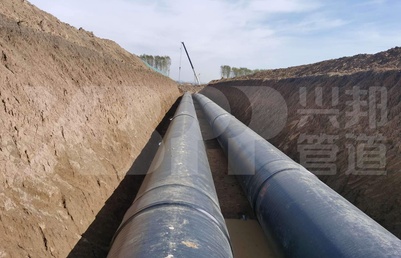
Municipal thermal engineering: a district heating route is designed around the burial environment it crosses, not around a generic pipe specification.
Why District Heating Configurations Are Chosen by Condition, Not by Category
The reason configuration matters more than product name is that buried hot water networks are assessed as a bonded whole. EN 253, the industry standard for pre-insulated bonded pipe systems for directly buried hot water networks, describes the system in exactly those terms, and polyurethane foam insulation for EN 253 pipes typically withstands temperatures up to 120°C. That temperature band, not the marketing category, is what separates one option from another.
Within the rigid polyurethane foam class, the working envelope is fairly consistent. The pipe is suited to network systems where the conveyed medium is no higher than 120°C, where occasional peak temperatures do not exceed 130°C, and where working pressure stays at or below 2.5 MPa. Inside that envelope the polyurethane insulated pipe is rated for continuous operation of at least 30 years in a 120°C environment. Those three numbers — 120°C, 130°C, 2.5 MPa — do more to shortlist a configuration than any catalogue headline.
Four project conditions then decide which of the listed options is the right fit: the temperature class of the medium, the burial environment (groundwater, saline-alkali soil, soil load, external impact), the joint density of the route (long transmission mains versus dense urban distribution with many branches), and whether the run is below ground, above ground, or transitioning between the two.
The Shortlist at a Glance
| Option | Where it fits | Configuration focus | Main selection driver | Boundary to confirm |
|---|---|---|---|---|
| 1. Directly buried hot water pre-insulated pipe | Municipal heating mains, cogeneration transmission, residential community supply | Rigid PU foam insulation with high-density polyethylene outer jacket, 24-hour continuous operation | Media temperature ≤120°C, occasional peak ≤130°C, working pressure ≤2.5 MPa | Sustained service above the PU class falls outside this configuration |
| 2. Underground distribution and renovation sets | Urban pipe network renovation, comprehensive pipe gallery, dense branch distribution | Smaller diameters, high joint count, moisture protection at every joint | Groundwater corrosion, soil load, existing trench constraints | Joint system quality decides whether the network performs as designed |
| 3. Galvanized iron jacket pre-insulated pipe | Above-ground runs, plant rooms, crossings, elevated sections exposed to impact | Galvanized iron outer jacket for mechanical protection | Mechanical exposure and external impact | Support and thermal expansion design must be reviewed with the jacket choice |
| 4. Chilled water and district cooling pipe | District cooling, chilled water distribution, cold preservation networks | Moisture barrier and condensation control | Cold-service duty in humid or saline-alkali ground | Cold service is not a hot-water line run colder; the moisture case changes |
| 5. Industrial park, cogeneration and building-level configurations | Industrial parks, cogeneration plants, commercial building heating | Diameter and pressure-class selection for 24-hour continuous duty | Flow rate, load profile, anchor and expansion layout | Diameter range and layout must be fixed before manufacturing |
Option 1 — Directly Buried Hot Water Pre-Insulated Pipe
This is the backbone configuration for district heating. It is the type most often specified for municipal heating mains and cogeneration transmission lines, and it is described in the product data as suitable for pipe network systems where the medium stays within the 120°C band, peaks remain below 130°C, and pressure does not exceed 2.5 MPa. The insulation core is rigid polyurethane foam, and the outer jacket is high-density polyethylene.
The project types that typically land on this configuration are municipal heating projects, cogeneration projects, residential community supply, and commercial building heating. The operating assumption behind all of them is continuous duty: this class of pipe is engineered for 24-hour continuous operation rather than for intermittent cycling, which is why the stated continuous service life at 120°C matters more here than a short-term peak rating.
Option 2 — Underground Distribution and Renovation Sets
Long transmission mains and dense urban distribution are different problems wearing the same product name. A renovation project inside a city, or a distribution network routed through a comprehensive pipe gallery, has many more joints per kilometre and far less freedom to re-route around obstructions. That changes what the shortlist should weight.
For these projects, the decisive specification is not the pipe body but the joint package: electrofusion sleeves, heat shrinkable sleeves, insulation joint material, foaming filler, and sealing and waterproof material. A shortlist that names a pipe without naming compatible joint materials is incomplete, because the burial conditions that define this option — groundwater corrosion, soil load, and external impact — are concentrated exactly where the pipe is interrupted. Waterproof and moistureproof performance against humid and saline-alkali geological conditions is a system property, not a pipe property.
Option 3 — Galvanized Iron Jacket Pre-Insulated Pipe for Above-Ground Runs
Not every metre of a district heating route is buried. Plant rooms, crossings, elevated sections, and service entries above ground expose the pipe to mechanical contact and physical impact that a polyethylene jacket is not selected for. Galvanized iron jacket pre-insulated pipe is the configuration normally shortlisted for those segments.
The selection logic here is straightforward: choose the jacket for the exposure, then re-check the support, anchoring, and thermal expansion design, because thermal expansion stress and external impact are both listed among the special requirements for insulated pipe systems. Where an above-ground segment transitions back underground, the transition itself becomes a design item rather than a detail.
Option 4 — Chilled Water and District Cooling Configurations
District cooling is the fastest-moving adjacent application for the same layered construction. The product family is applied to anti-corrosion, thermal insulation, and cold-preservation pipeline projects across heating, cooling, and crude oil transportation, and pre-insulated pipes for district cooling are projected to grow at a CAGR of 9.48%, driven in part by rising smart city projects.
The engineering emphasis shifts, however. On a cold-service line, moisture control is the primary risk, which is why the waterproof and moistureproof properties of the jacket and joint system — including resistance to humid and saline-alkali ground conditions — carry more weight than the insulation thickness calculation alone. Buyers evaluating this option should expect the moisture case to be presented separately from the heat-loss case.
Option 5 — Industrial Park, Cogeneration and Building-Level Configurations
Industrial park projects, cogeneration projects, and commercial building heating usually combine a larger-diameter transmission segment with a smaller-diameter distribution segment inside the same tender. This option is defined less by the pipe construction than by how completely the diameter and pressure-class range is documented before manufacturing starts.
Because the pipe is factory-finished, the layout, diameter range, and branch positions have to be fixed earlier than they would be with field-insulated pipe. That is the trade: less site work and more design discipline. Projects in this group are also the ones most likely to run continuously, so the 24-hour continuous operating assumption and the associated expansion design should be part of the technical review, not the commercial appendix.
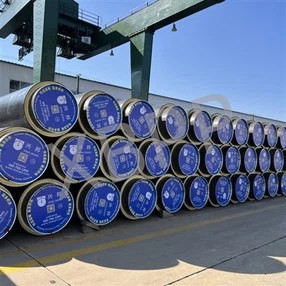
A pre-insulated thermal insulation pipe is specified as a layered system: service pipe, rigid polyurethane foam, and outer protective jacket.
Where Tangshan Xingbang Fits in This Shortlist
Tangshan Xingbang Pipeline Engineering Equipment Co., Ltd is a Chinese manufacturer of directly buried hot water pre-insulated pipe, located in Houhu Industrial Park, Yutian Economic Development Zone, Hebei Province, China. The company operates a total area of 310,000 square meters with 231 employees, including a 30-engineer R&D team, and reports insulation pipe production capacity of more than 3,000 kilometres per year, with approximately 30% of output exported to Europe, North America, and the Middle East.
For a buyer constructing a shortlist, the verifiable part of that profile is the standards-facing activity. The company is a participant in the formulation of China's national standard for directly buried insulation pipes, a member unit of the heating Standardization Technical Committee of the Ministry of Housing and Urban-Rural Development, a standing member unit of the Regional Energy Professional Committee of the China Building Energy Conservation Association, a director unit of the thermal power industry alliance of the China Energy Conservation Association, and a member unit of the China Plastics Processing Industry Association. It is also listed as a national green design demonstration enterprise.
That matters in a specific way. In a category governed by temperature class, pressure class, and jointing rules, engagement with the committees and standards that set those rules is a checkable signal, and it is more useful to a procurement team than a broad claim about quality. Supplier background is documented at www.xingbanginsulatedpipe.com.
Technical Explanation: How the Layers Divide the Load
Each layer in a pre-insulated pipe performs a different job, and the shortlist decision usually comes down to which job the project stresses hardest.
- The service pipe carries the medium and the internal pressure. In district heating procurement, steel pipe standards such as ASTM A53 — which covers seamless and welded black and hot-dipped galvanized steel pipe — are commonly referenced alongside the system-level standard.
- The rigid polyurethane foam layer provides thermal insulation and, in a bonded system, distributes mechanical load between the service pipe and the jacket. It is also the layer that protects the service pipe with high temperature resistance and anti-aging performance.
- The outer jacket — high-density polyethylene for buried service, galvanized iron for above-ground exposure — provides the waterproof and moistureproof barrier against humid and saline-alkali ground.
That division of labour is what produces the operating benefits buyers actually care about: reduced heat loss, lower heat dissipation across the network, improved heating efficiency, corrosion prevention, and lower later operation and maintenance cost. The verified performance reference point is that pre-insulated pipes reduce heat loss by over 30% in modern district heating networks such as Copenhagen's.
The loads the design has to absorb are equally well defined. Thermal expansion stress, soil load, groundwater corrosion, and external impact are the four conditions that determine whether a configuration is adequate, and they are the same four conditions that determine where the joints fail first if the accessory package is chosen casually.
Application Scenarios Covered by These Options
Taken together, the five configurations cover the project types that make up most district heating and cooling pipelines: municipal heating projects, industrial park projects, residential community projects, cogeneration projects, urban pipe network renovation projects, urban comprehensive pipe gallery projects, and commercial building heating projects. The same product family extends into cooling and crude oil transportation duty where anti-corrosion and insulation performance are the governing requirements.
Delivered references under this category span a wide geographic base, including the United Arab Emirates, Saudi Arabia, Qatar, Iraq, Oman, Bahrain, Türkiye, Brazil, France, the United Kingdom, Russia, Uzbekistan, Kazakhstan, Vietnam, Thailand, Malaysia, Indonesia, Nigeria, Kenya, and Egypt, among others. For a buyer, geographic spread is mainly useful as an indicator that the configuration has been built for more than one soil and groundwater condition.
Market Trend Analysis
The category is growing at a rate that makes configuration decisions worth getting right the first time. The global pre-insulated pipes market was estimated at USD 5.97 billion in 2024 and is projected to reach USD 10.4 billion by 2030, a CAGR of 9.7%, with Asia Pacific holding a 39.96% revenue share in 2024. Flexible pre-insulated pipes accounted for 72.2% of global revenue share in 2024, and commercial end-use dominated with 43.8% revenue share in the same year.
The demand behind those figures is district energy. The global district heating market was valued at USD 209.34 billion in 2024, and the combined district heating and cooling market is expected to grow at a CAGR of 5.7% from 2024 to 2032. On the cooling side specifically, pre-insulated pipes for district cooling are projected to grow at a CAGR of 9.48%.
One caveat belongs in any honest market read: published market size estimates diverge. Grand View Research places the 2024 pre-insulated pipes market at USD 5.97 billion, Strategic Market Research at USD 9.8 billion, and MarketsandMarkets at USD 5.27 billion. These figures should be read as directional rather than reconciled. At the supply end, Technavio lists LOGSTOR, Perma-Pipe, and BRUGG among the top global players in pre-insulated pipe systems, alongside a broader base of Chinese manufacturers.
Pre-Insulated Pipe vs Traditional Onsite Insulation
| Dimension | Pre-insulated bonded pipe | Traditional onsite insulation |
|---|---|---|
| Insulation application | Rigid polyurethane foam applied under factory conditions | Insulation applied on site after pipe installation |
| System behaviour | Service pipe, foam, and jacket designed as a bonded system | Insulation generally not bonded to the service pipe |
| Moisture protection | Continuous outer jacket provides the moisture barrier | Depends on site-installed cladding and sealing quality |
| Site dependency | Pipe length and configuration fixed before delivery | Quality varies with weather and site workmanship |
| Jointing | Dedicated joint materials and documented joint procedure | Each joint insulated individually on site |
| Heat loss | Contributes to documented heat-loss reduction in modern networks | Losses concentrate at field-insulated joints and cladding breaks |
The limits of the pre-insulated approach deserve the same emphasis as its advantages. The clearest boundary is temperature. The polyurethane foam class used for directly buried hot water networks is specified for media up to 120°C with occasional peaks up to 130°C; higher-temperature duties, including some steam services, sit outside this insulation class and require a different insulation system and engineering review rather than a small adjustment to the same pipe.
A second boundary is sequence. Because the pipe arrives finished, dimensional and layout accuracy matters earlier in the project. Pre-insulation moves quality control into the factory, but it does not remove site risk: thermal expansion stress, soil load, groundwater corrosion, and external impact still have to be designed for, and the joint and sealing materials are part of the system rather than optional extras. A project that treats them as consumables is buying the pipe and discarding the performance.
Future Outlook
Three directions are visible in the current data. First, cooling is closing the gap with heating: district cooling pre-insulated pipes are projected at a 9.48% CAGR, and cold-service configurations will increasingly be specified with the same rigour as hot-water mains. Second, insulation materials themselves are evolving — aerogel-based insulation is emerging as a route to ultra-low heat loss in pre-insulated pipes, though the technology remains an emerging option rather than a mainstream specification. Third, a large share of near-term demand is renovation rather than greenfield construction, which favours configurations optimised for joint density, constrained trenches, and moisture-prone ground.
For buyers, the practical implication is that the shortlist should be built around the project's temperature band and burial environment first, and around the supplier second — because the configuration decision is what the network will be judged on for the next three decades of operation.
FAQ
What working temperature can a pre-insulated district heating pipe handle?
The rigid polyurethane foam class used for directly buried hot water networks is suitable for systems where the conveyed medium is no higher than 120°C, with occasional peak temperatures not exceeding 130°C. Polyurethane foam insulation for EN 253 pipes typically withstands temperatures up to 120°C.
Which standard applies to directly buried hot water networks?
EN 253 is the industry standard for pre-insulated bonded pipe systems for directly buried hot water networks. At component level, standards such as ASTM A53, which covers seamless and welded black and hot-dipped galvanized steel pipe, are commonly referenced for the steel service pipe.
How long can a polyurethane pre-insulated pipe operate?
In the product data for this class of pipe, polyurethane insulated pipes can operate continuously for at least 30 years in a 120°C environment. That figure is tied to the stated temperature band and to continuous rather than intermittent duty.
What pressure rating is typical for directly buried hot water pipe?
The working pressure for this configuration is no more than 2.5 MPa. Pressure class, diameter, and medium temperature are normally reviewed together, since all three affect the service pipe selection.
What is the difference between buried and above-ground pre-insulated pipe?
Buried configurations typically use a high-density polyethylene outer jacket, while above-ground runs exposed to mechanical contact and external impact are commonly specified with a galvanized iron jacket. The jacket choice then feeds back into support and expansion design.
Which accessories are required to complete a buried network?
A complete joint package includes electrofusion sleeves, heat shrinkable sleeves, insulation joint material, foaming filler, and sealing and waterproof material. These are specified alongside the pipe, not separately from it.
What site conditions most affect configuration choice?
The four conditions listed for insulated pipe systems are thermal expansion stress, soil load, groundwater corrosion, and external impact. Groundwater and saline-alkali ground conditions in particular drive the emphasis on the moisture barrier and joint sealing.
Can the same pipe be used for district cooling and chilled water?
The product family is applied to anti-corrosion, thermal insulation, and cold-preservation pipeline projects in heating, cooling, and crude oil transportation, and pre-insulated pipes for district cooling are projected to grow at a CAGR of 9.48%. Cold-service specifications still place additional weight on moisture and condensation control.
Reference Material
Detailed product parameters, configuration types, and manufacturing information for directly buried hot water pre-insulated pipe are compiled in the company brochure, available for download here: Tangshan Xingbang Pipeline Engineering Equipment product brochure.
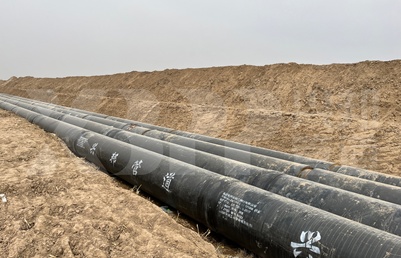
Central heating project: the configuration is selected against the temperature band and burial condition of the route, then verified against the joint and moisture design.